These 10 Idaho Waterfall Hikes Under Two Miles That Deliver Big Canyon Drama Fast
Big scenery should not require a brutal climb and a parking-lot pep talk.
Short waterfall hikes can feel almost unfair when the reward arrives this fast.
In Idaho, some trails reach the drama before anyone has time to question their shoe choice.
The sound of falling water starts pulling hikers forward, and the whole walk gets more exciting with every step.
Mileage stays low, but the payoff does not act small.
Under two miles can still bring the kind of view that makes everyone stop talking for a second.
No all-day expedition needs to happen.
No heroic suffering has to become part of the story.
Just enough trail, just enough anticipation, and then the waterfall appears like the landscape saved its best line for last.
These hikes prove a short walk can still feel huge when the water knows how to make an entrance.
Jump Creek Falls Trail
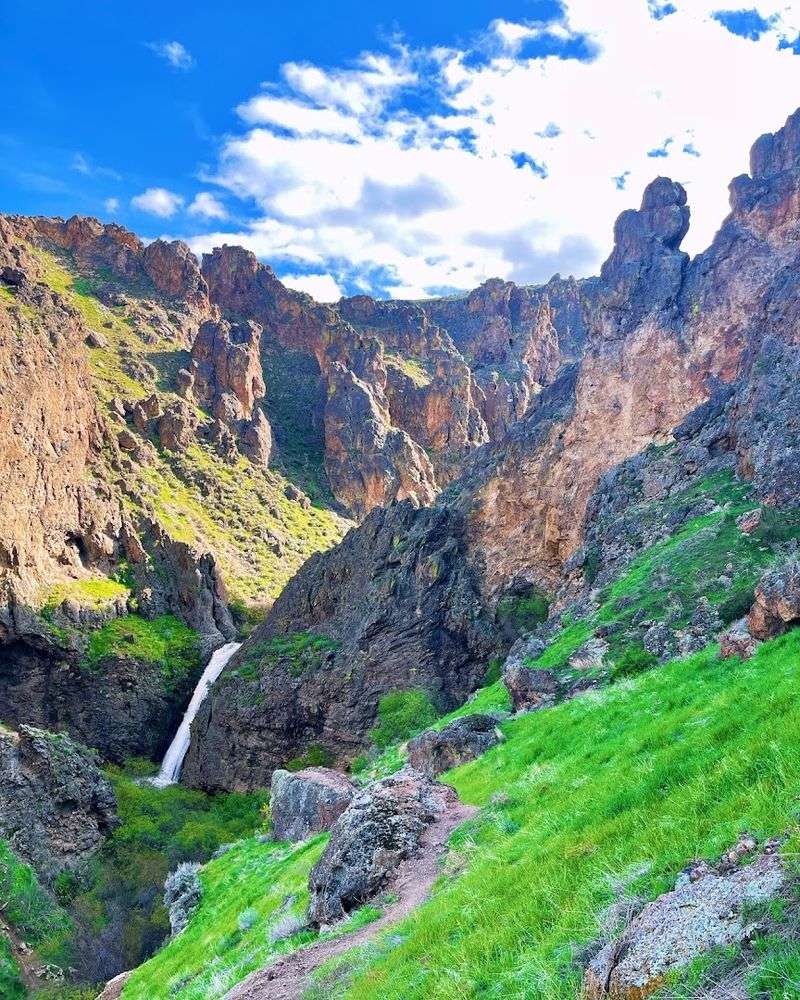
Desert heat makes the entrance to Jump Creek Canyon feel even more surprising. Just outside Marsing, this BLM recreation site leads visitors into a narrow volcanic canyon where shade, creek sounds, and a short waterfall walk replace the open high-desert feel almost immediately.
A short, easy walk leads to the waterfall and pool without demanding much time or effort. Families, casual hikers, and photographers often favor the trail because the scenic payoff arrives so quickly.
The BLM notes that poison ivy grows thick in some spots along the creek and trail, so staying aware of trailside vegetation matters here.
A $5 day-use pass is also listed for the site, with annual options available.
The falls themselves can vary by season, but the canyon setting does a lot of the work even when flows are modest.
Rock walls rise around the creek, and the final pool area feels cooler than the surrounding landscape. Shoes with grip are smart because wet rock, loose dirt, and sandy footing can make the short approach trickier than the distance suggests.
This hike is quick, but it still feels like a small canyon escape.
Perrine Coulee Falls Trail
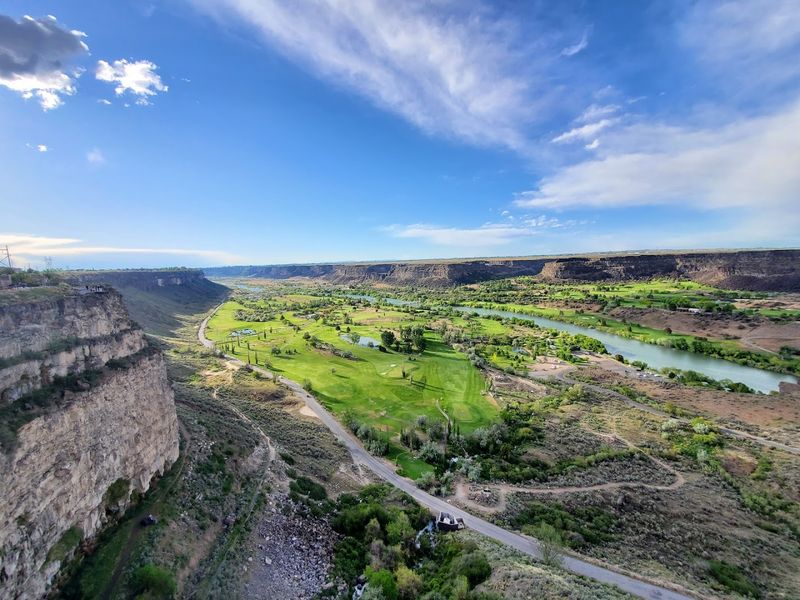
Waterfall drama rarely gets this convenient. Perrine Coulee Falls sits right in Twin Falls’ Snake River Canyon and drops nearly 200 feet, with a short route that lets visitors walk behind the falling water and feel the mist up close.
Visit Southern Idaho notes that the falls run year-round and that summer flows can be especially strong, which makes the stop useful even when other waterfalls have slowed down. The experience is part hike, part canyon surprise.
One moment, the city feels close. A few minutes later, the path is hidden beneath a tall curtain of water with basalt walls, canyon views, and the Perrine Bridge nearby.
The route is short enough for many casual visitors, though wet ground and slippery rock mean everyone should move carefully, especially behind the falls. Winter brings its own hazards, with ice and icicles creating serious risk around the trail and waterfall.
In warmer months, early light can make the canyon glow before the area gets busier. Perrine Coulee works because it feels bigger than its mileage.
The walk is brief, the payoff is huge, and the chance to stand behind a waterfall makes the whole stop feel like cheating in the best way.
Shoshone Falls Overlook Walk
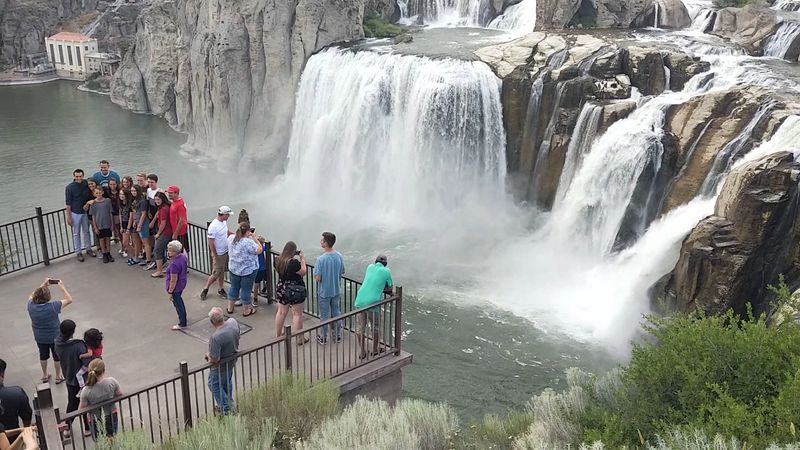
Niagara comparisons get thrown around too easily, but Shoshone Falls has earned its famous nickname. The City of Twin Falls lists the scenic attraction at 4155 Shoshone Falls Grade Road, and the falls are widely recognized for dropping 212 feet, making them taller than Niagara Falls.
The walk from parking areas to overlooks is short, which places this more in the “big waterfall access” category than a traditional hike. Still, the canyon-rim payoff is massive.
Visitors get basalt walls, Snake River drama, mist, rainbows when conditions cooperate, and a waterfall wide enough to make everyone instinctively reach for a camera.
Spring and early summer usually bring stronger flows, while later-season water levels can be lower because river flow is affected by irrigation and upstream management.
That does not make the stop pointless in late summer. The canyon itself remains impressive, and the overlook layout keeps the view easy for many visitors.
A seasonal vehicle fee may apply, so checking current city information before arrival is smart. Shoshone Falls is the easiest kind of “hike” on this list: very little walking, very big scenery, and zero need to pretend the view was hard-earned.
Devil’s Washbowl At Malad Gorge
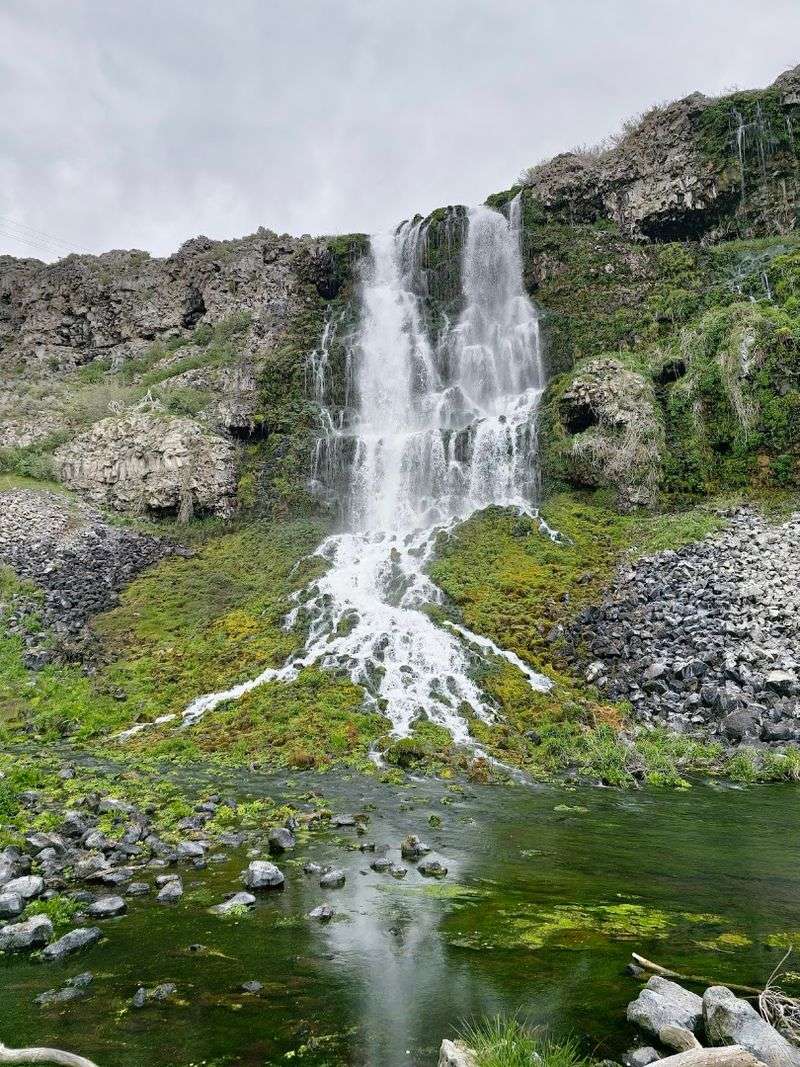
Sound hits first at Malad Gorge. The Malad River crashes through stairstep falls into the Devil’s Washbowl before cutting through a dramatic 250-foot gorge, according to Idaho Parks and Recreation.
A short walk from the parking area leads to the bridge and viewpoints, putting visitors right above one of the most intense scenes in Thousand Springs State Park.
This is not a long hike, but it feels powerful because the water is confined inside dark basalt walls.
The gorge drops away suddenly, the pool below can look teal in the right light, and the footbridge gives a direct sense of height and movement that photos never quite capture.
The Malad Gorge unit sits just off Interstate 84 near Hagerman, making it surprisingly easy to reach for something that feels so geologically dramatic.
Park fees apply within Thousand Springs State Park, and visitors should follow all posted rules around viewpoints and cliff edges. The best part is how quickly the scenery arrives.
No long approach, no complicated navigation, no waiting for the canyon to reveal itself. One short walk brings the full force of water, rock, and depth into view.
Ritter Island / Lemmon Falls Trail
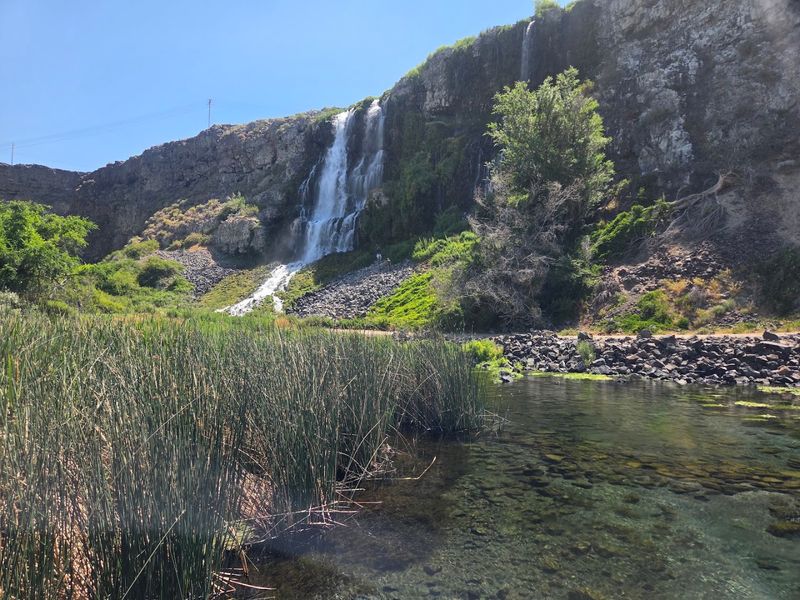
Green edges and spring-fed water make Ritter Island feel softer than the surrounding high desert. Within Thousand Springs State Park, Lemmon Falls offers one of the area’s prettiest short waterfall walks, with aquifer-fed water, lush vegetation, and Snake River scenery all close together.
Visit Southern Idaho notes that Ritter Island is open Memorial Day weekend through Labor Day weekend, while Lemmon Falls can be viewed from the canyon-wall area in any season.
That seasonal access distinction matters, because visitors should not assume every part of Ritter Island is open year-round.
When timing works, the short walk around the island and toward Lemmon Falls gives a slower, greener version of Idaho waterfall scenery than the sheer-walled drama of Malad Gorge.
Minnie Miller Falls can add another nearby point of interest when access and routes allow, making the stop feel more layered than the distance suggests.
The water here does not need a giant plunge to be memorable. It spills, threads, and gleams through a landscape shaped by springs and old agricultural history.
Park fees apply, and current Thousand Springs updates should be checked before visiting. This is the gentle scenic break on the list, but it still delivers plenty of water, color, and contrast.
Char Falls Trail
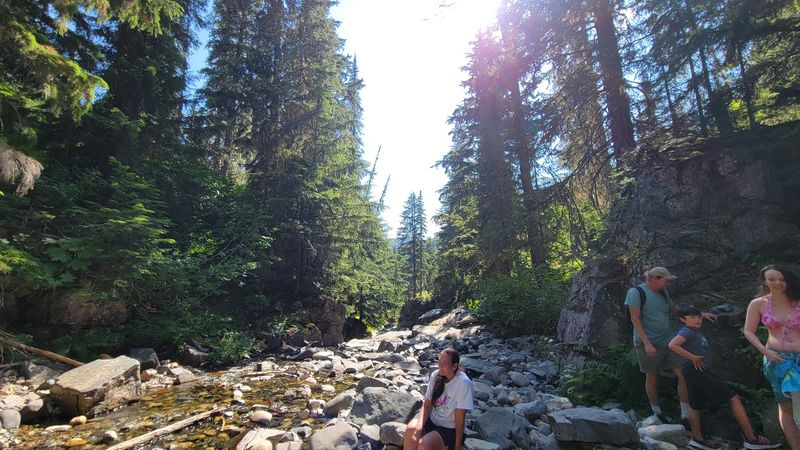
Remote forest roads make this short hike feel more adventurous before anyone even starts walking. Char Falls sits in North Idaho’s Kaniksu National Forest country, reached by gravel-road driving near the Trestle Creek and Lightning Creek area.
Regional guides describe the waterfall as a semi-remote cascade measuring roughly 40 to 50 feet. Depending on parking and additional exploring, the out-and-back hike generally covers about one mile or slightly more.
That makes the trail short, but not necessarily casual in terms of access.
Road conditions, navigation, and cell service can all affect the trip, so downloading maps and checking local conditions are smart moves.
Once on foot, the trail has an easy woodland feel until the scramble near the falls, where careful footing may be needed to reach the best views.
The reward is a forested cascade with enough drop and sound to feel substantial, framed by the rugged Cabinet Mountains landscape. Char Falls is not the polished roadside attraction version of waterfall hiking.
It feels more like something found by people willing to follow the right roads and trust the forest to deliver. For hikers who like a little treasure-map energy, that is the whole appeal.
Copper Falls Loop
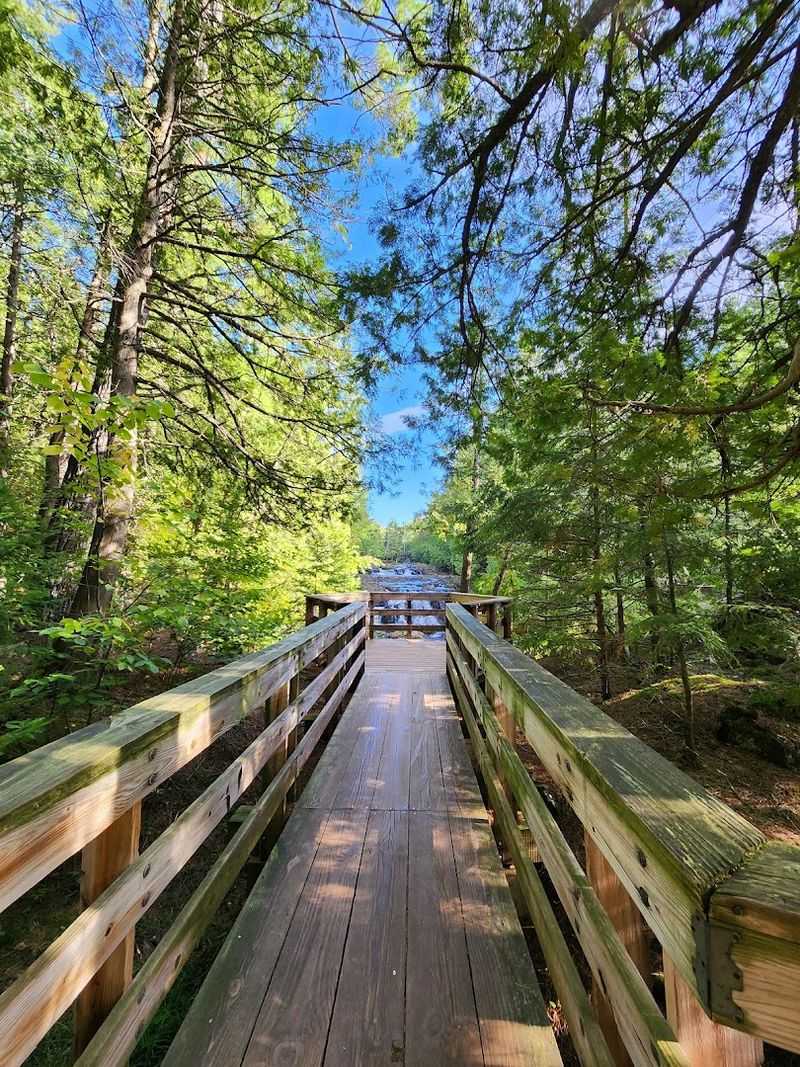
Northern Idaho gives this waterfall a cool, shaded feel from the start. Copper Falls is reached from Copper Falls Road near Bonners Ferry, and Forest Service information for nearby Copper Creek Campground points visitors toward the Copper Falls viewpoint trail on Road #2517.
Local Bonners Ferry hiking guides describe the route as a short loop, roughly 1.4 miles in many reports, with both upper and lower viewpoints depending on the path taken. Even with that variation, it stays comfortably under two miles.
The falls are often described as a tall, narrow cascade, with many local guides citing about 225 feet, though visitors should focus more on the experience than measuring every drop.
Interpretive signs, creek crossings, forest shade, and changing viewpoints give the short walk more substance than a simple out-and-back.
Spring and early summer tend to make the flow stronger, while summer shade keeps the trail pleasant when temperatures rise.
Gravel-road access means conditions can matter, especially after weather, so checking local updates is smart.
Copper Falls works beautifully for hikers who want a short walk that still feels like a proper forest outing. The mileage is modest, but the atmosphere is pure North Idaho.
Grouse Creek Falls Trail
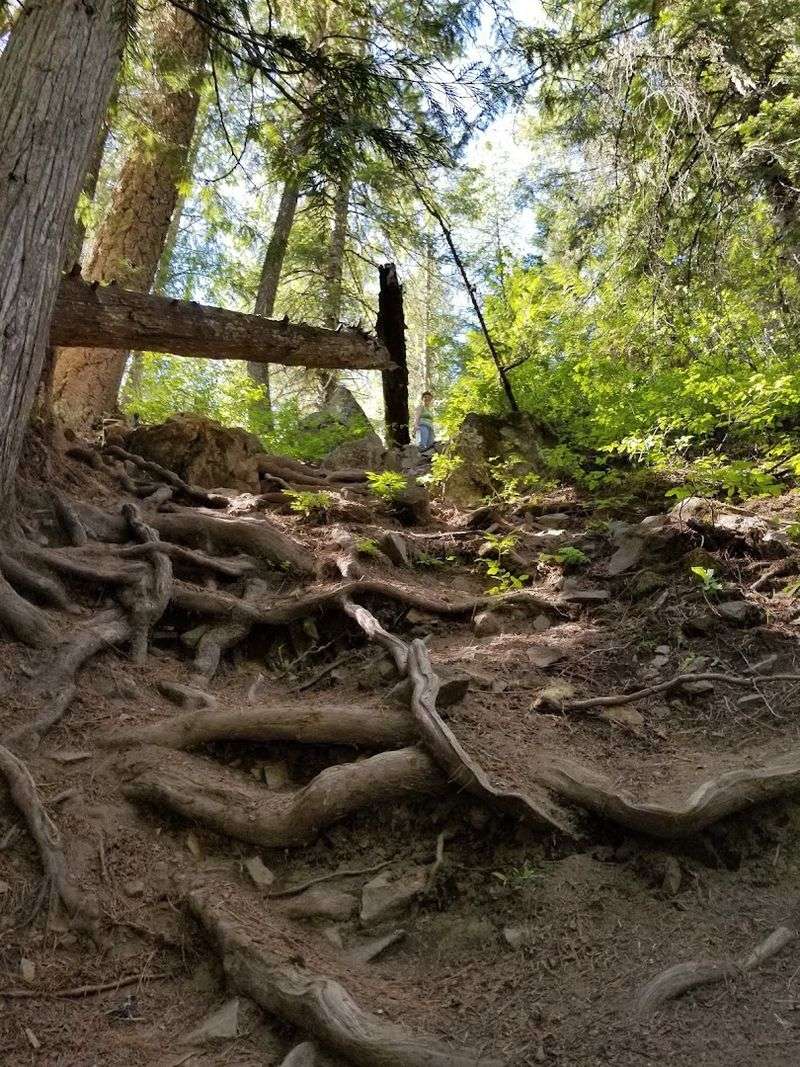
Bright water and cedar shade make this Sandpoint-area trail feel more dramatic than its distance suggests.
Grouse Creek Falls sits off Grouse Creek Road northeast of Sandpoint, and local recreation sources describe it as roughly a half-mile hike each way or a little over a mile total depending on route and viewpoint choices.
Rather than one huge vertical plunge, the reward is a series of cascades and pools where the creek moves over rock in bright, lively steps.
Sandpoint-area guides note that the trail forks near the end, with different branches offering different views of the falls and creek.
That fork is worth exploring carefully if conditions are safe, because the perspectives change quickly. Footing can be rocky and uneven, and high water may make some viewpoints less accessible, so visitors should not treat the short distance as a promise of perfect ease.
The surrounding forest adds texture, with cedar, thimbleberry, and damp creekside greenery creating a cooler microclimate. This is a good stop for people who enjoy moving water in layers rather than one single curtain.
Grouse Creek delivers sound, color, and enough trail variety to make a short hike feel much fuller than expected.
Myrtle Falls Trail
Wildlife-refuge quiet gives Myrtle Falls a different mood from the more roadside canyon stops. The U.S.
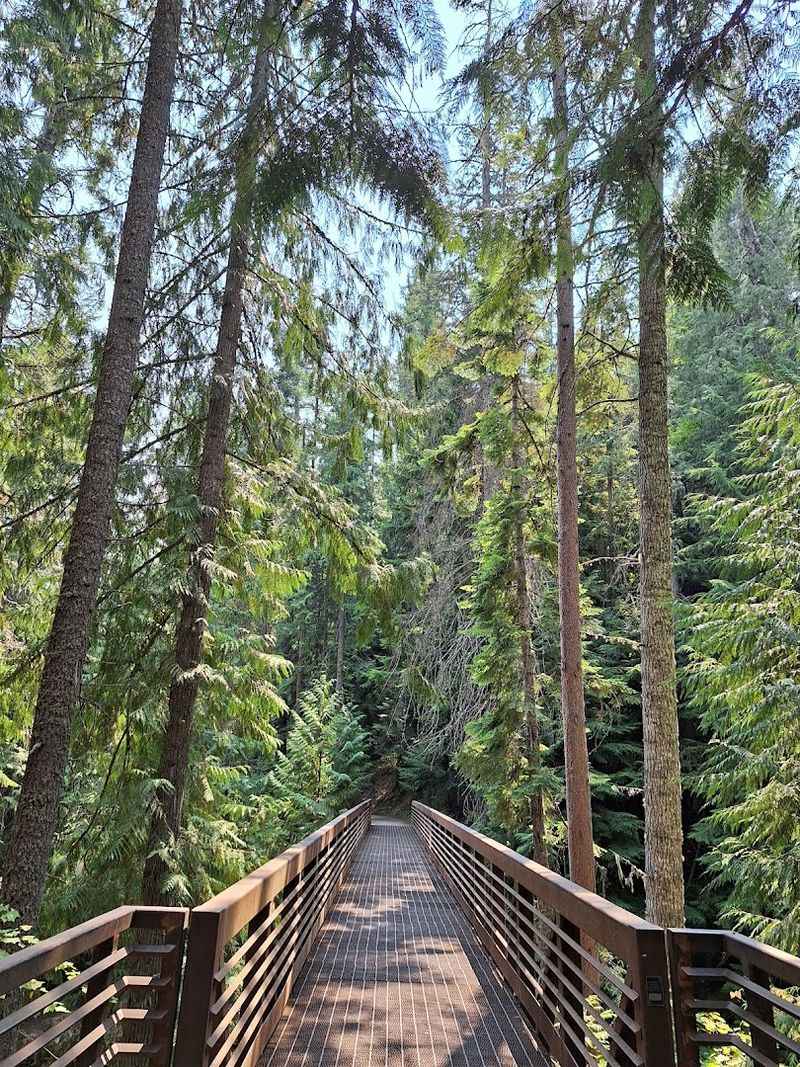
Fish and Wildlife Service says Myrtle Falls Trail leads visitors to an overlook of 100-foot Myrtle Creek Falls, with the first 0.15 mile paved and accessible as it climbs gradually through dense conifer forest.
That opening section includes a bridge over Myrtle Creek and a bench where visitors can pause and listen for water and birds, including American dippers sometimes seen along the creek.
Beyond the accessible section, the path continues toward the overlook, where the waterfall drops through a narrow gorge framed by forest and rock.
Visit Idaho describes the route as a short 0.9-mile out-and-back, which fits the under-two-mile promise while still offering enough elevation change to feel like a real walk.
The viewpoint has steep drop-offs nearby, so children need close supervision. What makes Myrtle Falls special is the combination of waterfall, forest, and refuge setting.
The hike is not only about reaching the cascade. It is about moving through habitat where birds, creek sound, mossy shade, and interpretive details all build the scene.
For a short trail, it carries a surprisingly calm, complete feeling.
Shadow Fern Falls Trail
Two waterfalls make this short Wallace-area hike feel like a bargain.
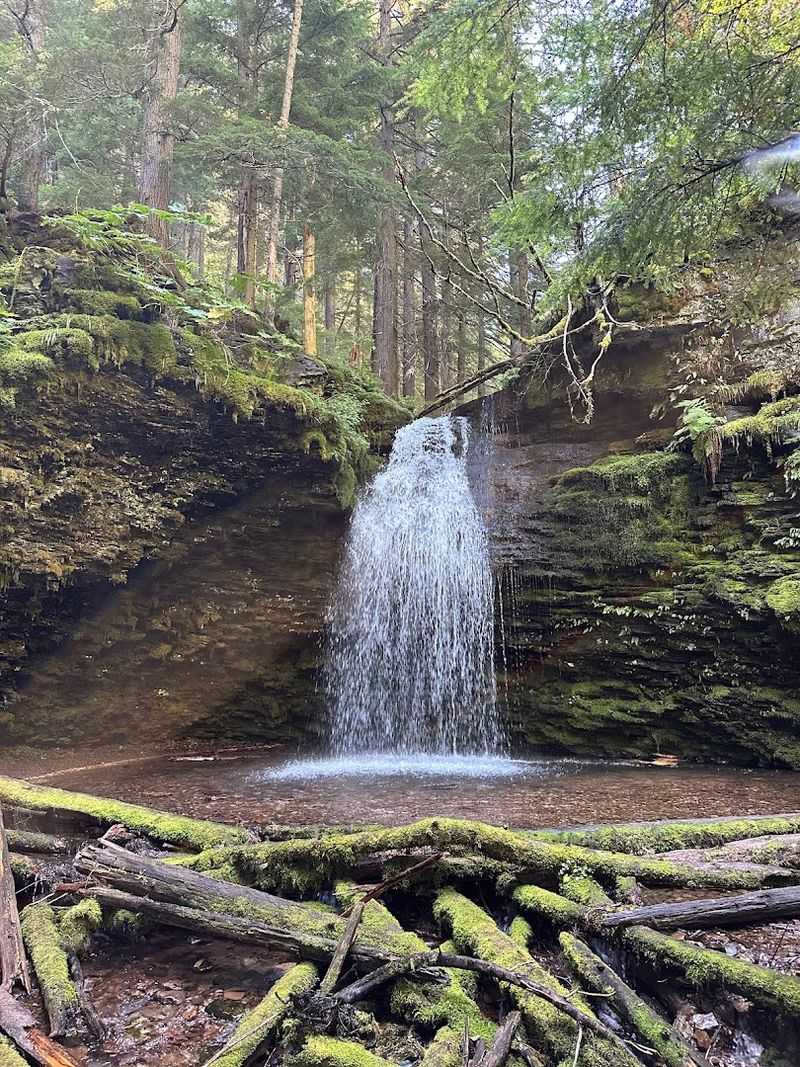
A 25-foot waterfall spills over a moss-covered rock face along Shadow Falls Trail #513. Below the cascade, a split-log footbridge crosses the creek and provides access beneath and behind the falling water.
The same source notes that smaller Fern Falls appears about 0.2 mile from the parking lot on the way to Shadow Falls.
Regional guides often call the full hike about 0.8 to 0.9 mile out and back, with moderate elevation gain for such a short route.
That means the walk is brief, but not totally flat. The road to the trailhead can be rough, and several local sources recommend high-clearance vehicles, so the drive deserves more preparation than the hike length might suggest.
Once there, the scenery is classic wet North Idaho forest: ferns, moss, creek sound, shaded trail, and a box-canyon feel around the main falls.
Spring and early summer usually bring stronger flow, while summer greenery makes the setting feel lush and enclosed.
Shadow Fern Falls is exactly the kind of hike that proves mileage is not the same thing as impact. Less than a mile can still feel like a full little adventure.