12 Connecticut Museums That Surprise Visitors With Hidden Stories, History, And Creativity
Museums that genuinely surprise you are a specific kind of wonderful and this state has more of them than most people ever get around to discovering. The ones on this list go well beyond the expected and deliver something that sticks with visitors long after they have left and gone home.
Hidden stories, unexpected creativity and history that feels genuinely alive rather than just displayed behind glass creates an experience that makes a museum visit feel like a proper event worth clearing the afternoon for.
Walking into one of these places without knowing exactly what to expect and leaving considerably more informed and more moved than anticipated is honestly one of the better feelings a free weekend can produce.
Connecticut museums full of hidden stories and genuine creative surprises are exactly the kind of cultural discovery that makes exploring close to home feel endlessly worthwhile.
These institutions have a depth to them that deserves a much bigger audience than they currently get.
1. Yale Peabody Museum, New Haven
A dramatic renovation has given this beloved New England museum a brighter, more energetic feel without losing its historic character.
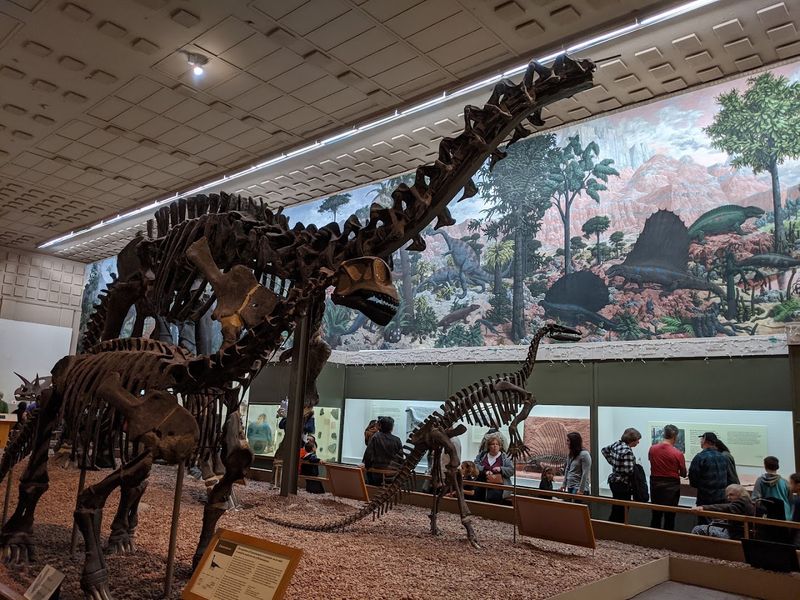
After reopening in 2024, the Yale Peabody Museum welcomed visitors back to expanded galleries, refreshed exhibits, and dinosaur mounts updated to match modern scientific research.
The star remains Rudolph F. Zallinger’s sweeping 110-foot “Age of Reptiles” mural, carefully protected and restored during the four-year project.
Nearby, the famous Brontosaurus now holds its tail above the floor, creating a livelier and more scientifically accurate pose.
Beyond the dinosaur hall, guests can explore glittering minerals, Egyptian objects, wildlife displays, fossils, and geological treasures. Glass-fronted research spaces also offer glimpses of Yale scientists at work, connecting the collections with discoveries happening today.
The museum welcomes visitors at 170 Whitney Avenue in New Haven. Free admission makes it especially appealing for families, students, and curious travelers.
With comfortable seating and galleries that encourage visitors to set their own pace, the experience feels relaxed, varied, and easy to enjoy from floor to floor at leisure.
2. Mashantucket Pequot Museum & Research Center, Mashantucket

Built on ancestral land and operated by the Mashantucket Pequot Tribal Nation, this museum carries a weight and authenticity that sets it apart from most historical institutions.
The center sits at 110 Pequot Trail, Mashantucket, CT 06338, and its architecture blends deliberately with the surrounding forest landscape.
A Smithsonian affiliate, it stands as one of the most comprehensive resources on Native American history in the Northeast.
The experience begins with a simulated glacial crevasse and builds into a full-scale replicated 16th-century Pequot village, complete with environmental sounds and lifelike figures.
The powerful 30-minute film “The Witness” brings the events of the 1637 Pequot War into sharp focus, presented with historical dignity rather than dramatization.
An 18-story observation tower offers sweeping views of the surrounding land, and hands-on replica artifacts make the exhibits accessible to younger visitors. The sheer scale of the museum means that even busy days feel spacious.
A cafe and gift shop round out a visit that could comfortably fill most of a day.
3. Connecticut Museum Of Culture And History, Hartford
Founded in 1825, this institution holds one of the most surprising collections in the state, including what is considered the largest and most spectacular grouping of colonial inn and tavern signs in the entire country.
The museum is housed in an elegant building at 1 Elizabeth St, Hartford, CT 06105, and has been a cornerstone of the state cultural life for two centuries.
Formerly known as the Connecticut Historical Society, it rebranded to reflect its broader community mission.
The permanent exhibit “Making Connecticut” uses over 500 historic objects, photographs, and documents to trace the state’s story from the 1500s to today.
Visitors can try hands-on activities like working a World War II assembly line station or sewing a traditional Native American moccasin, which brings the history into direct physical contact.
The interior feels welcoming and well-organized, with lighting that makes close examination of artifacts comfortable. Educational programs run for all ages, and a significant library and research center serves those with deeper historical interests.
The pacing here encourages lingering, especially in sections that reward careful reading and close observation.
4. Connecticut River Museum, Essex
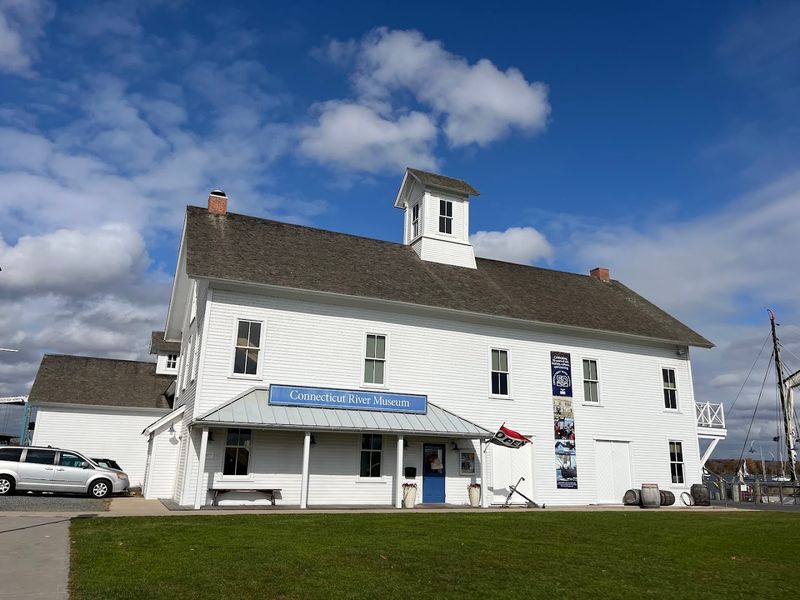
Sitting right at the edge of the Connecticut River in one of New England’s most picturesque small towns, this museum manages to pack an enormous amount of history into a compact and charming space.
The building at 67 Main St, Essex, CT 06426, is the last remaining steamboat warehouse on the river, dating back to 1878, and its original character is very much intact.
Three floors of exhibits cover shipbuilding, steamboat commerce, and the river’s evolving ecology.
One of the more surprising stories on display involves the world’s first submarine, the “Turtle,” which was built in nearby Old Saybrook during the Revolutionary War. A full-scale replica sits inside the museum, offering a tangible sense of just how small and audacious that early invention truly was.
Seasonal river cruises aboard a replica of Adriaen Block’s 1614 vessel, the Onrust, and eco-tours on the research vessel RiverQuest extend the experience beyond the walls of the building.
The Vertical Gallery features aerial photography of the river’s full 410-mile course, offering a striking sense of scale.
A visit here typically runs one to two hours at a comfortable pace.
5. Yale University Art Gallery, New Haven
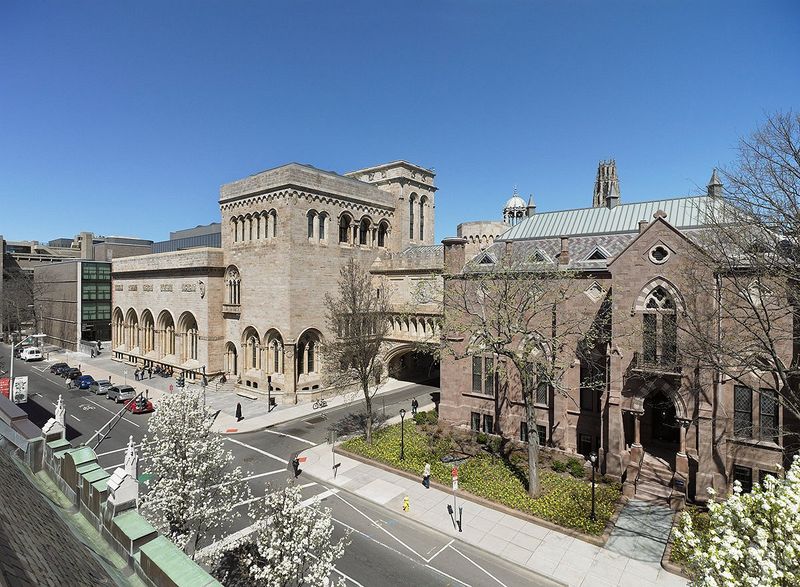
Holding over 300,000 objects across its galleries, this institution quietly ranks among the most significant art museums in the entire Western Hemisphere.
The gallery is located at 1111 Chapel St, New Haven, CT 06510, and admission is free to all visitors, a policy rooted in its founding commitment to public access.
Founded in 1832, it serves both as a teaching resource for Yale students and as a major cultural destination for the broader region.
Works by Edward Hopper, Winslow Homer, Vincent van Gogh, and Claude Monet appear alongside African sculpture, ancient Mediterranean artifacts, and early American decorative arts.
The range is genuinely surprising, and the layout allows for relaxed movement between wings and floors without the crowds that larger metropolitan museums often attract.
Natural light filters into several gallery spaces, creating a warm and contemplative atmosphere that makes extended visits feel effortless. Benches are placed thoughtfully throughout, encouraging visitors to sit and spend time with individual works rather than moving through quickly.
The curatorial labels are clear and informative without being overwhelming, making the collection accessible to visitors of all backgrounds and experience levels.
6. Museum Of Connecticut History, Hartford
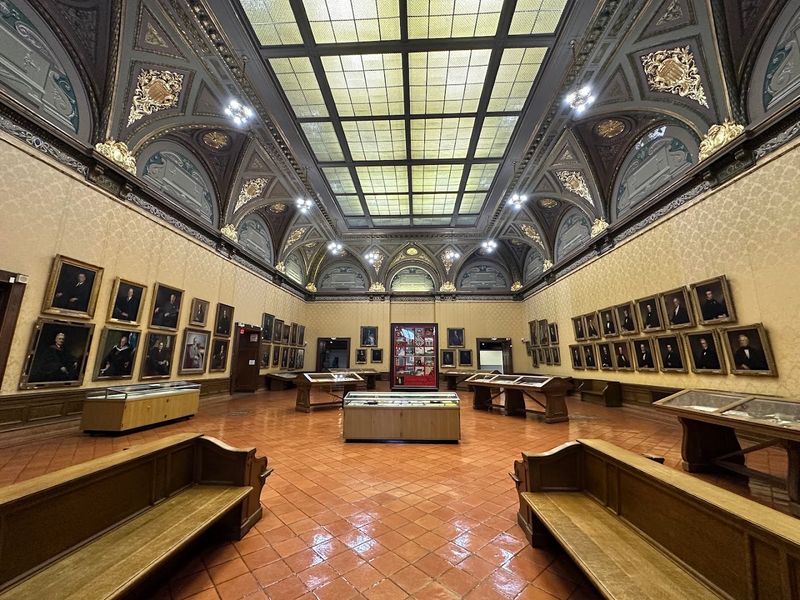
History feels especially immediate when its artifacts appear inside a working government building. The Museum of Connecticut History shares the grand State Library and Supreme Court Building, where stately architecture creates a fitting backdrop for stories of politics, industry, and public life.
One gallery follows the rise of Colt manufacturing through an extensive firearms collection, highlighting the state’s influence on American production and design. Portraits of governors add a human thread, introducing leaders from different eras.
Colonial charters, court records, military objects, and other original documents gain meaning through detailed labels that explain why each piece mattered.
Visitors will find the museum at 231 Capitol Avenue in Hartford. The galleries are usually calm, making it easy to pause, read closely, and examine displays without feeling rushed.
This is a place that rewards curiosity and a slower pace, especially for guests who enjoy discovering the stories behind official records and carefully preserved objects.
Admission is free, adding to the appeal of this thoughtful Hartford stop. Its mix of impressive surroundings and substantial exhibits makes the museum both accessible and truly memorable.
7. Yale Center For British Art, New Haven
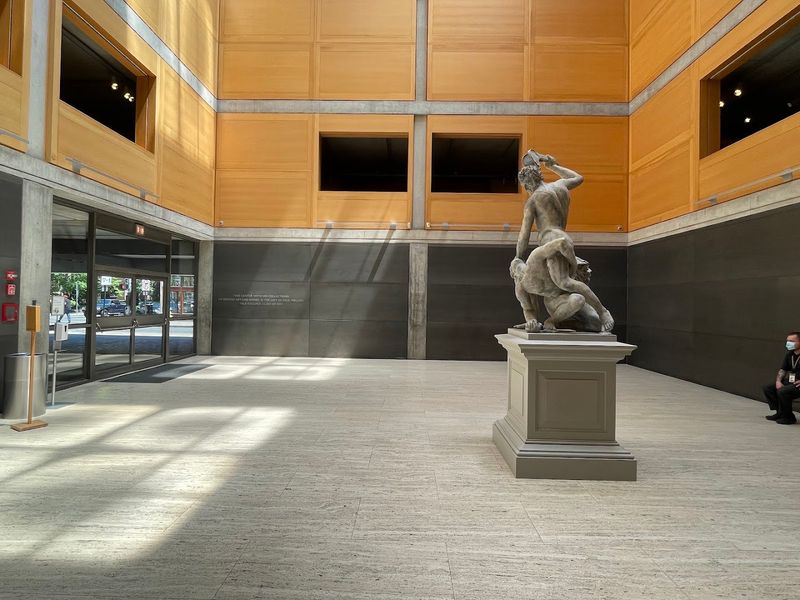
Soft daylight, quiet galleries, and a remarkable sweep of artwork make this museum feel both grand and intimate.
The Yale Center for British Art holds the largest collection of British art outside the United Kingdom, spanning more than five centuries through paintings, sculpture, drawings, prints, rare books, and manuscripts.
Masterpieces by J. M. W. Turner, John Constable, and Thomas Gainsborough share the galleries with works from later generations, giving visitors a broad view of British creativity rather than a single historical chapter.
The building is equally memorable. Designed by Louis I. Kahn as his final project, it opened in 1977 after Paul Mellon presented his collection to Yale.
Visitors will find the center at 1080 Chapel Street in New Haven, directly across from the Yale University Art Gallery. A major conservation project kept it closed from February 2023 until March 29, 2025, replacing the roof and skylights while improving gallery lighting.
Admission is free, and the calm atmosphere encourages slow looking across several beautifully arranged floors and galleries. Pairing both museums creates an easy, art-filled afternoon with plenty of variety.
8. Bruce Museum, Greenwich
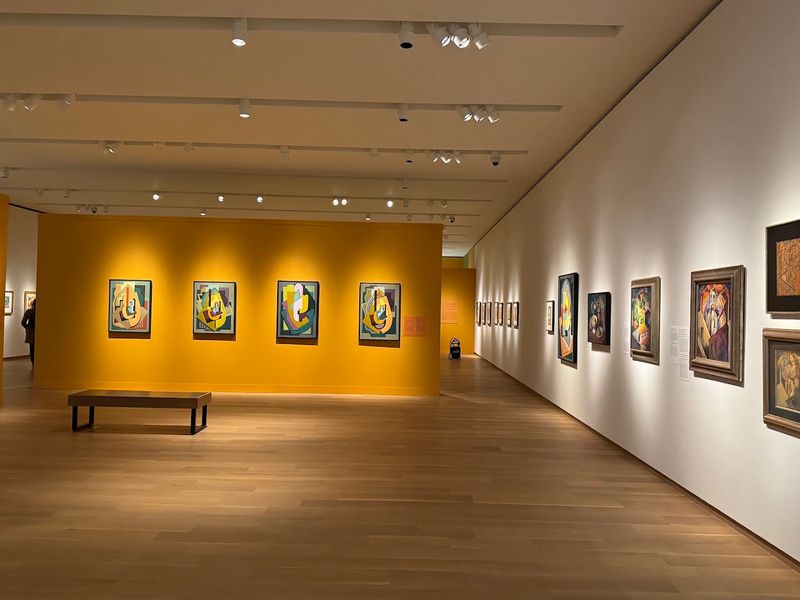
Art and science share equal billing at this Greenwich institution, which manages to feel both approachable and genuinely substantive at the same time.
The museum stands at 1 Museum Dr, Greenwich, CT 06830, within a scenic park setting that gives the surrounding environment a calm, unhurried quality before visitors even step inside.
Founded in 1912 and accredited by the American Alliance of Museums, it has built a reputation for thoughtful exhibitions that appeal to a wide range of interests.
Life-size dinosaur skeletons, fossil displays, mineral and gem collections, and dioramas of local wildlife fill the natural history galleries, while rotating art exhibitions bring in works by notable regional and national artists.
Interactive stations throughout the building invite visitors to engage directly rather than simply observe from a distance.
Recent renovations have refreshed the display areas, creating a modern and welcoming interior that feels updated without losing its character. The museum’s size makes it manageable for most visitors in one to two hours, though the variety of content means there is rarely a sense of rushing.
The blend of disciplines under one roof makes each visit feel unexpectedly layered and rewarding.
9. Florence Griswold Museum, Old Lyme
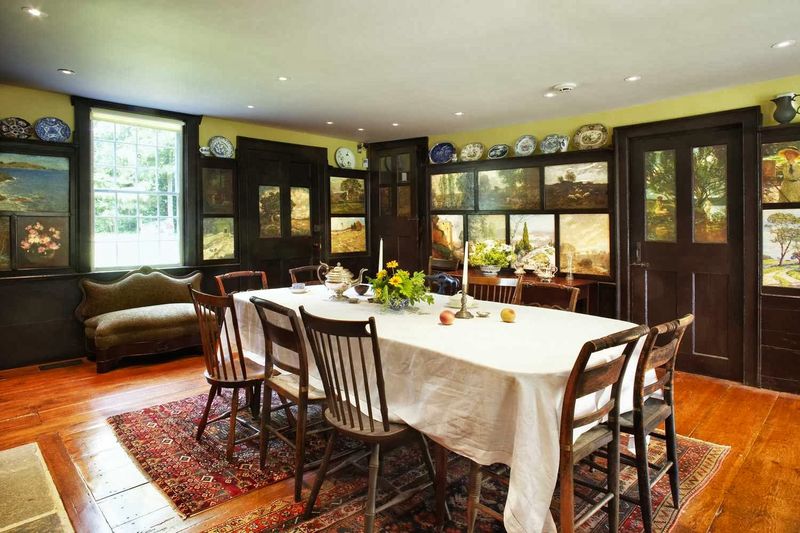
Between 1899 and the 1930s, over 135 American Impressionist artists boarded at this Old Lyme mansion, painting the surrounding marshes and river light that made the region famous in art history.
The property at 96 Lyme St, Old Lyme, CT 06371, encompasses the original Georgian Revival house, riverside gardens, an education center, a landscape center, and a restored artist’s studio.
The museum is widely known as the “Home of American Impressionism.”
What makes the house itself so remarkable is that the artists left their mark directly on it, painting 43 panels onto the walls and doors of the dining room as a form of communal artistic expression.
Walking through those rooms feels less like visiting a museum and more like stepping into a living artistic conversation that happened over a century ago.
The 12-acre site along the Lieutenant River offers leisurely strolling through gardens that still carry the quality of light that drew artists like Childe Hassam and Willard Metcalf to this spot. A changing gallery presents rotating exhibitions of art and culture throughout the year.
A few hours here pass gently, especially on a clear day when the landscape glows the way it does in the paintings inside.
10. The Mark Twain House & Museum, Hartford
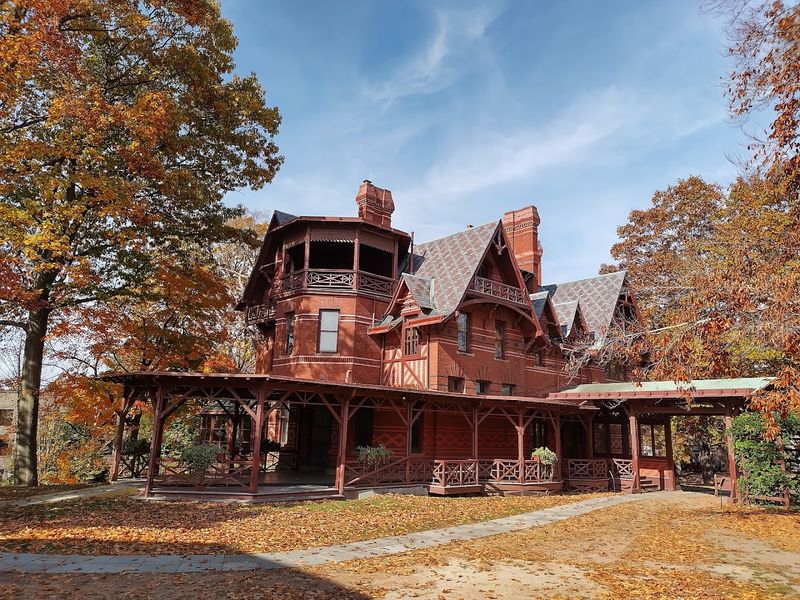
Samuel Clemens chose Hartford as the place to build his dream home, and the result is one of the most visually striking Victorian houses in New England.
The residence at 351 Farmington Ave, Hartford, CT 06105, served as the family home from 1874 to 1891, a period during which Twain wrote The Adventures of Tom Sawyer, Adventures of Huckleberry Finn, and several other landmark works.
The interior decoration was partly designed by Louis Comfort Tiffany, and the elaborate stenciling and carved woodwork still feel extraordinary.
Guided tours move through the original rooms at a measured pace, with personal objects and original furnishings creating a sense of genuine proximity to one of America’s most celebrated literary figures.
The stories shared during tours often touch on the unexpected, including the family’s financial struggles and Twain’s complicated feelings about the house itself.
Special programming adds a playful dimension to the experience, including interactive Clue-style tours and seasonal ghost tours that run on select evenings.
Victorian holiday decorations transform the house from late November through January, offering a completely different atmosphere during that period.
The adjacent museum center includes a Ken Burns documentary and rotating exhibition galleries for additional context.
11. Wadsworth Atheneum Museum Of Art, Hartford
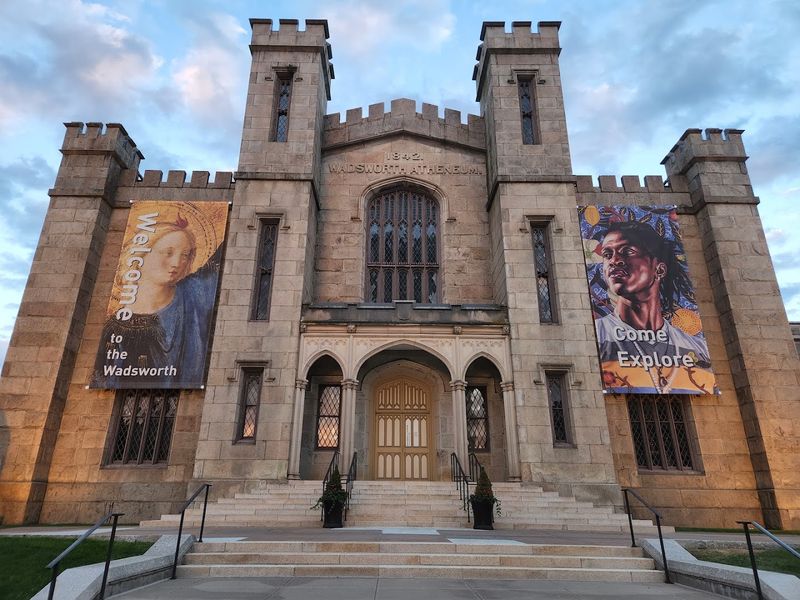
A journey through these galleries can cover centuries of creativity without leaving downtown Hartford. Founded in 1842, the Wadsworth Atheneum Museum of Art is recognized as the nation’s oldest continuously operating public art museum.
Its collection includes more than 50,000 works from cultures and artistic movements around the world.
Visitors may encounter dramatic Baroque paintings, luminous Impressionist scenes, decorative arts, sculpture, and bold modern experiments during a single visit. Works associated with Caravaggio, Claude Monet, and Salvador Dalí reveal the collection’s impressive range.
The museum is especially celebrated for its European Baroque art and its important Dada and Surrealist holdings, which bring playful, dreamlike energy to the experience.
Several connected buildings and wings give each section a distinctive atmosphere while allowing the collection to unfold naturally. The museum welcomes guests at 600 Main Street in Hartford, close to other downtown landmarks.
Spacious galleries encourage careful viewing, whether the plan involves exploring one favorite period or spending hours roaming from room to room. Clear organization makes transitions between eras feel effortless, yet visitors remain free to follow their own interests.
The result is a rich, flexible museum experience that can feel rewarding during either a focused visit or a leisurely afternoon.
12. Connecticut Science Center, Hartford

Opened in 2009 and designed by architect César Pelli, this nine-story building brings a contemporary energy to Hartford’s riverfront that is hard to miss from across the Connecticut River.
The center is located at 250 Columbus Blvd, Hartford, CT 06103, and spreads 200 interactive exhibits across 10 galleries within 40,000 square feet of hands-on space.
The building itself generates much of its own power from an on-site fuel cell, reflecting a commitment to sustainability that extends into several of its exhibits.
Topics covered range from space and earth sciences to biology, river ecology, and the inventions of local innovators.
A year-round indoor tropical Butterfly Encounter offers a sensory experience that stands apart from the science-focused galleries, with warmth, color, and movement creating an unexpectedly peaceful contrast to the active exhibits nearby.
A 200-seat 3D digital cinema and four dedicated educational labs give the center depth beyond the main exhibit floor. The atmosphere tends to be lively and energetic, particularly on weekends when families fill the interactive stations with genuine enthusiasm.
On-site parking is available, and a free city shuttle stops directly at the building, making logistics straightforward for most visitors.