This Connecticut Monument Marks One Of The State’s Most Unexpected Historic Stories
History that genuinely surprises you is the best kind and this monument delivers exactly that in a way that makes the whole visit feel considerably more meaningful than a typical historic site.
The story behind it is the kind that stops people mid sentence when they hear it for the first time and makes them immediately want to know more.
Most people who live nearby have absolutely no idea this place exists which makes discovering it feel like a genuinely lucky day.
Right here in Connecticut a monument quietly marks one of the state’s most unexpected historic stories and the park surrounding it makes the whole experience feel like a proper outing rather than just a quick look at a marker and moving on.
The history packed into this place goes deep and that depth rewards the people curious enough to actually show up and spend some proper time here.
1. Revolutionary War History
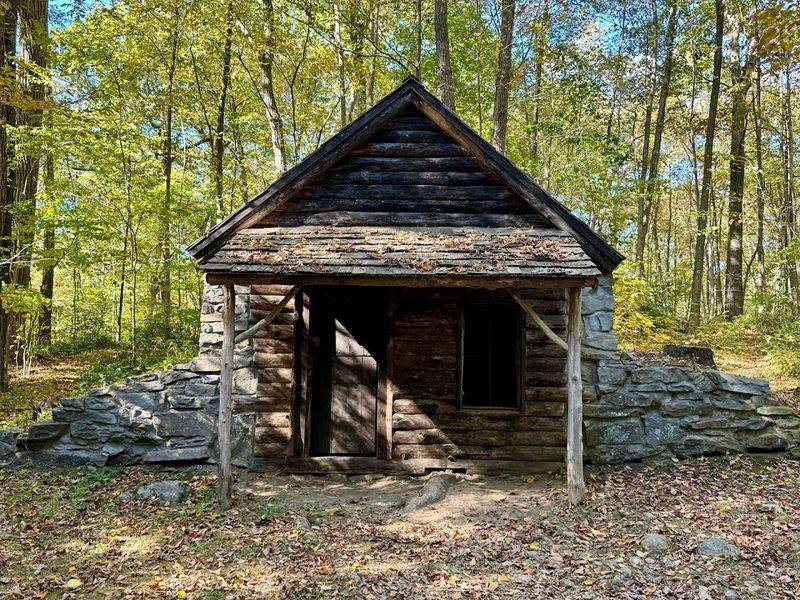
History feels close at Putnam Memorial State Park, where traces of a Revolutionary War encampment remain visible across the Connecticut landscape.
During the winter of 1778–79, troops under Major General Israel Putnam camped in Redding as part of a defensive network protecting the Hudson River Valley, Long Island Sound, and military supplies in Danbury.
Roughly 3,000 soldiers occupied three camps, including Enoch Poor’s New Hampshire Brigade and Moses Hazen’s 2nd Canadian Regiment. Bitter weather, scarce food, inadequate clothing, and limited medical supplies made the season difficult, eventually inspiring the nickname “the state’s Valley Forge.”
Visitors can explore the preserved site at 499 Black Rock Turnpike in Redding. Along Company Street, collapsed stone chimneys known as firebacks mark the positions of 116 enlisted men’s huts arranged in two rows for nearly a quarter mile.
Each log structure measured about 16 by 12 feet and sheltered 12 soldiers.
Archaeological work has continued to refine what historians know about the camp, its buildings, and daily military life. Artifacts recovered from the grounds are displayed in the museum, while monuments and reconstructed features help visitors picture the scale of the encampment.
The park offers a powerful, moving connection to the hardships endured during the Revolution.
2. Unexpected Stories Uncovered
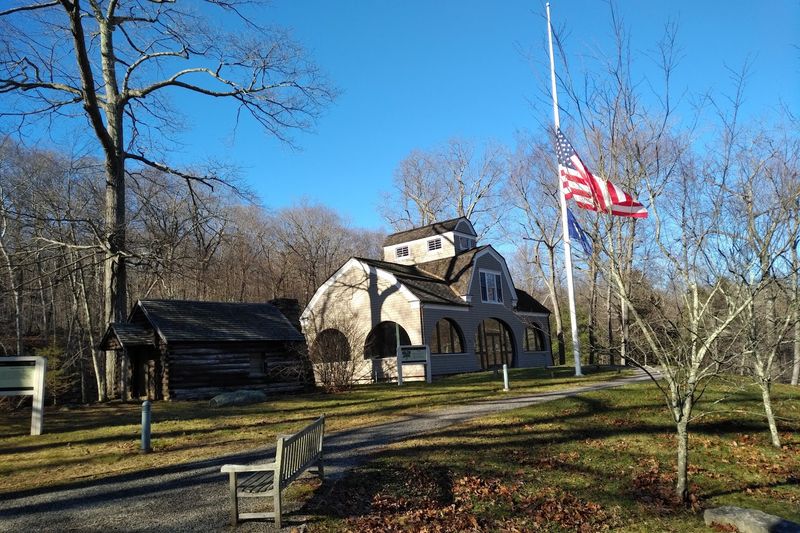
Most history books focus on battles and commanders, but the human stories buried within Putnam Memorial State Park run far stranger and more gripping than standard military accounts.
During the brutal winter of 1778 to 1779, soldiers pushed to their limit by poor pay and dwindling supplies planned a full mutiny, intending to march directly to Hartford to air their grievances.
Major General Israel Putnam stepped in and shut the rebellion down, and the ringleader was ultimately executed as a consequence.
Justice during the encampment could be severe by any measure. Historical records indicate that Putnam sentenced two spies to death, with one hanged and a teenage boy shot, his clothes left to burn on a location the park now refers to as Gallows Hill.
These are not embellished legends but documented accounts that add a sobering dimension to a walk through these quiet woods.
Philip’s Cave, a glacially formed rock shelter within the park, adds yet another layer to the story. Native Americans used it long before any army arrived, and local lore holds that a former Revolutionary War soldier later lived there as a hermit.
Recent research has also overturned older beliefs, confirming that the barracks were not burned when the army departed and that Sheldon’s Cavalry wintered in Durham, not Redding.
3. Peaceful Woodland Setting
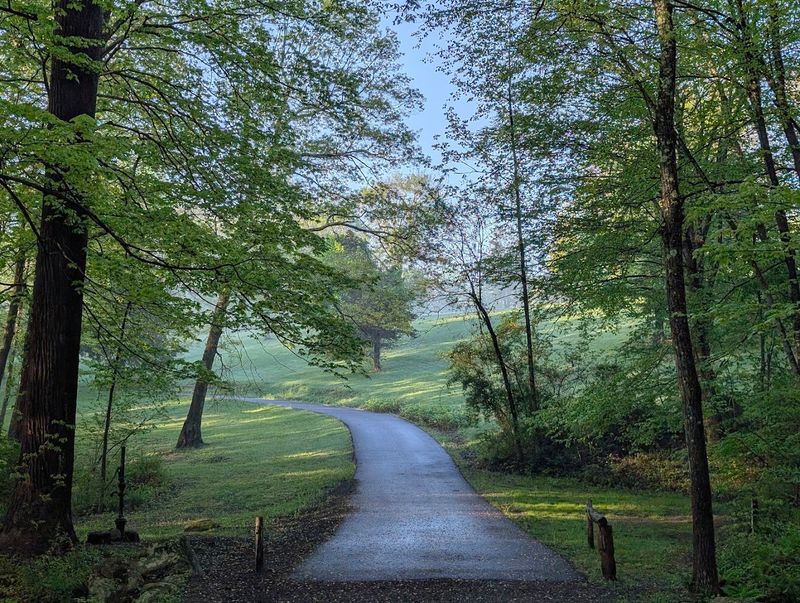
Nature adds another dimension to Putnam Memorial State Park, where wooded ridges, gentle slopes, and water surround the preserved Revolutionary War encampment.
Exploring the grounds offers more than a history lesson, since the landscape itself helps reveal why this area could support thousands of soldiers during the winter of 1778–79.
Large glacial erratics appear throughout the park, reminders of the ice sheets that once shaped the region. One of the most distinctive formations is Philip’s Cave, which is actually a glacially formed rock shelter rather than a true cave.
Visitors can approach these features along the interpretive trail and examine the weathered Rowe Schist, exposed stone, and unusual textures at close range.
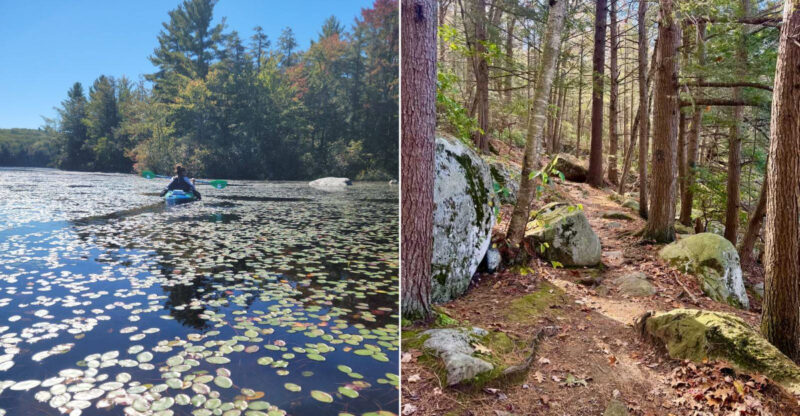
Putnam Park Pond covers 14 acres and provides a peaceful setting for picnicking, wildlife watching, and fishing. Its waters contain largemouth bass, chain pickerel, bluegill, black crappie, and black bullhead, giving anglers several possibilities during a visit.
Across the park’s 183 acres, natural scenery blends easily with monuments, reconstructed buildings, and archaeological remains. Even during busier periods, wooded paths and pondside spaces offer room to slow down.
The result is a rewarding mix of geology, recreation, and history that invites visitors to experience the property from several perspectives.
4. Scenic Walking Trails
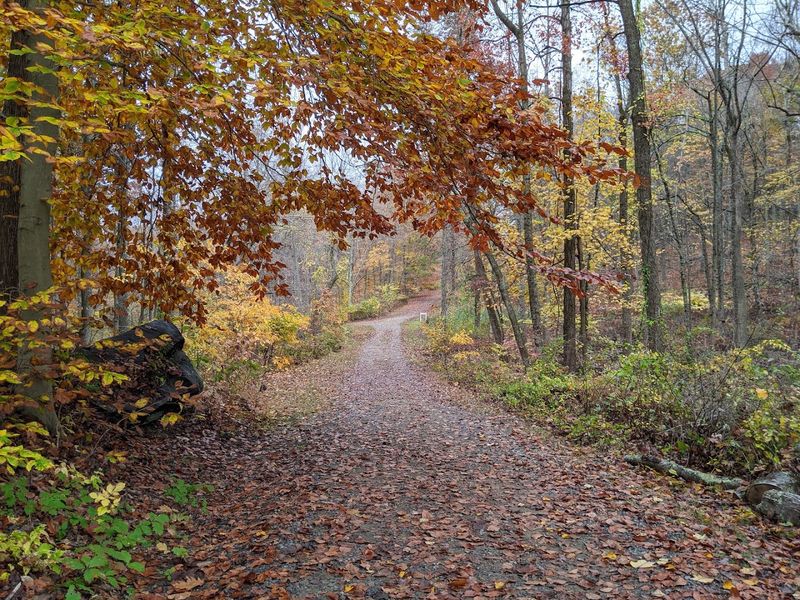
History and outdoor exercise blend naturally at Putnam Memorial State Park, where easy routes follow roads and paths once used during the Revolutionary War encampment.
Instead of steep climbs, visitors get a relaxed journey past archaeological remains, monuments, reconstructed buildings, woodland scenery, and signs explaining the events connected to each stop.
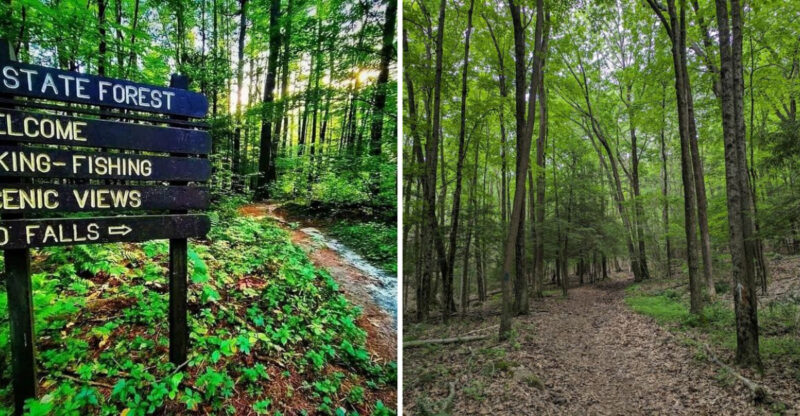
The historic one-mile loop is the centerpiece of the trail system. Its mostly level gravel surface makes the route approachable for families and casual walkers, while interpretive panels add context to Company Street, soldiers’ huts, officers’ quarters, and other important features.
Additional paths extend into quieter sections of the property, bringing the park’s trail network to roughly 4.7 miles.
Walkers and cyclists can explore the main loop, and leashed dogs are welcome in outdoor areas under standard park rules. During the operating season, vehicles may also travel around the historic road, so everyone should remain aware of shared traffic.
The grounds generally open at 8 a.m. and close at sunset.
Weekday visits often feel calmer, while weekends attract families, history enthusiasts, and groups. With manageable terrain and fascinating stories throughout the route, these trails offer an engaging way to combine fresh air with a closer look at the past.
5. Historic Monuments And Displays
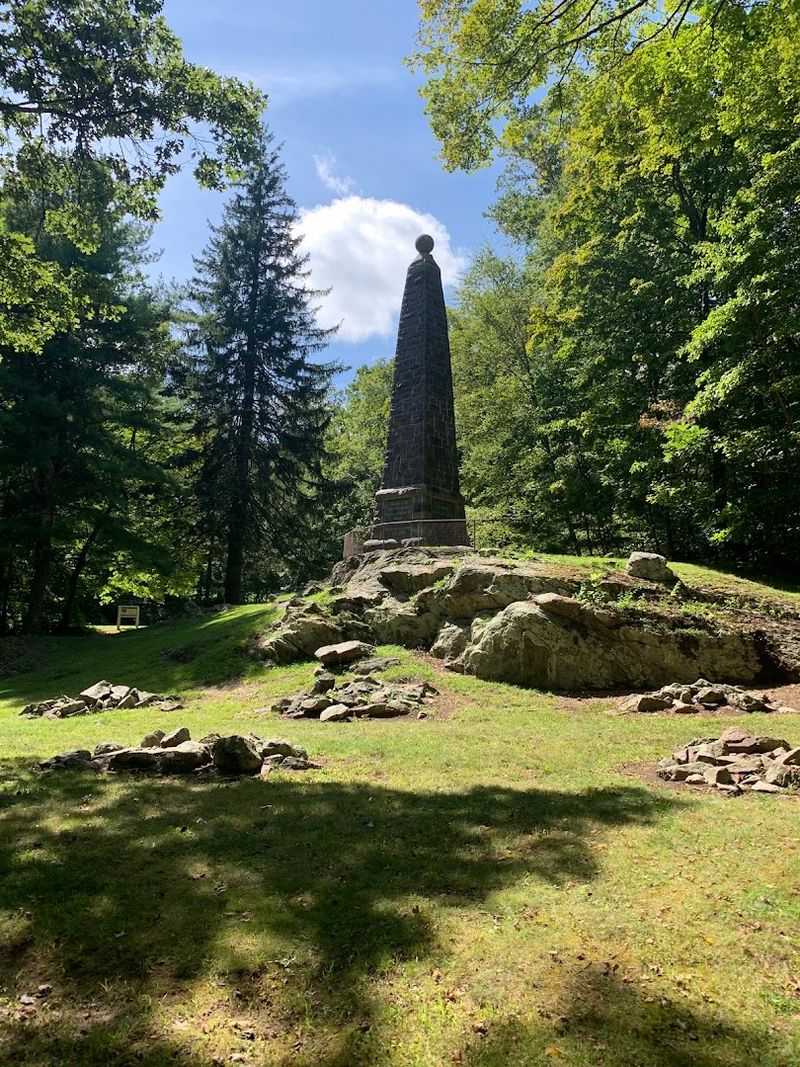
Walking through Putnam Memorial State Park means encountering layers of commemoration that span multiple centuries.
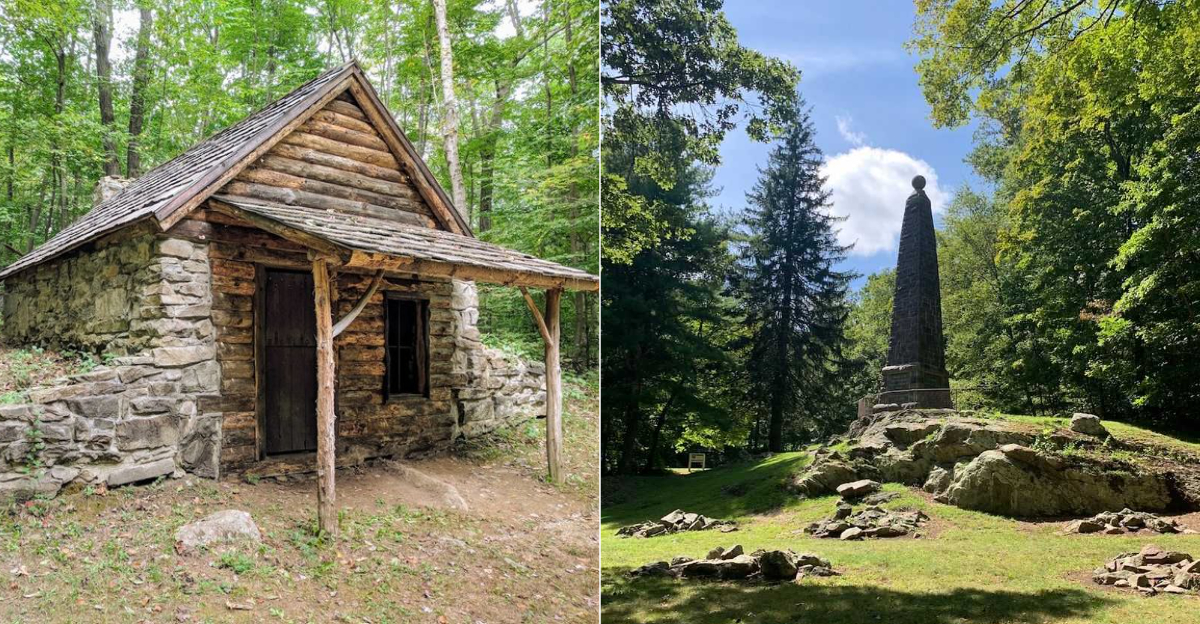
A 44-foot-tall granite obelisk, erected in 1888 and built from local Redding limestone and Ridgefield granite, rises prominently on the site to honor the commanding officers and soldiers who endured the winter encampment.
Its sheer size commands attention from a distance and marks the heart of the historical grounds in a way that feels both dignified and grounded.
Near the Visitor Center stands the bronze sculpture titled Putnam’s Escape at Horseneck, created by artist Anna Hyatt Huntington and donated in 1969 when she was in her early nineties.
The piece depicts General Israel Putnam riding his horse down 100 stone steps in Greenwich to escape pursuing British forces, capturing a moment of legendary boldness in striking physical form.
Reconstructed replicas of a guard house, rebuilt around 1890 on the original 1778 foundation, and officers’ quarters give visitors a tangible sense of the encampment’s physical layout.
The Visitor Center, originally built in 1893 and restored in 2005, houses maps, a gift shop, informational kiosks, and artifacts including tools, buttons, and ammunition.
The Museum, constructed in 1921 with an exterior inspired by George Washington’s Newburgh headquarters, displays excavation finds alongside dioramas and donated community antiques.
Both facilities are open Friday through Monday from 10 AM to 5 PM, Memorial Day through Veterans Day, with free admission.
6. Family-Friendly Stop
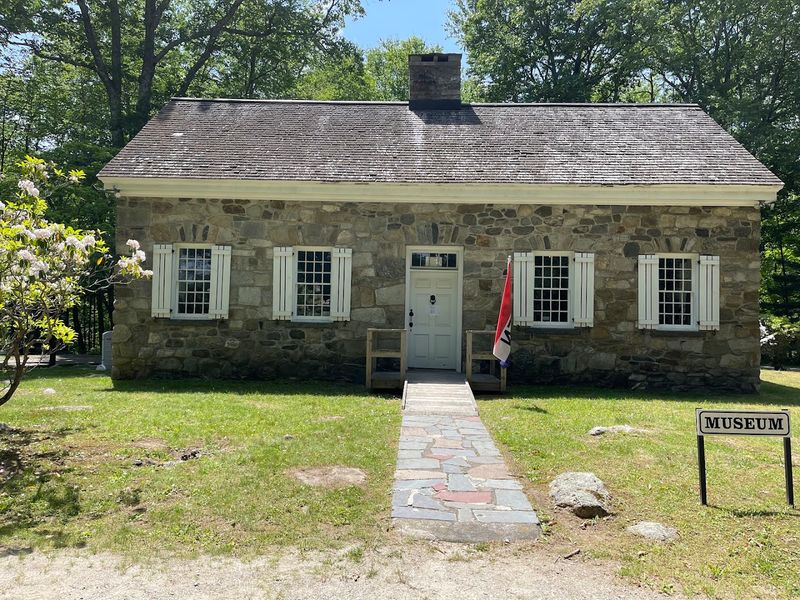
Combining outdoor activity with genuine educational value is not always easy to find in a single destination, but Putnam Memorial State Park manages it without feeling forced or overly structured.
Admission to the park is completely free, which removes one of the more common barriers for families planning a spontaneous outing.
Leashed dogs are welcome on hiking trails and in picnic areas, so the family pet does not have to stay home.
Younger visitors tend to respond well to the reconstructed buildings, the visible stone chimney remnants, and the dramatic bronze statue near the Visitor Center.
Older kids who are studying American history may find the site especially resonant, since the physical remains of the encampment make the Revolutionary War feel far more real than a textbook ever could.
The museum and visitor center provide additional context that helps connect the outdoor experience to specific historical events.
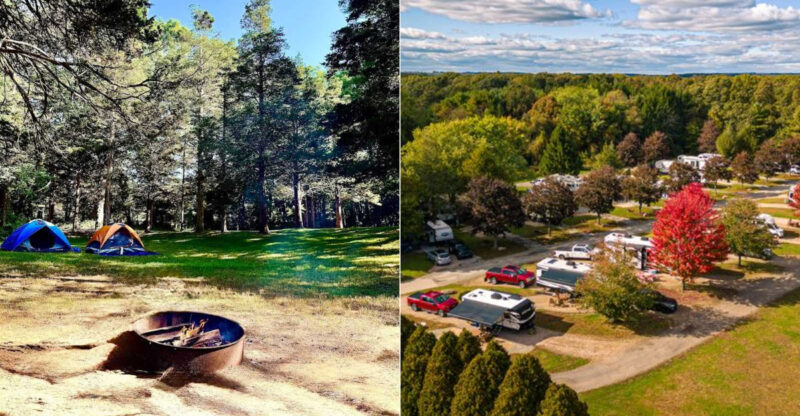
Organized youth groups, including scout troops, can reserve camping sites within the park with advance notice, offering an overnight experience that goes well beyond a typical day trip.
Historical reenactments and guided tours are hosted periodically throughout the year, giving repeat visitors a reason to return.
Pond fishing at Putnam Park Pond rounds out the recreational options, ensuring that families with varied interests can all find something to enjoy during a single visit.
7. Picnic Areas To Enjoy
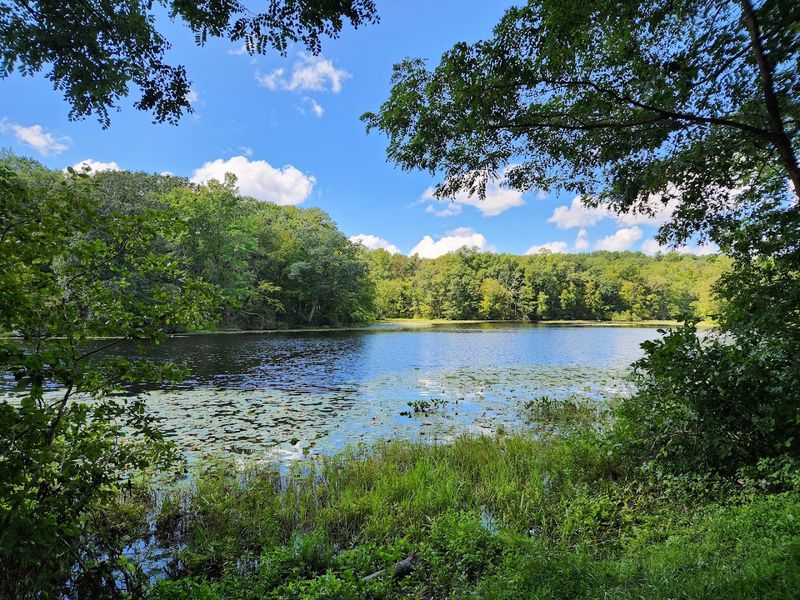
A well-placed picnic table with a view can turn an ordinary afternoon into something worth remembering, and the picnic areas at Putnam Memorial State Park deliver exactly that kind of low-key pleasure.
Tables are located on the recreational side of the park, with many positioned pondside along the edge of Putnam Park Pond, offering a relaxed outlook across the calm water.
Open-air grills are also available for visitors who want to cook on-site rather than simply unpack a cooler.
All picnic facilities operate on a first-come, first-served basis, which means planning around timing can help secure a preferred spot, especially on warm weekend afternoons.
The proximity to the pond adds a pleasant ambient quality to meals, with the sounds of the water and surrounding woodland providing a natural backdrop.
Restrooms are available within the park, which makes extended visits more comfortable for families and groups.
The recreational side of the park where the picnic areas sit feels slightly separate from the more structured historical grounds, giving it a looser, unhurried atmosphere that suits a longer stay.
Leashed dogs are permitted in picnic areas, so bringing the family pet along for a meal outdoors is entirely workable.
Combining a picnic with a trail walk and a visit to the museum makes for a well-rounded afternoon that covers recreation, nature, and history in a single trip.
8. A Step Back In Time
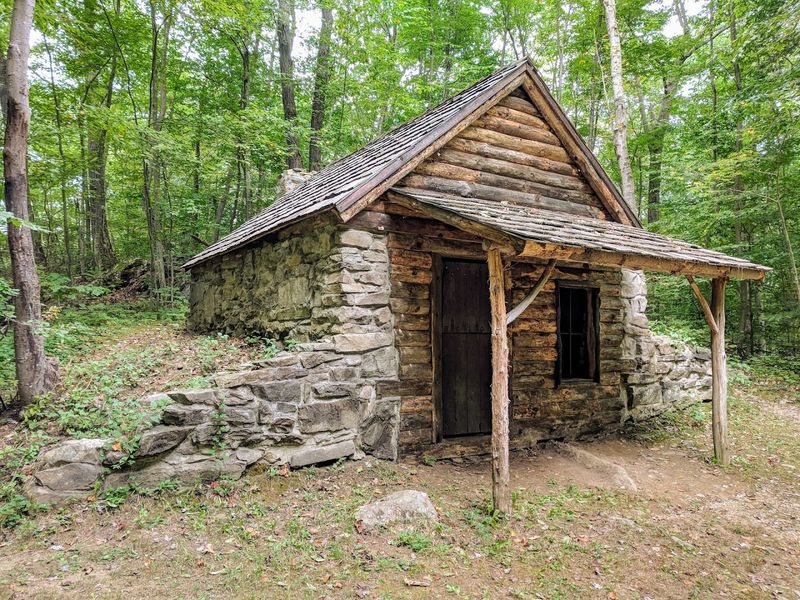
Some historic sites feel like museums you walk past, but Putnam Memorial State Park feels more like a place where the past simply never fully left.
The grounds have been preserved as a relatively undisturbed parcel of land, meaning the terrain visitors walk today closely resembles what soldiers experienced during the winter of 1778 to 1779.
That sense of physical continuity is rare and makes even a short visit feel substantive rather than superficial.
Visible remains of the encampment, including the stone chimney firebacks arranged along Company Street, give the site a texture that photographs rarely capture fully.
Reconstructed buildings, including the guard house rebuilt around 1890 on its original 1778 foundation and the officers’ quarters, provide dimensional reference points for understanding how the camp was actually organized and inhabited.
Civil War cannons placed on the grounds after the Civil War add yet another layer of historical time to the site’s already complex story.
The interpretive signage along the one-mile trail loop frames each feature clearly without overwhelming visitors with dense text.
Two traditional 18th-century gardens, including a Paugussett-style Three Sisters garden and a colonist’s dooryard garden, bring an unexpected quietness to the experience.
Spending an hour or two moving slowly through the grounds tends to leave visitors with a stronger sense of what the Revolutionary War actually demanded of ordinary people.