The Haunted Walk Through This Historic Kentucky Site Is Not For The Timid
You consider yourself brave, and maybe you are. Plenty of confident people have said the same before this walk humbled them.
This Kentucky site was famous long before the state even existed.
Mammoths and giant sloths came here for the salt springs and never left. Their bones rested in the mud for thousands of years, earning the land its eerie nickname.
Scientists call it the birthplace of American paleontology. Locals call it something closer to a graveyard of giants.
Now imagine crossing that ground after the sun goes down.
The trails turn quiet, the fog settles low, and history feels very close. Some visitors laugh their way through and call it a good story.
Others walk faster than they planned and refuse to look back.
You will not know which type you are until you stand out there. The timid rarely finish the walk.
The Backstory That Changes Everything
Big Bone Lick State Historic Site is one of those places that sounds like a joke until you actually go. The name alone stops people mid-sentence.
But once you learn what happened here, the jokes stop pretty fast.
This site is considered the birthplace of American vertebrate paleontology.
That is a fancy way of saying some of the most important ancient animal bones ever found in North America were discovered right here in northern Kentucky.
Scientists and explorers like Thomas Jefferson and Benjamin Franklin were fascinated by the fossils pulled from this land.
The site sits on a natural salt lick, which is basically a spot where salty minerals seep from the ground. Ancient megafauna like mastodons and giant ground sloths came here to lick the salt.
They got stuck in the boggy ground and were preserved for thousands of years.
Walking the grounds today, knowing all of that, gives the whole place at 3380 Beaver Rd, Union, Kentucky, a very different kind of weight.
It feels less like a park and more like standing inside a chapter of history that most people never even knew existed.
The Museum That Packs A Serious Punch
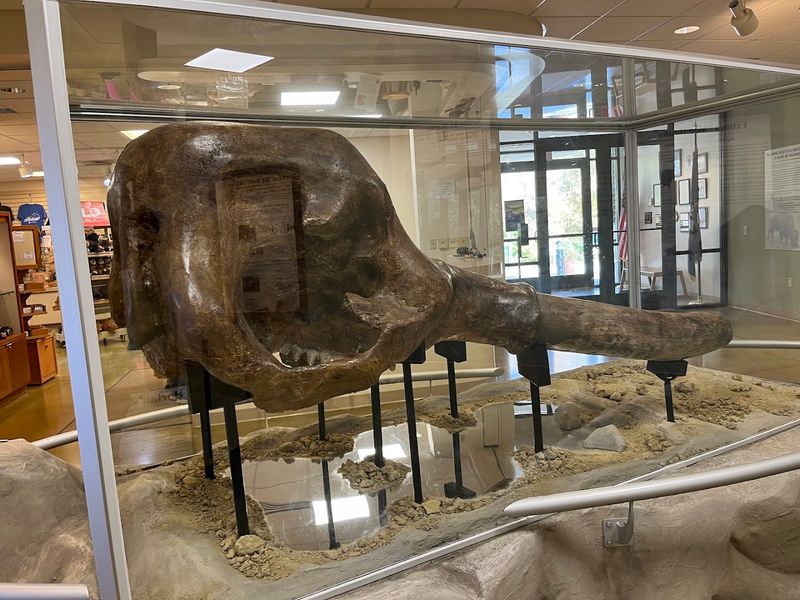
Small museums can be hit or miss. This one is a solid hit.
The on-site museum at Big Bone Lick is compact but genuinely impressive, and it respects your time by getting straight to the point.
Inside, you will find fossil replicas, informational panels, and displays that tell the full story of the megafauna that once roamed this area.
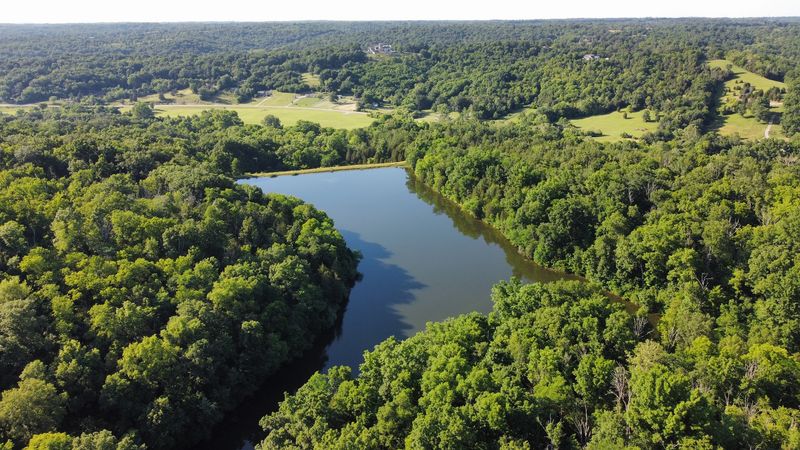
There is a life-size mastodon replica that makes you stop and rethink everything you thought you knew about prehistoric Kentucky. The exhibits are well-organized and easy to follow, even for younger visitors.
What makes this museum stand out is how it connects the science to the story. You are not just looking at bones behind glass.
You are reading about the explorers who came here, the Native Americans who knew this land long before them, and the ongoing scientific significance of the site.
The staff are knowledgeable and genuinely enthusiastic about the history. I spent more time in that building than I planned to, and I walked out feeling like I had actually learned something real.
That does not happen at every museum, and it is worth mentioning.
Walking Trails That Tell You Something
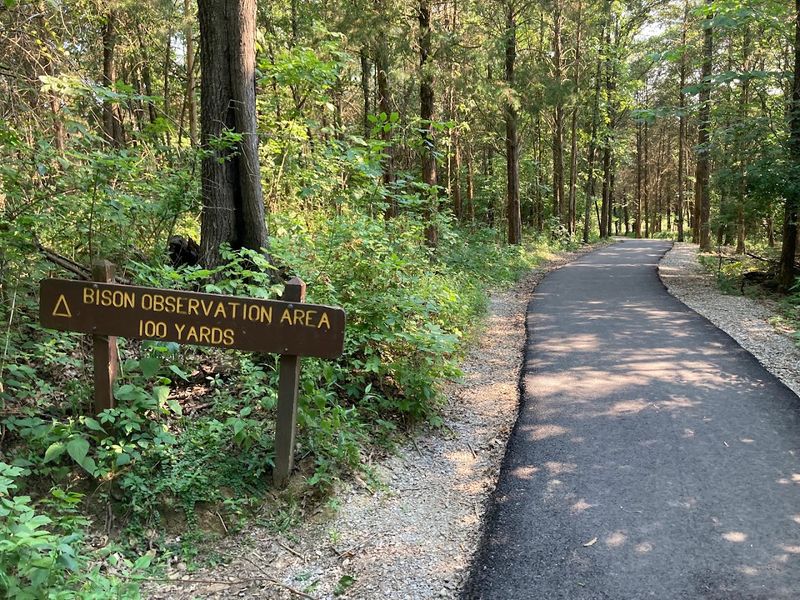
Most nature trails are beautiful and completely silent about what you are actually looking at. The trails at Big Bone Lick are different.
Interpretive signs are placed along the path, giving you real context for what you are seeing and standing near.
The trails wind through the same landscape where prehistoric animals roamed thousands of years ago.
The terrain is relatively easy to navigate, making it accessible for families, older visitors, and anyone who is not exactly training for a marathon. The paths take you past the salt lick area, which still bubbles with mineral-rich water today.
There is something quietly surreal about walking a trail and realizing the ground beneath you has been significant for thousands of years. Native Americans used this site long before European explorers arrived.
Early American scientists treated it like a laboratory. Now it is a state park where families bring their kids on a Tuesday afternoon.
The layers of history here are genuinely stacked.
The trail is about a mile and a half and takes roughly an hour if you stop to read the signs, which you absolutely should. Rushing through it would be missing the whole point of coming.
Nature’s Oldest Trap
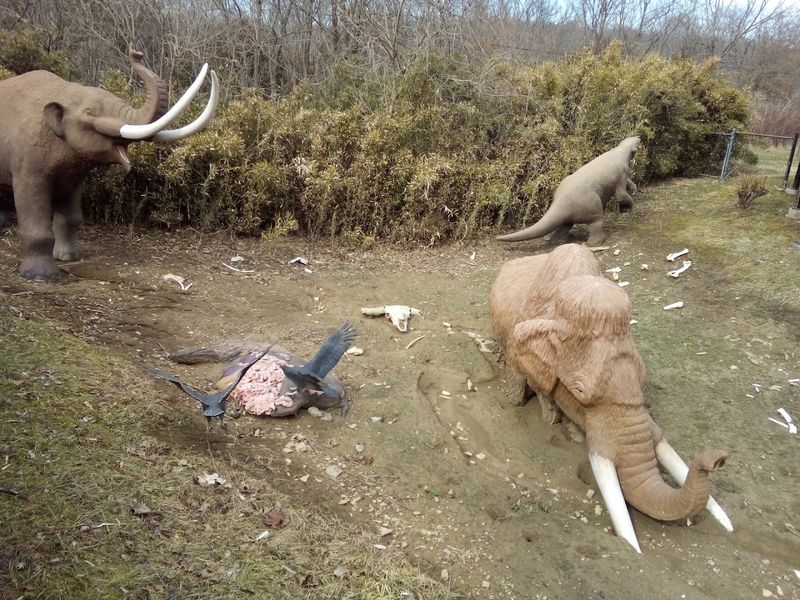
Here is something most people do not expect: the salt lick is still active. Mineral-rich water still seeps through the ground at this site, just like it did when mastodons were wandering through.
Standing next to it feels oddly eerie in the best possible way.
The salt lick is what made this place a magnet for prehistoric animals. They needed the minerals, they came from miles around, and the soft boggy ground around the lick preserved their remains for thousands of years.
It was essentially a natural time capsule created by geology and animal behavior.
Modern deer and other wildlife still visit the area for the same reason ancient animals did. So while you are standing there reading about mammoths, you might also spot a deer doing exactly what mammoths used to do.
That overlap of ancient and present-day wildlife behavior is something I did not expect to find so fascinating. It grounds the whole prehistoric story in something you can actually see happening in real time.
That is the kind of detail that makes a place memorable long after you have driven home and unpacked your bag.
Camping Here Is A Completely Different Experience
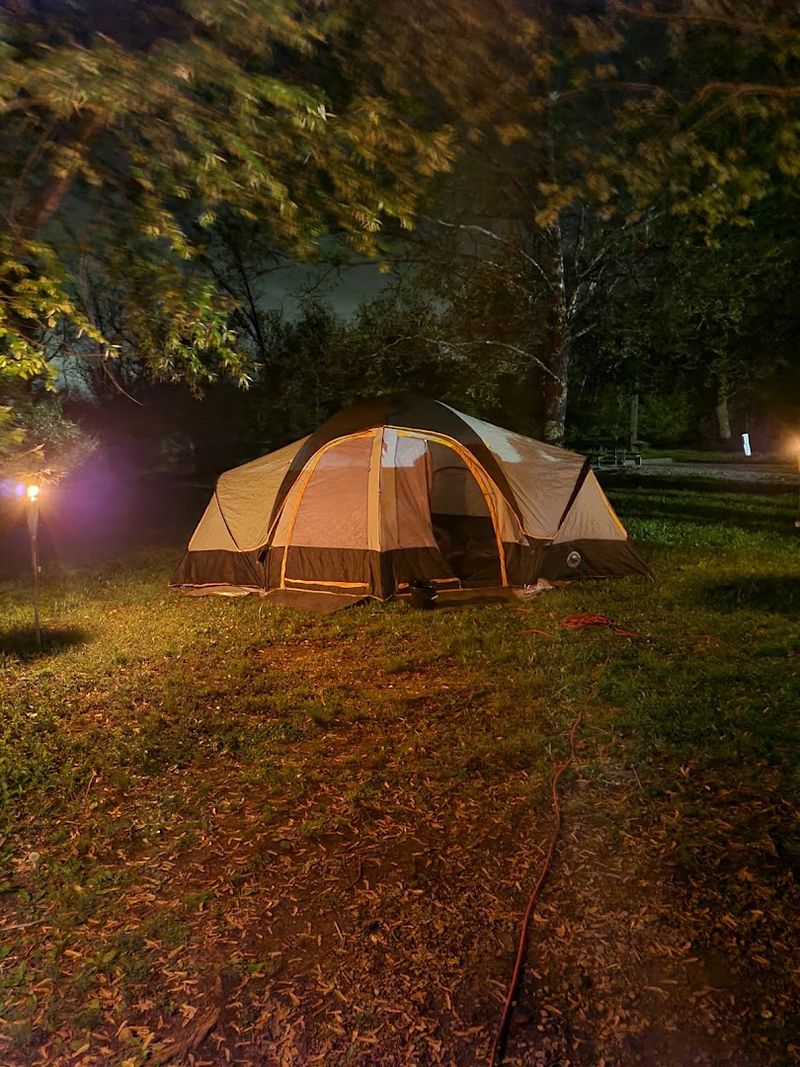
Spending the night at a site where mastodons once roamed is not something most people have on their bucket list. Maybe it should be.
Big Bone Lick offers camping facilities that are clean, well-maintained, and genuinely peaceful.
The campground has both tent sites and RV hookups, so it works for a range of travelers. It is not a luxury experience, but it is a comfortable one.
The surrounding landscape is quiet at night in a way that feels almost prehistoric itself. No city noise, no bright lights, just trees and stars and the occasional sound of something moving through the dark.
Waking up at this site in the morning has a quality that is hard to describe without sounding dramatic. The mist comes in low over the fields, and everything feels older than it should.
I am not saying anything supernatural is happening, but I understand why people use the word haunted when they talk about this place. It has an atmosphere that sticks with you.
If you are someone who enjoys camping with a side of genuine historical context, this campground delivers something most state parks simply cannot offer.
Fishing And Wildlife That Round Out The Trip
Not every visitor comes for the fossils. Some come with a fishing rod and a cooler.
Big Bone Lick has a fishing pond stocked with bass and bluegill, which makes it a solid option for families who want a mix of history and outdoor recreation.
The pond is calm, accessible, and does not require a long hike to reach. Kids who might not be immediately excited about prehistoric mammals tend to perk up when there is a fishing pole in their hands.
It is a practical detail that makes the site work for a wider range of visitors than you might expect from a historic park.
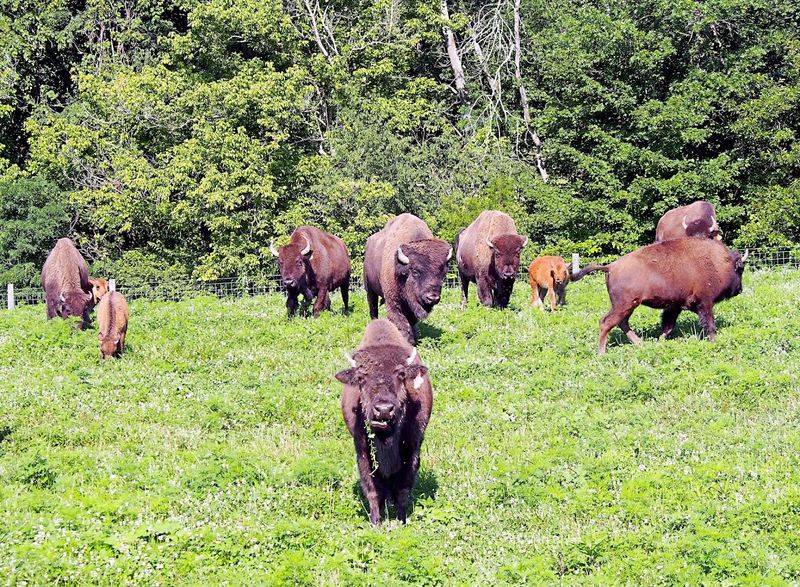
The wildlife presence throughout the site is also worth mentioning. White-tailed deer, wild turkeys, and various bird species are common sightings.
Birdwatchers will find the open fields and tree lines particularly rewarding. The combination of fishing, wildlife watching, hiking, and fossil history in one location is genuinely rare.
Most parks specialize in one thing. This one covers a lot of ground, literally and figuratively, without feeling scattered or unfocused.
It all connects back to the land itself, which has always been the main character of this story.
The Mastodon Replica That Stops You Cold
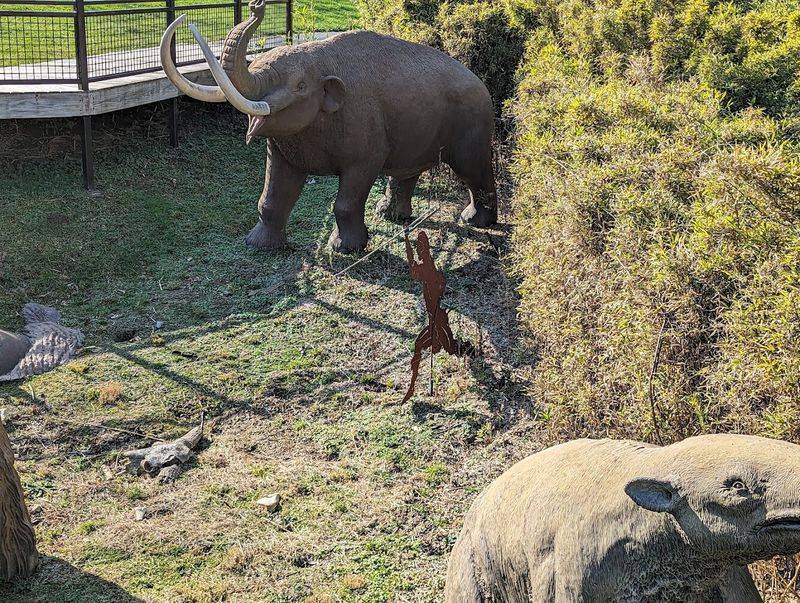
There is a moment when you first see the mastodon replica outside the museum and your brain does a quick recalibration. It is large in a way that photographs do not quite prepare you for.
Standing next to it gives you an immediate and visceral sense of what these animals actually were.
The replica is positioned near the museum entrance and serves as a natural gathering point for visitors. Kids love it, obviously, but adults tend to linger longer than expected.
There is something about seeing scale represented physically that data and diagrams simply cannot replicate.
What makes this replica meaningful beyond its size is the context surrounding it. You are not looking at a random sculpture in a random park.
You are standing near the actual location where mastodon bones were pulled from the earth. The replica represents animals that genuinely lived and perished on this specific piece of land.
That connection between the object and the place gives it a resonance that most museum pieces lack. It is not decorative.
It is a reminder of what this land witnessed long before any human being thought to write anything down about it. That is a perspective worth pausing for.
Why This Place Deserves More Attention Than It Gets
Big Bone Lick does not get the national recognition it probably deserves.
Although Kentucky State Parks manages the site, Big Bone Lick is nationally recognized as both a National Historic Landmark and a National Natural Landmark.
The scientific and historical significance of this site is genuinely on par with places that attract far larger crowds. Thomas Jefferson personally requested that Lewis and Clark collect specimens from this area.
The fossils found here helped shape early American scientific thinking about extinction and prehistoric life. That is not a small footnote in history.
For anyone driving through northern Kentucky or the greater Cincinnati area, this site is an easy and rewarding detour.
The entrance fees are free, the facilities are well-kept, and the experience is one that stays with you.
It is the kind of place that reminds you how much history is packed into the American landscape if you are willing to look for it. I would send anyone there without hesitation, and I would go back myself.
Not every historic site makes you feel something. This one genuinely does, and that is rarer than most people realize.