This Connecticut State Park Is A Peaceful Retreat Away From The Crowds
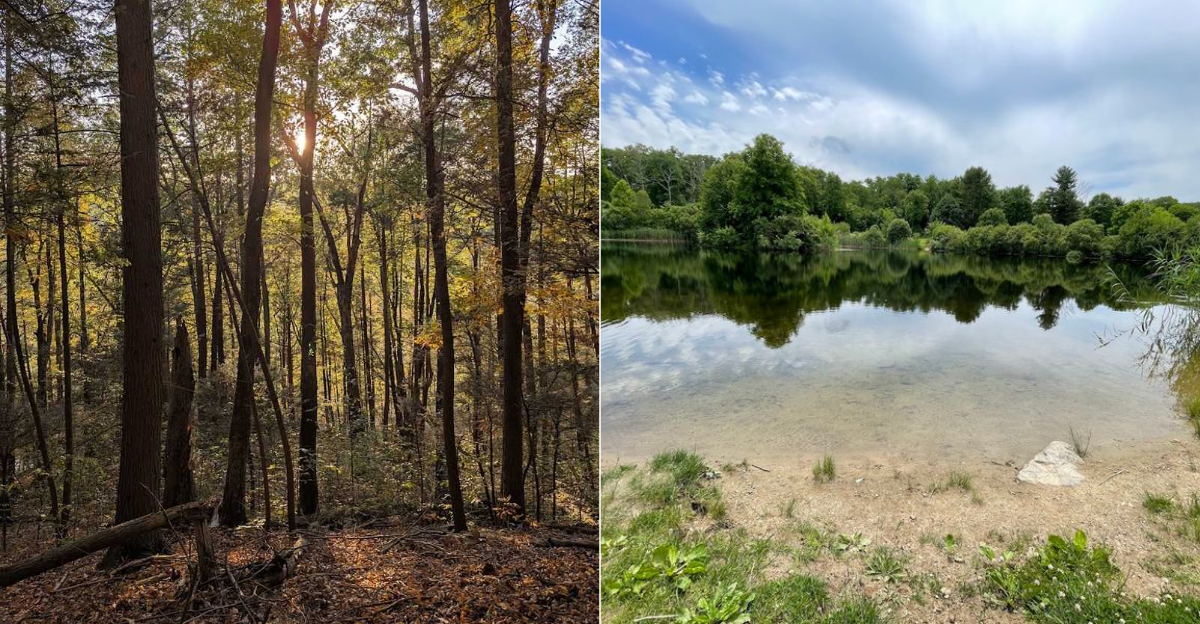
Quiet can be entertaining when a park gives you this much room to breathe. One minute you are following an old farm road.
The next, the trees open and the landscape feels much bigger. A peaceful Connecticut state park swaps busy attractions for uncrowded trails and wide river views that invite an easier pace.
That is the charm here. The paths feel approachable, so the outing never turns into a test of endurance.
You can wander through woods, pass ponds, then reach a lookout above Salmon River Cove. The name carries a strange local story connected to mysterious underground rumbles once heard around the area.
It adds a fun little twist, although the park itself feels calm rather than spooky. Birdlife changes with the seasons, and fall brings rich color across the hillsides.
Still, the best detail may be how unhurried everything feels. It is easy to lose track of time when the loudest interruption comes from the trees.
1. The Place Of Noises Holds An Unusual Legacy
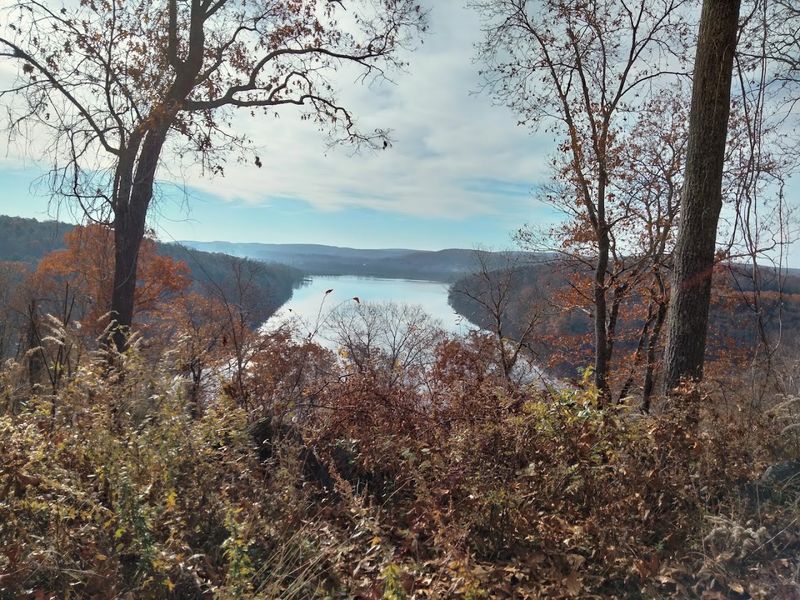
Strange rumblings have shaped the identity of this East Haddam landscape for centuries. The name Machimoodus comes from an Indigenous term commonly translated as “place of noises,” a reference to the booming sounds once heard around the Moodus area.
Those mysterious reports inspired generations of explanation. Indigenous communities connected the noises with spiritual forces, while later English settlers offered their own fearful interpretations, including witchcraft and divine punishment.
Modern researchers generally link the phenomenon to shallow earthquakes, but the old stories remain part of the region’s character.
When the state acquired the former Echo Farm property in 1998, Machimoodus became an official state park. Its trails, fields, and river views now invite visitors to explore a landscape whose history reaches well beyond recreation.
That background gives every hike an added sense of depth. The woods may feel peaceful today, yet the park’s name preserves memories of unexplained sounds that once traveled across the valley.
Rather than turning the past into spectacle, Machimoodus allows history, geology, and local tradition to share the same quiet ground beneath the broad New England sky.
2. Ancient Rumbles Gave The Landscape Its Name
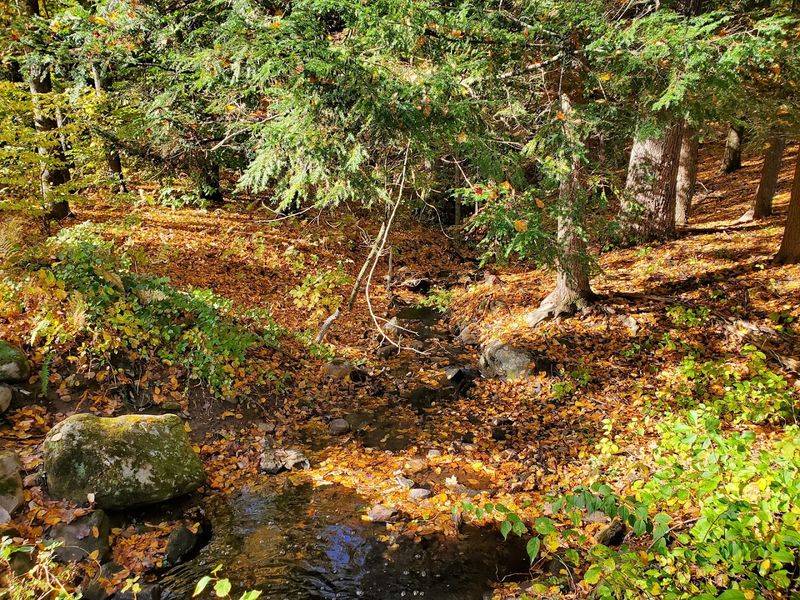
The sounds that gave this place its name are not folklore. Geologists have confirmed that Moodus sits at the center of state’s most seismically active zone, where micro-earthquakes regularly ripple through the bedrock at the lower end of the Richter scale.
Historical accounts describe the noises as rumblings, crashings, and sounds resembling distant cannon fire, and those descriptions align closely with what seismic activity of this type tends to produce.
In 1981, researchers recorded more than 500 micro-earthquakes in the area over just three months, a figure that underscores how geologically restless the ground beneath the park truly is.
A local cave is believed to amplify these seismic sounds, which may explain why the noises seemed so dramatic to early inhabitants.
An earthquake in 1791 estimated at around 4.3 on the Richter scale caused enough damage to topple walls and chimneys in the surrounding area.
Visitors today are unlikely to feel anything underfoot during a typical hike, but knowing the ground has a story of its own adds a quiet dimension to the experience. The trails feel a little more alive when the landscape itself has a geological voice.
3. Old Farm Roads Lead Into Three Hundred Quiet Acres
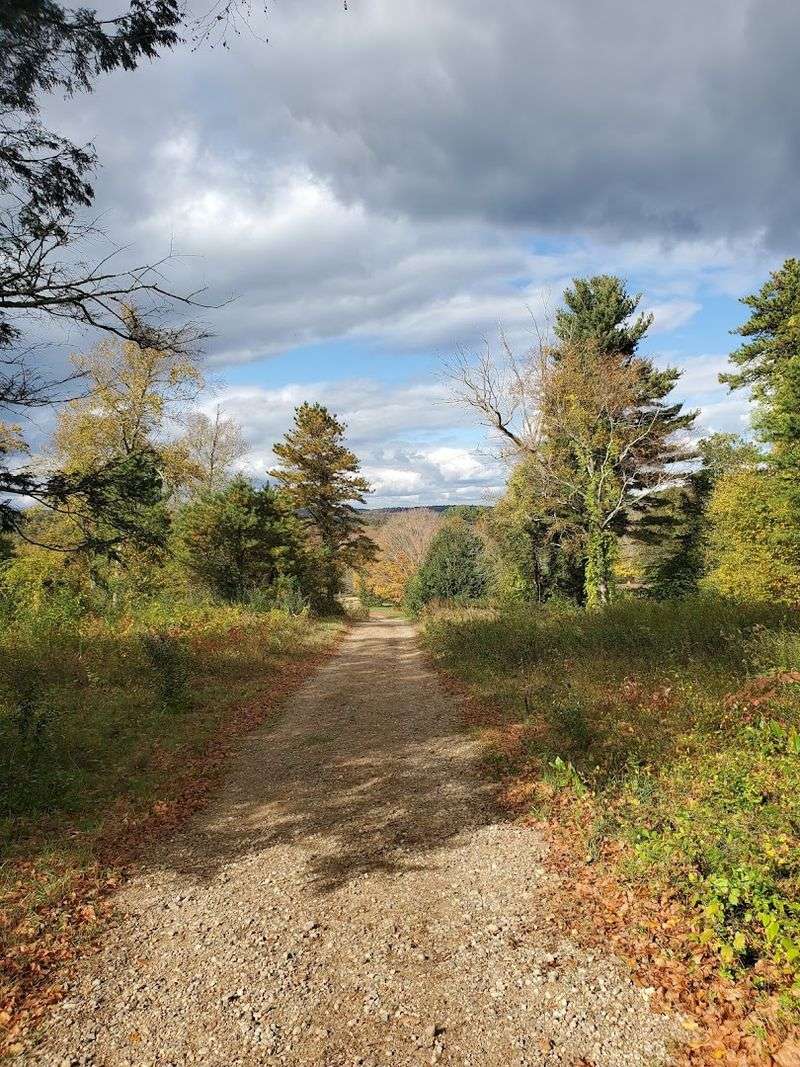
Before it became a state park, this land had a working life. Machimoodus State Park was established in 1998 after Connecticut purchased Echo Farm, a former dairy operation whose old roads and field edges still shape the trail network visitors use today.
The park entrance is located at 128 Leesville Rd, Moodus, CT 06469, and the property opens daily at 8 AM with hours extending to 8 PM throughout the week.
Across its 300 acres, the terrain shifts between upland ridges, forested stretches, open meadows, and waterfront edges along the Salmon River and Moodus River.
The former farm roads that crisscross the property provide wide, stable walking surfaces that feel easy underfoot even for those who are not regular hikers.
Mount Tom, the park’s highest point, reaches 314 feet above sea level and anchors the landscape with a gentle sense of elevation.
The wide paths and varied terrain make this a practical destination for families, dog walkers, and anyone who wants to cover ground without feeling rushed or challenged beyond their comfort level.
4. Woodlands Open Suddenly Into Wildflower Meadows
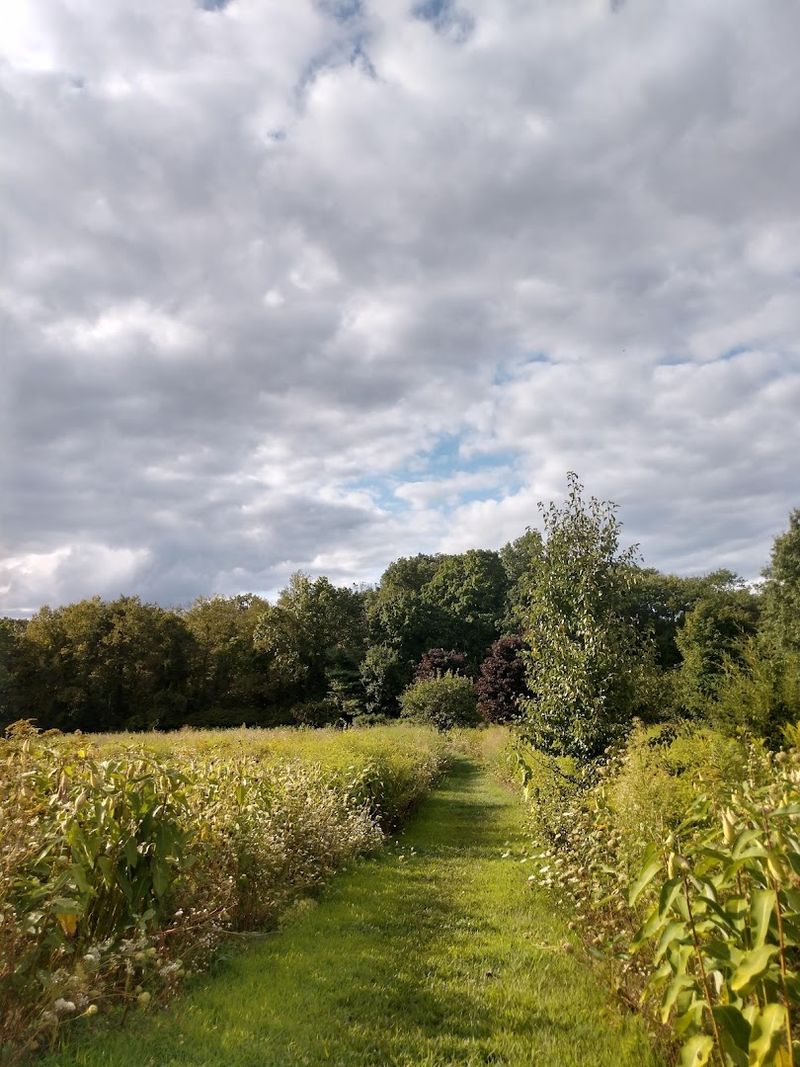
Shade gives way to open sky several times along the trails at Machimoodus State Park, creating a gentle change of pace during each walk. One moment, the route passes beneath a leafy canopy; the next, it opens across broad fields where sunlight reaches the grasses and views stretch farther.
These meadows are more than scenic breaks between wooded sections. The park includes grassland habitat managed to prevent shrubs and trees from taking over.
Connecticut DEEP has also used prescribed burns at Machimoodus to support native wildflowers and maintain early-successional areas important to birds and other wildlife.
Color shifts with the seasons. Spring brings the first blossoms before the forest canopy becomes dense, while summer fills the fields with taller growth and flowering plants that attract butterflies and other pollinators.
The open terrain also makes it easier to watch for hawks overhead or spot smaller birds moving near the meadow edges.
That mix of woodland and grassland gives the park a surprising sense of variety within its 300 acres. Rather than following one unchanging landscape, hikers move through contrasting habitats, each with its own light, sounds, and wildlife.
The transitions keep even a relaxed outing visually engaging from beginning to end.
5. Two Small Ponds Draw Birds And Pollinators
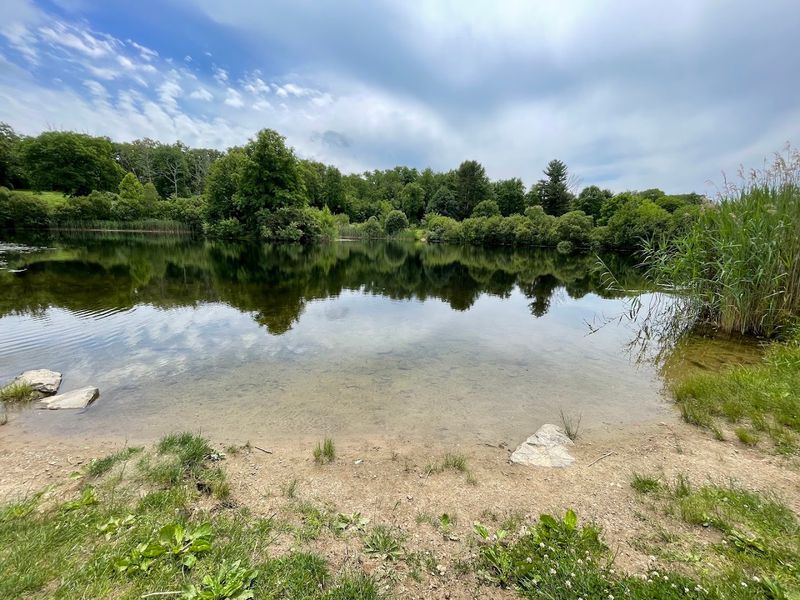
Near the park entrance, a pair of small ponds sits beside the wildflower meadows, creating a rich pocket of habitat that attracts a surprising variety of wildlife throughout the year.
The combination of open water and flowering plants nearby makes this corner of the park particularly active, especially during the warmer months when butterflies move steadily between blooms and dragonflies hover low over the water’s surface.
Birdwatchers find this area especially productive for spotting small songbirds that favor edges between meadow and water.
The ponds attract species that might not venture deep into the forested sections of the park, making the area near the entrance worth spending time at rather than simply passing through on the way to the trails.
The paths around the ponds are wheelchair accessible, which makes this section reachable for a broader range of visitors.
Even on days when the trails feel quiet, the pond area tends to have something happening.
A heron standing still at the water’s edge, a warbler moving through the shrubs, or a cluster of monarchs working the meadow nearby are the kinds of small moments that make a short visit feel worthwhile without requiring miles of hiking.
6. The Lower Vista Reveals Salmon River Cove
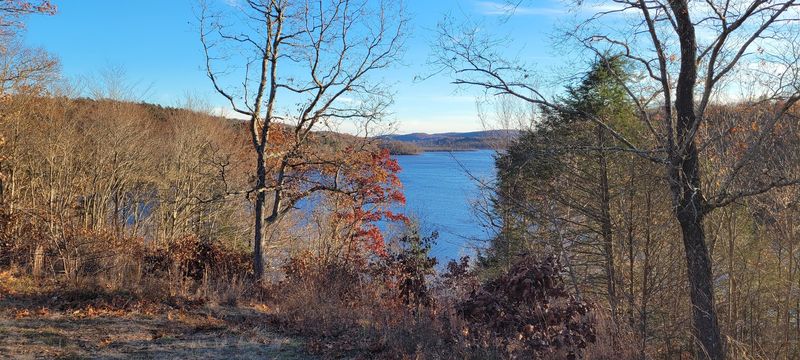
The Lower Vista Trail leads to one of the most quietly rewarding spots in the park: a circular clearing fitted with picnic tables that looks directly out over Salmon River Cove.
The view from this spot is calm and unhurried, shaped by the gentle curve of the cove and the tree-lined banks that frame it on either side.
It is the kind of overlook that rewards sitting still rather than just pausing for a photo before moving on.
Mount Tom, which sits at 314 feet and serves as the park’s highest elevation point, also provides vantage points where the Moodus River, the Connecticut River, and the Salmon River Cove all come into view depending on the season.
During summer, leaf cover can soften or partially block some sightlines, but spring and fall visits tend to offer the clearest panoramas when the canopy is thinner.
The picnic tables at the Lower Vista make this a natural stopping point for a midday break. The sound of the river carries up from below on quiet days, and the surrounding trees provide enough shade to make the spot comfortable even during warmer months.
It is a small reward built into the middle of the hike.
7. Easy Trails Keep The Scenery Within Reach
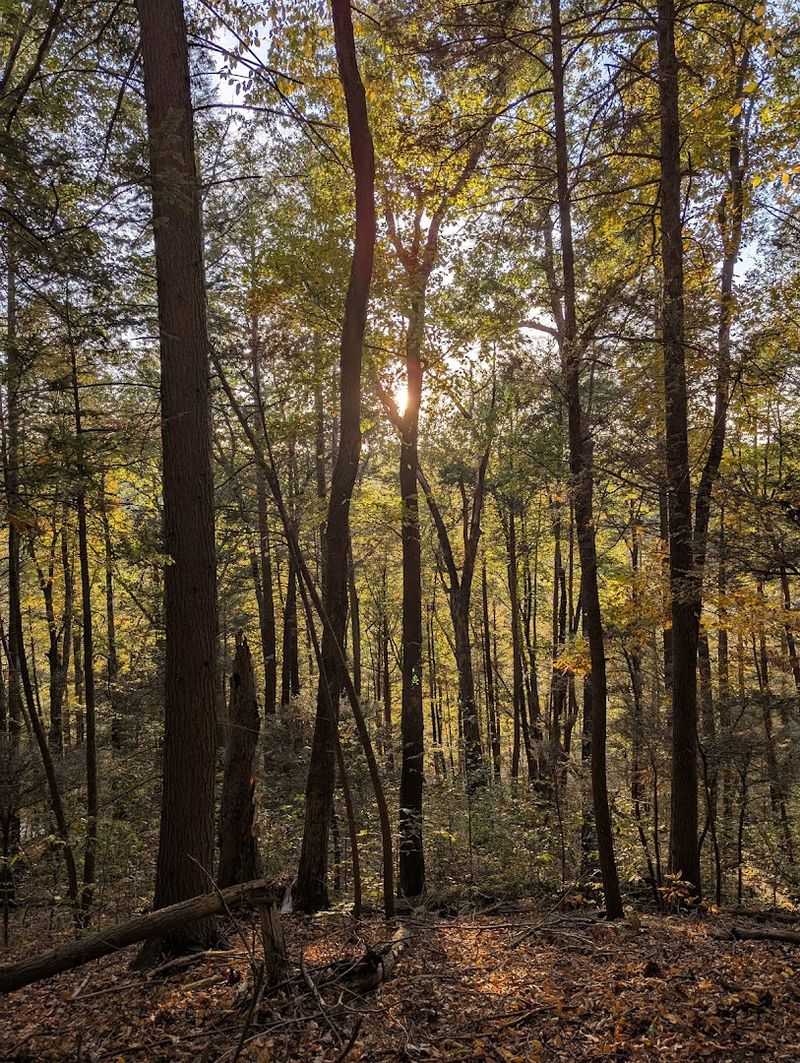
The trail network at Machimoodus stretches approximately 11.3 miles in total, covering a range of terrain types without requiring technical skill or significant fitness.
Most routes fall into the easy to moderate category, which makes the park a comfortable choice for families, older adults, and anyone returning to hiking after time away.
Trail signs are generally well-marked throughout the property, helping first-time visitors navigate without confusion.
Named trails include the Vista Trail, a 1.2-mile easy loop with views of the river and surrounding countryside, and the Salmon River Overlook Trail, a moderate 1.8-mile path that winds toward a viewpoint above the water.
The Echo Ridge Trail covers 2.5 miles across wooded ridges and open meadow stretches, while the Moodus Loop Trail offers a longer 3-mile route through forests, fields, and river-facing terrain.
Beyond hiking, the old farm roads throughout the park are used by horseback riders and provide flat, stable surfaces for those who prefer a more relaxed pace. Fishing and birdwatching are also available along the river sections.
The variety of activities packed into a single park means a visit here can look different depending on who is making the trip and what they are hoping to find.
8. Every Season Changes The Park’s Birdlife And Color
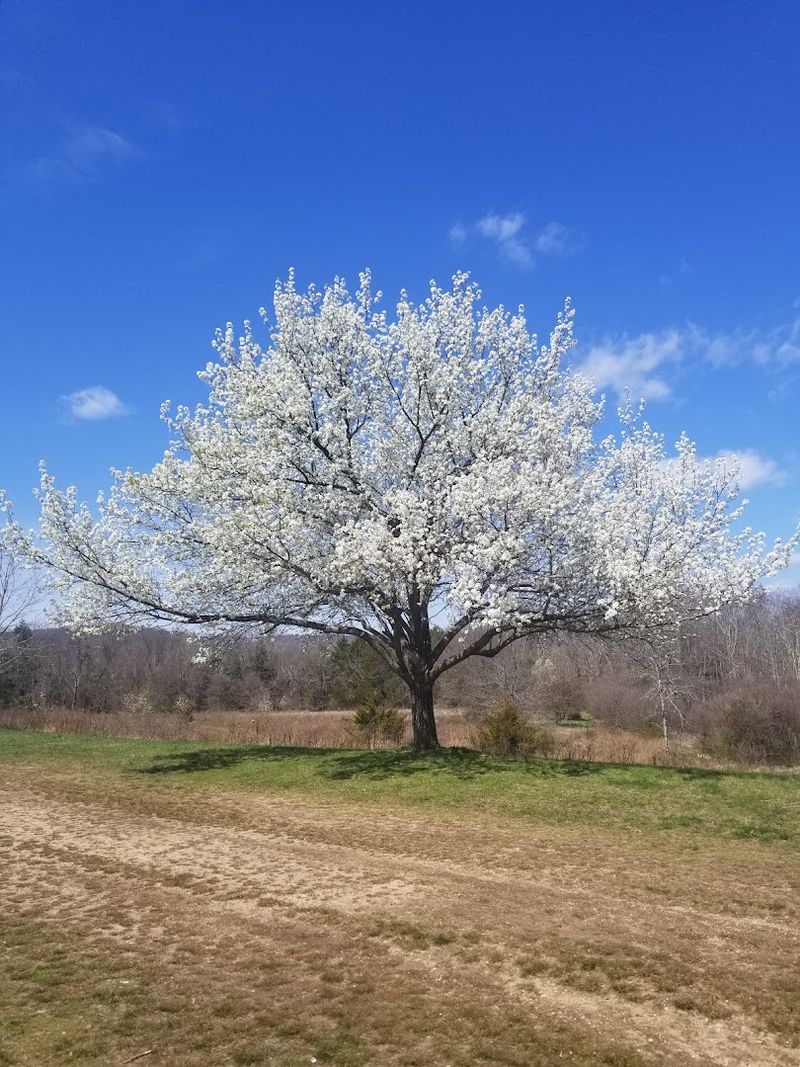
Spring migration turns Machimoodus State Park into an especially rewarding place to carry binoculars. Its mix of woodland, open meadow, ponds, and riverfront creates feeding and resting areas for birds with very different habitat needs.
May often brings the greatest variety, when warblers and other songbirds pass through or settle in for the breeding season. Bluebirds and phoebes favor open areas and edges, while sparrows and juncos appear more noticeably as temperatures shift.
Sightings vary with weather and timing, so no two outings follow quite the same pattern.
The Mount Tom overlooks add waterfowl and raptors to the possibilities. Depending on the season, visitors may spot geese, mute swans, mergansers, buffleheads, black ducks, mallards, or bald eagles above the Salmon River and nearby coves.
Winter can be particularly productive for eagle watching where moving water remains open.
Scenery changes alongside the bird activity. Fresh spring growth becomes dense summer shade, followed by brilliant autumn foliage.
Once winter clears the leaves, sunlight reaches deeper into the woods and distant views become easier to appreciate. Every season reveals a different side of the park, giving returning birders new movement, sounds, and details to notice.
Familiar trails feel entirely new with each visit.
9. A Trail Connection Continues Into Sunrise State Park
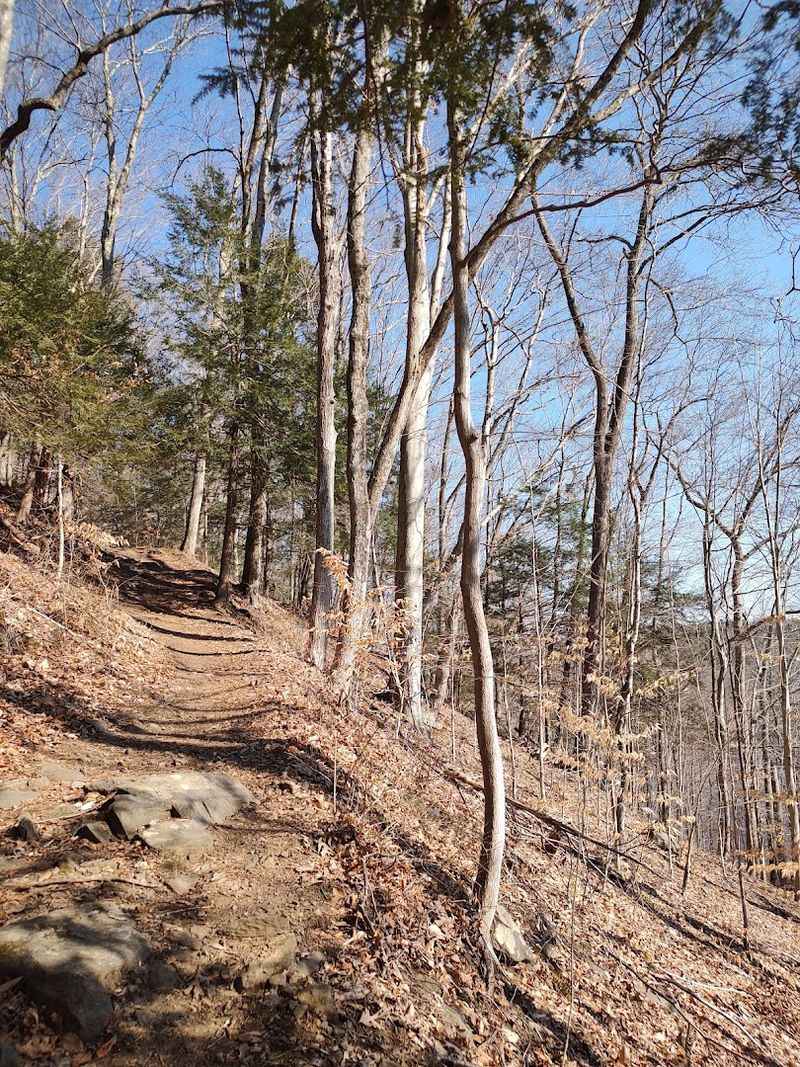
Sharing a northern boundary with Machimoodus, Sunrise State Park adds another 146 acres to the experience without requiring a return to the parking area or a drive to a separate trailhead.
The two parks connect through a trail system that transitions naturally between their different characters, making a combined visit feel like one extended outing rather than two separate trips.
Sunrise State Park has a layered history of its own, having operated at various times as Ted Hilton’s Hideaway, the Frank Davis Resort, and finally the Sunrise Resort before the state acquired the property in 2008.
The old paved roads from the resort era now serve as walking routes through dense woodland, and remnants of the former development are visible along the way, adding an unexpected layer of texture to what is otherwise a quiet forest walk.
The park also holds significant frontage along the Salmon River, opening up opportunities for kayaking, fishing, and riverside picnicking. During winter, the paved resort roads double as cross-country skiing routes when snow conditions allow.
The combined trail network of both parks offers enough variety in surface, terrain, and scenery to keep the exploration feeling fresh from the first step to the last.