9 Strange Georgia Phenomena That Scientists And Locals Still Can’t Fully Explain
I grew up hearing stories that made adults lower their voices before they finished the sentence. Lights that move on their own.
Ground that hums for no reason. Places where the rules of nature seem to take a night off.
I always thought these were just campfire tales until I started digging into them one by one. Georgia holds more of these strange stories than most people realize.
Scientists have studied some of them for years and still can’t agree on a clean explanation. Locals have their own theories, passed down and argued over for generations.
Some stories involve strange lights. Others involve sounds, shapes, or patterns that shouldn’t exist.
Georgia doesn’t hand out easy answers here. It just keeps the mystery going, one strange story at a time.
1. Surrency Ghost Light, Surrency
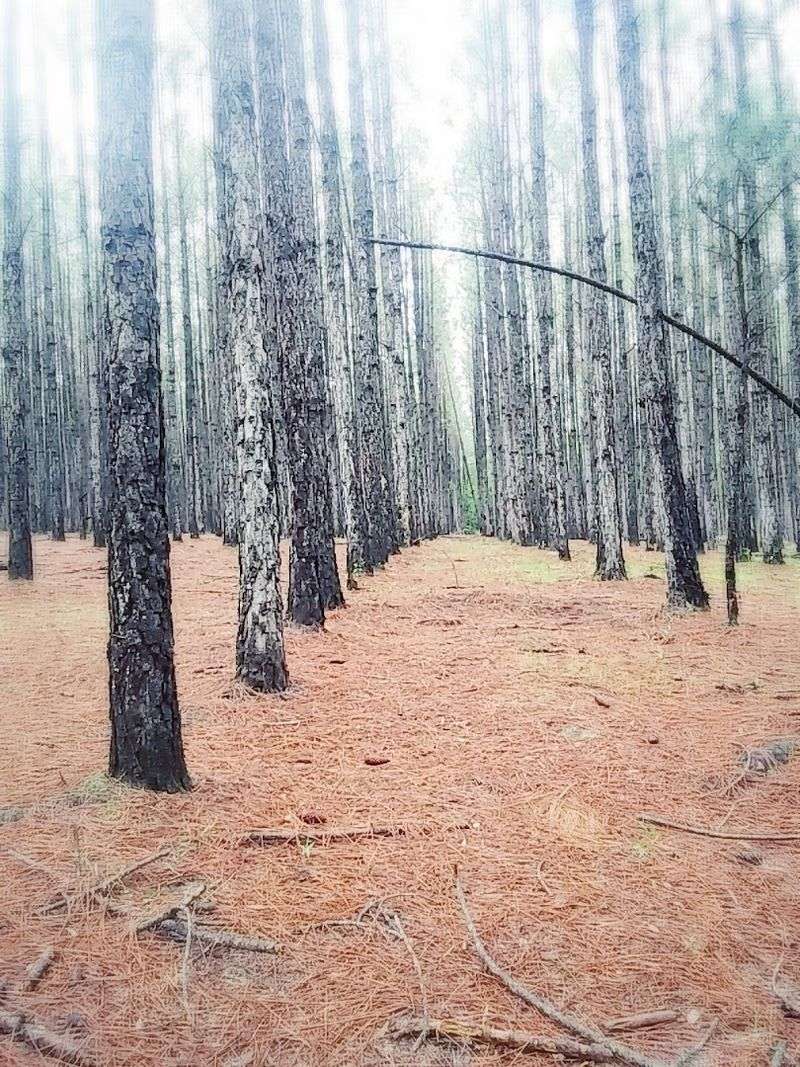
Nobody warned me that a stretch of railroad tracks in rural Georgia could feel so unsettling after dark. Near the Highway 341 bridge in Surrency, GA 31563, a strange light has been spooking locals since the early 1900s.
It appears as a glowing yellow or green ball, hovering silently over the old tracks.
What makes this light truly bizarre is what happens when you get close. It vanishes.
Every single time, it disappears the moment someone approaches it.
Folklore connects it to ghost trains and old European legends about wandering spirit lights. Some locals figured it was just car headlights bouncing off the rails.
That theory falls apart fast when you remember the sightings predate highways and common car use entirely.
Here is where it gets scientifically strange. Some accounts have attempted to connect the legend to unusual geological conditions in the area, but no verified scientific evidence has linked underground formations to the reported light.
Could the underground anomaly and the light above be connected? Nobody knows.
That question has been sitting unanswered for decades. The Surrency Ghost Light remains one of the most genuinely unexplained phenomena in the entire region, and honestly, that is exactly what makes it worth the trip.
2. Track Rock Gap Petroglyphs, Blairsville
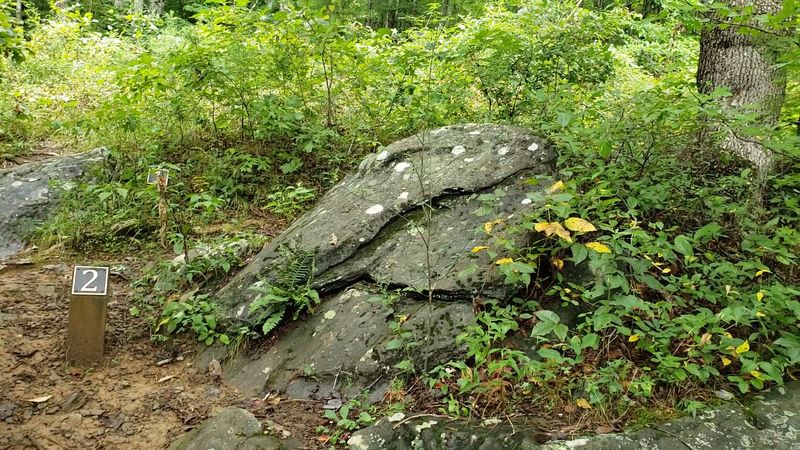
Imagine stumbling across six massive soapstone boulders covered in hundreds of ancient carvings deep in a national forest. That is exactly what waits at 2000 Trackrock Gap Rd, Blairsville, GA 30512.
These petroglyphs have been confusing researchers for generations.
The Cherokee called this site Datsu’nalasgun’ylu, meaning “where there are tracks.” Their legends offer several explanations, from hunters carving out of boredom to animals departing a great canoe after a flood when the earth was still soft.
Archaeologists believe the carvings span thousands of years, dating from the Archaic Period around 8,000 B.C. all the way through the 19th-century Cherokee era. That is an enormous stretch of human history etched into stone.
The carvings include animals, birds, human footprints, and geometric shapes.
Some researchers think the symbols recorded specific events or served ritualistic purposes. Others suggest they mark a spiritual doorway to dangerous spirit beings.
Nobody has landed on a definitive answer, and that ambiguity is part of what makes this site so compelling.
Track Rock Gap is recognized as one of the most significant rock art locations in the entire southeastern United States. You can walk right up to these ancient boulders and see the carvings yourself.
Standing there, it is hard not to wonder what the person holding that carving tool was trying to say.
3. Rock Eagle Effigy Mound, Eatonton
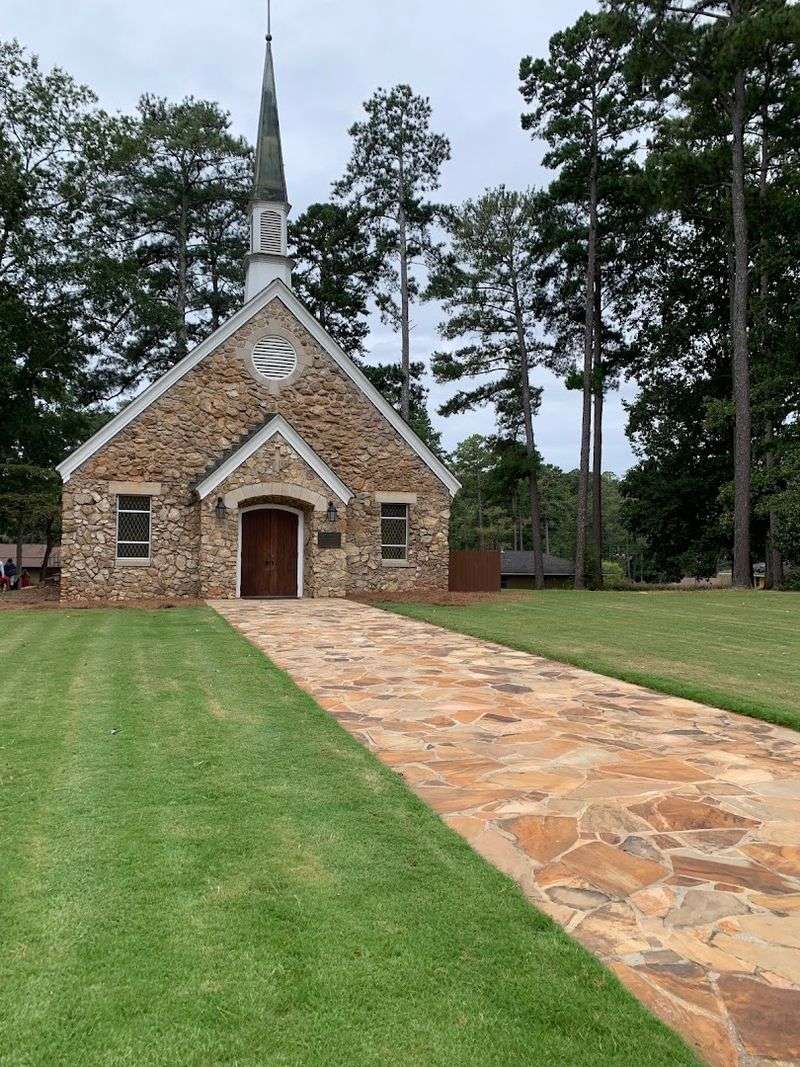
Picture a giant bird made of stacked white quartz rocks, spread across the earth like something drawn from above. That is the Rock Eagle Effigy Mound at 350 Rock Eagle Rd, Eatonton, GA 31024.
It stretches over 100 feet from head to tail and about 120 feet from wingtip to wingtip.
The mound was built by Native Americans during the Woodland period, somewhere between 1,000 and 3,000 years ago. That is a staggering amount of time for a structure to survive.
Yet here it stands, remarkably intact.
What nobody can fully answer is why it was built. The eagle shape is only visible from above, which raises an obvious and fascinating question.
Who was it meant to be seen by?
Some researchers believe it served a ceremonial or spiritual purpose, possibly connected to burial rituals or sky worship. Others think it was a gathering point for ancient communities.
The quartz rocks themselves were hauled in from surrounding areas, which means the construction required serious organized effort.
There is an observation tower on site so visitors can see the full shape from above. Standing up there and looking down at it gives you a real sense of how intentional and deliberate the design truly was.
The mystery of its purpose, though, remains wide open. It is one of those places that makes you feel genuinely small in the best possible way.
4. Kolomoki Mounds State Park, Blakely
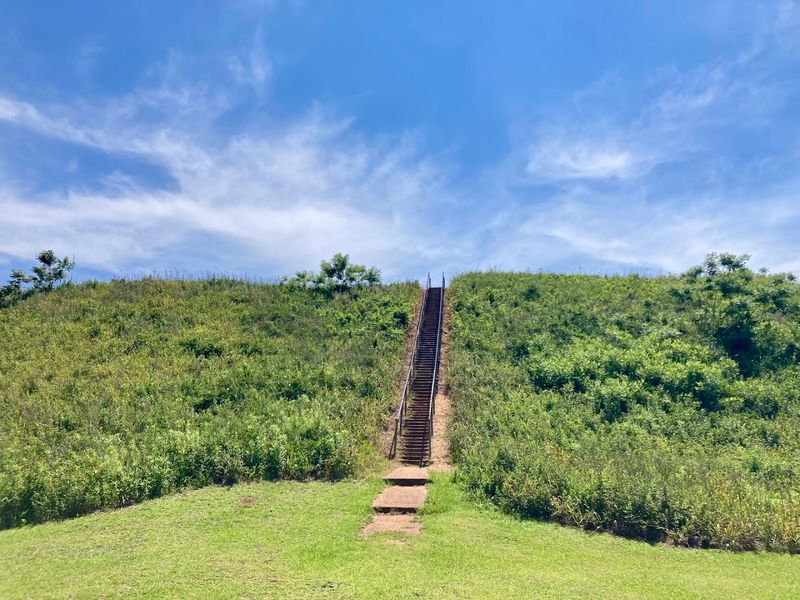
Some places carry a weight that is hard to explain the moment you arrive. Kolomoki Mounds State Park at 205 Indian Mounds Rd, Blakely, GA 39823 is absolutely one of those places.
The park contains eight mounds built by the Swift Creek and Weeden Island peoples between 350 and 750 A.D.
The largest mound rises 57 feet high and stretches 325 feet at its base. That is not a small pile of dirt.
That is a massive, deliberate construction project carried out without modern tools or machinery.
What puzzles researchers most is the sheer scale of the community that must have existed here. Kolomoki was one of the largest settlements in North America during its peak.
Then, around 750 A.D., the population vanished. Nobody knows exactly why.
The site includes burial mounds filled with ceremonial objects, pottery, and human remains. Some artifacts suggest complex trade networks stretching across the continent.
That level of cultural sophistication raises more questions than it answers.
The on-site museum lets you peer directly into an excavated burial mound, which is both educational and genuinely eerie. Standing at the base of the great temple mound and looking up, you get a clear sense of the ambition behind its construction.
Whatever happened to the people who built all of this remains one of the more haunting open questions in southeastern archaeology.
5. Providence Canyon State Park, Lumpkin
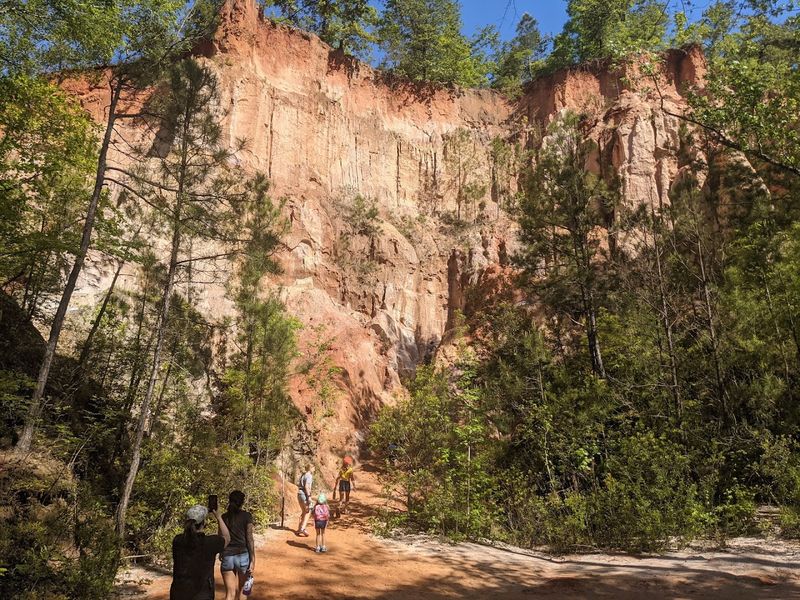
Most geological wonders take millions of years to form. Providence Canyon took about fifty.
That fact alone should stop you in your tracks. Located at 8930 Canyon Rd, Lumpkin, GA 31815, this place is nicknamed Georgia’s Little Grand Canyon, and the nickname is well earned.
The canyon walls glow with colors ranging from white and pink to deep purple, red, and rich ochre. These exposed layers are millions of years old in geological terms.
But the canyon itself? That is embarrassingly recent.
Poor farming practices by early 19th-century settlers caused this entire landscape to exist. Cotton monoculture stripped the land of natural vegetation.
Rainwater had nothing to slow it down, and it carved directly into the soft Coastal Plain soils with alarming speed.
What started as small gullies in the 1800s grew into canyons reaching 150 feet deep. The erosion is still actively continuing today.
Scientists study this site partly because it demonstrates how quickly human activity can permanently reshape the earth.
The colors in the canyon walls come from different mineral compositions in each geological layer. Some of those layers date back to the Cretaceous period.
Walking the canyon floor feels surreal, like stepping through time while also confronting a very modern cautionary tale about land management. It is beautiful, strange, and a little humbling all at once.
6. Chickamauga Battlefield, Fort Oglethorpe
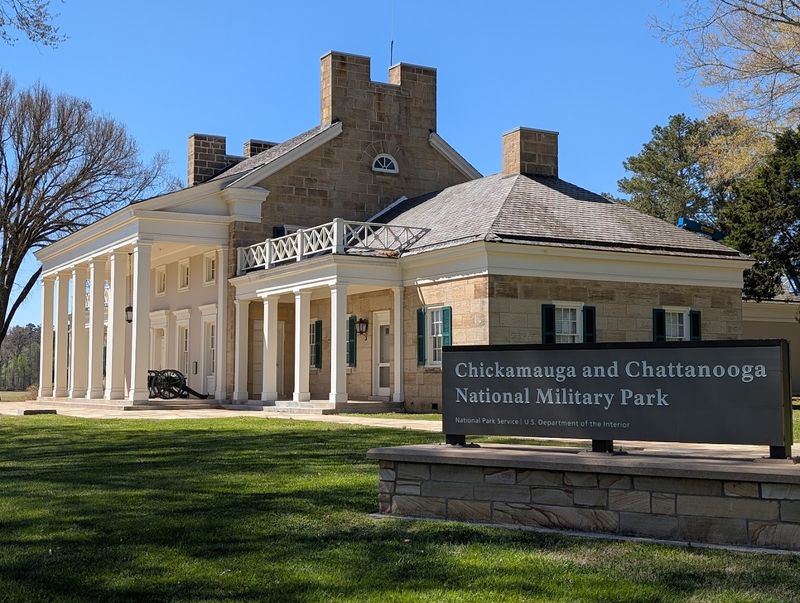
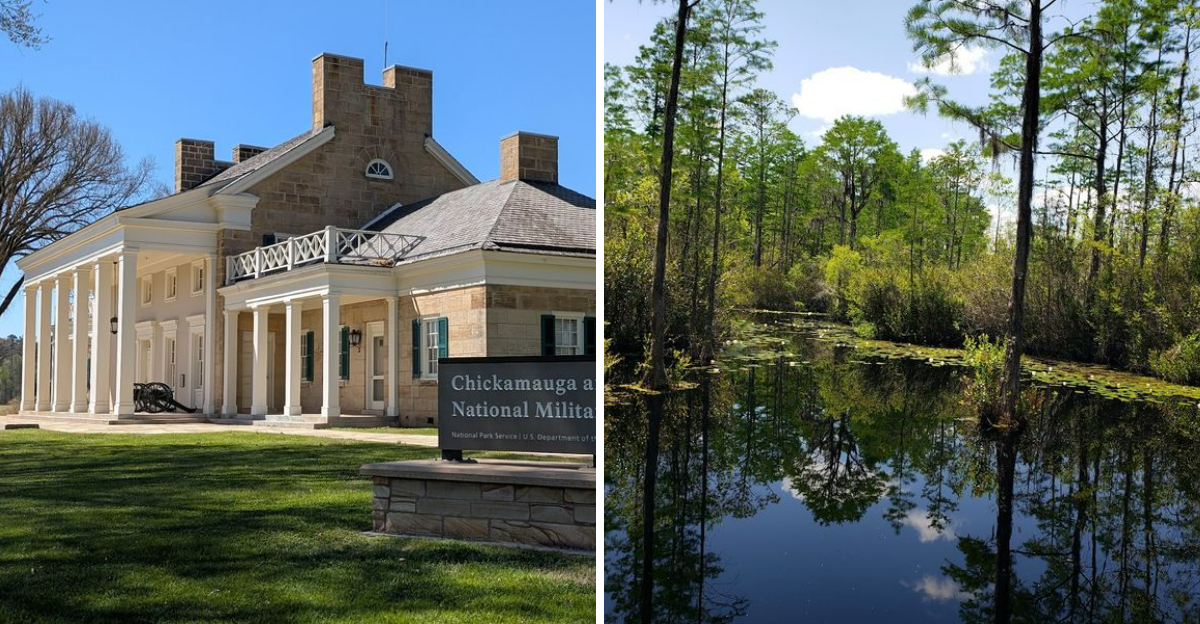
There are battlefields, and then there is Chickamauga. Located at 3370 Lafayette Rd, Fort Oglethorpe, GA 30742, this place has a reputation that goes well beyond its Civil War history.
Rangers and visitors consistently report sounds that have no visible source: gunshots, moaning, galloping horses, and distant screams.
The most famous figure here is known as Ol’ Green Eyes. Legend describes him as a Confederate soldier whose head was separated from his body by a cannonball.
He reportedly wanders the field searching for what he lost, sometimes appearing as two glowing green eyes hovering between the trees.
Another recurring apparition is called the Lady in White, seen near the Snodgrass Cabin. She is said to be searching for a soldier lost in battle.
Flickering lantern lights also appear in the distance on quiet nights, with no logical explanation attached to them.
The scale of what happened here is staggering. The three-day Battle of Chickamauga in September 1863 resulted in more than 34,000 soldiers being killed, wounded, captured, or reported missing.
The land also has a history as a Native American burial ground, which adds another layer of significance to the site.
Unexplained cold spots appear suddenly in open fields. Visitors describe an overwhelming feeling of being watched.
7. Okefenokee Swamp Park, Waycross
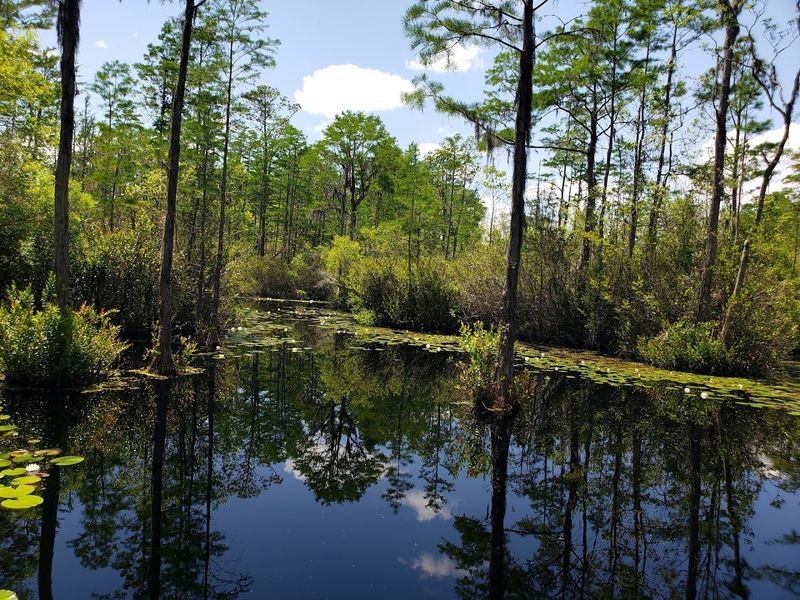
The name Okefenokee translates to “trembling earth,” and that description is not metaphorical. The ground actually shakes here.
At 5700 Okefenokee Swamp Park Rd, Waycross, GA 31503, unstable peat beds cause trees to visibly tremble when you stomp nearby, which is both fascinating and deeply unsettling.
The swamp covers nearly 700 square miles of wetland. That is a lot of dark water and dense vegetation hiding things from view.
It is the kind of place where legends grow easily.
Reports of a large, dog-like creature with thick fur and a cat-like tail date back to 1871. Witnesses describe it as six to seven feet long with bear-like limbs.
Scientists have not identified what animal matches that description.
There are also accounts of animal carcasses found with specific organs removed in patterns that seem deliberate. Early 19th-century accounts describe attacks by a large hairy figure, similar to Bigfoot legends from other regions.
Native American traditions speak of a giant race living on an island deep within the swamp.
Even without the cryptid legends, the swamp itself behaves strangely. Methane gas bubbles up through the peat, occasionally igniting in what witnesses describe as unexplained flashes of light on the water.
The ecosystem here is genuinely unlike anything else in the southeastern United States, and its secrets feel far from fully uncovered.
8. Vogel State Park / Blood Mountain, Blairsville
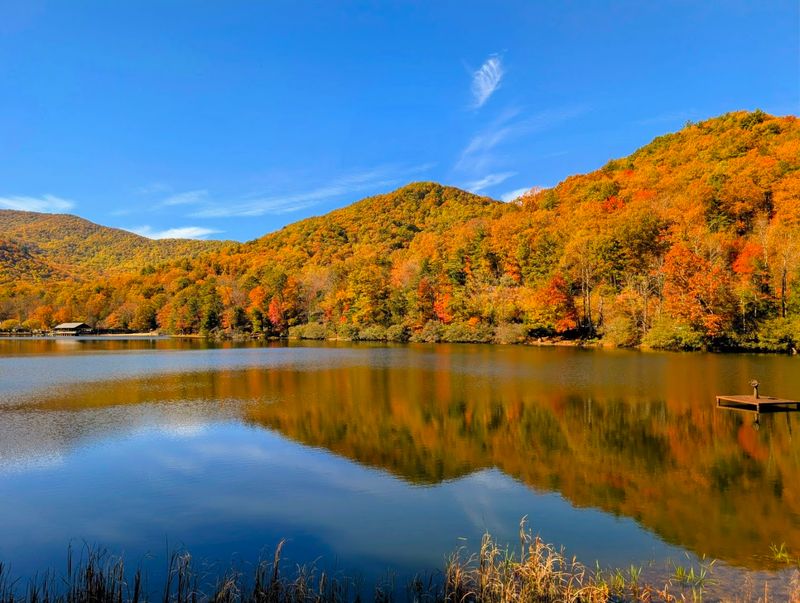
A mountain named Blood Mountain is always going to demand an explanation. Located near Vogel State Park at 405 Vogel State Park Rd, Blairsville, GA 30512, Blood Mountain is the highest peak on the Appalachian Trail in the area and carries centuries of legend on its slopes.
The most widely shared story says the Cherokee and Creek tribes fought a battle here so fierce that streams ran red with the blood of fallen warriors.
Other theories are less dramatic but equally interesting. Some point to the reddish lichen and rhododendron blooms that color the slopes in certain seasons.
Others suggest the name came from early hikers describing the brutal effort required to reach the summit.
Cherokee mythology adds a spiritual dimension to the mountain. The Nunnehei, described as a race of Spirit People, were believed to live in townhouses within the highlands.
These beings reportedly helped lost travelers and distressed hunters find their way home safely.
A nearby legend tells of Princess Trahlyta, who gained immortality by drinking from magic springs in the area. Her story is tied to a cairn of stones on a local roadside, where people still add rocks today.
Blood Mountain holds more stories per square mile than almost anywhere else in the region.
9. Lake Lanier, Buford
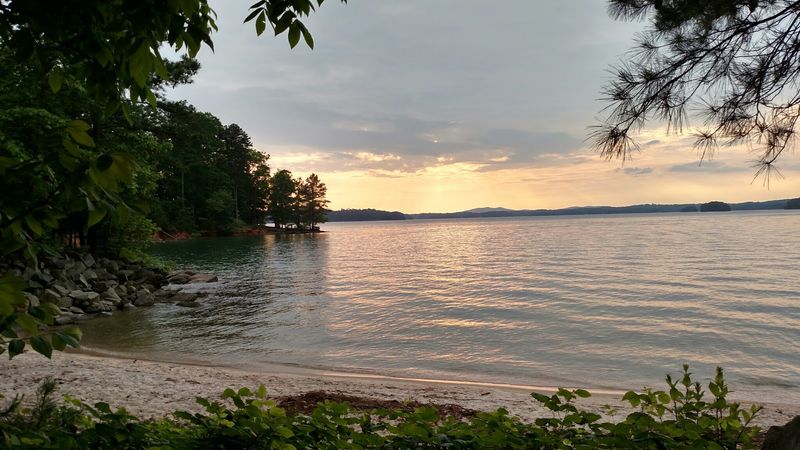
Lake Lanier has a reputation that follows it everywhere, and not for its water sports. Created in 1956 by flooding entire communities, the lake at Lanier Park Rd, Buford, GA 30518 submerged farmlands, homes, roads, and cemeteries.
The history underneath its surface is genuinely unsettling.
The most talked-about figure is the Lady of the Lake, a ghostly woman spotted near bridges wearing a blue dress. She is linked to a 1958 car accident in which two women drowned.
One body was recovered missing its hands, which added a layer of disturbing detail that locals never forgot.
Swimmers have reported feeling unseen forces pulling them downward during sudden underwater swells. Reports of unexplained lights over the water have been documented across multiple decades.
Some visitors describe hearing what sounds like church bells ringing from beneath the surface.
The lake also covered the historically Black community of Oscarville, adding a dimension of tragic social history to its paranormal reputation.
The lake has recorded numerous drownings and boating accidents over the years, with officials commonly pointing to heavy recreational use, deep water, underwater hazards, and unsafe boating behavior.
Folklore even suggests that placing a specific chair at a certain point on the shore can summon a glowing ball of light over the water.