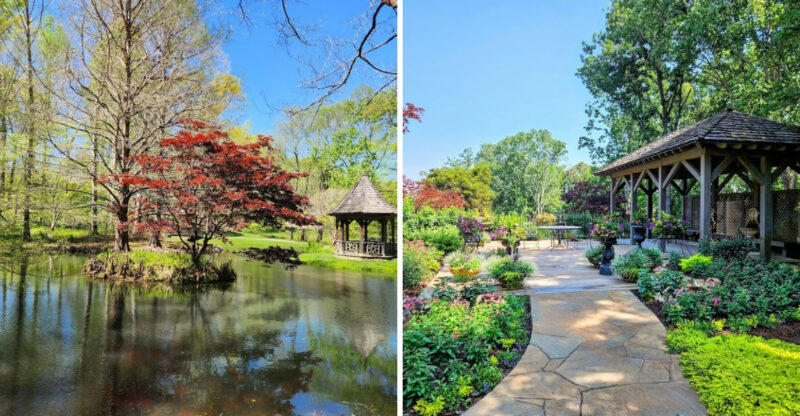
This Georgia Town Feels Like Weekend Mornings Never Left The 1950s
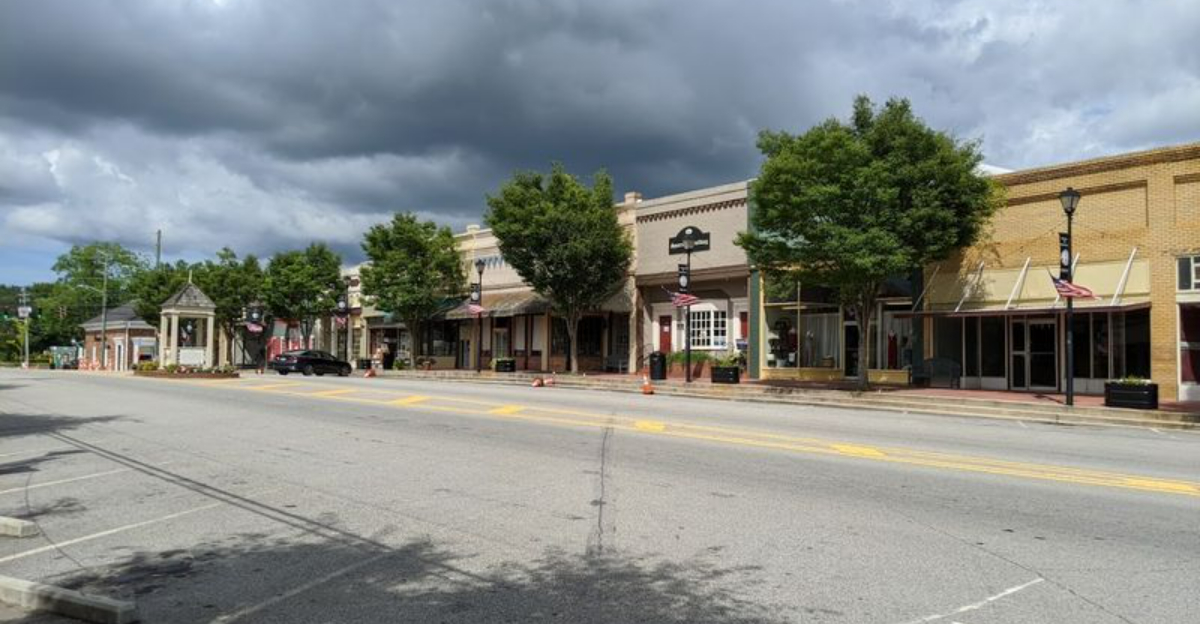
The first thing I noticed was the quiet. No car horns, no rush, just the sound of a screen door closing somewhere down the block.
I parked my car and just stood there for a minute, unsure what decade I had landed in. A man on a porch waved like he already knew me.
Kids rode bikes down the middle of the street like traffic was not even a concept here. I grew up hearing stories about towns like this, the kind my grandfather used to describe from his childhood in Georgia.
I always thought they were exaggerated. Georgia proved me wrong that morning.
Every corner felt frozen in time, but in the best possible way. I ended up staying three extra hours, and I still think about going back.
A Downtown That Refuses To Forget Its Roots
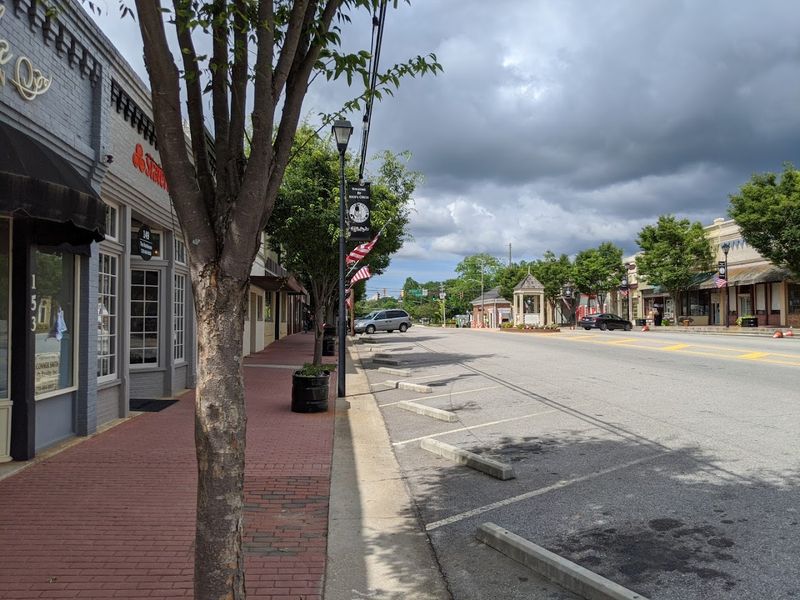
Few downtowns in Georgia hit you with this much history before you even step out of your car. Every building seems to have a story pressed into its bricks.
The Social Circle Historic District was listed on the National Register of Historic Places in 1980, with its original nomination identifying 200 contributing buildings representing styles such as Greek Revival, Early Commercial, and Late Victorian.
Walking these streets feels like flipping through a photo album from another century. The architecture is not just decorative.
It is structural storytelling at its finest.
What makes this place rare is that the buildings are not just preserved, they are actively used. Shops, offices, and community spaces breathe life into structures that are nearly two centuries old.
The town consciously protects its small-town atmosphere. That is not an accident.
It is a deliberate community decision, and you feel that intention in every corner you turn.
Social Circle, Georgia sits about 45 miles east of Atlanta, yet it feels like a completely different world. A great place to begin exploring is Social Circle’s historic downtown along Cherokee Road and Hightower Trail.
The Oldest Building With The Best Origin Story
Imagine a building that has been feeding people since before the Civil War. That kind of staying power deserves serious respect.
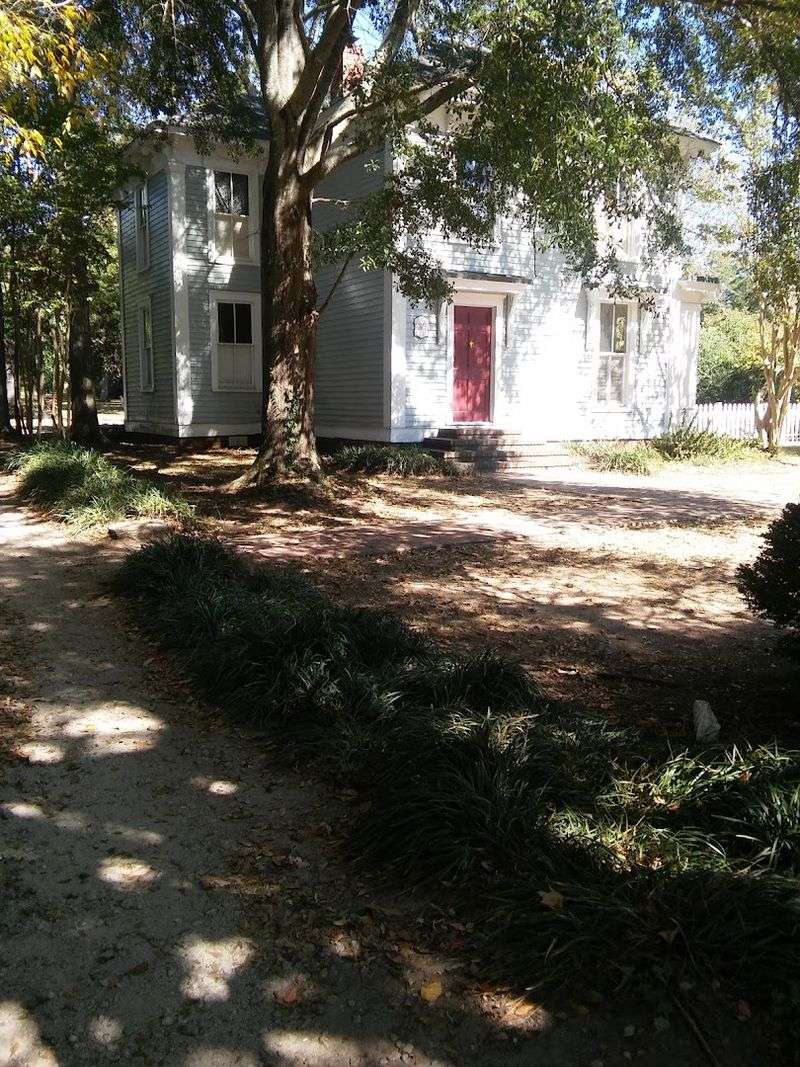
The Josiah Clark Town House is believed to be the oldest standing building in the area. Built in 1838, this Plantation Plain style home has witnessed more history than most history books cover in a single chapter.
Its original purpose was deeply practical. The home served as a stop for hungry railway passengers and crew, earning it the nickname the Social Circle Dinner House.
People arrived tired and left full. That tradition of hospitality never really left.
The architecture is straightforward and honest. No excessive ornamentation, no grand gestures.
Just solid craftsmanship built to last, and last it did, well past its 185th birthday.
What strikes you most is how livable it still looks. It does not feel like a museum piece frozen behind velvet ropes.
It feels like a home that simply kept going while the world changed around it.
Buildings like this remind you that durability is its own form of beauty. Some structures earn their place in history by simply refusing to disappear.
Gunter Hall And The Preservation Society Behind It
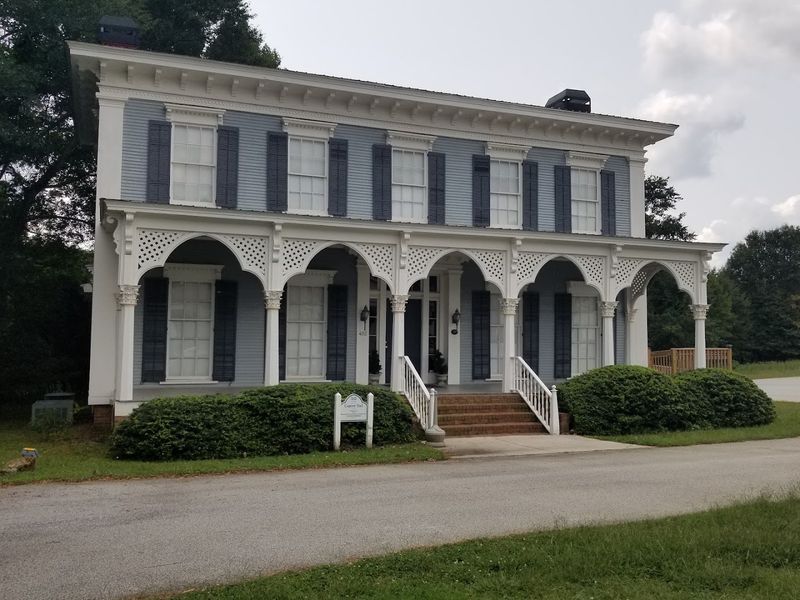
Some buildings age gracefully. Others age with purpose.
Gunter Hall lands firmly in the second category, and walking up to it makes that clear immediately.
Built sometime between 1840 and 1855, the Nebhut-Akridge-Gunter House has had a long and layered history. Today it proudly houses the Historic Preservation Society of Social Circle, which feels like exactly the right use for a structure this significant.
The fact that a preservation organization operates from one of the town’s most historically valuable buildings is a genuinely smart move. It puts the mission and the building in perfect alignment.
Gunter Hall adds another layer to the town’s already rich architectural tapestry. Alongside the other old homes and structures in the area, it helps paint a picture of what life looked like here during the mid-1800s.
Many of these historic buildings remain not just intact but actively in use. That is the detail that separates this town from places where history is merely displayed rather than lived in.
There is something quietly powerful about a community that looks at its oldest buildings and says, we are keeping these, and we are using them. That attitude shows up everywhere you look here.
The Round Town With A Perfectly Circular Origin
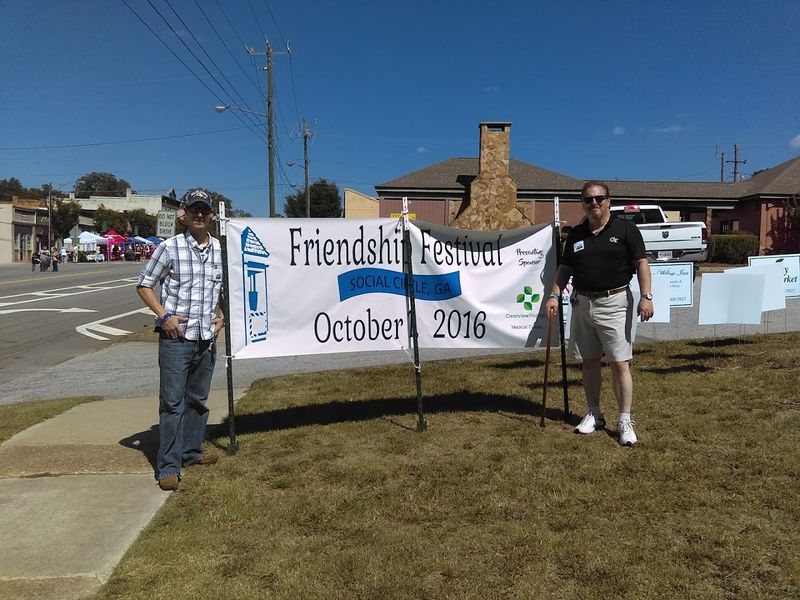
Here is a fact that stops most people mid-sentence when they hear it. Social Circle is one of Georgia’s first round towns.
The original town limits were defined as a precise quarter-mile radius around the post office. Not a square grid, not a rough boundary, but a perfect circle drawn around a single central point.
That is genuinely unusual in American town planning history.
The name itself has sparked plenty of debate over the years. Some say it references the friendly circle of neighbors who gathered regularly in the early days of the settlement.
Others connect it to the circular layout.
Whatever the true origin, the name fits perfectly. There is a sociable, communal energy here that you notice almost immediately.
People wave. People stop to chat.
People seem to actually enjoy being in the same space together.
That kind of community warmth is harder to find than you might expect. Many towns claim it, but few deliver it with this much consistency and authenticity.
The circular origin is not just a historical footnote. It is a reflection of the town’s character, a community that has always drawn people toward a common center rather than pushing them to the edges.
Burma-Shave Signs That Make You Smile On The Road
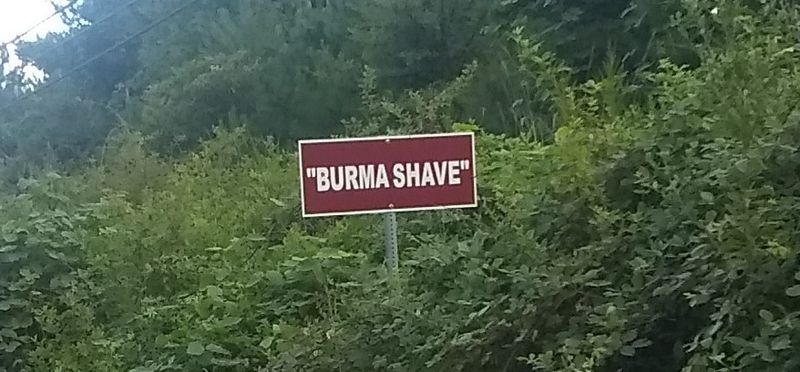
Road trip humor from the 1950s is making a comeback in at least one Georgia town, and honestly, it is long overdue.
Social Circle was selected in 1995 by Reminisce Magazine as the only city in Georgia to display classic Burma-Shave signs. These iconic roadside advertisements appear on Jersey/Social Circle Road, and they bring an instant smile to anyone who passes by.
Burma-Shave signs were famous throughout mid-20th century America. They appeared in short sequential messages spread across multiple signs along the road, building up a joke or rhyme as drivers passed each one.
The format was brilliantly simple. You read the first sign, then the second, and by the time you hit the last one, you were grinning at the punchline.
It was advertising that respected the reader’s sense of humor.
Seeing them here feels like a small gift from a simpler era of road travel. No algorithms, no pop-up ads, just a few painted boards and a good laugh waiting at the end.
It is a tiny detail in the grand scope of the town’s history, but it captures the spirit of the place beautifully. Fun, unpretentious, and refreshingly human.
The Coaling Tower That Outlasted The Steam Era
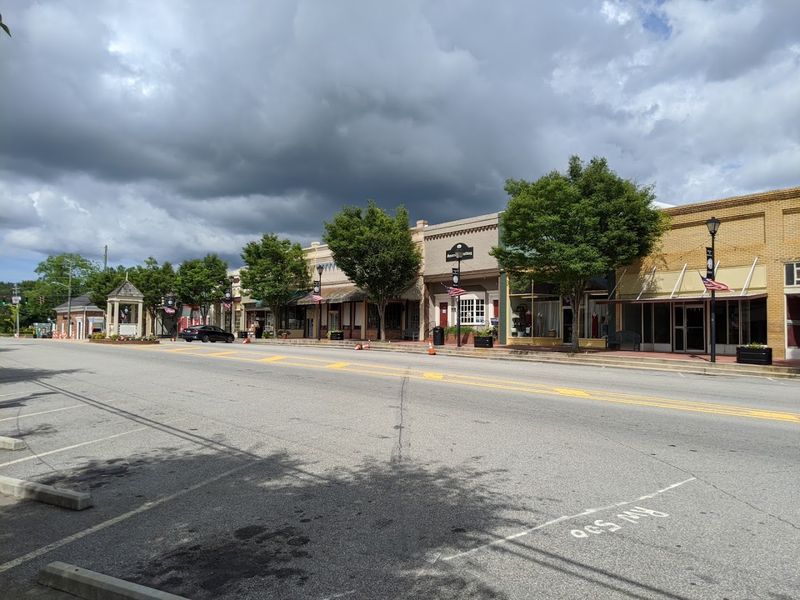
Social Circle’s railroad history played a major role in shaping the town during the steam era. As trains traveled across Georgia, the community became an important stop along the rail line, supporting both passengers and commerce.
For many years, a historic coaling tower stood here as a reminder of that period, supplying coal to steam locomotives before they continued their journeys.
Although the structure has since been removed, it remains an important part of the town’s story and is remembered through local history and photographs.
The railroad helped drive Social Circle’s early growth, influencing its economy, businesses, and daily life for generations. Today, the tracks still pass through town, offering a visible connection to the past even as modern trains replace their steam-powered predecessors.
Walking through the historic district, it is easy to see how closely the community’s development was tied to the railroad and why preserving that history continues to matter to residents today.
Self-Guided Walking Tours That Actually Deliver

The best way to understand a town is to walk it slowly and let the details find you. This place makes that easy and completely free.
The Welcome Center offers illustrated brochures for self-guided historic walking tours. You grab one, step outside, and the town basically narrates itself.
Every stop on the tour connects to a real story rooted in this community’s past.
The Welcome Center is located at 129 E. Hightower Trail and is an ideal first stop before exploring the historic downtown.
The staff there genuinely want you to enjoy your visit, and the brochures are detailed without being overwhelming.
Self-guided tours have a particular magic that group tours sometimes miss. You move at your own pace, linger where something catches your eye, and skip nothing out of obligation.
The walking tour here highlights many of the town’s most significant sites. You will pass architectural styles spanning nearly two centuries, all within a manageable and enjoyable walking distance.
By the end of the route, you will have covered more history than most people absorb from a full museum visit. The difference is that here, the history is still standing right in front of you, not behind glass.
The Diner That Froze Time In The Best Possible Way

Some restaurants feel like they belong to a specific decade, and every detail confirms it the moment you step inside. Hot Rod’s Diner is exactly that kind of place.
The classic 1950s feel is not a costume here. It is the whole personality.
From the aesthetic to the atmosphere, everything signals a slower, more deliberate era of American life when diners were the center of the social universe.
Breakfast and lunch hit differently in a setting like this. The food tastes better when the booth you are sitting in looks like it rolled straight out of a mid-century Saturday morning.
You slow down without even trying.
The vibe is welcoming and unpretentious. Nobody is trying to impress you with complicated menus or trendy ingredients.
The goal is comfort, and the place delivers it consistently.
Local eateries like this one are exactly why small-town road trips beat airport travel every single time. You stumble into a diner, sit down for an hour, and leave feeling like you actually lived something rather than just passed through.
This spot captures what makes the whole town tick. It is rooted, real, and completely itself.
That combination is rarer than it should be, and worth every mile of the drive to find it.