This Historic Northern California Lighthouse Sits Beside A Secluded Cove With A Fascinating Past
A lighthouse path can feel peaceful even before the ocean comes into view.
The walk opens gradually, carrying visitors past windswept grass and weathered coastal scenery before the tower finally appears against the Pacific.
Nearby, a quiet cove adds another layer to the setting, though its beauty only tells part of the story.
Along Northern California’s coast, even the calmest landscapes can hold traces of shipwrecks, rescue efforts, and lives abruptly changed by the sea.
That history gives the overlook a different weight. Waves continue to roll into the shoreline and the lighthouse stands much as it has for generations.
Nothing about the scene feels hurried, yet there is plenty beneath the surface for curious visitors to uncover.
Come for the coastal walk and the dramatic views. Stay long enough to notice how closely the lighthouse and the past are tied together.
The Lighthouse Has Guided Ships Since 1909
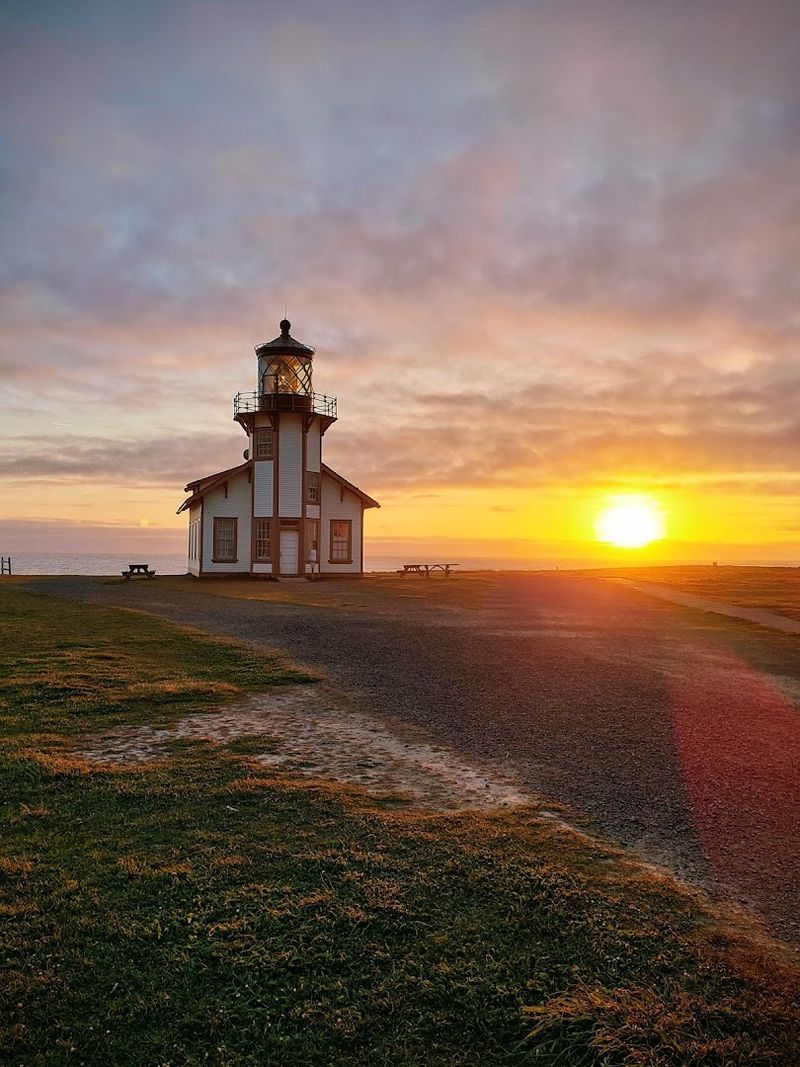
Few coastal landmarks along the Northern California shoreline have kept such a consistent and meaningful watch as Point Cabrillo Light Station, which began its operation in 1909 on a dramatic, windswept headland.
The station was built during an era when maritime traffic along the Mendocino Coast was heavy, driven largely by the thriving timber and fishing industries of the region.
Ships needed reliable guidance through these sometimes treacherous waters, and the lighthouse answered that need from its very first night of operation.
What makes the station especially notable is that it continues to function as an active aid to navigation today, rather than simply existing as a preserved relic behind a velvet rope.
The complex is recognized as one of the most complete surviving light stations in the entire United States, with a significant portion of its original structures still standing.
Visitors who walk the grounds get a genuine sense of how the station looked and functioned during its working peak, not a reconstructed version of it.
The headland setting adds to the experience considerably, with open sky and Pacific views surrounding the historic buildings on nearly every side.
Its Original Fresnel Lens Still Works
Sitting inside the lantern room of the lighthouse is something genuinely rare in the world of historic preservation: the station’s original Chance Brothers third-order Fresnel lens, still actively doing its job.
The lens weighs approximately 6,800 pounds and was assembled using 90 lead glass prisms, a level of craftsmanship that reflects the serious engineering investment lighthouse construction demanded in the early 20th century.
It was shipped to California the long way, traveling around Cape Horn before being installed at the station.
The lens was taken out of active service in 1972, but dedicated restoration efforts brought it back to life, and it was reactivated in 1999.
On a clear night, the beam it produces can be seen from up to 14 miles out at sea, which is a remarkable reach for a lens that is well over a century old.
The engineering behind Fresnel lenses relies on concentric rings of precisely angled glass that concentrate and amplify light far more efficiently than a simple reflector could.
Public access to the lantern room is limited to specific tour days offered only a few times each year.
Frolic Cove Holds A Dramatic Shipwreck Story
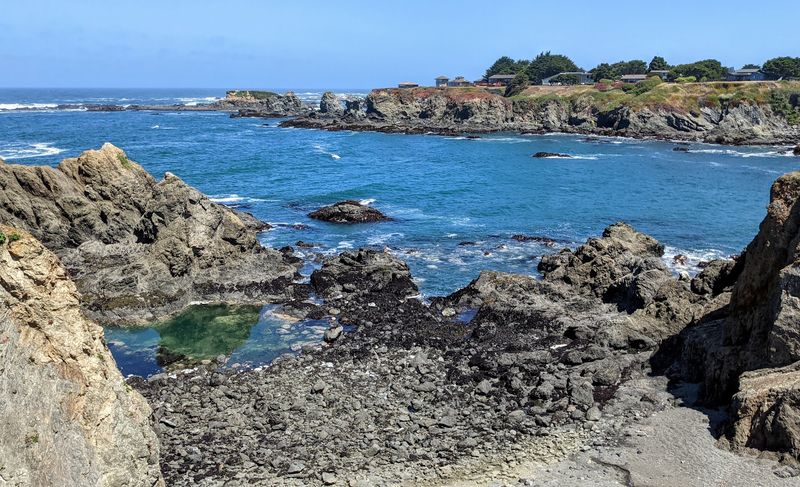
Not every quiet cove has a name with a backstory this compelling.
The inlet sitting just north of the lighthouse takes its name from the Frolic, a sailing brig that struck a reef in 1850 while making its way from China toward Gold Rush-era San Francisco.
The collision was catastrophic, and the vessel eventually came to rest within the cove at what is now the northern boundary of the state park.
The wreck of the Frolic is considered one of the most historically significant shipwrecks in California, valued not just for its age but for what it carried and the chain of events its sinking set in motion.
The story involves Pacific trade routes, the Gold Rush economy, and the discovery of vast redwood forests along the Mendocino Coast that would later fuel a booming timber industry.
A single maritime disaster helped reshape the development of this entire region.
Standing at the bluff overlook above the cove today, it takes some imagination to picture a 19th-century brig breaking apart on the rocks below, but the landscape has changed very little since that night.
The cove remains sheltered, rocky, and strikingly remote feeling, even with a paved path leading toward it from the lighthouse grounds.
The Ship Was Carrying Goods From China
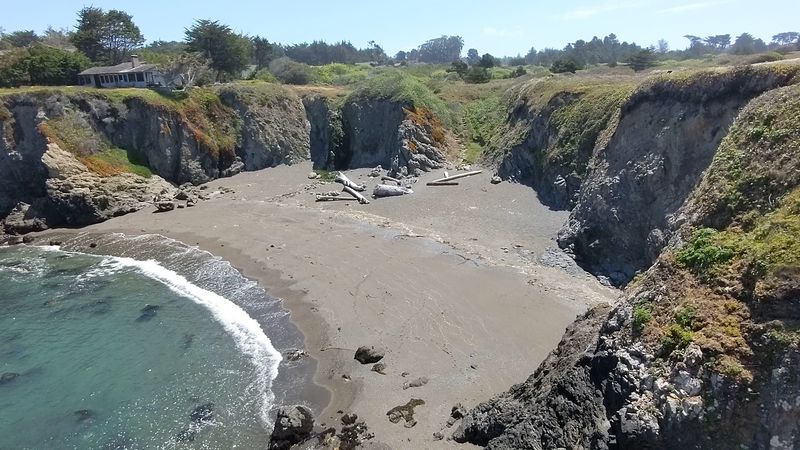
The cargo aboard the Frolic reads like a window into 19th-century Pacific trade.
The brig was loaded with approximately 21,000 porcelain bowls, marble inset tables, a prefabricated house complete with oyster shell windows, and more than 6,000 bottles of Edinburgh ale.
The sheer variety of goods reflects how quickly demand for imported products had grown along the West Coast in the years following 1848.
Archaeological research into the wreck, which was notably extensive and methodical, helped document more than 1,600 associated artifacts now held across regional collections.
A permanent exhibit at the Mendocino County Museum in Willits presents some of these findings, and a smaller collection can be viewed at the lighthouse itself.
The research revealed important details about early Pacific trade networks that might otherwise have gone undocumented.
There is an additional twist to the story worth knowing.
The salvage attempt organized after the wreck was unsuccessful in recovering the ship’s cargo, but the crew who traveled overland to investigate the site instead discovered the enormous redwood forests of the Mendocino Coast.
That accidental find directly triggered the growth of the local timber industry, making the Frolic’s sinking arguably one of the most consequential maritime accidents in California history.
The Cove Is An Underwater Historic Site
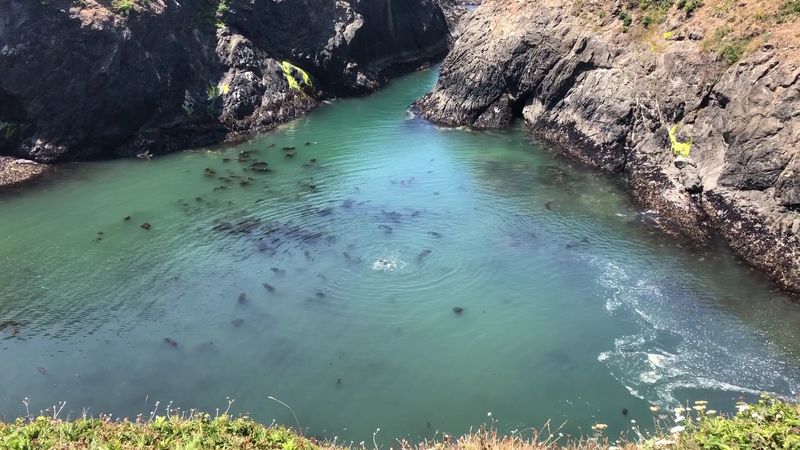
Beneath the surface of Frolic Cove lies something most visitors never see but should know about: the scattered remains of the 1850 shipwreck, resting on a rocky substrate of boulders and bedrock cut through by deep crevices and surge channels.
The cove has been officially designated as a California State Underwater Park, a status that reflects its archaeological importance and the need to protect what remains of the wreck site.
That designation is not just a title; it carries legal protections that prohibit the disturbance of any underwater elements.
The waters surrounding the headland are also part of the Point Cabrillo State Marine Conservation Area, where the removal of plants or animals is strictly prohibited.
This layered protection means the cove functions simultaneously as a cultural heritage site and a marine sanctuary, which creates a rare combination of historical and ecological significance in a single location.
The marine life that has colonized the wreck debris over the past 170-plus years adds another dimension to the site’s value.
Visitors are encouraged to appreciate the cove from established overlooks and trails rather than attempting to access the water.
The view from the bluffs above is genuinely striking on its own, and the context of knowing what lies below gives the scenery a weight that purely scenic spots rarely have.
Coastal Trails Lead Toward The Cove
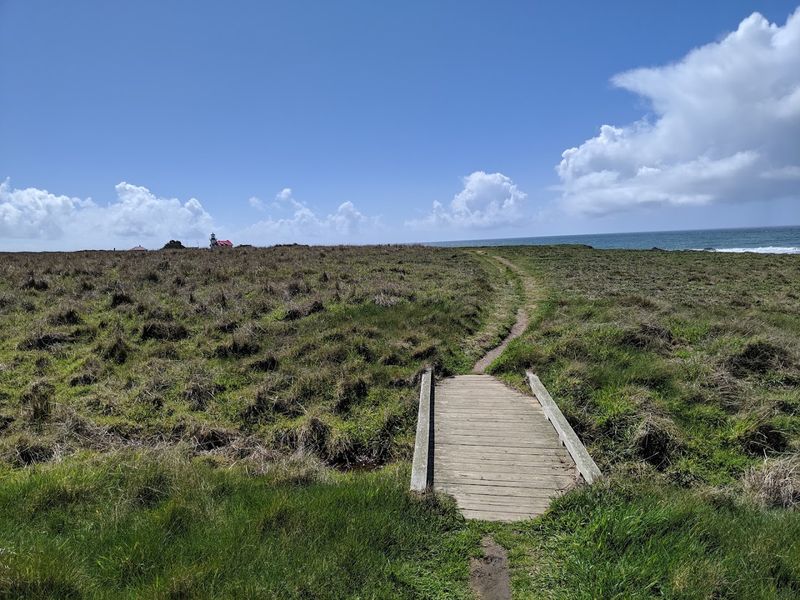
Walking the trails at Point Cabrillo feels different from most coastal hikes in California because the landscape stays open and unobstructed for nearly the entire route.
Paths cross wide stretches of coastal prairie, pass along grassy bluffs, and wind toward rocky overlooks that put the Pacific directly in front of visitors without any visual clutter interrupting the view.
The sense of space out here is one of the most immediately striking things about the property.
Designated routes extend northward from the lighthouse toward Frolic Cove, allowing visitors to reach the area where the historic brig came to rest in 1850.
Along the way, the trail offers wide, uninterrupted views of the ocean and the rugged coastline that stretches in both directions.
On clear days, the horizon seems almost impossibly far away, and on foggy mornings, the mist turns the bluffs into something quieter and more atmospheric.
Bluff edges along the route can be unstable, and staying on marked paths is genuinely important rather than just a suggestion.
The soft, eroded nature of coastal cliffs in this region means that ground near the edge may not support weight the way it appears to.
Three Original Lightkeeper Homes Remain
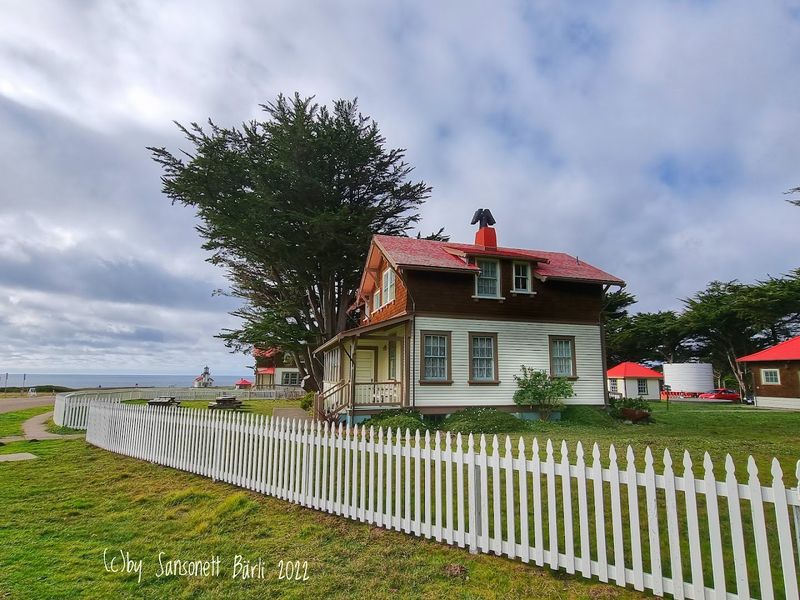
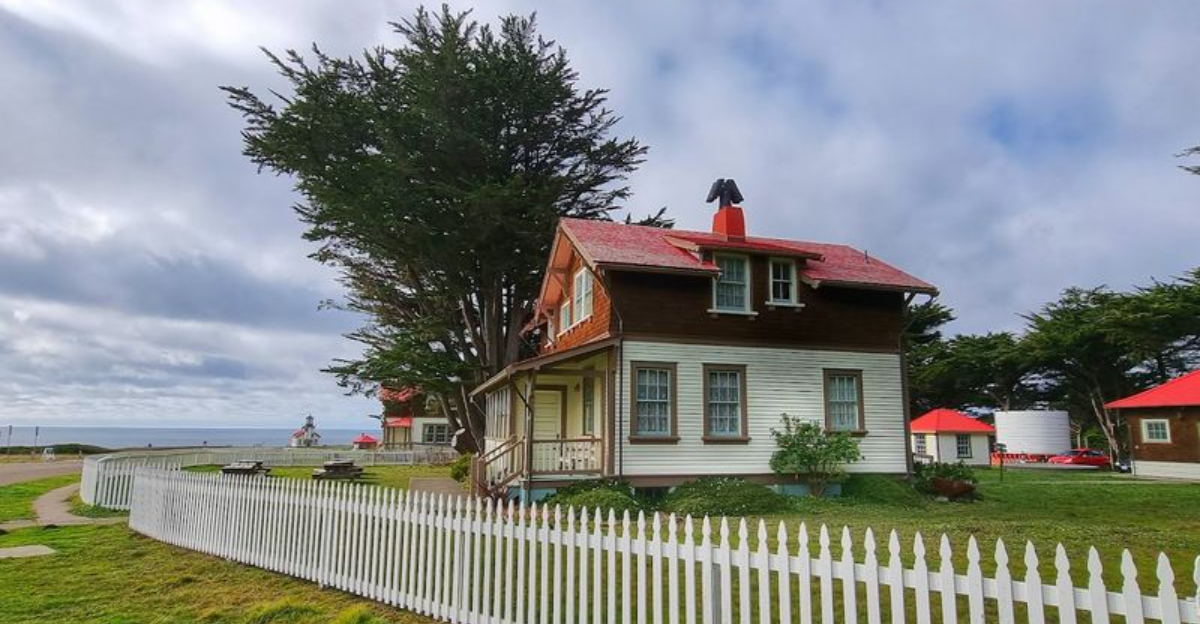
One of the most telling signs that Point Cabrillo is genuinely well preserved rather than merely restored is the fact that three original lightkeeper residences are still standing on the property.
These homes were built to house the head lightkeeper and two assistant lightkeepers, each of whom lived on-site with their families while maintaining the station around the clock.
Lightkeeping was not a job that ended at 5 p.m.; it was a lifestyle built around constant responsibility for the safety of ships at sea.
The First Assistant Lightkeeper’s House has been arranged as a period museum, carefully set up to reflect how a lightkeeper’s family might have lived during the 1930s.
Period furniture, household items, and personal touches bring the space to life in a way that static exhibits rarely manage.
Spending time in that house gives visitors a grounded, human-scale sense of what daily life at an isolated coastal station actually looked like.
The Head Lightkeeper’s House and the Second Assistant Lightkeeper’s House, along with two smaller cottages on the property, have been restored and converted into vacation accommodations.
Staying in one of these buildings offers an unusually direct connection to the station’s history, with the added benefit of waking up on the headland before the daytime visitors arrive and the grounds get busy.
A Small Museum Explains The Coast’s History
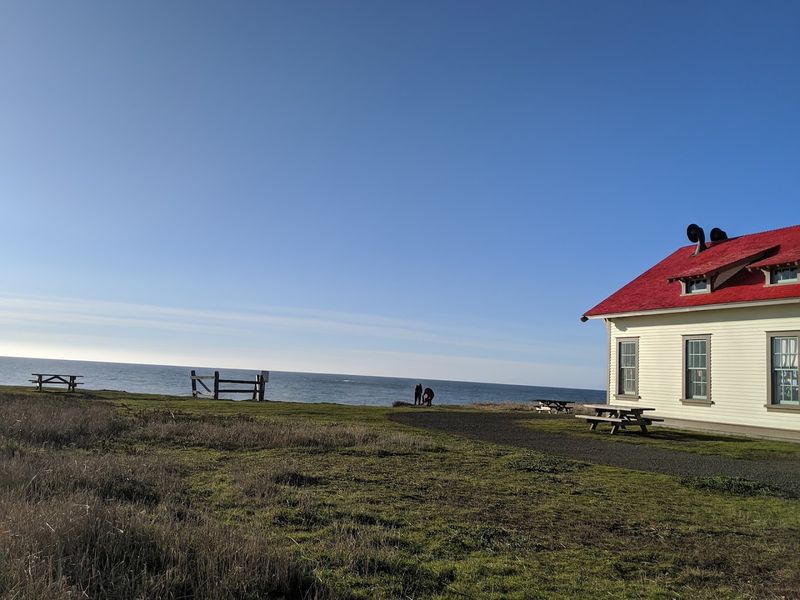
The main floor of the lighthouse building holds a compact but genuinely informative set of exhibits covering the full range of stories connected to this stretch of coastline.
Displays address the history of the light station itself, the dramatic wreck of the Frolic, ongoing restoration work, and the broader cast of people whose lives intersected with this headland over the decades.
The presentation is approachable rather than overwhelming, which makes it a good starting point for visitors who want context before heading out on the trails.
Notably, the exhibits also acknowledge the Mitom Pomo, the Indigenous people whose relationship with this land reaches back thousands of years before the lighthouse was built.
The Mitom Pomo traditionally used these resource-rich headlands as summer hunting and gathering grounds.
The museum is housed within a working historic structure, which adds a layer of authenticity that purpose-built museum buildings cannot replicate.
Standing inside the lighthouse while reading about its own history creates a satisfying sense of place that tends to make the information stick in a way that reading a brochure in a parking lot rarely does.
There Is A 240-Gallon Seawater Aquarium
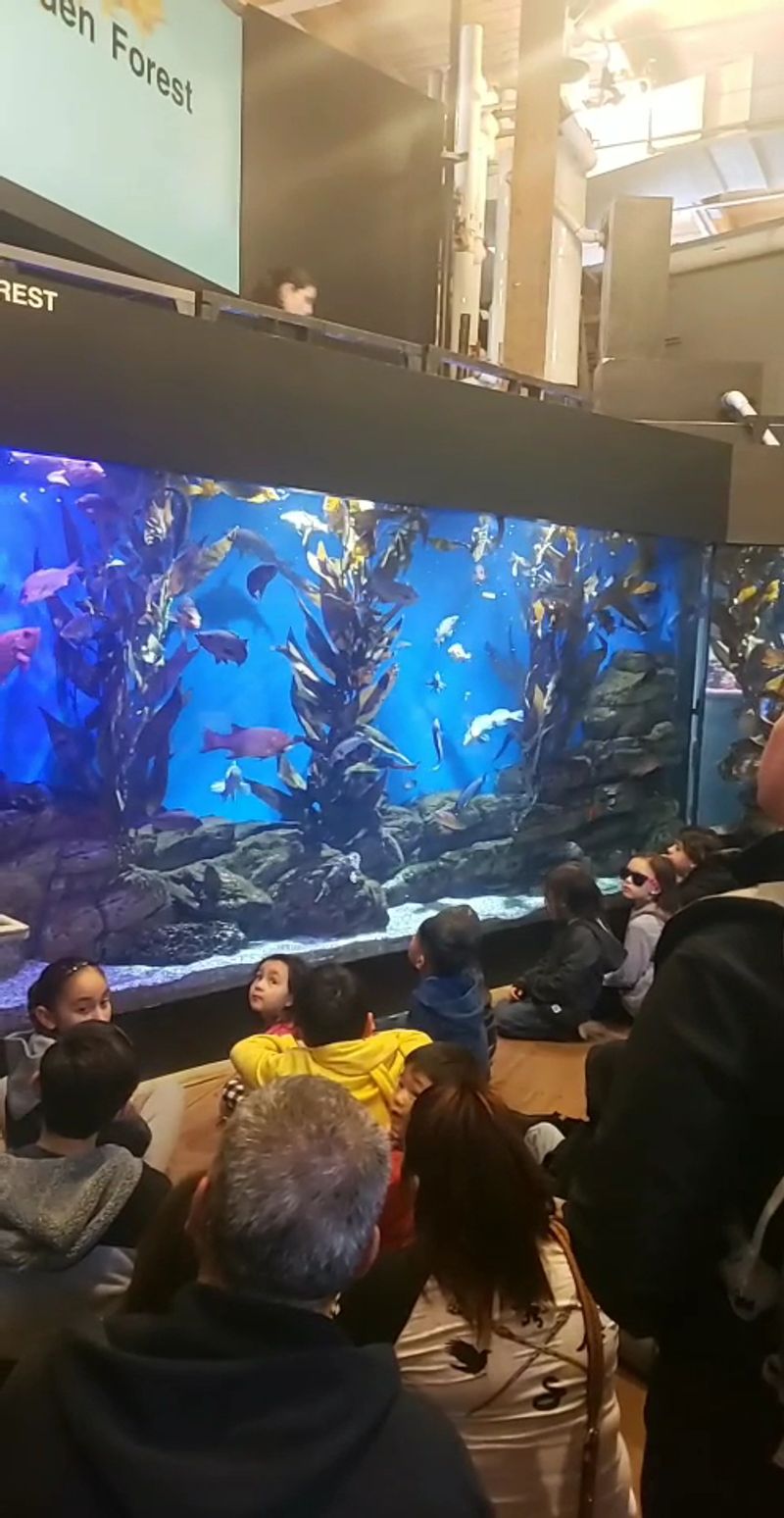
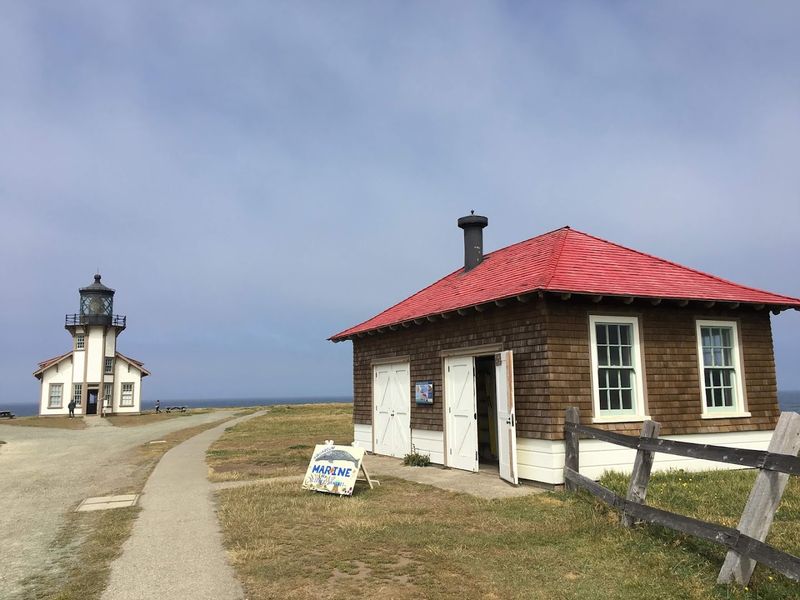
The old Blacksmith and Carpentry Shop on the property has been given a second life as a Marine Science Exhibit, and the centerpiece of that exhibit is a 240-gallon seawater aquarium.
Sea stars, crabs, anemones, and nudibranchs move slowly through the tank in a way that rewards patient observation.
Watching a nudibranch navigate a piece of rock is the kind of quietly fascinating experience that tends to hold attention longer than expected.
The exhibit serves a practical conservation purpose as well. Tide pools along the Mendocino Coast are ecologically sensitive and can be damaged when visitors step on or handle their inhabitants.
Having a well-maintained aquarium nearby gives curious visitors a chance to observe local marine organisms up close without putting pressure on the actual tide pools.
The educational value of that trade-off is straightforward and effective.
Beyond the aquarium, the Marine Science Exhibit also covers marine mammal ecology and behavior and explores the broader world of marine invertebrates found along this section of coastline.