This Beloved California Lake Is Now At The Center Of A Fierce Environmental Fight
Crystal-clear water and postcard views rarely tell the whole story.
Millions of people arrive each year expecting a peaceful escape, yet beyond the beaches and mountain scenery, difficult questions continue to shape the lake’s future.
Growing visitation, environmental pressures, and competing priorities have transformed one of the West’s most treasured landscapes into the focus of an ongoing debate.
Few places in California inspire as much passion from residents, scientists, businesses, and outdoor enthusiasts alike.
Everyone agrees the lake is extraordinary. Deciding how to protect it while balancing recreation, development, and local communities is where opinions begin to diverge.
Each new proposal brings fresh discussion, and the choices made today could influence what future generations experience when they stand along the shoreline.
The conversation extends far beyond one project or one season.
What happens here has become a test of how a world-famous natural destination can remain both accessible and protected at the same time.
The Caldor Fire Left A Massive Restoration Challenge
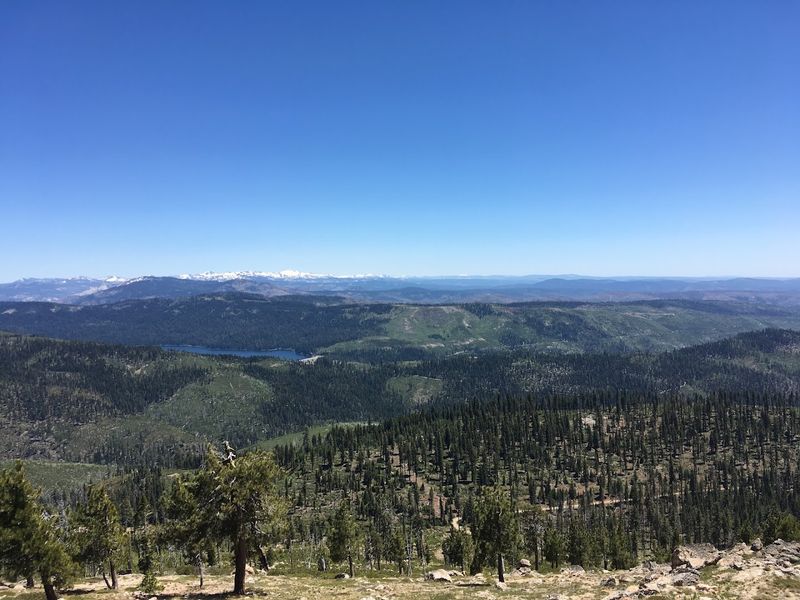
Few wildfires in recent California history left a mark as dramatic as the 2021 Caldor Fire, which consumed over 221,000 acres across the Sierra Nevada.
Nearly 10,000 of those acres fell within the Lake Tahoe Basin Management Unit, leaving behind a landscape of gone trees, exposed soil, and elevated wildfire risk for surrounding communities.
The scale of destruction was difficult to fully process even from above.
The U.S. Forest Service recognized that without intervention, the damaged areas could shift permanently from forested land into dense shrub chaparral, a conversion that would dramatically alter the basin’s ecology.
Early post-fire work focused on removing hazard trees along roads, trails, and private property through the Tahoe Basin Caldor Hazard Tree Fuels Reduction Project, which did not involve herbicides.
That phase addressed the most immediate safety concerns.
What followed, however, became far more controversial.
Federal planners began developing a longer-term restoration framework, one that included vegetation management strategies that would eventually spark widespread public pushback.
The fire essentially handed land managers an enormous and complicated puzzle, with no easy answers and a deeply invested public watching every move closely.
The Restoration Project Covers Thousands Of Acres
The scope of what federal officials authorized is genuinely staggering.
Restoration work was approved across roughly 11,700 acres within the Lake Tahoe Basin, a footprint large enough to reshape the landscape surrounding one of North America’s most iconic alpine lakes.
The project does not hug only the shoreline but extends into areas near ski resorts like Sierra-at-Tahoe, Kirkwood, and Heavenly, as well as campgrounds, trailheads, and residential neighborhoods in Meyers.
That geographic reach is part of what has made the plan so contentious.
Critics point out that activity anywhere within the Lake Tahoe watershed deserves heightened scrutiny because of how water moves through the basin.
Every hillside, drainage channel, and forest floor connects to the broader hydrological system that ultimately feeds the lake.
Supporters of the project counter that leaving thousands of acres of burned land unmanaged carries its own serious risks, including accelerated erosion, poor seedling survival rates, and increased vulnerability to future fire.
The tension between acting decisively and acting cautiously runs through nearly every public discussion about the plan.
Both sides tend to agree that the fire damage is real and serious, even when they disagree sharply on what to do about it.
Herbicides Are Only One Part Of The Plan
It would be easy to read the headlines and assume the entire restoration plan revolves around chemical spraying, but that framing misses a lot of what the Forest Service actually proposed.
Herbicide use is described as one component within a broader Integrated Vegetation Management strategy that also includes thinning surviving trees, removing diseased or storm-damaged timber, and preparing ground for replanting with native seedlings.
The underlying logic is straightforward. After a severe fire, fast-growing shrubs and brush can crowd out young conifer seedlings before they have a chance to establish.
Controlling that competition for sunlight, moisture, and soil nutrients may give replanted trees a realistic shot at survival in what are often already difficult growing conditions.
Officials have been careful to frame herbicides as a conditional tool rather than a default one, something to be considered only where other methods fall short.
The Integrated Vegetation Management approach is designed to be adaptive, meaning treatment decisions are meant to respond to on-the-ground conditions rather than following a rigid predetermined schedule.
Whether that flexibility reassures or worries community members tends to depend heavily on how much trust they already have in the agency’s decision-making process.
Glyphosate Is Driving Most Of The Backlash
Of all the elements in the restoration plan, glyphosate has attracted the most alarm.
The chemical, widely recognized as the active ingredient in Roundup, carries a complicated public reputation built up over decades of agricultural use, litigation, and conflicting scientific assessments.
Proposing its use near Lake Tahoe turned what might have been a quiet land management decision into a regional flashpoint.
The regulatory picture around glyphosate is genuinely mixed. California adds another layer of complexity by listing the chemical under Proposition 65, which requires warnings about potential health risks.
For many residents and environmental advocates, that regulatory ambiguity is precisely the problem.
When scientific and government bodies offer different conclusions about a substance, the instinct to keep it away from a lake as celebrated and sensitive as Tahoe feels like basic common sense.
The debate has less to do with chemistry textbooks and more to do with what level of risk feels acceptable when the stakes involve one of California’s most treasured natural resources.
No Spraying Is Planned For 2026 Or 2027
Amid all the tension, one detail from the Forest Service offers at least a temporary pause in the conflict.
Herbicide applications for the Caldor Fire Restoration Project within the Lake Tahoe Basin are not scheduled for the remainder of 2026 or 2027.
The agency clarified that new batches of seedlings requiring herbicide-assisted site preparation are not proposed during those years, giving communities a window of time before any chemical treatments would potentially begin.
If treatments do move forward, the earliest realistic start date appears to be 2028, and only in locations where manual vegetation removal is determined to be impractical or ineffective.
That conditional framing matters, because it suggests the door to herbicide use remains open rather than closed, just delayed.
Critics have been careful not to interpret the pause as a victory. The authorization that permits herbicide use is already in place, and a two-year delay does not change the underlying framework.
For many opponents, the more pressing concern is what happens in year five or year ten of a project that could run for over a decade.
A temporary schedule gap does little to address the structural concerns about long-term chemical management in a watershed as sensitive as this one.
Steep Terrain Could Determine Where Chemicals Are Used
Geography plays a surprisingly large role in how the Forest Service plans to decide where herbicides might eventually be used.
Officials have indicated that chemical treatments would be considered primarily in steep, remote, or difficult-to-access areas where crews cannot safely or effectively clear vegetation by hand.
Manual equipment, for example, is not permitted in project zones with severe slopes, sensitive soils, locations far from existing roads, or areas with ongoing wildfire risk concerns.
That terrain-based logic makes a certain practical sense.
Sending workers with hand tools into dangerously steep burned hillsides carries real safety risks, and some areas may simply be unreachable without mechanized or chemical assistance.
The Forest Service frames herbicide use in these contexts as a pragmatic response to physical limitations rather than a preference for chemicals over manual labor.
Opponents have not found that explanation entirely reassuring.
Many have pushed for detailed maps showing every potential treatment site, arguing that vague references to steep or remote terrain leave too much undefined.
Without precise boundaries, community members say it is difficult to evaluate actual risk to waterways or to plan any meaningful oversight.
The call for spatial transparency has become one of the most consistent demands from groups opposing the project.
The Lake’s Watershed Raises The Stakes
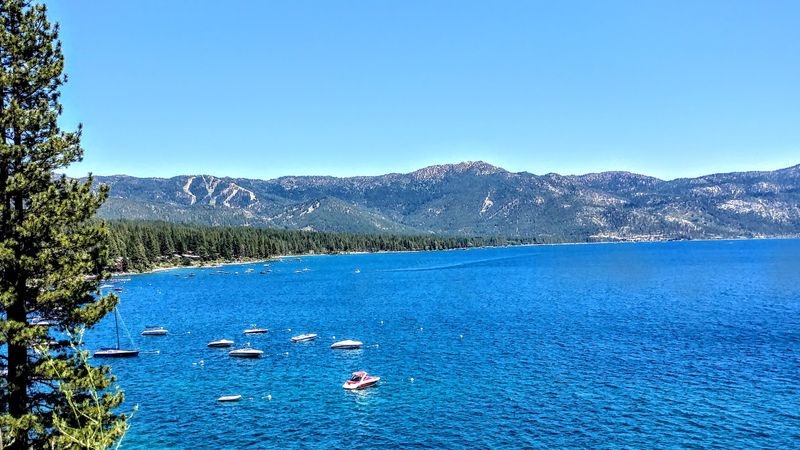
What makes this debate feel so urgent to so many people is the way Lake Tahoe’s hydrology works.
Snowmelt and mountain tributaries carry water down through the surrounding forest and into the lake, meaning that what happens on the hillsides above does not stay on the hillsides.
Residents fear that herbicides applied upslope could eventually migrate into streams, enter groundwater, or reach the lake itself over time.
The Forest Service has outlined several safeguards intended to prevent that outcome, including a prohibition on applying herbicide within 100 feet of any water body and a restriction on spraying before forecasted heavy rainfall.
Officials maintain that selective and targeted application would adequately protect the lake’s water quality and aquatic ecosystems.
The Tahoe Regional Planning Agency has taken the concern seriously enough to expand its water quality monitoring program, adding new testing for glyphosate downstream of the Caldor burn area.
That step reflects an acknowledgment that public trust depends on measurable data rather than assurances alone.
For a lake that draws visitors from around the world partly because of its legendary clarity, even the perception of compromised water quality carries consequences that extend well beyond environmental policy.
Backpack Sprayers Would Replace Aerial Spraying
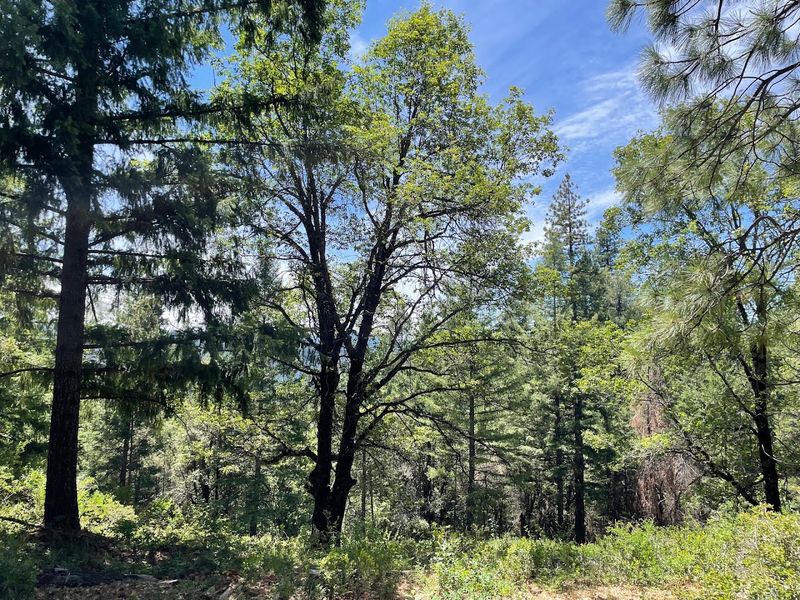
One of the more significant distinctions in the Forest Service proposal involves how herbicides would actually be applied.
Rather than aircraft releasing chemicals broadly across the forest canopy, the plan calls for targeted ground-level application using calibrated backpack sprayers.
Additional methods like cut stump treatment, basal bark spray, and thinline application are also part of the toolkit, all designed to treat specific plants rather than blanketing large areas.
The difference between aerial and ground application is not trivial. Backpack methods allow workers to target individual shrubs or competing vegetation while leaving surrounding plants untouched.
That precision is meant to reduce the total volume of chemicals used and limit the potential for unintended contact with non-target species or nearby water features.
Even so, critics have not been fully satisfied by the ground-application framing.
Concerns about chemical drift on windy days, surface runoff during rain events, and the cumulative effect of repeated treatments over a multi-year project remain central to the opposition.
The argument is not simply about the delivery method but about whether any level of herbicide use near such a sensitive lake can be managed with enough consistency and oversight to prevent long-term harm.
Environmental Groups Are Not Completely United
A debate this charged might seem like a clean standoff between government officials and environmentalists, but the reality is more layered.
The League to Save Lake Tahoe, widely known by its slogan Keep Tahoe Blue, has taken a notably nuanced position.
After reviewing the Forest Service’s detailed plans, the organization stated that any herbicide use in the project would be cautious, limited, closely monitored, and accompanied by environmental protections.
The League also emphasized that herbicides should be treated as a last resort rather than a routine tool.
That position places Keep Tahoe Blue in a different camp from groups like the Sierra Club, which has called on Congress to intervene and halt herbicide use entirely until more thorough environmental analyses are completed.
The difference in approach reflects genuine disagreement about risk tolerance, trust in federal agencies, and the relative urgency of forest recovery versus chemical caution.
For community members trying to form their own views, the lack of a unified environmental voice can feel disorienting.
When respected conservation organizations read the same plan and reach different conclusions about its acceptability, it signals that the tradeoffs involved are genuinely complex.
The internal debate among environmental groups has added texture to the public conversation and pushed both agencies and advocates to be more specific about what safeguards they consider sufficient.