This San Francisco, California Beach Reveals A 19th-Century Clipper Shipwreck At Extremely Low Tide
Most beach walks end with shells, driftwood, or a few windblown photos. Every so often, the ocean gives up something far stranger.
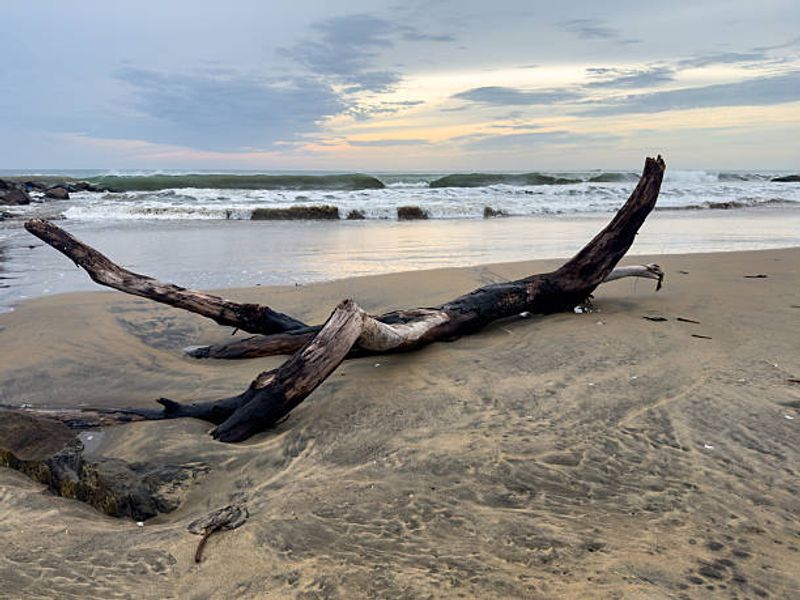
At extremely low tide, dark wooden ribs can emerge from the sand near the shoreline. They belong to a 19th-century clipper ship that met its end more than a century ago.
For much of the year, waves and shifting sand keep the remains almost completely hidden.
This part of California turns an ordinary coastal stroll into a brief encounter with maritime history.
Timing matters. Tide levels must drop far enough, beach conditions can change quickly, and no two appearances look exactly alike.
One visit may reveal only a few weathered beams. Another may expose a much larger outline stretching across the wet sand.
Catching the wreck at the right moment feels like discovering a secret the ocean was willing to share for only a few hours.
Most Visitors Walk Right Over The Wreck
There is something quietly extraordinary about a beach that keeps a 150-year-old secret buried just inches below your feet.
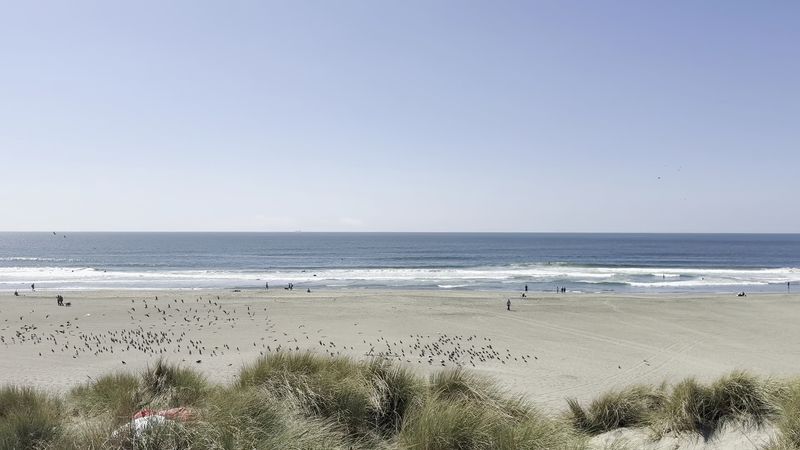
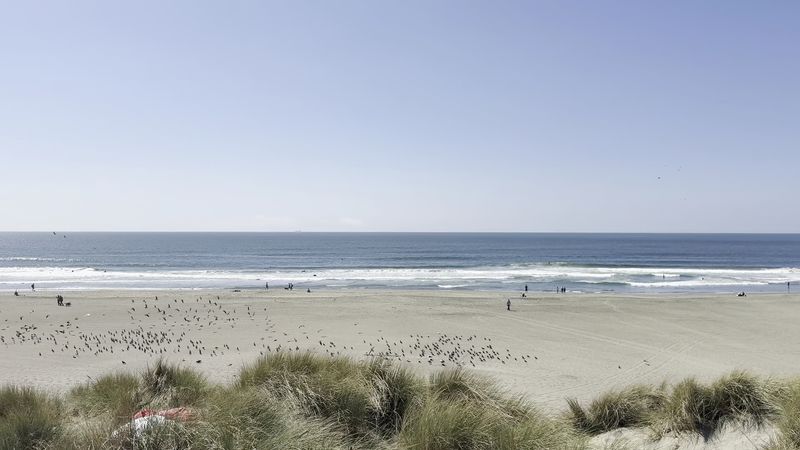
The remains of the King Philip generally rest completely hidden beneath the sand and surf at Ocean Beach, and most people who visit never realize a 19th-century sailing ship lies directly underfoot.
Beachgoers can pass over the wreck without any visible sign of what rests below.
Only a rare combination of erosion, shifting sand, powerful storms, and very low tides can uncover its heavy wooden timbers.
Each element must align just right, which is part of what makes every reappearance feel genuinely special rather than routine. The beach does not offer scheduled reveals or posted warnings.
That unpredictability has transformed each sighting into a notable local event that draws photographers, historians, and curious walkers from across the Bay Area.
Residents who have walked Ocean Beach for decades sometimes go years without ever catching a glimpse of the structure.
Knowing the wreck could be lying just beneath the surface on any given walk adds a layer of quiet mystery to every visit here.
The Ship Was Built Before The Civil War
Long before the Civil War changed the country forever, a wooden-hulled clipper ship was taking shape on the banks of the Sheepscot River in Alna, Maine.
The King Philip was launched in 1856 and built for William T. Glidden of the Boston-based shipping company Glidden and Williams, a firm involved in long-distance maritime trade connecting the East Coast with ports around the world.
Its three towering masts, large spread of canvas, and sturdy wooden hull were designed specifically for speed during an era when sailing vessels still carried valuable cargo across enormous ocean distances.
The ship regularly made the demanding run from the Eastern United States to San Francisco, a route that required navigating the notoriously violent waters around Cape Horn at the southern tip of South America.
That journey alone could take months and demanded a well-built vessel with an experienced crew. The King Philip was considered a capable and competitive ship for its time.
Understanding the era in which it was constructed helps explain why its surviving timbers carry such weight for maritime historians who study the golden age of American sail.
It Was A Genuine American Clipper Ship
Not every shipwreck tells a story worth traveling to hear, but the King Philip is different. The submerged timbers at Ocean Beach are not the remains of a modest fishing vessel or a small coastal schooner.
The King Philip was a medium clipper, part of a celebrated class of fast commercial sailing ships that defined American maritime ambition during the mid-1800s.
Measuring approximately 182 feet in length, the ship would have cut an imposing silhouette under full sail.
Maritime historians regard its surviving structure as exceptionally significant because very few physical remains of American medium clippers still exist anywhere.
The National Park Service has described the King Philip as the most complete remains of an American medium clipper and the only known structural remains of its kind.
That distinction elevates this site far beyond what its weathered appearance might suggest to a casual observer.
Standing next to an exposed timber and knowing it once formed part of a vessel that raced across the Pacific Ocean creates a connection to history that no museum exhibit can fully replicate.
The scale of those dark wooden beams makes the original ship feel almost impossible to comprehend.
The Ship Survived Two Mutinies And Fires
Few ships in American maritime history can claim a career as turbulent as the one the King Philip endured before it ever reached its final resting place on a San Francisco beach.
National Park Service accounts confirm that mutinous crew members set the vessel on fire deliberately on at least two separate occasions during its working life.
One of those fires occurred in Honolulu in 1869, after which the ship underwent significant repairs that included the installation of a new bow made from Douglas fir.
That repair detail is particularly interesting to historians because it preserved a record of the materials and methods used to restore a working clipper in the mid-Pacific during the 19th century.
The ship remarkably survived both destructive incidents and continued operating.
That resilience makes the story of the King Philip far richer than a simple tale of a ship running aground.
Every timber that occasionally surfaces on Ocean Beach carries the memory of fire, mutiny, and a vessel that refused to surrender easily.
A Rescue Emergency Led To The Disaster
January 25, 1878 started as a routine departure from San Francisco Bay, California, but a chain of unexpected events turned it into the final day of the King Philip’s working life.
The clipper was being guided outward through the Golden Gate by a steam tug, a common practice for large sailing vessels navigating the challenging tidal currents of the bay entrance.
Another ship nearby, the Western Shore, encountered a fatal accident involving its captain at almost the same moment.
The steam tug made the difficult decision to release the King Philip and redirect its attention to assist the distressed vessel.
Left suddenly without towing assistance in heavy open-ocean swells, the clipper dropped anchor in an attempt to hold position.
The anchor failed to grip the seafloor firmly enough, and the King Philip began drifting steadily toward the shore.
Heavy surf pushed the vessel further along until it became firmly stranded in the breaking waves of Ocean Beach.
That sequence of events, a selfless rescue attempt triggering an irreversible disaster, gives the wreck a bittersweet quality that sets it apart from ships lost simply to bad weather or poor navigation.
The Entire Crew Made It Safely Ashore
Despite the complete loss of the clipper, the grounding of the King Philip had one outcome that every maritime disaster hopes for: every crew member survived.
The stranding occurred close enough to shore and under conditions calm enough after the initial surf impact that the entire crew was able to reach the beach safely.
Once the tide receded, the ship rested so high on the expansive sand that curious spectators could walk directly up to its enormous wooden hull.
Contemporary accounts describe how the vessel struck the beach with considerable force, with timbers breaking apart and the rudder tearing away as the keel was crushed by the impact.
The sight of a full-sized ocean-going sailing vessel sitting on a San Francisco beach drew large crowds of onlookers.
The scene must have felt almost theatrical: a massive three-masted clipper, fresh from the Pacific, sitting on the same sandy shore where families and pedestrians walked every day.
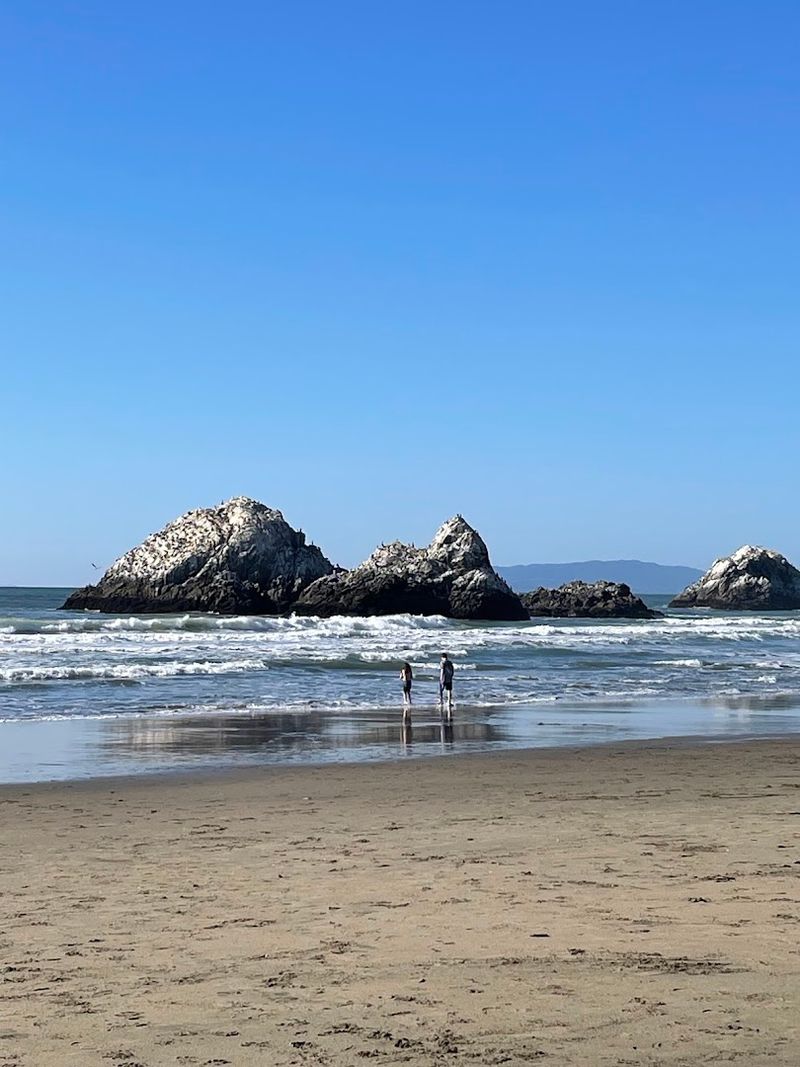
That image captures something essential about Ocean Beach, a place where the raw power of the Pacific occasionally collides with ordinary city life in ways that nobody can predict or fully prepare for.
Salvagers Stripped Away Its Valuable Parts
After the King Philip came to rest on Ocean Beach, it quickly became a commercial opportunity as much as a maritime tragedy.
The remains of the vessel were sold at auction to a San Francisco businessman for the sum of $1,050, a price that reflected the considerable value still locked inside its timber frame, metal fittings, and rigging.
Salvagers moved systematically through the wreck, pulling out sails, metal components, reusable fittings, and any hardware that could be repurposed or sold.
In some accounts, dynamite was reportedly used to break apart sections of the hull that proved too stubborn to dismantle by hand.
Anything that could not be efficiently recovered was simply left behind and abandoned to the elements.
The lower hull gradually settled deeper into the wet sand as tides and weather worked around it over the following months and years.
Layer by layer, sand accumulated over the remaining structure until the beach reclaimed what the salvagers had left behind.
That slow burial process is precisely why the wreck can still emerge today, protected by the same sand that covered it, waiting for the right storm and the right tide to bring it briefly back into view.
Another Ship Wrecked In Nearly The Same Spot
The King Philip was not the last vessel to lose its battle with this particular stretch of California coastline.
In 1902, the wooden schooner Reporter met its end near the exact same location on Ocean Beach, adding another layer of maritime history to a site that was already historically significant.
Over time, the remains of the Reporter became physically intertwined with those of the older clipper beneath the shifting sand.
A contemporary newspaper account from 1902 noted that the Reporter was rapidly digging its own grave alongside the bones of the King Philip, whose ribs were still visible at the time.
That vivid description captures just how close the two wrecks actually were to each other.
National Park Service records confirm that the remains of the two vessels are now intermingled beneath Ocean Beach.
For visitors who manage to catch a glimpse of exposed timbers, this means that what they are seeing may represent more than one shipwreck and more than one story.
The site has quietly accumulated more than a century of maritime loss in a stretch of beach that most San Franciscans walk without ever suspecting its complicated history.