Almost No One Has Heard Of This Incredible Hidden Palace In Georgia
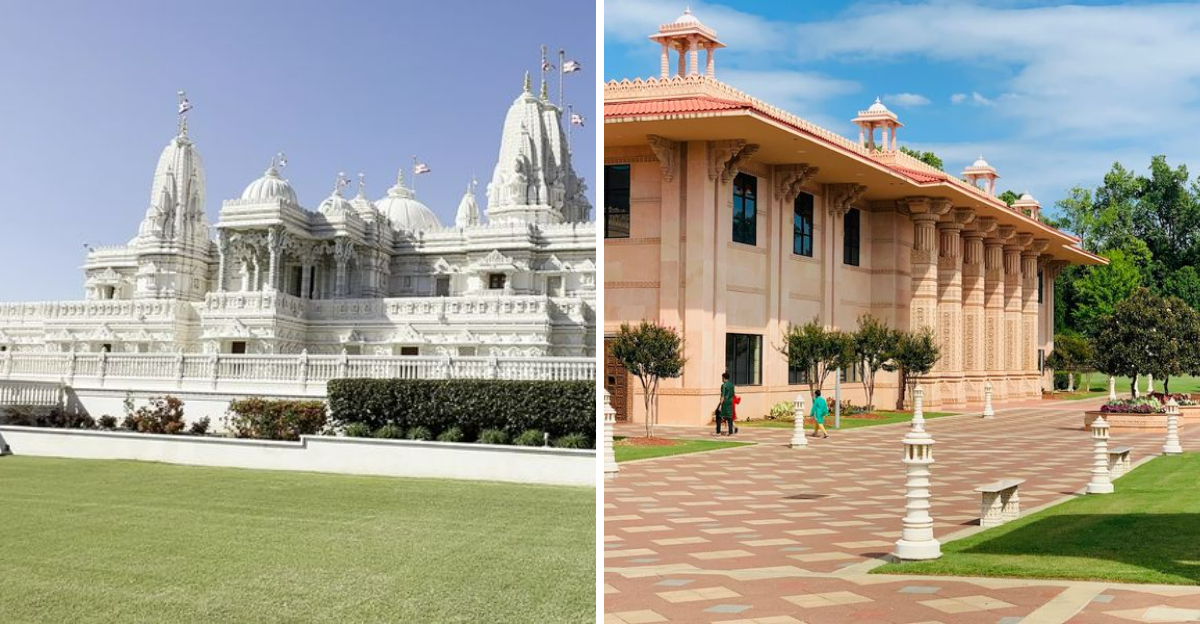
I almost missed it completely. One wrong turn down a quiet road and there it was, white marble catching the light like something dropped from another century.
I sat in my car for a full minute just staring. Georgia hides more than sweet tea and peach orchards, I’ve learned that much by now, but this stopped me cold.
No signs pointed here. No crowds lined up with cameras.
Just silence, stone columns, and a feeling that I’d wandered into someone else’s secret. I’ve chased plenty of roadside curiosities across this state, yet none made me feel like I’d cracked open a hidden storybook quite like this one.
A single photo doesn’t do it justice. Once you see it in person, you’ll understand why so few people ever talk about this corner of Georgia.
A First Glance That Stops You Cold
Some buildings whisper at you. This one shouts in the most elegant way possible.
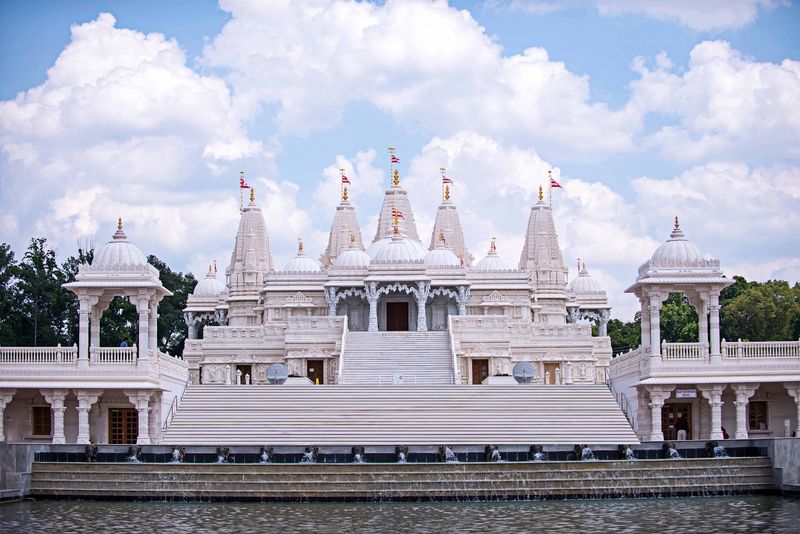
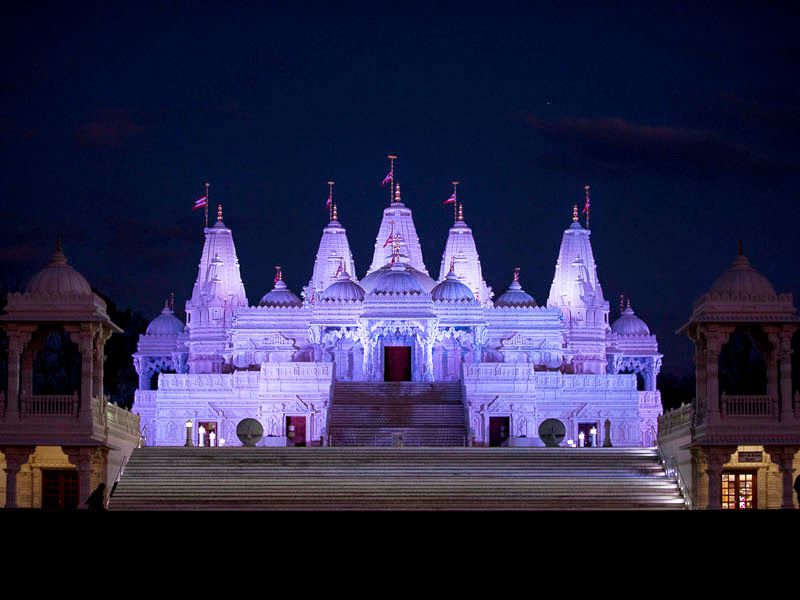
The first sight of those gleaming white spires rising above the Georgia treeline is genuinely shocking. Nothing around it prepares you for the scale or the beauty.
Your brain takes a second to catch up with your eyes.
The structure looks like it belongs in a storybook about faraway kingdoms. Every dome and tower is carved with breathtaking detail.
Standing there with your jaw open feels completely appropriate.
This is BAPS Shri Swaminarayan Mandir, Atlanta, located at 460 Rockbridge Rd NW, Lilburn, GA 30047. It is one of the most visually stunning places in the entire southeastern United States.
Most people driving through Georgia have no idea it even exists.
The reflection of the white stone in the surrounding water makes the whole scene feel almost unreal. It is the kind of place that makes you reach for your phone immediately.
You want proof that you actually saw it.
Ancient Blueprints Built Into Every Stone
Architects use computers today. The people who designed this place used thousand-year-old books instead.
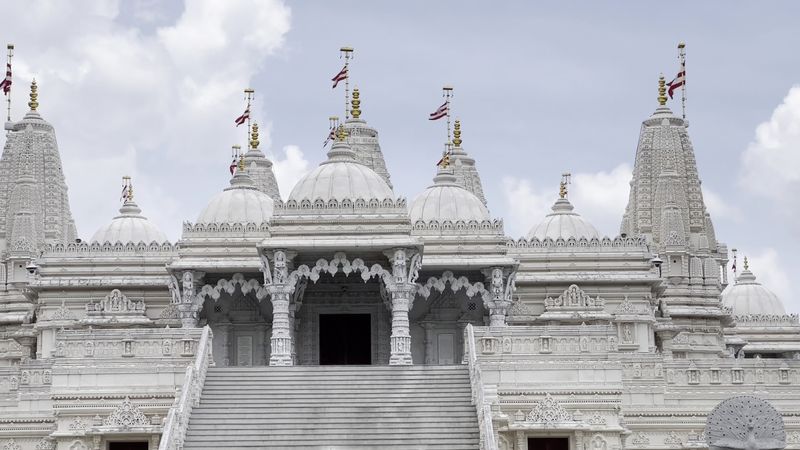
Every measurement, curve, and proportion follows ancient Hindu architectural texts called the Shilpa Shastras. These sacred scriptures have guided temple construction for centuries.
Nothing here was designed casually or by accident.
The rules set out in these texts govern everything from the height of the spires to the spacing of the pillars. Following them was not optional.
It was a matter of deep spiritual respect for the tradition.
What makes this even more remarkable is that modern engineers had to interpret ancient Sanskrit instructions. They then translated those instructions into a building that had to meet American construction standards.
That balancing act alone is extraordinary.
The result is a structure that feels both timeless and precise. Every line serves a purpose rooted in centuries of wisdom.
You are not just looking at a pretty building when you stand here. You are looking at a living document of one of the world’s oldest architectural traditions, expressed in stone and set down in suburban Georgia.
Marble From Three Continents, One Vision
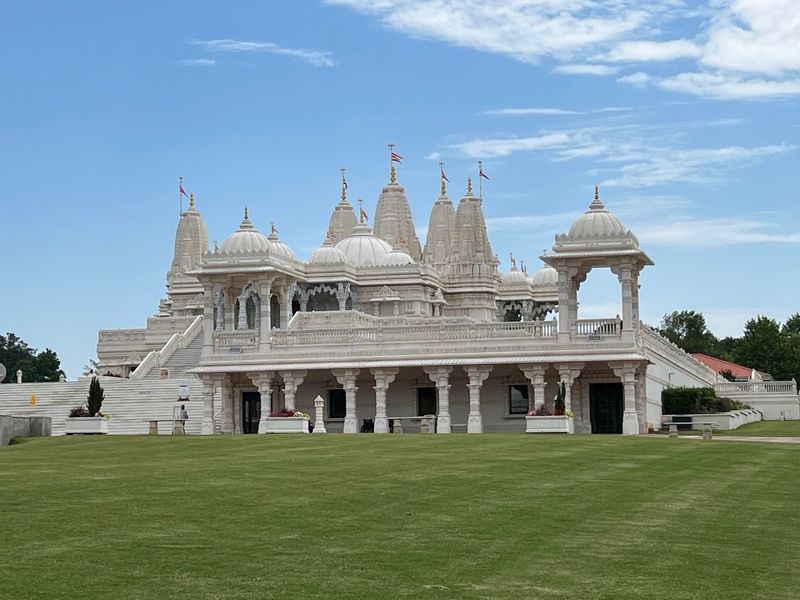
Building a temple that looks this good requires serious shopping. The team sourced materials from three continents.
The structure uses Italian marble, Turkish limestone, and Indian pink sandstone. Each material was chosen for its color, durability, and beauty.
Together they create a palette that feels both warm and luminous.
Italian marble brings a cool, bright white to the exterior. Turkish limestone adds depth and texture to certain sections.
The Indian pink sandstone gives the whole composition a rosy warmth that shifts beautifully in different light.
Seeing all three materials working together is one of the quiet joys of visiting this place. Up close, you notice how each stone has its own character.
The contrast between them is subtle but genuinely gorgeous.
The total structure is made up of 34,450 individual pieces of stone. That number is almost impossible to picture until you are standing in front of the building.
Every single piece fits together with remarkable precision using traditional interlocking stone construction inspired by ancient temple-building techniques. The stones support each other entirely through traditional joinery and expert placement.
17 Months And 1.3 Million Volunteer Hours
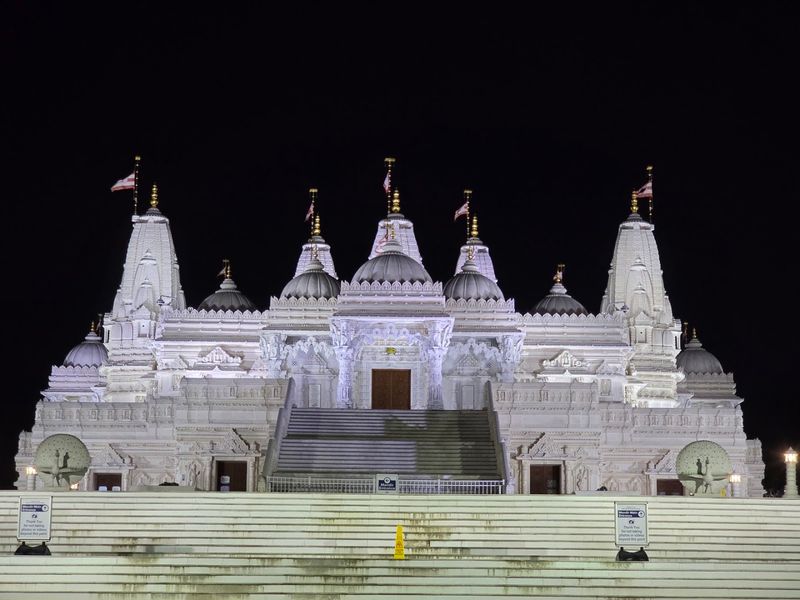
Speed and beauty rarely go together. This place somehow managed both at once.
The entire construction was completed in just 17 months from start to finish. For a project of this scale and complexity, that timeline is staggering.
Most buildings a fraction of this size take longer to complete.
The secret behind that pace was people. An astonishing 1.3 million volunteer hours went into building this mandir.
Devotees from across the country and beyond gave their time freely to make it happen.
These were not just unskilled helpers carrying bricks. Many volunteers had professional backgrounds in construction, engineering, and design.
They worked alongside trained craftsmen to assemble the carved stone pieces with care and accuracy.
The community effort behind this place gives it a completely different energy than most buildings. Every corner carries the fingerprints of someone who chose to be there.
That kind of collective dedication is almost impossible to manufacture.
When you walk through the space knowing that fact, the atmosphere shifts. It feels less like a tourist attraction and more like a gift.
A very large, very beautiful gift that an entire community decided to give to the world.
116 Archways And A Ceiling That Defies Logic
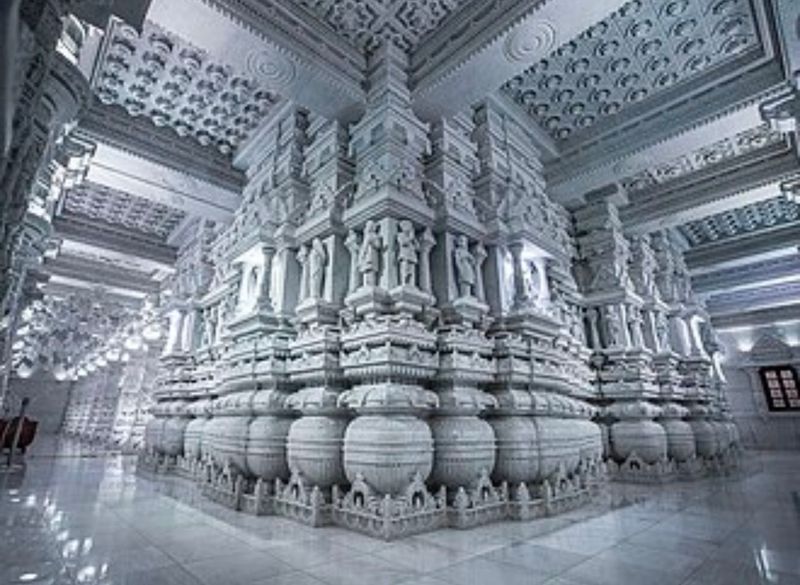
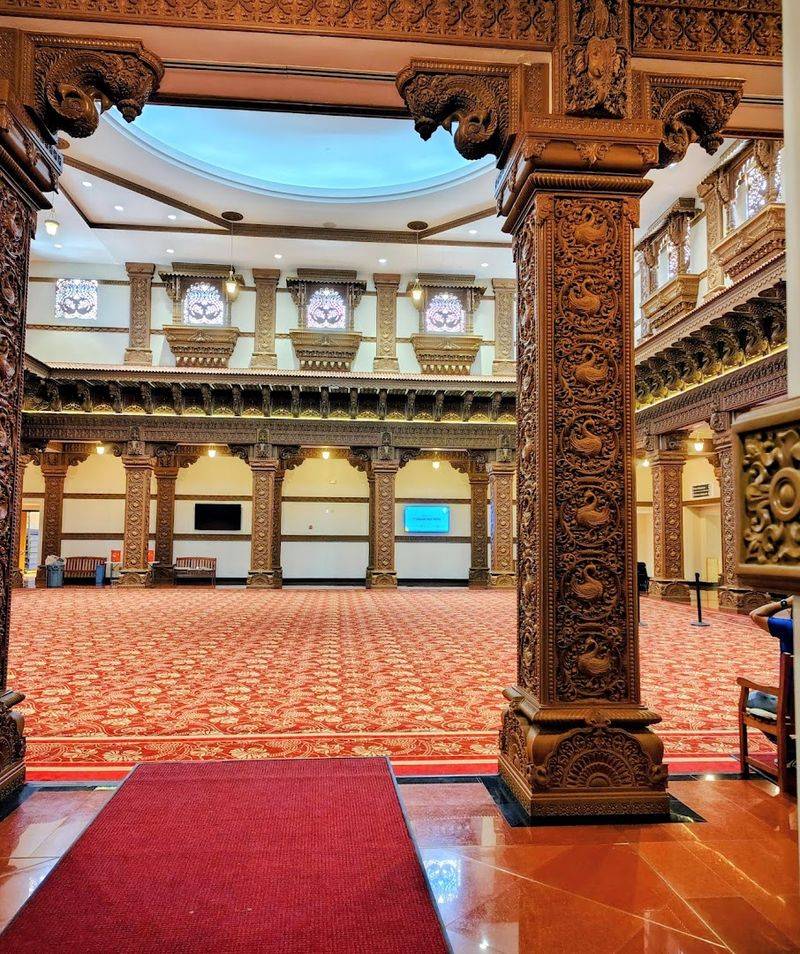
Walking inside feels like stepping into a completely different dimension. The numbers alone are staggering.
The interior features 116 archways, 340 pillars, and 86 decorative ceilings. Every single one of those elements is carved with intricate patterns.
The level of repetition without monotony is genuinely hard to explain.
Each pillar tells a slightly different story through its carvings. Figures of deities, flowers, geometric patterns, and mythological scenes cover every surface.
Your eyes keep finding new details no matter how long you look.
The ceilings are particularly jaw-dropping. Some feature concentric rings of carved petals that spiral toward a central point.
Others show elaborate geometric patterns that seem almost mathematically impossible to have carved by hand.
Ambient lighting in soft blues and purples reflects off the polished marble floors throughout the space. That lighting choice makes the whole interior glow in a way that feels intentional and deeply calming.
The air itself feels quieter here than anywhere outside.
Photography is not permitted inside, which is actually a blessing in disguise. It forces you to look with your eyes instead of your phone screen.
That undivided attention makes the whole experience land much more deeply.
Free To Enter, Open To Everyone
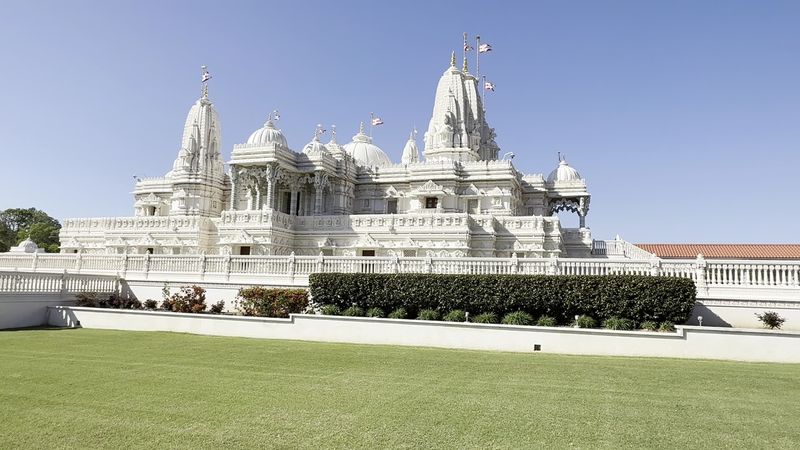
Here is a fact that surprises almost everyone who hears it. Entry to this extraordinary place is completely free.
No tickets, no reservations, no membership required. The doors are open to people of every faith, background, and nationality.
The only requirement is a respectful attitude and appropriate clothing.
The mandir welcomes curious visitors, students, families, and spiritual seekers equally. School field trips happen here regularly.
A middle school student once used a visit here as the centerpiece of a Social Studies project and came away genuinely inspired.
Parking is also free and plentiful, which removes one of the most common frustrations of visiting popular attractions. You can arrive, park easily, and spend as long as you like exploring the grounds and interior without any stress.
The temple is open Tuesday through Sunday from 9 AM to 6 PM. Planning your visit around those hours is simple.
Checking the website at baps.org/atlanta before you go is a smart move to confirm any special event schedules.
The combination of free admission and genuine openness to all visitors makes this place unusually generous. Few attractions of this caliber ask nothing in return.
That generosity is part of what makes the whole experience feel so warm.
The Arti Ceremony Is Something You Will Not Forget
There are experiences that change the way you understand a place. Witnessing the Arti ceremony at this mandir is one of them.
Arti is a traditional Hindu prayer performed with small lighted wicks and accompanied by devotional music. The ceremony happens daily at 11:15 AM inside the mandir.
Visitors are welcome to observe respectfully.
The combination of soft chanting, flickering light, and the faint scent of incense creates an atmosphere unlike anything most visitors have encountered before. It is deeply calming and surprisingly moving, even for those unfamiliar with Hindu traditions.
The ceremony itself is brief, but its effect lingers long after you leave the room. Something about the rhythm of the music and the stillness of the space makes everything feel slower and quieter.
It is a genuine sensory experience.
An exhibition area near the ceremony space offers context and explanation about the core values of the Swaminarayan tradition. Reading through those panels before or after the ceremony adds real depth to the visit.
You leave understanding not just what you saw, but why it matters.
Attending the Arti without prior knowledge is perfectly fine. The volunteers nearby are knowledgeable and happy to explain what is happening at any point during the experience.
Shayona Cafe Serves Food Worth Planning Around
Nobody expects to find great food next to one of the most beautiful buildings in Georgia. And yet, here we are.
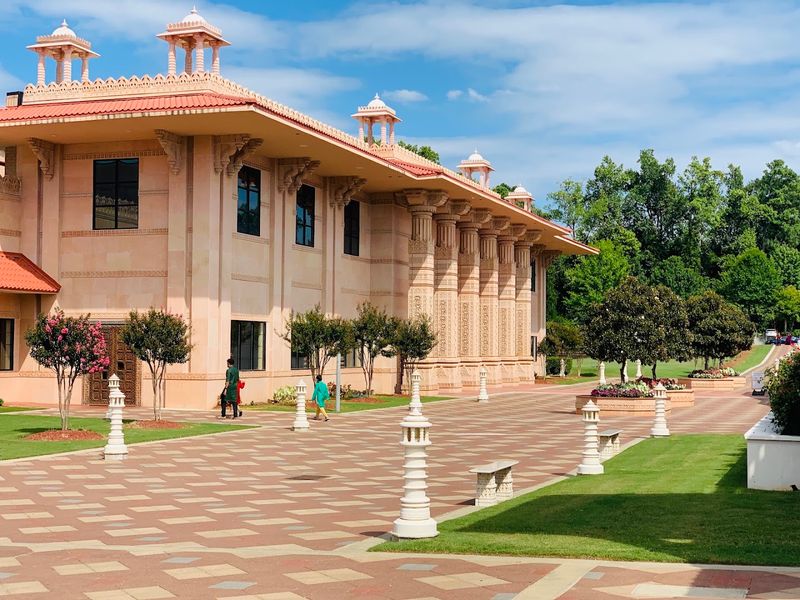
Shayona Cafe sits on the temple campus and serves fresh, traditional vegetarian food. The menu is made without garlic or onion, following traditional Swaminarayan dietary guidelines.
That sounds limiting until you taste the food, and then it sounds like a very good idea.
The snacks, sweets, and full meals on offer are flavorful and generously portioned. Everything is made fresh, and the quality is consistently high.
The pricing is reasonable enough that you will probably order more than you planned to.
Finding no-garlic, no-onion vegetarian food of this quality anywhere in the Atlanta area is genuinely rare. The cafe fills a culinary niche that most restaurants do not even attempt.
Food lovers who follow specific dietary traditions will find it particularly exciting.
Eating here after a long walk around the grounds feels like a natural and satisfying conclusion to the visit. The calm atmosphere of the cafe matches the overall mood of the campus perfectly.
Nothing feels rushed or commercial about the experience.
The cafe is open during regular campus hours. Stopping in even for a small snack is highly recommended.
It adds a whole extra layer to what is already a memorable day out.
Why This Place Deserves A Spot On Every Georgia Bucket List
Georgia has a lot going for it. Mountains, coastlines, peach orchards, and legendary barbecue all make the list.
But this mandir belongs right at the top.
The combination of architectural brilliance, cultural depth, spiritual openness, and natural beauty on the grounds makes this place genuinely one of a kind. Few places in the southeastern United States offer the same combination of traditional Hindu architecture, intricate craftsmanship, and cultural significance.
People who visit once tend to come back with family and friends. The reaction of a first-time visitor seeing the building is something most people want to share with someone they care about.
The fact that entry is free makes the decision to visit a complete no-brainer. There is no financial risk, no reservation stress, and no complicated planning required.
You just show up, dress appropriately, and let the place do its thing.
This spot is the kind of discovery that makes you feel lucky. Lucky to have found it, lucky to live close enough to visit, and lucky that something this extraordinary exists and is open to everyone.
Georgia keeps its best secrets well. This one is worth uncovering.