12 Affordable Central California Day Trips That Feel Like A Full Vacation For Under $65
A full day away does not have to come with hotel costs or a carefully planned itinerary.
Sometimes the best escape begins with a tank of gas and enough curiosity to follow a road you have ignored before.
A few hours can bring a complete change of scenery, a slower pace, and the satisfying feeling that the day stretched much farther than expected.
Central California makes an affordable kind of adventure surprisingly easy.
Hidden trails, breezy waterfronts, scenic overlooks, and quiet places to linger can all fit comfortably into a modest budget.
Many of them feel far removed from everyday routines, even when the drive is shorter than anticipated.
The real trick is knowing where your money goes furthest.
These twelve day trips prove that $65 can still cover a memorable outing without making the experience feel limited.
1. Big Sur Scenic Drive, Monterey County
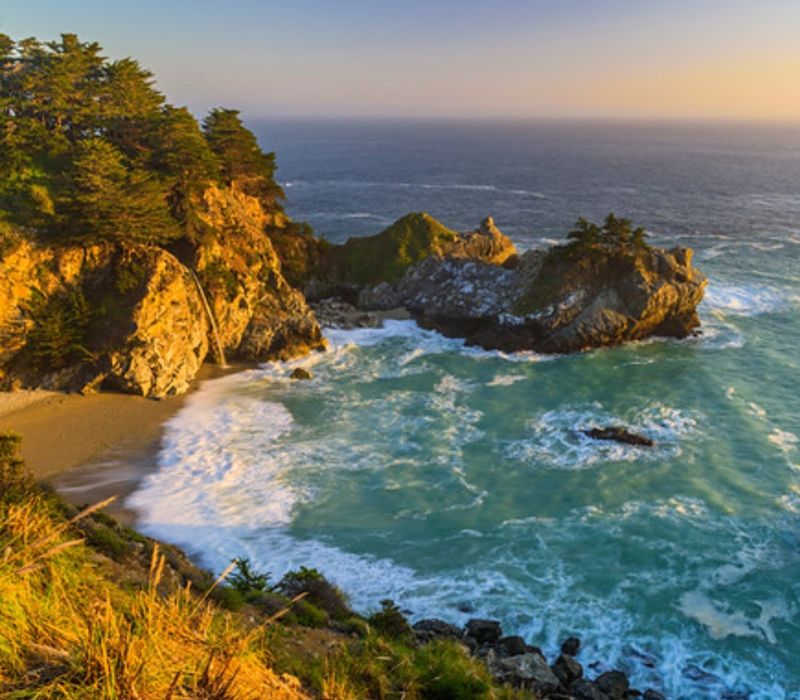
Few drives in the country match the raw drama of Highway 1 through Big Sur, where towering cliffs drop straight into the Pacific and redwood canyons appear without warning.
The roughly 90-mile stretch of road is free to travel, though gas, snacks, and optional park entrance fees should be factored into a $65 budget.
Cell service is nearly nonexistent throughout the region, so downloading offline maps before leaving home is a smart move.
Bixby Bridge, completed in 1932, is one of the most photographed landmarks along the route and is free to admire from the Castle Rock pullout just south of the bridge.
Stopping directly on the bridge is prohibited for safety reasons, but the viewpoint offers a stunning angle of the arch against the coastline.
McWay Falls at Julia Pfeiffer Burns State Park drops 80 feet onto a secluded cove and is viewable from a short half-mile trail with a $10 day-use fee per vehicle.
Traffic can be heavy on weekends, so an early start helps avoid congestion and secures better parking at popular pullouts along the way.
2. Hearst Castle, San Simeon
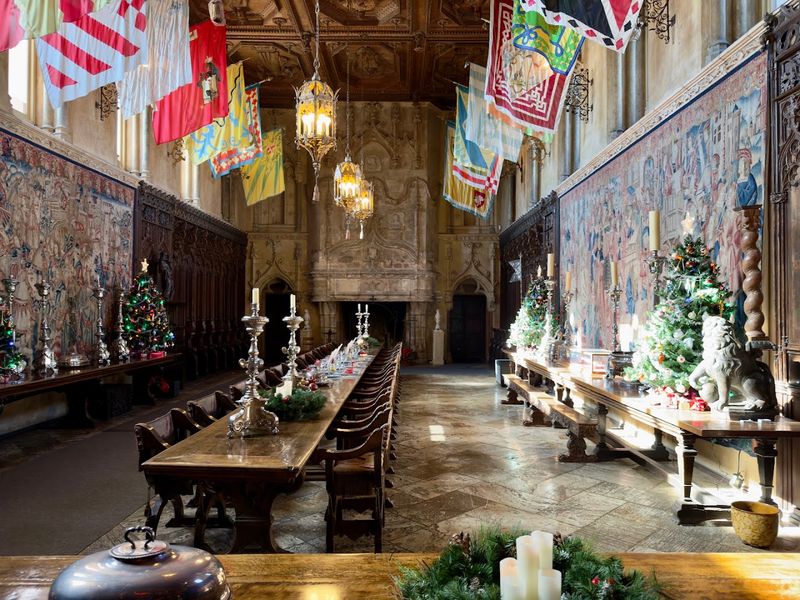
Perched high above the Pacific coastline on a hill once called Camp Hill by its owner, Hearst Castle stands as one of the most extraordinary private estates ever built in the United States.
The estate sits at 750 Hearst Castle Road, San Simeon, CA 93452, and tours are available through California State Parks with tickets typically ranging from $25 to $100 depending on the tour type.
The Grand Rooms Tour is one of the most popular options for first-time visitors and provides access to the main building’s ornate interior spaces.
Construction began in 1919 and continued for nearly 28 years, resulting in a 165-room complex filled with European antiques, hand-painted ceilings, and two elaborate swimming pools.
The Neptune Pool, an outdoor marvel lined with classical sculptures and marble colonnades, is genuinely unlike anything else in California.
The Visitor Center at the base of the hill includes a museum and a large-format theater showing a documentary about the estate’s history.
Timed shuttles transport visitors from the Visitor Center up to the hilltop, and comfortable walking shoes are recommended since tours involve stairs and uneven terrain.
Advance ticket purchases are strongly encouraged to avoid sellouts on busy weekends.
3. Morro Bay and Morro Rock, Morro Bay
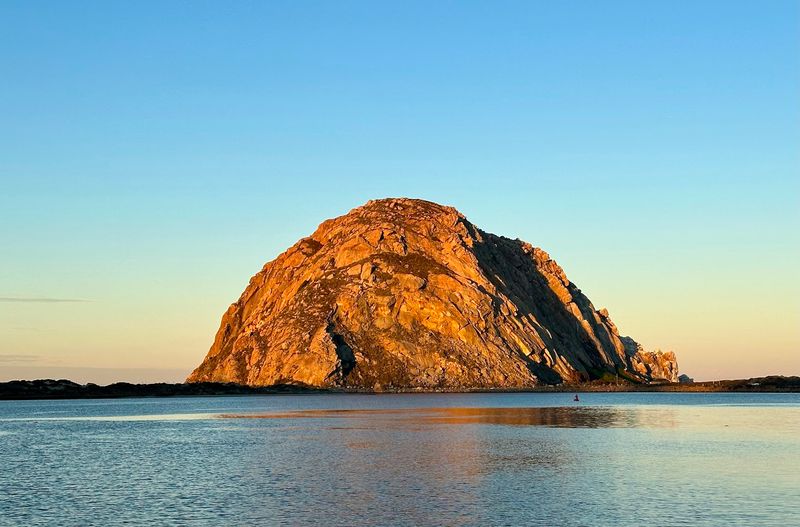
Standing 581 feet tall at the edge of the Pacific, Morro Rock is a volcanic plug that has anchored the identity of this Central California fishing town for centuries.
The rock itself is a California Historical Landmark and a protected nesting site for Peregrine Falcons, meaning climbing is not permitted, but walking around its base along the breakwater is free and genuinely satisfying.
The surrounding Morro Bay State Park offers tide pools, hiking trails, and a natural estuary that attracts a wide variety of shorebirds.
Strolling the Embarcadero, the town’s waterfront promenade, connects visitors to local seafood stands, kayak rentals, and harbor views without requiring much spending.
Kayak or paddleboard rentals are available from several outfitters along the waterfront and typically cost around $20 to $30 per hour, which fits comfortably within a $65 daily budget.
The calm harbor waters make paddling accessible even for beginners.
Morro Bay State Park Museum of Natural History charges a small admission fee and covers the ecology of the estuary in an engaging and informative way.
Weekday visits tend to feel noticeably quieter than weekends, giving the whole area a more relaxed and unhurried pace that makes the trip feel like a genuine escape.
4. Montaña de Oro State Park, Los Osos
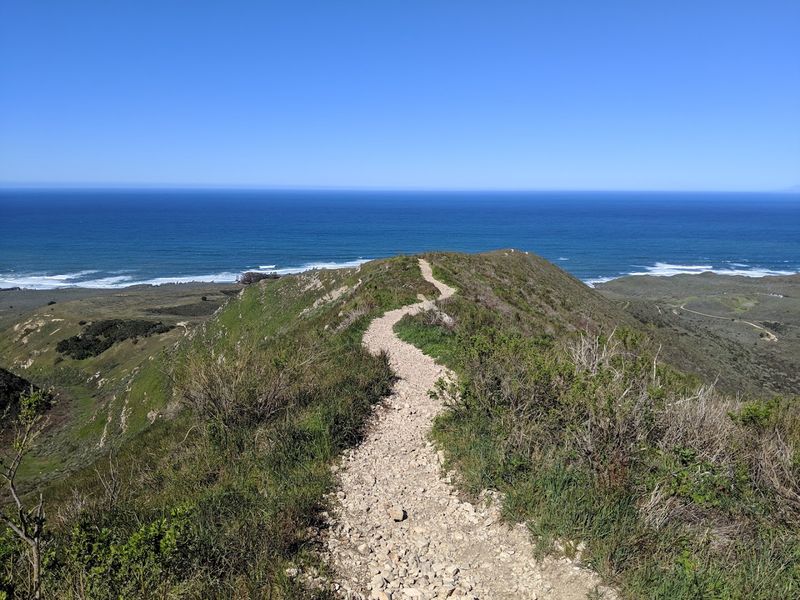
Translated as Mountain of Gold, Montaña de Oro earned its name from the golden wildflowers that blanket its hillsides each spring, though the park rewards visitors year-round with some of the most dramatic coastal scenery.
Entry to the park is free, making it one of the best budget-friendly outdoor destinations in San Luis Obispo County.
The park spans over 8,000 acres and includes rugged sea cliffs, tide pools, sand dunes, and eucalyptus groves.
The Bluff Trail is a relatively flat two-mile path that hugs the coastline and delivers consistent views of wave-carved rock formations and blowholes that send water spraying into the air on windy days.
Spooner’s Cove, a small sandy beach within the park, is a popular spot for picnicking and watching the surf roll in without needing to spend anything.
The cove has restroom facilities and a small parking area that fills quickly on weekends.
For those wanting more elevation, the Valencia Peak Trail climbs to 1,347 feet and offers sweeping views of the coastline stretching toward Morro Rock.
Bringing enough water and sunscreen is important since shade along the trails can be limited, especially during summer afternoons when the sun stays high and the wind picks up along the bluffs.
5. Pinnacles National Park, San Benito County
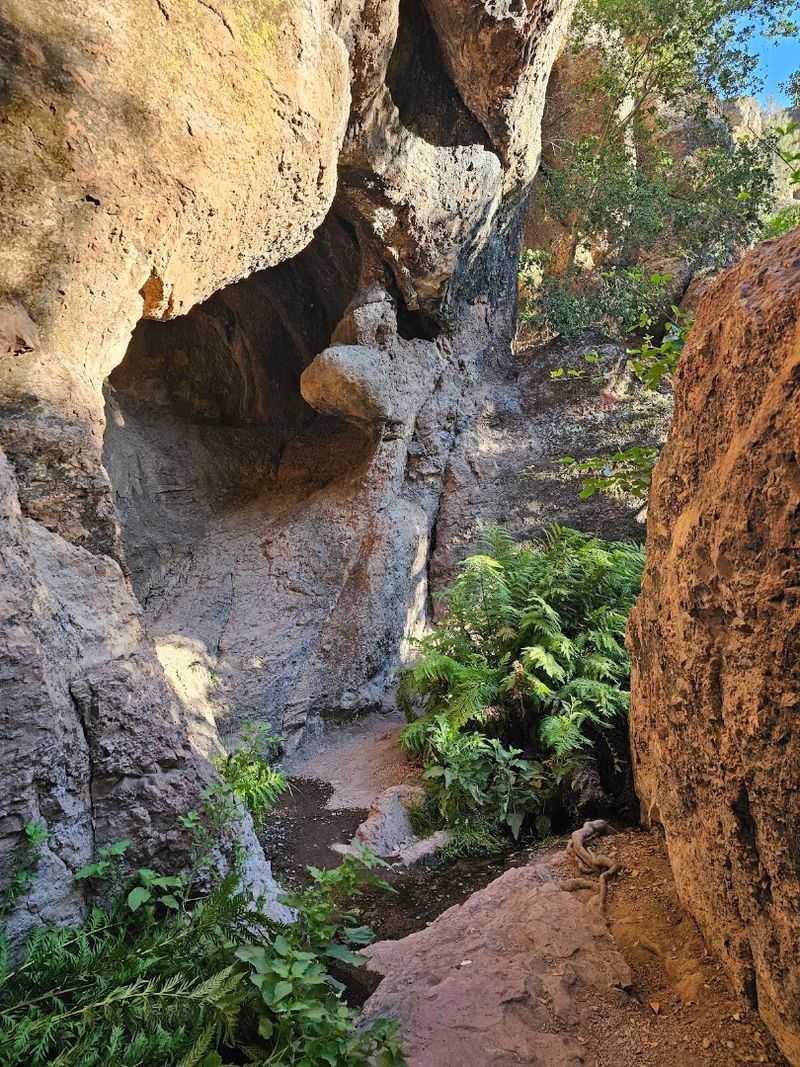
Rising dramatically from the surrounding chaparral, the towering spires and talus caves of Pinnacles National Park look like something from another planet entirely.
The park protects the eroded remnants of an ancient volcano and is one of the newer additions to the National Park system, having been designated a national park in 2013.
A standard vehicle pass costs $35 and is valid for seven days, making it an accessible option for a day trip budget.
The Balconies Caves Trail is a favorite for its combination of rock scrambling and cave exploration, where visitors squeeze through narrow passages with only a headlamp for guidance.
Flashlights or headlamps are required to navigate the caves and can be rented at the visitor center for a small fee.
The Bear Gulch Cave system is another option, though seasonal closures protect roosting Townsend’s big-eared bats during certain times of year.
Pinnacles is also one of the few places in the world where California Condors can be spotted soaring overhead, a remarkable sight given that the species was nearly extinct just decades ago.
Temperatures inside the park can climb significantly in summer, so early morning hikes are strongly recommended for comfort and safety on exposed rocky trails.
6. Sequoia National Park, Tulare County
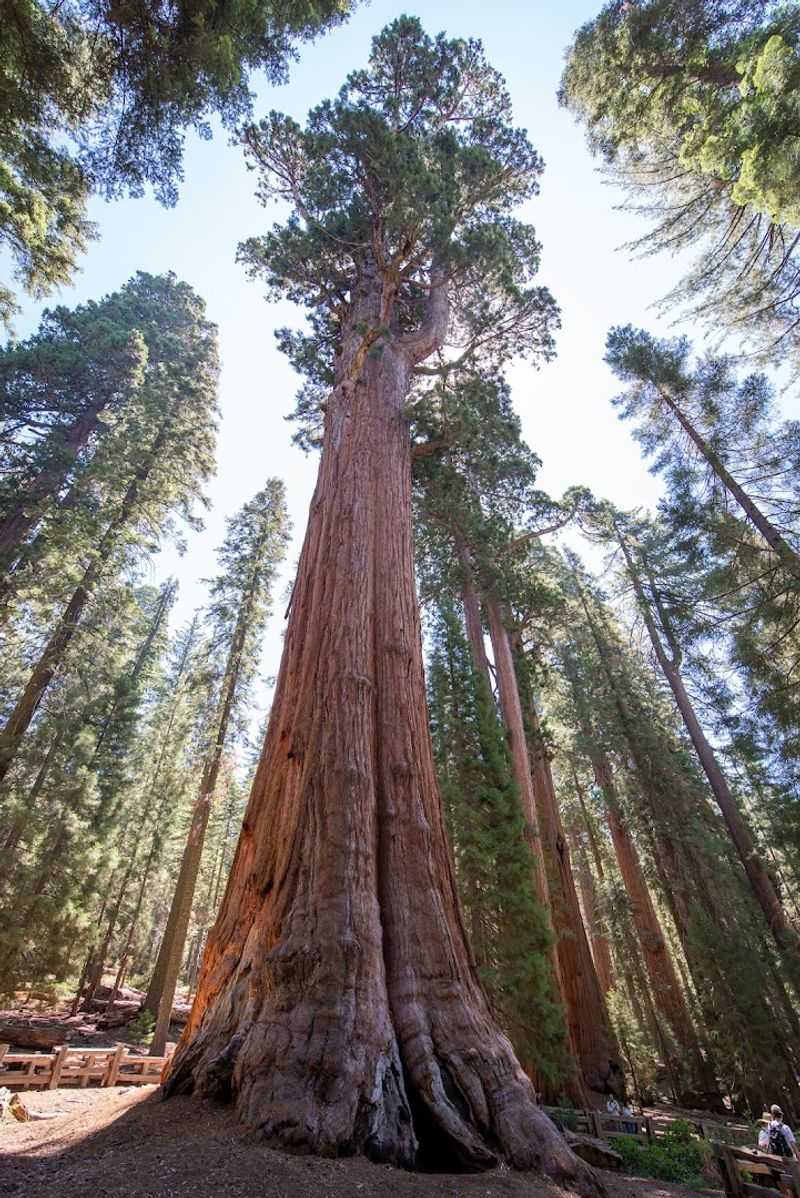
Standing next to a Giant Sequoia for the first time is the kind of experience that genuinely resets perspective, because no photograph fully prepares a person for how enormous these trees actually are.
General Sherman Tree, located in the Giant Forest of Sequoia National Park, holds the title of the largest tree on Earth by volume and is accessible via a short paved trail from the parking area.
A vehicle pass for Sequoia and Kings Canyon National Parks costs $35 and is valid for seven consecutive days.
The Congress Trail is a two-mile paved loop that winds through one of the densest concentrations of giant sequoias in the park and is manageable for most fitness levels.
Crescent Meadow, located nearby, offers a peaceful contrast to the towering forest with open grassy views and wildflowers that bloom through late spring and summer.
The drive into the park along the Generals Highway involves steep switchbacks and sharp curves, so allowing extra travel time is wise.
Tunnel Log, a fallen sequoia that was carved to allow vehicles to drive through it, is a quirky and memorable stop along the park road.
Summers are busy and parking at major trailheads fills early, so arriving before 9 a.m. on weekends makes a significant difference in the overall experience and stress level.
7. Point Lobos State Natural Reserve, Carmel-by-the-Sea
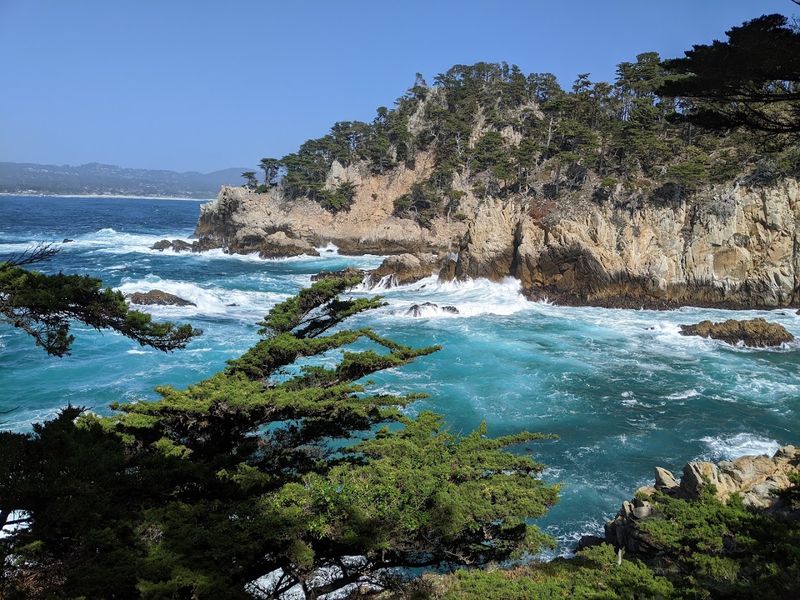
Called the crown jewel of the California State Park system by many naturalists, Point Lobos packs an astonishing variety of ecosystems into a relatively compact coastal reserve just south of Carmel.
The reserve protects rocky coves, kelp forests, cypress groves, and meadows that host everything from harbor seals to sea otters to black oystercatchers.
Day-use parking costs $10 per vehicle and the reserve can reach capacity quickly, especially on weekends and holidays.
Sea Lion Point Trail offers some of the most dramatic coastal views in the reserve, where waves crash against jagged rocks and sea lions bark from the offshore outcroppings below.
Whaler’s Cove and Bluefish Cove are popular spots for permitted scuba diving, with the underwater kelp forest considered one of the best dive sites in Northern California.
Non-divers can still enjoy the coves from above, watching the shifting light play across the remarkably clear water.
Allan Memorial Grove contains one of the last naturally occurring stands of Monterey Cypress trees in the world, their wind-twisted shapes creating a landscape that feels ancient and sculptural at the same time.
Staying on designated trails is strictly enforced to protect the fragile habitat, and leashed dogs are only permitted in the parking lot and on paved surfaces within the reserve.
8. Piedras Blancas Elephant Seal Rookery, San Simeon
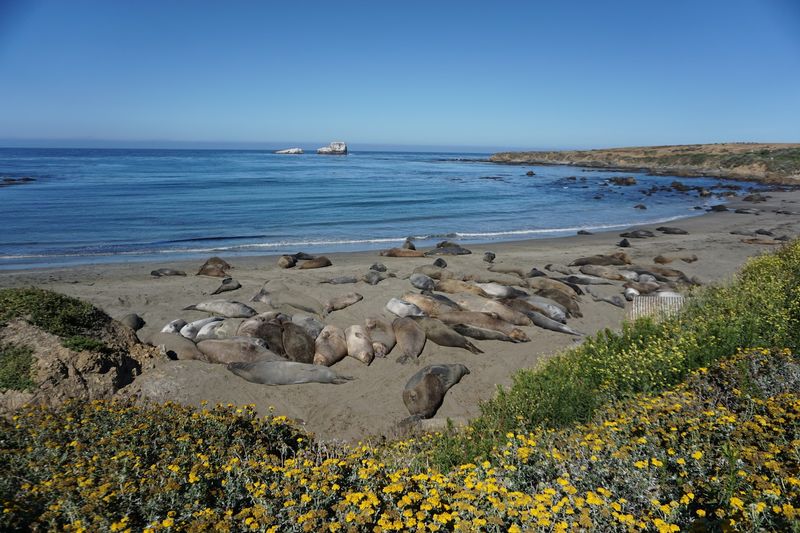
Watching hundreds of massive elephant seals pile onto a beach and completely ignore human observers is one of the stranger and more wonderful wildlife experiences available anywhere in California.
The Piedras Blancas Elephant Seal Rookery sits along Highway 1 about 4.5 miles north of Hearst Castle and is completely free to visit year-round.
Boardwalk viewing areas run along the bluff above the beach and put visitors remarkably close to the animals without disturbing them.
Northern elephant seals return to this beach in predictable seasonal cycles, with the largest gatherings occurring during pupping season from December through February and the summer molting season from July through August.
Docents from the Friends of the Elephant Seal are often present on weekends and offer free, informative commentary about seal behavior, biology, and conservation history.
The sounds, smells, and sheer scale of the colony create a sensory experience that sticks with visitors long after the drive home.
A small parking area is available along the highway and fills quickly during peak viewing seasons, so arriving early in the morning increases the chance of finding a spot easily.
Binoculars are useful for watching behavior across the full length of the beach, though the seals often rest close enough to the boardwalk that they’re visible with the naked eye.
9. Cambria and Moonstone Beach, Cambria
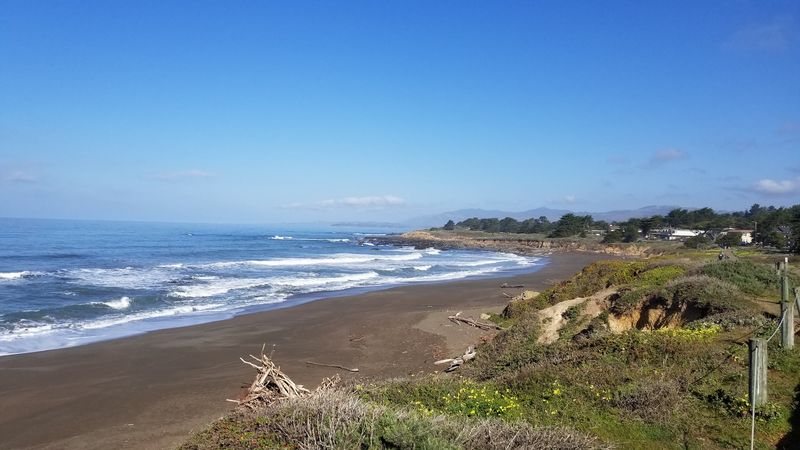
There’s a particular charm to Cambria that’s difficult to pin down exactly, a combination of salt air, pine trees, and a small-town pace that makes the whole place feel like a deliberate step away from modern noise.
Moonstone Beach is the town’s most iconic feature, a narrow stretch of shoreline where the surf deposits smooth agates and moonstones that visitors can search for freely along the waterline.
The Moonstone Beach Boardwalk runs parallel to the shore for about 1.5 miles and is flat, unpaved, and free to walk.
The boardwalk passes through coastal scrub habitat where ground squirrels dart between bushes and shorebirds pick through the kelp beds at low tide.
East Village and West Village, the two commercial sections of town, are walkable and filled with independent galleries, bookshops, and casual cafes that make for easy browsing without much pressure to spend.
A cup of coffee and a pastry from one of the local bakeries makes a fine and affordable morning alongside the ocean breeze.
Shamel Park, located at the north end of Moonstone Beach, has a small heated pool, picnic tables, and a playground that make it a comfortable stop for families.
Cambria tends to be cooler and foggier than inland destinations, so bringing a windproof layer ensures comfort during the walk regardless of the season.
10. Solvang and Mission Santa Inés, Solvang

In the Santa Ynez Valley, Solvang looks like a Danish village that somehow landed in the California foothills and decided to stay permanently.
The town was founded in 1911 by Danish settlers and has maintained its distinctive architectural style through generations, with windmills and thatched rooflines lining the main commercial streets.
Walking the town center is free and genuinely entertaining, with bakeries selling aebleskiver, a traditional Danish pancake ball, for just a few dollars per order.
Mission Santa Inés, founded in 1804, sits at 1760 Mission Drive, Solvang, CA 93463 and remains an active parish with a small museum open to visitors for a modest suggested donation.
The mission’s garden courtyard and original adobe walls offer a quiet contrast to the busier commercial streets just blocks away.
Historical displays inside the museum trace the mission’s role in California’s Spanish colonial period with artifacts and documents that provide genuine context.
The Hans Christian Andersen Museum, located above a bookshop on Mission Drive, is a small but charming tribute to the Danish author with free admission on most days.
Solvang is compact enough to explore entirely on foot, and the combination of cultural history, architecture, and affordable street food makes it easy to fill several hours without straining a budget.
11. Carrizo Plain National Monument, San Luis Obispo County
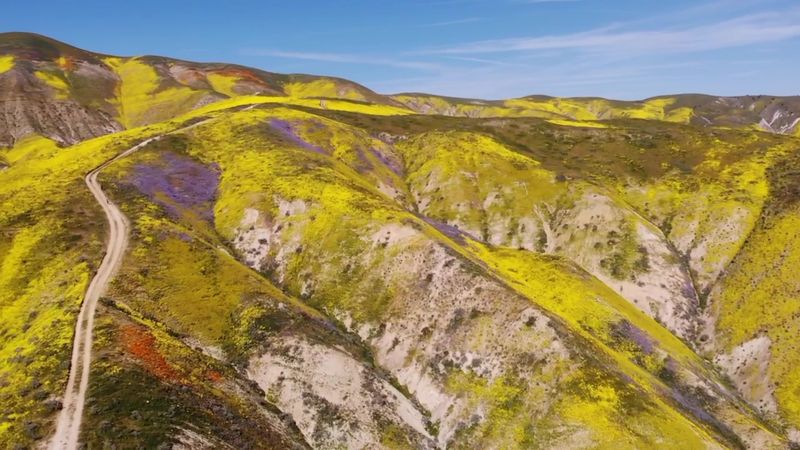
On a clear day, the Carrizo Plain feels like the edge of the world in the best possible way, an enormous flat basin ringed by mountains with almost no development visible in any direction.
Located in southeastern San Luis Obispo County, the monument is managed by the Bureau of Land Management and is free to enter year-round.
The plain is one of the largest remaining native grassland ecosystems in California and provides habitat for several endangered species including the San Joaquin kit fox and the pronghorn antelope.
Soda Lake, a shallow alkali lake at the center of the plain, draws large flocks of sandhill cranes and tule elk during fall and winter migrations, offering wildlife viewing that rivals much more famous destinations.
The Painted Rock site features a large sandstone outcropping covered in Chumash pictographs and is accessible via a guided walk during the spring season when the area is open to the public.
Spring wildflower blooms on the Carrizo can be spectacular in years with adequate rainfall, though bloom intensity varies significantly depending on winter precipitation.
Roads within the monument are unpaved and can become impassable after rain, so checking conditions through the BLM Bakersfield Field Office before visiting during wet weather is an important step.
Bringing extra water and food is essential since there are no services of any kind within the monument boundaries.
12. Fresno Chaffee Zoo, Fresno
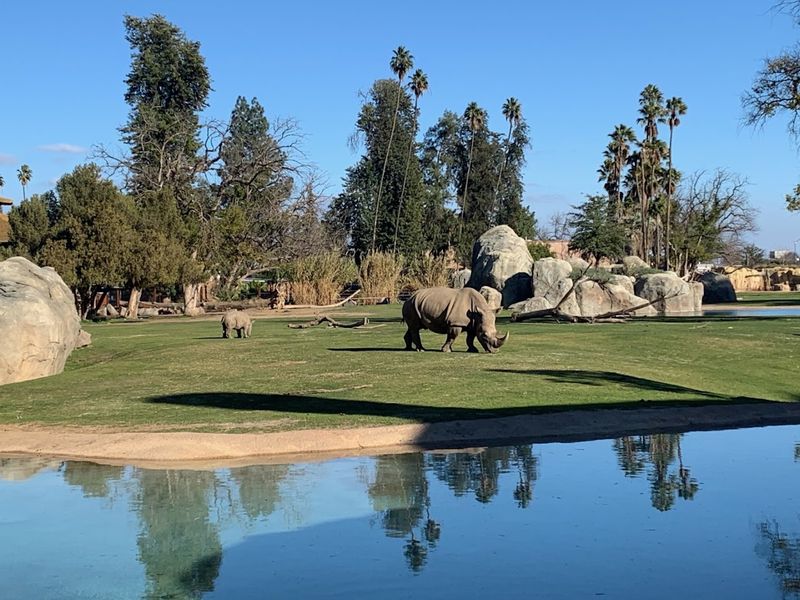
Spread across 65 acres in the heart of Roeding Park, the Fresno Chaffee Zoo offers a full day of animal encounters at a price point that fits easily into a modest budget.
At 894 W Belmont Ave, Fresno, CA 93728, the zoo is home to more than 190 species and has invested significantly in naturalistic habitat exhibits over recent years.
Adult admission is typically around $20 to $22, making it one of the more affordable accredited zoos in California.
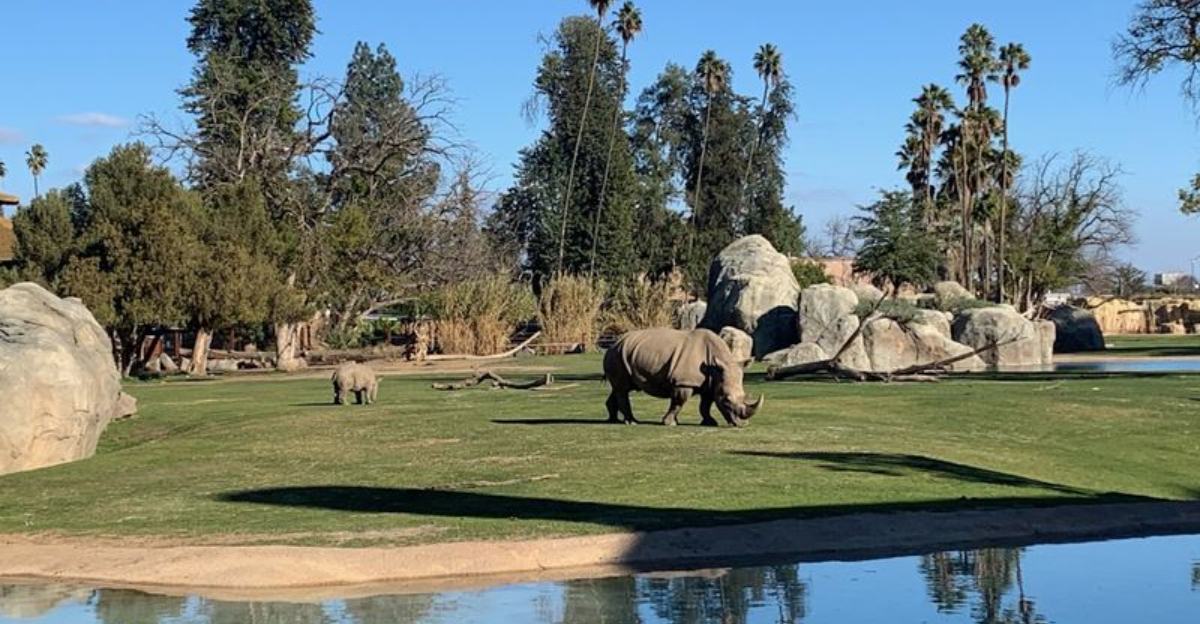
The African Adventure exhibit places visitors within close viewing distance of giraffes, rhinos, and zebras in a sprawling open habitat that feels genuinely spacious rather than confined.
The Stingray Bay touch pool is a popular interactive feature where visitors can gently touch cownose rays gliding through the shallow water, and the experience tends to be a highlight for younger visitors especially.
The zoo also operates a carousel and a train ride for small additional fees.
Weekday visits are noticeably less crowded than weekends, and morning hours offer cooler temperatures along with more active animal behavior before the afternoon heat sets in.
Fresno summers can be intensely hot, so planning a visit during spring or fall significantly improves the comfort of the experience from start to finish.