This Rebuilt Colorado Fort Was Once Where The Entire American West Crossed Paths
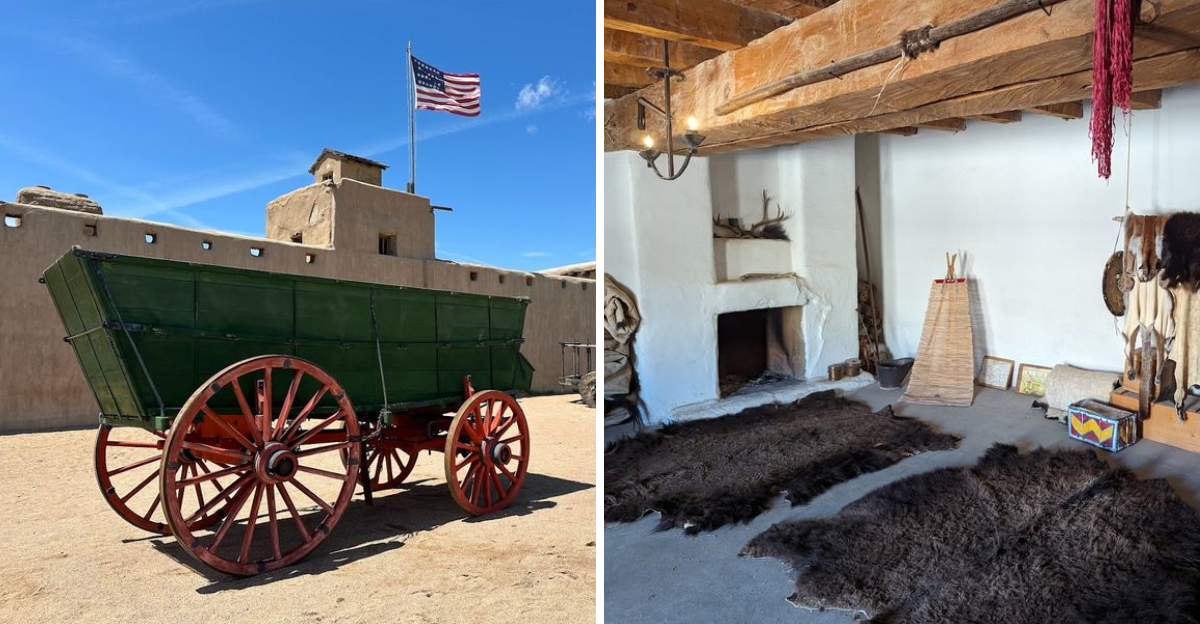
You do not expect a building made of mud to hold this much of a continent’s story. Yet here we are.
This one stood where two countries met and neither one entirely ruled. Traders, trappers, soldiers, and travelers all funneled through the same gate.
Cheyenne families camped outside while a bride from Missouri wrote in her diary upstairs. Somebody was probably arguing about the price of beaver pelts.
Kit Carson worked here, which is the kind of detail that stops a conversation. Then the whole thing was abandoned and left to melt back into the plains.
What you can visit now was rebuilt from old sketches and careful digging in the dirt. Staff in period clothing tend the rooms as though the traders might return tomorrow.
Come for the adobe and stay for everything that happened inside it, because this place in Colorado hosted the entire West before the West had a name.
The Story Behind It
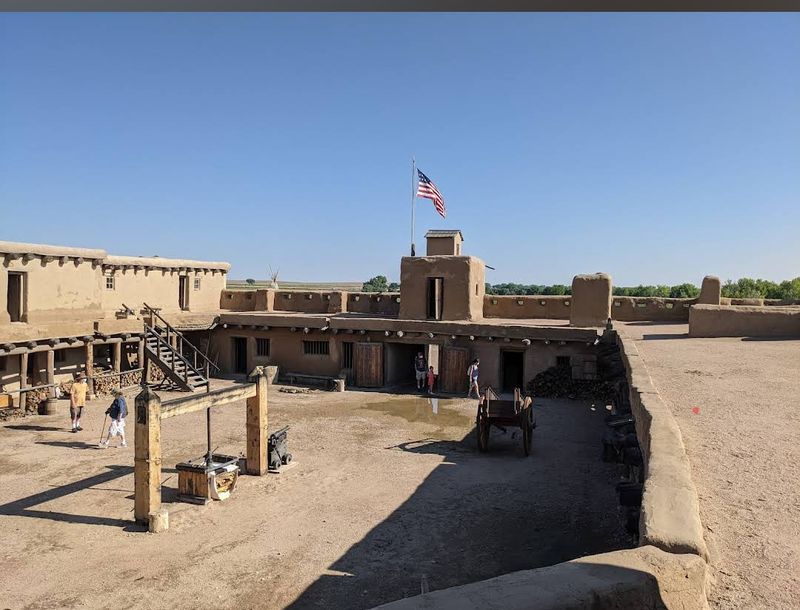
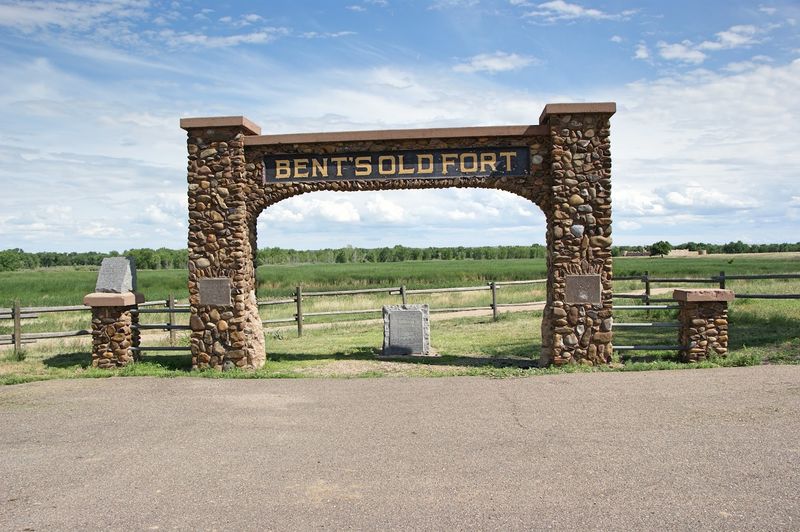
Bent’s Old Fort National Historic Site earns every bit of your attention from the moment you arrive. Built in the 1830s by brothers Charles and William Bent along with Ceran St. Vrain, this fort was the commercial heart of the entire southern plains trade network.
For roughly fifteen years, it was the only permanent American settlement between Missouri and Santa Fe. That is a staggering stretch of wilderness to anchor with one building.
Fur traders, Cheyenne and Arapaho peoples, Mexican merchants, and U.S. soldiers all passed through its thick adobe walls.
The original structure crumbled in 1849. What stands today is a painstaking 1976 reconstruction built by the National Park Service using original archaeological data.
Every room, every tool, every smell of woodsmoke is historically accurate. Visiting feels less like sightseeing and more like stepping into a moment that shaped an entire continent.
It is located at 35110 CO-194, La Junta, Colorado.
The Adobe Walls That Held The West Together
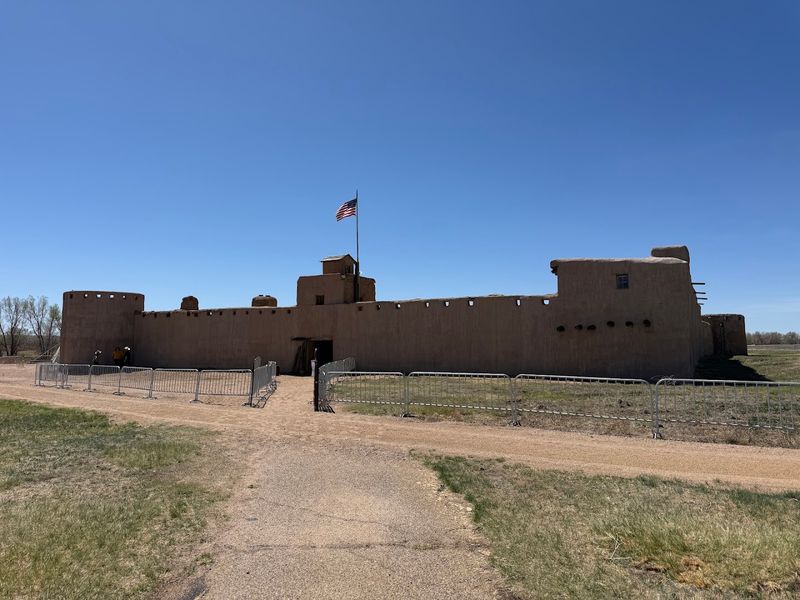
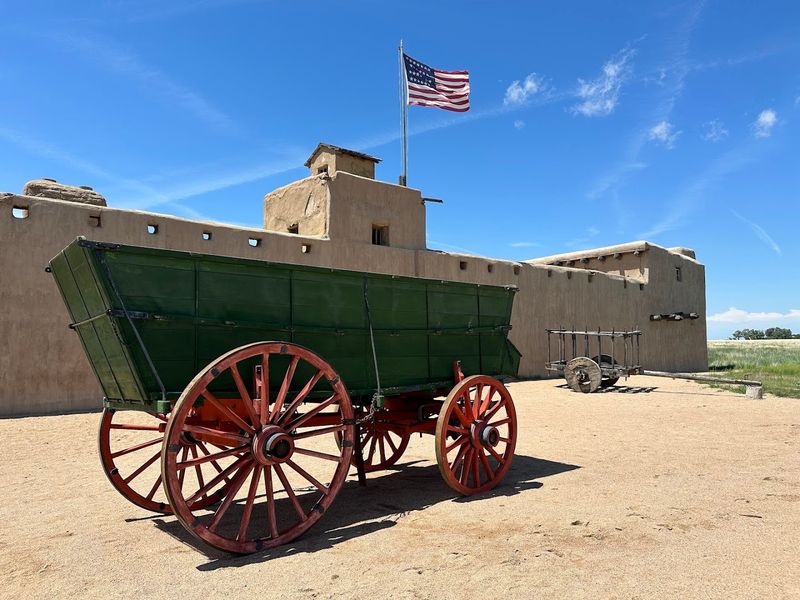
There is something quietly impressive about a wall made of mud that outlasted empires. The adobe construction at Bent’s Old Fort was not decorative.
It was practical, defensive, and surprisingly sophisticated for the 1830s frontier.
Walls stretched two feet thick in places. That kept the interior cool in summer and warm during brutal Colorado winters.
The design drew directly from Spanish colonial building traditions that had been used in the Southwest for centuries.
The fort measured roughly 180 by 135 feet, with bastions at two corners for defense. Workers used local clay mixed with straw and dried it in the sun.
It was labor-intensive but brilliantly suited to the environment. The reconstruction team in the 1970s matched the original dimensions almost exactly using archaeological survey data and period accounts.
Standing next to those walls today, you feel the weight of that history in a very physical way. They are not glamorous, but they are honest.
The Trading Post That Powered The Plains Economy
Before Amazon, before department stores, before railroads, there was a room inside Bent’s Old Fort where you could trade a beaver pelt for a metal cooking pot. That transaction shaped the economy of an entire region.
The fort operated as a full commercial hub for the southern Rocky Mountain fur trade.
Cheyenne and Arapaho traders brought bison robes and furs. Mountain men arrived with beaver pelts from the Rockies.
The Bent brothers exchanged these for manufactured goods shipped all the way from St. Louis. The markup was real, but so was the service.
There was simply nowhere else to go.
At its peak, the fort employed around 100 people. Blacksmiths, hunters, cooks, and interpreters all worked here.
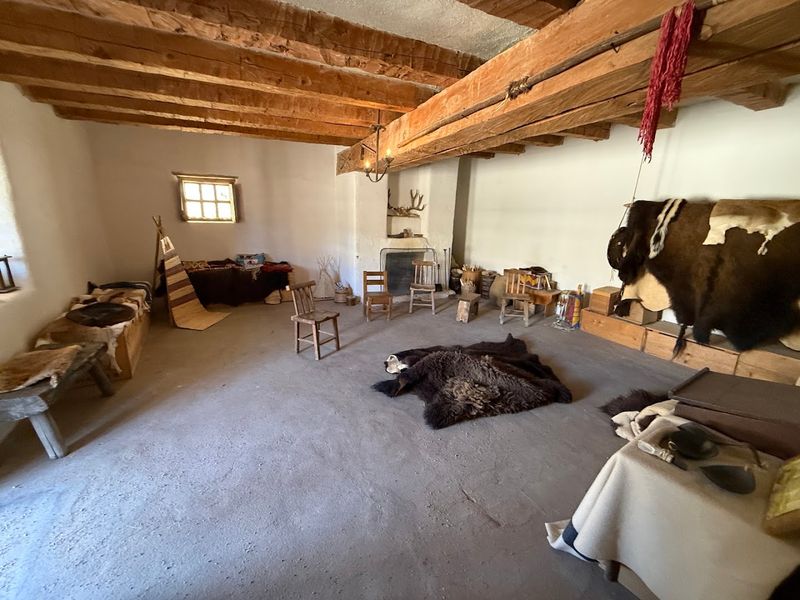
The trade room today is stocked with period-accurate replicas of goods that would have moved through the fort. Seeing it laid out like that makes the scale of the operation suddenly very clear.
This was not a small side business. It was a financial engine running on bison and beaver.
Native American Connections At The Fort
Most frontier forts were built against Native peoples. Bent’s Old Fort was built with them.
That distinction matters enormously. The Bent brothers understood that trade required relationship, and they invested in those relationships seriously and deliberately.
William Bent married Owl Woman, a Southern Cheyenne woman and daughter of a respected peace chief. That connection gave the fort credibility and safety in a region where tensions ran high.
The Cheyenne and Arapaho were not just customers. They were partners in a shared commercial ecosystem.
Historians note that the fort served as a genuine meeting ground where cultural exchange happened alongside commerce. Native craftwork, language, and knowledge all moved through those walls.
The fort’s interpreters today do an excellent job of presenting this complexity without oversimplifying it. Understanding this layer of the fort’s history changes how you see the whole place.
It was not just a trading post. It was one of the few places on the frontier where multiple worlds coexisted with genuine mutual benefit.
Life Inside The Fort’s Daily Routine
Living history programs at Bent’s Old Fort are genuinely some of the best in the National Park system. That is not a casual compliment.
The interpreters here know their stuff, and they make daily frontier life tangible in ways a display case never could.
On a typical visit, you might watch a blacksmith hammer iron near the forge, smell biscuits baking in the kitchen, or hear a trapper explain exactly how to prep a beaver pelt. None of it feels performative.
It feels like someone just invited you into their workday.
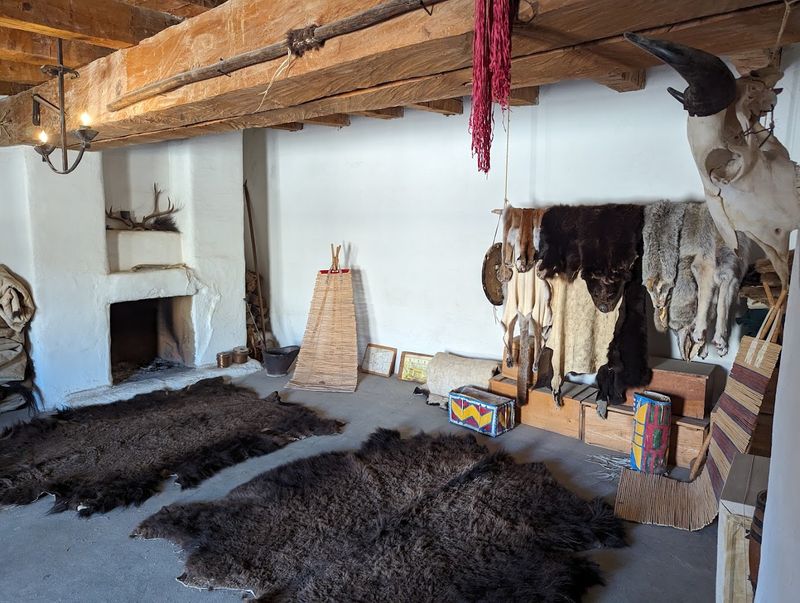
The fort had a billiard room, which surprises almost every first-time visitor. It also had a dedicated quarters for women, a dining room for guests, and a rooftop observation area.
Daily life here was structured, social, and surprisingly comfortable by frontier standards. The reconstruction captures all of it.
Every room tells a different story about who lived here and what they needed to survive a season on the southern plains.
The Santa Fe Trail And The Fort’s Geographic Power
Location was everything for Bent’s Old Fort. The brothers chose their spot with sharp commercial instinct.
The fort sat directly on the Mountain Branch of the Santa Fe Trail, the most important overland trade route connecting the United States to Mexico in the 1800s.
The Arkansas River ran nearby, providing water for people, horses, and livestock. Travelers heading southwest toward Santa Fe could resupply here before crossing into what was then Mexican territory.
Coming back north, they could sell goods and rest before the long push back to Missouri. The fort was the last reliable stop in both directions.
That geographic positioning gave the Bent brothers enormous leverage. They did not need to advertise.
Every wagon train, military expedition, and trading party heading down the trail stopped here by necessity. Explorer John C.
Fremont passed through. Kit Carson worked here as a hunter.
The fort attracted the most remarkable cross-section of frontier characters imaginable. Standing on the trail today, you can still feel the pull of that route across the open land.
The Reconstruction Story Is Fascinating On Its Own
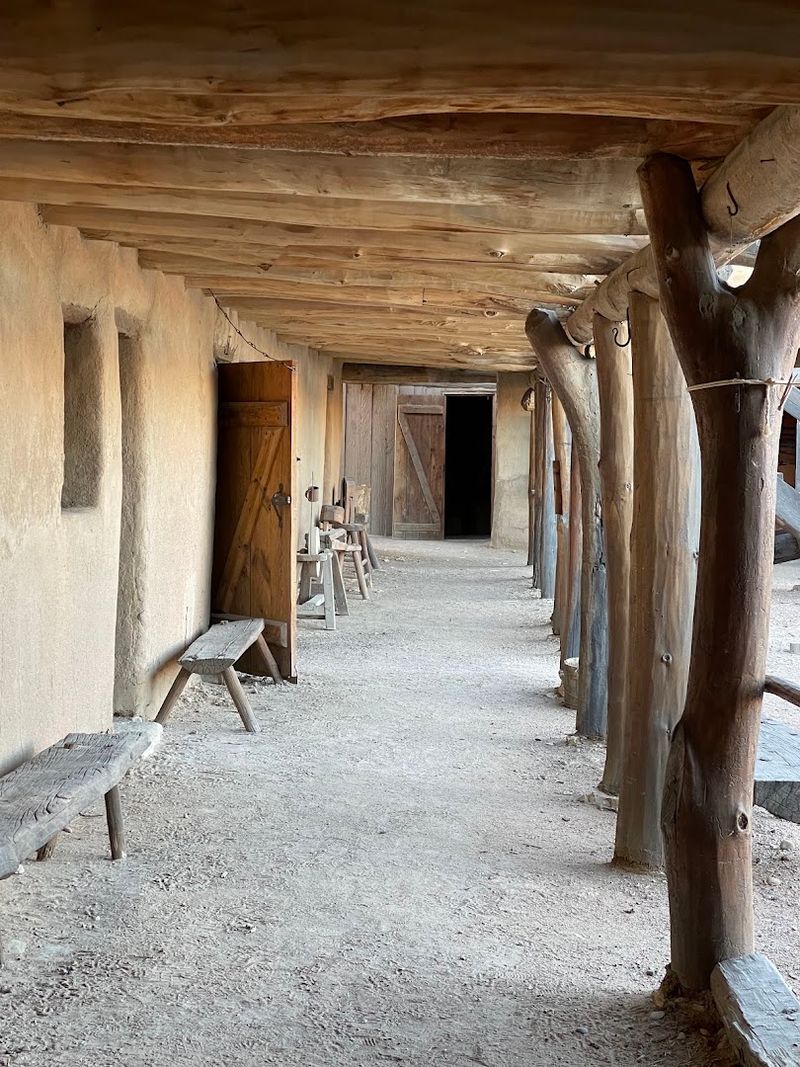
Rebuilding a 19th-century adobe fort from scratch in the 1970s was not a simple project. The National Park Service faced a genuinely unusual challenge.
The original structure had been deliberately destroyed in 1849, and almost nothing remained above ground by the time restoration efforts began.
Archaeologists excavated the site carefully before any reconstruction started. They mapped foundation lines, identified artifact deposits, and cross-referenced their findings with written accounts from people who had actually visited the fort in its operating years.
Journals from traders, soldiers, and travelers became architectural blueprints.
The result is one of the most historically accurate reconstructions in the entire National Park system. Adobe bricks were made using traditional methods.
Roof timbers were cut and shaped by hand. Period-correct furnishings were sourced or replicated with obsessive attention to detail.
The 1976 opening gave southeastern Colorado something remarkable. It gave the region back a piece of its story that had completely vanished from the landscape.
That kind of commitment to accuracy is rare, and visitors notice it immediately when they step inside.
Planning Your Visit
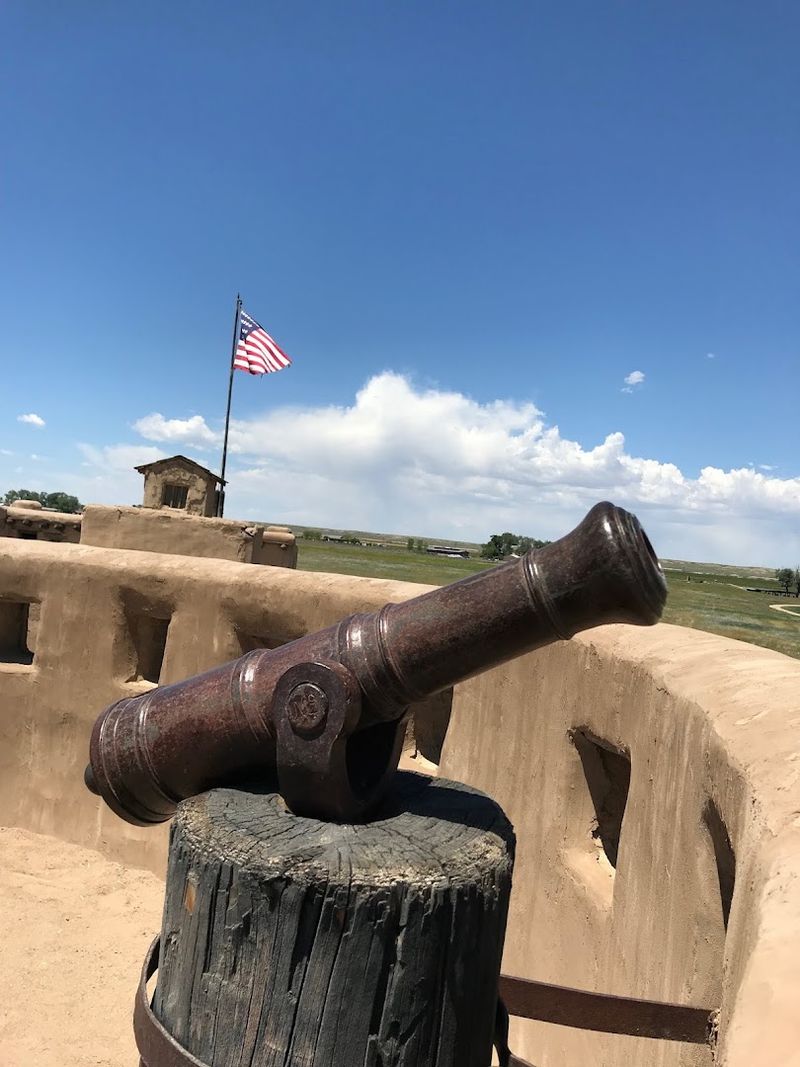
Bent’s Old Fort is open most of the year, and the experience rewards visitors who take their time. Budget at least two hours.
The self-guided tour covers the full interior, but the ranger-led and living history programs add a layer of context that makes everything click into place.
The site is managed by the National Park Service, so it accepts America the Beautiful passes. Admission is affordable otherwise.
The fort sits about eight miles east of La Junta on CO-194, and the drive itself is scenic in a wide-open, sky-goes-forever kind of way. Bring water, especially in summer.
The gift shop carries genuinely interesting books on frontier history, the Santa Fe Trail, and the Bent brothers specifically. The staff and volunteers are knowledgeable and happy to answer specific questions.
Families with kids should look for the junior ranger program. School groups visit regularly, and for good reason.
This is the kind of place that makes history feel real rather than remote. Once you have stood inside those adobe walls, the American West makes a different kind of sense.