10 Unusual Minnesota Roadside Attractions You’ll Love
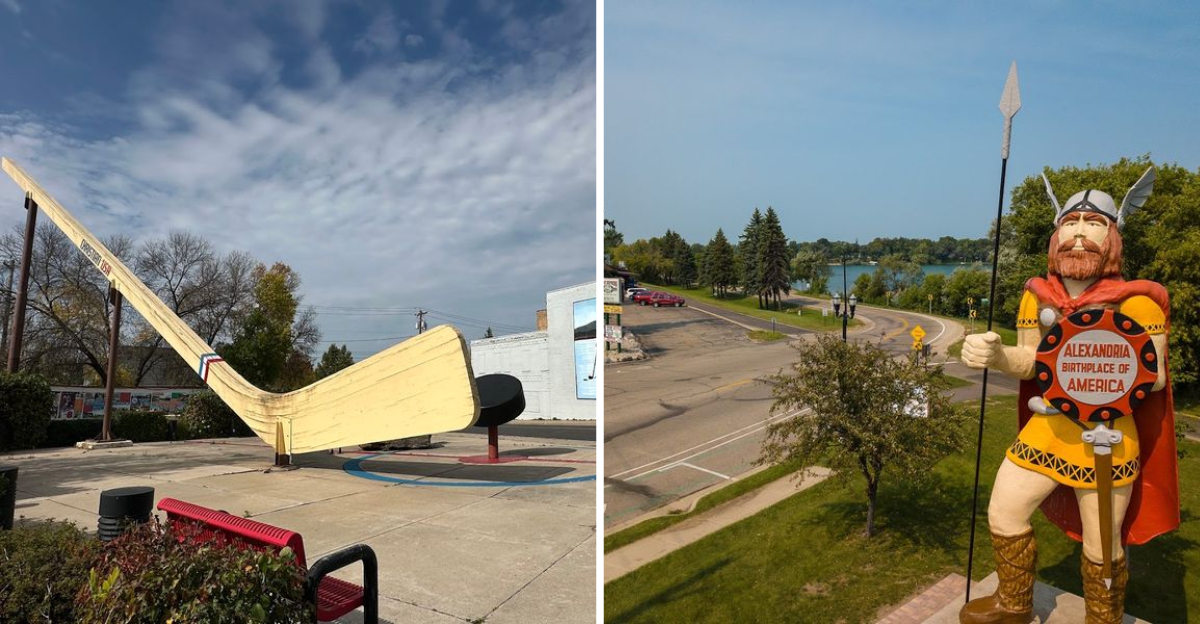
Giant twine balls and towering hockey sticks? Road-tripping here gets gloriously, hilariously weird.
These oddball Minnesota attractions spark real conversation, sneak in local history, and show off pure humor.
Locals lean fully into the goofy, and each stop doubles as a grinning photo op. This state scatters a whole trove of strange, wonderful roadside oddities across its small towns.
One small town guards a giant landmark, and the next one proudly flaunts something even sillier. The surprises just keep coming, so the long miles between them fly right by.
Which oddball roadside stop would you pull over for first and gladly photograph twice?
1. Minnesota’s Largest Ball Of Twine, Darwin
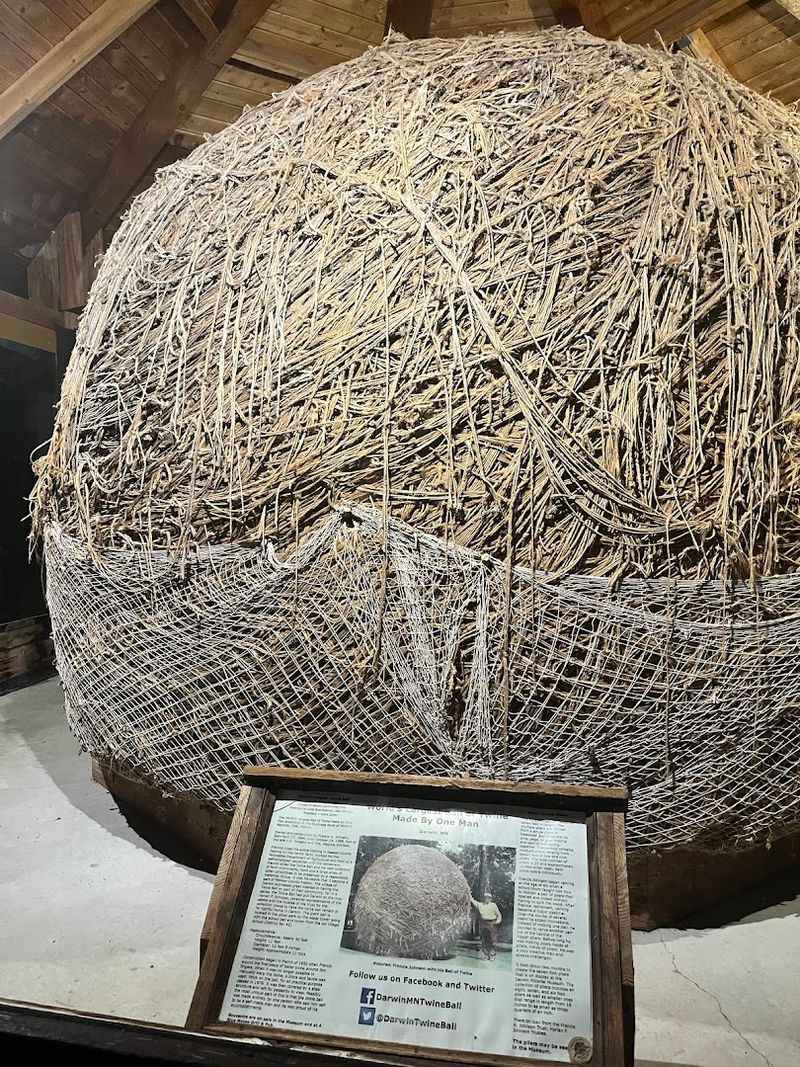
This one is genuinely hard to believe until you see it yourself.
Tucked inside a small gazebo in Darwin sits one of the most surprisingly fascinating roadside stops in the entire Midwest.
This colossal ball of twine was the lifelong project of one dedicated local, who wrapped sisal twine for nearly three decades to create something truly one of a kind.
The ball weighs around 17,400 pounds and measures about 12 feet in diameter. That is not a typo.
It took years of steady, patient wrapping to reach that size, and the town eventually built a special shelter just to protect it from the weather.
Darwin celebrates its famous attraction every August with Twine Ball Days, a quirky local festival that draws curious travelers from all over the state. The event includes parades, food, and plenty of community pride.
You can find the ball at N 1st St in Darwin, right in the heart of town.
Visiting is completely free, and the gazebo is accessible year-round. It is one of those roadside curiosities that sounds ridiculous on paper but somehow becomes the highlight of your road trip once you are standing next to it.
Snap a photo and own the bragging rights forever.
2. Paul Bunyan And Babe The Blue Ox Statues, Bemidji
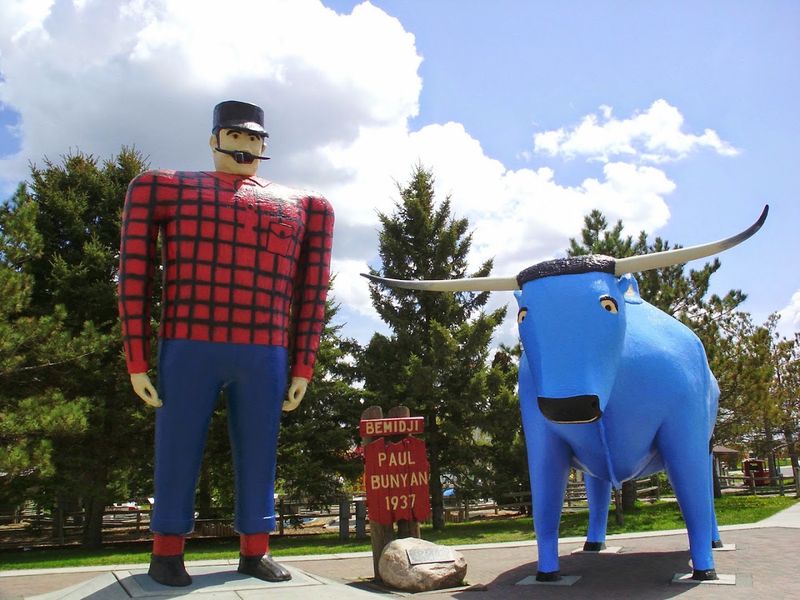
Are you seeing what I am seeing, because these two are absolutely massive?
Standing proudly along the waterfront in Bemidji, the statues of Paul Bunyan and Babe the Blue Ox have been greeting curious travelers since 1937. That makes them some of the oldest roadside statues of their kind in the entire United States.
Paul Bunyan is the legendary giant lumberjack of American folklore, and Babe is his loyal giant blue ox.
Together, they represent the logging heritage that shaped this part of the state for generations. The statues are painted in bold, cheerful colors that pop beautifully against the backdrop of Lake Bemidji.
Bemidji itself is a charming northern city worth exploring beyond just the statues. The area around the statues has picnic spots, a lakeside walking path, and a small visitor information center nearby.
You can find the statues at 300 Bemidji Ave N, right along the scenic lakefront.
They have appeared in films, TV shows, and countless road trip bucket lists over the decades. Kids absolutely love standing next to them for scale, and adults tend to be just as amazed.
This is a classic stop that never gets old, no matter how many times you roll through town.
3. Jolly Green Giant, Blue Earth
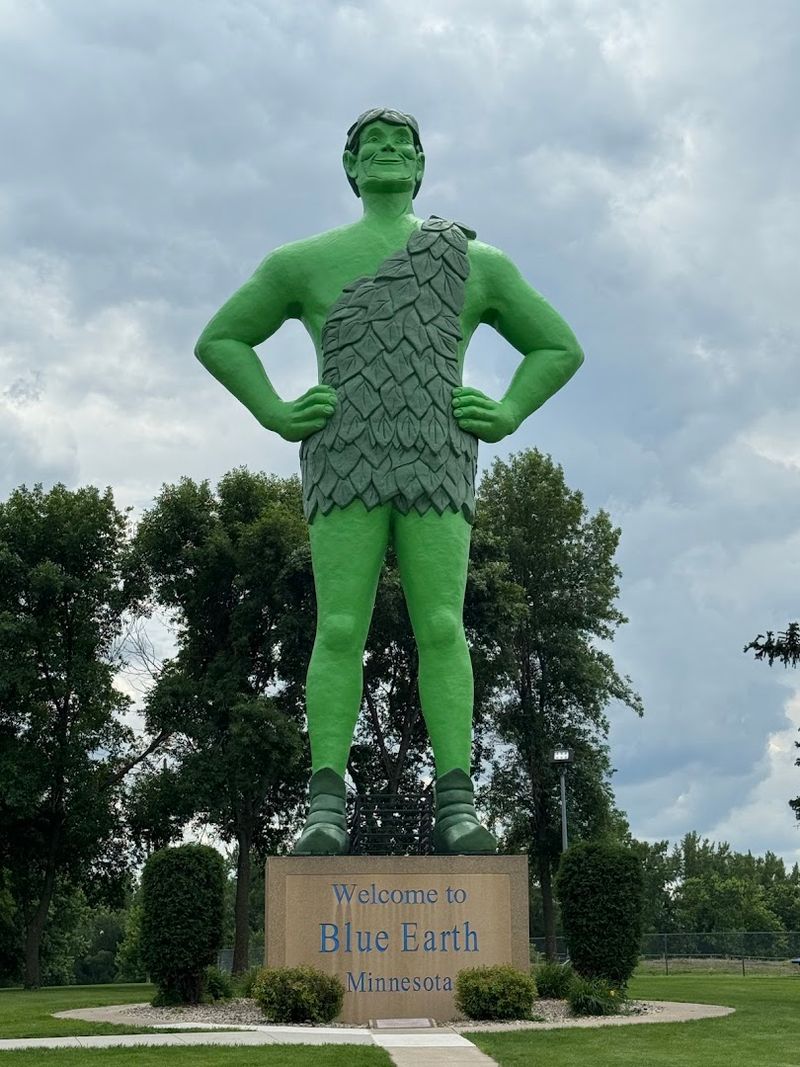
Just imagine for a second standing next to a 55-foot-tall green giant wearing a leafy outfit and grinning down at you.
That is exactly what awaits you in Blue Earth, home to one of the most iconic and eye-catching roadside statues in the whole state. The Jolly Green Giant statue was built in 1979 to celebrate the town’s connection to the Green Giant brand.
Blue Earth sits in southern Minnesota, right off Interstate 90, which makes it a natural pit stop for road trippers cutting across the state.
The statue was created as a way to draw attention to the town and the nearby Green Giant processing plant, which has been a major part of the local economy for decades.
The giant stands on a large platform and is surrounded by a small park area where you can walk around and take photos from different angles.
The best shots are taken from below, looking straight up at that famous grin. You will find him at 1134 Green Giant Ln in Blue Earth.
The town leans into the theme with green-themed decorations and local pride that is hard to miss. It is the kind of stop where you arrive planning to spend five minutes and end up staying much longer, just soaking in the sheer silliness of it all.
4. SPAM Museum, Austin
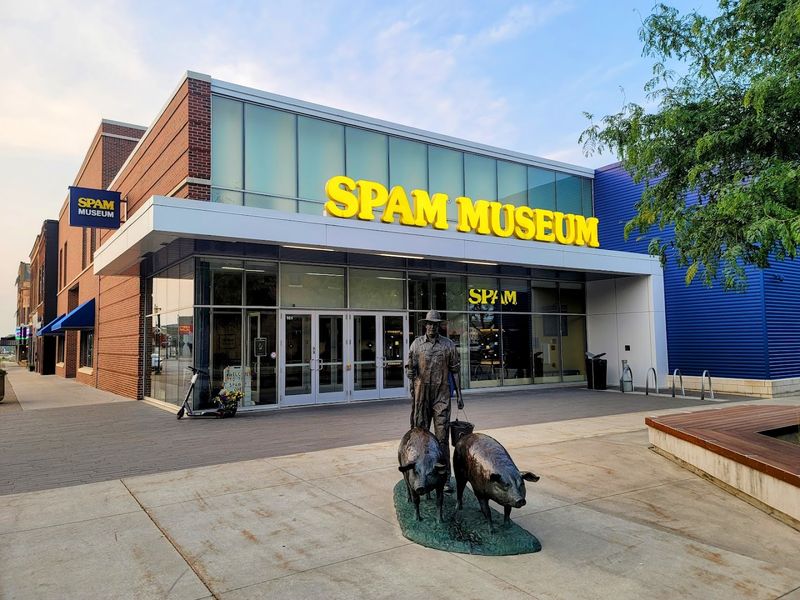
Not everyone walks into a museum about canned meat expecting to be entertained, but the SPAM Museum in Austin will absolutely change your mind.
This free attraction is one of the most surprisingly well-done museums in the Midwest, with interactive exhibits, fun history, and more SPAM trivia than you ever thought possible.
SPAM, the iconic canned meat product made by Hormel Foods, was first introduced in 1937. Austin is the home of Hormel, which means this city has a genuine and deep connection to the product that has fed families and soldiers around the world for nearly a century.
The museum covers everything from the origins of SPAM to its massive popularity in countries like South Korea and the Philippines.
There are tasting stations, a gift shop packed with SPAM-branded merchandise, and exhibits that walk you through decades of iconic advertising campaigns. You will find the museum at 101 3rd Ave NE in Austin.
It is genuinely funny, educational, and weirdly touching all at once. The staff are enthusiastic and knowledgeable, and the whole experience lasts about an hour or two depending on how deep you go.
Who knew that a little blue can could inspire this much creativity and community pride? Absolutely worth the detour.
5. World’s Largest Loon, Vergas
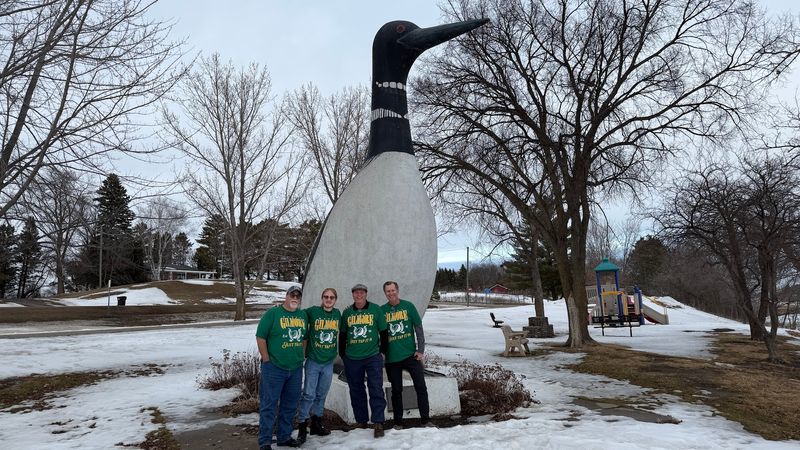
What does it mean when a town decides its most beloved symbol deserves a giant monument?
In Vergas, the answer is a 20-foot-long, 2.5-ton fiberglass loon perched proudly near City Beach. The common loon is the state’s bird, and this sculpture is a fitting tribute to one of the most recognizable sounds of the northern lakes.
The loon was built in 1982 and has been a beloved landmark ever since. It sits near the water, which feels completely right given that real loons spend most of their lives on lakes.
The setting is peaceful and photogenic, especially during golden hour when the light hits the water just right.
Vergas is a small town in Otter Tail County, in the lake-filled region of west-central Minnesota. The area is popular with anglers and outdoor enthusiasts, and the loon statue adds a quirky cultural landmark to an already scenic area.
The loon is free to see and sits in a public area near the beach, making it easy to combine with a swim or a picnic.
There is something deeply fascinating about standing next to a giant loon on a summer afternoon, listening to the actual loons calling out across the lake nearby.
6. Rocky Taconite, Silver Bay
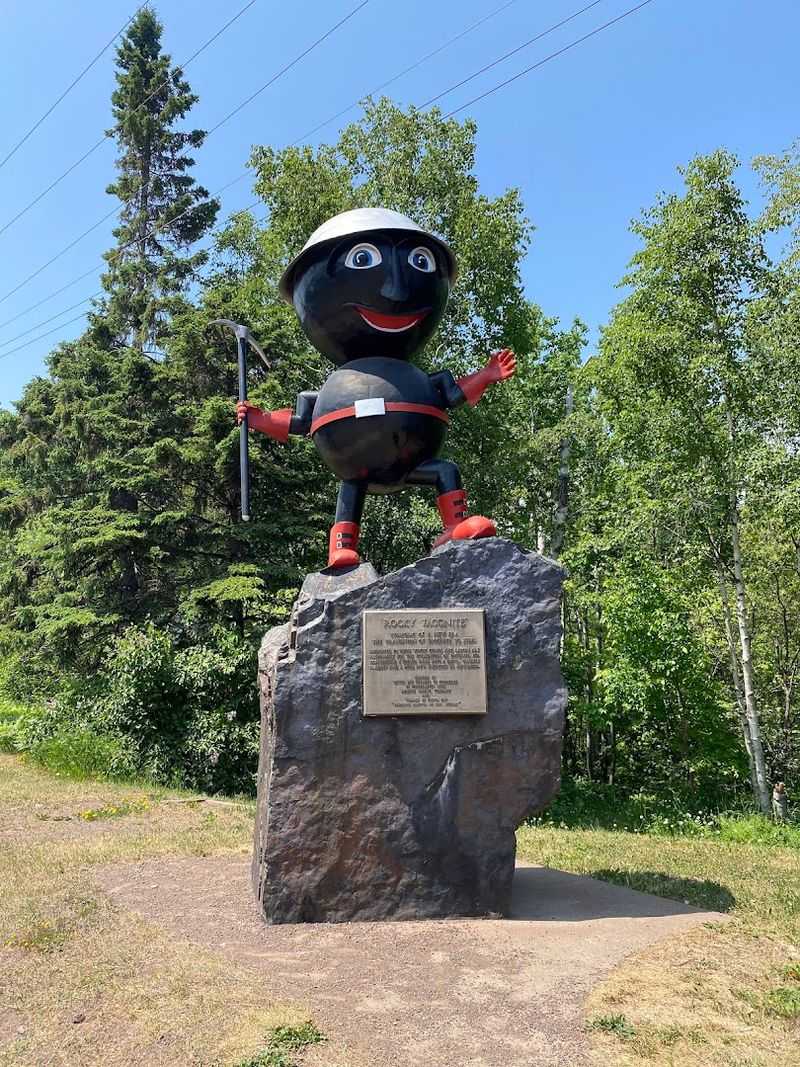
My jaw literally dropped when I first learned that a town has a giant rock mascot with a face painted on it, and yes, it is every bit as charming as it sounds.
Rocky Taconite is the beloved symbol of Silver Bay, a small city on the North Shore of Lake Superior that grew up around the iron ore industry.
Taconite is a type of iron ore that was processed in massive quantities along Minnesota’s Iron Range, and Silver Bay was built specifically to support that industry in the 1950s.
Rocky serves as a fun and friendly reminder of the town’s industrial roots, with a painted face that gives the giant rock a surprisingly warm personality.
Silver Bay itself is a beautiful destination on its own. The North Shore of Lake Superior is one of the most scenic stretches of road in the entire Midwest, with dramatic cliffs, waterfalls, and dense forests lining the highway.
Rocky Taconite can be found in Silver Bay, making it an easy stop on any North Shore road trip.
The statue is free to see and sits in a public area that is easy to access year-round. Pair it with a hike in Tettegouche State Park nearby, and you have yourself a full day of adventure.
7. Big Ole – Big Viking Statue, Alexandria
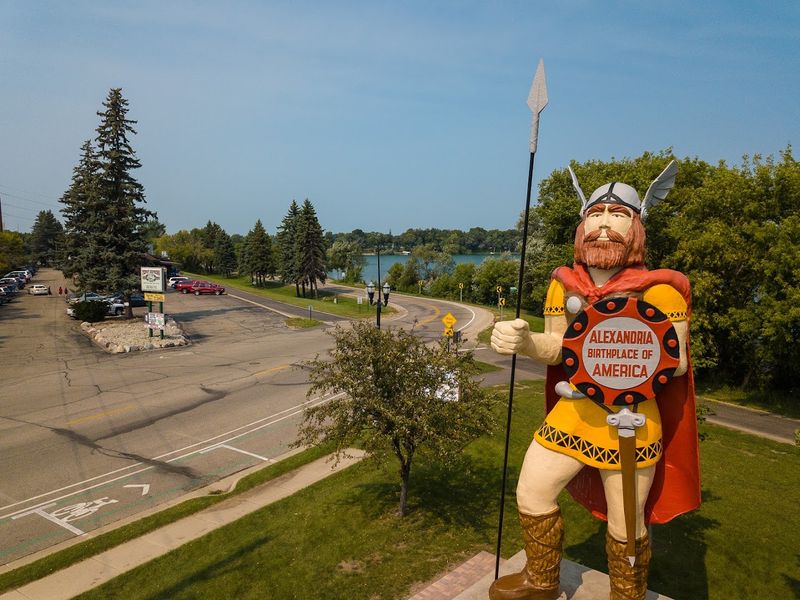
I had to do a double-take the first time I spotted a giant armored Viking standing along a trail in the central part of this state.
Big Ole is a 28-foot-tall fiberglass Viking statue in Alexandria, and he has been a local icon since he was built for the 1965 New York World’s Fair. He was brought back to Alexandria after the fair and has stood guard over the community ever since.
Alexandria is in the heart of the state’s lakes region, a popular area for summer vacationers and outdoor lovers. The region has long embraced its Scandinavian heritage, and Big Ole fits right in with that proud cultural identity.
He carries a large shield that reads “Alexandria, Birthplace of America,” a nod to the controversial Kensington Runestone found nearby.
The Kensington Runestone is a stone slab discovered in 1898 that some believe proves Norse explorers reached this state in the 1300s.
Whether you believe the legend or not, it adds a fascinating layer of history to Big Ole’s presence here. You can find him along the Central Lakes Trail in Alexandria.
He is free to see and makes for an epic photo opportunity, especially if you try to match his fierce warrior pose. Alexandria is a fun town with good food, beautiful lakes, and now one very intimidating Viking to welcome you in.
8. Prairie Chicken Statue, Rothsay
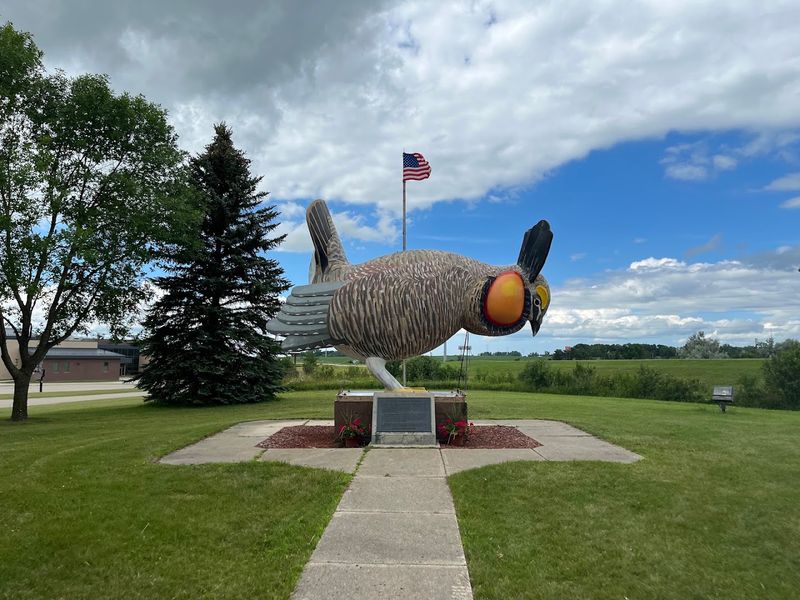
Here is a crazy thought, what if the most iconic symbol of a tiny town was a bird that most people have never seen in real life?
That is exactly the case in Rothsay, where a giant greater prairie chicken stands tall along the highway, honoring one of the region’s most fascinating native birds.
Rothsay calls itself the Prairie Chicken Capital of Minnesota, and this statue makes that claim impossible to miss.
The greater prairie chicken is a ground-dwelling bird known for its spectacular mating dance, where males puff up colorful air sacs on their necks and stomp their feet in elaborate displays.
The bird was once common across the Great Plains but has become far less common due to habitat loss. Western Minnesota still supports some of the best prairie chicken habitat remaining in the state.
The statue was built to celebrate this connection and to draw attention to the importance of preserving native prairie ecosystems.
Rothsay is a small farming community in Wilkin County, in the flat, wide-open landscape. The prairie chicken statue sits right along US Highway 10 as you pass through town.
Stopping here feels like a genuine slice of rural culture. The surrounding landscape is beautifully stark, with big skies and rolling farmland stretching in every direction.
It is a reminder that roadside art does not need to be flashy to leave a lasting impression.
9. Otto the Otter, Fergus Falls
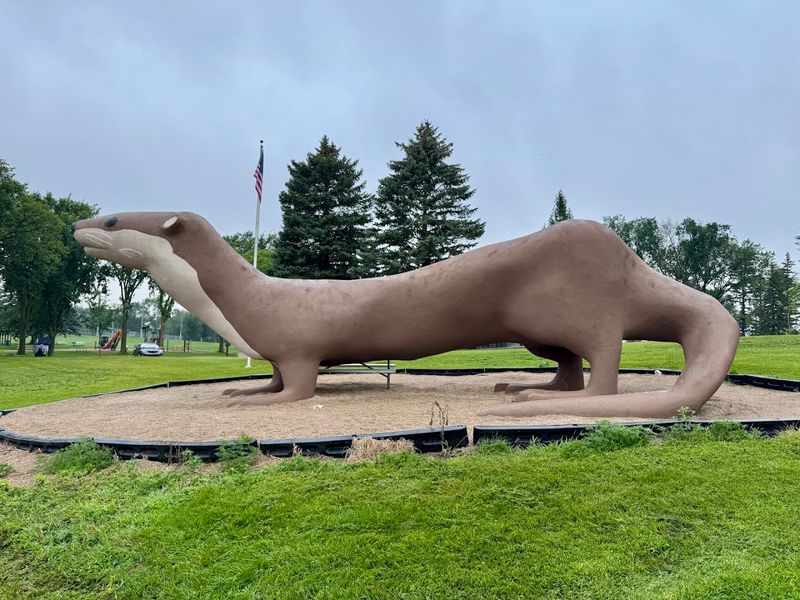
Otto the Otter is a cheerful fiberglass sculpture in Fergus Falls, and he is exactly the kind of roadside attraction that makes you smile before you even get out of the car. Fergus Falls sits in Otter Tail County, so the otter theme is deeply rooted in local identity.
Otters were historically common in the rivers and lakes of this part of Minnesota, and the county itself was named after the otter tail shape of a nearby lake.
Otto stands as a tribute to that heritage, welcoming travelers and locals alike with his wide grin and upright posture. He has become a beloved community mascot over the years.
Fergus Falls is a charming city with a beautiful historic downtown, scenic river walks, and a strong arts community.
The city sits along the Otter Tail River, which adds to the natural beauty of the area and makes it a lovely stop even beyond the statue. Otto can be found at 112 W Washington Ave in Fergus Falls.
The statue is free to see and sits in a publicly accessible area near the riverfront. Pair your visit with a stroll along the river trail and some local dining downtown.
Otto the Otter is proof that the best roadside attractions are the ones that truly reflect the soul of the community around them.
10. World’s Largest Hockey Stick, Eveleth
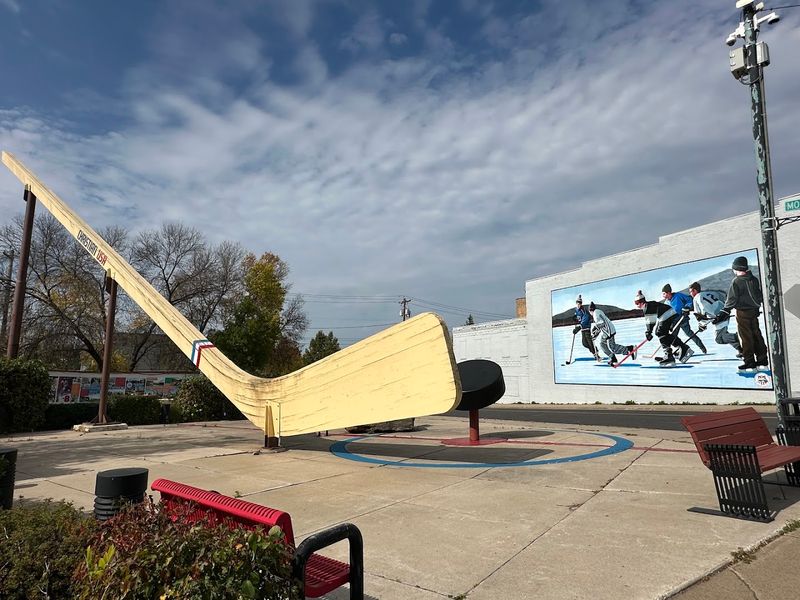
This state is serious about hockey, and nothing proves that point quite like a hockey stick that stretches over 110 feet long.
The World’s Largest Hockey Stick in Eveleth is a true monument to the state’s most passionate sport. Eveleth is located on the Iron Range in northeastern Minnesota, a region with a fierce and proud hockey culture that dates back over a century.
The stick was originally built in 1995 and has been updated over the years to maintain its record-holding status.
It is mounted outside the United States Hockey Hall of Fame, which is reason enough to make the trip to Eveleth on its own. The Hall of Fame celebrates American hockey history with exhibits, memorabilia, and tributes to legendary players.
Eveleth is known as the Hockey Capital of the United States, a title the town wears with enormous pride.
The Iron Range has produced a remarkable number of professional and Olympic hockey players over the decades, and the culture of the sport is woven into everyday life here. The giant stick is located at 412 Monroe St in Eveleth.
Standing next to it is genuinely awe-inspiring, even if you are not a hockey fan. The sheer scale of the thing is hard to process until you are right there beneath it.
It is the perfect final stop on a road trip, sending you off with one last dose of pure, oversized state pride.