California’s Japanese Heritage Still Thrives In These Communities Through Food And Tradition
You notice it first in the small details.
A bakery window filled with familiar sweets. A garden designed for quiet wandering. A festival where recipes, music, and customs still bring generations together.
Stop long enough, and the history begins showing up everywhere.
Several communities across California continue to carry Japanese heritage into everyday life rather than leaving it behind glass.
You can taste it, walk through it, and sometimes stumble into it without planning to.
Order something you have never tried. Pause at a cultural landmark and look a little closer than you normally would.
That is where this story becomes interesting.
These communities are not simply preserving the past. They are showing how tradition keeps changing, adapting, and staying visible in the present.
1. Japanese Village Plaza, Little Tokyo, Los Angeles
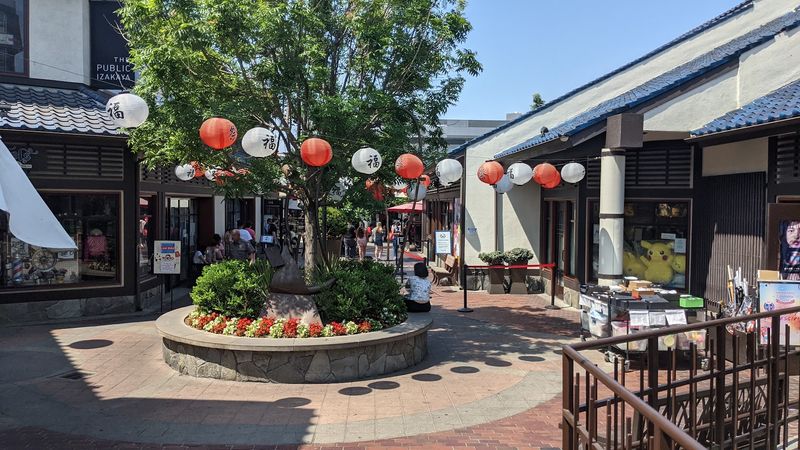
Few places in Los Angeles carry the layered energy of a neighborhood that has been feeding and gathering people for well over a century.
Japanese Village Plaza sits right at the heart of Little Tokyo, which was established in 1885 and declared a National Historic Landmark District in 1995.
The plaza draws a steady mix of longtime locals and curious first-time visitors looking for something genuinely rooted in Japanese culture.
Stalls and storefronts offer street food, sweets, and Japanese-themed goods in a compact, walkable layout that feels designed for unhurried browsing.
Ramen, sushi, mochi, and takoyaki are among the foods commonly found here, with options ranging from quick bites to sit-down meals.
The architecture nods to traditional Japanese design without feeling like a theme park, and the foot traffic gives the plaza a lively but comfortable rhythm throughout the day.
Weekends tend to bring larger crowds, so arriving earlier in the day can make the experience feel more relaxed.
The plaza connects naturally to the surrounding Little Tokyo streetscape, making it easy to extend a visit into the broader neighborhood without needing to plan far ahead.
2. Go For Broke Monument, Little Tokyo, Los Angeles
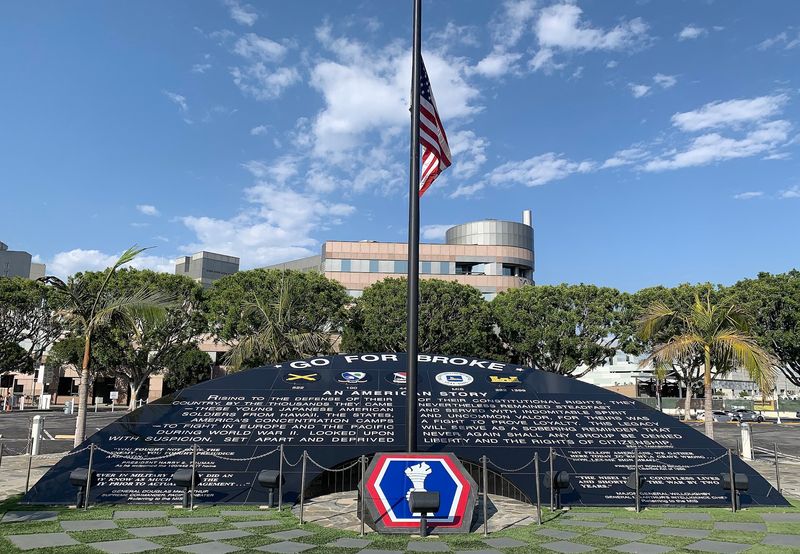
Standing quietly along North Central Avenue, the Go For Broke Monument carries a weight that photographs cannot fully capture.
This outdoor memorial honors the Japanese American soldiers who served in World War II, many of whom fought with extraordinary courage even as their own families were held in internment camps back home.
The monument is accessible at all hours and costs nothing to visit.
The name comes from a Hawaiian slang phrase meaning to go all out or risk everything, which became the rallying motto of the 442nd Regimental Combat Team.
That unit became one of the most decorated in U.S. military history.
The monument features the names of those who served, etched into its surface as a permanent record of sacrifice that might otherwise be forgotten by younger generations.
Visiting in the early morning or late afternoon gives the space a quieter, more reflective atmosphere.
The monument works well as a companion stop alongside the nearby Go For Broke National Education Center, which adds historical context through its interactive exhibitions.
Together, the two sites offer a meaningful and grounded look at a story that shaped Japanese American identity in California and across the country.
3. Japan Center Malls, Japantown, San Francisco
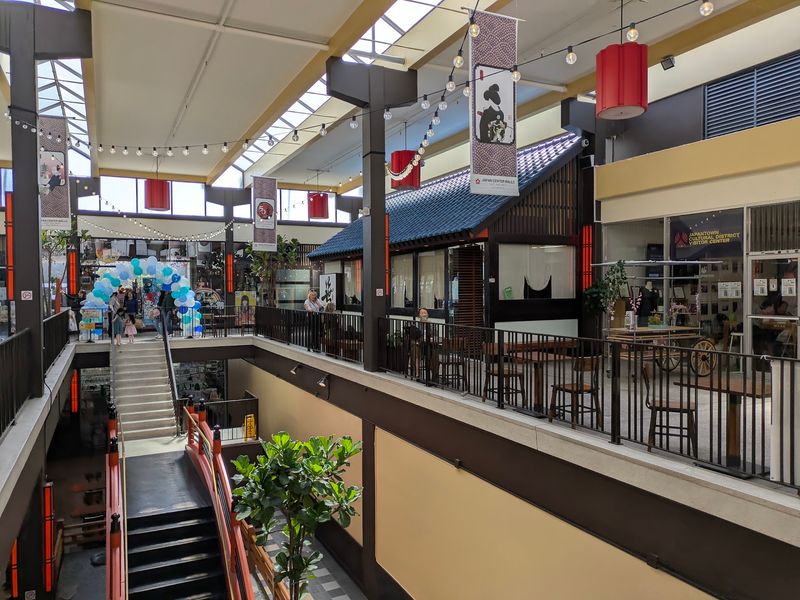
San Francisco’s Japantown holds the distinction of being the oldest and largest Japanese neighborhood of its kind in the United States, with roots going back to 1906.
At the center of this community sits Japan Center Malls, a sprawling complex which anchors the neighborhood with dozens of shops, restaurants, and cultural businesses.
The malls connect multiple buildings and offer a concentrated experience of Japanese American commercial life in the Bay Area.
Inside, visitors can browse bookstores stocked with Japanese-language titles, pick up traditional ceramics and settle into restaurants serving everything from bento sets to freshly made crepes.
The indoor layout makes it a comfortable destination year-round, especially on foggy San Francisco afternoons when the warmth and activity inside feel particularly welcoming.
Major events like the Northern California Cherry Blossom Festival in April and the Nihonmachi Street Fair in August draw significant crowds to the surrounding blocks, so visiting on a regular weekend offers a calmer pace for those who prefer unhurried exploration.
The malls sit within easy walking distance of the Peace Pagoda and several other cultural landmarks, making the area rewarding to explore on foot without needing a detailed itinerary.
4. Peace Pagoda, Japantown, San Francisco
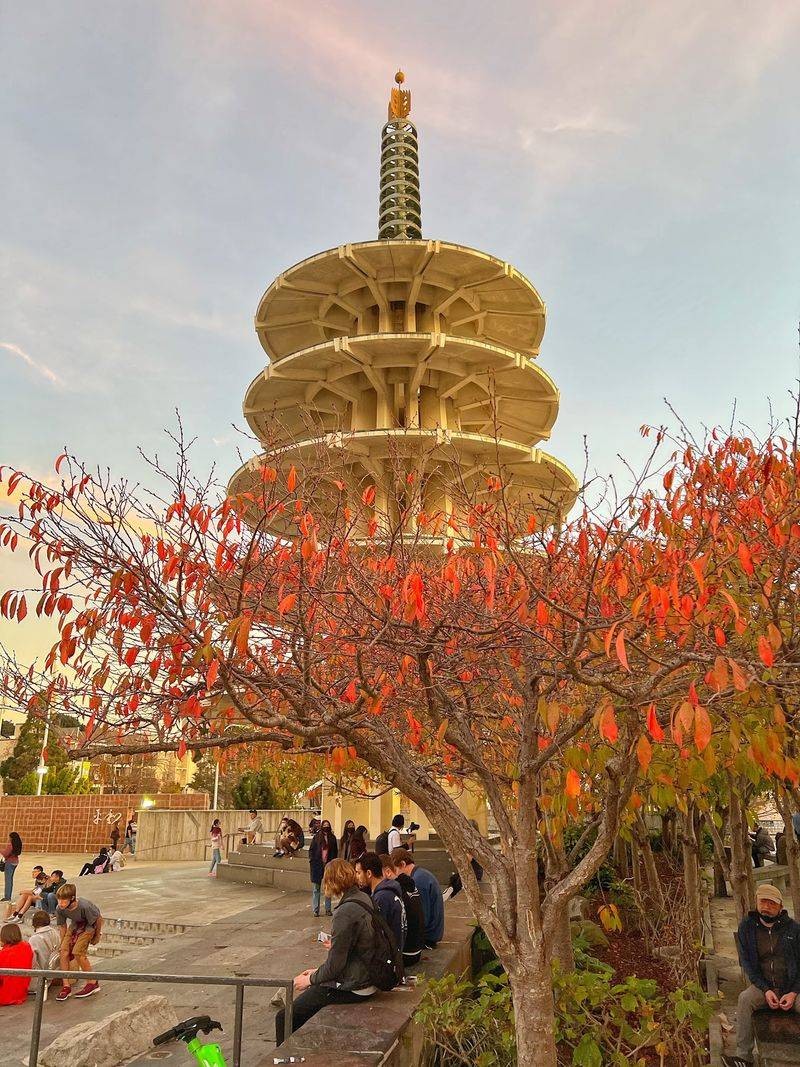
A gift from Osaka, Japan, to the city of San Francisco, the Peace Pagoda has stood in Peace Plaza since 1968 as a symbol of friendship and goodwill between two cities connected across the Pacific.
The five-tiered concrete stupa is one of the most recognizable structures in California’s Japantown and serves as a natural gathering point for the community throughout the year.
Its presence in the open plaza gives the surrounding neighborhood a calm, grounded focal point.
The pagoda’s design follows the style of traditional Japanese Buddhist architecture, though its concrete construction gives it a distinctly mid-century character that reflects the era in which it was built.
Visitors often pause here between shopping or dining stops, and the open plaza around it provides space for festivals, performances, and quiet reflection depending on the time of year.
Morning visits tend to offer the most peaceful experience, when the plaza is less crowded and the light falls softly across the pagoda’s tiered form.
The structure is always accessible and free to view, making it one of the most effortless cultural stops in San Francisco’s Japantown.
5. Soba Dining Sora, Japantown, San Francisco
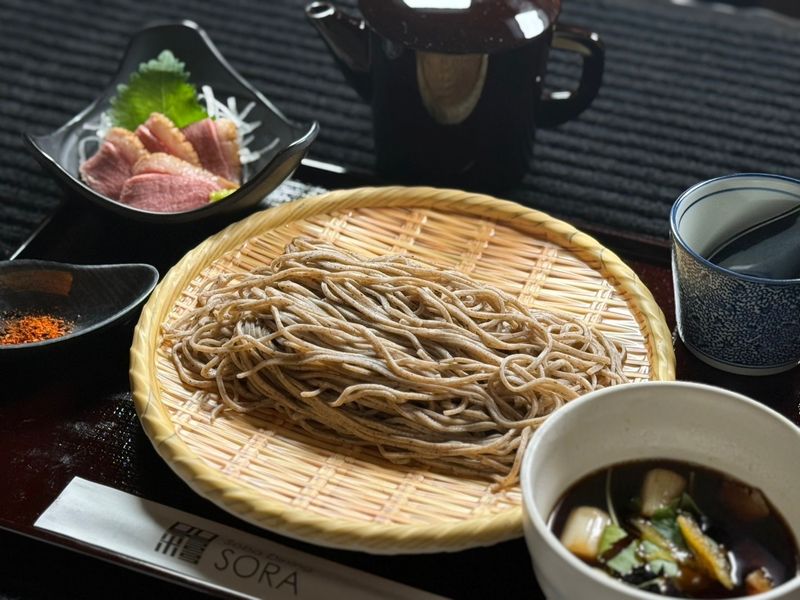
Buckwheat soba noodles have been part of Japanese culinary tradition for centuries, and Soba Dining Sora brings that tradition to the heart of San Francisco’s Japantown with a focus on 100 percent buckwheat soba made with care.
The menu centers on soba in its most honest forms, served simply so the texture and flavor of the noodle itself can come through clearly.
The dining room has a quiet, composed atmosphere that fits the food well.
Seating is comfortable without being fussy, and the pacing of service tends to feel unhurried, which suits the kind of meal where slowing down is part of the experience.
Cold soba and hot soba preparations are typically available depending on the season, offering flexibility for different preferences and weather.
Visiting during off-peak lunch or early dinner hours generally means shorter waits and a more relaxed experience.
Soba Dining Sora fits naturally into a broader Japantown visit, sitting close to the Japan Center Malls and Peace Pagoda.
6. Japanese American Museum Of San Jose
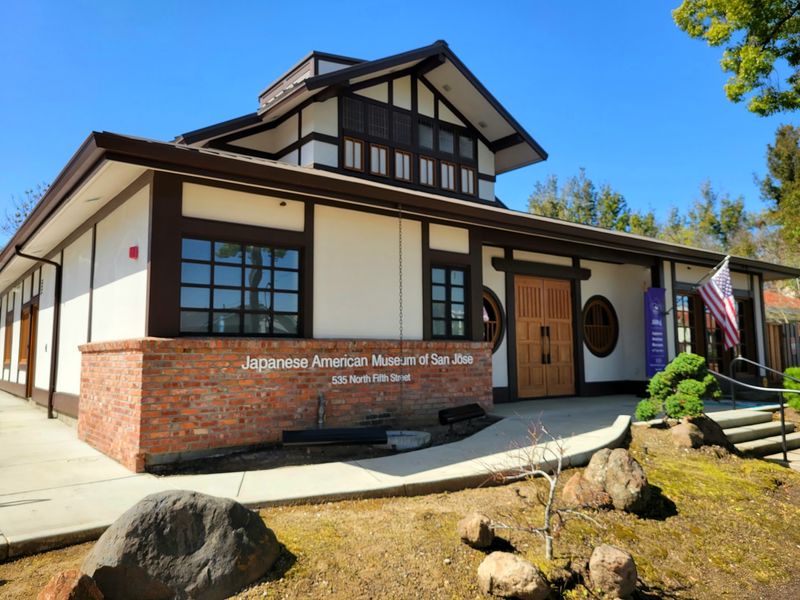
San Jose’s Japantown is one of only three historic Japantowns remaining in the United States, and it earned official designation as a California Cultural District in 2025.
At the center of its cultural life sits the Japanese American Museum of San Jose, known locally as JAMsj, which collects and shares art, history, and stories focused on the Japanese American experience.
The museum is located at 535 N 5th St, San Jose, CA 95112, and is open Thursday through Sunday from noon to 4:00 PM.
Exhibitions tend to rotate, covering topics that range from the early immigration period to contemporary Japanese American identity.
The museum’s scale is approachable rather than overwhelming, making it a good fit for visitors who want meaningful engagement without spending an entire day inside.
The staff and volunteers are generally knowledgeable and welcoming to questions.
JAMsj works well as a starting point for a broader walk through San Jose’s Japantown, which spans roughly three blocks along Jackson Street and includes long-standing businesses like Shuei-do Manju Shop and Minato Japanese Restaurant.
Together, the neighborhood and the museum offer a layered and honest look at a community that has held its ground through decades of change.
7. Shuei-do Manju Shop, Japantown, San Jose
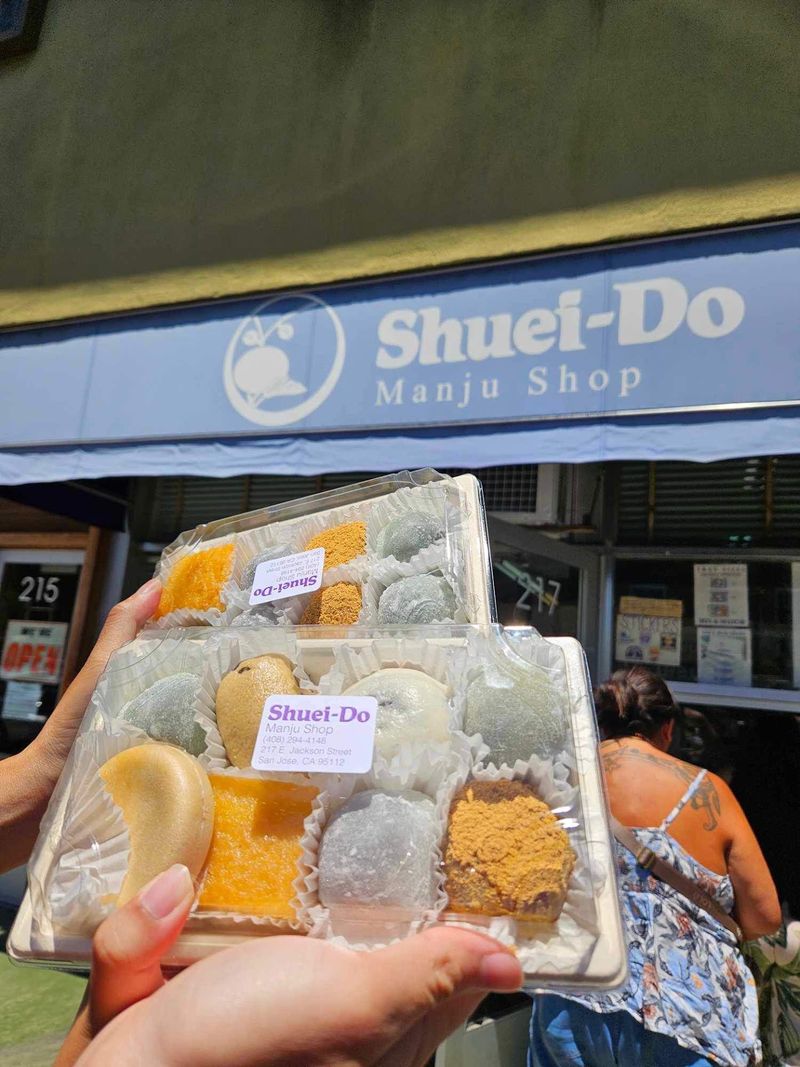
Since 1953, Shuei-do Manju Shop has been hand-crafting manju and mochi in San Jose’s Japantown, making it one of the most enduring small businesses in the neighborhood.
Found at 217 Jackson St, San Jose, CA 95112, the shop occupies a modest storefront that looks much the way it did decades ago, which is part of what makes a visit feel genuinely connected to the past.
Manju are traditional Japanese confections made with sweet bean paste wrapped in soft dough, and Shuei-do’s versions are made using methods passed down through generations.
The selection is typically small and focused, which reflects the shop’s commitment to doing a few things exceptionally well rather than offering a wide menu.
Seasonal varieties may appear around certain holidays or festivals, so checking ahead or visiting during community events can reveal special options.
The shop is a beloved fixture in the neighborhood and tends to draw a loyal customer base that spans multiple generations of Japanese American families.
Arriving earlier in the day is generally advisable since popular items can sell out before closing.
A stop at Shuei-do pairs naturally with a walk along Jackson Street, where the three-block stretch of Japantown includes other cultural landmarks.
8. Roy’s Station Coffee and Tea, Japantown, San Jose
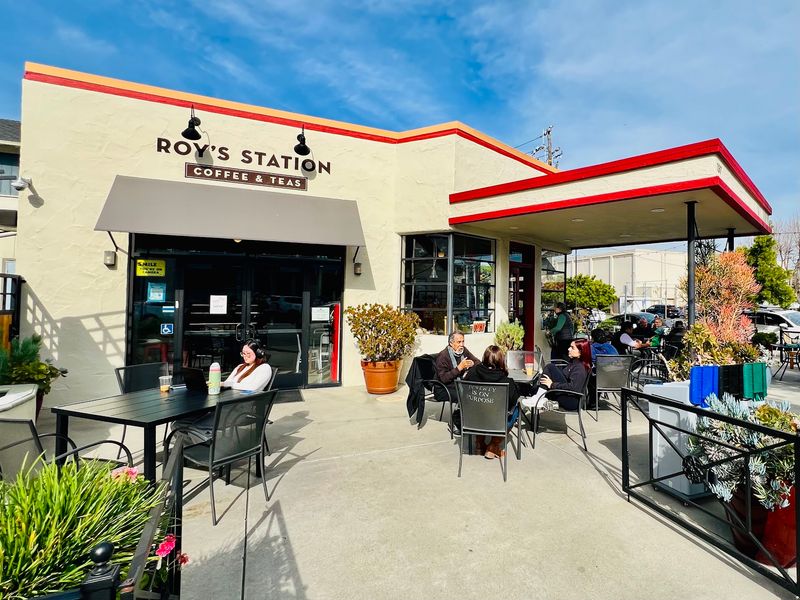
There is something quietly special about a coffee shop that carries history in its walls.
Roy’s Station Coffee and Tea operates out of a converted Mobil gas station that was once owned by a Japanese American family, and that backstory gives the space a character that no amount of interior design can manufacture.
The shop is open daily from 8:00 AM to 2:00 PM and has become a genuine community gathering place in the heart of San Jose’s Japantown.
The menu covers coffee, tea, and light fare in a relaxed setting where the building’s vintage bones are still visible.
The preserved structure adds texture to every visit, and the morning light through the old windows gives the space a warmth that feels earned rather than engineered.
Regulars and newcomers alike tend to linger longer than planned, which says something about the atmosphere.
Roy’s Station sits within easy walking distance of Shuei-do Manju Shop, Minato Japanese Restaurant, and the Japanese American Museum of San Jose, making it a natural first stop before exploring the broader Japantown neighborhood.
9. Terminal Island Japanese Memorial, San Pedro, Los Angeles
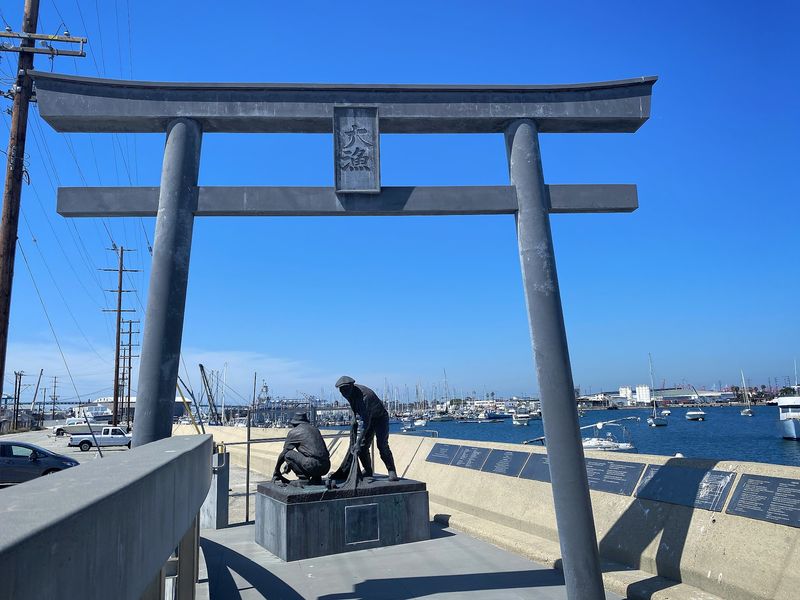
Terminal Island was a home to a thriving Japanese American fishing village of nearly 3,000 residents who built their lives around the sea and the canned tuna industry.
In 1942, that community became one of the first groups of Japanese Americans forcibly removed from their homes and the village itself was subsequently demolished.
The Terminal Island Japanese Memorial stands as a permanent tribute to those who were displaced and to the community that was erased.
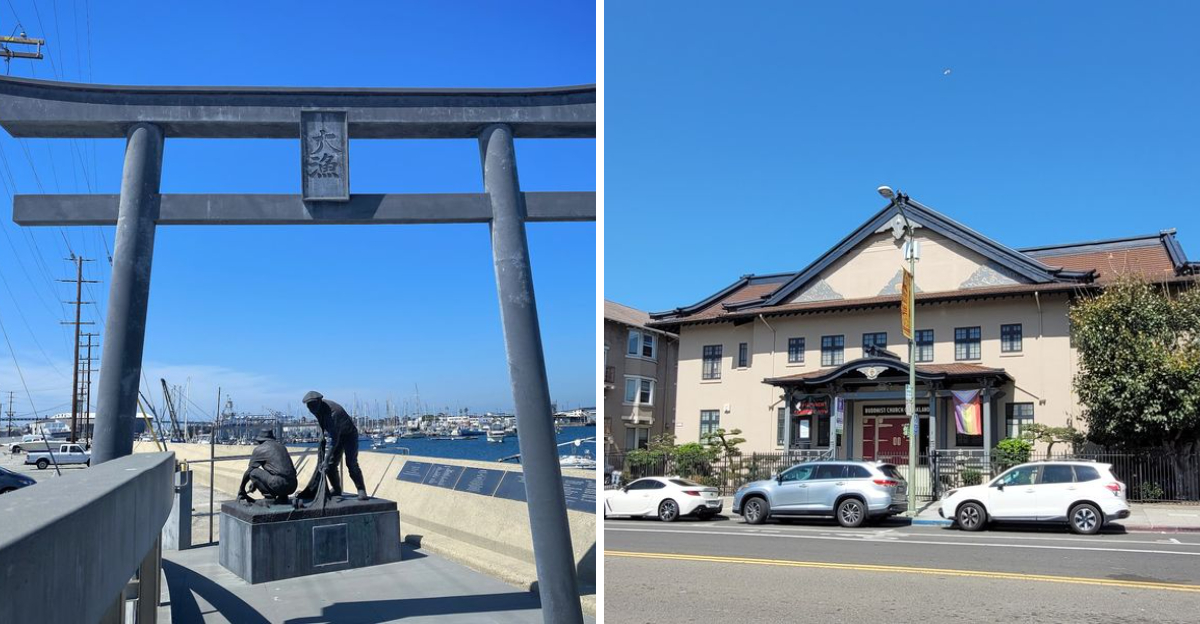
The memorial features a traditional torii gate, bronze statues of fishermen, and image panels that document the history of the village and its people.
An elevated viewing platform gives visitors a vantage point over the surrounding area, adding a layer of physical perspective to the emotional weight of the site.
The outdoor memorial is always accessible to the public at no cost, making it one of the most open and honest historical sites in the Los Angeles area.
Visiting in the quieter hours of a weekday morning allows for unhurried reflection without distraction.
The memorial is located in an industrial port area, so the surrounding landscape is stark rather than scenic, which in some ways reinforces the gravity of what the site represents.
10. Buddhist Church of Oakland, Oakland, California
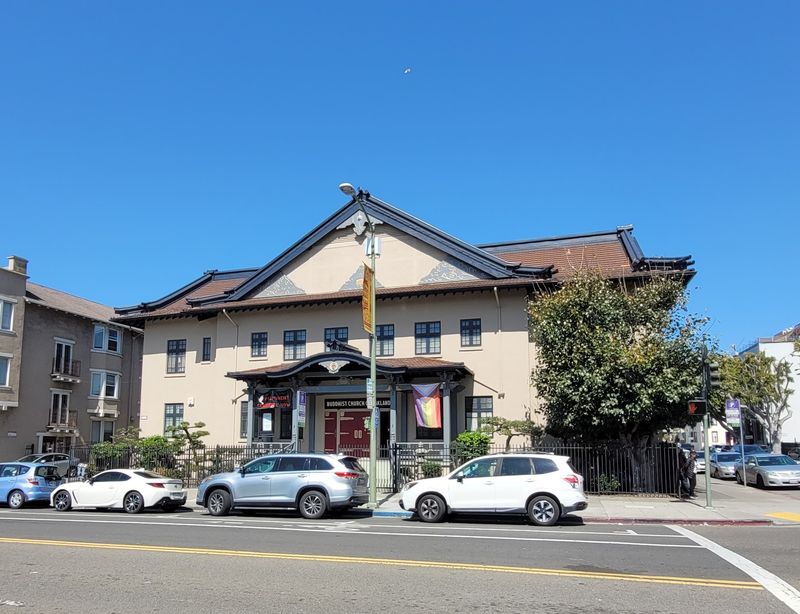
Oakland’s Japanese American community has maintained its cultural identity through institutions that have remained active and community-focused across generations.
The Buddhist Church of Oakland holds weekly services and a range of cultural events throughout the year that keep the neighborhood’s Japanese heritage visible and accessible.
Office hours run Monday through Friday from 9:00 AM to 4:00 PM for those looking to connect with the church during regular business hours.
The church hosts public events including the Obon Festival, which brings together community members and visitors for an evening of traditional music, dance, and food in the summer months.
Japanese language classes offered through the church provide another point of connection for those wanting to engage more deeply with the culture beyond a single visit.
The building itself reflects the architectural traditions associated with Japanese Buddhist temples, giving the surrounding block a distinct character within Oakland’s urban landscape.
Oakland’s Japanese American history is often overshadowed by the more prominent Japantowns in San Francisco and Los Angeles, but the community here has its own deep roots and its own story worth knowing.
A visit to the Buddhist Church of Oakland works well alongside a broader walk through the surrounding neighborhood, where traces of Japanese American life continue to surface in small but meaningful ways.