9 Texas Day Trips That Go Beyond The Usual Tourist Attractions
Did you ever think that you’ve seen everything Texas has to offer? Not even close.
Somewhere between mysterious desert lights, medieval castles, glowing caverns, towering sand dunes, and a house covered entirely in beer cans, the state starts feeling wonderfully unpredictable.
Offbeat roadside stops and hidden local landmarks offer endless excuses for spontaneous detours.
Every stop seems stranger than the last. Just when you think you’ve found the most unusual destination, another one appears around the next bend.
These aren’t the places filling every travel brochure. They’re the stories people can’t wait to tell after they get home.
Marfa Lights Viewing Area
Just imagine for a second what could create dancing orbs of light in the vast desert night.
People have been reporting these glowing spheres near Marfa since at least 1883. Nobody has ever fully explained them, and that mystery is exactly what makes this stop so irresistible.
The Marfa Lights appear in colors ranging from white and yellow to red and blue. They shift in intensity, split apart, and merge back together while drifting unpredictably across the horizon.
Some nights they are vivid and active, while other nights they are subtle and fleeting.
Theories about their origin range from temperature-based mirages to refracted headlights and even static electricity.
More imaginative explanations involve bioluminescent animals and atmospheric anomalies. None of them have been proven, which keeps scientists and curious travelers coming back year after year.
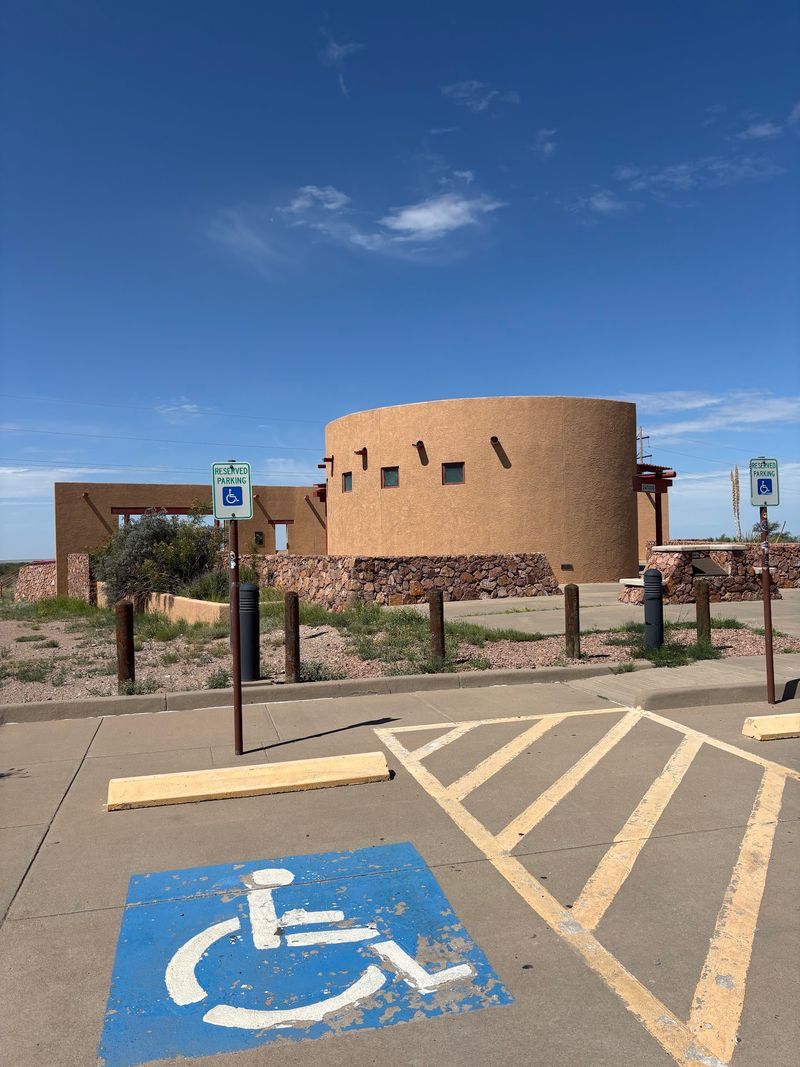
The Texas Department of Transportation built a dedicated roadside viewing area in 2003 specifically for watching this phenomenon.
The Marfa Mystery Lights Viewing Center sits east of town on US-90 and offers a comfortable, open-air setup for spectators. Bring a blanket, because desert nights get surprisingly cool even in summer.
The best viewing conditions are typically clear nights with no moon and low humidity. Arriving around dusk gives your eyes time to adjust before full darkness sets in.
The address is US-90, Marfa and the experience of standing in that silent darkness, watching unexplained lights dance across the Chihuahuan Desert, is genuinely unlike anything else in the state.
Monahans Sandhills State Park
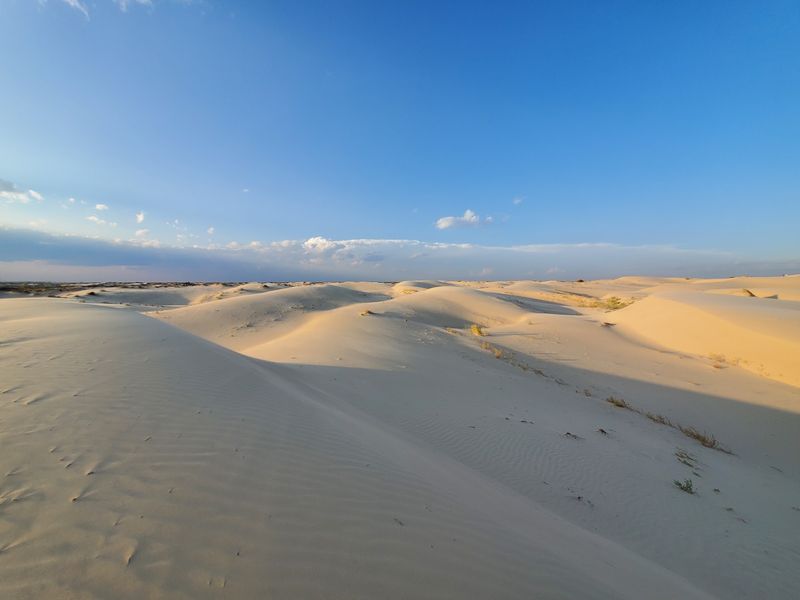
Rolling dunes stretch as far as you can see in Monahans shaped constantly by desert winds. The scenery looks more like the Sahara than anything you would expect to find in the American Southwest.
Sand disc rentals are available at the Dunagan Visitor Center, and sledding down these dunes is every bit as fun as it sounds.
There are no marked trails here, which means you are free to wander wherever curiosity takes you. An 800-acre equestrian zone also welcomes riders who want to explore on horseback.
Minimal light pollution makes Monahans Sandhills one of the better stargazing locations in West Texas. After the sun sets, the sky fills up with stars in a way that feels almost theatrical.
Photographers regularly make the trip out here just for those golden-hour and nighttime shots.
Camping is available at 25 sites equipped with water and electricity, making it easy to turn this into an overnight adventure.
Sunsets here are spectacular, painting the dunes in deep oranges and pinks before the stars take over. Pack plenty of water no matter what season you go, because the desert heat can sneak up on you fast.
The park sits on Park Rd 41, Monahans, and its combination of high-energy outdoor fun and jaw-dropping scenery makes it one of the most underrated state parks in the entire Lone Star State.
Natural Bridge Caverns, San Antonio
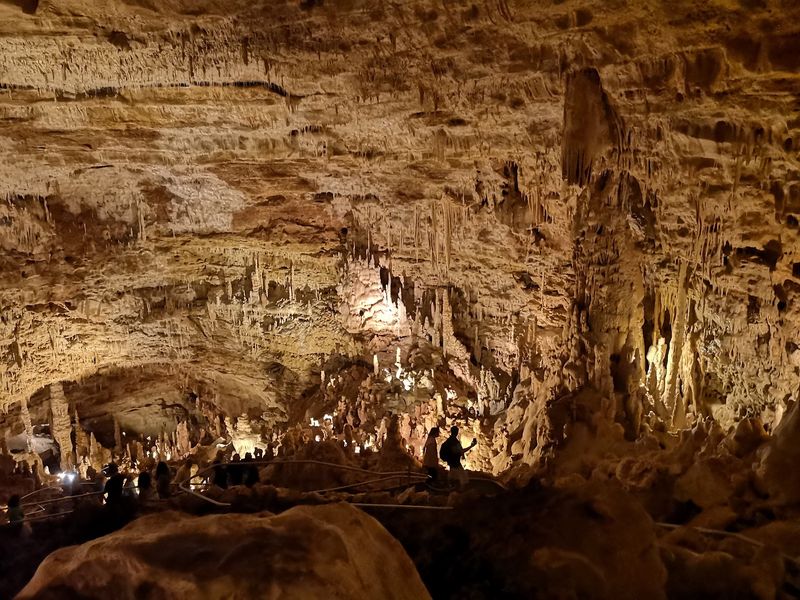
My jaw dropped the moment I descended into this underground world.
Natural Bridge Caverns is the largest show cavern in Texas, and it carries the title of a State Historical Site and National Natural Landmark. More than 95% of its formations are still actively growing, making every visit a glimpse into an ongoing geological process.
Four university students discovered the caverns in 1960 after squeezing through a tight opening in the ground.
The cave takes its name from a 60-foot natural limestone bridge that spans the entrance, formed when a sinkhole collapsed long ago. Inside, the temperature holds steady at 70 degrees Fahrenheit year-round, with humidity near 100%.
The Crystal Palace Tour takes guests 180 feet below the surface through 1.75 miles of decorated passages. Stalactites, stalagmites, and flowing draperies line every chamber, many with a waxy, almost luminous sheen.
For those who want a more intense experience, the Hidden Passages Tour includes a stretch of complete darkness that is equal parts thrilling and humbling.
Above ground, the property keeps the excitement going with a ropes course, zip rails, and a sprawling 5,000-square-foot outdoor maze.
It is genuinely one of those rare attractions that works perfectly for solo travelers, couples, and families all at once. Kids and adults both tend to leave with wide eyes and a strong urge to come back.
You can find this geological wonder at 26495 Natural Bridge Caverns Rd, San Antonio, just a short drive from the city and worlds away from the usual tourist circuit.
Newman’s Castle, Bellville
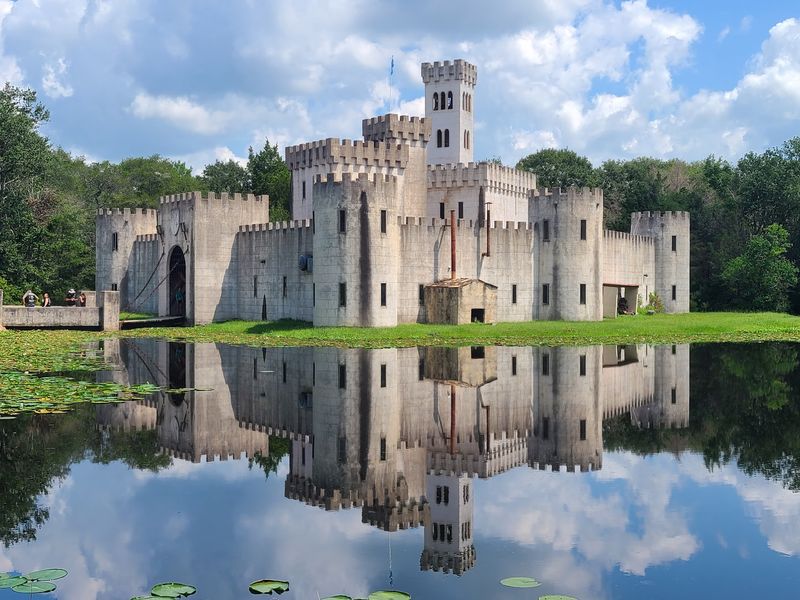
Stumbling upon a full-scale medieval castle in the countryside is not something most people put on their road trip list.
Newman’s Castle near Bellville is exactly that, a magnificent stone fortress built by a local baker named Michael Newman starting in 1997. He completed it in 2006, and the result is one of the most genuinely surprising stops in the entire state.
A deep moat wraps around the structure, and a 3,000-pound working drawbridge grants entry over it. Inside, five round corner turrets, a grand banquet hall, a chapel, and even a dungeon wait to be explored.
The central keep offers sweeping views of the surrounding landscape that feel almost cinematic. Tours here are reservation-based and often begin with a stop at Newman’s Bakery in Bellville before heading out to the castle itself.
Michael Newman sometimes leads the tours personally, and his storytelling makes the whole experience feel warm and personal rather than museum-like.
Younger guests often get treated to a knighting ceremony, complete with wooden swords, which tends to be a highlight for the whole group.
A working trebuchet on the property adds another layer of authenticity to the medieval atmosphere, and watching it launch is surprisingly satisfying.
The craftsmanship throughout the castle is remarkable when you consider it was built by one determined individual with a very specific vision.
Plan your visit to 1041 Old Hwy 36, Bellville, and prepare to leave with a completely new appreciation for what one person can build with enough passion and a whole lot of bricks.
Caverns Of Sonora
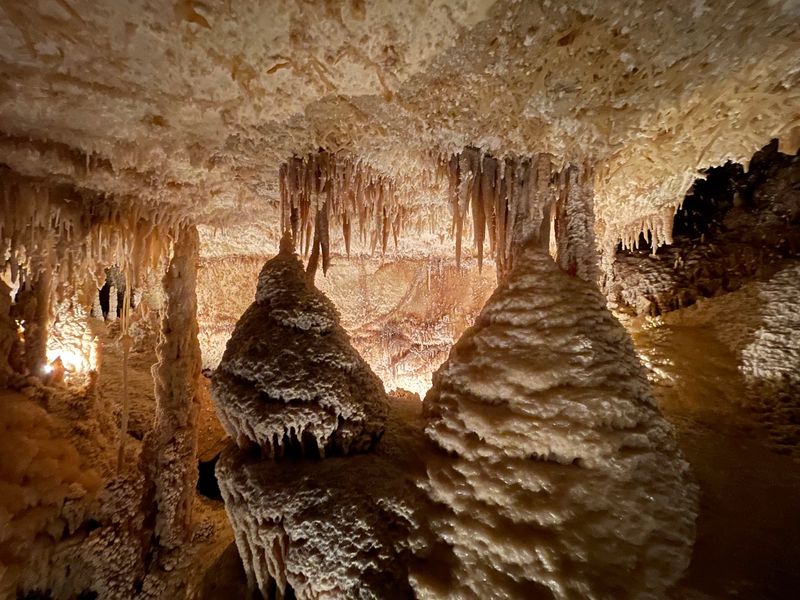
What if a single cave was considered one of the most beautiful on the entire planet?
The Caverns of Sonora, located near the town of Sonora has earned exactly that reputation among geologists and cave enthusiasts worldwide.
Its formations are so intricate and densely packed that even experienced cavers tend to stop mid-sentence just to stare.
The cave maintains a constant 71 degrees Fahrenheit inside, making it a cool retreat no matter what the weather is doing above ground. More than 95% of the formations are still actively developing, so the cave is genuinely alive in a geological sense.
The Crystal Palace Tour guides you through highly decorated passages filled with helictites, cave coral, and translucent calcite structures that seem almost impossibly delicate.
For adventurers who want to go further, the Discovery Challenge Adventure Tour takes you off the paved path and culminates in a 43-foot rappel into an area called Devil’s Pit.
Photographers can book specialized tours that allow extended time in particularly stunning sections of the cave. Both options require advance reservations and are well worth planning ahead for.
Above ground, the property offers gem sluicing, a scenic nature trail, and camping for both RVs and tents, so there is genuinely no shortage of things to do during a full day out here.
The origin story of the cave involves a dog chasing a raccoon into a small ground opening, which is the kind of delightfully accidental discovery that makes the state’s history so entertaining.
Find this crystal kingdom at 1711 Private Rd 4468 and give yourself a full day to truly absorb what makes it so extraordinary.
Texas State Railroad Palestine Depot, Palestine
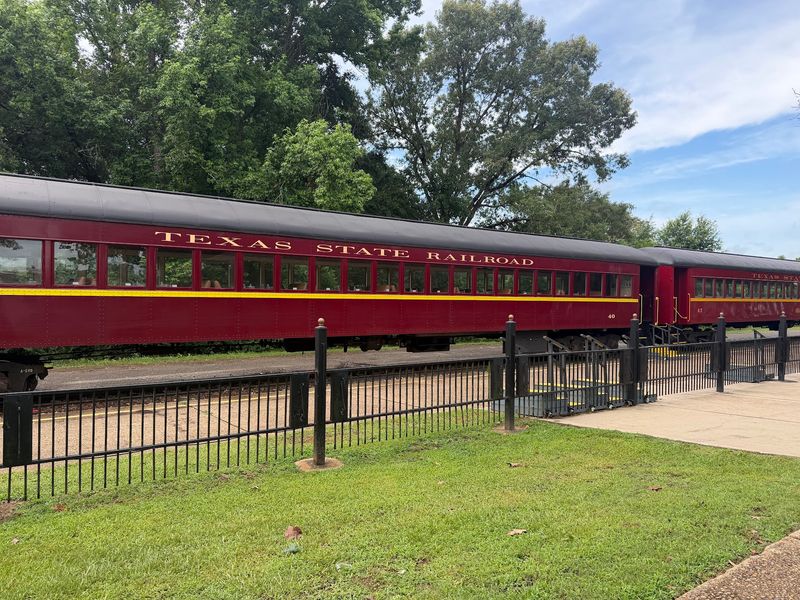
When was the last time a train ride felt like a genuine adventure rather than just transportation?
The Texas State Railroad Palestine Depot in Palestine answers that question with a resounding rumble of steam and history.
The tracks here were originally laid by inmates in 1881, and the line has been carrying passengers through the East Texas Piney Woods ever since.
Vintage steam and diesel locomotives power the 50-mile round trip between Palestine and Rusk, with the full journey taking about four hours.
That is plenty of time to settle in, look out the window, and let the dense forest scenery do its thing. The lush greenery, occasional creek crossings, and quiet stretches of woodland make the ride feel genuinely restorative.
Themed train experiences throughout the year add serious variety to the schedule.
The Piney Woods Evening Dinner Train and the Fiesta Flyer Dinner Train bring festive energy to the journey, while the Dogwood Lunch Train in spring runs through tunnels of white dogwood and pink redbud blooms.
Each themed ride has its own personality, so repeat trips never feel repetitive.
Both the Palestine and Rusk depots function as small museums, giving you historical context for what you are riding through. Campgrounds and outdoor activities near the Rusk Depot make it easy to extend the trip into a full weekend if the mood strikes.
The Palestine Depot sits at 789 Park Rd 70. Boarding one of these vintage locomotives is the kind of slow-travel experience that reminds you why leaving the highway occasionally is always the better choice.
Round Top Antiques District
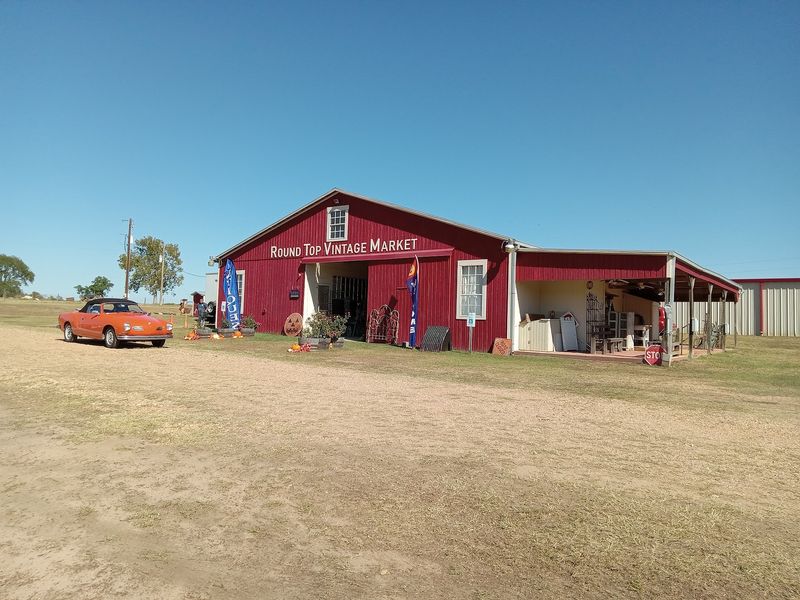
Are you seeing what I am seeing? A tiny town with a population of fewer than 100 people somehow becomes one of the largest antique shows in the entire United States.
Round Top pulls off this extraordinary transformation several times a year, drawing thousands of dealers and shoppers from across the country to a 20-mile stretch of State Highway 237.
The main events happen twice a year, with the spring show running from March into April and the fall show taking place from late September into October.
A smaller winter edition runs in January for those who cannot wait. During peak seasons, roughly 100 venues and over 2,000 dealers set up along the route, creating an experience that is equal parts treasure hunt and open-air festival.
The range of what you will find here is genuinely staggering. European furniture from the 18th century sits alongside vintage clothing, handmade jewelry, industrial salvage, and quirky collectibles that defy easy categorization.
Some venues are highly curated with premium pieces, while others are sprawling picking fields where the thrill of discovery is the whole point.
Comfortable shoes are non-negotiable, and a car is essential for navigating the spread-out market areas. Bringing cash tends to open up better deals at many booths, so hitting an ATM before you arrive is a smart move.
Some venues like Marburger Farm charge a small entry fee, while most others are free to browse.
Round Top is the kind of place that rewards patience and a wandering spirit, and nearly everyone leaves with something they had no idea they were looking for until they found it.
Leonabelle Turnbull Birding Center, Port Aransas
I will be the first to admit that a birding center next to a wastewater treatment facility does not sound like a dream day trip on paper.
The Leonabelle Turnbull Birding Center in Port Aransas proves that first impressions can be spectacularly wrong.
The freshwater wetlands created by the facility attract an astonishing variety of bird species, making this one of the most productive birding locations on the Gulf Coast.
Situated along the central flyway, the center encompasses both freshwater and saltwater marshes that serve as critical habitat for resident and migratory birds throughout the year.
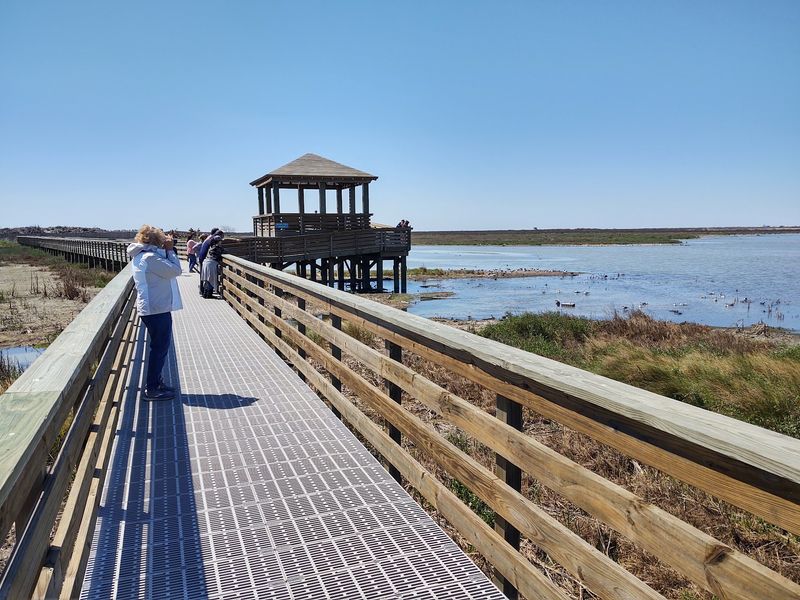
A 1,225-foot ADA-accessible boardwalk system winds directly over these teeming wetlands, putting you eye-level with the action.
Shaded observation platforms and fixed spotting scopes along the route make it easy to linger and really study what is happening in the water below.
Roseate Spoonbills, black-bellied whistling-ducks, cinnamon teal, and various egrets are among the regulars you might encounter.
The boardwalk also connects to the Nature Preserve at Charlie’s Pasture South Trail, adding another 1.25 miles through salt marsh, grassland prairie, and up an observation tower with sweeping coastal views.
Keep an eye out for a resident alligator affectionately known as Boots, who has become something of a local celebrity.
Free guided birding walks happen every Wednesday morning, with binoculars available to borrow so no one misses out on the finer details. The center is at 1356 Ross Ave in Port Aransas.
Spending a morning here, surrounded by wings and water and the sound of coastal wind, has a way of slowing everything down in the best possible sense.
Beer Can House, Houston
I had to do a double-take the first time I saw a photo of this place, because it genuinely looks like something out of a fever dream.
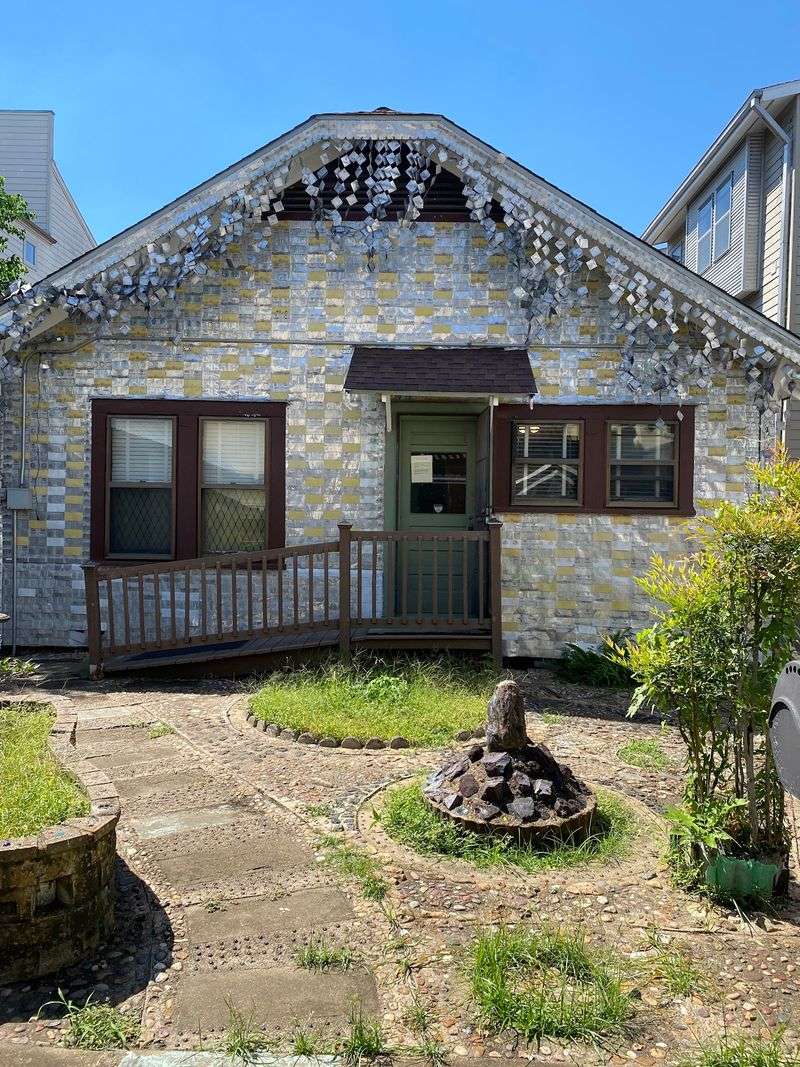
The Beer Can House in Houston is a folk art masterpiece covered with an estimated 50,000 flattened beer cans, pull-tab garlands, wind chimes, and metallic sculptures that catch the light in every direction.
It is one of those rare landmarks that gets more impressive the longer you stand in front of it.
John Milkovisch, a retired upholsterer, started transforming his property in 1968, beginning not with the house itself but with the yard.
He embedded marbles, rocks, and metal pieces into concrete across the lawn, largely because he was tired of mowing grass.
That practical impulse eventually evolved into something far grander, as his creative attention shifted to the exterior walls of the home itself.
Over the next 18 years, Milkovisch covered nearly every surface with flattened cans, arranging them in patterns and hanging cascading garlands of pull-tabs from the eaves.
Beyond the artistic effect, the can cladding actually helped reduce the family’s energy bills by insulating the walls from Houston’s intense heat. Function and folk art, working together in the most unexpected way imaginable.
Today, The Orange Show Center for Visionary Art preserves and operates the house, ensuring that Milkovisch’s singular vision continues to inspire new generations of visitors and artists.
Guided tours are available, and the staff brings genuine enthusiasm to telling the full story behind the creation.
You can find this shimmering Houston landmark at 222 Malone St, Houston and leaving without stopping to appreciate every glittering detail would be a genuine missed opportunity.