11 Northern California Scenic Drives Where The Road Trip Is Almost As Good As The Food
Put the destination into your GPS, then give yourself permission to ignore the fastest route.
A good road trip should make you pull over for no practical reason. Perhaps the coastline suddenly opens up beside you. Or maybe redwoods turn the road into a green tunnel.
Northern California is especially good at turning the drive itself into half the reward.
These 11 routes give you scenery worth slowing down for and food stops tempting enough to rearrange the entire day.
Follow the curve that looks interesting. Take the overlook seriously. And when somebody spots a bakery, roadside market, or restaurant you did not plan for, turn the car around.
That unplanned detour may become the story you tell later.
Just remember one road-trip rule: whoever chooses the scenic route does not get blamed when lunch happens two hours late.
1. Pacific Coast Highway Through Marin County, Sausalito to Point Reyes Station
Morning light changes fast on this route, and that is part of the fun.
The road leaves the busy waterfront feel behind and starts trading marinas for hills, open grass, and long coastal views that make the drive feel bigger with every mile.
Curves arrive often, so a slow pace works best here.
Pullouts can fill on sunny weekends, and fog can hide the widest views, so travelers usually get the easiest experience by starting early and keeping plans flexible.
Food along this stretch feels tied to the land and water around it.
Sausalito offers easy places to begin with breakfast or a relaxed lunch, while Tomales Bay and Point Reyes Station are better for seafood, oysters, baked goods, and simple meals that taste fresh instead of fussy.
Point Reyes Station gives the route a satisfying finish because it is easy to walk, easy to snack through, and full of low key charm.
After hours of cliffs, ranchland, and sea air, even a sandwich or bowl of chowder can feel unusually rewarding on this memorable drive.
2. Highway 1 Through Sonoma Coast, Bodega Bay to Jenner
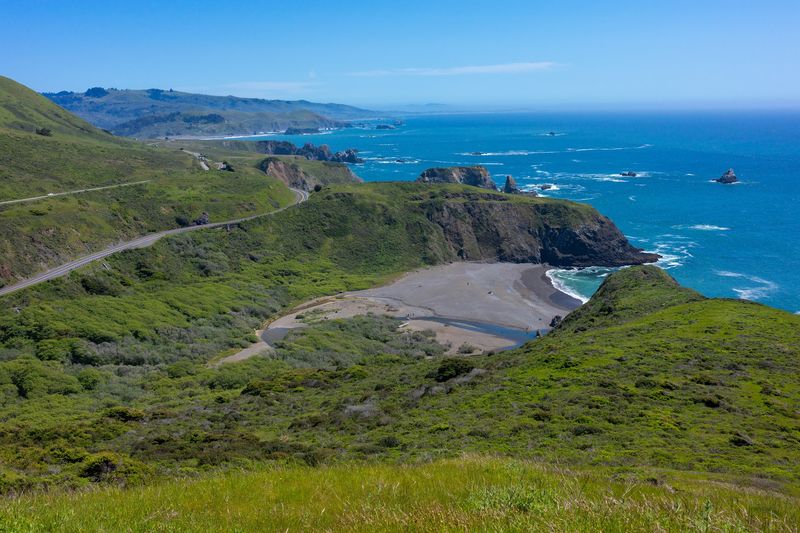
Raw coastline gives this drive its personality from the start.
Instead of polished resort energy, the stretch between Bodega Bay and Jenner feels windy, open, and a little wild, which makes every warm meal along the way feel extra welcome.
The road is not very long, but it asks for patience. Sharp turns and frequent scenic stops mean the trip works better as a slow outing than a quick transfer, especially when weekend traffic and fog roll in together.
Bodega Bay is the easiest place to anchor the food part of the day.
Seafood is the obvious draw, yet chowder, sandwiches, coffee, and bakery stops matter too because the cool air and salt spray tend to make people hungry sooner than expected.
Jenner brings a quieter finish where the Russian River meets the Pacific.
That meeting of river and bluff creates a calm final mood, and it pairs nicely with a simple meal eaten near the water after a drive filled with wind noise, wave sounds, and bright coastal light.
3. Highway 128 Through Anderson Valley, Boonville to Mendocino
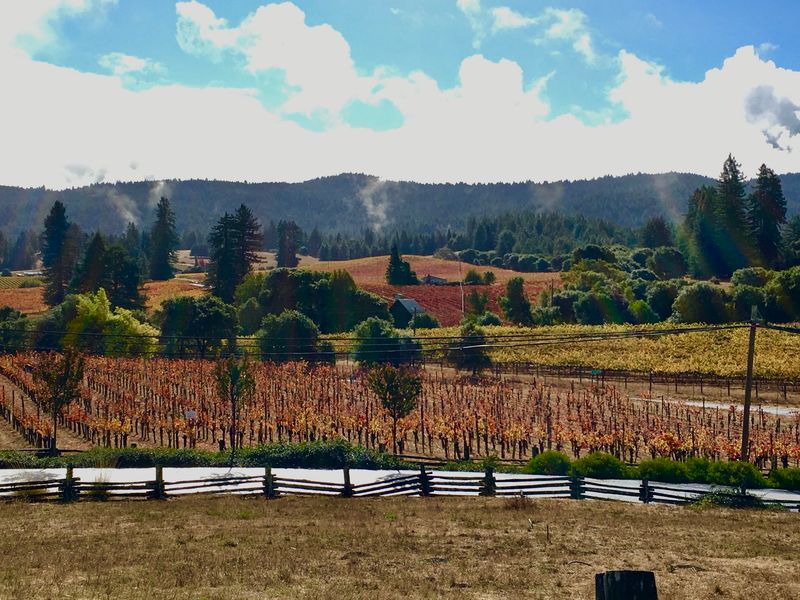
A drive can feel like a long meal course, and this one proves it.
Starting in Anderson Valley means open farmland, orchards, and a laid back rhythm, then the route slips into redwood shade before ending at the cool, dramatic coast near Mendocino.
Because the scenery changes so much, the trip rarely feels repetitive.
Sunlit vineyard views give way to dark forest walls and then ocean air, so each stop seems to belong to a different chapter even though the route flows together naturally.
Boonville works well for a calm beginning with breakfast or an early lunch before the road narrows and bends through the valley.
Farm stands and small town cafes help keep the food side grounded, and Mendocino adds more polished choices without losing its village scale.
Timing matters here more than speed.
Leaving room for a short redwood walk and an unhurried coastal meal makes the route feel complete, since the payoff is not only reaching Mendocino but noticing how the food and landscape slowly shift together.
4. Silverado Trail, Napa to Calistoga
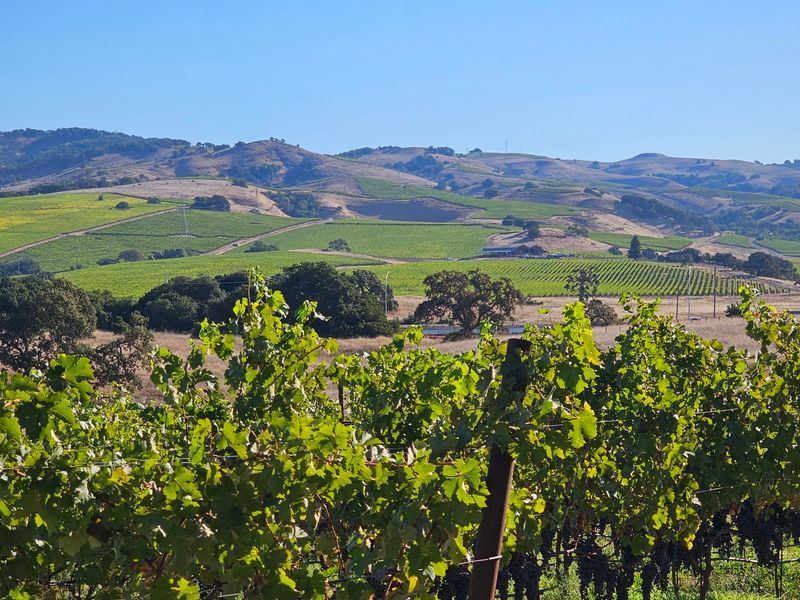
Some drives feel smoother before the wheels even start moving.
Silverado Trail has that effect because it usually carries a calmer rhythm than the valley’s busier main road, letting the eye settle on vines, hills, and old trees instead of constant traffic signals.
The route suits travelers who want scenery without too much stop and start motion.
Long vineyard views create a steady visual pattern, and that makes food breaks feel nicely spaced rather than squeezed between crowded stretches of driving.
Napa and Calistoga both offer dependable places to build a day around breakfast, lunch, or dinner.
Between them, nearby towns and market areas provide bakery stops, roadside snacks, and sit down meals that match the valley’s slower pace without needing an overplanned schedule.
Afternoon is especially pleasant when the light turns softer across the rows and the road feels almost quiet.
A simple plan works best here: pick one meal, add one scenic pause, and leave the rest open, since Silverado Trail shines brightest when the day never feels rushed or overpacked.
5. Highway 29 Through Napa Valley, Napa to Calistoga
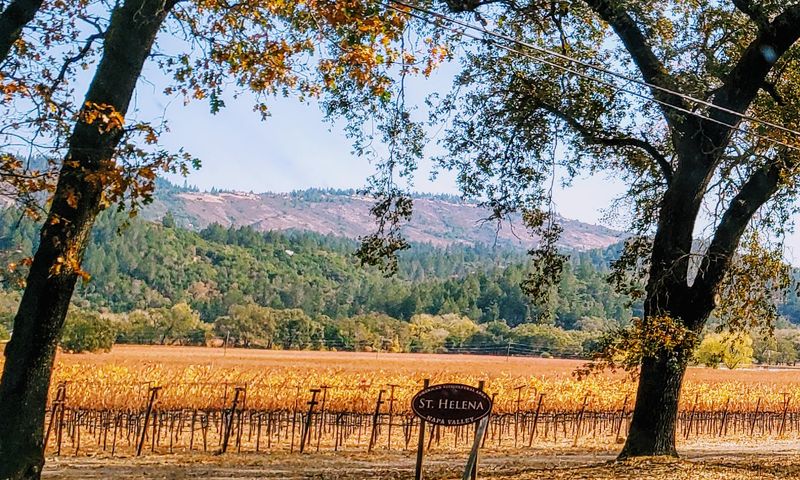
Energy is the main difference on this route, and that can be a good thing.
Highway 29 feels more active than Silverado Trail, with busier towns, heavier traffic at peak times, and many chances to stop for food without straying far from the main road.
That lively pace makes the drive useful for travelers who want scenery and convenience together.
Instead of a quiet countryside mood, the route mixes vineyard views with walkable town centers where lunch, coffee, or a bakery break can fit naturally into the day.
Yountville, St. Helena, and Calistoga are the strongest food anchors because each offers a cluster of real options close to the route.
Reservations help at popular places, but casual meals are possible too, especially earlier in the day or on weekdays when the traffic pattern tends to feel easier.
Patience improves this drive more than speed ever will.
A slower plan with one town walk and one sit down meal lets the route show its strengths, since the appeal comes from the combination of valley scenery and the promise that something good to eat is never far ahead.
6. Highway 49 Through Gold Country, Auburn to Nevada City
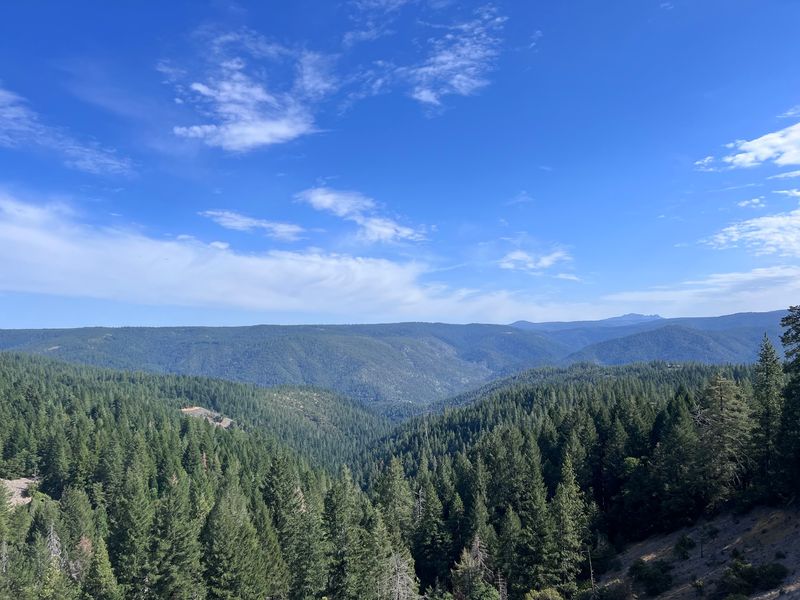
History gives this drive its flavor before any meal even begins.
The road between Auburn and Nevada City passes through foothill country where old buildings, river canyons, and wooded hills create a slower mood that pairs naturally with hearty lunches and long afternoon strolls.
Unlike the coast or wine country, the scenery here feels earthy and grounded.
Oak trees, pines, and Gold Rush town centers keep changing the texture of the trip, so it is easy to split the day between scenic driving and walking through streets lined with shops and cafes.
Auburn makes a practical starting point because services are easy to find and the historic core invites a short stop.
Grass Valley and Nevada City give the route its strongest finish, especially for travelers who enjoy old architecture, bakery breaks, comfort food, and a downtown that still feels human in scale.
The best approach is to allow extra time for wandering.
Highway 49 is not only about reaching the next town, since the charm comes from moving between places that still show their age, then sitting down to a meal that feels satisfying after a road lined with stories.
7. Highway 1 Through Mendocino County, Mendocino to Fort Bragg
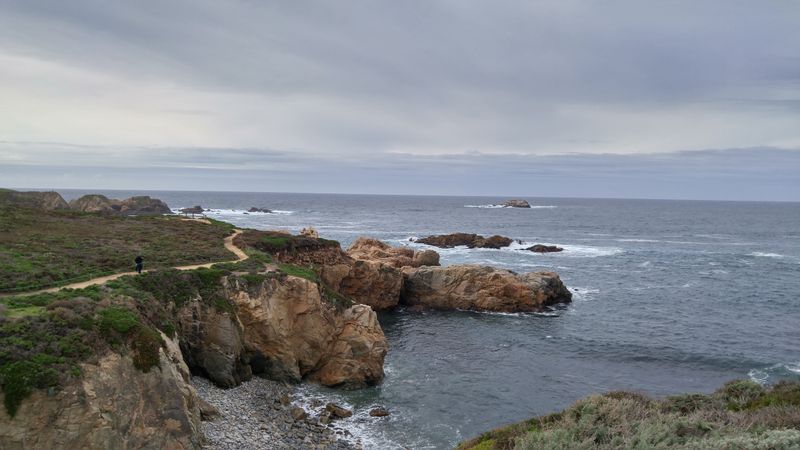
Cliffs, wind, and sea noise shape this short drive in a big way.
The route from Mendocino to Fort Bragg is not long, but the scenery is so dramatic that even a simple lunch stop can feel attached to something much larger.
Roadside pullouts and headland walks are part of the appeal here.
The pace naturally slows because the ocean keeps stealing attention, and that makes it smart to leave room for a beach walk, a harbor stop, or extra time standing still near the bluffs.
Mendocino brings the village charm with cafes and restaurants that suit an unhurried start.
Fort Bragg feels more workmanlike and practical, which actually helps the food side of the trip because travelers can shift from postcard views to straightforward seafood and casual meals.
Gray skies do not hurt this drive much at all. In fact, cool weather often deepens the texture of the place.
It makes chowder, coffee, or a warm plate near the water feel especially timely after a morning spent watching waves crash against dark rock along one of California’s most rugged shorelines.
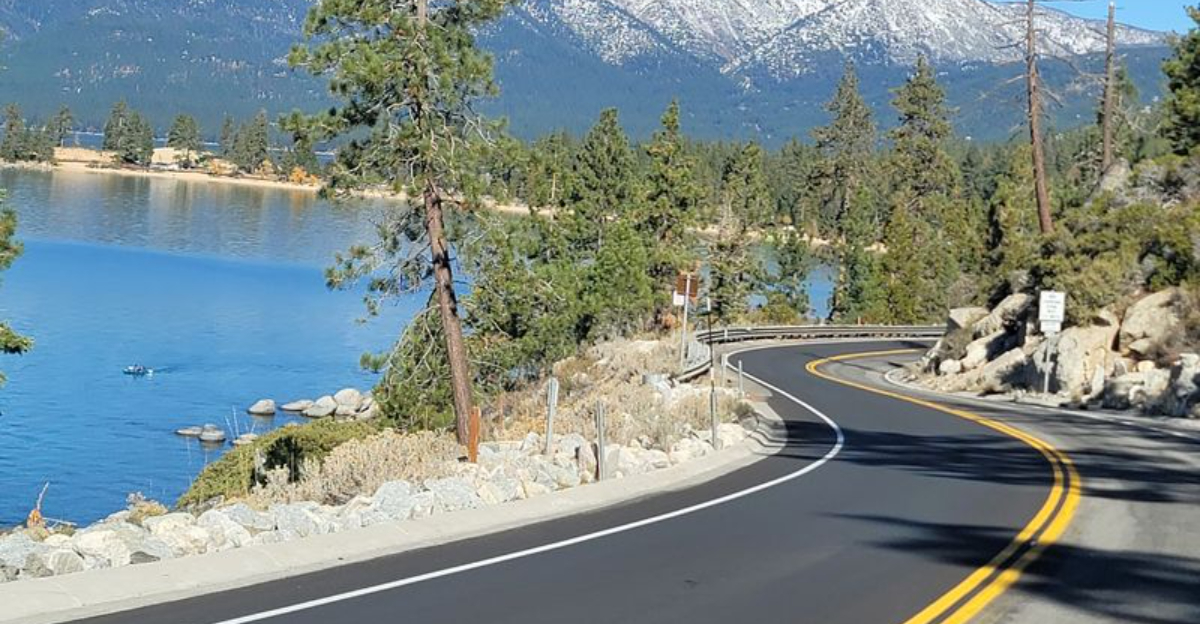
8. Highway 89 Around Lake Tahoe, Truckee to Tahoe City
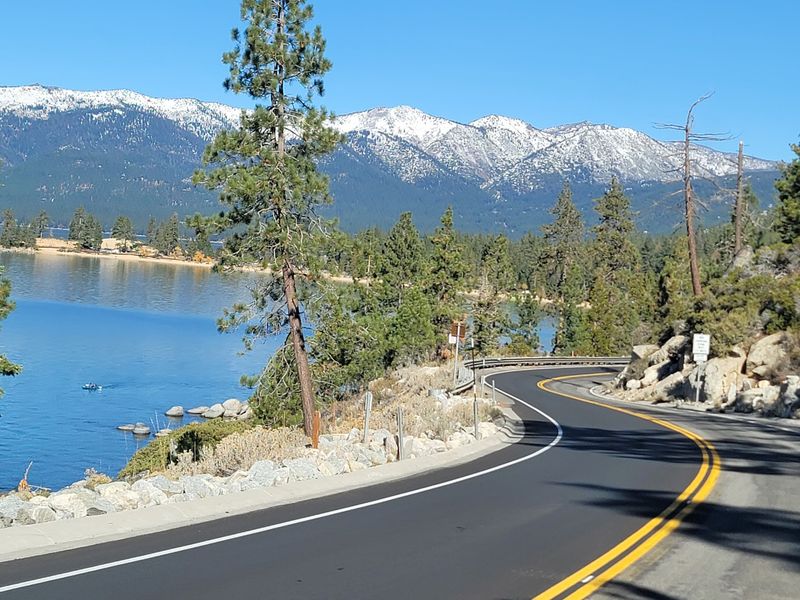
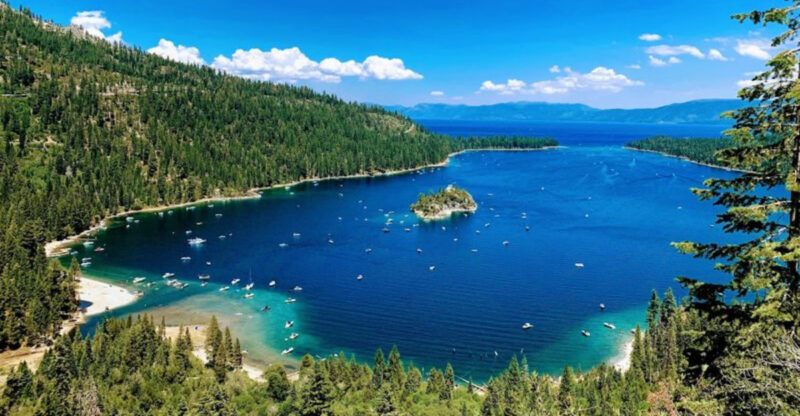
Blue water takes over the whole mood of this drive once the lake comes into view.
The route from Truckee to Tahoe City is short enough for a half day plan, yet scenic enough to support a full day if walks, meals, and overlooks are built in.
Curves and seasonal traffic keep the pace modest, especially near popular viewpoints.
Early starts help with parking, and cooler layers are useful even in warm months because lake breezes can shift the comfort level quickly near the shore.
Truckee offers a smart place to begin with coffee or breakfast before the route leans fully into alpine scenery.
Tahoe City finishes the drive with easy food options close to the water and river, which makes it simple to turn a scenic outing into a relaxed lunch or sunset dinner.
The strongest part of this route is how accessible it feels.
A traveler does not need a huge time commitment to get mountain views, fresh air, and a satisfying meal in one outing, which is why this stretch remains such a dependable choice.
9. Highway 50 Through Apple Hill, Placerville to South Lake Tahoe
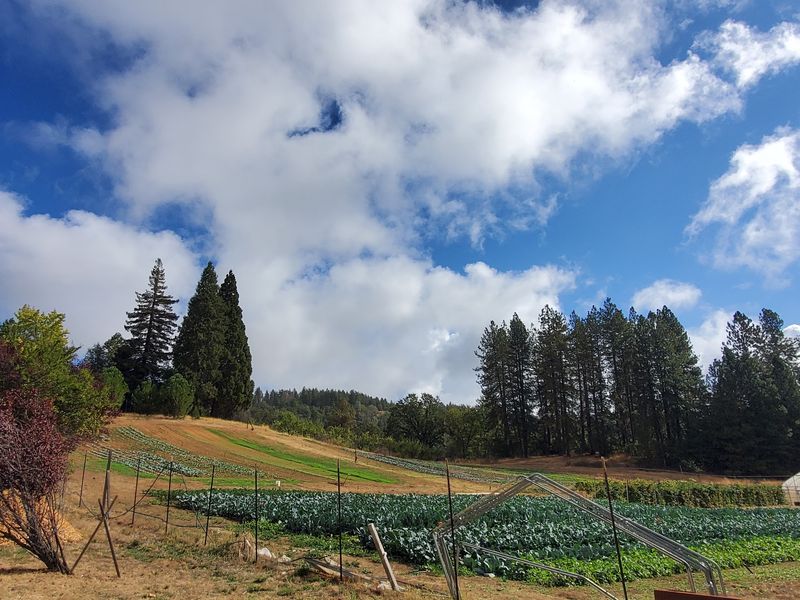
Season matters more here than on almost any other drive in the region.
Highway 50 through Apple Hill changes character with the harvest, and fall brings the fullest version of the trip with farm stands, apple treats, cooler air, and busier roads.
Placerville gives the day a historic starting point before orchards begin to shape the mood.
The route then climbs steadily toward the Sierra, so the scenery shifts from rural foothills to mountain terrain, making the food story change too from farm snacks to fuller meals near the lake.
Apple Hill is best handled with realistic expectations on weekends because traffic and parking can become part of the experience.
Travelers who start earlier or visit on weekdays usually get a calmer rhythm and more room to enjoy baked goods, produce stops, and short breaks without feeling boxed in.
South Lake Tahoe supplies the final contrast with bigger views and more dining options.
After passing orchards and roadside markets, arriving at the lake creates a satisfying sense of payoff, especially when the day ends with a warm dinner and the feeling of having crossed several different Californias.
10. Sacramento River Delta Loop, Sacramento to Clarksburg and Locke
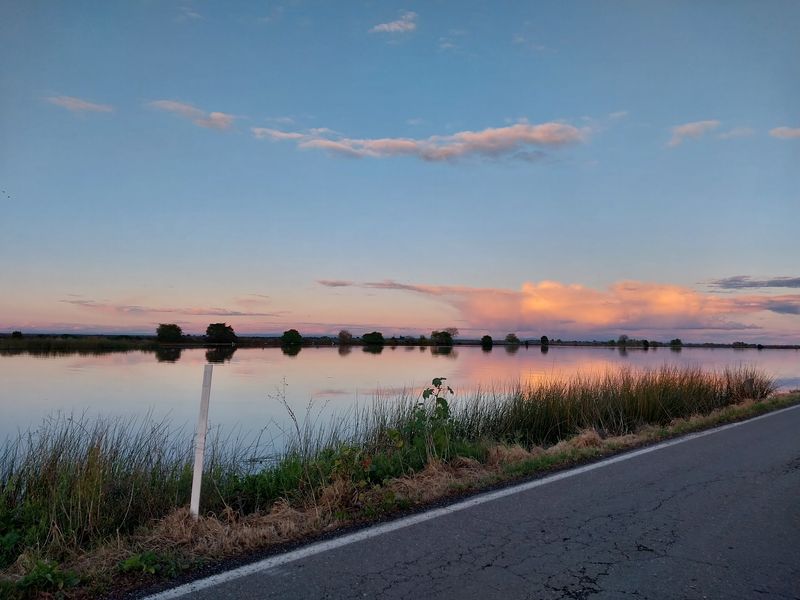
Flat land gives this drive a different kind of beauty, quieter and more spacious than mountain or coast routes.
The Delta loop trades cliffs and peaks for levee roads, slow water, farm fields, and historic towns that make the trip feel calm from the first mile.
Because the roads are gentler, the outing suits a relaxed pace with several short stops.
Clarksburg and Locke are the key anchors, and the space between them matters too because bridges, waterways, and old buildings create a steady sense of local history.
Food here tends to feel practical and rooted in the region rather than flashy.
Picnic supplies, simple meals, and small town stops fit the drive well, especially when paired with a walk through Locke or a slow break beside the river where the soundscape stays soft.
Late afternoon often shows the Delta at its best.
Warm light on the water and fields adds texture to a route that rewards observation more than speed, and that makes it a strong choice for travelers who want a low pressure day.
11. Highway 12 Through Sonoma Valley, Sonoma to Santa Rosa
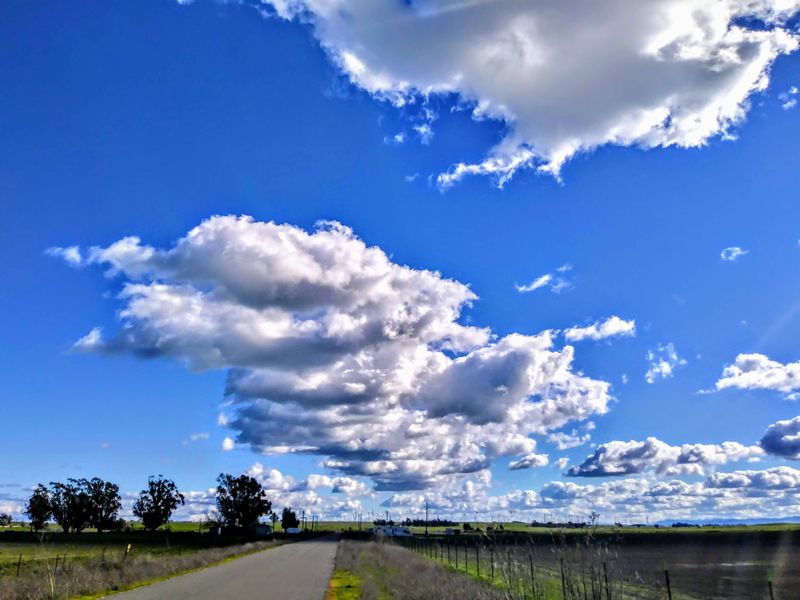
Warmth defines this drive in a very immediate way.
The route from Sonoma to Santa Rosa feels welcoming rather than dramatic, with vineyards and small towns that make the day easy to shape around one good meal and a few simple stops.
Sonoma starts things well because the historic core is walkable and pleasant before getting back in the car.
Farther north, Glen Ellen and nearby areas keep the scenery varied with open stretches, trees, and a rural feel that never pushes the route into a rushed mood.
Food is one of the strongest reasons to choose this drive.
Sonoma Valley offers everything from casual cafes to more polished restaurants, and the close spacing between towns means travelers can mix a market stop and a sit down meal without spending the whole day navigating.
What makes Highway 12 memorable is balance. The views are lovely, the towns are useful, and the route feels approachable for visitors who want a scenic California day without a complicated plan.