10 Abandoned Colorado Sites Where The History Still Feels Untouched
Colorado is full of towns that simply gave up. The silver ran out, the railroad left, and everybody packed what they could carry.
What they left behind is still standing in some places, which is the strange part. You can stand in a doorway where somebody once argued about money.
Old glass and rusted cans sit right there on the ground, and the honorable thing is to leave every bit of it alone. Some of these places sit a few steps from a highway pullout.
Others require a rough road and a vehicle with real clearance, so read before you commit. One of them has residents who still live there, which makes the word ghost feel a little rude.
Another has a park with restrooms and paved paths, because history occasionally comes with plumbing. Pick your comfort level, bring water, and go before the snow closes the passes again.
1. Independence Ghost Town
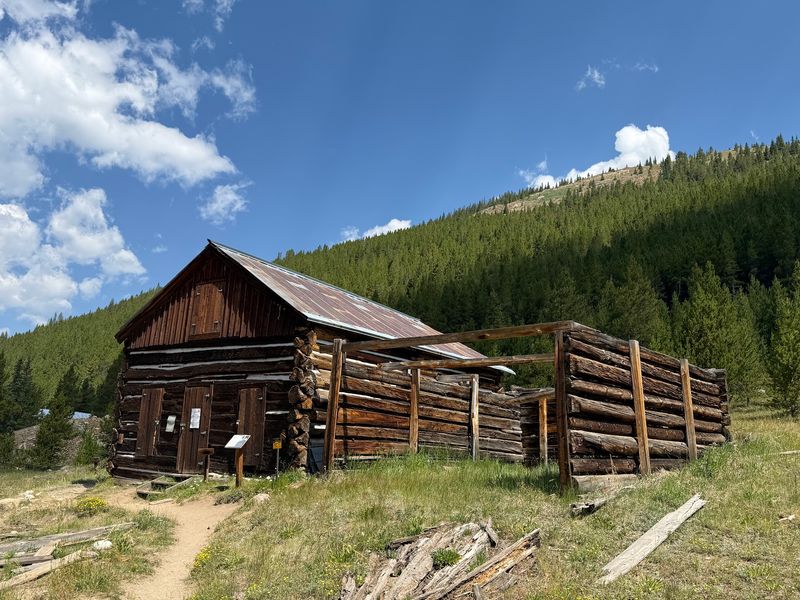
Perched at nearly 11,000 feet, Independence Ghost Town feels like the mountains swallowed a whole community whole. The wooden structures still stand, leaning slightly but stubbornly refusing to fall.
Standing here on a quiet morning, you can almost hear the echo of boots on old planks.
Founded during the silver rush of 1879, Independence once housed over 1,500 residents. That number is hard to believe when you are staring at a handful of rotting cabins.
The Roaring Fork Valley winters eventually drove most settlers away for good.
Located at 36221 Colorado Highway 82 near Aspen, the site is free to visit and well worth the drive. The Aspen Historical Society manages it with care.
Interpretive signs give context without overwhelming the raw, quiet atmosphere of the place.
Every collapsed wall here has a story. One cabin reportedly belonged to a baker who stayed through three brutal winters alone.
That kind of stubborn spirit feels baked right into the landscape itself.
2. Ashcroft Ghost Town
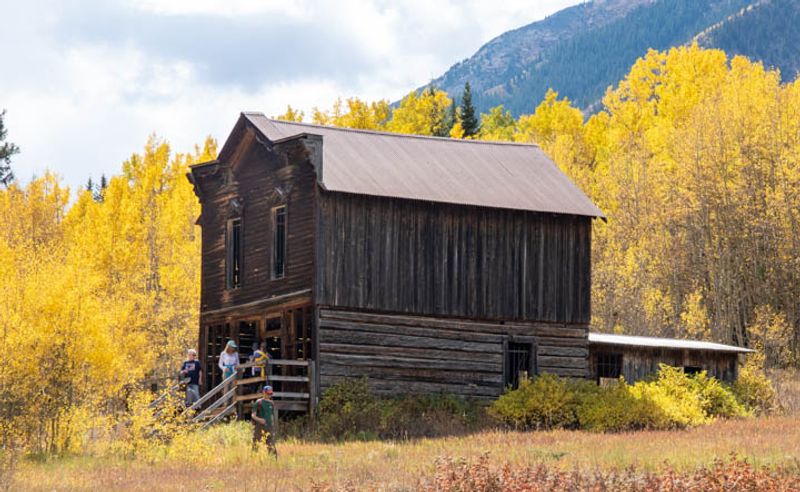
Ashcroft actually beat Aspen to the punch. This town was booming before its flashier neighbor even had a proper name.
At its peak in the early 1880s, Ashcroft had two newspapers, a school, and nearly 2,000 residents packed into Castle Creek Valley.
Then the silver market collapsed, and people left almost overnight. The buildings stayed behind like guests who forgot to go home.
Today, around a dozen original structures survive in remarkable condition along Castle Creek Road near Aspen.
The Pine Creek Cookhouse sits nearby, which adds a pleasant modern contrast to the ghostly surroundings. But the ghost town itself is the real draw.
Volunteers from the Aspen Historical Society lead tours that bring the old saloon stories back to life.
What makes Ashcroft special is the sheer density of original structures still standing. Most ghost towns offer a foundation or two.
Ashcroft gives you a full street view frozen in time. Walking through it feels less like a history lesson and more like stumbling onto a film set that nobody ever cleaned up.
3. Saint Elmo
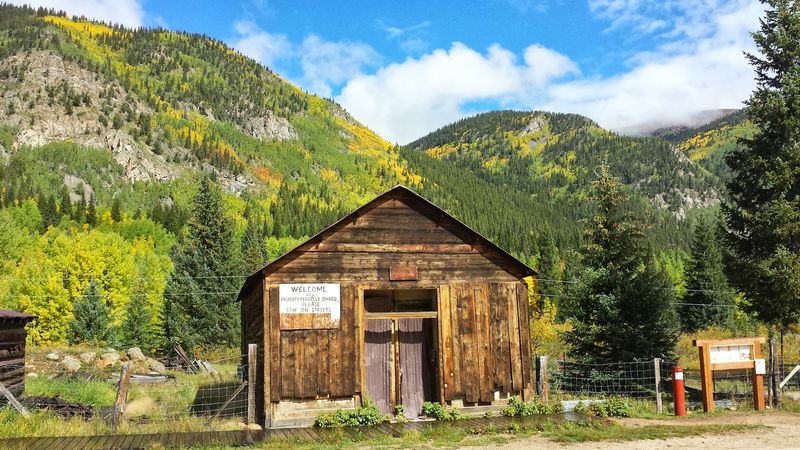
Saint Elmo is the most photogenic ghost town in Colorado, and it knows it. The buildings are colorful, the streets are wide, and the chipmunks are aggressively friendly.
Seriously, bring snacks at your own risk because those little guys have zero fear.
Founded in 1880 to support nearby gold and silver mines, Saint Elmo grew fast and grew loud. At its height, the town had a hotel, general store, dance hall, and over 2,000 residents.
The railroad arrived in 1881 and made everything even busier for a while.
When the mines dried up and the railroad pulled out in 1922, Saint Elmo emptied quickly. One family, the Murphys, stayed on for decades and essentially kept the town from disappearing entirely.
Their dedication is a big reason so much survives today along County Road 162 in Nathrop.
You can rent ATVs nearby and explore the surrounding mining roads. The town itself is open year-round, though summer visits offer the best access.
Some buildings have been stabilized for safety, but the atmosphere remains 100 percent unpolished and completely genuine.
4. Winfield Mining Camp Interpretive Site
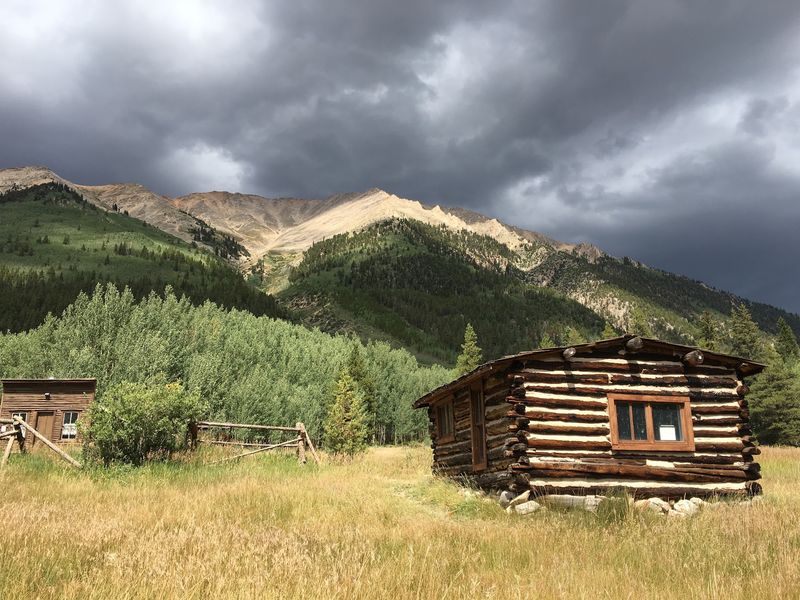
Winfield is the kind of place where the silence feels earned. Getting here requires navigating Forest Road 390 outside Buena Vista, and the rough drive filters out anyone who is not serious about exploring.
That roughness is part of the charm.
The camp was founded in the 1880s and served as a supply hub for miners working the surrounding peaks. At its busiest, Winfield had a post office, sawmill, and several dozen cabins scattered through the valley.
The elevation sits around 10,000 feet, which made year-round living genuinely brutal.
Today the site features interpretive signs that explain the mining operations with real detail and zero fluff. Several log cabin ruins still stand, mossy and leaning but unmistakably present.
The surrounding San Isabel National Forest adds a wild backdrop that makes the ruins feel even more remote.
Winfield is also the eastern trailhead for the Huron Peak climb, so hikers often pass through without realizing they are walking through a historic site. If you stop and read the signs, the place transforms completely.
History has a way of changing how you see a landscape when you actually pay attention to it.
5. Vindicator Valley Trailhead
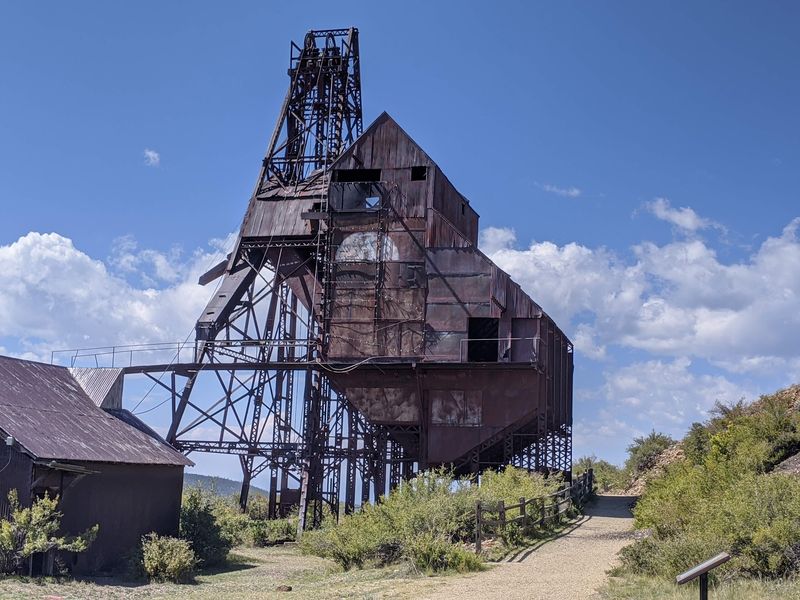
Victor, Colorado calls itself the City of Mines, and the Vindicator Valley Trail makes that title feel completely justified. The trail winds through an outdoor museum of mining relics that most people drive right past on County Road 81 without ever stopping.
The Vindicator Mine was one of the most productive gold mines in the Cripple Creek district during the late 1800s and early 1900s. Headframes, ore chutes, and stone foundations line the trail in a density that is almost overwhelming.
Each relic has a number, and a printed guide explains what you are looking at.
I walked this trail on a foggy morning, and the atmosphere was genuinely eerie in the best possible way. The mist clung to the old wooden structures and made everything look like a sepia photograph come to life.
That kind of accidental magic is hard to plan for.
The trail is about two miles round trip and rated easy to moderate. Dogs are welcome, and the signage is thoughtful without being condescending.
Victor itself is worth exploring after the hike, with several historic buildings lining its main street in various states of beautiful decay.
6. Redstone Coke Oven Historic District
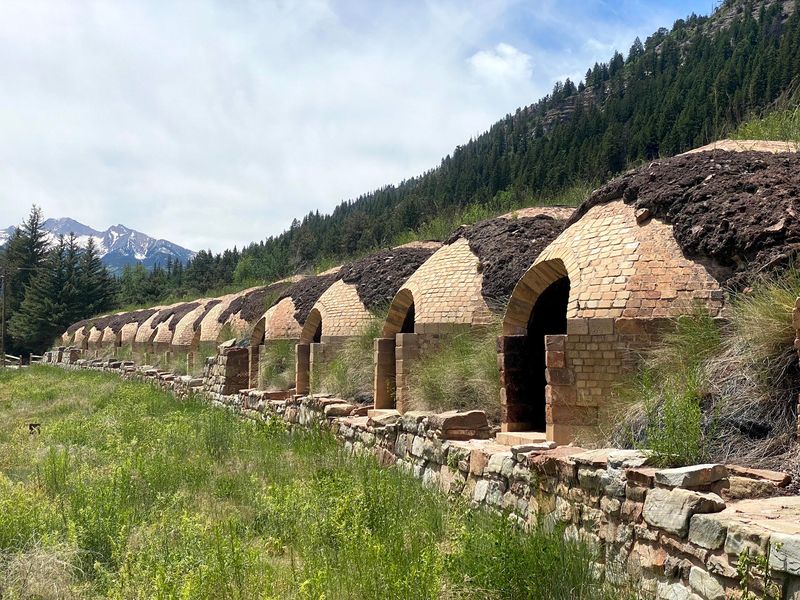
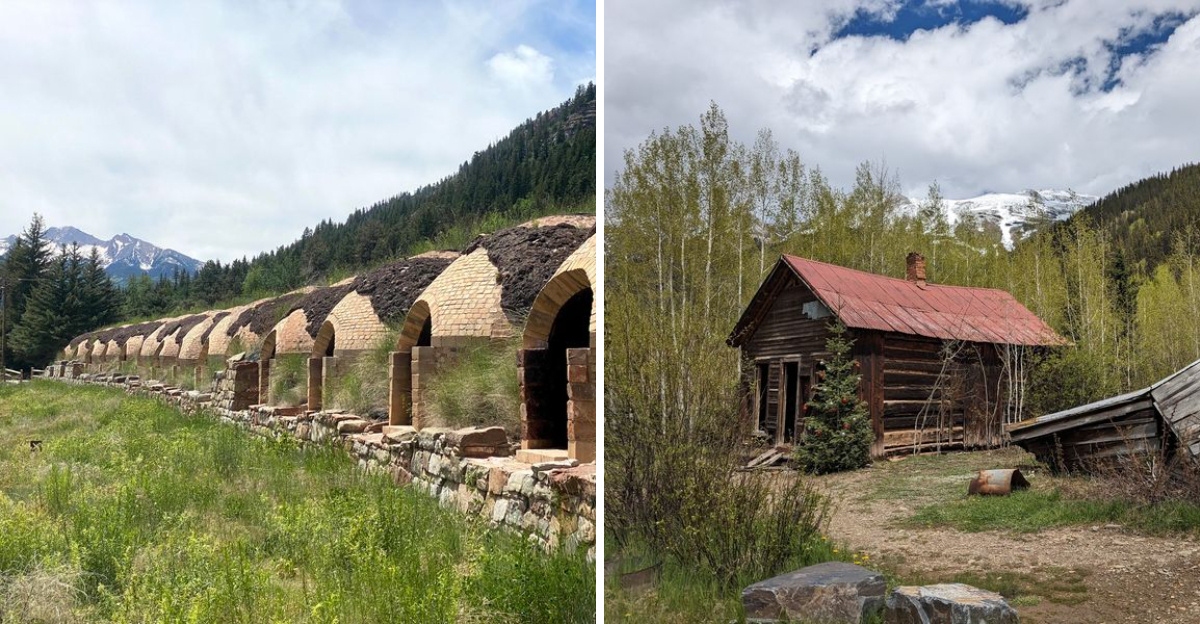
Seventy-four stone beehive ovens lined up in a perfect row is not something you expect to see on a Colorado highway drive. But there they are at 17807 Colorado Highway 133 near Carbondale, standing like a forgotten industrial army.
The Redstone Coke Oven Historic District is one of the most visually striking sites in the entire state.
Built in the 1890s by coal magnate John Cleveland Osgood, the ovens converted coal into coke for steel production. Osgood was famously paternalistic toward his workers, building them a model village called Redstone with amenities unusual for the era.
The ovens operated until around 1909 before falling silent.
What makes this site so satisfying is the sheer scale of it. Each oven stands about twelve feet tall with a perfectly arched opening.
Walking along the row feels like passing through a very old, very strange sculpture garden.
The site is accessible year-round and free to visit. The nearby town of Redstone adds context, with Osgood’s Cleveholm Manor still standing as a reminder of the wealth this operation generated.
The contrast between the rough ovens and the ornate manor tells the whole story without a single word.
7. Marble Mill Site Park
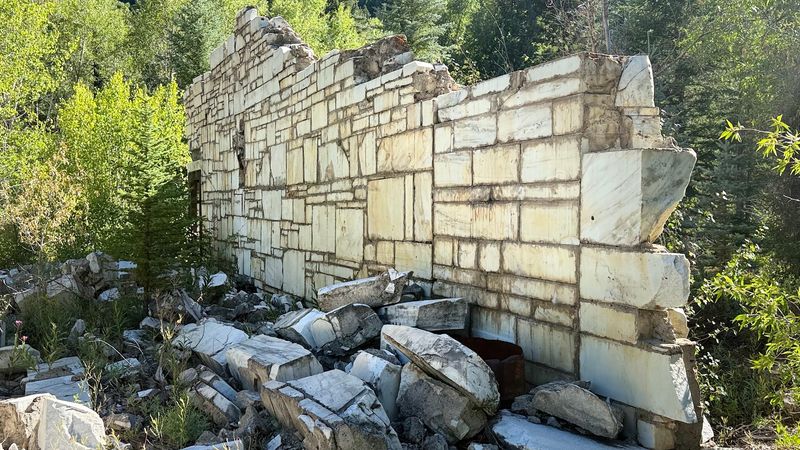
The Lincoln Memorial and the Tomb of the Unknown Soldier share something with a tiny Colorado town called Marble.
The stone used in both monuments came from the Colorado Yule Marble Quarry, and the mill that processed it still leaves behind a jaw-dropping footprint at 213 West Park Street.
The Marble Mill operated from 1906 until 1941, cutting and finishing massive blocks of pure white marble. At its peak, the operation employed hundreds of workers and shipped stone across the country.
The mill burned and flooded multiple times before finally closing for good.
Today the Marble Mill Site Park preserves the concrete foundations and scattered marble blocks in a setting that feels genuinely surreal. Enormous chunks of white stone rest in the Crystal River like abstract art.
The scale of what was once here becomes clear when you start measuring the foundations with your eyes.
The town of Marble is tiny and wonderfully unpretentious.
A short hike up to the active quarry gives you even more perspective on the operation’s ambition. Bring good shoes and a camera, because the combination of white stone, green forest, and rushing water is almost unfairly beautiful.
8. Ironton Townsite
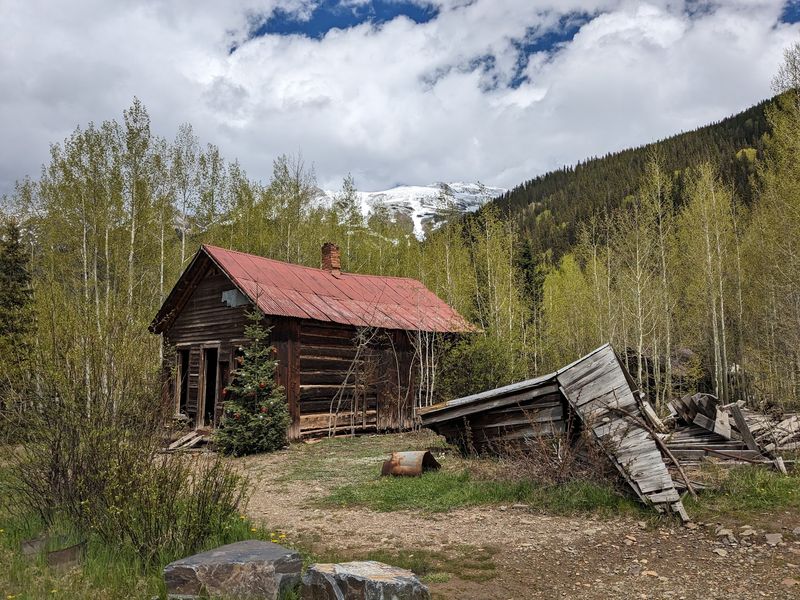
Driving the Million Dollar Highway through the San Juan Mountains is already one of Colorado’s great experiences. But most people blow right past Ironton without a second glance.
That is a genuine shame, because this flat meadow along U.S. Highway 550 holds the bones of a town that once had 1,000 residents and real ambition.
Ironton was founded in 1883 to serve the silver mines of the Red Mountain Mining District. The town had hotels, a newspaper, and a bustling main street for about a decade.
Then silver prices fell in 1893, and Ironton began its long, quiet retreat from the map.
A few wooden structures still stand at the site, scattered across the meadow like punctuation marks in an unfinished sentence. The surrounding peaks are dramatic and close, making the whole scene feel theatrical.
Red Mountain looms directly above, its iron-oxide slopes glowing orange-red on sunny afternoons.
There are no formal tours or visitor centers here. You simply pull over and walk around, which is honestly the perfect way to experience it.
The absence of crowds and interpretive signs makes Ironton feel like a genuine discovery rather than a curated attraction. That rawness is exactly what makes it memorable.
9. Animas Forks
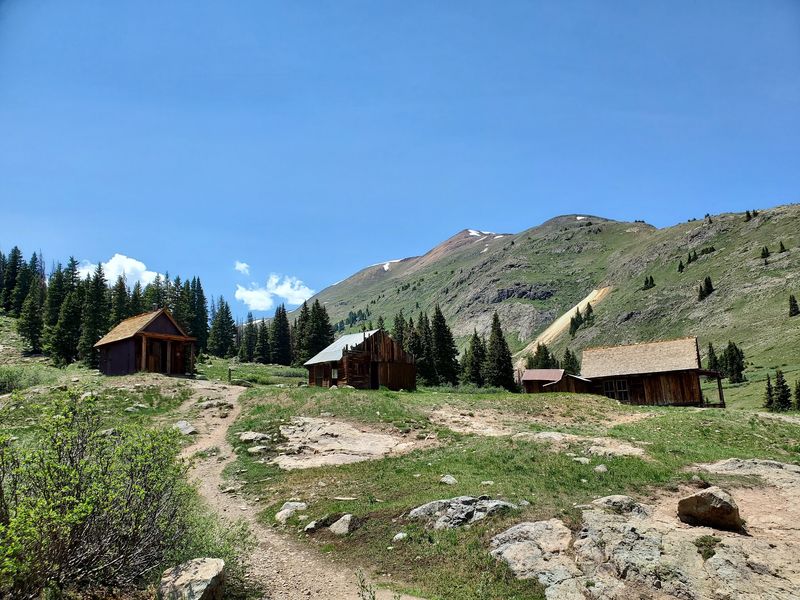
Animas Forks sits at 11,200 feet, which means it has absolutely no business being a town. And yet, in the 1870s and 1880s, miners decided that gold and silver were worth enduring brutal winters at altitude.
They were stubborn, and we are all better off for it because Animas Forks is spectacular.
The town was founded around 1873 and grew steadily as mining operations expanded in the surrounding mountains.
Several large, multi-story buildings were constructed, including a notable bay-windowed home that still stands today along County Road 2 near Silverton. That house, given the setting, feels almost comically ambitious.
Reaching Animas Forks typically requires a four-wheel-drive vehicle, and the road itself is part of the adventure. The Alpine Loop Backcountry Byway passes right through town, connecting it to Ouray and Lake City.
The scenery along the way rivals anything in the Rocky Mountain West.
Bureau of Land Management signs explain the history at several points throughout the townsite. The structures have been partially stabilized but retain their rough, authentic character.
Standing in the middle of the old main street with peaks rising on every side, it is easy to understand why people came here. It is harder to understand why anyone ever left.
10. Dearfield
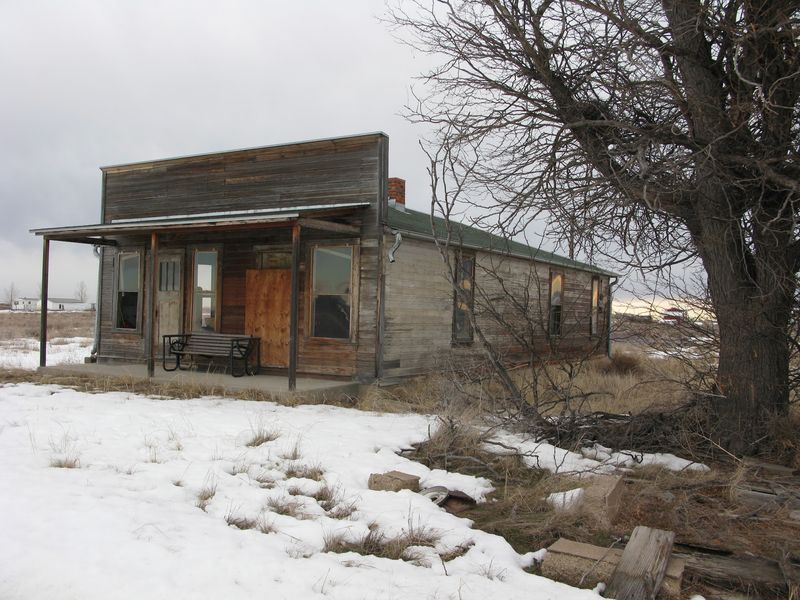
Most Colorado ghost towns tell stories of mining booms. Dearfield tells a completely different and far more important story.
Founded in 1910 by Oliver Toussaint Jackson, Dearfield was established as an African American agricultural colony on the eastern Colorado plains. It was a bold, extraordinary experiment in self-sufficiency.
At its peak in the early 1920s, Dearfield had over 700 residents, a restaurant, gas station, school, and dozens of homestead farms.
Jackson believed that land ownership was the key to true freedom and built his community around that conviction. The colony thrived for over a decade before drought and the Great Depression dismantled it piece by piece.
Today a handful of deteriorating structures survive at 42468 U.S. Highway 34 near Orchard.
The site is managed by the Colorado Preservation nonprofit, and ongoing efforts aim to stabilize the remaining buildings. A small interpretive area explains the colony’s history with clarity and respect.
Visiting Dearfield feels different from any other site on this list. The eastern plains setting is flat and windswept, which makes the ruined buildings feel exposed and vulnerable.
That vulnerability mirrors the colony’s own history in a way that hits harder the longer you stand there. This place deserves far more attention than it currently gets.