This Nebraska Forest Hides Some Of The Oldest Trees In The State
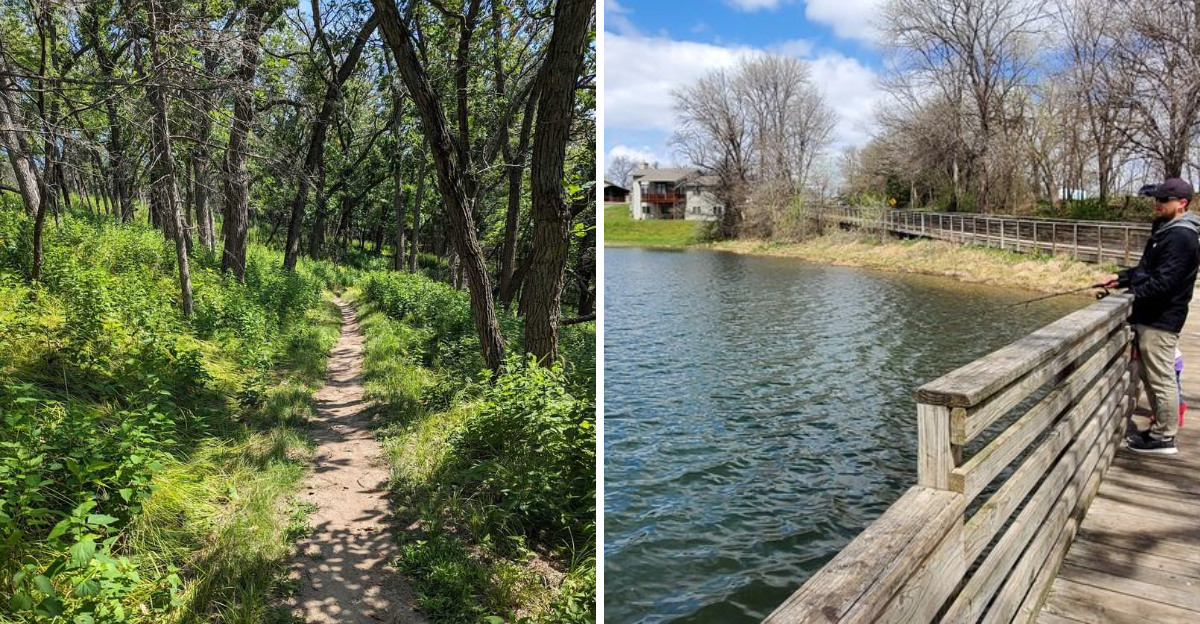
Take the trail that disappears beneath the biggest canopy.
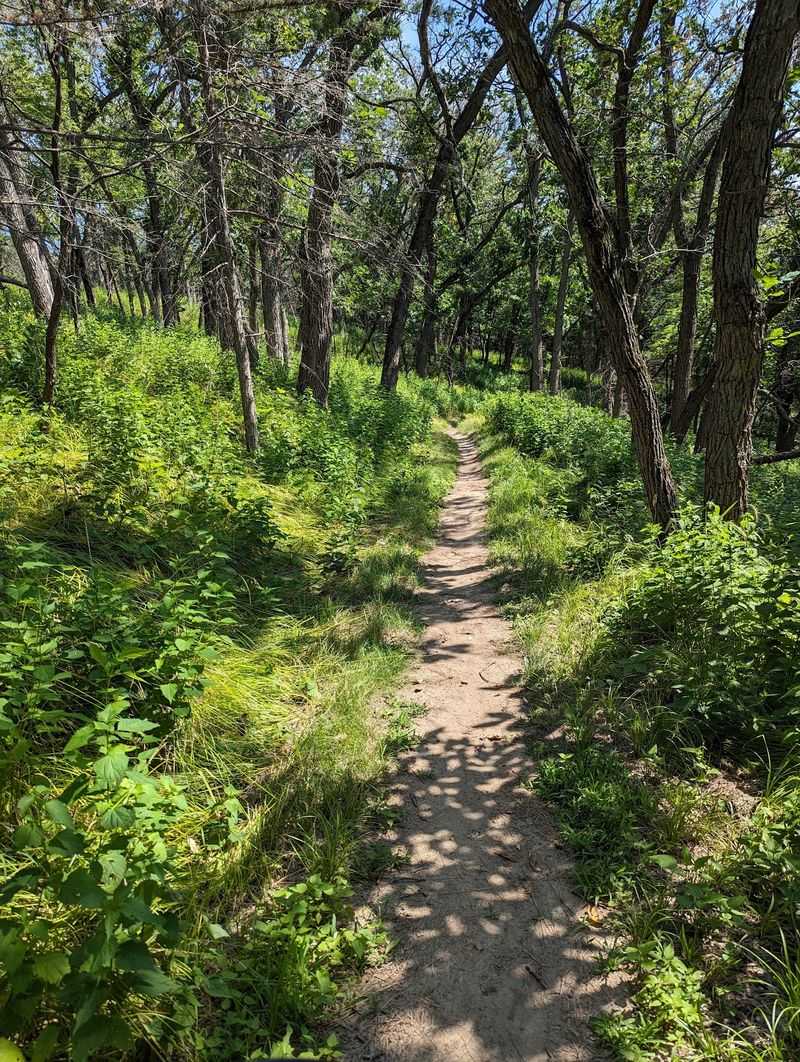
A few minutes in, the temperature drops, the road noise fades, and you start noticing just how massive some of the trunks are.
Run your hand across the bark. Look up. Then keep looking up, because these trees have been standing here far longer than your weekend plans have existed.
This corner of Nebraska protects some of the state’s oldest surviving woodland.
You do not need to know every species to feel the difference. The forest looks settled in, almost stubbornly so.
Fallen leaves soften the trail and every bend feels a little farther removed from the open prairie most people picture first.
Slow down instead of trying to cover every mile. Pause beside the biggest trees.
The best part of walking among trees this old is realizing how little they seem to care that you finally found them.
Walk Beneath The Bur Oaks On Old Oak Trail
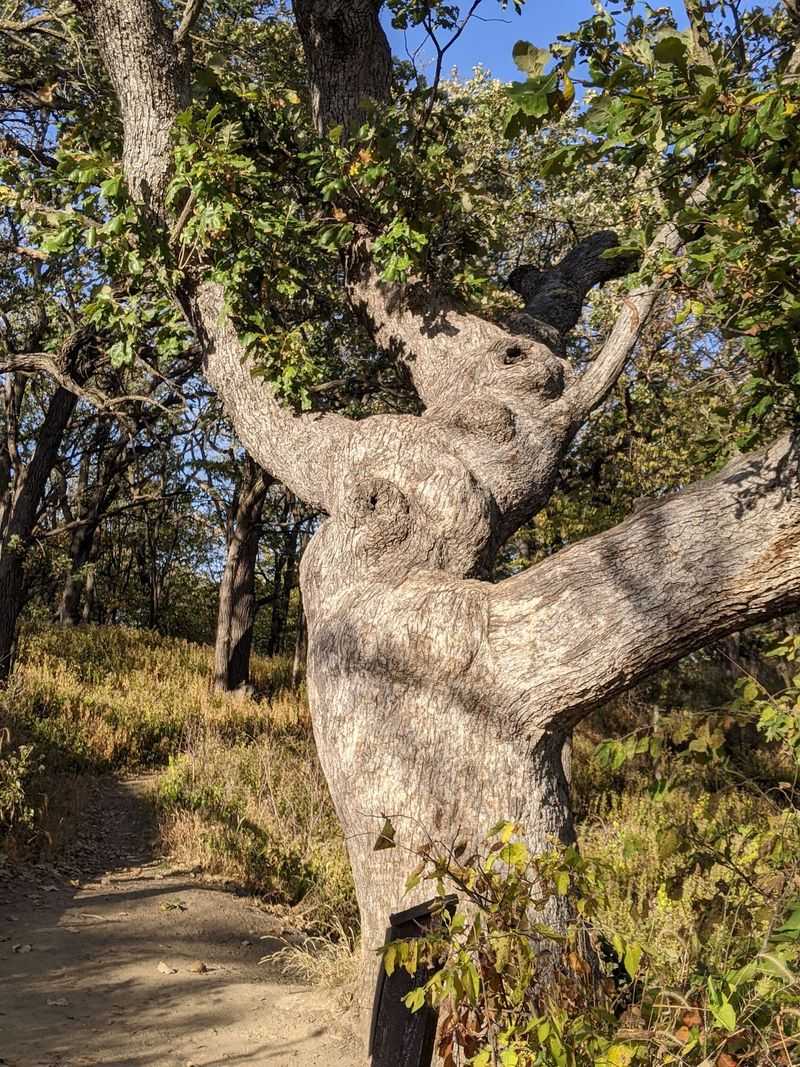
Few trails in Nebraska carry the kind of quiet authority that the Old Oak Trail does.
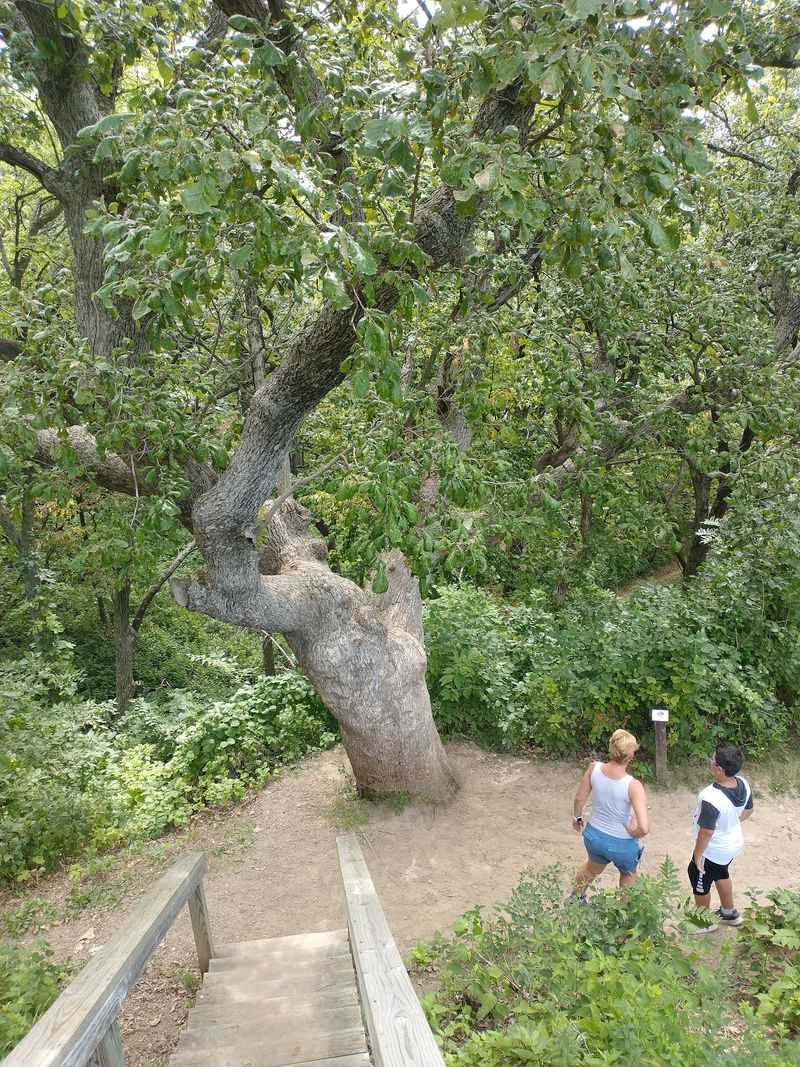
Winding through the park’s eastern deciduous forest, this one-mile path places visitors directly beneath mature bur oaks whose gnarled branches form a canopy dense enough to soften even the brightest afternoon light.
The trail is rated moderate in difficulty and takes roughly 30 minutes to complete on foot, making it manageable for most ages and fitness levels.
Along the route, bur oaks grow on the drier ridgetops and slopes of the bluffs, which is exactly the kind of fire-tolerant terrain these trees have favored for centuries.
A bur oak known as the Old Wolf Oak once stood along this trail and was estimated to be 320 years old back in 1964, meaning it was already a sapling around 1644.
Sadly, drought and disease claimed that particular tree in 2025.
The remaining oaks along the trail still command attention, their thick trunks and deeply furrowed bark offering a tangible sense of just how long this forest has been growing here.
Take The Easy Walk To A Three-State View
Standing at a point where three states are simultaneously visible is a genuinely unusual experience, and the Tri-State Overlook Trail at Ponca State Park makes it surprisingly accessible.
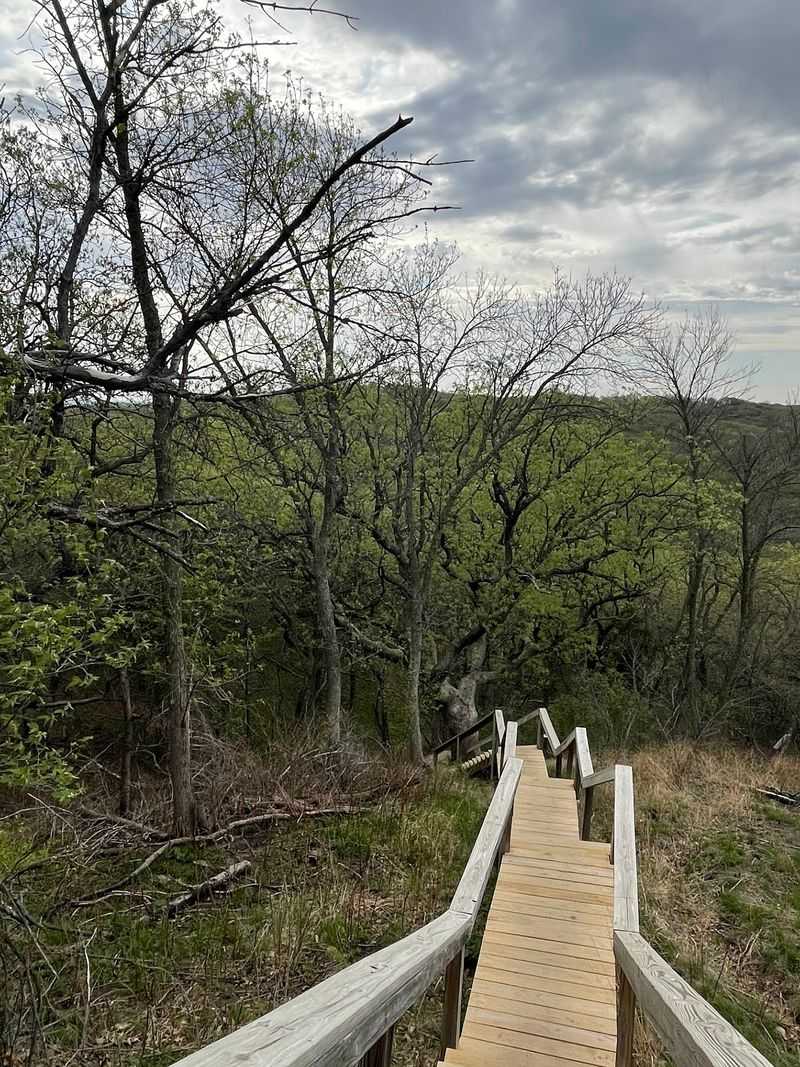
The 1.28-mile route climbs through wooded terrain and rolling hills before opening to one of the park’s most recognized vistas.
From the overlook, the broad Missouri River valley stretches out below, with Nebraska, Iowa, and South Dakota all visible from a single vantage point.
The elevation gain along the trail adds just enough physical engagement to make the view feel earned without being exhausting.
Accessibility is worth noting here as well. The overlook area is reachable for visitors who cannot manage long distances, with a parking area nearby and a relatively short walk to the viewpoint itself.
Arriving in the morning tends to offer cleaner light and fewer people on the trail, which makes the experience feel a bit more personal.
The surrounding tree cover along the path shifts with the seasons, so the same trail can look dramatically different between a summer visit and an autumn one.
See A Wilder Stretch Of The Missouri River
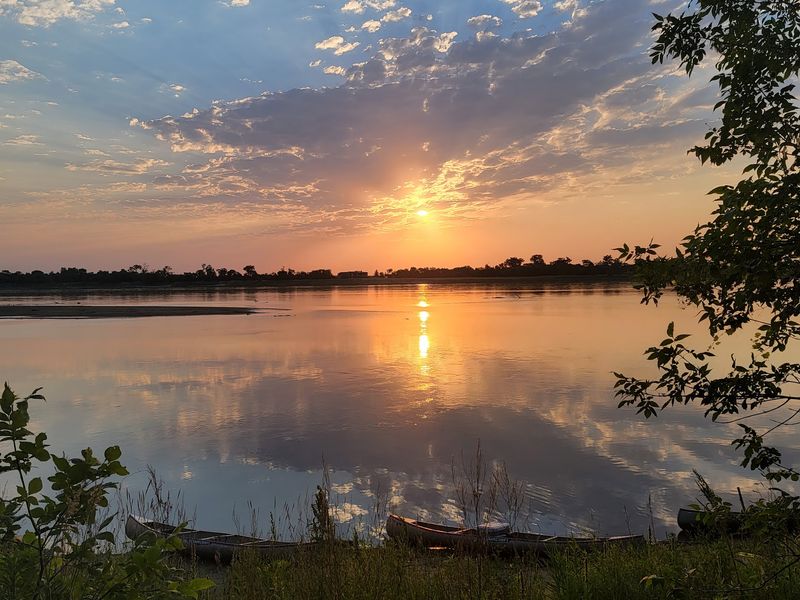
The Missouri River has been heavily engineered along most of its length, which makes the stretch near Ponca State Park genuinely rare.
The park serves as the eastern gateway to a 59-mile segment of the Missouri National Recreational River, one of only two unchannelized sections remaining between Montana and the river’s mouth.
Seeing this part of the river means seeing something closer to what the landscape looked like before major human alteration.
The water moves with a natural unpredictability, the banks shift, and the broad floodplain retains a wild, open quality that managed river sections simply do not have.
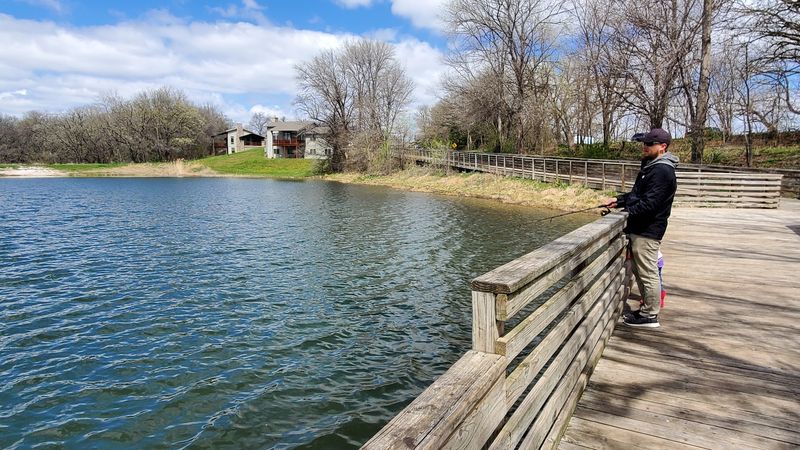
The park provides approximately two miles of river access along with a boat ramp for those who want to get on the water directly.
Fishing, kayaking, and simply standing at the bank and watching the current are all reasonable ways to spend time here.
The river experience pairs naturally with the forest trails, giving the park a dual character that keeps it interesting across multiple visits and different seasons.
Let The Forest Completely Change Your Idea Of Nebraska
Nebraska’s reputation for flat, open terrain is not entirely undeserved, but Ponca State Park offers a convincing counterargument.
Forested bluffs rise steeply above the Missouri River, trails disappear beneath a canopy of oaks, hickories, maples, and basswood trees, and the terrain folds into ridges and ravines that feel more like Midwestern woodland.
The park covers roughly 2,400 acres of this heavily forested landscape, which sits in a biogeographic transition zone where eastern deciduous forest meets the edge of the plains.
That position gives the park an unusual mix of plant and animal species not commonly found together elsewhere in the state.
Walking through the steeper sections of the park, it becomes easy to forget that wide, treeless horizons exist just a short drive away.
The forest has a density and a verticality that genuinely reorient the senses. For visitors arriving from the flatlands, the first descent into a wooded ravine can feel almost startling.
That contrast is part of what makes Ponca such a memorable destination for people who assumed they already knew what Nebraska looked like.
Try The Short Nature Trail Behind The Education Center
Not every worthwhile experience at Ponca requires a long hike. Behind the Education Center sits a 0.17-mile nature trail that packs a surprising amount of botanical variety into a very short walk.
Bur oak, eastern red cedar, Virginia waterleaf, and little bluestem are among the species that can be observed along the path.
For families with young children, visitors with limited mobility, or anyone just arriving at the park and wanting an easy orientation before tackling longer trails, this trail works well as a starting point.
The plants along the route represent a cross-section of the park’s broader ecosystem, so even a quick walk gives a useful sense of what the forest contains.
Pairing this trail with a stop inside the Education Center itself creates a natural loop of indoor and outdoor learning.
The center provides context for the natural history of the area, which can make the plant and tree species along the trail feel more meaningful once visitors understand the larger ecological story they fit into.
Find The Towers Of Time

Arriving at the Towers of Time for the first time tends to prompt a double-take.
Three large sculptural towers rise unexpectedly from the landscape near the park entrance, each one telling a different chapter of the region’s deep history through detailed relief carvings and artistic design.
The left tower stands 25 feet tall and depicts the late Cretaceous Period, a time when much of Nebraska was submerged beneath a shallow inland sea.
Prehistoric marine creatures and early land animals cover its surface.
The central tower reaches 27 feet and shifts forward in time to the Pleistocene, featuring woolly mammoths, saber-toothed cats, and giant ground sloths from the Ice Age.
The right tower, also 25 feet tall, represents the modern era with species native to the Missouri River region, including blue herons and bison.
Surrounding the towers, a Stairway of Falls and Reflecting Pond add to the overall composition, along with a square fountain featuring imagery connected to indigenous cultures of the region.
The entire installation makes for an engaging stop even for visitors who would not normally seek out public art, because the subject matter ties directly to the landscape around it.
Claim A Campsite Beneath The Trees
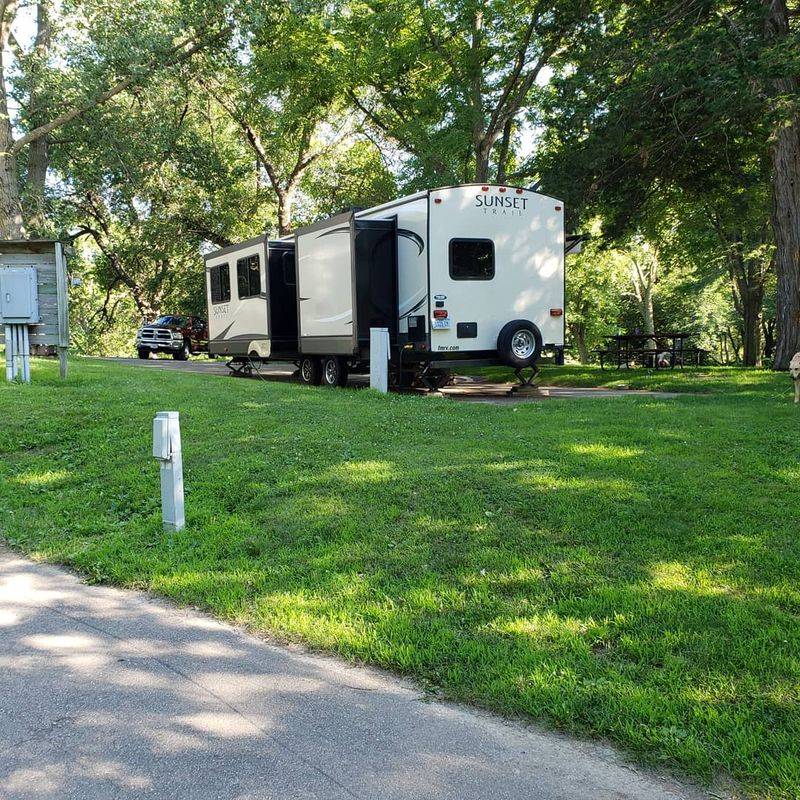
Camping at Ponca State Park gives a visit a completely different rhythm.
Rather than arriving and leaving in a single day, setting up a campsite means waking up inside the forest, which changes how the whole experience feels.
Turkey Ridge campground offers 35 Electric Plus sites on a first-come, first-served basis, making it a good option for spontaneous trips.
Oak Bluff campground has 37 reservable Electric Plus sites for those who prefer to plan ahead.
Riverfront campground provides 20 sites along the river, split between Electric and Electric Plus options. Basic and primitive sites are also available throughout the park on a first-come, first-served basis.
Each campsite generally includes a picnic table, a grill, and a fire ring.
Modern restroom and shower facilities operate from April through October, weather permitting, while primitive camping remains available year-round.
Electrical hookups with 30 and 50-amp options are available in many areas, along with water access and sewer hookups in select spots.
Quiet hours run from 10 p.m. to 6 a.m., and pets are welcome as long as they stay on a leash no longer than six feet.
Time Your Visit For Nebraska’s Huge Outdoor Expo
A September trip to Ponca can coincide with one of the region’s most activity-packed outdoor events.
The Missouri River Outdoor Expo brings together more than 100 free activities in a single weekend, drawing participants from across the area for a celebration of outdoor recreation and natural education.
The 2026 event is scheduled for September 19 and 20 at Ponca State Park.
Activities on offer span a wide range, including kayaking, fishing, wildlife demonstrations, mountain biking, climbing, and hands-on outdoor skills workshops.
The breadth of programming makes it a particularly strong option for families with children of different ages and interest levels, since there tends to be something engaging for nearly everyone present.
Timing a visit around the expo adds a social dimension to the park experience that a standard weekend trip does not provide.
The event also serves as a practical introduction to outdoor activities for people who may not have prior experience with paddling or climbing.
Arriving early on either day generally helps with parking and gives more time to move between activity stations before crowds build at the most popular demonstrations.