This North Carolina Mountain Wonderland Is One Of America’s UNESCO World Heritage Sites
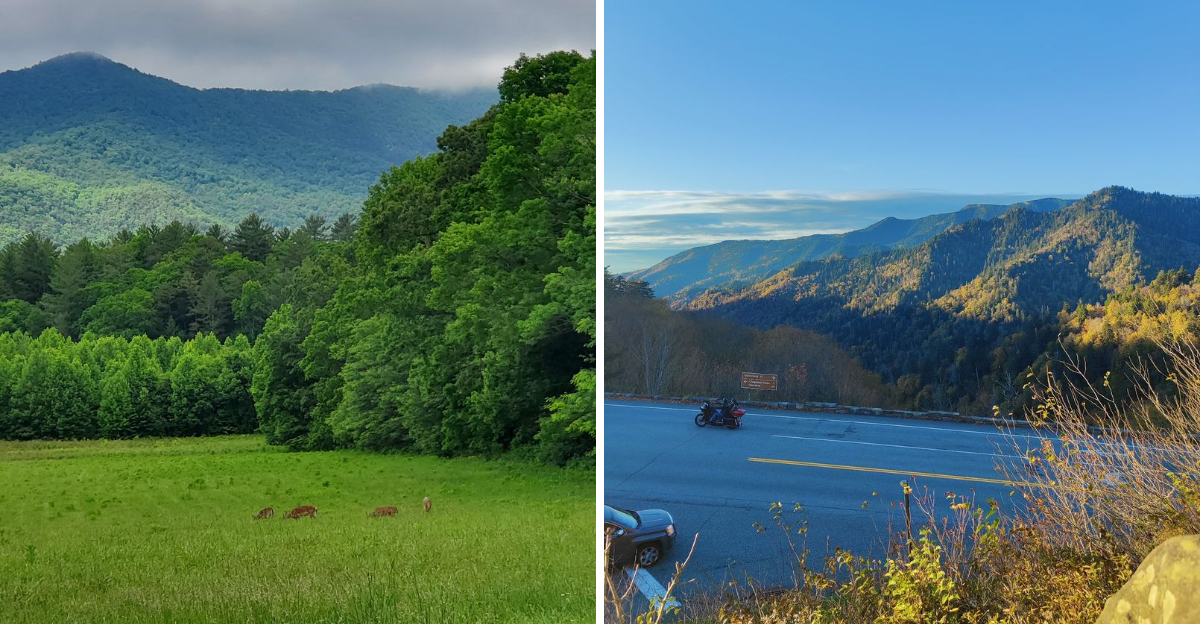
Wooooow is honestly the correct reaction here.
Some places look beautiful in photos and then feel even bigger once you are actually standing inside them. This is one of those rare cases where the landscape seems determined to outdo every expectation.
The mountains roll on for miles, often wrapped in that famous blue-gray haze that makes the whole horizon look almost unreal.
This corner of North Carolina is also part of a UNESCO World Heritage Site, a recognition tied to the park’s exceptional natural importance.
And somehow, knowing that still does not prepare you for the scale of it.
You can stand at an overlook and feel tiny in the best possible way.
Then the clouds shift, another ridge appears in the distance, and the only reasonable response is basically: Okay. Wow again.
See Why UNESCO Recognized These Mountains As A World Heritage Site
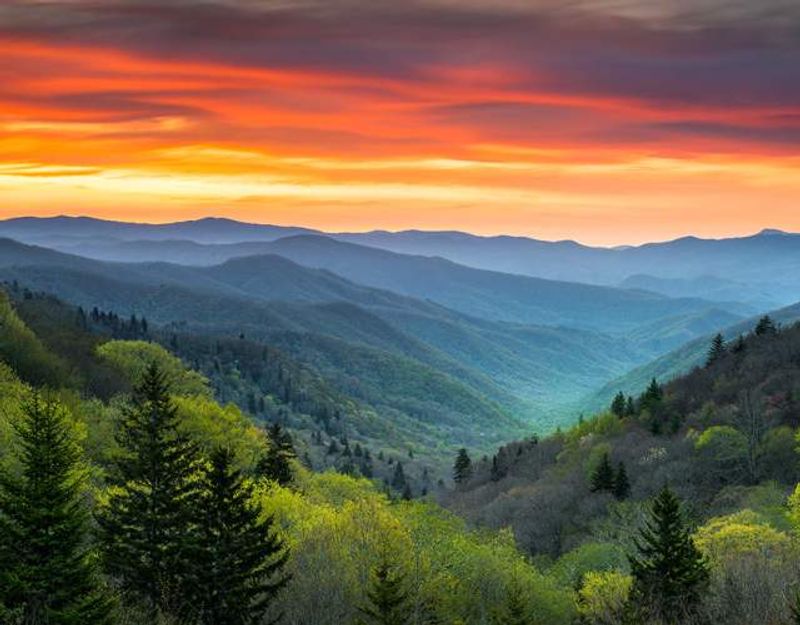
Global recognition arrived in 1983, but the story behind it reaches back millions of years. UNESCO considers the Smokies one of the world’s important surviving examples of ancient temperate forest.
The mountains sheltered plants and animals during the Pleistocene glaciations. That allowed an unusually rich collection of life to survive as conditions changed elsewhere.
UNESCO also highlights remnants of Arcto-Tertiary geoflora found within the park. Those ancient plant communities help scientists understand what temperate forests looked like long before modern human influence.
Beauty mattered too. Mist-covered ridges, clear streams, old forests, and enormous stretches of undeveloped mountain terrain helped earn the designation.
Great Smoky Mountains National Park qualified under four natural World Heritage criteria. That combination reflects both scenery and ecological importance.
The protected area covers more than 209,000 hectares across the two states. More than 90 percent is managed for wilderness values.
Walking through these forests suddenly feels different once you know the trees are part of a landscape recognized as globally significant.
Walk Through Some Of The Most Diverse Forests In North America
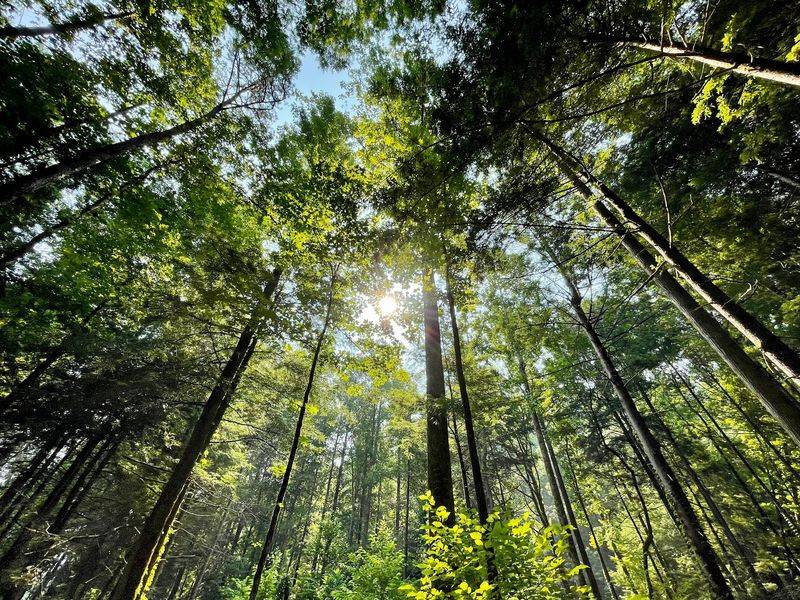
Green seems endless once the road disappears behind the trees. Forest communities cover about 96 percent of the park, with roughly one-quarter considered old growth.
Lower elevations support rich cove hardwood forests filled with tulip poplar, maple, magnolia, and other broadleaf species. Climb higher and the forest changes around you.
Northern hardwoods begin appearing before red spruce and Fraser fir dominate the highest elevations. More than 100 native tree species grow within the Smokies.
Over 22,000 species of life have now been documented across the park. More than 1,000 of those discoveries were completely new to science.
Researchers still believe a large share of the park’s biodiversity remains undocumented. That means exploration here is not only recreational.
Scientific discovery is still happening among these valleys and ridges. Trails around Deep Creek, Oconaluftee, and other areas give ordinary visitors an easy look at that diversity.
Slow down around streams and shaded forest floors. Tiny fungi, insects, mosses, and salamanders can be every bit as remarkable as the towering trees overhead.
Climb Into The Misty High Country For Huge Mountain Views
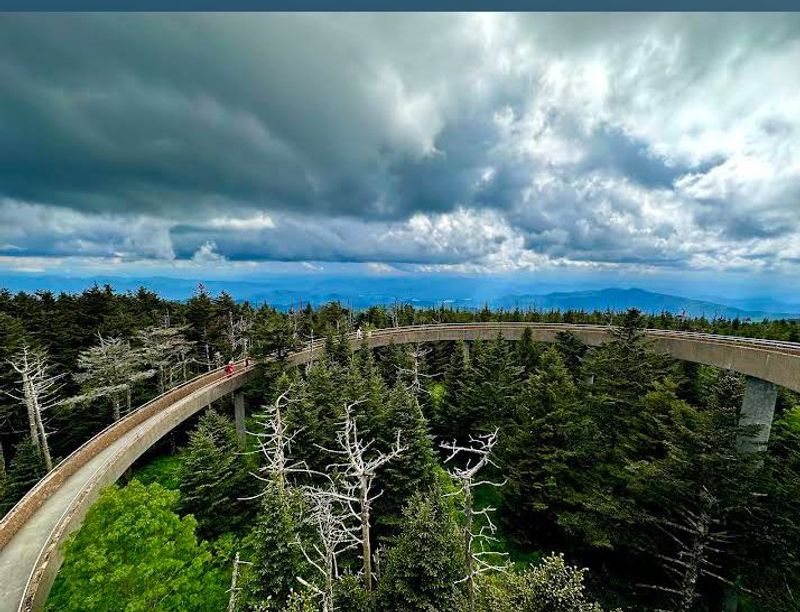
At 6,643 feet, Kuwohi rises higher than anything else inside the park. The mountain was formerly known as Clingmans Dome and remains the highest point in Tennessee.
It also ranks among the highest summits east of the Mississippi River. A seven-mile road leaves Newfound Gap and climbs toward the visitor area.
From the parking lot, a paved half-mile trail reaches the observation tower. The distance sounds easy until the steep grade begins.
Benches along the route provide welcome chances to stop. At the top, a spiraling ramp leads to wide views across layers of Appalachian ridges.
Clear weather can make the mountains seem endless. Clouds can erase the view almost completely within minutes.
Temperatures up here may run 10 to 20 degrees cooler than the surrounding lowlands. That makes an extra layer useful even during summer.
Kuwohi Visitor Center stays open later during July and August, though mountain weather can still affect access. The changing mist is not a disappointment.
Watching clouds move through the high country is part of the Smokies experience.
Follow Waterfalls, Creeks, And Quiet Trails Deep Into The Park
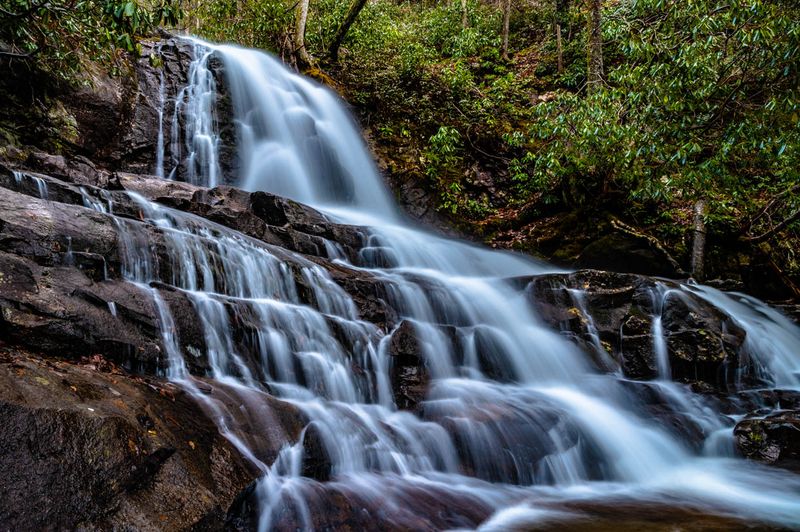
Water seems to find every possible route down these mountains. Nearly 2,900 miles of streams run through the park, feeding cascades and waterfalls across both states.
Grotto Falls offers one of the most unusual experiences. The trail actually passes behind the 25-foot waterfall, letting hikers watch the water fall in front of them.
The route follows Trillium Gap Trail through rhododendron and old forest. Ramsey Cascades delivers a much bigger challenge.
The 100-foot cascade is the tallest waterfall in the park and requires a demanding hike. Current conditions should always be checked before attempting it.
Easier alternatives still exist. Cataract Falls begins near Sugarlands Visitor Center, while the Deep Creek area near Bryson City offers several creekside routes and waterfalls.
Summer rain can make rocks and roots slippery. Give yourself time, watch your footing, and let the sound of rushing water set the pace.
Watch For Wildlife In Valleys And Along Forest Roads
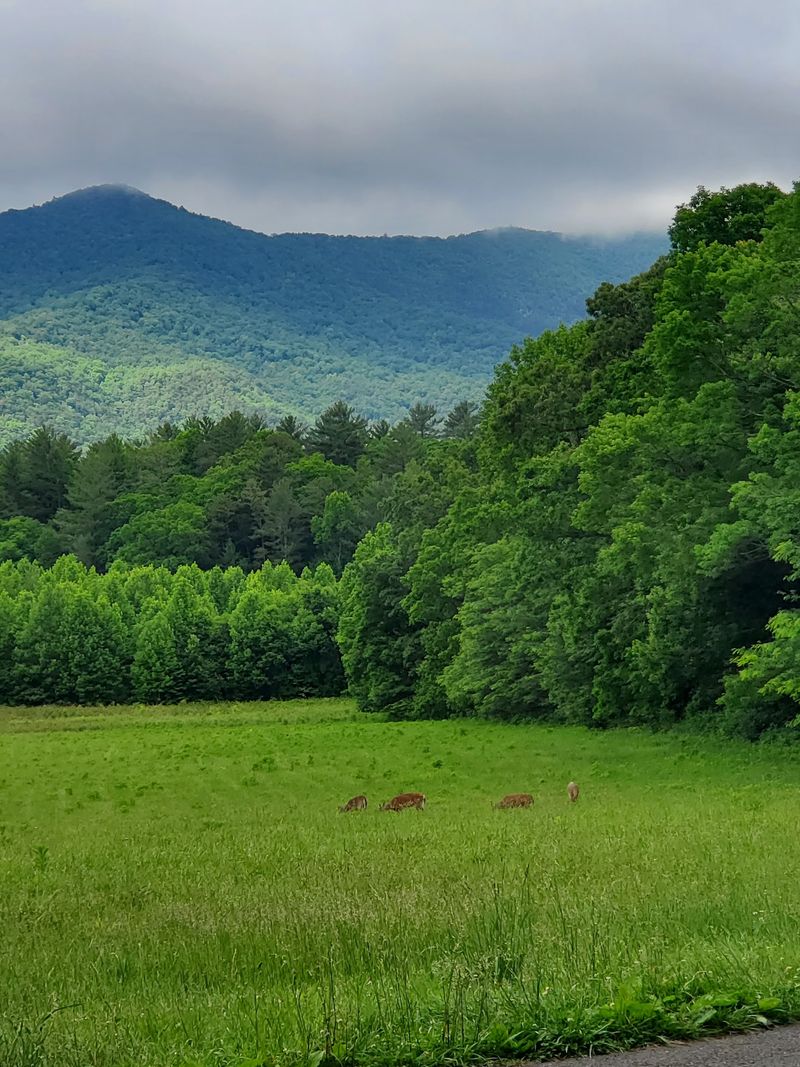
A quiet field can suddenly become the most exciting stop of the day. Roughly 1,900 black bears live within Great Smoky Mountains National Park.
Biologists estimate about two bears per square mile, giving the park an exceptionally dense population. Sightings are possible almost anywhere, though seeing one is never guaranteed.
Elk provide another wildlife highlight on the North Carolina side. Around 200 are estimated to live in the park after successful reintroduction efforts.
Oconaluftee and Cataloochee are two important areas for the herds. Elk can become especially unpredictable during calving and autumn rutting seasons.
Give them plenty of space and follow any field closures. Smaller wildlife deserves attention too.
More than 250 bird types have been recorded, along with 31 salamander species. The Smokies contain more salamander diversity than anywhere else on Earth.
Never handle them because their skin is extremely sensitive. Wildlife watching works best without chasing the wildlife.
Stay back, keep food secured, and let binoculars handle the close-up work.
Drive Newfound Gap Road For One Of The Park’s Classic Scenic Routes
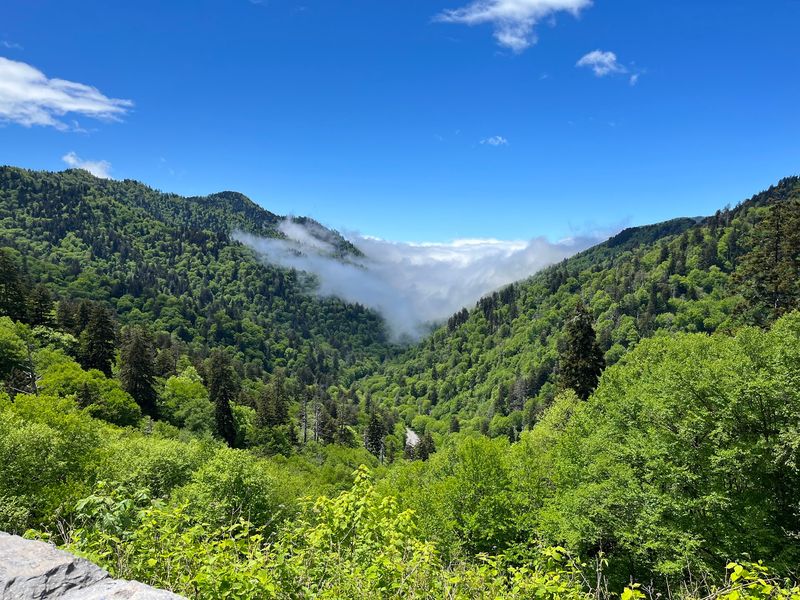
Thirty-one miles can feel like several different mountain regions on Newfound Gap Road. U.S. 441 connects Cherokee with Gatlinburg while climbing straight across the park.
The drive begins near lower-elevation forests and steadily rises through changing plant communities. Pullouts appear along the route, giving drivers chances to stop without rushing the scenery.
Newfound Gap itself sits at 5,046 feet on the North Carolina-Tennessee state line. The Appalachian Trail crosses the road here, adding another reason to step out and explore.
Kuwohi Road branches away nearby and climbs toward the park’s highest point. Back toward Cherokee, Oconaluftee Visitor Center makes an excellent starting point.
It sits two miles north of town and includes exhibits, ranger information, and the nearby Mountain Farm Museum. Driving straight through misses much of what makes this road special.
Give yourself time for overlooks and weather changes. Fog can roll across the higher sections quickly.
Conditions at Newfound Gap may also be dramatically cooler than those near Cherokee. A 31-mile drive can feel like traveling several hundred miles north.
Experience How Quickly The Landscape Changes With Elevation
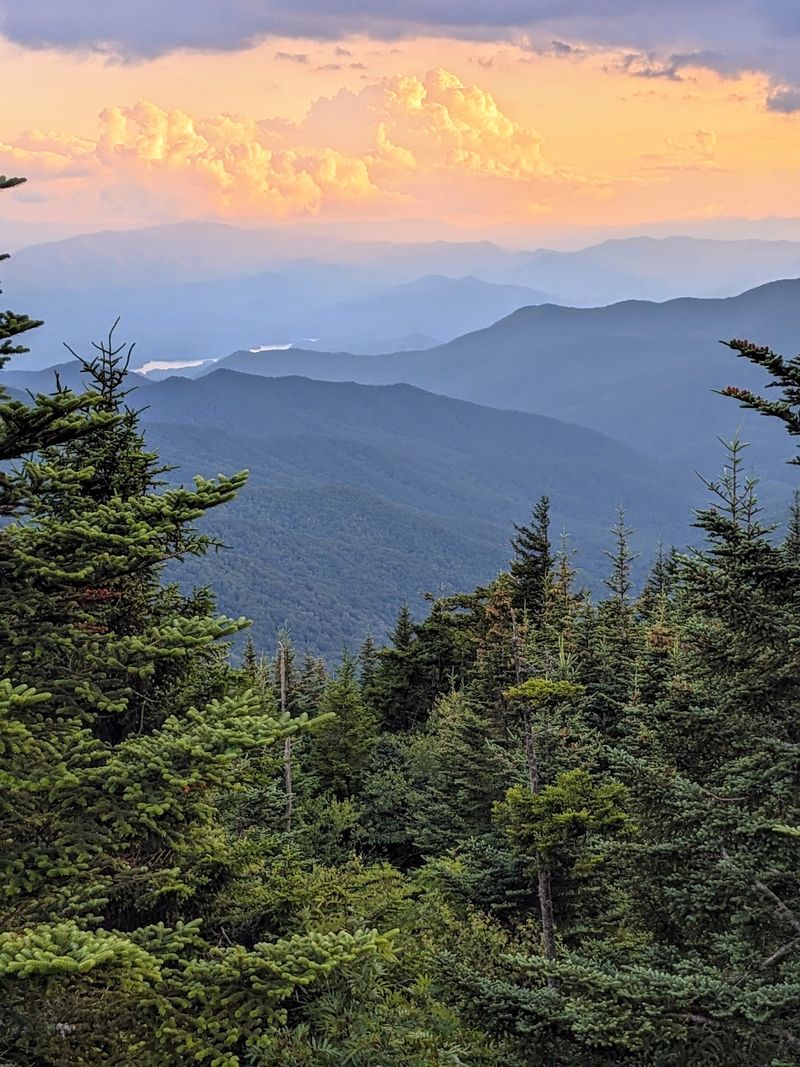
Start near the lowest valleys and you are standing around 876 feet above sea level. Reach Kuwohi and the elevation has climbed to 6,643 feet.
That enormous difference creates one of the park’s most fascinating natural features. Warm lower slopes support plants common farther south.
Higher mountains provide cooler conditions for species usually associated with northern regions. The park itself compares the ecological change to traveling from Georgia toward Maine.
Cove hardwood forests thrive lower down, where moisture and rich soil support enormous trees. Northern hardwood communities appear as elevation increases.
Near the highest ridges, red spruce and Fraser fir create forests that feel dramatically different from those below. Sixteen peaks inside the park rise above 6,000 feet.
The main crest stays above 5,000 feet for more than 36 miles. You do not need a huge hike to notice the transition.
A drive toward Newfound Gap or Kuwohi reveals it mile by mile. Roll down the window at several elevations.
Temperature, vegetation, fog, and even the smell of the forest can change surprisingly fast.
Leave Understanding Why This Mountain Wonderland Earned Global Recognition
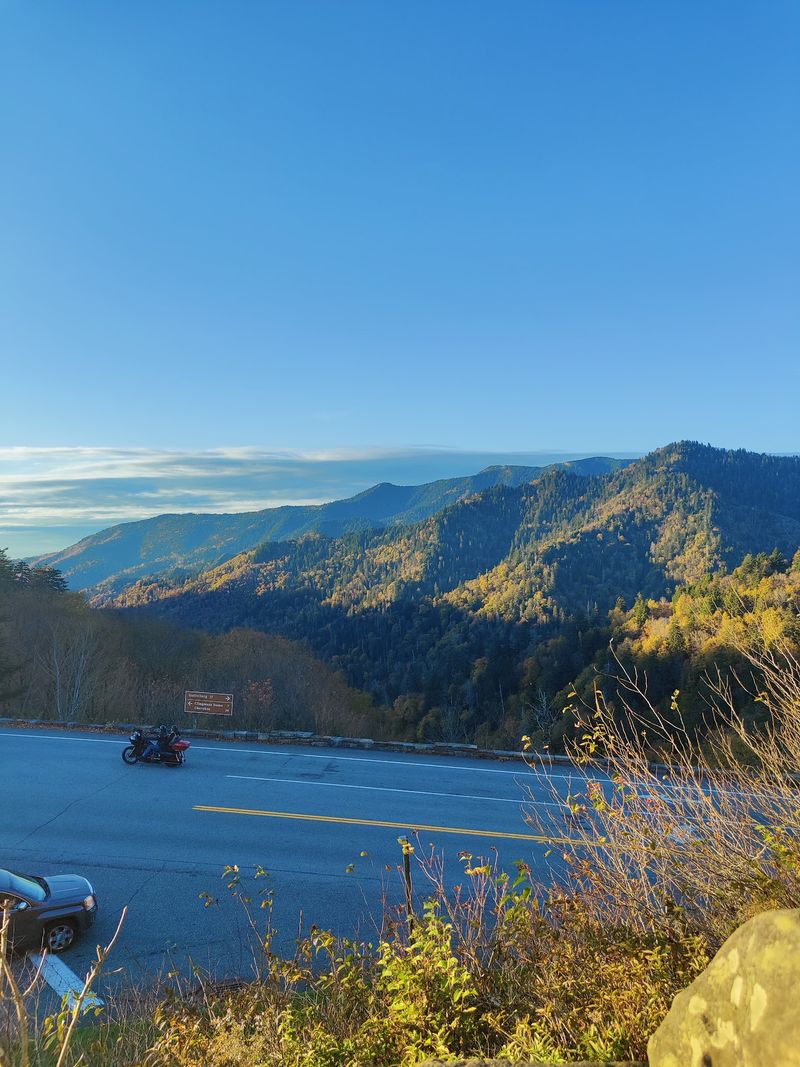
The strongest argument for protecting the Smokies is simply spending time inside them. One day might bring an elk sighting beside Oconaluftee.
Another could mean mist curling around Kuwohi or sunlight breaking through an old forest. More than 848 miles of trails make it impossible to experience everything during one trip.
Roads add dozens of overlooks and easier ways to reach remarkable scenery. The park remains open every day, though individual roads and facilities can close because of weather or seasonal conditions.
Entrance is free. A parking tag is required when a vehicle stays parked longer than 15 minutes.
Daily tags cost $5, weekly tags cost $15, and annual tags cost $40 in 2026. Current trail conditions deserve a check before hiking.
Laurel Falls Trail remains closed for rehabilitation, while Bullhead Trail has weekday closures through November 19. Those projects help protect heavily used routes for future visitors.
UNESCO recognition may sound formal from a distance. After a day among North Carolina’s forests, ridges, streams, and wildlife, the reason behind it becomes much easier to understand.