Most Travelers Rush Past This Idaho Waterfall Without Realizing You Can Walk Behind It
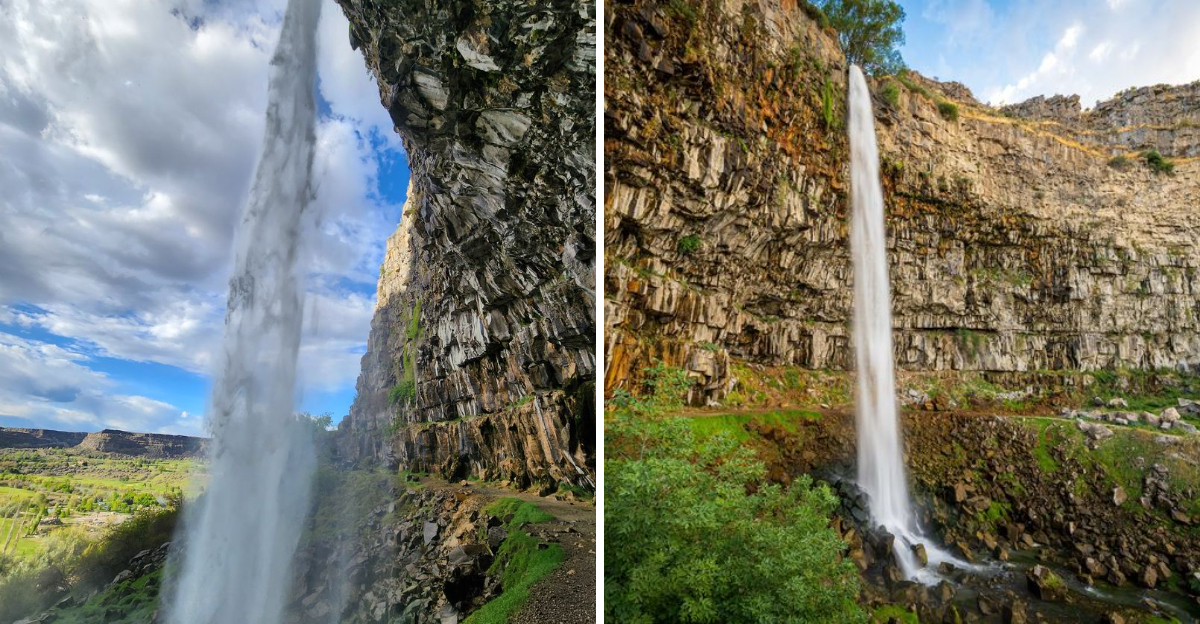
The best part is hiding behind the waterfall. Literally.
From the road, this Idaho cascade already looks impressive enough to deserve a stop. Then you notice the trail curling closer to the cliff and realize the view from the front is only half the story.
A few careful steps later, the water is crashing in front of you instead of somewhere in the distance. That changes everything. The sound gets louder. The air turns cooler.
Suddenly you are standing behind a nearly 200-foot curtain of water while the canyon opens up beyond it.
Most people cruising through the area never realize they can get this close.
They see the waterfall. They miss the adventure.
And once you know there is a path leading behind it, driving past becomes much harder to justify.
Walk Behind The Waterfall Instead Of Just Viewing It From The Road
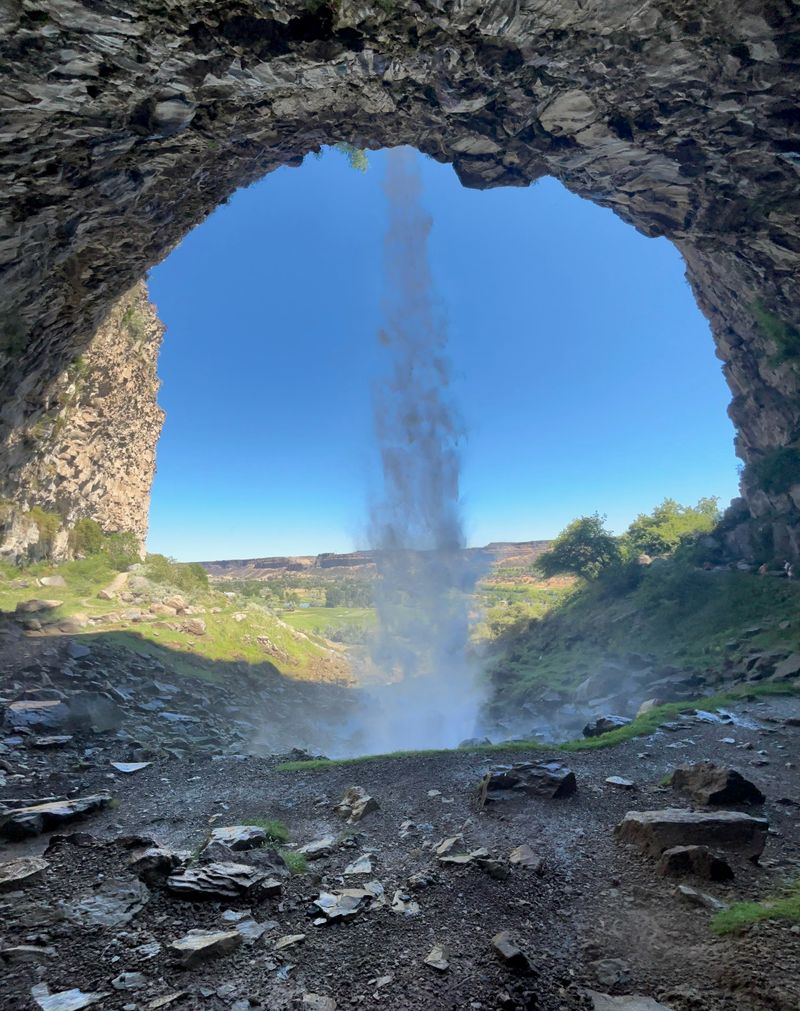
Do not stop at the first roadside glimpse and assume you have already seen Perrine Coulee Falls. A short natural trail near Canyon Springs Road takes you much closer to the nearly 200-foot cascade and eventually curves directly behind the falling water.
The approach is relatively short, but it feels increasingly dramatic as the roar gets louder and the cliff begins towering overhead.
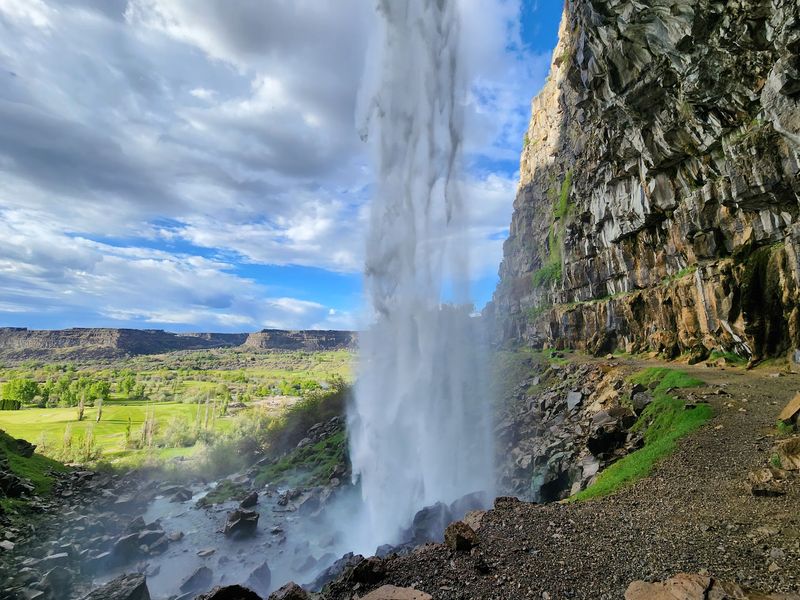
Once you reach the recessed area behind the falls, water drops in front of you while the Snake River Canyon remains visible through the moving curtain.
Spray hangs in the air, the temperature feels noticeably cooler, and the dark basalt wall creates a sheltered backdrop behind the path. This is not a paved observation deck, so expect rocks, dirt, uneven footing, and plenty of moisture.
Staying on the established route is much safer than scrambling toward exposed rocks for a different photograph. The view is already unusual enough without taking unnecessary chances.
Pause once you are behind the cascade and look outward instead of concentrating only on the falling water. The canyon framed through the spray is what separates this experience from an ordinary waterfall overlook.
Plenty of waterfalls are beautiful from a distance. Perrine Coulee lets you step right into the scenery.
Feel The Spray Once You Step Behind The Curtain Of Water
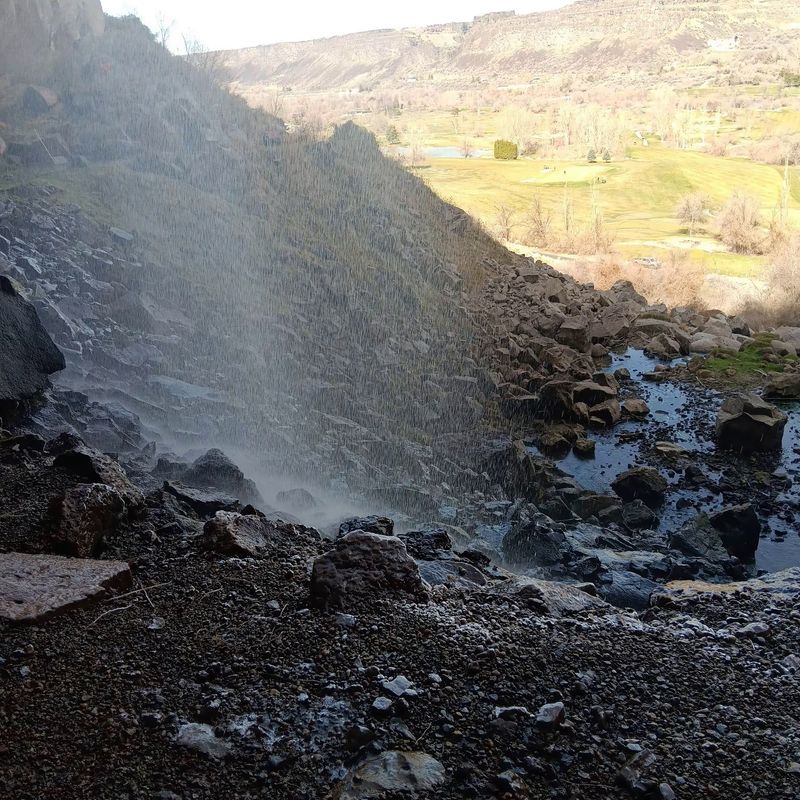
Cool mist starts reaching you before the waterfall completely fills your view. During summer, Perrine Coulee generally carries a stronger flow, making the path behind the cascade feel especially refreshing on hot Twin Falls afternoons.
A calm day may leave you lightly damp, while a breeze can push the spray sideways and make staying dry almost impossible. That unpredictability is part of the experience.
Quick-drying clothing is useful if you plan to linger, and phones or cameras deserve some protection once you get close to the falling water. The cliff also provides shade, creating a cooler pocket that can feel surprisingly comfortable compared with the exposed canyon above.
Damp ground comes with the territory, so slow down when the rocks begin shining with moisture. You do not need to stand inches from the cascade to appreciate it.
The sound alone becomes powerful as water crashes past the opening, and the mist gives the whole area an almost enclosed feeling. Children may love the spray, but they should stay close to an adult because the natural trail remains uneven and slippery in places.
Take your time, let other visitors pass safely, and enjoy the strange sensation of standing somewhere that looks completely inaccessible from the road. Idaho summer heat feels very far away once a nearly 200-foot waterfall is cooling the air around you.
Follow The Short Trail To A Much Closer Look At The Falls
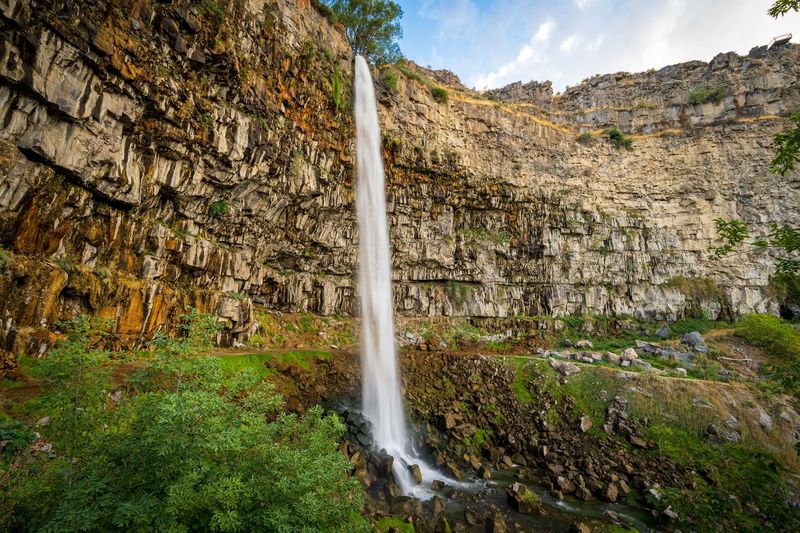
Finding the closest parking area takes more attention than completing the walk itself. Canyon Springs Road winds down into the Snake River Canyon toward Centennial Waterfront Park, and a small roadside pull-off near one of the upper bends provides convenient access to the waterfall.
Spaces are limited, so do not force the car onto an unsafe shoulder if the area is already full. Once parked, the path toward Perrine Coulee is short and considerably less formal than the entrance to a major tourist attraction.
Dirt, rocks, vegetation, and changing grades replace paved walkways and large directional signs. The waterfall quickly becomes louder as you approach, making it increasingly obvious that something much larger is waiting around the bend.
Another route begins lower in the canyon near the golf course, although that option requires a longer and steeper walk. Either way, the reward arrives quickly compared with most waterfall hikes.
You move from a roadside environment into the shadow of the canyon wall within minutes. The full height of the cascade becomes much easier to appreciate once you are standing underneath it instead of viewing it from above.
This is exactly the kind of Idaho stop that proves mileage does not always determine how rewarding a trail can be. A very short walk can completely change the experience.
Look Up From Below For A Completely Different View Of The Canyon
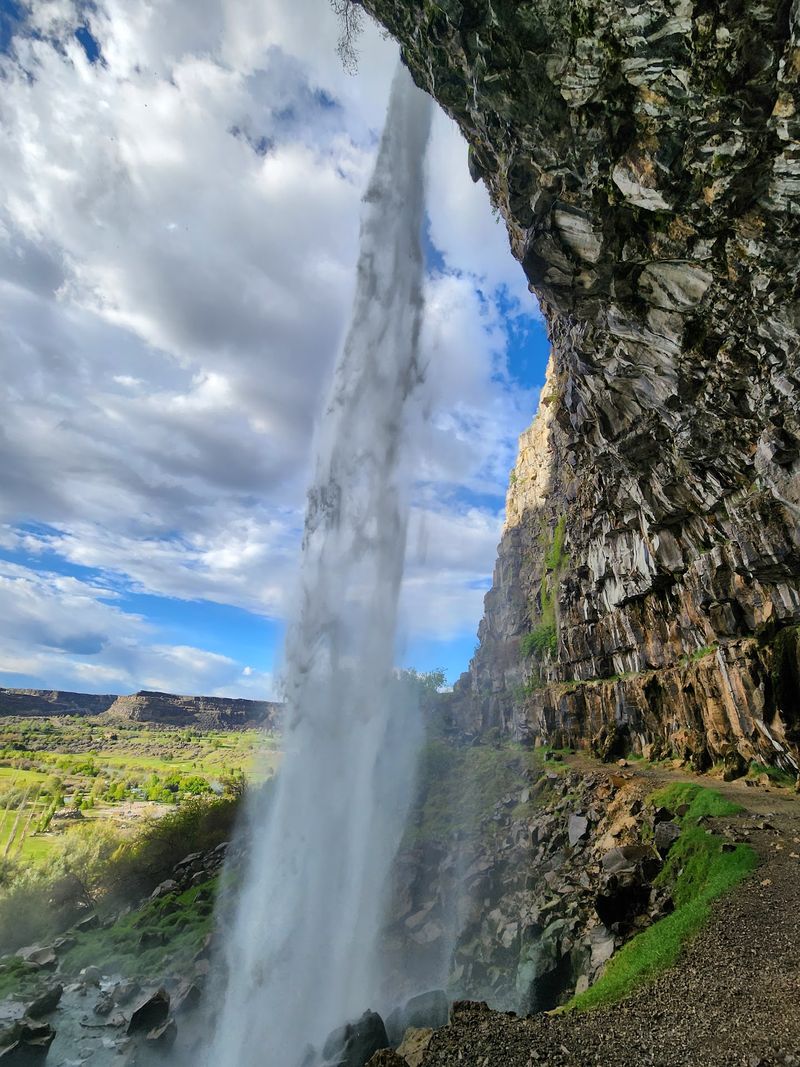
Standing beneath Perrine Coulee changes the proportions of everything around you. From the canyon rim, the waterfall fits neatly into the larger landscape.
Down below, you have to tilt your head back to follow the water all the way toward the top of the basalt wall. Dark horizontal rock layers stack above the trail, while patches of vegetation gather where constant moisture reaches the cliff.
The open sky becomes a narrower strip overhead, making the Snake River Canyon feel even deeper than it does from the famous viewpoints above. Photographers get several completely different compositions without walking very far.
Point upward and the waterfall dominates the frame. Move behind the cascade and the canyon appears through drifting spray.
Step farther away and the surrounding cliff begins revealing the full scale of the drop. You can also see Perrine Coulee from viewpoints along the Canyon Rim Trail before or after descending Canyon Springs Road.
Combining the upper and lower perspectives makes the stop especially rewarding because they barely feel like views of the same waterfall. Idaho’s Snake River Canyon is famous for enormous overlooks, but seeing those walls from underneath creates a much more intimate experience.
Take a minute to look in every direction instead of keeping the camera aimed only at the water. The canyon itself is doing nearly as much work as the waterfall.
Take Your Time Because The Best Perspective Is Not From The Parking Area
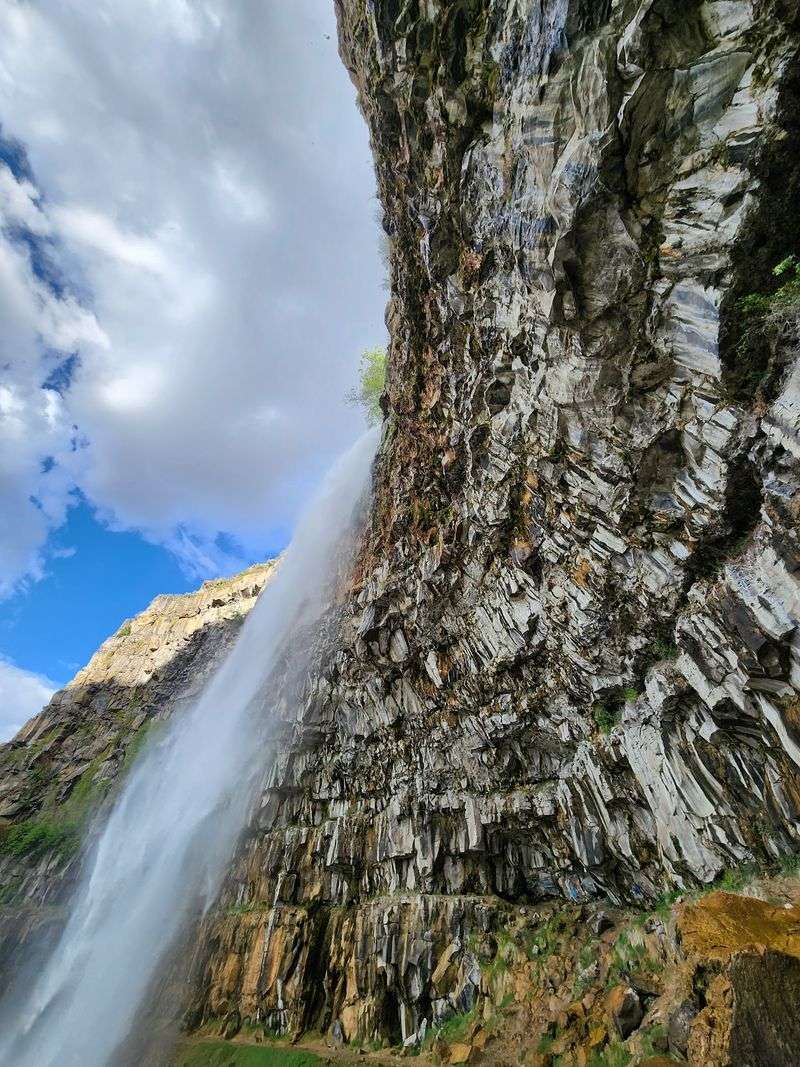
A five-minute stop may prove that Perrine Coulee Falls exists, but it will not show you why people remember it. The parking area provides only a partial view of what is waiting around the corner.
Walk toward the base and the waterfall begins changing with almost every few steps. One angle emphasizes the height.
Another reveals the basalt cliff. Moving behind the water opens a completely different view toward the Snake River Canyon.
Thirty minutes is enough for a straightforward visit, although photographers and families can easily spend longer exploring the established path. Summer weekends may bring other visitors into the narrowest sections, so a little patience goes a long way.
Let someone finish taking a picture before squeezing past on wet ground. Once you find a comfortable spot, listen for a while instead of immediately moving on.
Water crashes against the rocks, mist drifts across the trail, and the canyon stretches beyond the curtain in front of you. The entire experience feels far removed from the road even though your car is not particularly far away.
That accessibility is exactly why rushing feels unnecessary. Perrine Coulee gives you an unusually large payoff for very little hiking.
Add a few extra minutes to the stop and it becomes far more than another waterfall photograph buried among hundreds on your phone.
Watch Your Footing Where The Trail Gets Wet And Slippery
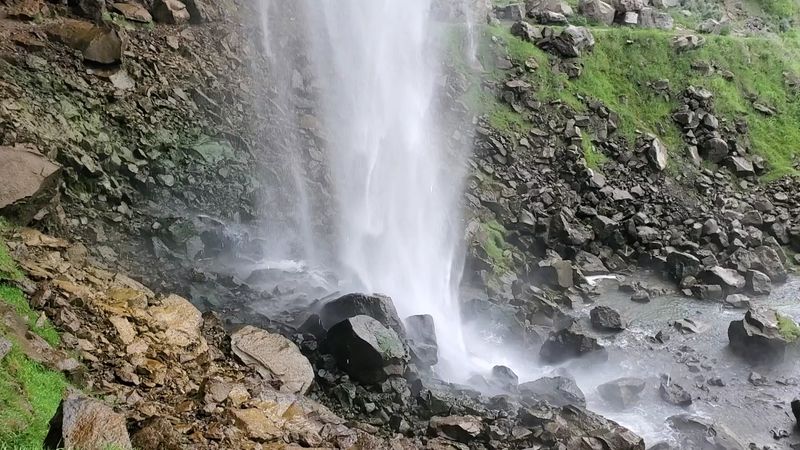
The short distance makes Perrine Coulee approachable, but the natural trail still deserves respect. Spray constantly reaches the rocks and dirt closest to the waterfall, creating slick sections even when the weather has been completely dry.
Shoes with reliable traction make the walk much easier than smooth-soled sandals. Rain can add mud to the approach, while colder weather creates an entirely different set of conditions.
Ice may develop around the trail during winter, and large icicles can form along the cliff near the cascade. Those frozen sections require much greater caution than a typical summer visit.
Never stand beneath hanging ice or treat winter conditions like the easy warm-weather walk shown in vacation photographs. Families should also keep younger children close around uneven ground and exposed terrain.
Visitors with limited mobility may find parts of the rocky path difficult because there is no smooth, fully accessible walkway behind the falls. During summer and early fall, the route is generally much simpler, although mist remains unavoidable near the cascade.
Move slowly where the ground turns shiny, keep your hands available for balance, and avoid climbing onto wet rocks just to create a different camera angle. Perrine Coulee already lets you get unusually close to the water without improvising your own route.
A little caution keeps the focus on the experience instead of your footing.
Pair The Stop With Other Snake River Canyon Views Nearby
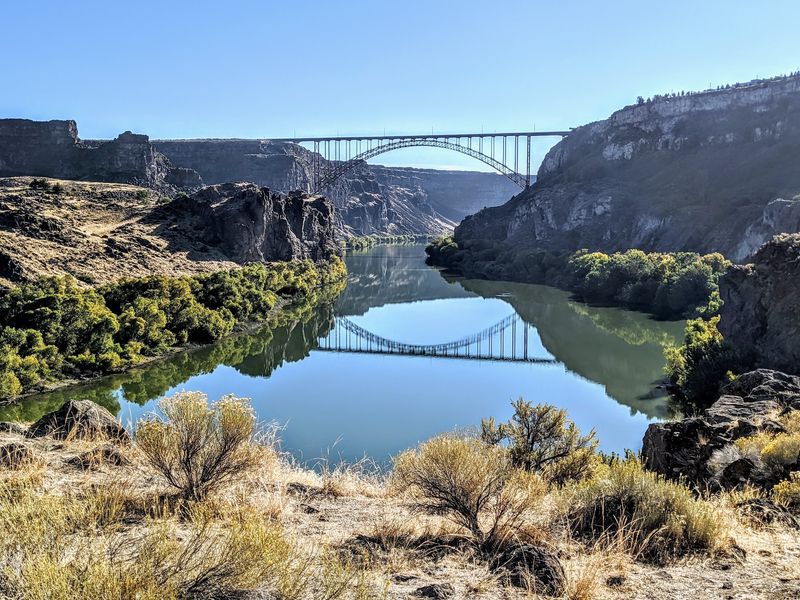
Perrine Coulee can easily become the first stop on a much longer Twin Falls adventure. The Perrine Bridge is only a short drive away and gives visitors enormous views across the Snake River Canyon.
BASE jumpers regularly use the bridge, so you may even catch someone launching from nearly 500 feet above the river. Shoshone Falls provides the obvious second waterfall stop.
Its 212-foot drop creates an entirely different kind of spectacle, although flow changes significantly depending on season and upstream water use. Dierkes Lake sits in the same park area and adds swimming, fishing, picnic spaces, playground equipment, and an unpaved loop trail.
Travelers who still have energy can continue toward Auger Falls Heritage Park, where miles of trails run through undeveloped canyon terrain beside the Snake River.
Centennial Waterfront Park sits much closer to Perrine Coulee and offers river access, picnic areas, kayaking opportunities, and another place to appreciate the canyon from below.
The Canyon Rim Trail provides the easiest way to connect several overlooks above everything. Idaho makes it remarkably easy to turn one waterfall detour into half a day of scenery.
Start behind Perrine Coulee, head toward the bridge, then decide whether another waterfall, a lakeside walk, or a longer canyon trail sounds better. The hardest part may be convincing yourself to leave the area before sunset.
See Why This Easy Detour Deserves More Than A Drive-By Glance
Perrine Coulee Falls has all the ingredients of a major attraction without requiring the time commitment of one.
The cascade drops roughly 200 feet into the Snake River Canyon, flows throughout the year, and becomes especially impressive during summer when irrigation contributes to stronger flow.
That water history is important because the modern waterfall is closely connected with the irrigation system developed above the canyon rather than being simply an untouched mountain stream spilling naturally over the rim. The result is still spectacular.
Summer brings heavier water and cooling spray, while colder months can transform the surrounding cliff with ice formations. Canyon Springs Road places visitors surprisingly close to the base, which may explain why some travelers underestimate the stop.
Seeing water from the car creates the impression that you have already experienced it. Parking and following the little trail proves otherwise.
Within minutes, the waterfall is overhead and the path is slipping behind its curtain. No major hike, expensive ticket, or complicated schedule is required.
You only need enough curiosity to leave the car. Pair that accessibility with the surrounding Snake River Canyon, and Perrine Coulee becomes one of Twin Falls’ easiest natural surprises.
Drive past and you will see a waterfall. Stop for a while and you get to walk through the scene itself.