Few People Realize This Incredible Moorish Castle Is Hiding In Florida
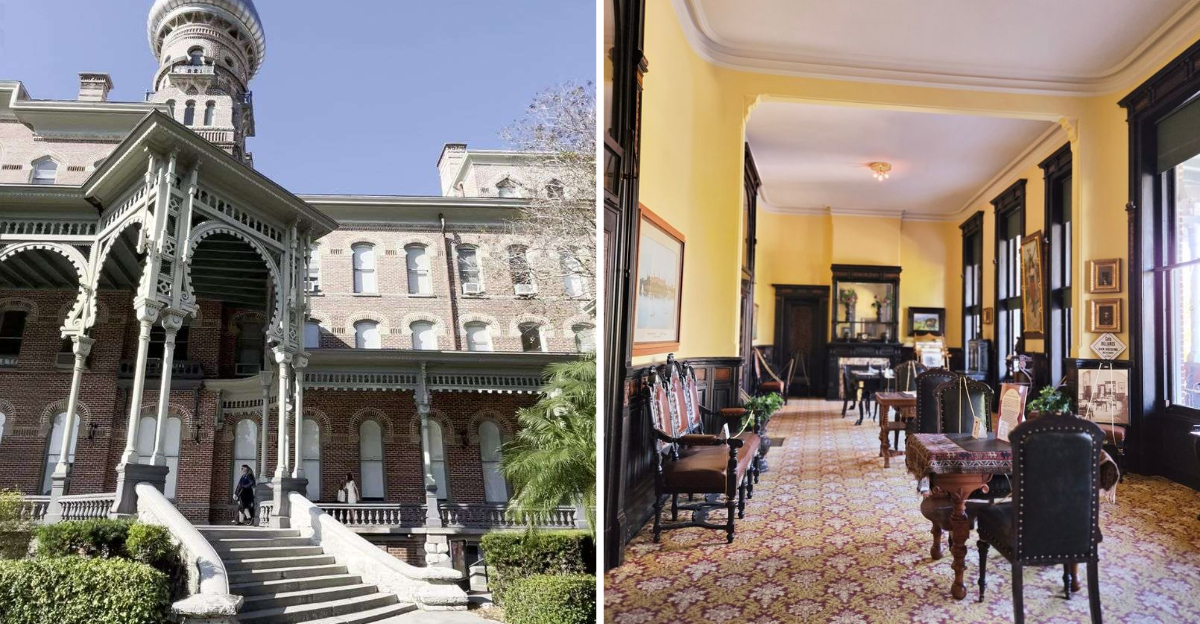
A Moorish castle beside a river sounds like something from another continent. Yet this extraordinary Florida landmark offers exactly that sort of surprise.
Ornate arches, silver domes, elaborate brickwork, and lavish interiors make the building feel wildly out of place in the best possible way.
Its story gets even more interesting, stretching through ambitious railroad plans and the drama of the Spanish-American War.
Walk inside and the whole thing becomes even harder to believe. You can explore grand rooms, admire unusual architectural details, and imagine the characters who once passed through them.
This is the sort of place that makes you wonder how you never heard about it sooner.
A Visionary Built This Palace
Before Tampa was a bustling Florida city, one man decided it deserved a palace.
Railroad magnate Henry B. Plant poured an astounding $2.5 million into constructing what would become one of the most ambitious resort projects in American history.
An additional $500,000 went toward lavish furnishings sourced from Europe and Asia, making the total investment almost incomprehensible for the era.
The project, originally called the Tampa Bay Hotel, broke ground in 1888. Its grand opening followed on February 5, 1891, introducing Florida to a level of luxury it had never seen before.
The structure covered six acres and stretched a full quarter-mile in length, immediately becoming a symbol of Gilded Age ambition and prosperity.
Plant’s goal was never simply to build a hotel. He wanted to establish Tampa as a premier destination at the terminus of his rail and steamship lines, drawing wealthy travelers to Florida’s west coast.
You can stand where it all began at 401 W Kennedy Blvd in Tampa, and feel the weight of that ambition still radiating from every brick and turret of the Henry B. Plant Museum.
Moorish Revival Design Unlike Anything Nearby
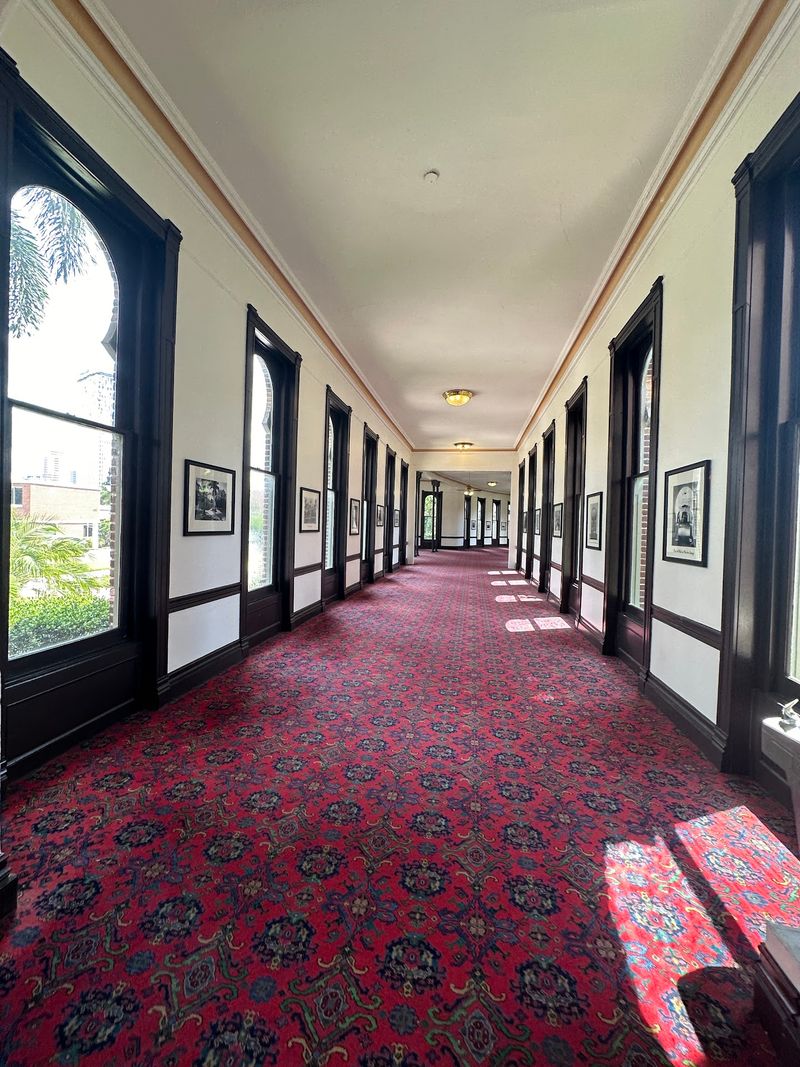
Architect J.A. Wood had a bold brief: create something that would stop Victorian travelers in their tracks.
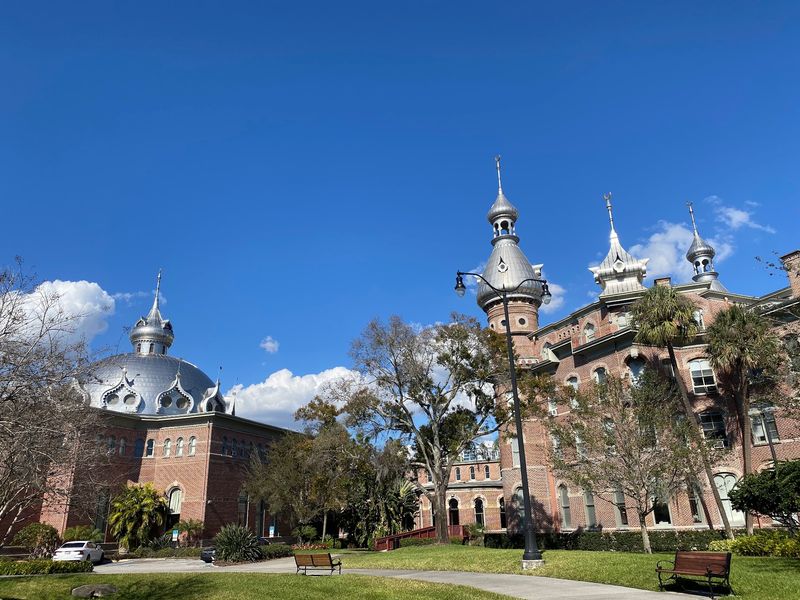
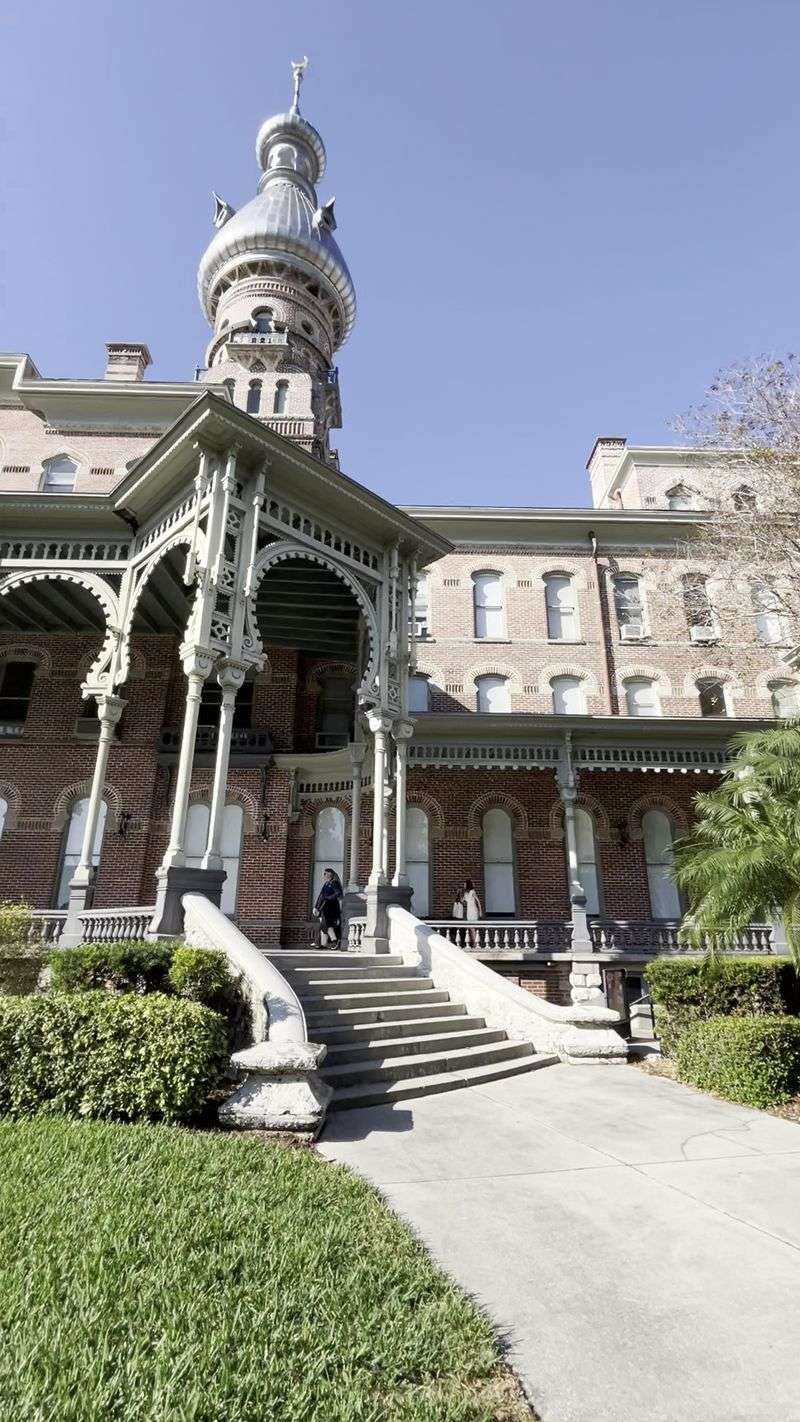
His answer was a sweeping Moorish Revival design inspired by the legendary Alhambra palace in Spain, a choice that was as deliberate as it was daring. No other building in this state looked remotely like it, and that was precisely the point.
Six minarets rise from the roofline, joined by four cupolas and three gleaming domes that catch the sunlight in a way that genuinely makes you stop and stare.
The red brickwork is trimmed with silver accents and delicate Victorian gingerbread detailing, blending two very different architectural worlds into one cohesive and spectacular whole.
The Moorish Revival style was a calculated marketing move as much as an artistic one.
It promised affluent Victorian guests an exotic escape without leaving the country, a fantasy of faraway places made real and accessible. That promise still works today.
Visitors arriving for the first time frequently pause on the sidewalk, phone cameras already raised, because the building simply does not look like it belongs in modern Florida.
Inside A Gilded Age Time Capsule
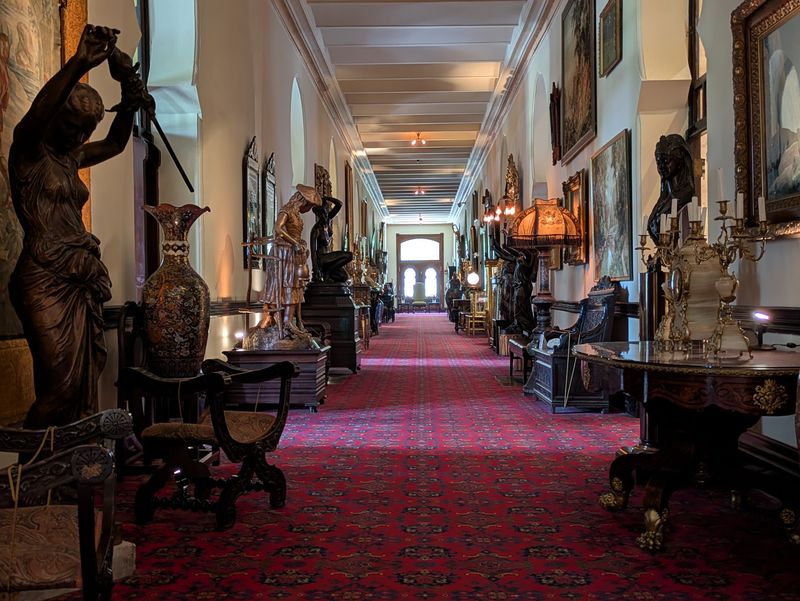
Crossing the threshold into the Henry B. Plant Museum feels like the world outside quietly disappears.
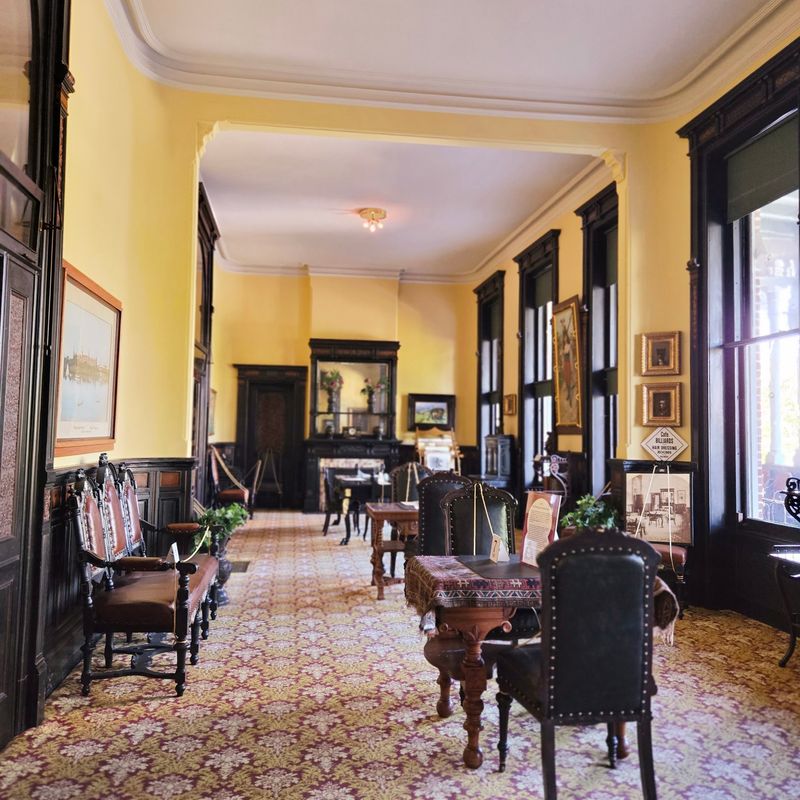
The preserved rooms recreate the atmosphere of the original Tampa Bay Hotel with careful, deliberate attention to period authenticity.
Ornate European furniture fills the parlors, and the grand hallway stretches a full quarter-mile, inviting the kind of slow, unhurried stroll that Victorian resort life was built around.
The museum uses vignettes to display artifacts in arrangements that mirror their original placement within the hotel. This approach makes the experience genuinely immersive rather than simply educational.
Bare lightbulbs glow softly throughout, replicating the novel electric lighting that wowed guests back in the 1890s, and the rooms carry a pleasantly cool, gently dim atmosphere that reinforces the time-travel effect.
It is easy to imagine elegant dinners and moonlit waltzes on the veranda when you are standing inside these rooms.
The curators have clearly prioritized feeling over spectacle, trusting that the authentic objects and thoughtful arrangements speak for themselves.
Audio tours are available and strongly recommended, because the stories attached to individual pieces add enormous depth to what you are seeing.
Global Treasures Fill Every Room
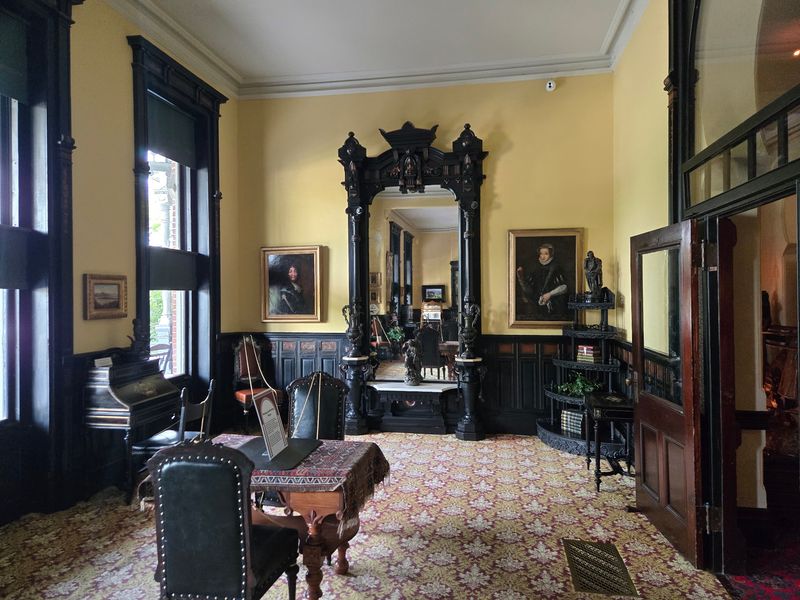
Not content with a beautiful building alone, Henry and Margaret Plant traveled extensively through Europe and Asia, returning with an eclectic and impressive haul of decorative treasures.
Those buying trips shaped what is now the museum’s permanent collection, and the sheer variety of what they brought back is genuinely surprising.
Ceramics alone span pottery, stoneware, porcelain, terra cotta, and majolica, many originally displayed in the hotel’s solarium, rotunda, and grand salon.
Sculptures and statues from the late 19th century represent classical Greek and Roman figures, royal busts, and charming animal forms.
Giltwood French chairs sit alongside Japanese porcelain garden seats, reflecting the era’s enthusiastic appetite for global artistry.
Each piece was chosen to impress and delight the hotel’s distinguished guests, and that curatorial instinct for the spectacular carries through to the museum experience today.
What makes this collection particularly compelling is its context. These are not objects acquired for a museum after the fact.
The Spanish-American War Connection
Few landmarks carry the weight of national military history the way this one does.
During the summer of 1898, the Tampa Bay Hotel was transformed from a leisure resort into a full military headquarters for Army officers preparing for the Spanish-American War.
Henry B. Plant had successfully lobbied for Tampa to serve as the primary embarkation point for American soldiers and supplies heading to Cuba.
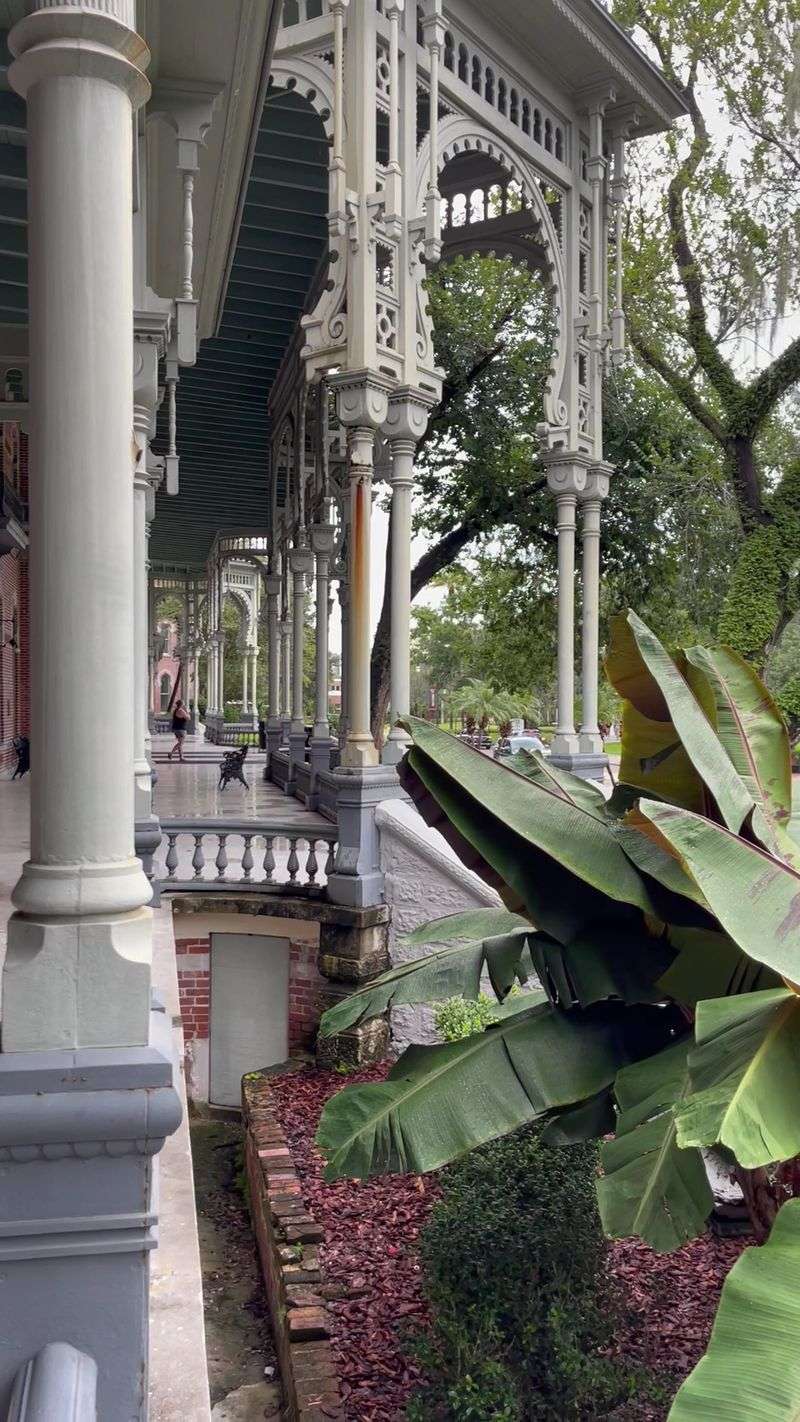
Officers and correspondents crowded the hotel’s famous veranda, conducting strategy discussions in rocking chairs with such unhurried ease that the period earned the nickname “the Rocking Chair War.”
The contrast between the opulent Moorish surroundings and the serious military business being conducted inside made for an atmosphere unlike anything else in the country at that moment.
Tampa was suddenly on the world stage, and Plant’s hotel was the center of it all.
The museum’s “Tampa at War” exhibit interprets this pivotal chapter with depth and clarity, using artifacts and displays to bring the 1898 transformation to life.
The building’s designation as a National Historic Landmark is partly rooted in this wartime role, recognizing its contribution to both local and national history.
Plant Park And The Riverside Setting
The story of this landmark does not stop at the front door.
The original Tampa Bay Hotel once sat within 150 acres of meticulously maintained grounds, and today those outdoor spaces survive as Plant Park, a beautiful green corridor running along the Hillsborough River.
The park is free to explore and offers some of the best exterior views of the building’s extraordinary roofline.
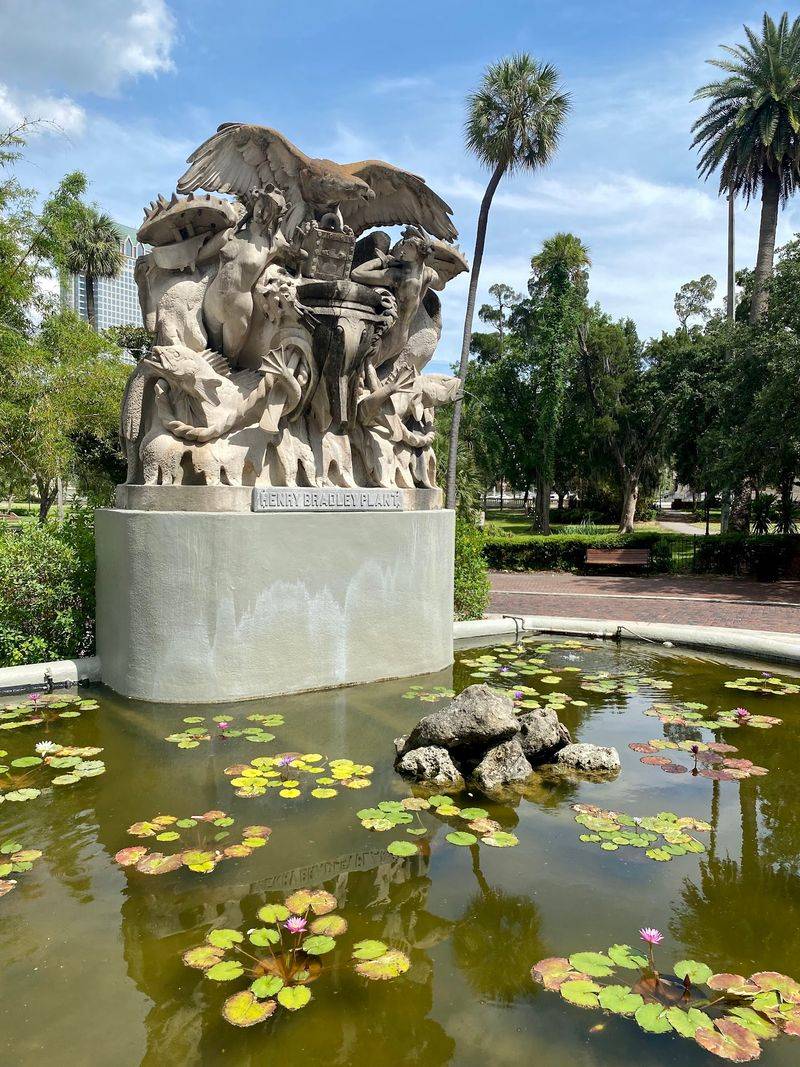
History buffs will want to find the Henry Plant memorial fountain, recognized as the oldest piece of public art in the City of Tampa. Commissioned after Plant’s passing in 1899, this carved stone sculpture pays quiet tribute to the transportation empire he built.
Nearby stands “Au Coup de Fusil,” a bronze sculpture of two hunting dogs that references the sporting expeditions once offered to hotel guests.
A natural creek, fed by a spring beneath the building, meanders through the grounds toward the river, supporting lush vegetation and giving the park a genuinely tranquil character.
The original hotel grounds also featured a golf course and a racetrack, providing Victorian guests with entertainment options that kept them occupied for extended stays.
Victorian Technology That Wowed Guests
Behind the exotic Moorish exterior, the Tampa Bay Hotel was quietly revolutionary in ways that had nothing to do with architecture.
Henry B. Plant was determined to offer guests not just beauty but genuine modern comfort, and the technology he installed was cutting-edge for late 19th-century Florida.
Every one of the hotel’s 511 rooms came equipped with both a telephone and a private bath, amenities that most Americans had never encountered in a hotel setting.
The building also housed the state’s very first elevator, and here is the remarkable part: that elevator is reportedly still operational today, making it one of the oldest working elevators in the entire nation.
Riding it means gripping a piece of functional history, surrounded by its original exquisite woodwork. It is a small detail that somehow makes the whole era feel startlingly close.
Full electric lighting throughout the rooms completed the picture of a place that was simultaneously exotic and forward-thinking.
Guests arriving from gaslit homes would have found the reliable electric illumination almost as impressive as the Moorish domes overhead.
Practical Tips For Your Visit
Planning a visit to the Henry B. Plant Museum is straightforward, and a little preparation makes the experience significantly better.
The museum is open Tuesday through Saturday from 10 AM to 5 PM, and on Sundays from noon to 5 PM. It is closed on Mondays, so keep that in mind when scheduling your Tampa itinerary.
Audio tours are available and come highly recommended by frequent visitors. They add meaningful context to the artifacts and rooms, turning a pleasant walk-through into a genuinely educational experience.
A short orientation video is also available near the entrance, and watching it before exploring the exhibits helps orient you within the building’s layered history.
The scavenger hunt option is a particularly clever touch, encouraging visitors to look more carefully at individual artifacts and the stories behind them.
Parking is limited directly in front of the building, but free parking is available in a nearby garage, which staff are happy to direct you to. The gift shop carries some genuinely interesting finds, from historical reproductions to locally themed items.