People Live Their Whole Lives In Missouri Without Going To These 11 Special Places
You could spend years in Missorui and still miss some of the places hiding in plain sight.
This lineup proves that the biggest surprises are not always the famous attractions everyone already knows.
Think unusual chapels, underground adventures, literary landmarks, and wonderfully strange destinations that reward a little curiosity.
Some require barely any planning, while others deserve a dedicated day trip. That mix makes exploring them especially tempting.
You might recognize the name of one place and discover several others you have somehow never heard about.
For longtime residents and curious road-trippers alike, this list offers multiple excellent excuses to finally explore beyond the usual stops.
1. Meramec Caverns, Sullivan
Underground near Sullivan lies a natural spectacle that genuinely rewrites what you expect from a cave.
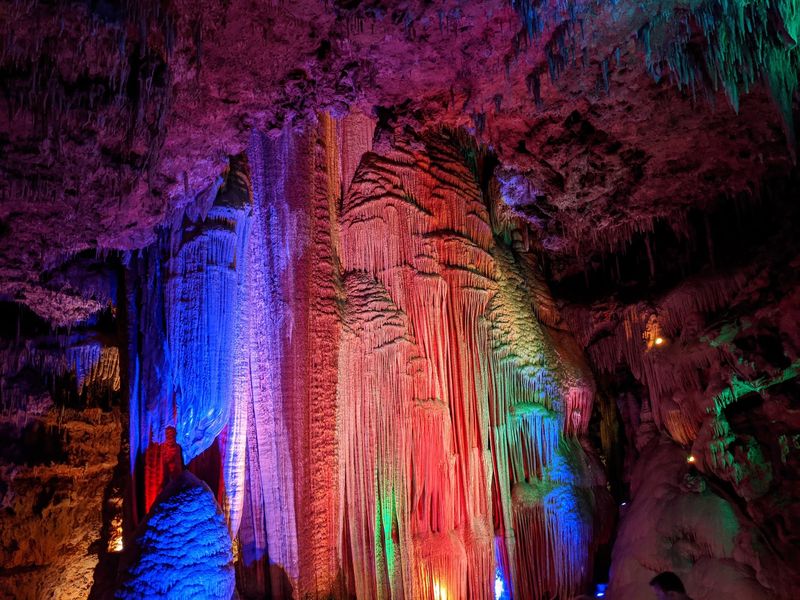
Meramec Caverns is a subterranean labyrinth carved over millions of years by flowing water. The formations inside are staggering, ranging from delicate stalactites to massive flowstone walls draped in mineral color.
The showstopper is the “Stage Curtain,” a sweeping natural drapery of layered stone that stretches across an enormous chamber.
The cave maintains a constant cool temperature year-round, making it an ideal escape from Missouri summers. Guided tours wind through well-lit passages, pairing geology lessons with genuinely gripping folklore.
One layer of that folklore involves Jesse James, whose gang allegedly used the cave’s winding tunnels to evade law enforcement. That historical intrigue adds serious edge to an already extraordinary natural experience.
The caverns also host a dazzling light show projected onto the Stage Curtain formation at the tour’s finale. It is equal parts science museum and underground theater, wrapped inside ancient Missouri bedrock.
Find this underground marvel at 1135 Hwy W.
2. City Museum, St. Louis
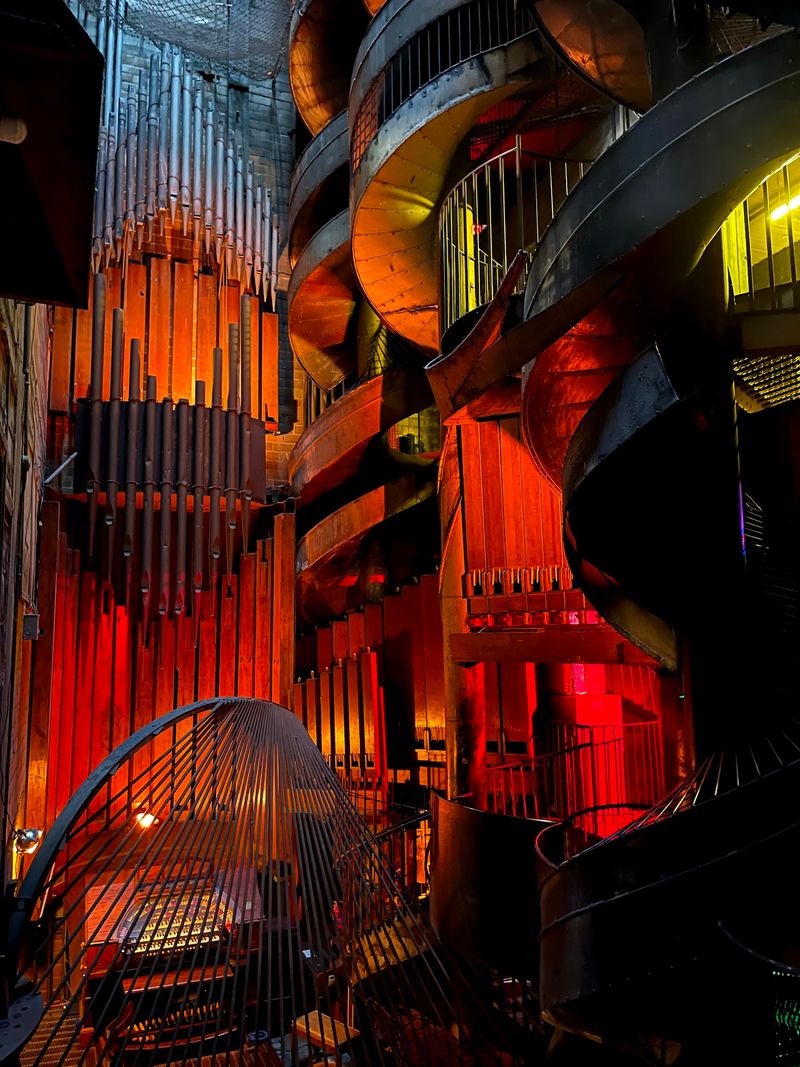
Are you seeing what I am seeing, or did someone just turn an old shoe factory into the most wildly creative building in America?
The City Museum in St. Louis occupies a 600,000-square-foot former warehouse that artist Bob Cassilly transformed into something almost impossible to categorize.
It opened in October 1997 and has been bending minds and delighting visitors of every age ever since.
Every surface here was built from salvaged industrial and architectural materials, including old bridges, construction cranes, and even decommissioned airplanes.
The outdoor rooftop playground called MonstroCity towers above the street, giving brave climbers panoramic city views from inside repurposed machinery.
Inside, a ten-story spiral slide cuts through the building, and crawl tunnels snake through walls and floors in every direction.
The museum also houses the largest continuous mosaic in the United States, stretching across entire floors and climbing support columns.
A working circus ring and an antique shoelace factory add layers of unexpected delight. No two visits here feel the same, because there is simply too much to absorb in one trip.
The City Museum is at 750 N 16th St, St. Louis.
3. Jim The Wonder Dog Museum, Marshall
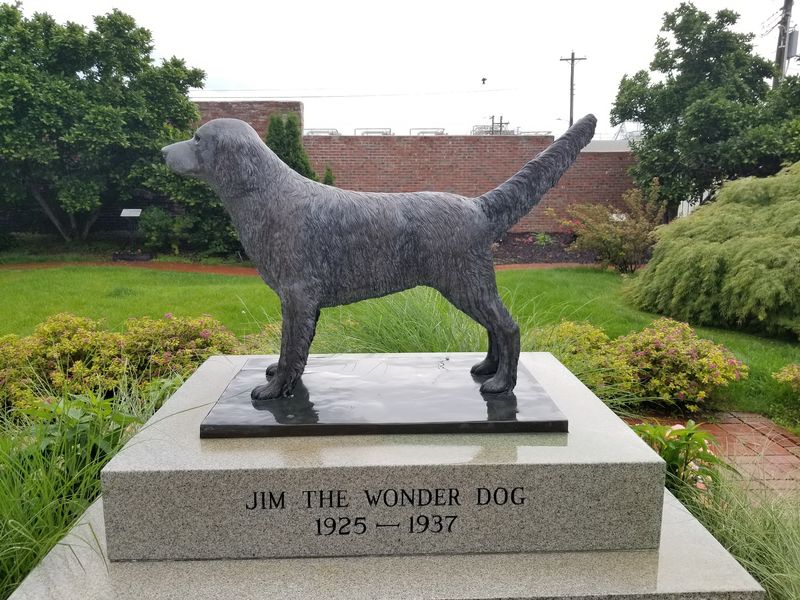
My jaw dropped the first time I heard the documented story behind this singular Missouri attraction.
In Marshall, a dedicated museum honors a Llewellyn setter from the 1930s named Jim, whose abilities stunned scientists, professors, and ordinary people alike.
He correctly predicted the Kentucky Derby winner for several consecutive years, identified strangers by profession on command, and responded to instructions in German, French, and Spanish.
Jim could also predict the gender of unborn babies and the outcomes of major sporting events with accuracy that left researchers completely stumped.
His owner, Sam Van Arsdale, never claimed Jim had supernatural powers, insisting he was simply an unusually gifted dog. National newspapers covered his story extensively, and curious crowds traveled to Marshall just to witness his talents in person.
The museum preserves photographs, artifacts, and detailed accounts documenting each verified feat, creating a portrait of an animal whose intelligence defied every known explanation.
It is a genuinely warm and thought-provoking experience that sparks real questions about the mysteries of animal cognition. The collection feels intimate and sincere, honoring a local legend who captured national imagination.
The Jim The Wonder Dog Museum is at 101-113 N Lafayette Ave.
4. Ste. Genevieve National Historical Park
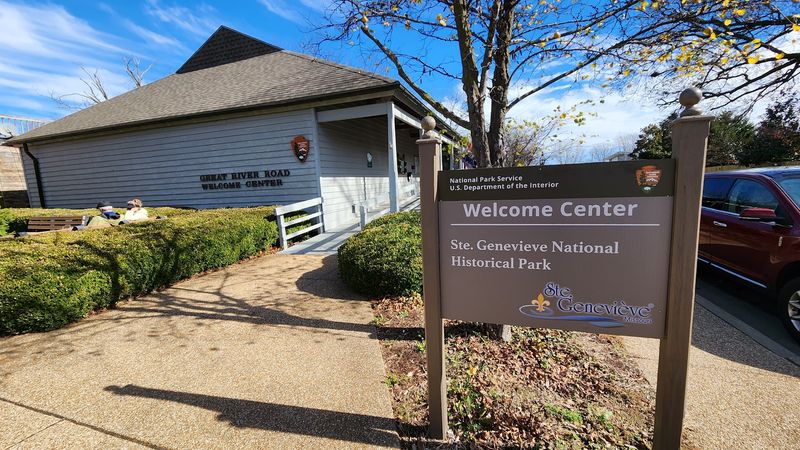
The oldest permanent European settlement in Missouri is also one of its least-visited treasures.
Established as a national park in 2020, Ste. Genevieve National Historical Park preserves French colonial architecture so rare that only five comparable structures survive in the entire United States.
French colonists founded the settlement in the 1750s, and the buildings here reflect their distinctive vertical log construction techniques.
Two primary building styles dominate the park: poteaux-en-terre, meaning post in ground, and poteaux-sur-sol, meaning post on sill.
These walls of upright hewn timbers represent a building tradition virtually extinct elsewhere in North America. After a catastrophic flood in 1785, the town was relocated to higher ground, preserving much of its original character in the process.
The Amoureux House, dating to 1792, is one of the standout structures, offering a tangible connection to 18th-century Creole frontier life. The visitor center features detailed exhibits, a diorama of colonial life, and historical film presentations.
Cultural influences here span French, Spanish, African American, and Native American traditions, making this a genuinely layered historical experience. The visitor center is at 99 S Main St, Ste.Genevieve.
5. Elephant Rocks State Park, Belleview
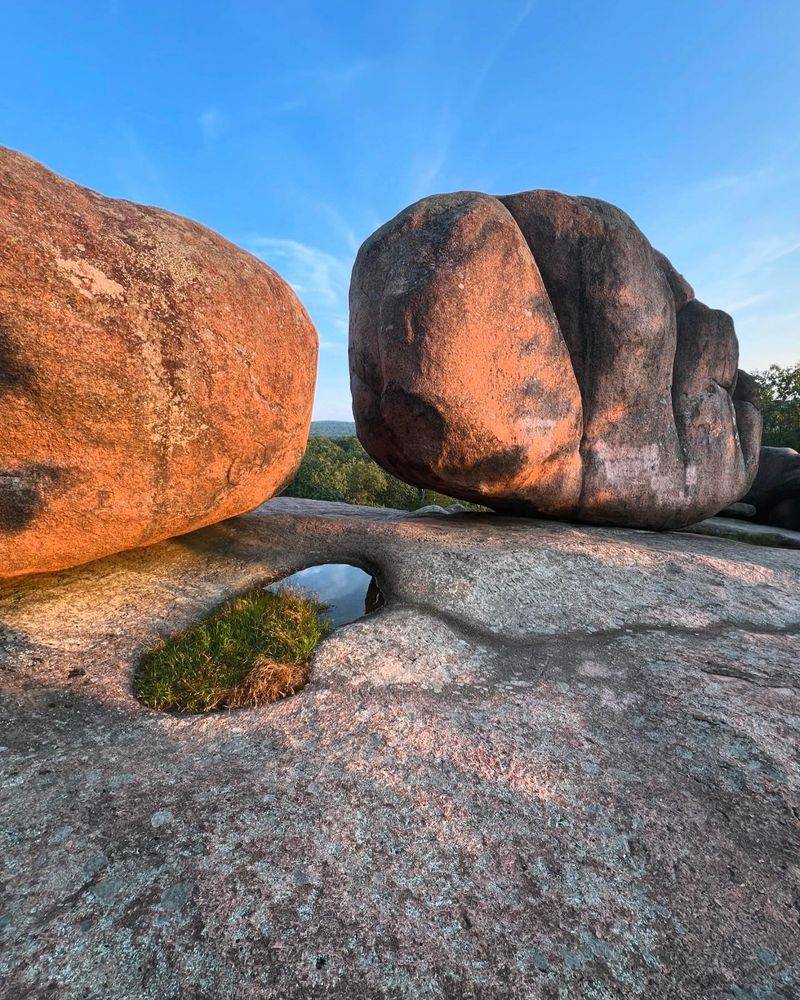
I am still trying to wrap my head around the idea that 1.5-billion-year-old boulders are just sitting in a Missouri state park, waiting for anyone to climb on them.
Near Belleview, Elephant Rocks State Park presents a landscape of colossal pink granite formations that genuinely look like a herd of resting elephants from a distance.
Some of these boulders weigh over 600 tons and stand 27 feet tall, making them among the most ancient exposed rocks in the central and eastern United States.
The granite began forming during the Precambrian era as molten rock cooled deep underground, then erosion gradually rounded the edges and brought these giants to the surface over eons.
Beyond their geological drama, the rocks carry industrial history too. Granite quarried here contributed to major construction projects, including the Eads Bridge in St. Louis and columns at the Missouri Governor’s mansion.
The park also features Missouri’s first Braille Trail, a paved accessible path that winds directly through the main formation with interpretive signs in Braille.
Ruins of an old railroad engine house add another layer of historical texture to the landscape. Vibrant lichens cling to the smooth boulder surfaces, adding unexpected color to the ancient stone.
Find this geological wonder at 7406 MO-21.
6. The Nelson-Atkins Museum Of Art, Kansas City
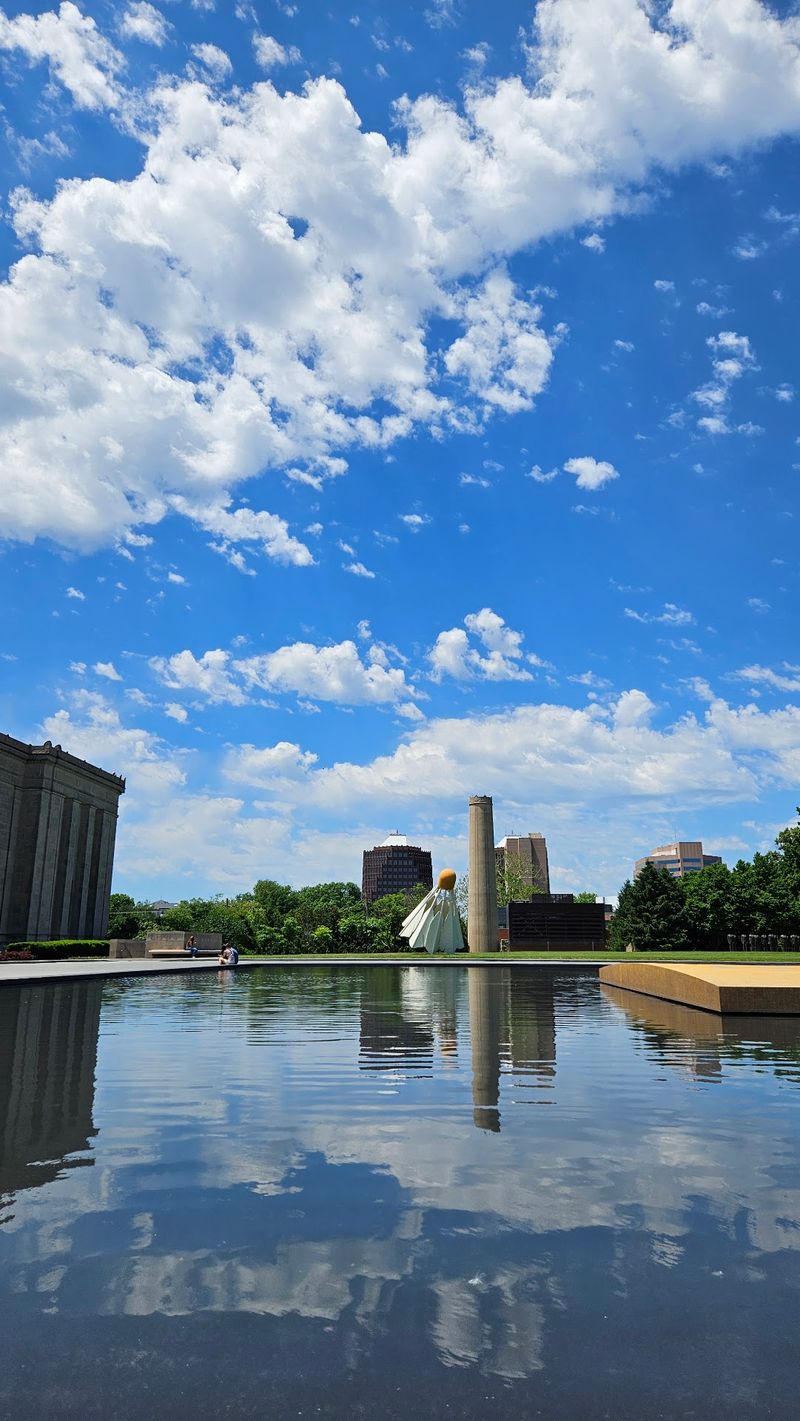
That came completely out of left field for me, discovering that one of the finest encyclopedic art museums in the entire country sits right in Kansas City.
The Nelson-Atkins Museum of Art opened in 1933 and now houses over 40,000 works spanning nearly every continent, culture, and era of human creativity.
Remarkably, admission has always been free, reflecting a foundational commitment to making art accessible to everyone.
The Asian art collection is particularly celebrated, featuring Chinese landscape paintings widely regarded as among the finest examples held in any Western institution.
Egyptian sculpture, European paintings from the Renaissance forward, and an outstanding American photography collection round out the museum’s extraordinary depth.
The Donald J. Hall Sculpture Park surrounds the building with striking outdoor works, including Claes Oldenburg’s playful giant “Shuttlecocks” installed on the front lawn.
In 2007, the Bloch Building expansion added a series of innovative glass lenses that funnel natural light into subterranean galleries, creating a luminous underground experience.
The original Beaux-Arts structure, designed by Kansas City architects Wight and Wight, is itself an architectural statement worth the trip alone.
This is a cultural institution of genuine international stature, tucked into the Midwest heartland. The museum is at 4525 Oak St, Kansas City.
7. Ha Ha Tonka State Park, Camdenton
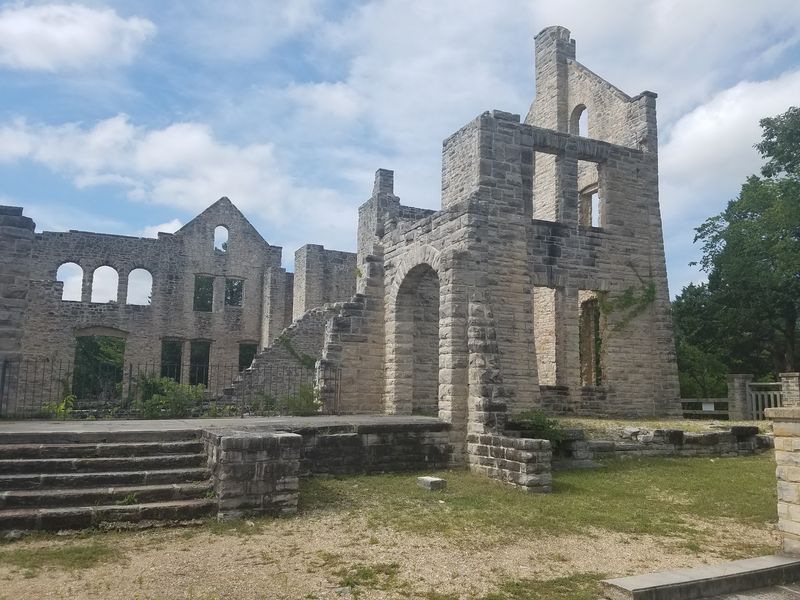
European-style castle ruins perched above a lake, natural caves beneath the ground, and a massive natural stone bridge all sharing the same Missouri state park.
Ha Ha Tonka State Park sits five miles south of Camdenton and covers over 3,700 acres on the Niangua arm of the Lake of the Ozarks.
The park’s most iconic feature is the dramatic stone shell of an early 20th-century mansion modeled after 16th-century European castle design.
Construction began in 1905 when Kansas City businessman Robert McClure Snyder Sr. envisioned a grand private retreat on the bluffs.
He did not live to see it completed, and his sons eventually finished the structure in the early 1920s. After briefly operating as a hotel, the mansion was destroyed by fire in 1942, leaving behind the hauntingly beautiful stone ruins that stand today.
The park is also a textbook example of karst topography, featuring sinkholes, caves, and a remarkable natural bridge carved by centuries of water movement.
Ha Ha Tonka Spring the state’s 12th largest, flows at an average of 58 million gallons daily and feeds directly into the lake. Fifteen miles of hiking trails connect all of these wonders in one unforgettable loop.
Ha Ha Tonka State Park is at 1491 Missouri D in Camdenton.
8. Bollinger Mill State Historic Site, Burfordville
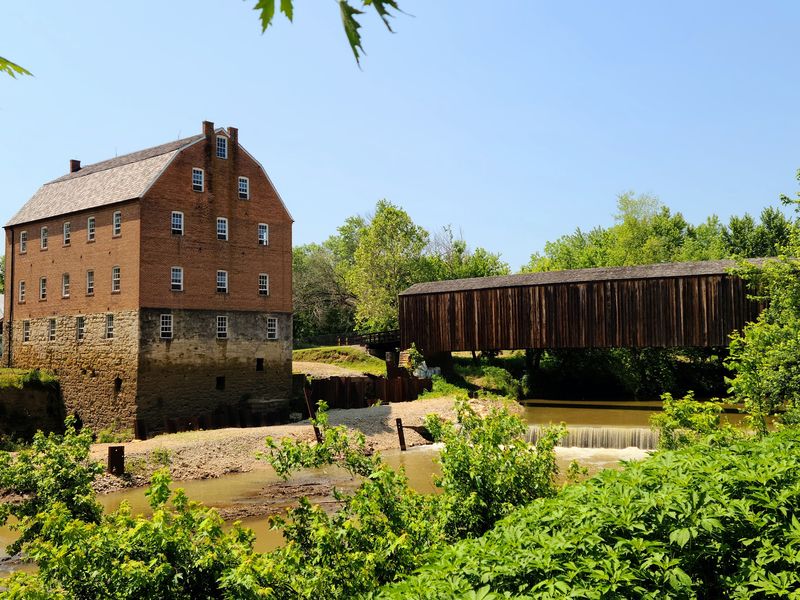
Have you given any thought to how few 19th-century grist mills survive in working condition alongside an equally historic covered bridge on the same property?
The Bollinger Mill State Historic Site in Burfordville preserves exactly that combination, set along the scenic Whitewater River in a landscape that feels genuinely unchanged by time.
George Frederick Bollinger first established a mill and dam here in the early 1800s, with the current four-story brick structure completed in 1867 on a limestone foundation from an earlier building.
The mill carries Civil War history within its walls. Union forces burned the original structure to deny Confederate troops access to its supplies, and the initials of rebuilder Solomon R.
Burford are still visible on an interior wall today.
Self-guided tours cover the first floor and basement, while paid guided tours open access to the upper levels and the full milling operation.
Adjacent to the mill, the Burfordville Covered Bridge spans the Whitewater River and holds the distinction of being the oldest of only four surviving covered bridges in Missouri.
Construction on this 140-foot span began in 1858 and was completed in 1868, and it remains a National Register of Historic Places landmark.
The combination of mill, river, and bridge creates a scene that photographers chase for good reason. Find the site at 113 Bollinger Mill Rd, Burfordville.
9. The Precious Moments Chapel, Carthage
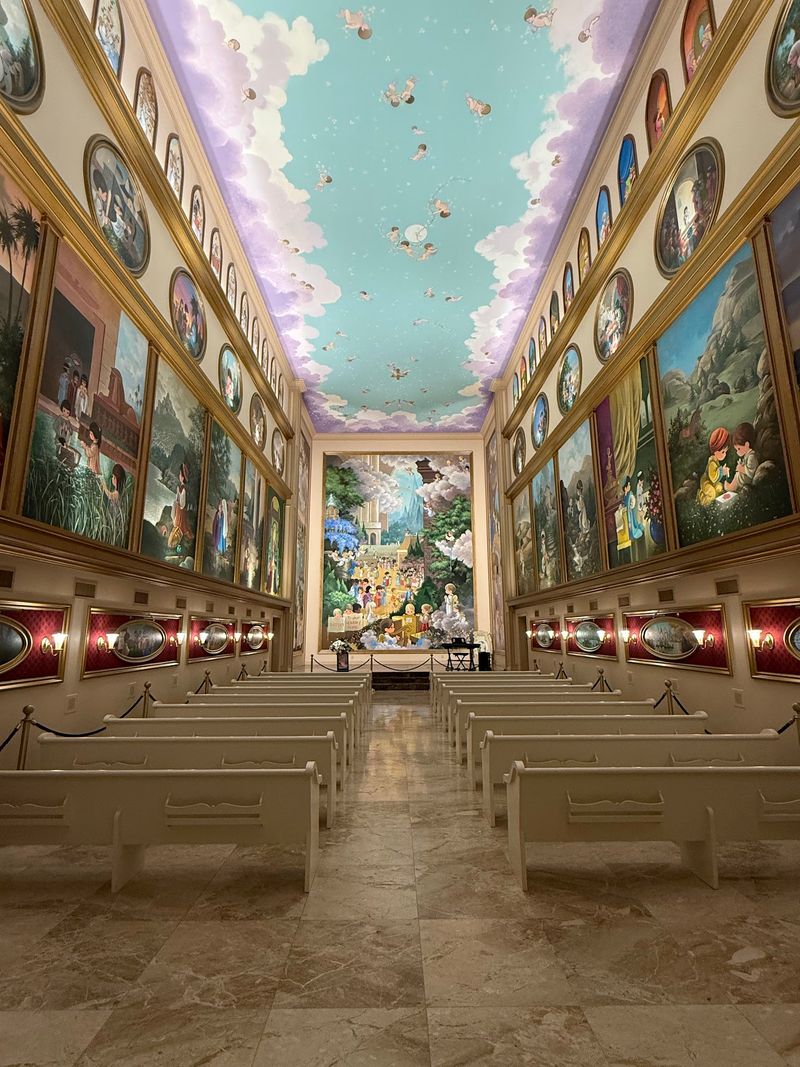
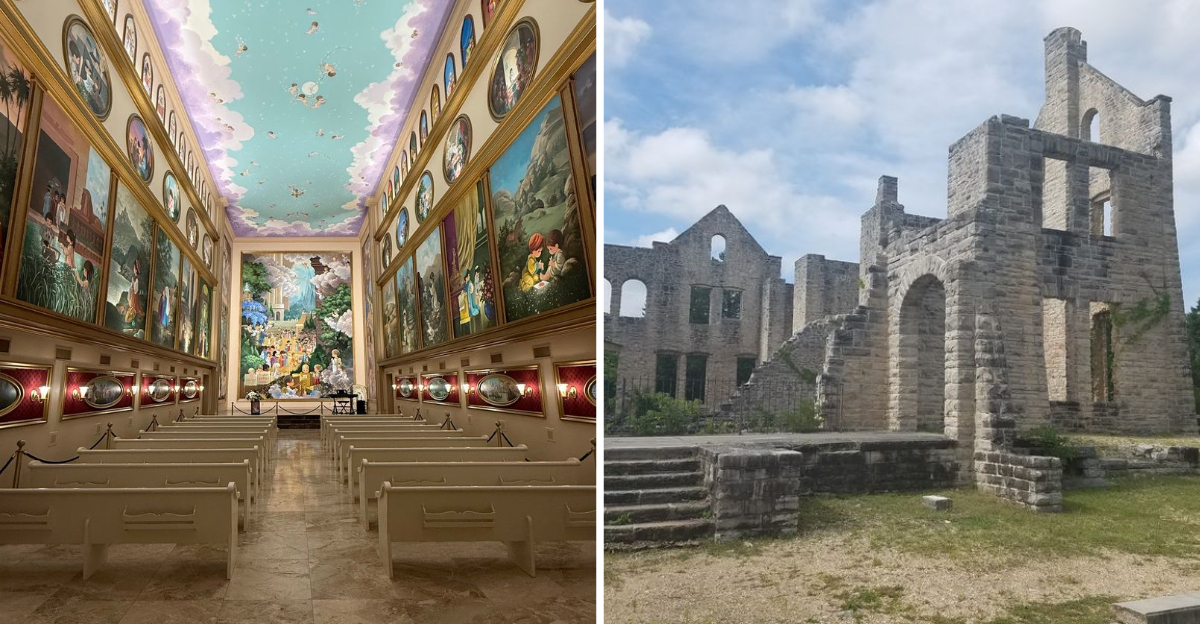
I had to do a double-take when I first read that an intimate chapel covered in 84 hand-painted murals exists in the Missouri Ozarks countryside.
The Precious Moments Chapel outside Carthage was inspired by Italian chapel architecture and built beginning in 1985 by artist Samuel J. Butcher, creator of the widely recognized Precious Moments figurine series.
The chapel at 4321 S Chapel Rd opened to the public in 1989 and has welcomed millions of people drawn by its messages of faith, hope, and love.
Often called the “Sistine Chapel of North America,” the interior murals depict the distinctive wide-eyed Precious Moments children in biblical scenes, rendered with extraordinary detail and devotion.
The largest mural, titled “Hallelujah Square,” represents a vision of heaven and includes a likeness of Butcher’s own mother among its figures. Massive bronze entry plates representing the Old and New Testaments flank hand-carved wooden doors at the entrance.
Even the ornate iron gates surrounding the chapel carry a personal story: Butcher reportedly sketched their intricate design on four paper napkins during a trip to the Philippines.
Beautifully landscaped memorial gardens on the grounds honor children who have passed on. The chapel is a genuinely moving artistic achievement, far deeper than any figurine collection could suggest.
10. Mark Twain Boyhood Home And Museum, Hannibal
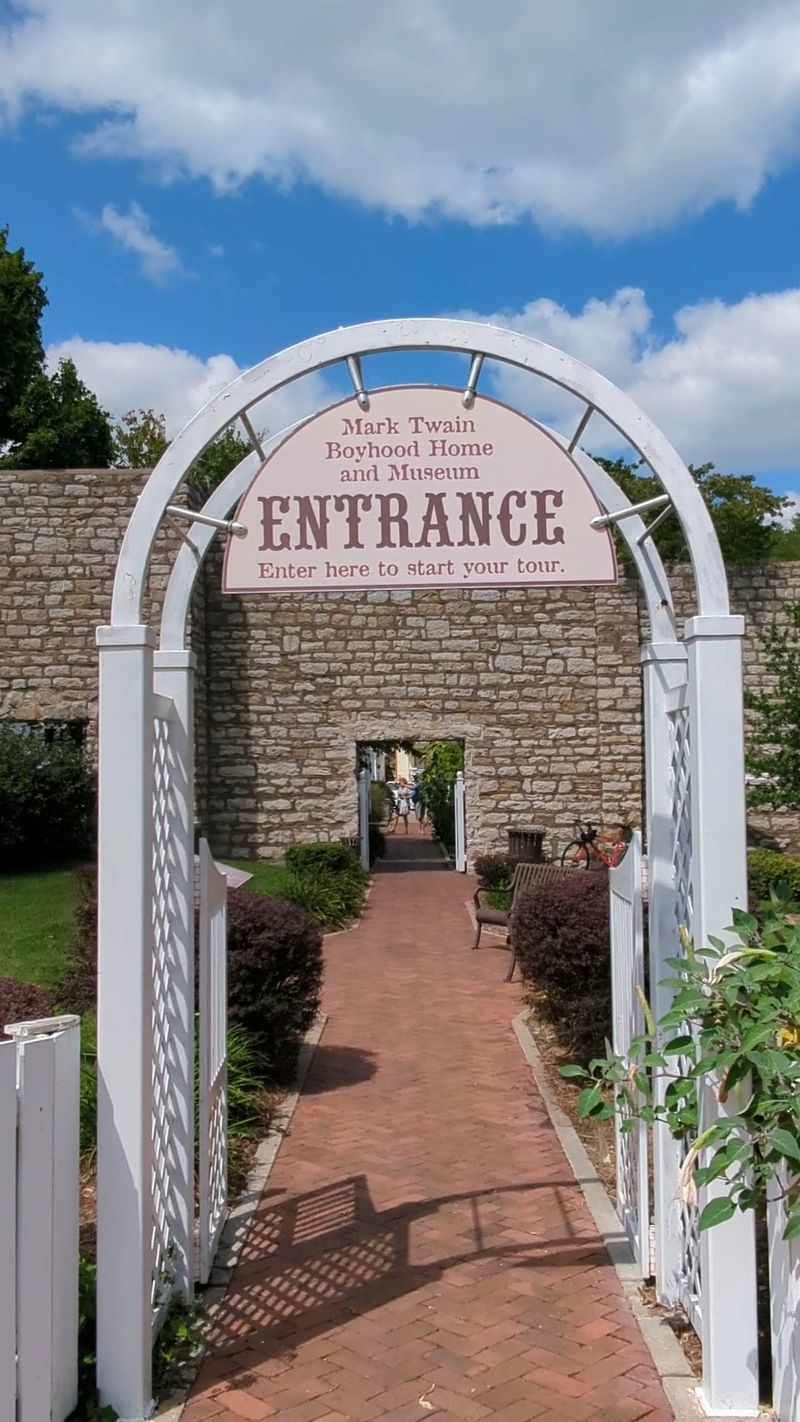
Just imagine for a second that the streets, fences, and actual rooms where Tom Sawyer and Huck Finn were born in the imagination of a literary giant are still standing and open to the public.
The Mark Twain Boyhood Home and Museum in Hannibal preserves the formative world of Samuel Langhorne Clemens, who lived here from age four to seventeen.
Those years in Hannibal shaped “The Adventures of Tom Sawyer” and “Adventures of Huckleberry Finn” in ways that are impossible to separate from the town itself.
The boyhood home, built around 1843, is a National Historic Landmark and has been open to the public since 1912, making it one of the earliest historic house museums in the country.
The complex spans eight properties, including the legendary whitewashed fence that borders the home and the Becky Thatcher House, where Twain’s childhood friend Laura Hawkins actually lived.
A replica of the Huck Finn House honors Tom Blankenship, the real boy behind the fictional character.
The Interpretive Center adds depth with a full timeline of Twain’s life, interactive exhibits, and 15 original Norman Rockwell paintings created specifically for Twain’s books.
The J.M. Clemens Justice of the Peace Office, where Twain’s father presided, completes this rich historical campus.
Every corner here echoes with the origins of American literature. The museum is at 415 N Main St, Hannibal.
11. Silver Dollar City, Branson
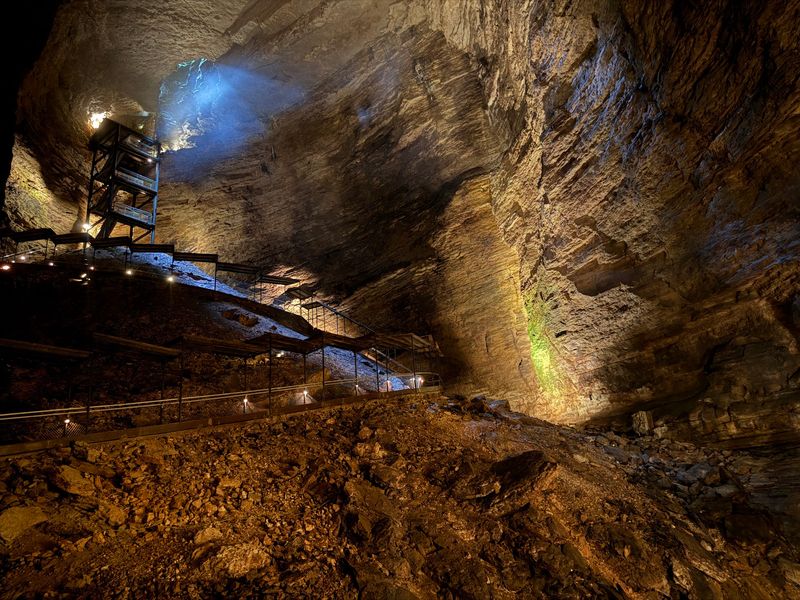
A world-class theme park that literally grew out of a cave and still celebrates Ozark craftsmanship alongside record-breaking roller coasters sounds like a genuinely one-of-a-kind proposition.
Silver Dollar City near Branson is an 1880s-themed park covering 61 acres, and its roots trace directly to Marvel Cave, one of the oldest tourist attractions in the region.
The cave was explored for lead, then mined for bat guano, before becoming a ticketed attraction in 1894.
The Herschend family leased Marvel Cave in 1946 and envisioned an Ozark village on the surface above it, one that would prioritize authenticity and natural beauty over generic amusement park aesthetics.
Silver Dollar City officially opened in 1960, named for the promotional tradition of giving guests silver dollars as change.
Today the park features over 40 rides, including Time Traveler, recognized as the world’s fastest, tallest, and steepest spinning coaster, and Outlaw Run, a celebrated record-holding wooden coaster.
Beyond the thrills, over 100 resident craftsmen demonstrate traditional Ozark skills including glassblowing, blacksmithing, woodcarving, and pottery throughout the operating season.
World-class festivals run from spring through a spectacular Christmas celebration, offering diverse entertainment at every turn.
Marvel Cave is still open for tours as a National Landmark, connecting every visit to the park’s extraordinary origin story. Silver Dollar City is at 399 Silver Dollar City Pkwy.