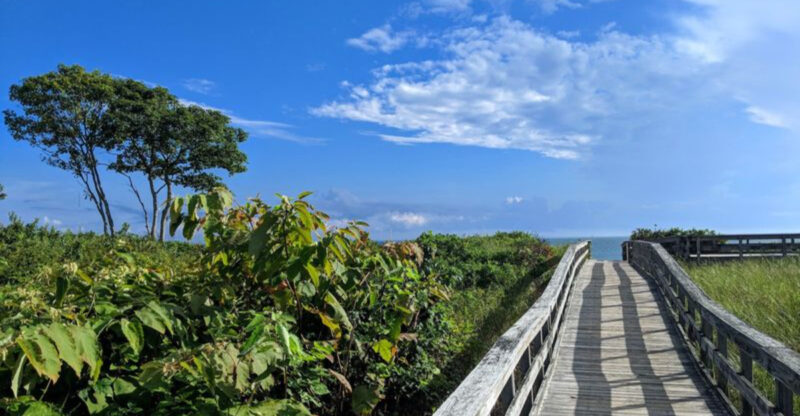
This Connecticut “Cave” Isn’t Really A Cave And Its Story Goes Back To 1661
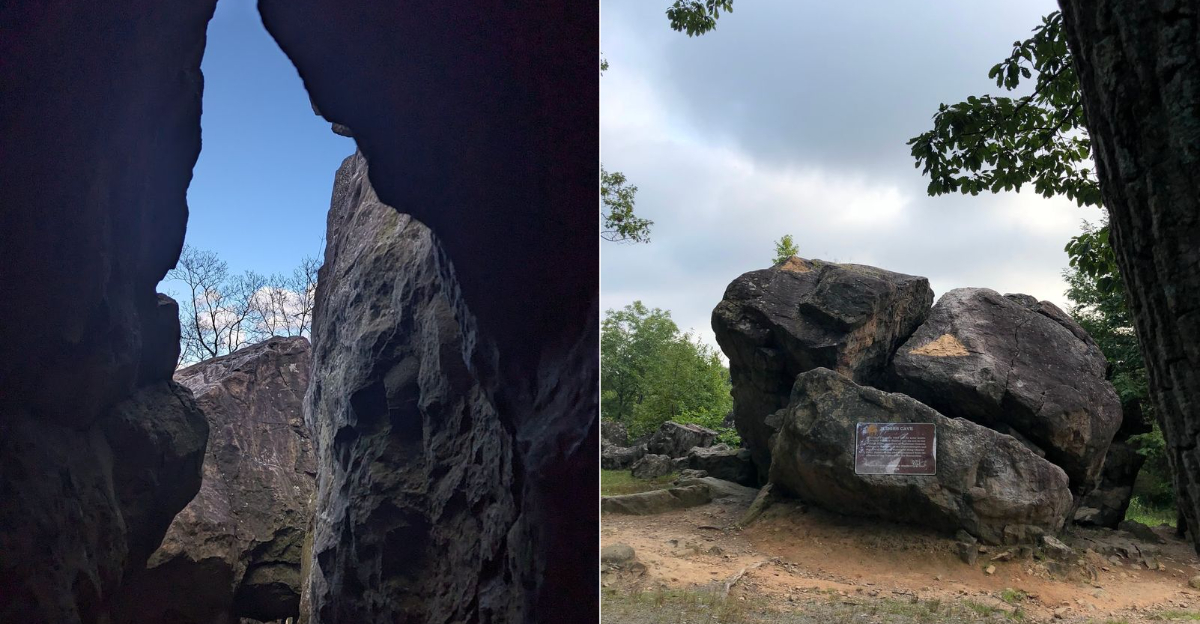
The name makes you expect one thing. The reality is much stranger.
This unusual Connecticut landmark looks more like a rocky puzzle than the cavern its nickname suggests. That confusion is part of the appeal.
The real reason people remember it, though, has nothing to do with geology alone. Its story reaches back to 1661, and once you know what happened here, the setting starts to feel completely different. That is where the fun begins.
You can look at the rocks and try to guess why this spot became important enough to survive in local history for centuries. The answer is far more dramatic than the peaceful surroundings suggest.
Today, the woods feel calm. The story behind them definitely was not.
Few places manage to be this misleading before you even arrive, and that makes the truth behind the so-called “cave” much more satisfying to uncover.
1. These Giant Boulders Hide A Surprising Story
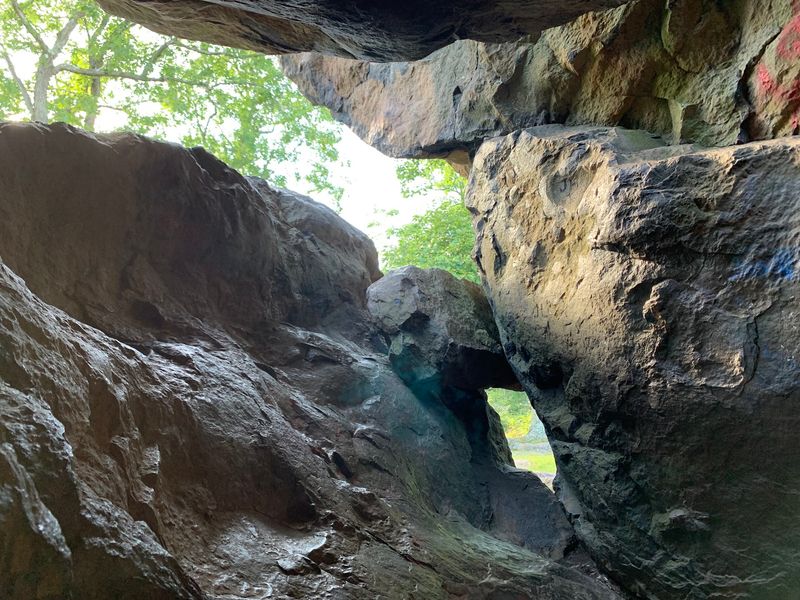
Up close, Judges Cave feels much more dramatic than its name suggests. Rather than a traditional underground cave, the landmark is formed by a massive glacial erratic that fractured into separate pieces, leaving narrow openings and sheltered spaces between the rocks.
Frost wedging and growing roots are among the forces believed to have helped widen those splits over time.
The surrounding West Rock Ridge is largely made of diabase, a dense igneous rock that cooled below the earth’s surface. Its tendency to fracture along sharp planes helps explain the rugged shapes visible throughout the area.
What makes the formation memorable is how quickly its scale changes once you approach it. From farther away, the rocks can look like another cluster of boulders among the trees.
Move closer and deep crevices begin to appear, while broad slabs lean against one another and create surprisingly protected pockets beneath them.
The rough surfaces and irregular openings invite a slower look rather than a quick photo. Shadows shift between the fractured stones, revealing new angles as you move around them.
Judges Cave may lack the tunnels of a conventional cave, but its unusual geology gives the landmark plenty of character on its own.
2. West Rock Gives The Site A Wild Setting
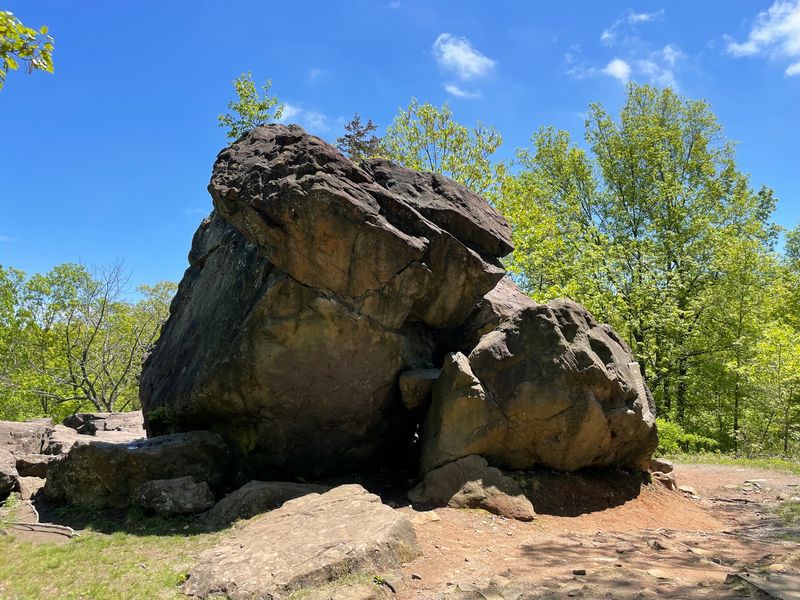
The setting surrounding Judges Cave does a lot of the heavy lifting when it comes to atmosphere.
West Rock Ridge State Park stretches across more than 1,700 acres of rugged landscape, offering a sense of wilderness that feels genuinely removed from the neighborhoods sitting just below the ridge.
The park follows a trap rock mountain ridge that runs for roughly seven miles and forms part of the larger Metacomet Ridge system extending northward from Long Island Sound.
Elevations across the ridge range from about 400 feet at the South Summit up to around 700 feet near High Rock, giving the terrain a noticeable rise and fall as trails wind through it.
The cliffs along the ridge can tower up to 500 feet above the surrounding terrain in certain sections, which adds a dramatic visual quality to the hike.
Forested slopes drop away on both sides of the ridge, and the canopy shifts with the seasons in ways that change the mood of the whole area.
The park also supports a concentration of rare and endangered plant and animal species, making it ecologically significant beyond its historical draw.
Visitors who take their time along the ridgeline may spot hawks riding thermals above the cliffs, adding a living, dynamic energy to an already striking natural environment.
3. Its History Goes Back To 1661
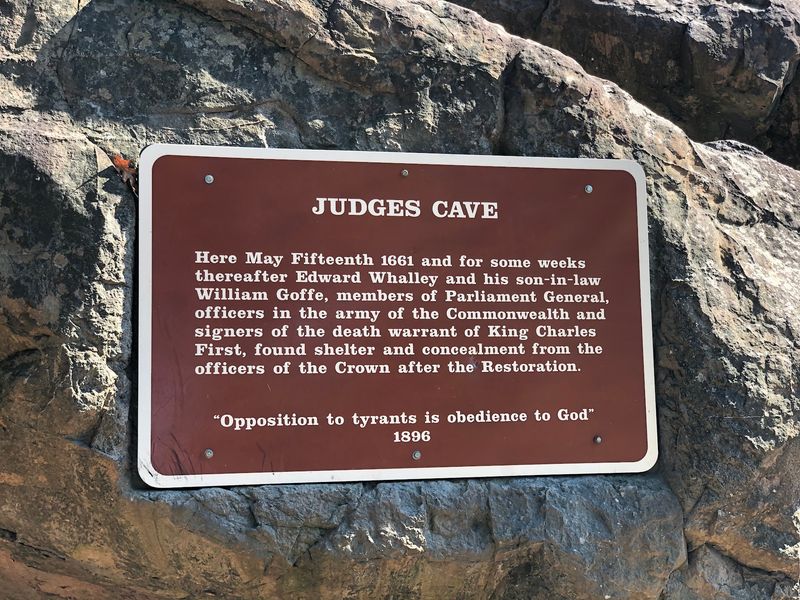
Long before Judges Cave became a landmark, two English fugitives turned this rocky shelter into part of a remarkable colonial story. Edward Whalley and William Goffe had been among the 59 men who signed the 1649 warrant authorizing the execution of King Charles I.
When Charles II restored the monarchy in 1660, both men faced arrest and fled across the Atlantic.
Their journey eventually brought them to New Haven, where local Puritan sympathizers helped conceal them from royal agents. After spending time in private homes, Whalley and Goffe moved to the rock formation on West Rock in May 1661.
Supporters secretly brought them food while they remained hidden among the massive stone slabs.
The episode became intertwined with a much larger political shift.
New Haven Colony’s decision to shelter the fugitives increased tensions with the restored English monarchy, while a royal charter issued to the neighboring Connecticut Colony in 1662 helped set the stage for their eventual consolidation. The process was completed a few years later.
Today, the rocks feel remarkably quiet considering the history attached to them. Knowing what unfolded here gives the landscape an entirely different weight, turning an unusual formation into one of West Rock’s most memorable historical stops.
4. Two Judges Once Hid Among The Rock Crevices
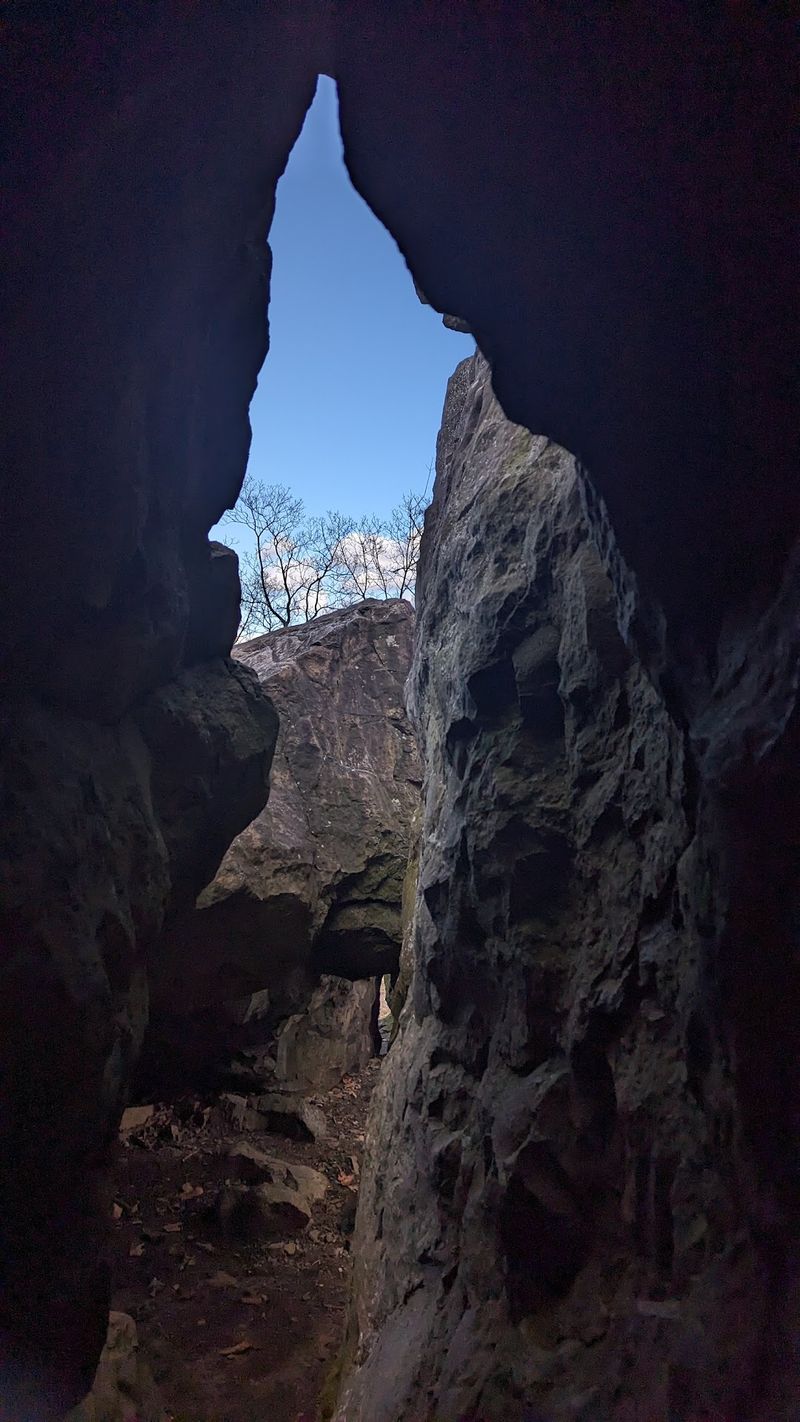
The two figures at the center of this story are Edward Whalley and his son-in-law William Goffe, both prominent participants in the English Civil War and both signatories on the warrant that ordered the execution of King Charles I.
After fleeing England following the restoration of the monarchy, they eventually made their way to the New Haven Colony, where local Puritans were willing to offer quiet assistance.
During their time hiding at the cave, a local farming family reportedly supplied them with food in secret, slipping provisions to the men while they stayed concealed among the boulders.
The two remained in the rock crevices for several weeks during their first period of hiding and reportedly returned to the same spot in 1664.
A legend connected to the cave also describes an encounter with a panther that reportedly drove them out temporarily to seek shelter elsewhere.
Although a third English regicide named John Dixwell also eventually settled in the colonies, his hiding places were primarily in other locations and not directly tied to Judges Cave.
The names of all three men live on in New Haven street names, a quiet but enduring acknowledgment of the unusual chapter in history that unfolded on this state ridgeline.
5. The “Cave” Name Stuck Even Without A Real Cave
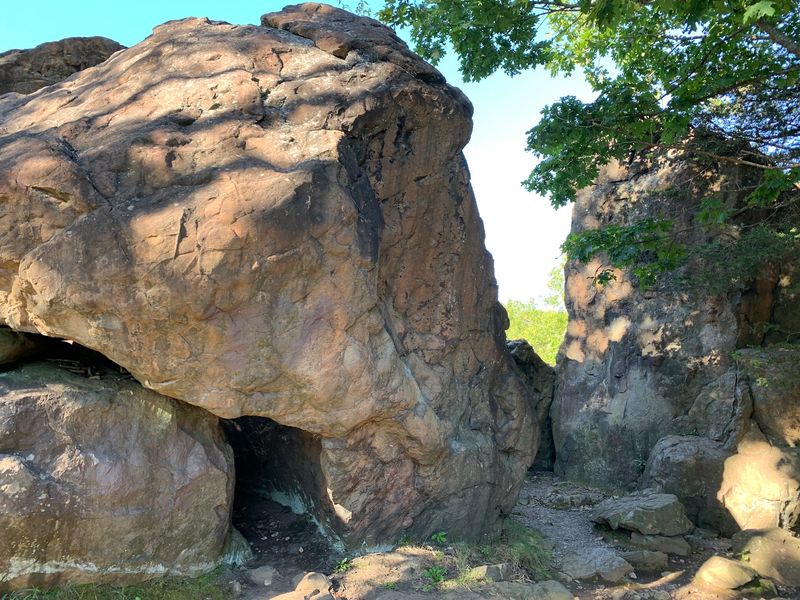
Geologically speaking, a true cave is a naturally formed hollow space within the earth, typically carved by water moving through soluble rock over thousands of years. By that definition, Judges Cave does not qualify.
The formation is more accurately described as a boulder cave or rock shelter, terms that refer to spaces created when large rocks split apart or stack unevenly, leaving gaps that offer protection from the elements.
The label of “cave” stuck to this particular site because of the way it was used rather than the way it was formed. When two men spent weeks hiding in its crevices during the 17th century, the dramatic quality of that event gave the rocks a name that felt fitting at the time and simply never changed.
Across Connecticut and the broader New England region, many similar rock formations carry the cave label even when they lack the geological features that technically define one.
Visitors who arrive expecting a dark underground chamber may need a moment to recalibrate their expectations, but most find the actual formation just as interesting.
The boulders are massive, the spaces between them are genuinely enclosed in places, and the rough texture of the diabase rock gives the whole area a raw, unpolished quality that no engineered attraction could replicate.
6. A Short Walk Leads Straight To The Rocks
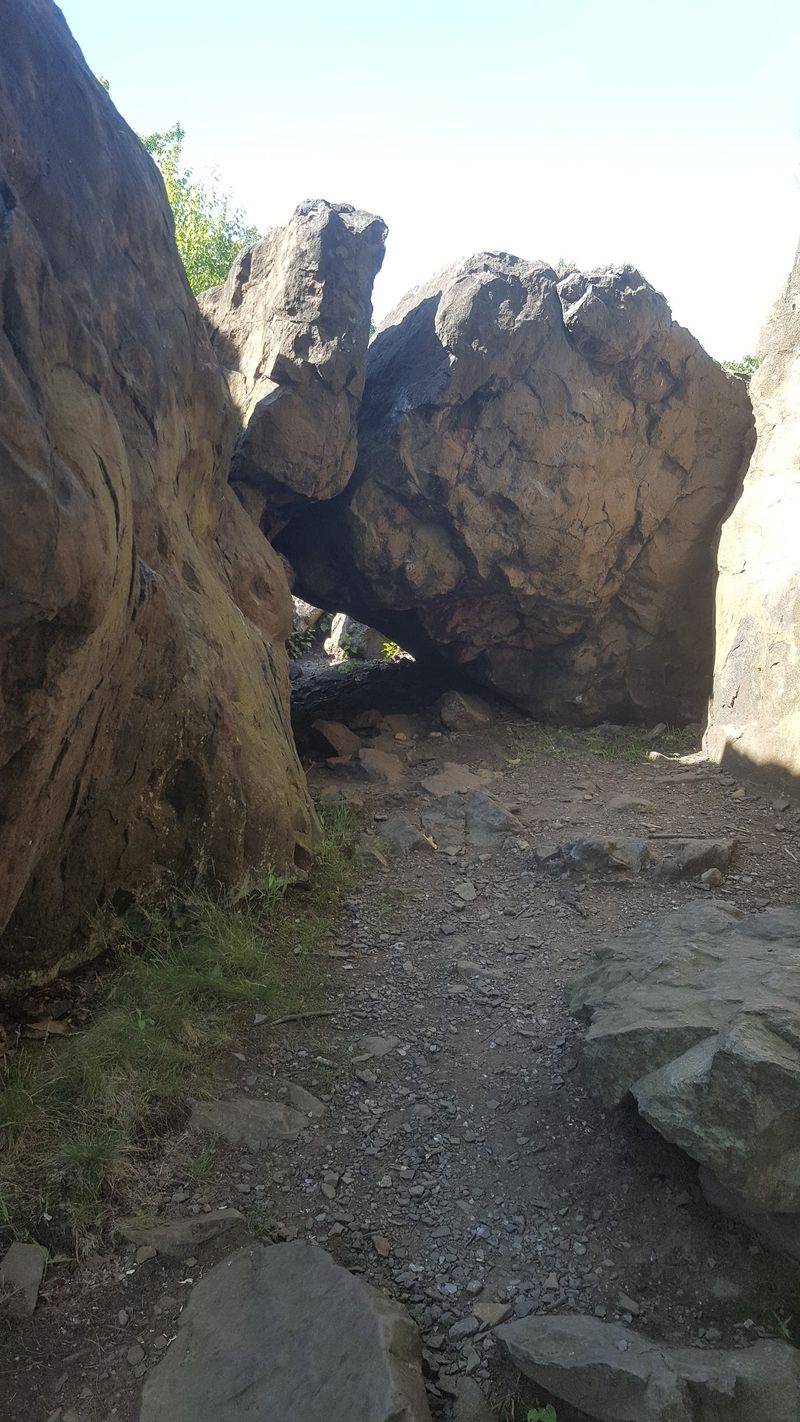
Getting to Judges Cave does not require a strenuous all-day expedition, which makes it accessible to a wide range of visitors. The primary trail leading to the site is the Regicides Trail, marked with blue blazes and running along the length of the ridge through West Rock Ridge State Park.
For those who want a more contained outing, a loop trail from the South Overlook covers roughly 1.8 miles and can take around 51 minutes at a moderate pace.
Another option for reaching the cave is the Westville Feeder Trail, a 0.7-mile connector path that links the Westville neighborhood of New Haven to the Regicides Trail near the boulder formation.
The trails throughout the park tend to be rocky and uneven in places, so sturdy footwear with good grip is a practical choice rather than an optional one.
West Rock Ridge State Park’s main entrance is located at 1080 Wintergreen Avenue in Hamden, 06514.
The park road leading toward the South Overlook and Judges Cave is typically open to vehicles from Memorial Day weekend through the last weekend in October, running from 8 a.m. to 6 p.m. daily.
Year-round walk-in trail access is available from 8 a.m. until sunset for those visiting outside the seasonal vehicle window.
7. Wide Ridge Views Add More To The Visit
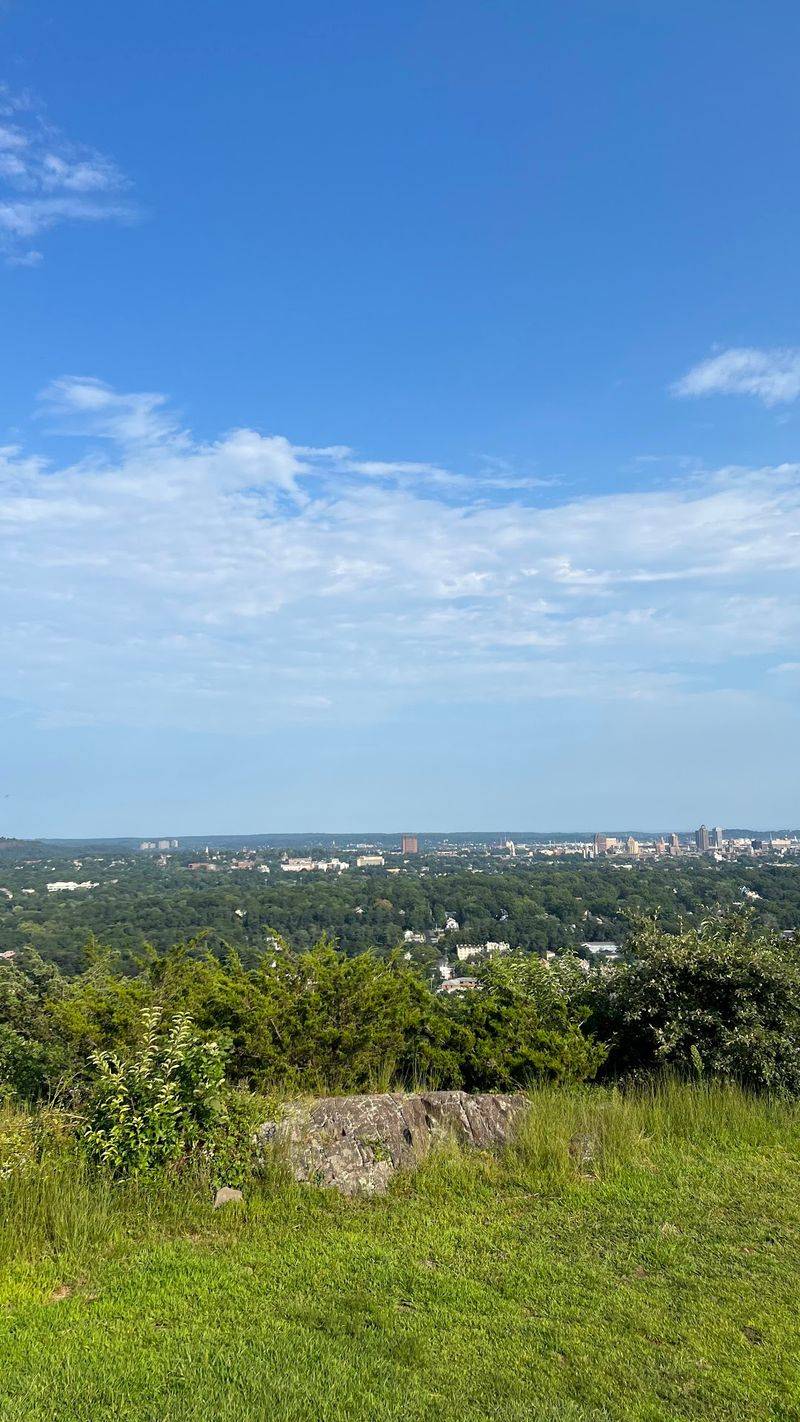
A visit to Judges Cave pairs naturally with the sweeping views available from the ridge above it.
The South Overlook, one of the most accessible vantage points in West Rock Ridge State Park, offers a broad visual sweep that takes in the city of New Haven, its harbor, and the open water of Long Island Sound stretching out beyond.
On clear days, East Rock Park and the distinctive rounded profile of Sleeping Giant State Park are also visible from this elevated position.
The views from the ridgeline are said to cover roughly 200 square miles of landscape, a figure that becomes easy to believe once someone is standing at the edge of the cliffs looking out.
Reservoirs and forests fill the western and eastern sides of the ridge, giving the panorama a layered, textured quality that shifts with the light and the season.
Early morning visits tend to offer cleaner air and softer light, while late afternoon can bring dramatic shadows across the traprock face.
The combination of historical intrigue at the cave and genuine natural beauty at the overlook makes West Rock Ridge a more complete outing than either element alone would provide. Bringing a pair of binoculars can make the distant landmarks even more rewarding to pick out from the ridge.
8. Old History And Strange Geology Meet Here
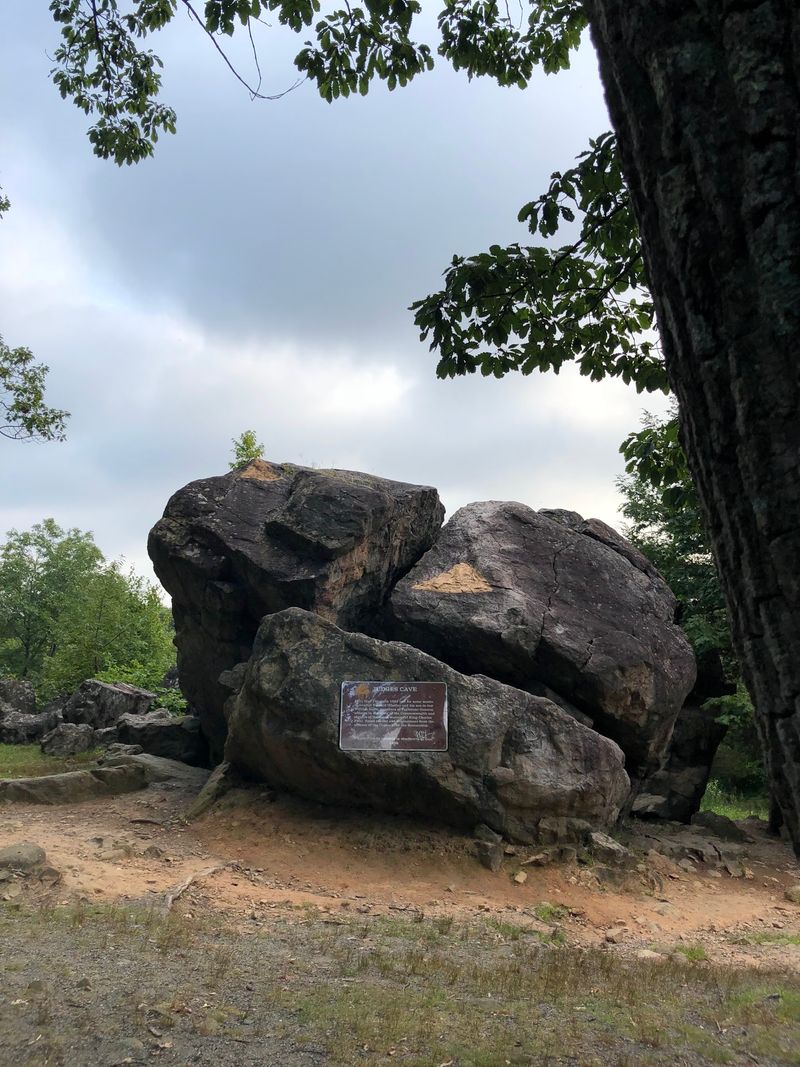
Geology stretches the story of Judges Cave far beyond the colonial events that eventually gave the formation its name. West Rock Ridge belongs to a traprock landscape shaped by ancient igneous activity, with diabase forming much of the rugged ridge seen today.
Those rocks trace back to the Jurassic period, putting their origins on a timescale almost impossible to compare with human history.
Visitors can carry that geological story into a longer hike on the blue-blazed Regicides Trail. The route runs for about seven miles through West Rock Ridge State Park and passes Judges Cave near its southern end.
From there, the trail continues along the ridge, where rocky footing and elevated viewpoints reveal more of the park’s distinctive terrain.
That combination makes the cave more interesting than a quick historical marker. The fractured boulders show the effects of natural processes, while the name connects the same spot to events from 1661.
You can visit the formation on its own or use it as the beginning of a longer walk through the park. Either way, spending a little extra time around the rocks helps reveal how two very different timelines meet in one remarkably compact place.