This Nebraska Bakery Makes A 17-Layer European Torte That Takes Three Days To Create
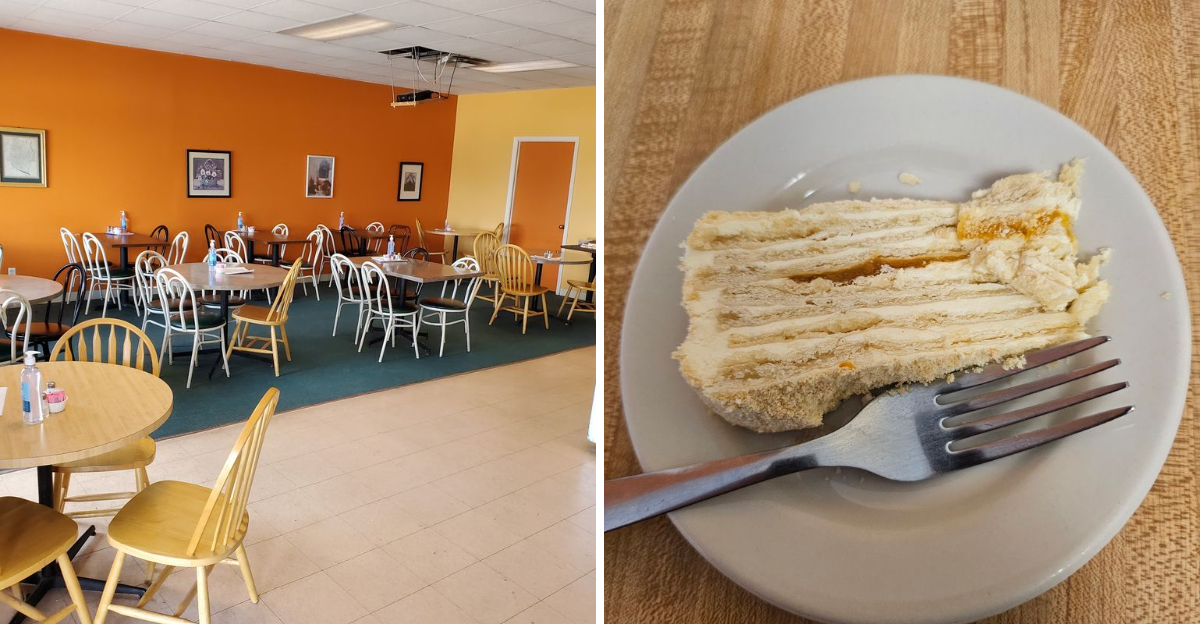
Seventeen layers should tell you immediately that this is not an ordinary bakery cake.
Cut into one and the stripes appear one after another, thin and precise enough to make you wonder who had the patience to build the whole thing.
The answer involves a process measured in days rather than hours.
Nebraska has a family bakery where European baking traditions still demand the kind of time most modern kitchens rarely give them.
The signature torte takes three days to create, with layer after layer coming together before the finished dessert is finally ready to slice.
Now comes your responsibility. Do not inhale it in four bites. Look at those layers first. Try a forkful slowly.
Decide whether three days of work can actually be tasted in one slice, then guard the rest from whoever came with you.
The Bakery Began With A Lithuanian Family Recipe
Long before the Napoleon torte became a nationwide sensation, the whole story started with a woman baking bread at home and sharing it with neighbors.
That simple act of generosity in 1962 created enough demand that a brick building eventually had to be constructed to keep up.
The Lithuanian Bakery officially opened its doors in 1964 at 5217 S. 33rd Avenue in Omaha, Nebraska, bringing traditional recipes from the old country to a new neighborhood.
The founders were Lithuanian immigrants who carried their culinary heritage with them when they settled in South Omaha. Their recipes were not adapted or simplified for American tastes.
They stayed true to the flavors and techniques that had been part of Lithuanian home cooking for generations, and that commitment became the foundation of everything the bakery stands for.
By 1966, the business had grown enough to add a meat market alongside the bakery.
Starting from homemade loaves shared with a few neighbors and growing into a full neighborhood institution, the trajectory of this bakery feels like something out of a storybook.
The fact that it is still going strong more than six decades later says everything about the quality of those original recipes.
The Napoleon Torte Is The Star Of The Show
Few desserts inspire the kind of loyalty that the Napoleonas torte does at Lithuanian Bakery and Kafe in Omaha.
Customers who grew up eating it describe it with the kind of fondness usually reserved for a grandmother’s cooking, and first-timers tend to be surprised by how different it tastes from anything else they have tried.
The torte became a popular item in the early 1970s and has remained the bakery’s best-known specialty ever since.
What makes it stand out is the combination of textures and flavors working together in a way that feels balanced rather than heavy.
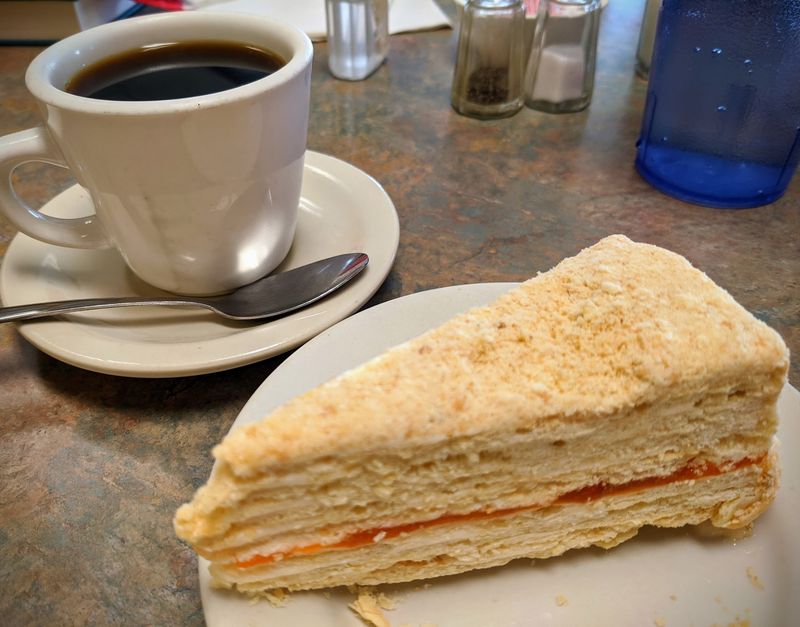
The pastry layers are delicate and slightly crisp, the buttercream filling is rich without being overpowering, and the apricot note near the center adds a gentle tartness that keeps each bite interesting.
The outside is coated in fine crumbs pressed carefully against the surface.
Describing the Napoleonas as simply a layered pastry undersells the experience. Creamy, buttery, flaky, and faintly tangy are all words that come up when people try to explain it.
The torte remains cold for serving, which is part of why it travels well and why the bakery has been able to ship it to customers across the country for decades.
Each Torte Takes About Three Days To Make
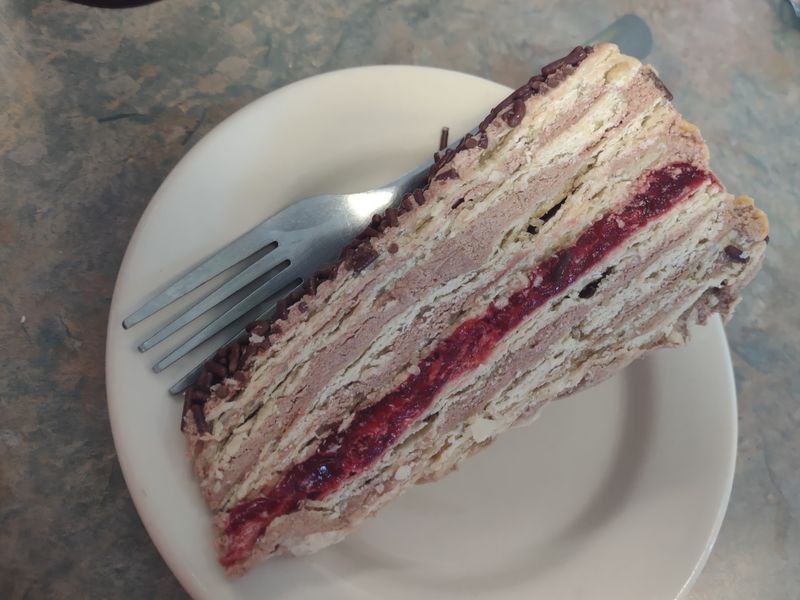
Three days is not a typo. Creating a single Napoleonas torte at Lithuanian Bakery and Kafe is a process that cannot be rushed, and the timeline reflects just how much care goes into each one.
The dough needs time to rest before it can be properly worked, and skipping that step would compromise the texture of every layer that follows.
Each individual pastry layer is rolled out by hand, pricked to prevent uneven puffing, baked until just right, and then cooled before anyone touches it again.
Only after the layers have properly cooled can the assembly process begin, which involves spreading the creamy buttercream filling between each one with careful attention to evenness.
The torte is then left to meld together, allowing the flavors and textures to settle into each other before it is finished and ready to serve.
That resting period at the end is what gives the Napoleonas its characteristic texture. A torte pulled too early would not have the same softness in the layers or the same cohesion in the filling.
The three-day commitment is not a marketing detail. It is a genuine reflection of the work that goes into making the dessert taste the way it does.
There Are 8 Delicate Layers Inside
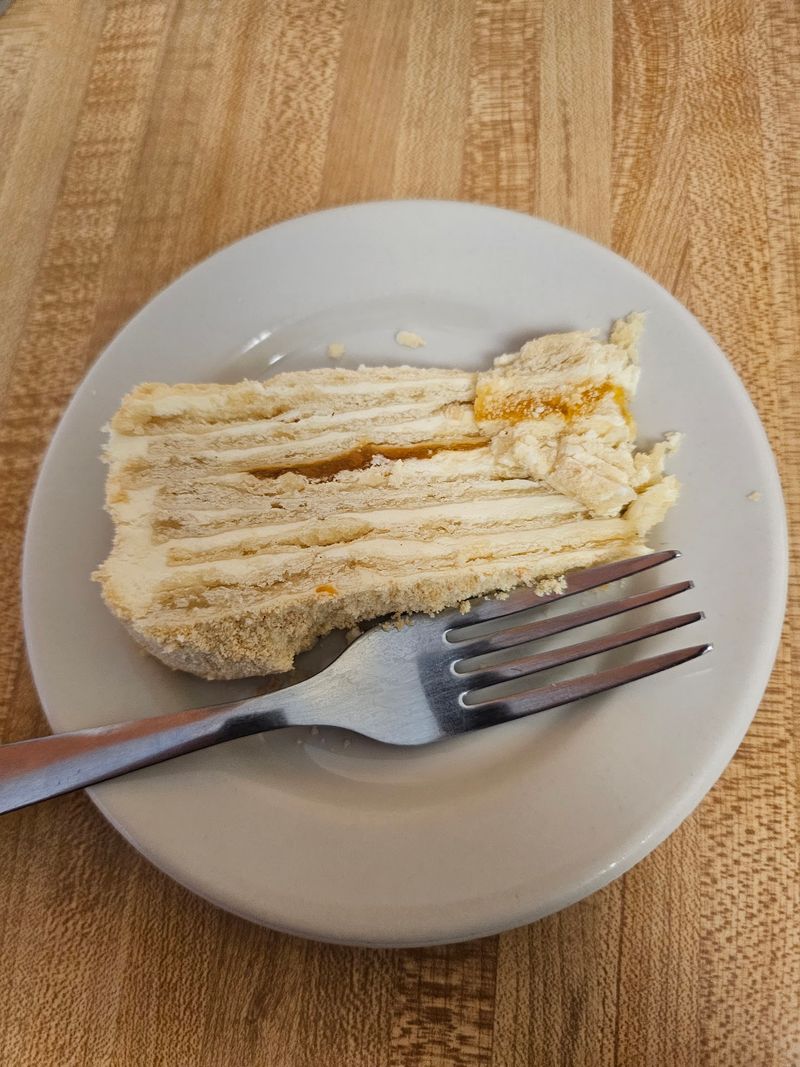
Cutting into a Napoleonas torte for the first time is a small revelation.
The cross-section reveals eight distinct pastry wafer layers, each one paper-thin and separated by smooth, creamy filling that holds everything together in a neat, satisfying stack.
The structure looks almost architectural from the side, and it gives the dessert a visual appeal that matches its flavor.
The filling used between the layers is a vanilla and lemon buttercream, which strikes a balance between richness and brightness.
Lemon keeps the buttercream from feeling too dense, and the vanilla rounds out the flavor with a familiar warmth.
Near the center of the torte, a thin layer of apricot adds a fruity tartness that breaks up the creaminess and gives the whole dessert a more complex flavor profile.
Getting the layers even and consistent is one of the more demanding parts of the process.
Too much filling in one spot and the torte loses its balance. Too little and the layers do not hold together properly after resting.
The precision required to build eight layers correctly, with the right amount of filling at each stage, is a big part of why this dessert takes a full three days from start to finish.
The Bakery Is Famous For Much More Than Dessert
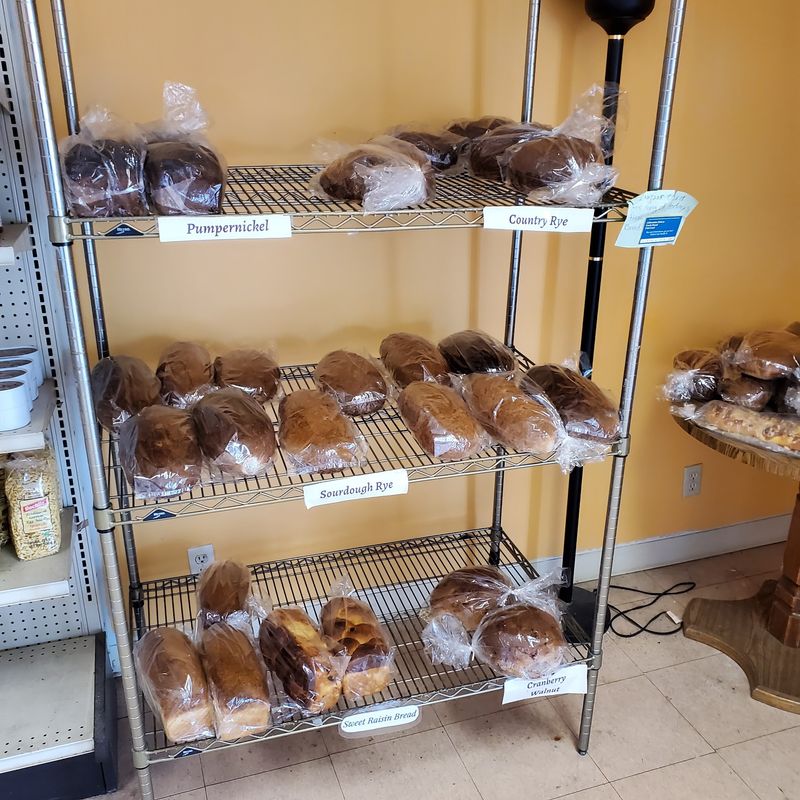
Bread has been central to this bakery from the very beginning, and the sourdough rye is the kind of loaf that people drive across town to pick up.
Made with ground caraway and a touch of onion, it carries a deep, slightly tangy flavor that holds up well whether eaten plain or used as the base for a sandwich.
Regular customers describe it as unlike anything available at a standard grocery store.
Pumpernickel is another staple, made with high-fiber pumpernickel rye flour and baked into a dense, hearty loaf.
Beyond bread, the bakery produces a range of baked goods that reflect traditional Lithuanian and European recipes.
Bagels, tarts, cottage cheesecakes, fruit rafts, and bacon buns known as Lasineiciai round out a menu that covers a lot of ground without feeling unfocused.
Strudels and kolaches also appear regularly, giving customers plenty of options in the pastry category beyond the famous torte.
The variety on display tends to shift slightly depending on the day, which means repeat visits often turn up something worth trying that was not available before.
Its South Omaha Roots Run Deep
South Omaha has a long history as a landing spot for immigrant communities, and the Lithuanian community that settled there in the early twentieth century left a lasting mark on the neighborhood.
Many Lithuanian immigrants found work in the area’s meatpacking plants, and the community built institutions around that shared experience, including churches, social clubs, and eventually a bakery that would outlast most of them.
The original Lithuanian Bakery sits at 5217 S. 33rd Avenue in Omaha, Nebraska, the same address where the brick building was constructed to meet the demand that started with homemade bread shared among neighbors.
The location is not flashy or prominently marked, but it has been a consistent presence in the neighborhood for more than sixty years, which carries its own kind of weight.
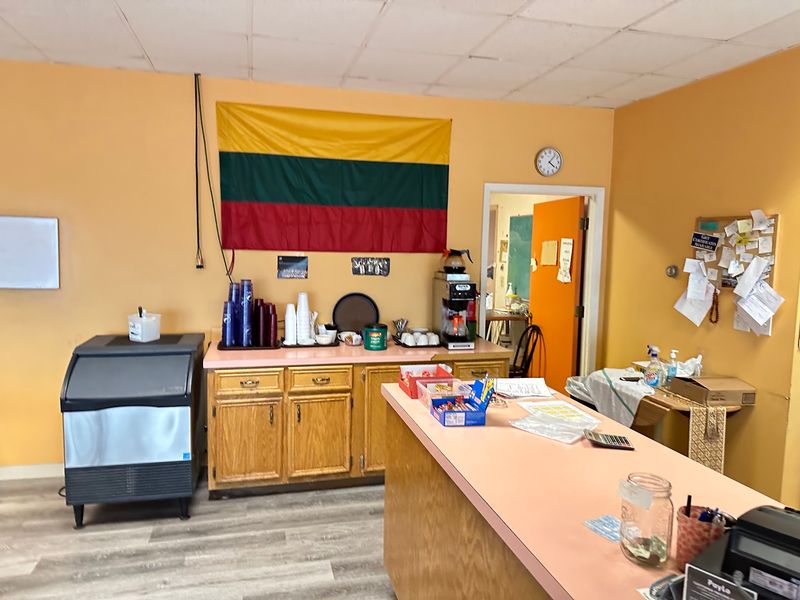
Walking into the original location still feels like stepping into a different era, in the best possible way.
The neighborhood around it has changed over the decades, but the bakery has remained a fixed point of reference for longtime residents and a discovery for newer ones.
For a community shaped by immigration and hard work, having a place like this still operating feels meaningful in a way that goes beyond the bread and pastries.
There Is A Second Omaha Location With A Cafe
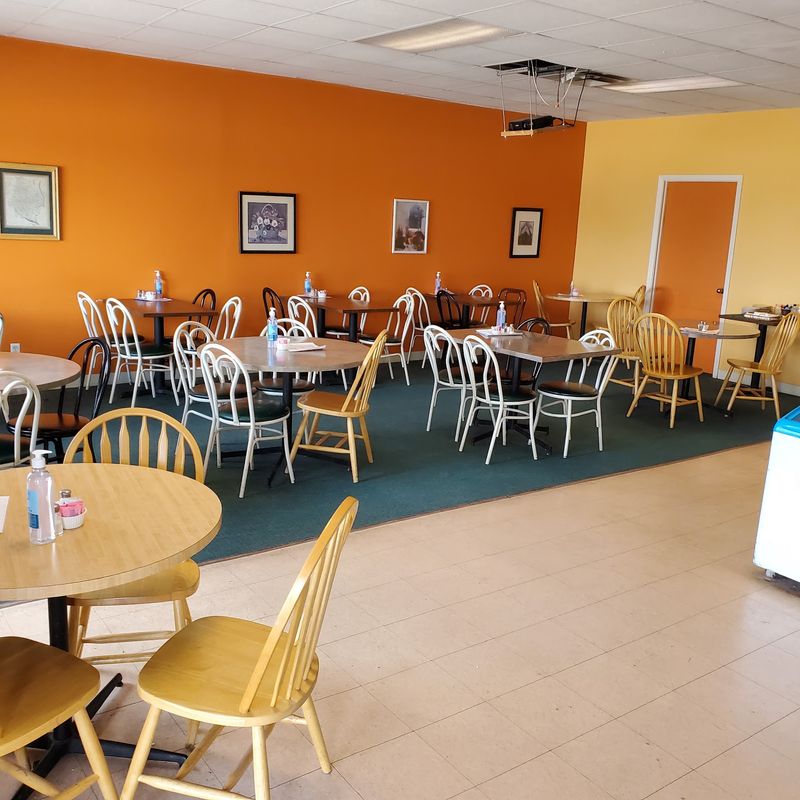
Sitting down for lunch is not something the original South Omaha location was designed for, which is part of why the Pacific Street location fills a different role.
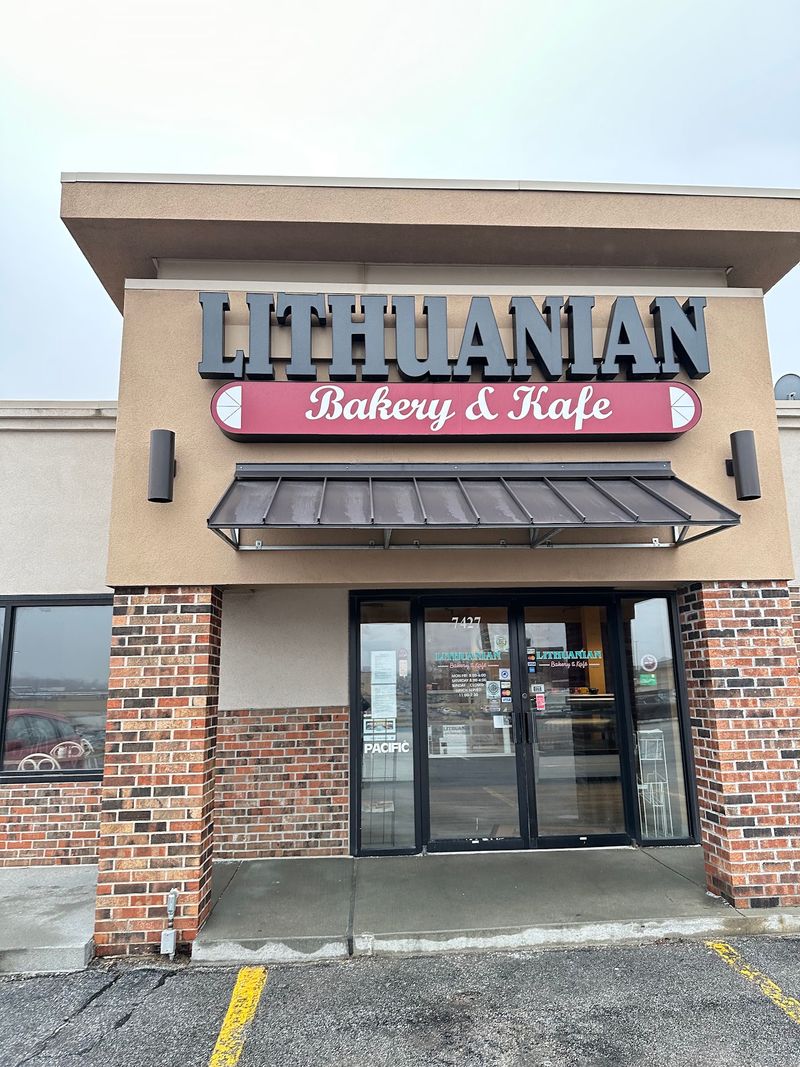
Lithuanian Bakery and Kafe at 7427 Pacific Street in Omaha, Nebraska operates as a full cafe in addition to a bakery, giving customers a place to sit, eat, and take their time with a meal.
The cafe menu leans on Old Country recipes and includes a rotating selection of soups, sandwiches, and specialty dishes.
Sausages like Kielbasa, Bratwurst, and Knackwurst appear alongside more familiar options like Reuben sandwiches and veggie sandwiches.
Homemade soups and sides like potato salad round out a lunch menu that feels genuinely homemade rather than assembled from a corporate playbook.
The space itself is modest in size, with a small seating area that can get busy around lunchtime on weekdays.
The lighting in the retail area tends toward dim, but the overall atmosphere is warm and casual rather than polished.
Breads and tortes are available for purchase to take home, and the display case typically includes pastries, strudels, and other baked goods.
The cafe is open Tuesday through Saturday, with hours running from 8 AM to 6 PM on weekdays and 8 AM to 4 PM on Saturdays.
The Cafe Menu Goes Beyond Pastries
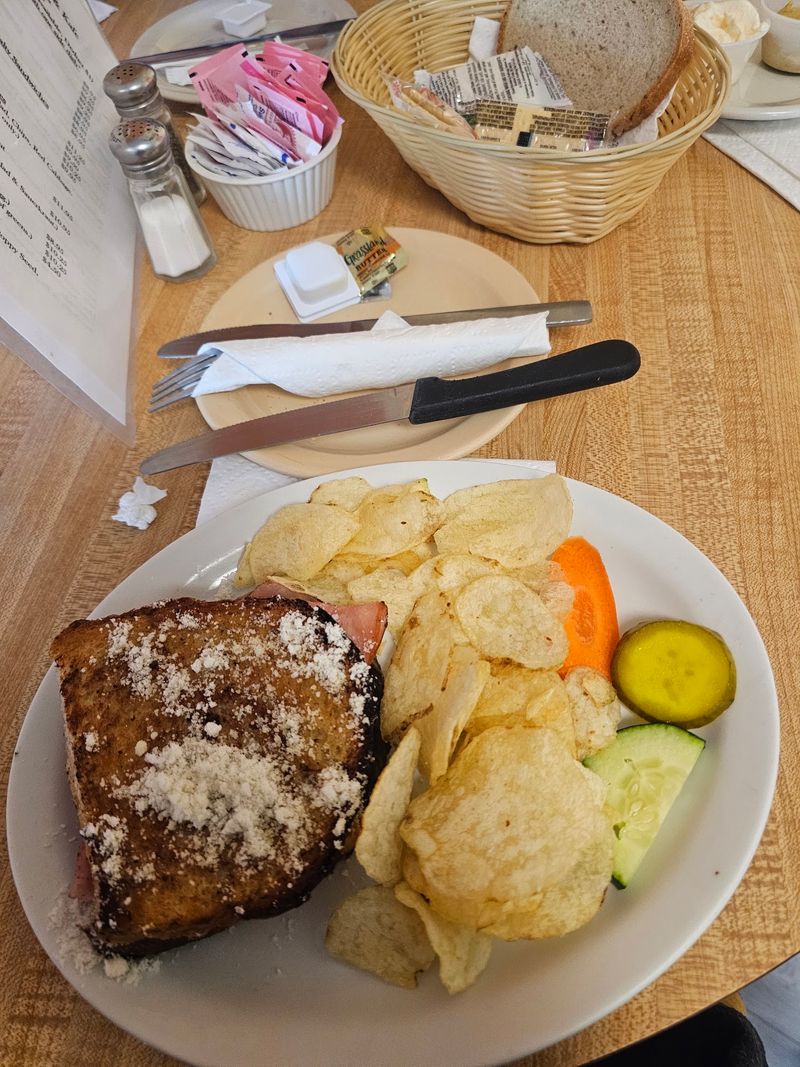
The cafe menu at Lithuanian Bakery and Kafe runs deeper than most people expect, covering soups, sandwiches, sausages, and sides that reflect the same Old Country sensibility as the baked goods.
Dishes like German goulash with potato salad or chicken and wild rice soup bring a comfort-food warmth that fits the setting perfectly.
Sandwiches range from hearty Reuben options on sourdough rye to more unusual choices like Braunschweiger or a double peanut butter and jelly.
Sausages served with sauerkraut or red cabbage offer a straightforward, filling alternative for anyone not in the mood for a sandwich.
The menu is not extensive, but what it covers, it covers well, and the daily rotation means there is usually something slightly different to try on each visit.
Prices tend to run lower than comparable sandwich shops in the area, which adds practical appeal to the culinary one.
The food feels genuinely homemade in the way that matters most, where the flavors are consistent and the portions are satisfying without being excessive.
Kolaches, Strudels, And Other European Pastries
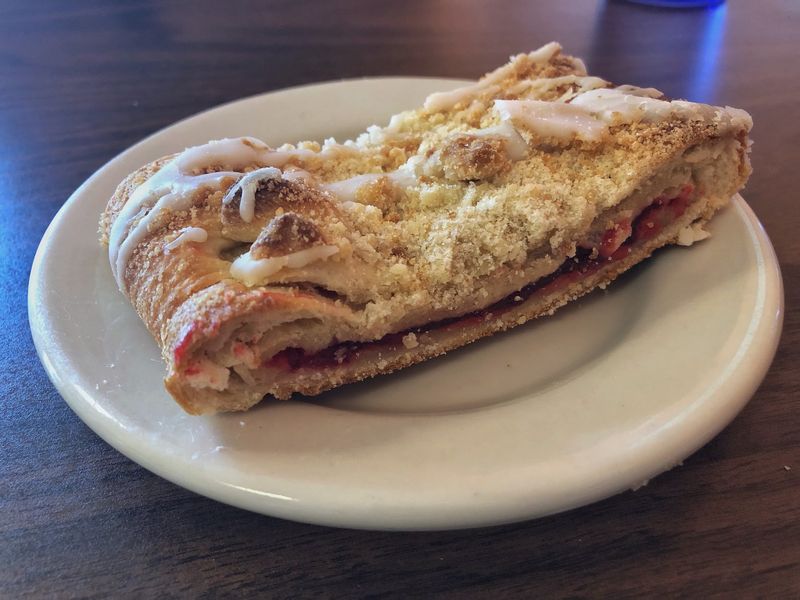
Beyond the Napoleonas torte, the pastry case at Lithuanian Bakery and Kafe holds a rotating selection of European baked goods that deserve their own attention.
Kolaches filled with fruit, strudels layered with apple or other fillings, cherry turnovers with flaky pastry, and fruit rafts are among the items that regulars return for between torte purchases.
The variety changes somewhat from day to day, which keeps the selection feeling fresh rather than static.
Apple dumplings and raspberry turnovers have earned particular praise from customers who make a point of picking them up whenever they are available.
The pastry in these items tends toward flaky and buttery, with generous fillings that do not disappoint when you bite through the outer crust.
Cottage cheesecakes and tarts round out the sweeter end of the display case with flavors that feel rooted in central and eastern European baking traditions.
For anyone new to Lithuanian or Eastern European pastries, the bakery offers a low-pressure way to explore that culinary tradition without needing to know exactly what to order.
Asking what is fresh that day is usually a reliable strategy, and the staff tends to know the inventory well enough to point customers toward whatever came out of the oven most recently.
The variety rewards curiosity and repeat visits in equal measure.