9 Eerie Cemeteries In Georgia That Locals Swear Are Too Spooky To Visit Alone
I don’t scare easily, but old cemeteries have a way of testing that. It started with a dare from a friend who swore Georgia hides burial grounds that feel wrong after dark.
I laughed it off until I stood alone at one, watching fog curl around headstones older than my grandparents. The air felt thicker there, like the ground remembered things I didn’t want to know.
A crow called out and I nearly dropped my camera. Since that night I’ve gone looking for more, dragging along anyone brave enough to join me.
Georgia keeps its ghost stories quiet, but the graves speak loud enough once you stand among them. Some places you visit for the view.
These you visit to feel something crawl up your spine.
1. Bonaventure Cemetery, Savannah
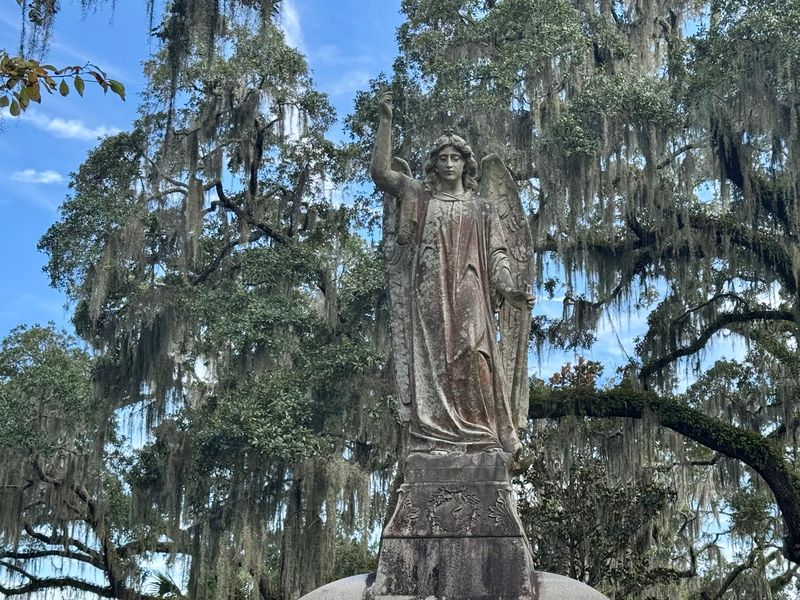
Spanish moss hangs low here like gray curtains nobody bothered to pull back. The effect is instant, and it explains why photographers arrive at sunrise.
Sitting at 330 Bonaventure Rd, Savannah, GA 31404, the grounds have inspired writers, poets, and filmmakers for more than 150 years. Books and movies borrowed this scenery long before social media discovered it.
Marble sculptures are the real showstoppers. Carved figures, draped urns, and detailed portrait statues line the lanes in a style people describe as Southern Gothic.
Walking the paths feels less like a chore and more like a slow museum visit. Live oaks arch overhead, and the moss filters sunlight into pale, shifting patterns on the grass.
Bring comfortable shoes because the property is large and the lanes wind. A printed map helps, since the sections look similar once you are deep inside.
Mornings are quieter and cooler, which matters during humid months in this part of the state. Late afternoon gives warmer light for photos, though shadows stretch fast under the trees.
Guided walking tours run regularly and cover the history behind the sculptures. Guides point out details most visitors stroll right past without noticing.
Respect matters more than anything. Stay on paths, keep voices low, and leave the monuments untouched, because many are fragile and irreplaceable.
Go with a friend if the quiet unsettles you. Half the fun is watching someone else jump at a rustling branch.
2. Colonial Park Cemetery, Savannah
Right in the middle of a busy downtown sits one of the oldest burial grounds in the city. Traffic hums a block away, yet the gates feel like a different century.
Established in the 18th century, the property at 200 Abercorn St, Savannah, GA 31401 predates almost everything around it. The brick wall and iron gate give it the look of an outdoor history book.
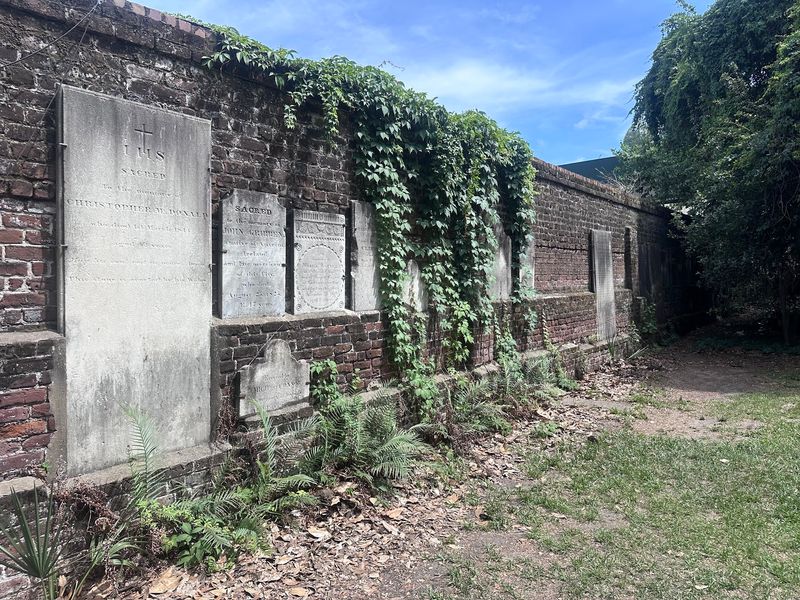
One detail surprises nearly every first-time visitor. City expansion caused many headstones to be moved, and dozens now stand in rows along the eastern wall.
Those relocated markers create an odd, memorable sight. Names and dates line up like framed pictures, no longer matching the ground beneath them.
Plenty of visitors report seeing ghostly figures inside the fence. Some claim they captured images on camera and video, which keeps the stories circulating.
Practical tip: the site is compact and easy to cover in half an hour. That makes it a smart stop between other downtown attractions.
Shade from mature trees helps on warm days, and benches nearby offer a rest. Sidewalks are level, so strollers roll fine here.
Late afternoon brings long shadows across the old stones. Photographers love that hour, and the crowds thin out noticeably.
Read a few of the inscriptions before you leave. Weathered lettering tells you plenty about early life in the area.
3. Oakland Cemetery, Atlanta
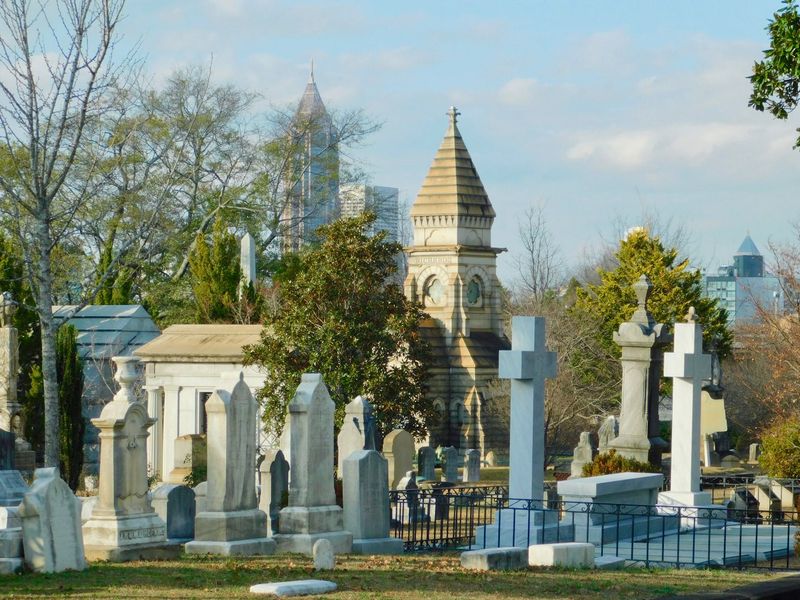
Forty-eight acres of Victorian monuments sit inside a modern skyline, and the contrast is striking. Glass towers rise behind stone obelisks like two eras arguing politely.
Founded in 1850, Oakland is Atlanta’s oldest public cemetery and its third-largest. You will find it at 374 M.L.K.
Jr Dr SE, Atlanta, GA 30312, just east of downtown.
The place carries a reputation as one of the most haunted spots in the region. Uniformed Confederate soldiers have been reported wandering the grounds after hours.
Stranger still are the phantom roll calls. Some visitors claim to hear names read aloud, including their own, which is a hard story to shake.
Numbers here are sobering and fascinating. The cemetery contains around 3,000 unmarked Confederate graves, while Potter’s Field holds approximately 7,500 unmarked burials.
Local legends add more color. Tales describe a Union soldier hanging from a tree and a well-known businessman rising from his own statue.
For visiting, brick walkways make navigation simple, though some sections are uneven. Sturdy shoes beat sandals every time.
Gardens are a genuine highlight, with roses, magnolias, and seasonal blooms tended carefully. Spring turns the whole property into a photographer’s playground.
Guided tours cover architecture, symbolism, and city history. Booking ahead is wise, since popular time slots fill up quickly.
4. Rose Hill Cemetery, Macon
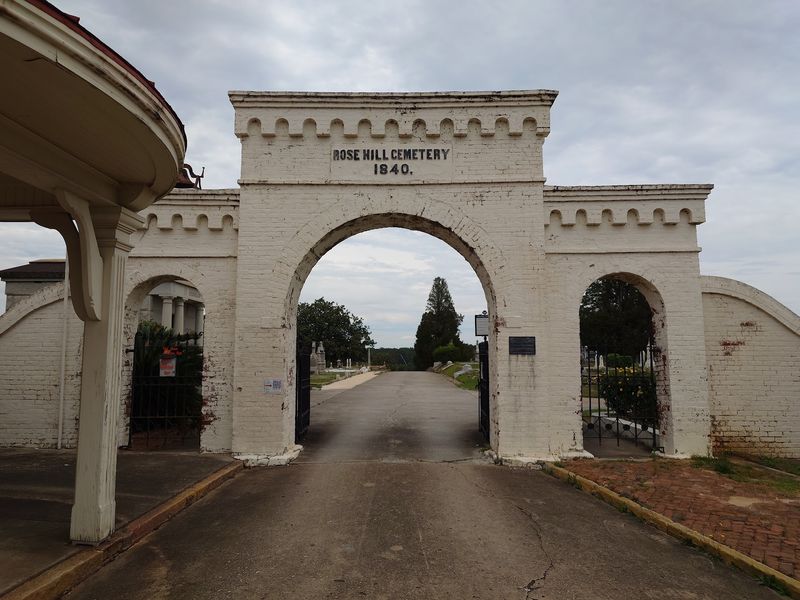
Steep hills and narrow lanes make this one feel like a maze with a view. Drivers quickly learn to take the curves slowly.
Established in 1840, the 50 acre property was designed with a park like layout. Rolling terraces drop toward the water, which is unusual for a burial ground.
Find it along the river at 1071 Riverside Dr, Macon, GA 31201. The setting is green, shaded, and surprisingly peaceful for a place with so many stories.
A serious safety note deserves attention. Many plots contain underground crypts that could collapse, so visitors are warned never to walk directly on them.
Stick to marked paths and roadways. That rule protects you and protects fragile historic structures at the same time.
History runs deep across these slopes. Six hundred soldiers from the 1860s rest here, and their markers cover a large portion of the grounds.
The winding roads challenge larger vehicles. Parking in a wider spot and walking is often the smarter move.
Bring water during warmer months, since the hills add up faster than expected. Shade helps, but the climbs are real.
Music fans have long treated the property as a pilgrimage site. Certain graves here connect directly to the city’s famous rock history.
Morning fog off the river adds atmosphere. Photographers who arrive early usually leave happy.
5. Andersonville National Cemetery, Andersonville
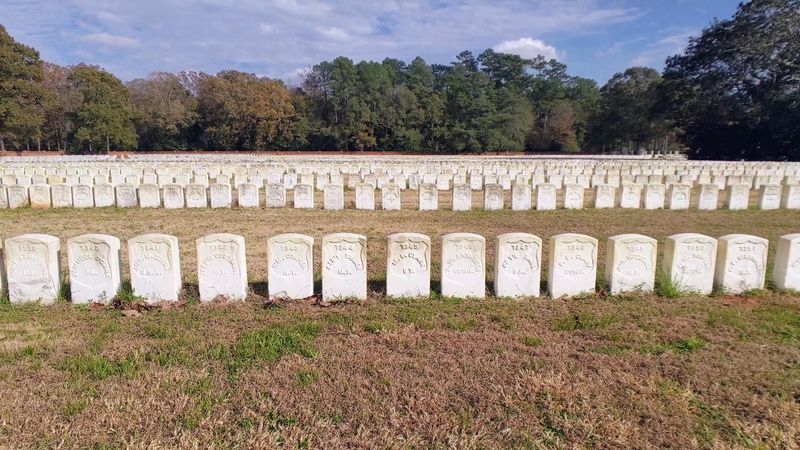
Rows of white marble markers stretch across a wide green lawn in near-perfect lines. The scale hits you before any story does.
Located at Andersonville National Cemetery, Andersonville, GA 31711, the site was established in 1865. Burials connected to Camp Sumter had already begun the previous year.
During Camp Sumter’s fourteen months of operation, 12,920 Union soldiers came to rest in a cemetery outside the prison walls. The close rows and simple markers reflect just how much history this ground holds.
Reports from visitors are unsettling. Some describe faint sounds drifting across the grounds with no visible source.
Others mention a distinct scent that park rangers cannot trace to anything natural. That detail alone keeps the location high on paranormal lists.
Stories name Captain Henry Wirz, the prison superintendent, as a lingering presence said to pace the property. Tales also mention a group known as the Camp Raiders, remembered in local lore for their tough reputation among fellow prisoners.
Setting the folklore aside, the site is a national cemetery and an active memorial. Quiet behavior and respectful photography are expected.
Grounds are flat and well maintained, so walking is easy. Shade is limited, though, so a hat helps.
Read the interpretive signs slowly. Their plain wording lands harder than any ghost story.
6. Myrtle Hill Cemetery, Rome
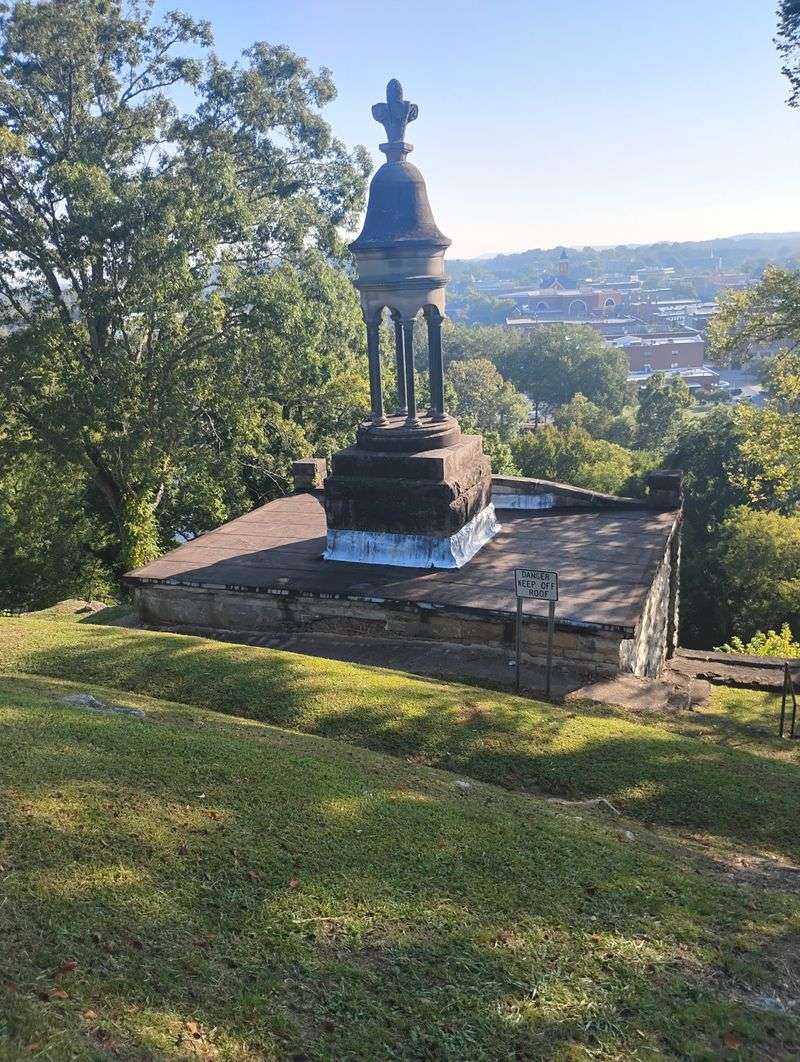
Myrtle Hill Cemetery rises above downtown Rome on one of the city’s seven hills. Its elevated setting and historic monuments create a distinctive first impression.
Established in 1857, the cemetery is listed on the National Register of Historic Places. It serves as the final resting place of many people who shaped Rome’s history.
The grounds contain the graves of more than 20,000 individuals. Among them are community leaders, military veterans, politicians, and prominent Georgia residents.
Six terraced levels climb the hillside near 20 Myrtle St SW, Rome, GA 30161. The carefully arranged terraces keep the burial grounds above the surrounding floodplain.
One of the best-known people buried here is Ellen Axson Wilson, the first wife of President Woodrow Wilson. Other notable graves belong to members of Congress and generations of Rome families.
Exploring the cemetery requires a fair amount of walking. Stone steps and steep drives connect the different levels, so shoes with good grip are helpful.
The upper terraces offer panoramic views of downtown Rome and the Etowah Valley. Visitors can also see the surrounding ridgelines and Appalachian foothills.
Mature trees provide pockets of shade during Georgia’s warmer months. Bringing water is sensible because the steep climb can feel more demanding than expected.
A daylight visit makes navigating the terraces and reading the monuments easier. Visitors should remain on established paths and treat every gravesite with care.
7. Linwood Cemetery, Columbus
One monument here looks unmistakably like a circus tent, and the reason behind it is remarkable. It marks the burial site of performers from an early 1900s circus train wreck.
That single stone turns a quiet walk into a genuine history lesson. Visitors often circle it twice, trying to picture the traveling show it represents.
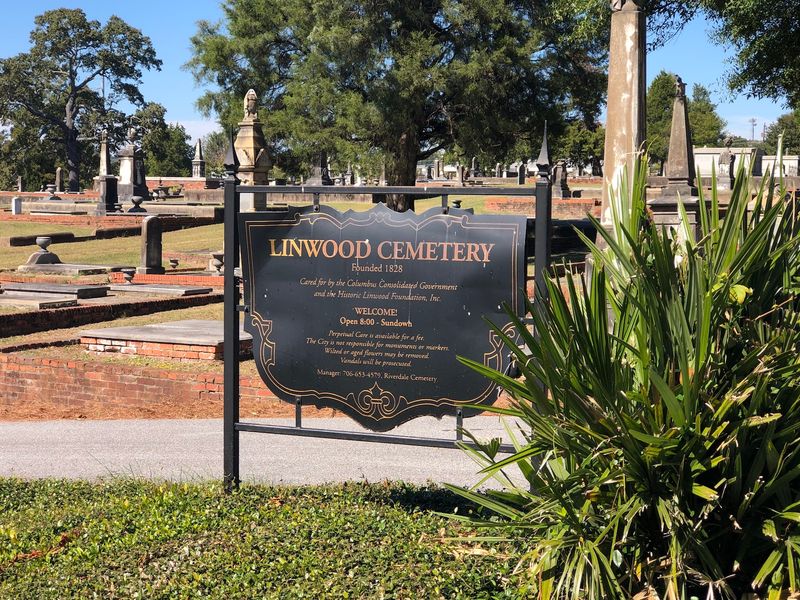
Established in 1828, this was the first cemetery in the city. The address is 721 Linwood Blvd, Columbus, GA 31901, a short drive from the riverfront district.
Odd experiences get reported here often. Some visitors describe feeling confused or turned around soon after entering the gates.
Paranormal investigators claim to have captured orbs and shadowy shapes on film. A few reported unexplained scratches and cuts during overnight visits.
Strange sounds round out the list of accounts. None of it is proven, but the reports keep coming.
For a normal daytime visit, the terrain is rolling with some uneven ground. Watch your footing near older sections.
Volunteer groups work on preservation and offer occasional tours. Those walks explain the symbolism carved into the older markers.
Give yourself an hour minimum. The circus monument alone is worth the trip.
8. Oconee Hill Cemetery, Athens
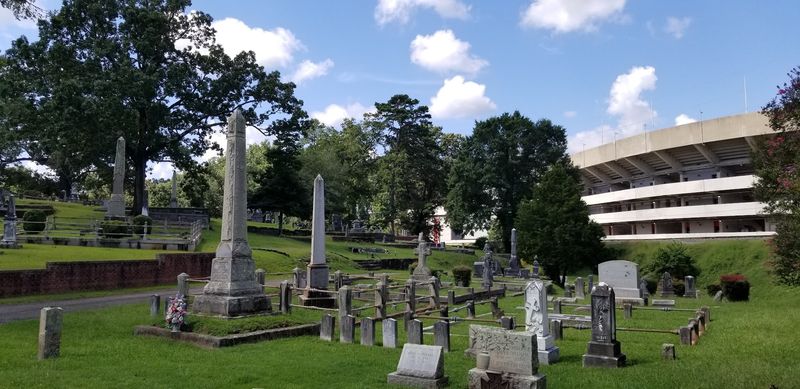
Few burial grounds sit this close to a major college campus. Football crowds roar nearby, yet the grounds stay strangely still.
Located at 297 Cemetery St, Athens, GA 30605, the property borders the University of Georgia. A river runs along one edge, adding mist and moving shadows.
Legends here are wonderfully specific. One tells of a farmer who drove his carriage off a bridge, and his spectral carriage supposedly reappears during full moons.
Another account is even odder. A misty shape reportedly transforms into a long-horned goat before diving into the river.
Orbs and spook lights get mentioned frequently. Some visitors claim to see them with the naked eye and later find them in photographs.
Being watched is the most common complaint. People describe footsteps behind them and apparitions dressed in clothing from different centuries.
A local tale adds an uncomfortable wrinkle. During transfers from an older burial ground, only headstones were sometimes moved, leaving remains behind.
Hills and stairs mean sturdy footwear is smart. The river side can be damp and slick after rain.
Visit during posted daylight hours only. Rules are enforced, and the grounds deserve the courtesy anyway.
9. Magnolia Cemetery, Augusta
Wylly Barron’s sealed granite mausoleum stands among Magnolia Cemetery’s best known landmarks. Its unusual appearance has inspired a local legend that continues to intrigue visitors.
Barron was an Augusta gambler with a strong interest in how his final resting place would look. In 1851, he had the granite mausoleum built more than two decades before it would be needed.
By 1875, Barron’s fortune had changed, and a traditional coffin was no longer part of the plan. His body was placed inside the mausoleum, the keyhole was sealed, and the key was set aside for good.
Magnolia Cemetery is among Georgia’s oldest historic burial grounds. Officially established in 1818, it is located at 702 3rd St, Augusta, GA 30901.
The cemetery is also the resting place of Charles Dawson Tilley, a name tied to Augusta’s colorful nineteenth century history near Sand Bar Ferry.
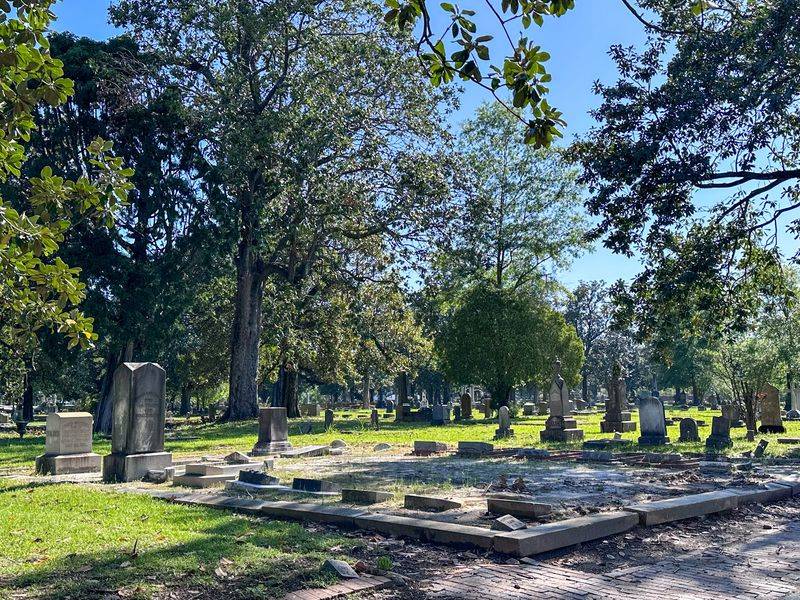
Some brick walkways have become uneven as tree roots have shifted them over time. Their aged appearance adds character, but visitors should watch their footing.
Walking carefully is especially important around older sections of the cemetery. Staying on established paths also helps protect the monuments and gravesites.
Magnolias and mature oaks provide welcome shade during Augusta’s warm summers. Filtered light through the branches creates an atmospheric setting for respectful photography.
The Barron story remains one of the cemetery’s most memorable pieces of local folklore. Visitors can learn more through Augusta’s official historical information and any guided tours available during their visit.