The Strange History Behind This Forgotten Connecticut Coastal Fort
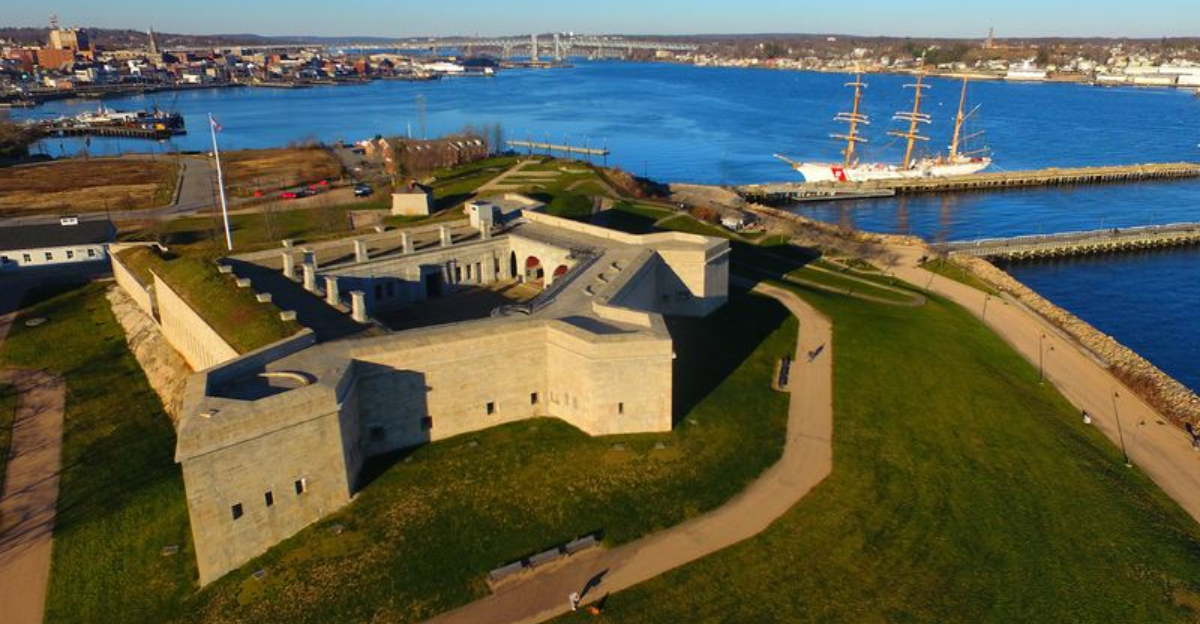
The word “forgotten” fits this place a little too well, because the waterfront looks peaceful enough to hide a seriously complicated past.
What stands here today is only one chapter in a much longer military story. The site changed roles repeatedly, survived different eras of defense, and eventually became something visitors could explore rather than avoid.
That layered history gives this Connecticut coastal fort a stranger backstory than its quiet harbor setting first suggests.
Walk the ramparts and the views may distract you for a minute. Then you remember how many different people once used this ground for very different reasons.
The fun is in peeling back those layers without knowing the whole story upfront. One detail leads to another, and suddenly the stone walls feel less decorative.
For a place that now looks calm beside the water, its past was anything but simple.
That contrast is exactly what makes the history so hard to forget.
1. The First Fort Was Destroyed During A British Attack
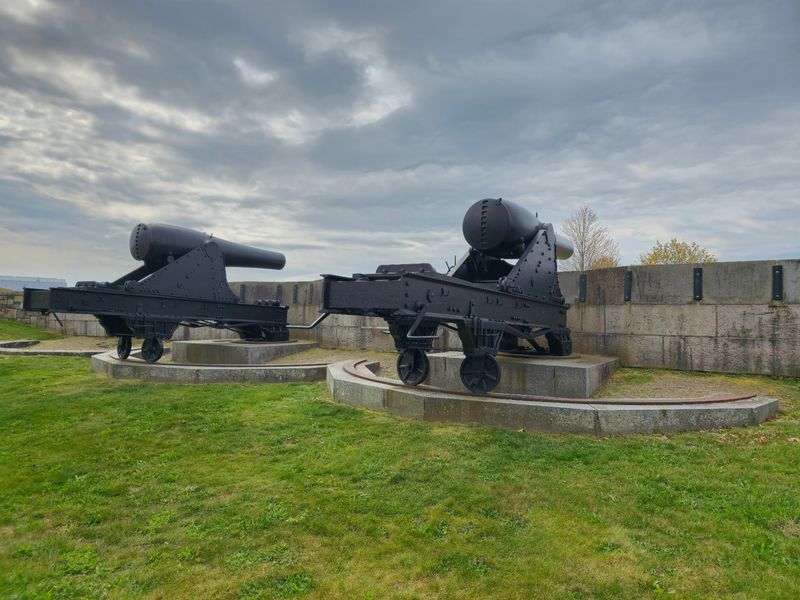
A fort built to face enemy ships discovered its greatest weakness when the attack came from behind. That twist is what makes Fort Trumbull’s Revolutionary War story so striking, especially when you look across the Thames River and realize how exposed the position could become.
The first fort was constructed in 1777 to protect New London Harbor and was named for Governor Jonathan Trumbull. Its defenses were primarily designed with threats from the water in mind.
Then came September 6, 1781. Benedict Arnold returned to his home state leading British forces in a major raid on New London and Groton.
New London was burned during the assault, while fighting also erupted across the river at Fort Griswold.
Fort Trumbull could not stop an attack approaching from the landward side. Its defenders withdrew, and British forces gained control of the position as the raid unfolded.
The structure visitors explore today is not that original Revolutionary-era fort. Later rebuilding transformed the site, while the museum preserves the earlier story and explains how the harbor defenses evolved.
What really brings the history together is the geography. Looking across the narrow Thames toward Groton makes the vulnerability surprisingly easy to understand.
The landscape itself becomes part of the exhibit, showing exactly why a fort designed around the harbor could still be outmaneuvered from shore.
2. The Granite Fort Took Shape In The 1800s
Rebuilding took a few tries. The site was repaired around 1808, then a so-called Second System fort went up in 1812 to meet new military needs.
That version wore out and came down in 1839.
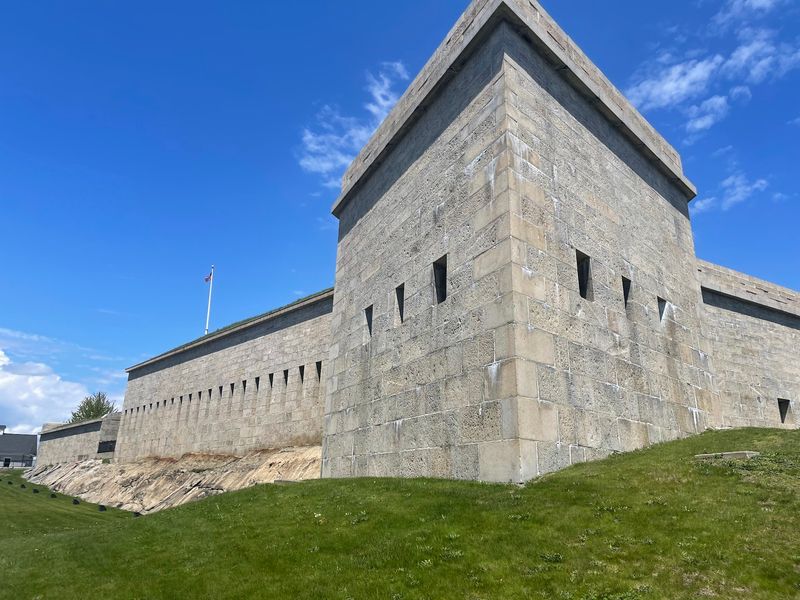
What replaced it is the structure visitors see today, built between 1839 and 1852 as part of the nationwide Third System of coastal fortifications. Five sides, four bastions, and walls of granite quarried nearby at Millstone Point.
Army engineer George Washington Cullum supervised the work, and he later became superintendent of the United States Military Academy at West Point. The stonework reflects that level of care, with tight joints and crisp edges that have held up through more than 170 New England winters.
During the Civil War, the fort worked as an organizational hub for Union troops and served as headquarters for the 14th U.S. Infantry Regiment.
Men were recruited here, trained here, and then shipped out.
One detail surprises almost everyone who takes the tour: no battle was ever fought at this granite fort. Its value came from deterrence and organization rather than combat.
If you enjoy architecture as much as history, the masonry alone justifies the trip, and the museum explains each rebuilding phase across its multiple floors.
3. Egyptian Revival Details Give The Fort An Unusual Look
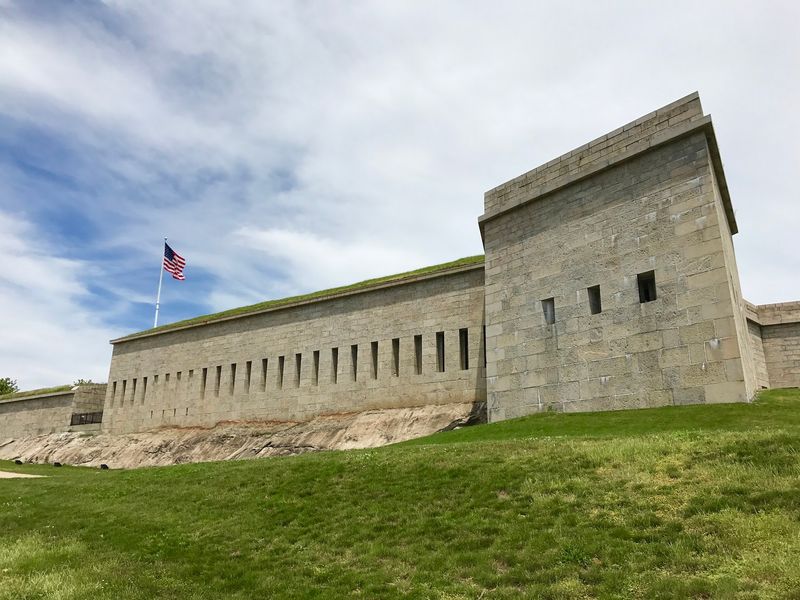
Here is the part that catches people off guard. Walk toward the main entrance and the granite starts looking less like a military wall and more like the doorway of an ancient temple.
Fort Trumbull was designed in the Egyptian Revival style, a fashion that swept through American architecture in the first half of the 19th century.
Tapered walls, severe structural lines, narrow passages, and heavy stone all borrow from the temples and tombs along the Nile, with the Temple of Luxor often cited as an influence.
Among the Third System forts scattered along the American coast, that choice makes this one genuinely unusual. Most were built for pure function.
This one got a costume.
The effect is quietly dramatic rather than flashy. On a bright afternoon the granite reads almost silver, and the shadows inside the entryway feel much cooler than the open grass outside.
Worth doing: slow down at the entrance instead of walking straight through. Look for the motifs above and beside the opening, then compare them to photos of Egyptian temple gateways in the museum displays.
Kids tend to find it more interesting than the cannons, because a fort that looks like a tomb is a strange idea, and strange ideas stick.
4. Huge Ramparts Once Protected The Harbor
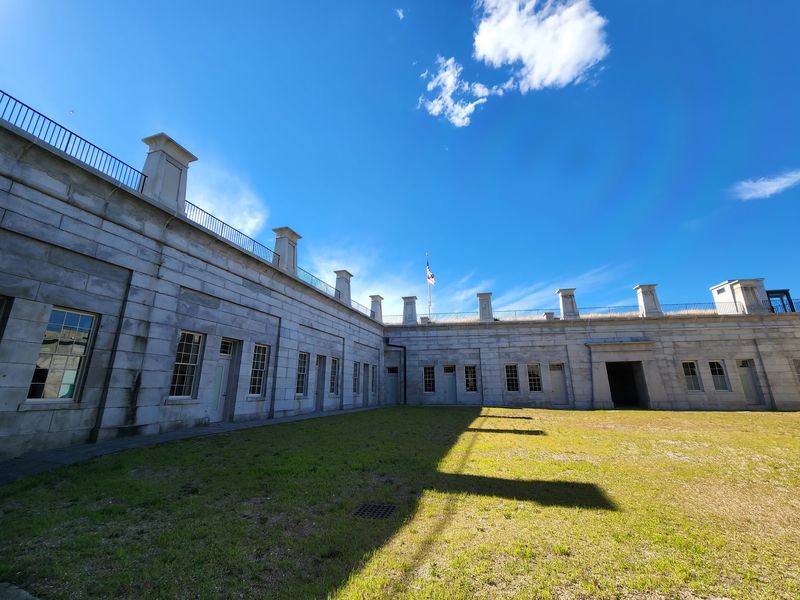
Scale is the thing you notice first from the rampart level. The thick granite walls and elevated position make it easy to understand why this stretch of shoreline mattered for protecting New London Harbor.
The harbor’s deep water and access to Long Island Sound gave the area strategic importance for generations. Fort Trumbull’s design reflects that role, with massive stonework, carefully planned sight lines, and an elevated layout overlooking the Thames River.
Visitors today can walk along the upper ramparts, where markers and displays explain how the fort was arranged and how different sections worked together. Looking downriver from above makes the geography much easier to understand than a diagram ever could.
You can also see how the fort’s builders used the shape of the shoreline to their advantage. From the top, the relationship between the river, harbor, and surrounding land becomes surprisingly clear.
Reaching the upper level involves a circular stairwell, so shoes with decent grip are helpful. Guests who prefer to stay on level ground can still explore the museum and paved paths around the fort.
Picnic tables sit on the grass nearby, offering an easy place to rest while taking in the water views.
5. Coast Guard Cadets Once Trained Here
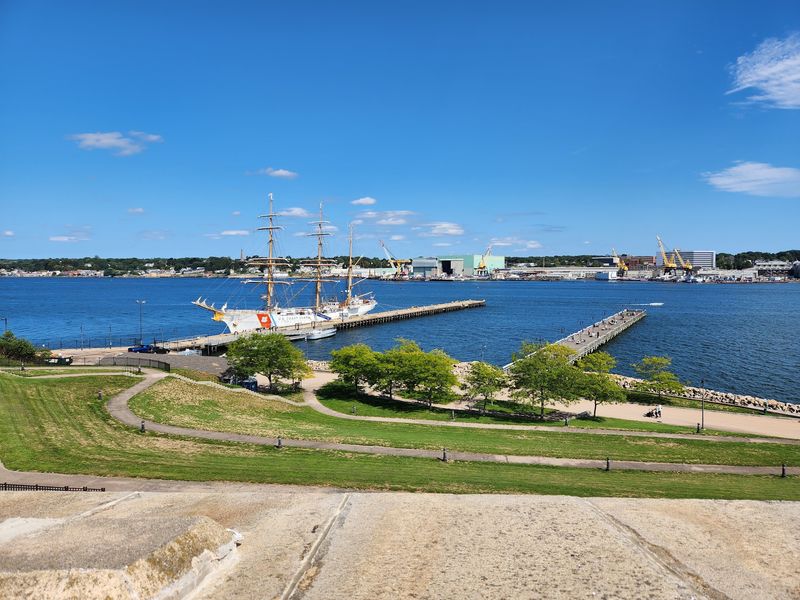
By the early 1900s, the age of masonry coastal forts was ending. Rather than sit empty, Fort Trumbull found an entirely new purpose.
In 1910 the site was turned over to the Revenue Cutter Service, which established the Revenue Cutter Academy on the grounds. Five years later, in 1915, the school was renamed the United States Coast Guard Academy.
Fort Trumbull served as the academy’s original home until 1932, when training moved to a larger campus about two miles up the Thames River.
That campus is still the Coast Guard Academy today, which means every cadet who has graduated since traces the institution’s roots back to this point of land.
The connection has a pleasant modern echo. From the park’s shoreline and pier, visitors sometimes catch the training barque Eagle moving on the river, and the tall ship against the water is a genuinely memorable sight.
If maritime service interests you, the museum’s exhibits on this chapter are worth lingering over. Admission to the museum has been listed at a modest fee, with state residents enjoying free park entry, so budget a little time indoors.
Between the academy story and the harbor traffic outside, the fort’s second life feels surprisingly present.
6. Sonar Research Became Part Of The Fort’s Later Story
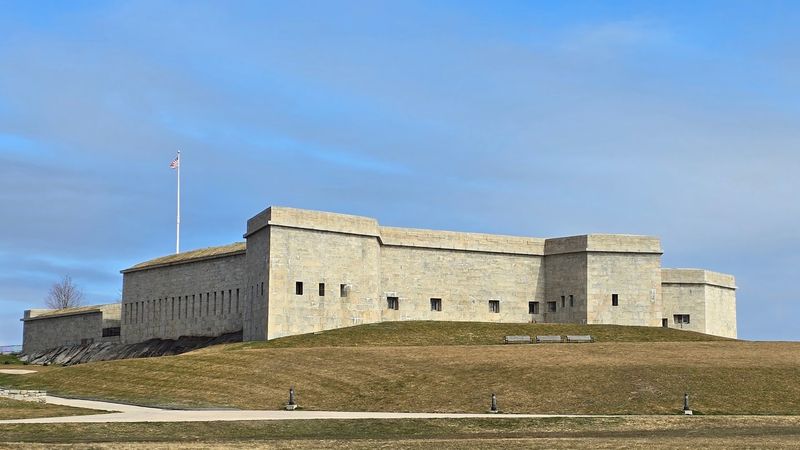
Cannons gave way to oscilloscopes. During World War II, Fort Trumbull hosted an office of Columbia University’s Division of War Research, focused on developing passive sonar, the technology that listens for ships instead of pinging them.
In 1946 that effort merged with Harvard University’s Underwater Sound Laboratory, creating the Naval Underwater Sound Laboratory at Fort Trumbull.
For decades afterward, the fort became a center for figuring out how sound behaves beneath the water. Researchers here worked on sonar and radio communication systems for submarines, antisubmarine sonar for surface ships, and devices including the radio sonobuoy.
The arrival of nuclear submarines and guided missiles pushed the science forward fast.
The New London facility eventually closed in 1996, and its work moved to Newport, Rhode Island. Given how much quiet Cold War history happened on this small piece of shoreline, the closure went largely unnoticed by the public.
The museum brings that era back with a mock laboratory and a 1950s-style office, furnished to look like the real research spaces of the period. Metal desks, dials, and period details make it feel less like a display and more like a room someone stepped out of.
It is the most unexpected exhibit here, and often the one visitors talk about afterward.
7. The Ramparts Open Up Wide River Views
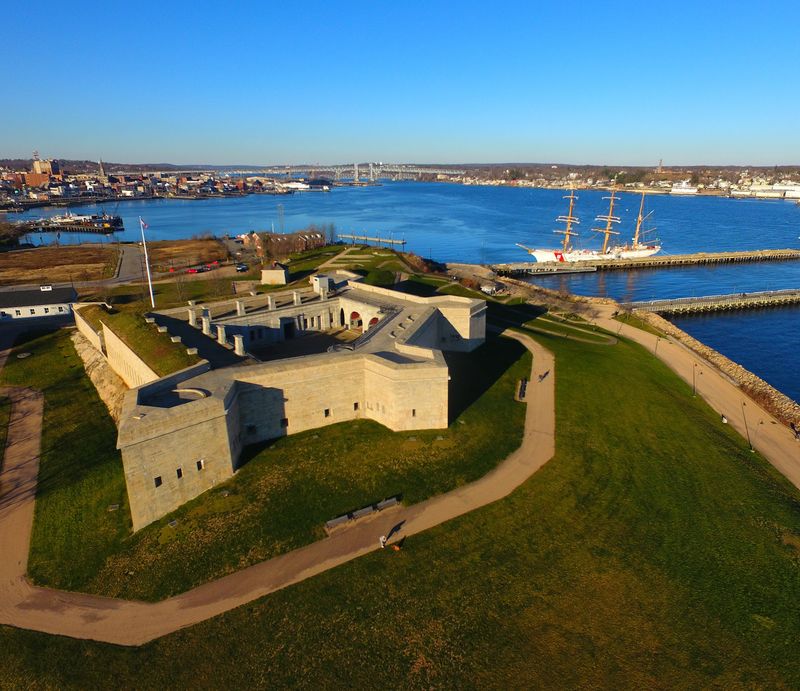
Climb to the top and the fort’s purpose flips. What was once a place for spotting enemy sails is now one of the best free viewpoints on the state shoreline.
The Thames River spreads out below, usually busy with boat traffic, and the harbor hums along with ferries and working vessels. Look north and the Gold Star Bridge crosses the water in a long steel arc.
Look south and the view runs out toward Long Island Sound.
Across the river in Groton, the Fort Griswold Monument rises above the trees. It honors those lost in the 1781 battle, the same day the first Fort Trumbull was abandoned, so the whole Revolutionary story lines up in a single glance.
Submarines occasionally pass on their way to or from the Groton shipyard, which regular visitors mention as a highlight worth waiting around for.
Timing helps. Late afternoon light warms the granite and softens the water, and cooler months bring sharper, clearer air.
Keep in mind that access to the fort’s interior and upper level follows a seasonal schedule, generally the warmer months, so checking hours before driving over saves disappointment. The grounds themselves stay open year-round for views from below.
8. A Waterfront Walk And Fishing Pier Round Out The Visit
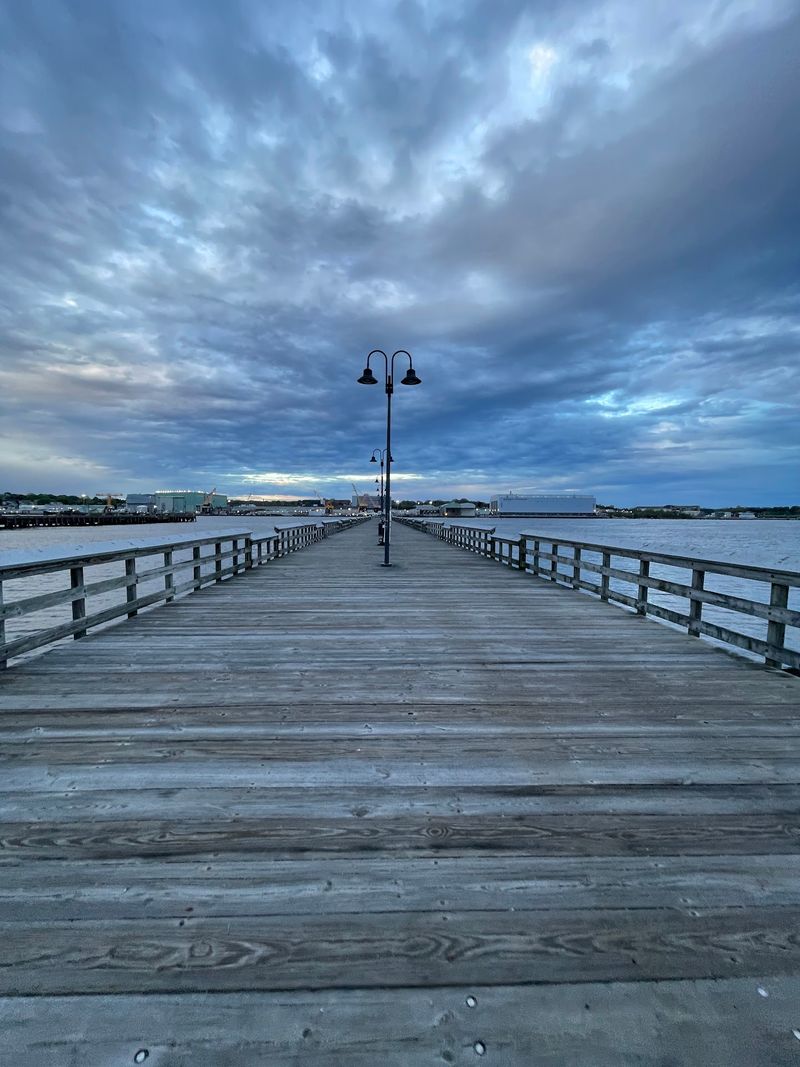
Plenty of people come for the history and stay for the shoreline. The park grounds, open daily from 8:00 AM to sunset, include a paved loop of roughly 1.3 miles that follows the Thames River.
Grades are gentle and the surface is smooth, which makes the walk manageable with strollers, wheelchairs, or tired legs. Benches and picnic tables appear along the way, several with open water views.
The pier is the other favorite. Extending about 500 feet into the river with 24-hour access, it is a well-known saltwater fishing spot, drawing striped bass, bluefish, weakfish, and tautog to the bait fish gathered near the river mouth.
Anglers get real amenities here: bright lighting, individual pole holders, year-round restrooms, and fresh running water. Fishing regulations are posted, so first-timers can check the rules on the spot.
The park sits at 90 Walbach Street in New London, with free parking and a museum building beside the fort. The entrance can be easy to miss on a first visit, so watch your directions carefully as you approach.
Most visitors spend one to three hours between the museum, the grounds, and the water. Bring lunch. You will want a reason to sit longer.