Brokeback Mountain Fans May Do A Double Take On This Remote Idaho Hike
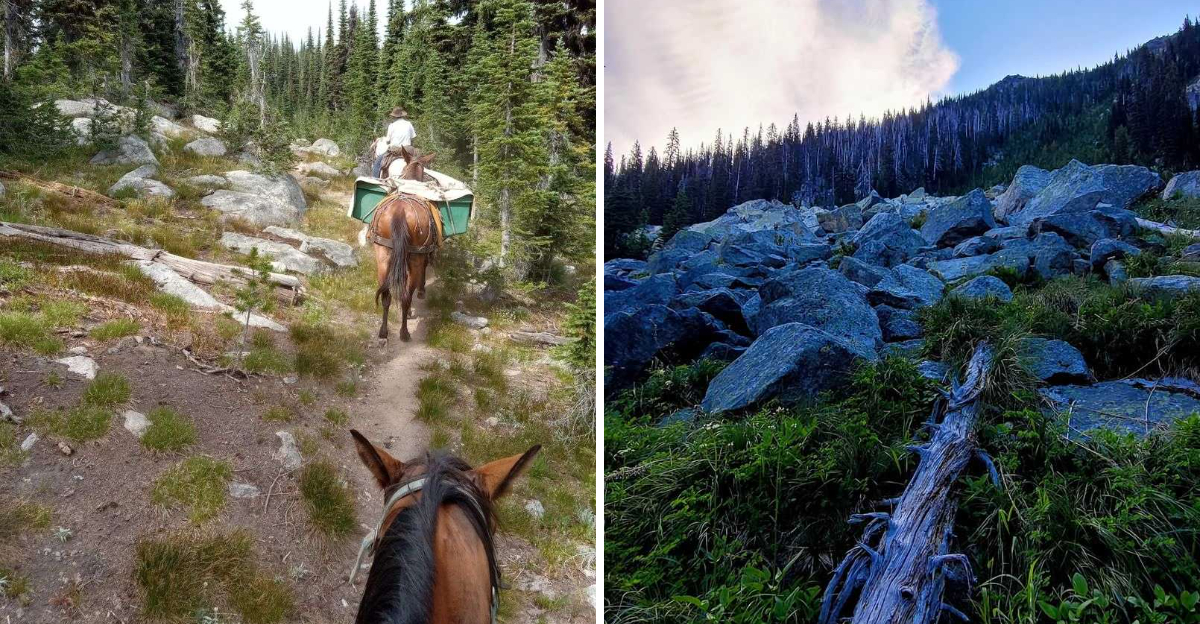
This trail has the kind of scenery that makes you suspicious somebody yelled “action” five minutes before you arrived.
Granite walls rise above alpine lakes, wildflowers spread across the high country, and the whole Selkirk backdrop looks suspiciously ready for a sweeping movie shot. Fans of Brokeback Mountain may feel an especially strong case of déjà vu.
There is just one problem with that theory. The movie was not filmed here.
That resemblance is pure Idaho showing off, and getting close enough to appreciate it requires considerably more effort than sitting through the end credits.
The Big Fisher Lake Trail climbs into remote mountain country where the views get bigger as your legs become increasingly interested in filing a complaint.
No stunt double is coming. But once those lakes and granite ridges appear ahead, the hike starts feeling very much like the scene everybody remembers.
Climb Into A Remote Selkirk Landscape That Feels Ready For The Big Screen
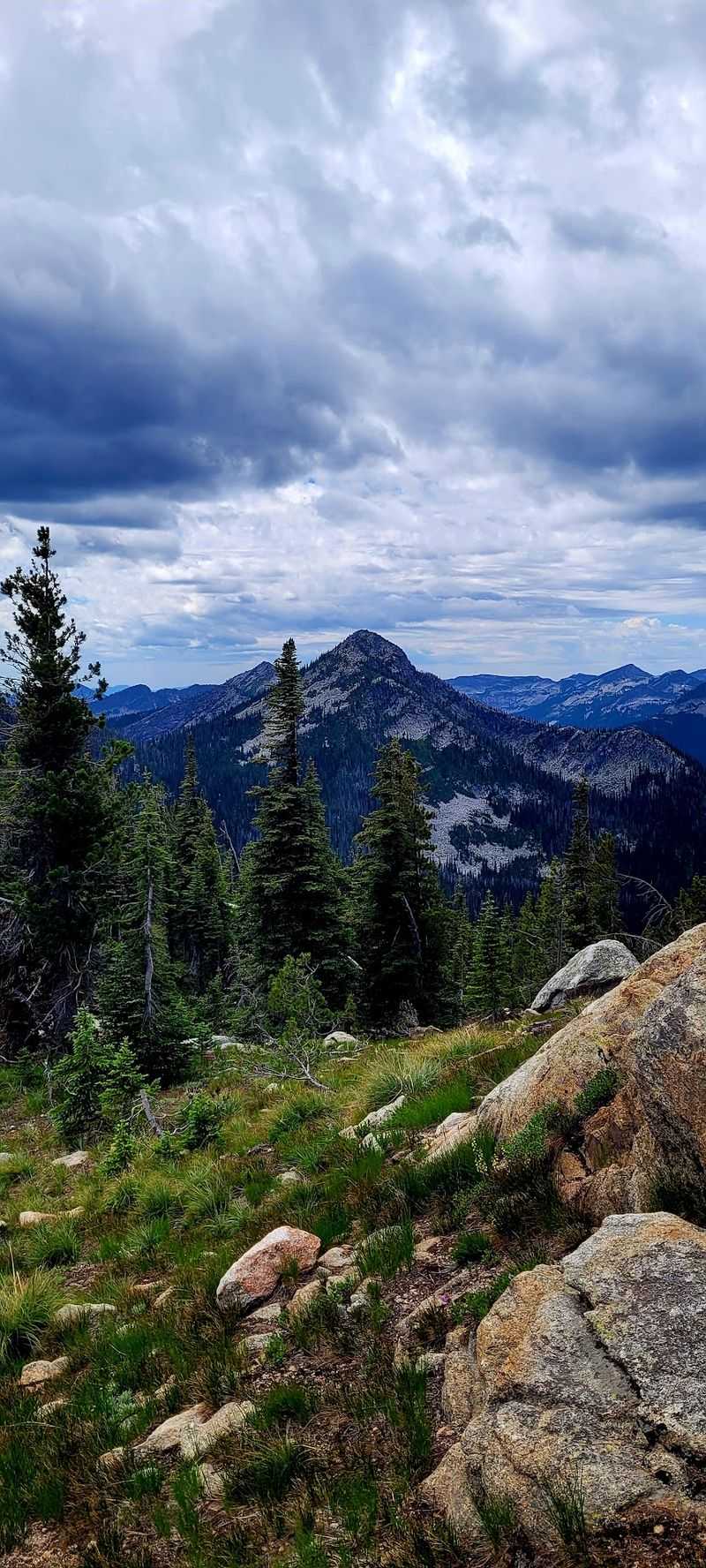
Wide granite walls, silver water, and meadows full of wildflowers give this corner of the Selkirk Mountains the look of a film set that nobody built.
Trail No. 41 carries hikers into that scenery, climbing through a range that stretches north from the Panhandle into eastern Washington and southeastern British Columbia.
The whole area belongs to the Idaho Panhandle National Forests, where alpine lakes sit in stone bowls scoured out long ago. Boulder fields spill down the slopes, and the rock looks pale and clean against dark stands of timber.
Wildlife makes the place feel even wilder. Grizzly bears, woodland caribou, and wolverines have all been reported in these mountains, which is a good reminder to store food properly and stay alert on quiet stretches of trail.
Nothing here has been polished for visitors. Photographers often linger at the first big opening, where light shifts fast across bare stone and green meadow grass.
The scale simply happens: ridges above, water below, and a hush that settles in once the parking area is out of sight.
Take In Sweeping Mountain Views From The Higher Switchbacks
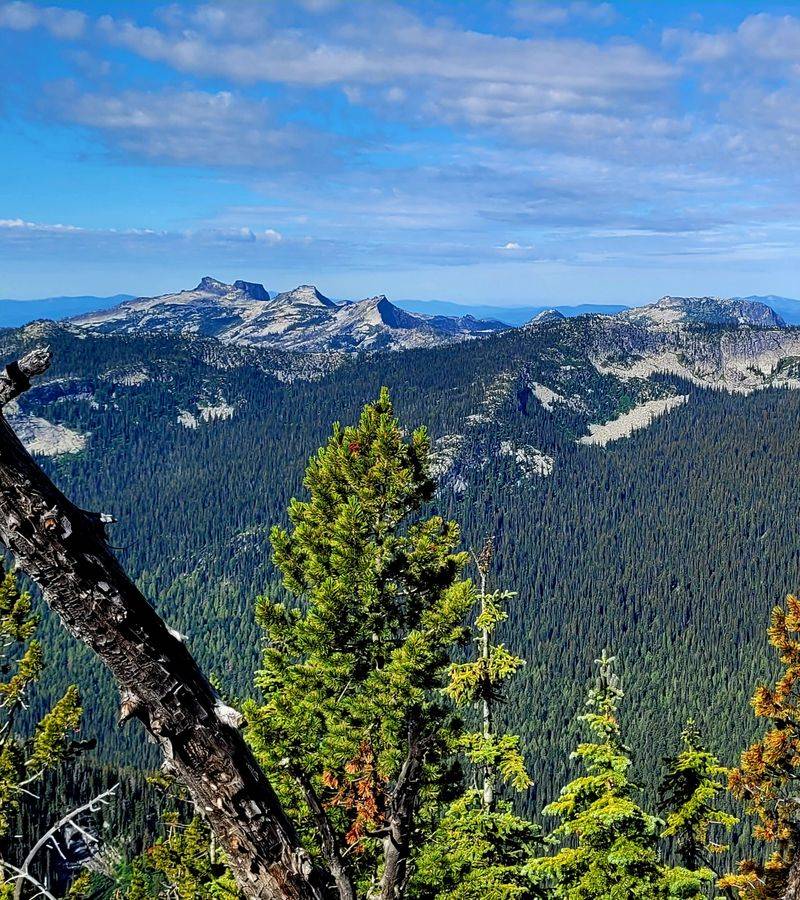
Shade and soft footing mark the beginning, where the tread rises at a friendly angle through forest scented with fir and warm dust. Roots and pine needles cushion the first mile, which lulls you into thinking the whole day will stay easy.
The mood changes when the switchbacks begin. Rocky turns stack up the slope, and each one trades a little more effort for a wider window on the surrounding country.
Around the three-mile point the timber thins and an open, grassy ridge takes over. Views unroll in every direction, from layered Selkirk summits to deep drainages folding away west, with the Kootenai Valley showing itself in the distance.
Pack a wind shell for this stretch. Breeze crosses the ridge even on warm summer afternoons, and there is very little cover once the trees drop away.
Early hikers get the best light. By midday, haze can flatten those far ridgelines, while morning sun sharpens every ledge and gully.
Marmots whistle from the rock piles here, a sound shrill enough to carry across the basin.
Drop Into The Trout Lake Basin Beneath Rugged Granite Slopes
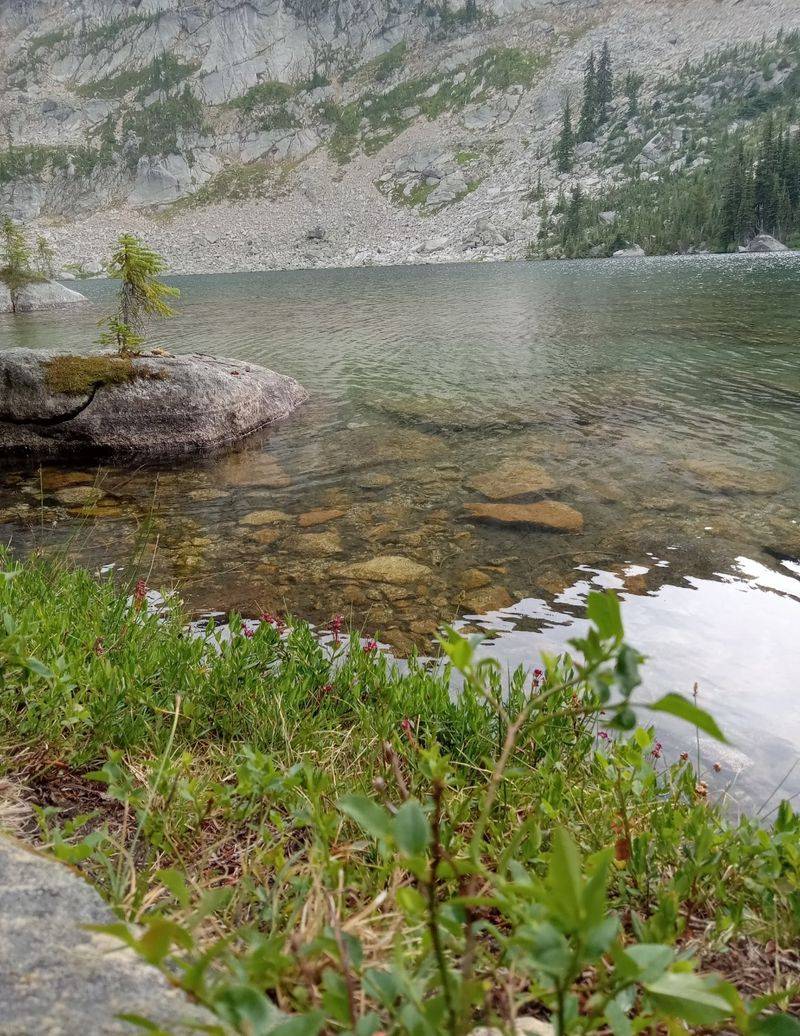
About a mile and a half in, after the initial climb, the tread tips downward and gets serious. Loose rock and steep pitches drop hikers into the Trout Lake basin, so trekking poles earn their keep here.
What waits below is worth every careful step. Trout Lake rests in a stone amphitheater, and a rock headwall roughly 1,100 feet tall guards its western edge.
Scree fields tumble straight down to the shoreline, gray and jumbled, meeting water so clear you can count stones near the bank. The contrast between broken rock and glassy surface is what people remember.
Trout Lake has long been called a true jewel of the Selkirks, and the description fits. Sound behaves oddly in a bowl like this: a splash or a raven’s call bounces off the wall and returns a beat later.
Anglers keep an eye on the shallows, and campers find level ground back among the trees, well away from the fragile shoreline. Shade arrives early in the afternoon, so plan snack stops accordingly.
Keep Going Toward Big Fisher Lake For An Even Deeper Backcountry Escape
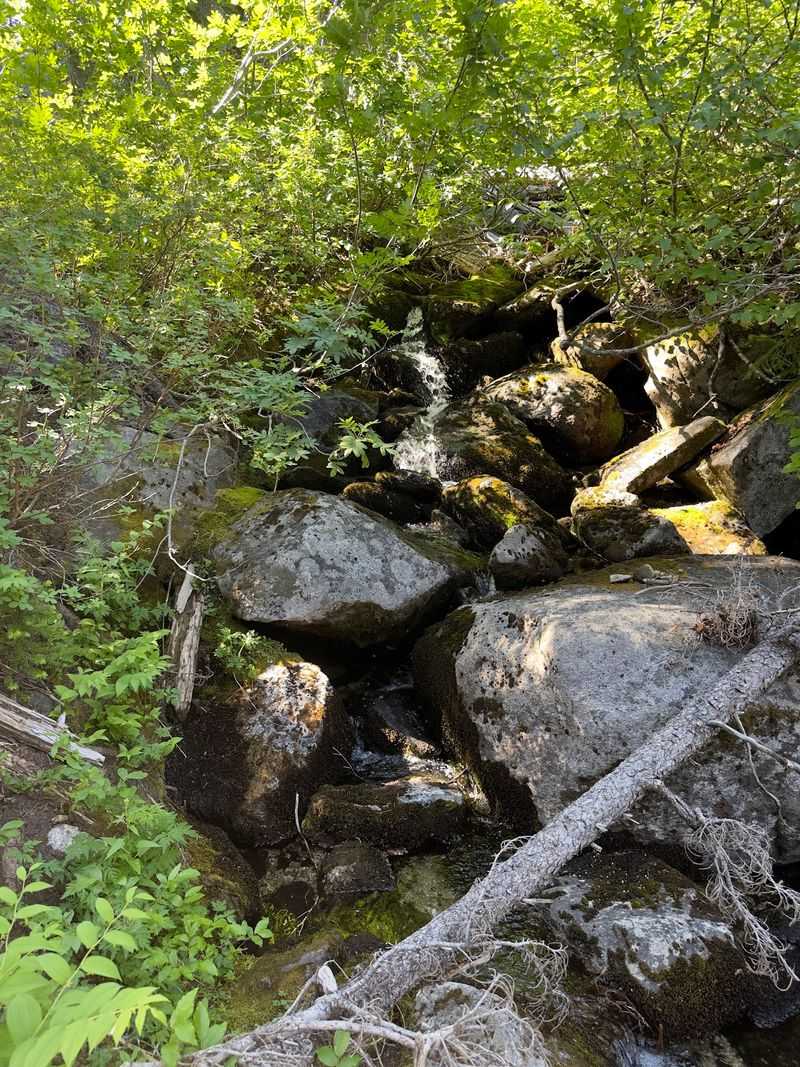
Leaving Trout Lake means paying the elevation back. The trail hauls itself out of the basin on another set of steep, rocky switchbacks, gaining ground fast.
Near the four-mile mark the corridor opens into a broad high-mountain meadow around 7,400 feet, where grass, low shrubs, and scattered stone stretch toward the skyline. Big Fisher Lake sits roughly 620 feet below that meadow, visible but not yet reachable.
The final descent is the steepest part of the whole outing, with pitches beyond a 40 percent grade. Loose rock rolls underfoot, so slow, deliberate steps beat speed every time.
What waits at the bottom is broad and fairly shallow, with a scree field along the southeast shore and tall timber ringing the rest. The bowl holds sound the way a cupped hand does.
Few hikers make it this far, which is exactly the appeal. Standing at the shoreline in one of the quietest pockets of northern Idaho, the outside world feels genuinely far away.
Expect A Tougher Hike Than The Peaceful Alpine Scenery Suggests
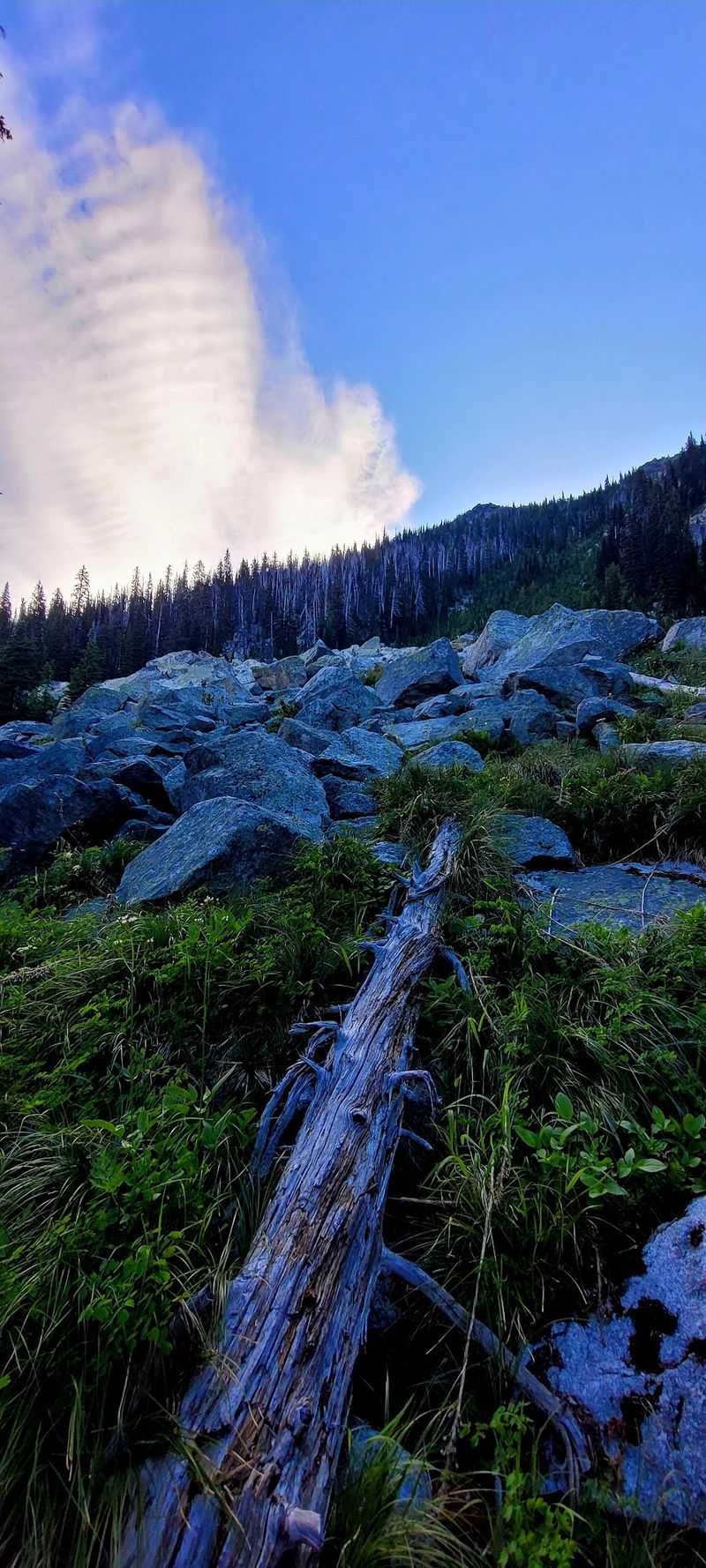
Calm water and wildflowers can be misleading. This route is rated difficult, and it earns the label with sustained climbs, abrupt drops, and long stretches of loose rock.
Round-trip distance runs from about 9.1 miles up to roughly 12, depending on the starting point and whether you visit both lakes.
Elevation gain for the full outing can reach 3,300 feet, much of it packed into short, punishing sections.
Because the trail loses elevation on the way in and regains it on the way out, the hardest climbing often waits until you are already tired. Plan water, food, and turnaround times with that pattern in mind.
Sturdy boots with real tread matter more than fancy gear. Ankle support helps on the scree, and poles take pressure off knees during the descents.
Cell service is unreliable, so carry a paper map, tell someone your plan, and pack a headlamp even for a day trip. Snow can linger on shaded switchbacks into early summer, which slows travel considerably.
Pack For Rough Roads Before You Even Reach The Trail
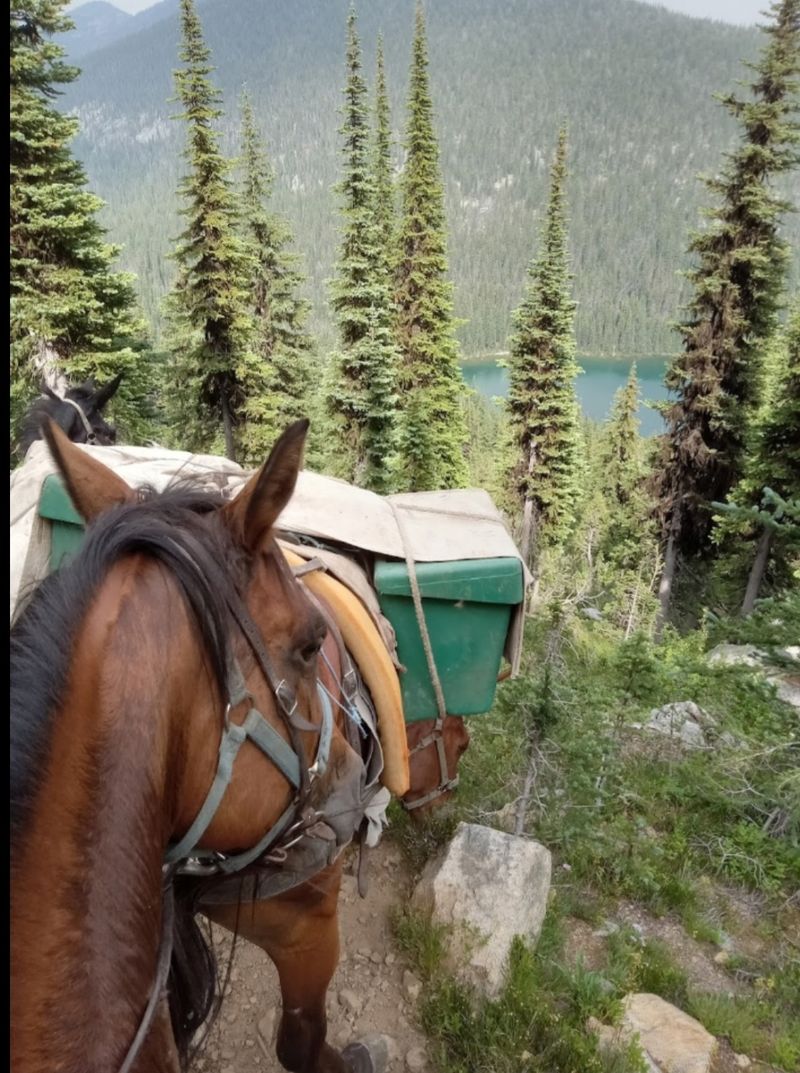
Getting to the start is half the adventure. Forest Road 634, known locally as Trout Creek Road, runs steep, washboarded, and rocky in places.
The trailhead sits along Trout Creek Rd, Bonners Ferry, ID 83805, and a high-clearance vehicle makes the approach far less stressful.
From Bonners Ferry, the usual route heads west on Riverside Road, also signed as County Road 18A, passing the Kootenai National Wildlife Refuge headquarters. Turn north onto West Side Road, Forest Road 417, and follow it about 10 miles.
A left onto Trout Creek Road (#634) starts the final leg, roughly 9 miles of slow driving to the parking area.
Space is tight up there, with room for only about 10 vehicles. Arriving early on summer weekends is the simplest way to avoid disappointment.
Check tire pressure, top off fuel in town, and bring extra water for the drive. The approach alone can take close to an hour, and dust hangs behind every vehicle, so give other drivers room on blind corners.
Give Yourself Time To Enjoy Two High-Mountain Lakes In One Outing
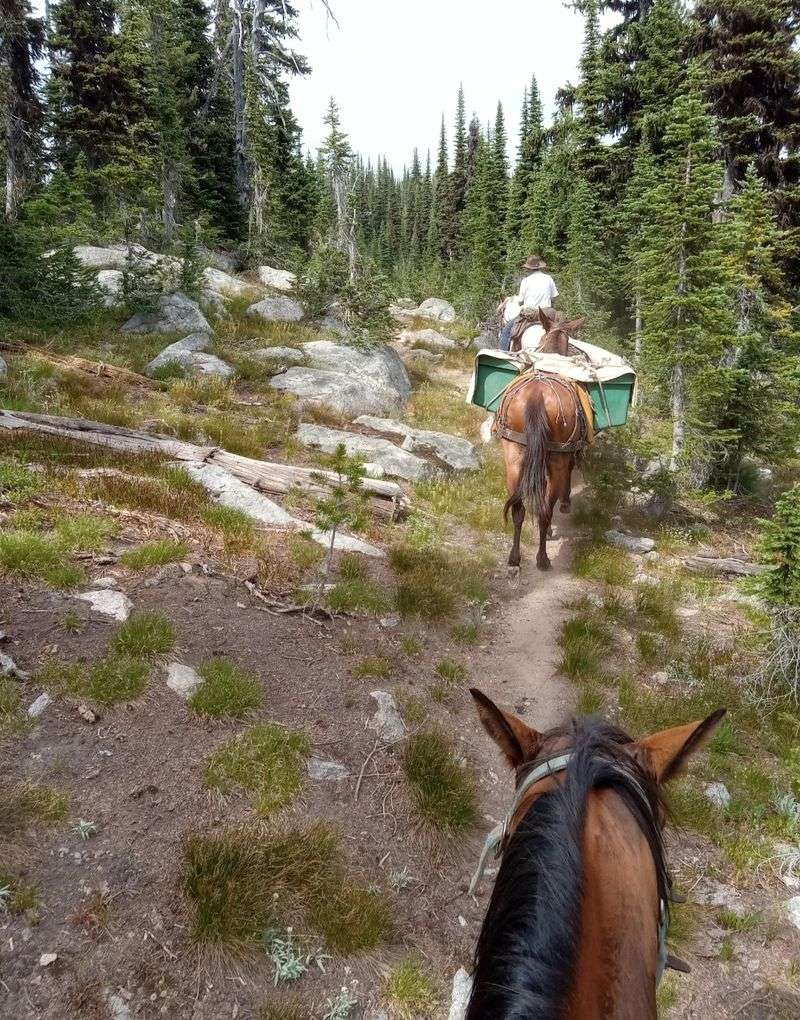
Two alpine lakes in one trip is a rare deal in this range. Hikers who plan ahead often camp at Trout Lake, then continue to Big Fisher Lake as a day hike the next morning, starting from the trailhead on Trout Creek Rd, Bonners Ferry, ID 83805.
Camping is allowed at both lakes, which makes the split-trip approach practical. An overnight also spreads out that 3,300 feet of climbing instead of cramming it into one long day.
The two lakes feel like siblings with different personalities. Trout Lake is all drama, framed by its towering granite headwall, while Big Fisher spreads wide and calm inside its ring of timber.
Mornings are the best reward for staying over. Mist drifts off the surface, the rock warms slowly, and the water goes mirror-still before any breeze arrives.
Bring a bear-resistant food container, pack out everything, and camp on durable ground away from the shoreline. Care like that keeps this corner of Idaho looking untouched.
Soak Up The Cinematic Scenery Without Pretending Hollywood Was Actually Here
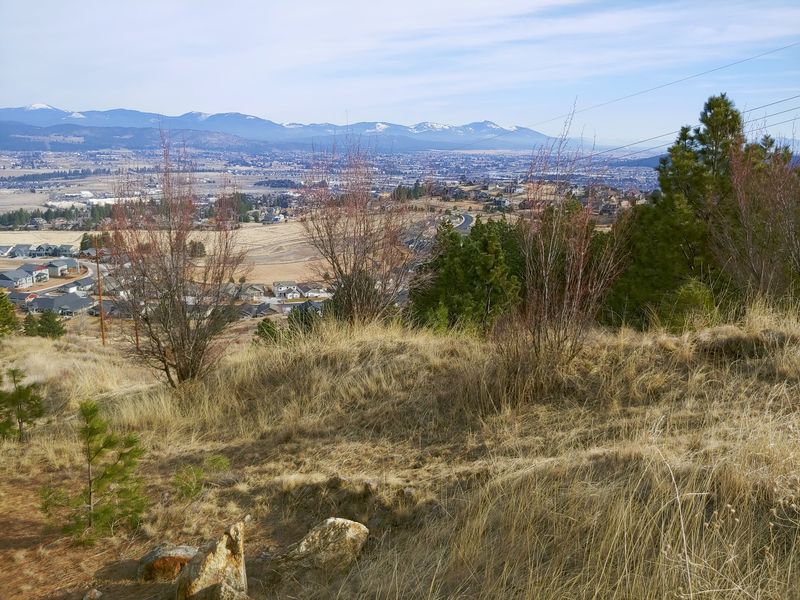
Here is the honest part: the film that inspired all those comparisons was shot in Alberta, Canada, not in the Selkirks.
The resemblance is real anyway, because both landscapes share that mix of open meadow, dark timber, and sharp granite ridgelines.
Boulder fields spill across the slopes, wildflowers flood the high meadows in midsummer, and the bare stone tricks the eye into reading these peaks as taller than they measure.
Views from the switchbacks keep delivering, especially where the Kootenai River Valley opens far below in a green sweep toward the border.
Clouds drag shadows across the ridges, changing the scene minute by minute.
No movie set could stage the small stuff either: the smell of sun-warmed pine, water so cold it stings your fingers, and silence broken only by wind moving through the grass.
Photographers, bring a wide lens and patience for shifting light. Everyone else can sit on a warm slab of rock and let the scale sink in.
Wild country like this stretch of Idaho needs no script.