This Nebraska Museum Is America’s Last Intact Windmill Factory, With More Than 1 Million Artifacts Inside
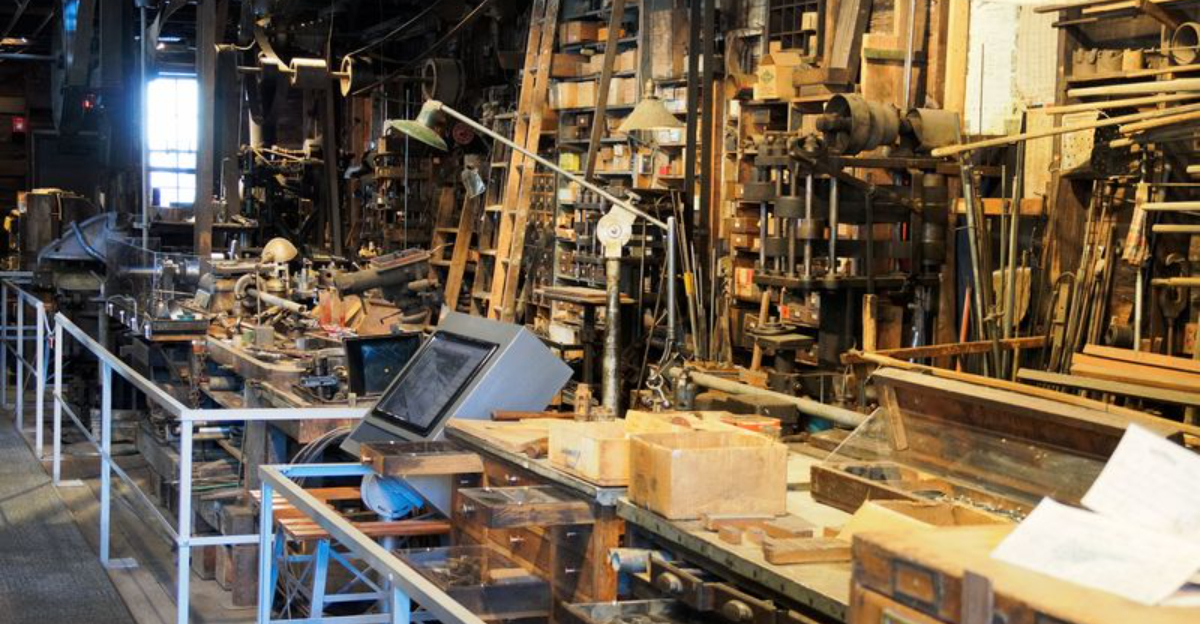
The factory closed for the day in 1991. In some ways, it never moved again.
Tools stayed near the benches. Machinery remained where generations of workers had used it. Paperwork and countless everyday objects were left behind, preserving something far more immersive.
Nebraska now has an extraordinary industrial time capsule hiding behind an unassuming brick exterior.
More than one million artifacts help document the story of a factory that produced windmills for nearly a century.
Instead of simply reading about how the work was done, visitors can step into rooms where much of the original equipment and working environment remain intact.
Look closely and the small details become the best part. A worn workbench. An old machine. Supplies waiting in places that still make practical sense.
This is not history polished until it feels distant. It feels remarkably like the workers have simply gone home for the evening.
Step Inside America’s Last Intact Historic Windmill Factory
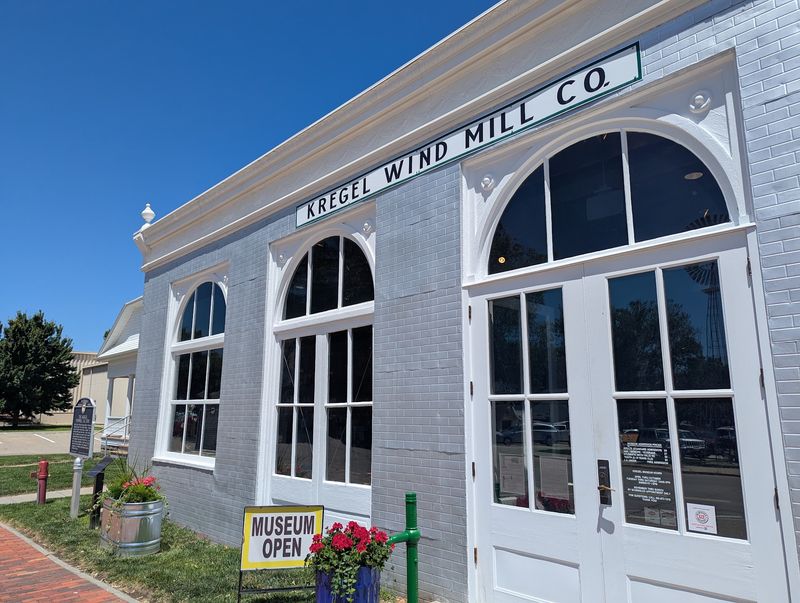
The Kregel Windmill Factory Museum sits at 1416 Central Ave, Nebraska City, NE 68410, right across from City Hall on a working downtown street.
From the sidewalk it reads as a plain brick shop, which is exactly why so many people drive past without slowing down.
What sets the place apart is completeness rather than size.
Most old factories were emptied out, remodeled, or scrapped for the value of their machines, and the few that survived usually lost their tools and paperwork along the way.
Here the building, the equipment, the products, and the business records all stayed together under one roof. The National Park Service considers the property nationally unique for that reason.
Walking in feels less like entering a gallery and more like stepping into a workplace that closed for the day and never reopened.
Light comes through original windows, floors show wear from decades of foot traffic, and the air carries the faint smell of metal and old oil. Plan on giving the visit real time rather than a quick loop.
Guided tours are offered, and staff members are known for explaining details that are easy to miss without help. An hour is a reasonable starting point for most visitors.
A Shop Floor That Barely Changed After Production Stopped
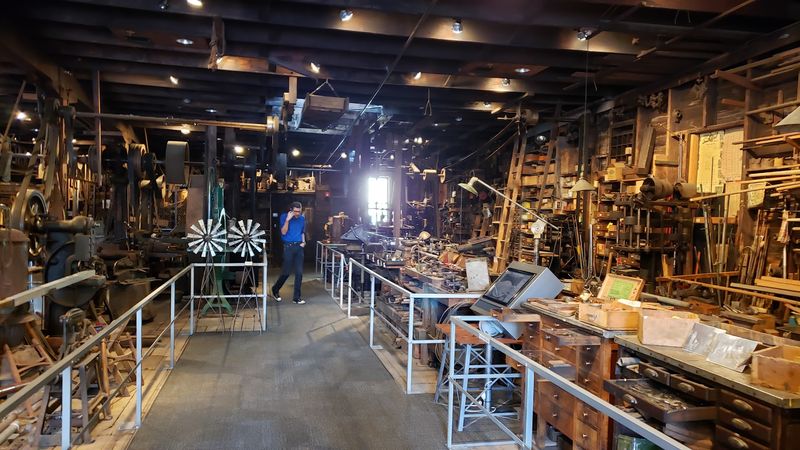
Tools still sit where they were set down, and that single detail changes how the whole building feels.
Machinery, work areas, parts bins, and records were preserved in their original spots rather than swapped out for recreated exhibits.
Nebraska tourism describes the interior as looking much the way it did in 1939.
Penciled notes remain on desks, and small piles of hardware sit near the machines that shaped them.
There is no polished museum casing separating visitors from the work surfaces, so the scale of everything registers immediately.
Benches are worn down in the places where hands and elbows rested for years.
Sound plays a part too, since the space is quiet enough that footsteps echo off brick and wood. That quiet makes the leftover clutter feel deliberate, almost like the crew is due back any minute.
Photographers tend to appreciate the mixture of dusty surfaces and window light falling across metal. For families, the layout offers plenty to point at without long stretches of reading.
Children often latch onto the smaller details such as tool racks and gears rather than the big picture history. Comfortable shoes help, since floors are original and uneven in places.
Anyone who enjoys seeing how things were actually made will find the honesty of the space more interesting than any staged display.
Trace A Family Business That Lasted 112 Years
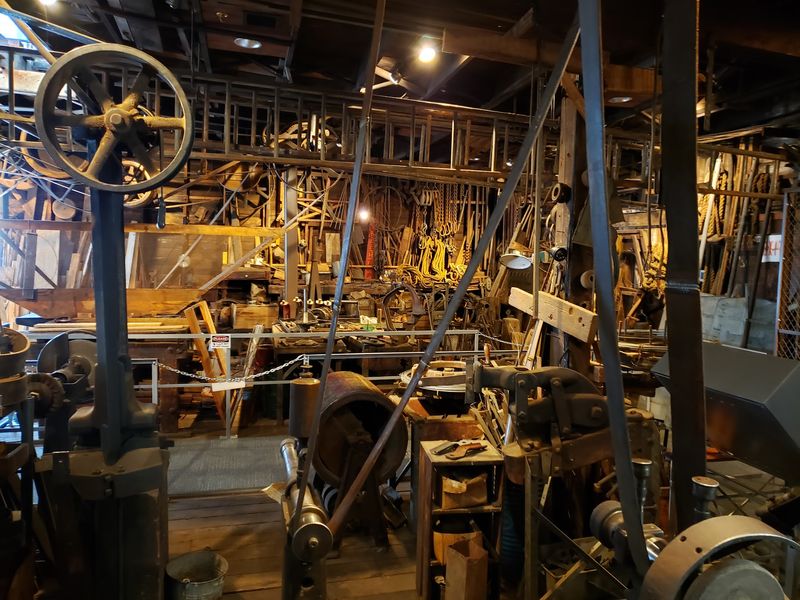
Longevity is the quiet headline of this story. Operations began on August 19, 1879, as a general manufacturer serving the agricultural trade in Nebraska City.
Windmill production followed, built around a design developed by George F. Kregel.
The company moved into the Central Avenue building in 1903 and worked there for 88 years. The business stayed in the family until the passing of Arthur Kregel, son of the founder, in 1991.
Counting from the very beginning, the enterprise spanned 112 years. Numbers like that are easy to skim past, so it helps to think about what they cover.
The shop was running before most rural homes had electricity, and it was still open when personal computers were common.
Very few small manufacturers anywhere in the country managed that kind of continuous run in one location.
Touring the space with that timeline in mind changes what visitors notice. Older hand-powered equipment sits near machines added decades later, showing how the family adapted instead of starting over.
Repairs, patches, and homemade fixes appear throughout the building. Those small adjustments say a lot about how a modest family shop kept going while larger competitors closed.
Guides usually work this history into the tour, which makes the machinery easier to understand.
Meet The ELI Windmill That Defined The Operation
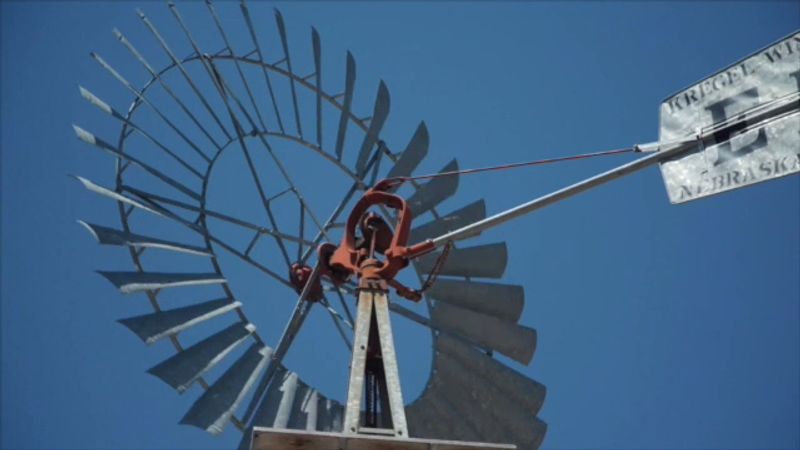
Every factory needs a signature product, and the ELI brand was this one.
Kregel built its own water-pumping windmills under that name, aimed at the practical needs of farms and homes around southeastern Nebraska.
Their job was simple and essential, which was pulling water up from wells day after day. A distinctive feature was the direct-stroke design, which worked without gears.
Fewer moving parts meant fewer things to break on a farm miles from any repair shop. Original ELI components and complete examples remain part of the preserved collection.
Seeing one up close indoors is a different experience than spotting a windmill from a highway.
The wheel is larger than most people expect, and the vane carries painted lettering that has softened with age.
Details such as rivets, blade curves, and bearing points are all within easy viewing distance.
Younger visitors tend to enjoy the smaller ELI windmill on display, which brings the mechanism down to a manageable size. Adults often find themselves recalculating how much labor these machines saved households.
Before electric pumps, hauling water by hand was a daily chore measured in buckets. A working windmill turned that chore into something the wind handled for free.
Get Close To Machinery More Than A Century Old
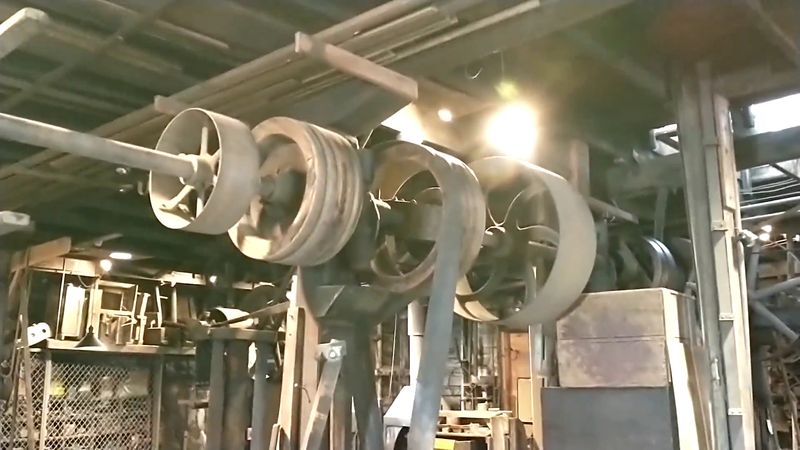
Some of the equipment here predates the state’s earliest paved roads.
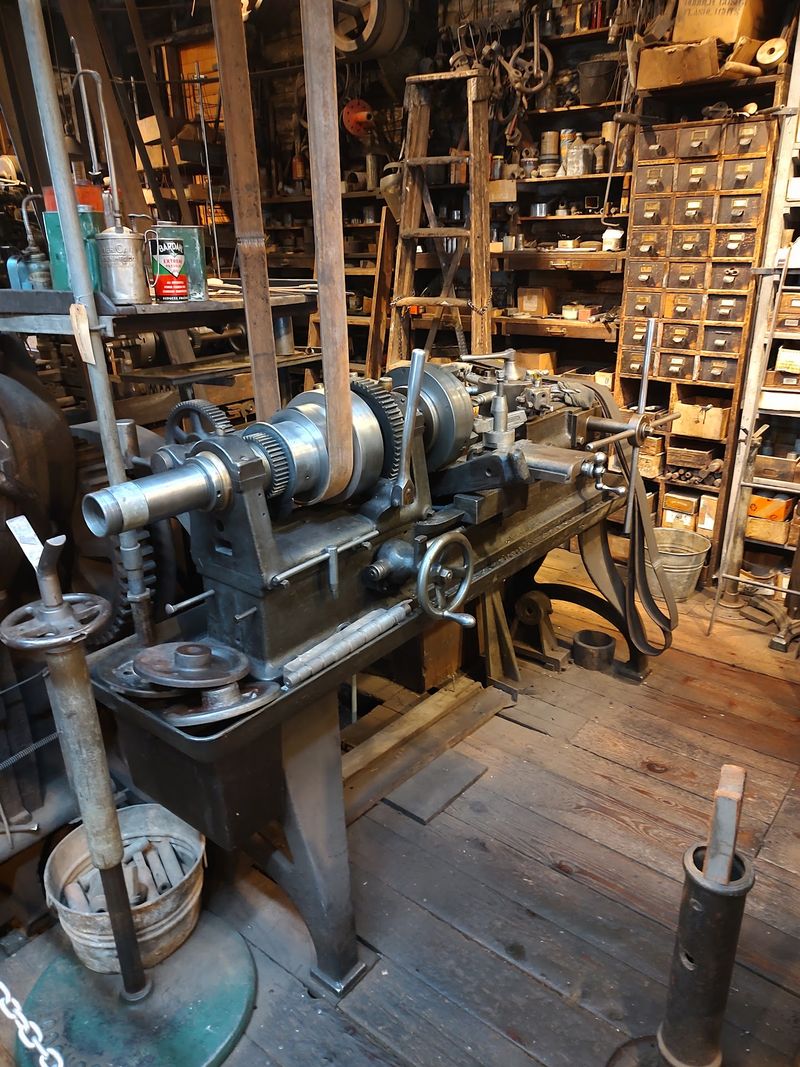
A metal-turning lathe dating to 1865 sits among a turret lathe from 1920 and drill presses from around 1900. A power shear, punch, and riveting machine from 1875 remains in place as well.
Other specialized pieces include broaching machines, grinders, cross-cutoff circular saws, and thickness planers. A drop hammer from 1900 handled heavy shaping work.
Sheet-metal tools such as rolls, beading machines, and brakes round out the collection. What makes the lineup worth studying is context rather than rarity alone.
These machines are grouped the way the work actually flowed, so raw material moved logically from one station to the next. Cast iron frames, painted surfaces, and hand-turned wheels all show heavy use.
Visitors with mechanical backgrounds often linger the longest in this part of the tour.
Engineers, woodworkers, and anyone who has fixed farm equipment tend to recognize familiar shapes under a century of patina.
Even without technical knowledge, the weight and solidity of the machines make an impression.
Ask questions during a guided tour, since staff can point out which machines performed which step.
Peek Into An Office Still Filled With Original Records
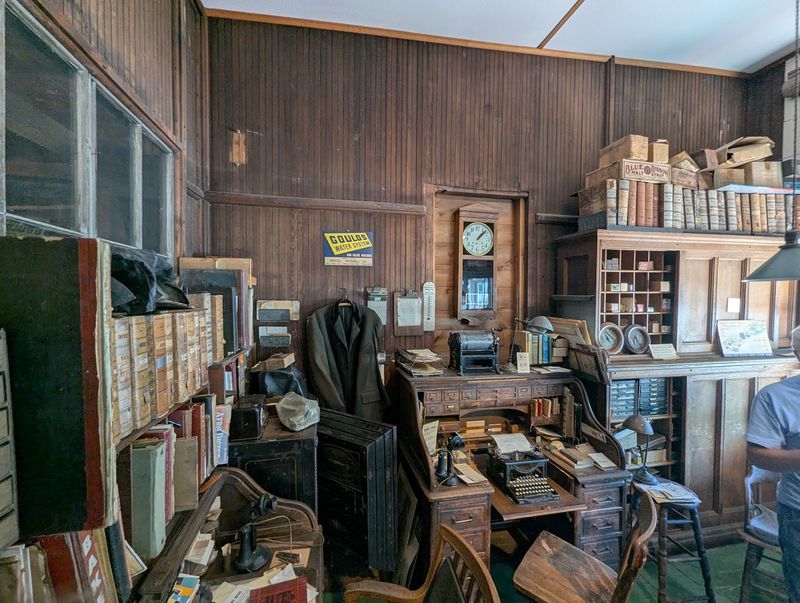
Machinery explains the work, but the office explains the people. Desks, fixtures, letter boxes, and manuscript business records all remain in place.
Ledger books line the shelves, and pencils and pens still rest on the desk surface. An early telephone sits nearby, along with the ordinary clutter that builds up in any workplace.
An overcoat hangs on a hook by the desk, which is the detail most visitors remember afterward. Small human touches like that carry more weight than any label could.
Business records give researchers real value beyond the visual appeal.
Orders, correspondence, and accounts document how a small manufacturer found customers and managed money across changing decades.
Very few factories of this size left behind a paper trail this complete.
Take a slow pass through this room instead of hurrying toward the machines. Handwriting on paper connects visitors to specific days of work in a way that iron and steel cannot.
The room is compact, so it can feel crowded when a tour group moves through together. Waiting a moment for space usually pays off with a better look.
Quiet observation is the right pace here.
Discover What Happened When Windmill Production Wound Down
Production of ELI windmills stopped in the early 1940s, and the reason was national rather than local.
Rationing of raw materials during World War II cut off the steel supply small manufacturers depended on. Many similar shops across the country closed permanently at that point.
The Kregel company took a different route and shifted its focus instead of shutting down. Pump repair, well work, and related services kept the business running for decades.
Those services stayed useful even as rural electrification replaced windmills on most farms. The company finally closed in 1991.
That long second chapter helps explain why so much survived inside the building.
Because the family kept working in the same space, nobody cleared out the old manufacturing equipment to make room for something new. Adaptation preserved the past almost by accident.
Tour conversations often touch on this stretch of history, since it connects the factory to broader changes in American farm life.
Electric pumps, rural power lines, and shifting agriculture all show up in the story.
Understanding the decline makes the preserved shop feel less like a frozen moment and more like the end of a long, practical run.
Take In A Collection Numbering More Than One Million Artifacts
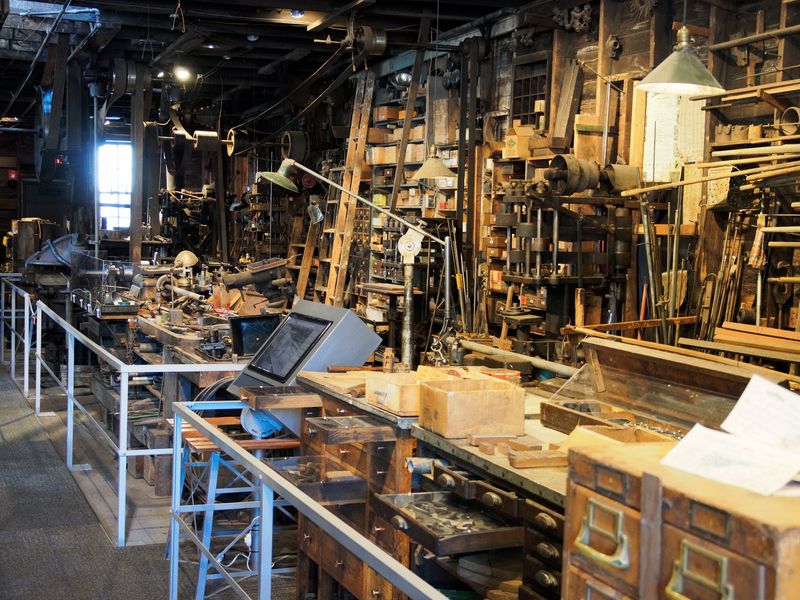
One million artifacts inside a modest brick building sounds impossible until the counting method makes sense.
The figure includes machinery and tools, but it also covers the enormous volume of small components stored throughout the shop. Bolts, rivets, castings, blanks, patterns, and paperwork all add up quickly.
Shelves and bins hold parts that were produced in bulk and never used. Decades of accumulation stayed put because the building never emptied out between owners.
Records, correspondence, and catalogs contribute to the total as well.
Standing in the middle of it gives a sense of density rather than sprawl. Every surface holds something, and the volume becomes obvious once eyes adjust to the details.
Repetition of identical small parts is part of what makes the space visually striking.
Visitors sometimes expect a handful of restored windmills on pedestals and find something far messier and more interesting. The clutter is the exhibit, and cataloging it is ongoing work.
A single visit will not cover everything, which is why some people return. Slowing down in one corner often reveals more than trying to see the entire collection at once.
Plan A Visit Right Along Nebraska City’s Central Avenue
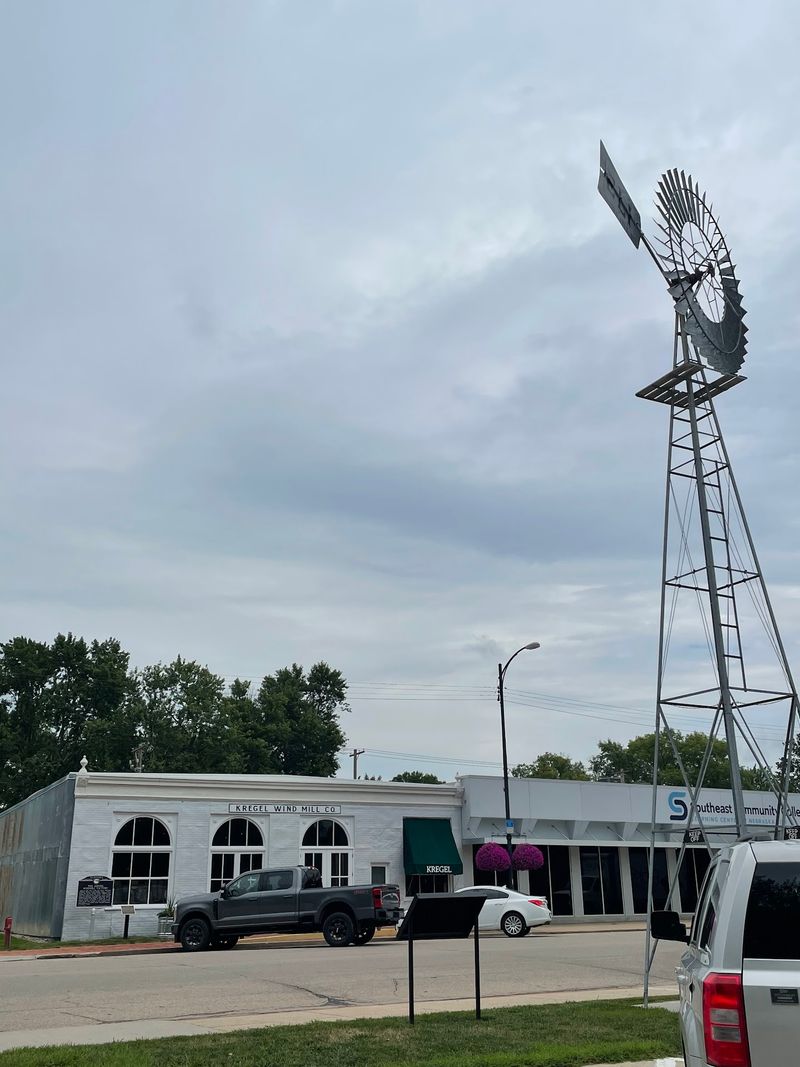
Downtown parking and a walkable main street make this an easy stop to work into a day trip.
The museum sits at 1416 Central Ave, Nebraska City, NE 68410, within short walking distance of other downtown businesses.
Sidewalks are flat along the block, which helps for visitors who prefer shorter walks.
Posted hours run Tuesday through Saturday from 10 a.m. to 5 p.m. and Sunday from 1 p.m. to 5 p.m., with Mondays closed.
Current admission is listed at $8 for adults and $5 for students. Children four and younger enter free, and a $1 discount is offered for AAA, AARP, and Veterans.
Calling ahead at 402-873-1078 is reasonable if the schedule matters, since hours and pricing can change.
Guided tours are a strength here, and staff members are frequently described as knowledgeable and welcoming. Self-guided options have also been available for visitors who prefer to move at their own pace.
Rainy days work well since the entire experience is indoors. Allow at least an hour, and longer if mechanical history holds your attention.