This 102-Year-Old Idaho Monastery Looks Like A Medieval Castle Hidden On The Prairie
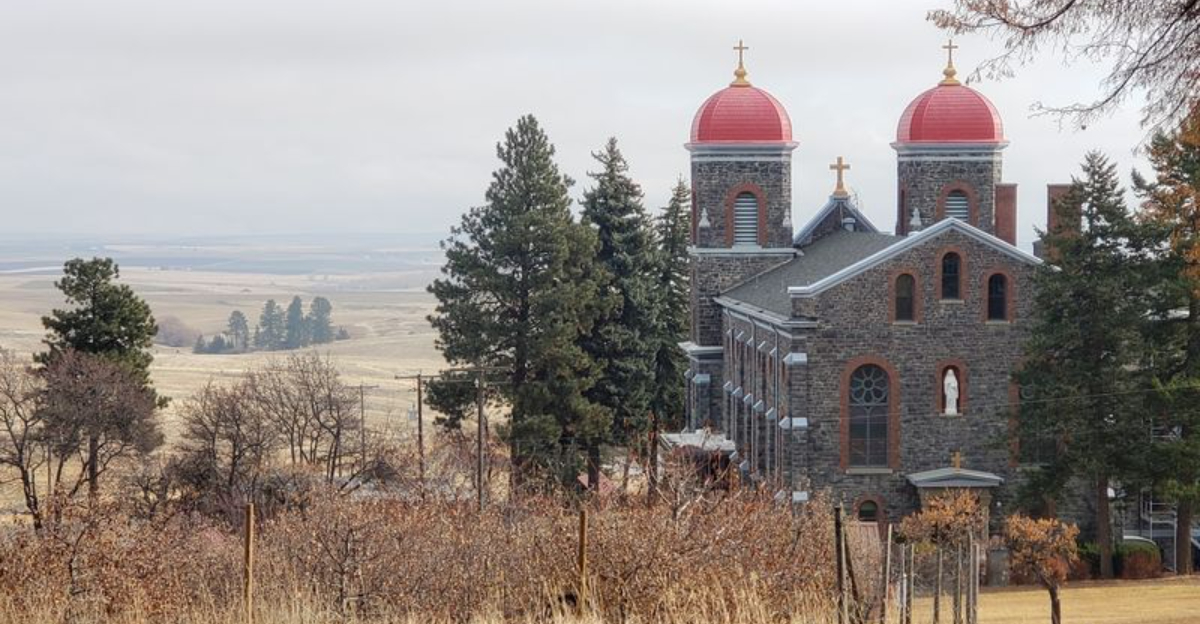
The wheat fields are doing something they absolutely did not warn you about.
Two red-capped towers suddenly rise above the Idaho prairie, followed by a massive blue-stone building that looks as though it arrived from another century and simply decided to stay.
That first glimpse is enough to slow the car.
Completed in 1924 by Benedictine Sisters with Swiss roots, this remarkable monastery has been standing quietly near Cottonwood for more than a hundred years. From the road, its scale almost does not make sense against the open farmland.
Then you step closer. The grand exterior gives way to a much quieter kind of beauty, where generations of craftsmanship and faith are still visible throughout the building.
No theatrical gimmicks are needed here.
The prairie already supplied the dramatic entrance.
Twin Red Towers Rise Above The Prairie Before You Even Reach The Grounds
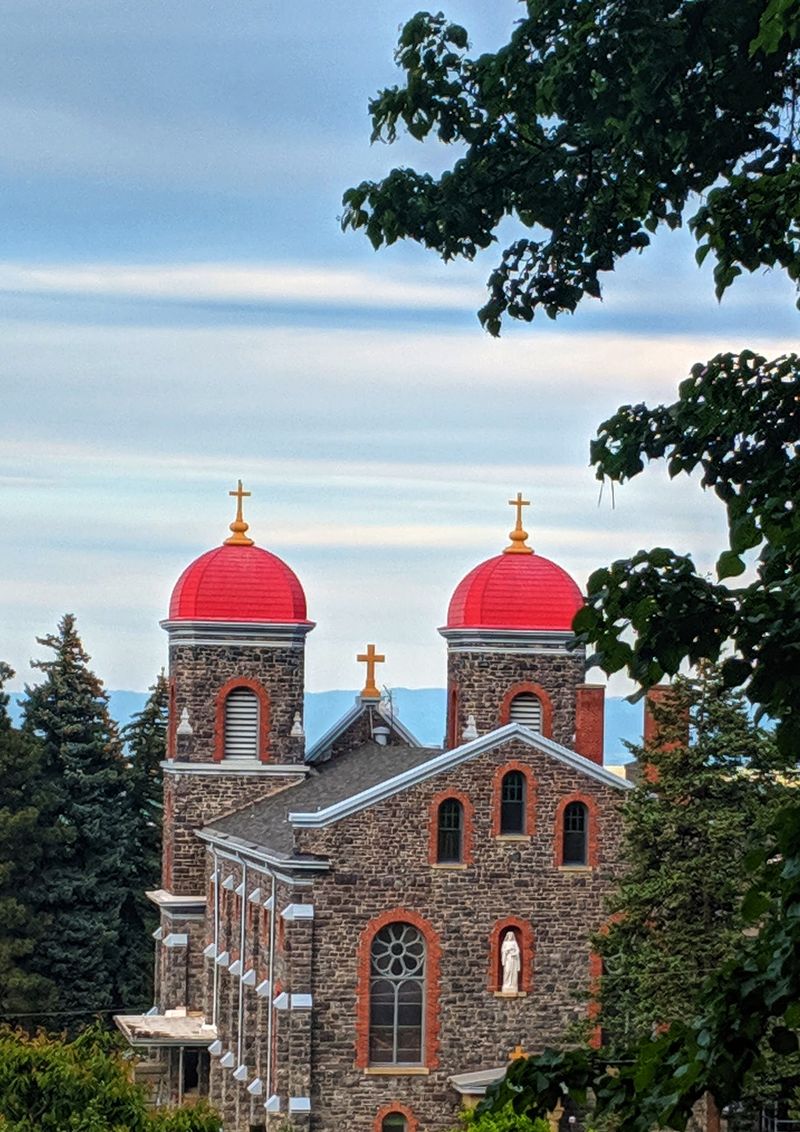
Long before the parking area comes into view, two square towers break the horizon line, and the effect is startling on such open farmland. Each one climbs 97 feet and wears a basilica roof of bright red shingle tile finished with a gold cross that catches afternoon light.
Bells hang inside those towers, honoring the Sacred Heart along with Saints Joseph, Michael, and Gabriel. Between the two, a statue of the Sacred Heart of Jesus sits in a sheltered stone niche, watching over the drive that curls up from the fields below.
Drivers coming off US 95 through Cottonwood usually spot the roofline first, red against green wheat in spring or gold stubble in late summer. Roll the window down and you will catch pine on the breeze as the road lifts into the hills.
Give yourself a minute in the lot before walking in. Photographers tend to favor early morning, when low sun warms the stone and the towers throw long shadows across the lawn.
Romanesque Stonework Gives The Chapel Its Old-World Presence
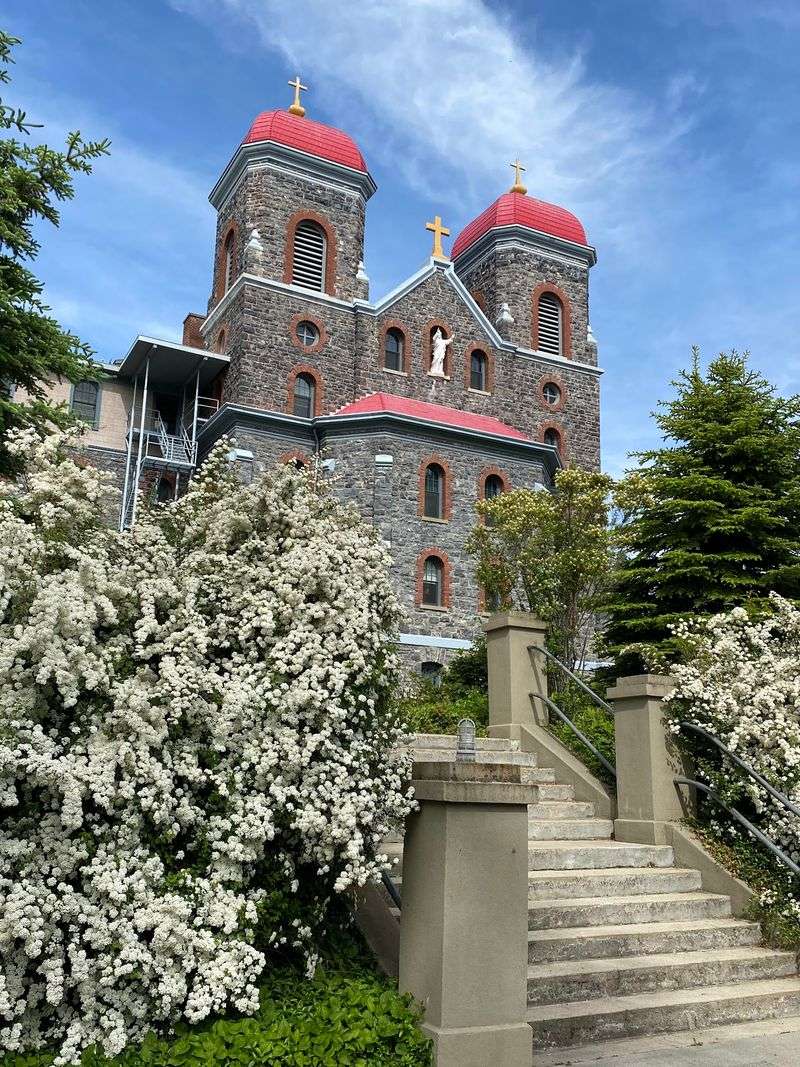
Architecture buffs get plenty to study here, starting with walls that measure a full two feet thick.
Romanesque Revival design gives the chapel its rounded arches and heavy, grounded look, the kind of building that seems to have grown out of the hill rather than been set on it.
A three-quarter-story stone foundation lifts the whole structure, and a broad stairway with a balustrade leads up to the front entry. Climbing those steps slows most visitors down, which feels like the point.
Seven bays run along the length of the chapel, each braced by a short buttress. Every bay frames a tall two-story arched window crowned by an oval one above, all outlined in brick that was made locally.
Run your eye along the seams and you will notice how tightly the blocks fit.
Nothing about the craftsmanship shouts for attention, yet the finished chapel remains a rare example of traditional Benedictine building in Idaho.
Blue Porphyry Walls Were Built From Stone Quarried Right On The Hillside
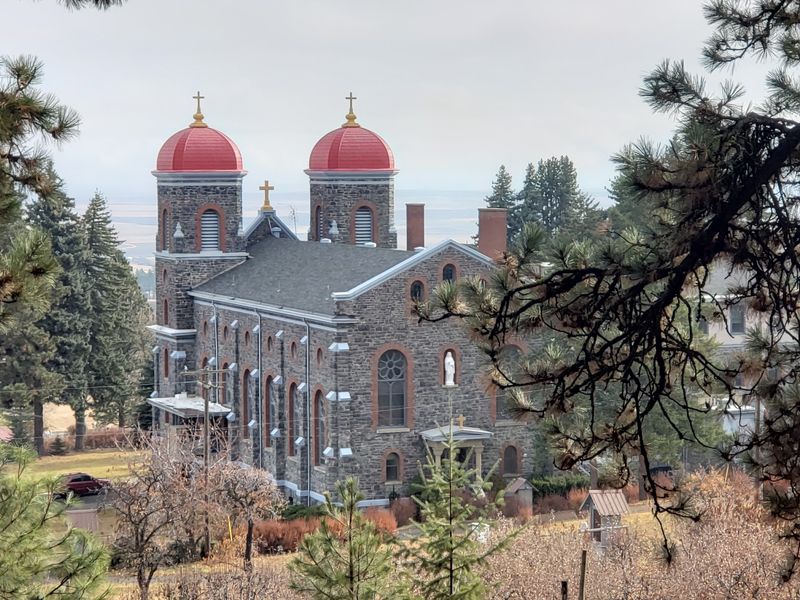
Touch the exterior on a warm day and the blue-gray porphyry feels cool and faintly rough, speckled with crystals that glint when the light hits right. None of it traveled far.
Workers pulled the stone straight from the hillside that holds the property.
Records from the period note that some of the Sisters themselves helped quarry and haul those heavy blocks to the building site.
Picture wheelbarrows, horse teams, and long summer days, and the scale of the effort starts to sink in.
Construction began in 1919 and wrapped up in 1924, six years of steady work that produced a building meant to outlast everyone who touched it.
Because the stone came from this exact ridge, the walls shift color with the weather, turning silvery in overcast light and almost violet near sunset. Visitors who linger after 4 p.m. often catch that change, and it is worth waiting for.
Inside, The Chapel Feels Far Older Than Its Idaho Setting Suggests
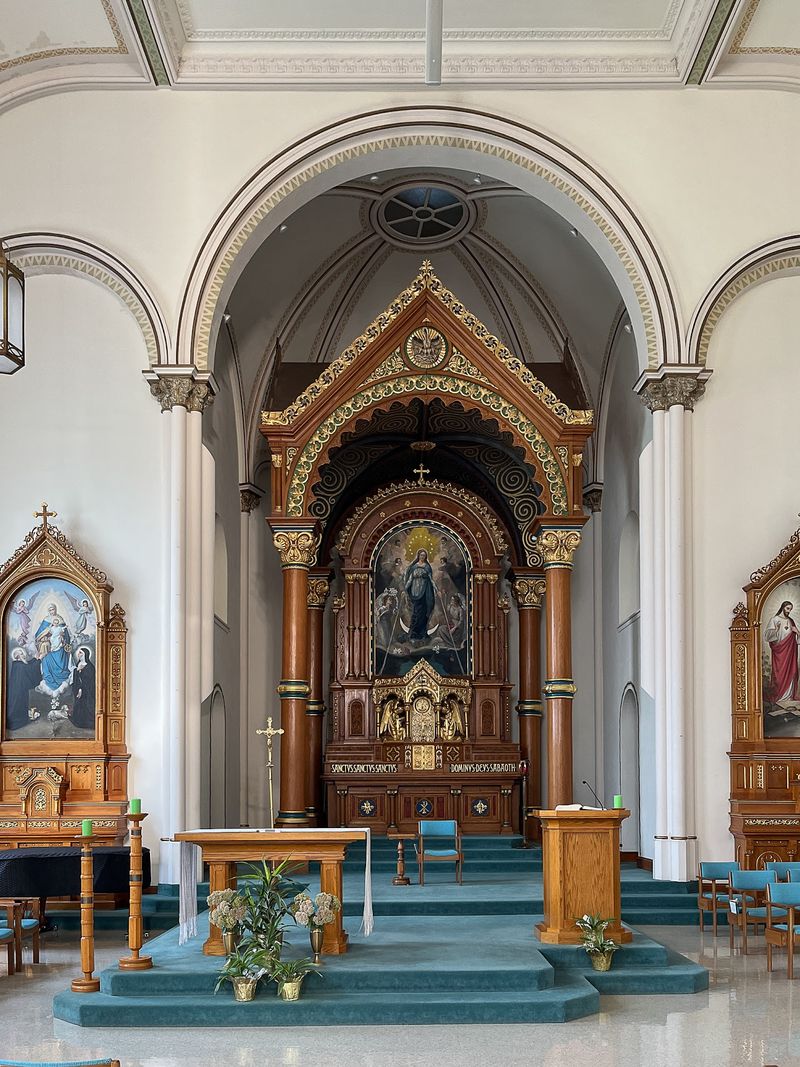
Pull open the door and the temperature drops, the noise of the prairie disappears, and centuries of quiet seem to settle over the pews. Hand-carved wood fills the space, dark and detailed enough to reward a slow walk down the aisle.
The high altar came as a gift, crafted in Sigmaringen, Germany, in 1928 by a firm known for religious art. Made from hand-carved oak, its pieces were mortised and glued with no nails anywhere in the joinery.
Above it rises a triple baldachin, 27 feet tall, resting on six pillars that draw the eye straight upward.
Side shrines carry their own history, saved from the original wooden monastery and purchased in 1909 from Dubuque, Iowa.
In 1947, Alex Linenberger and Associates painted the ceilings and walls, adding emblems of the Apostles’ Creed.
Ask a Sister about the carvings if one is nearby. The symbolism behind them turns a pretty room into a story.
The 97-Foot Towers Can Be Seen From Miles Across The Camas Prairie
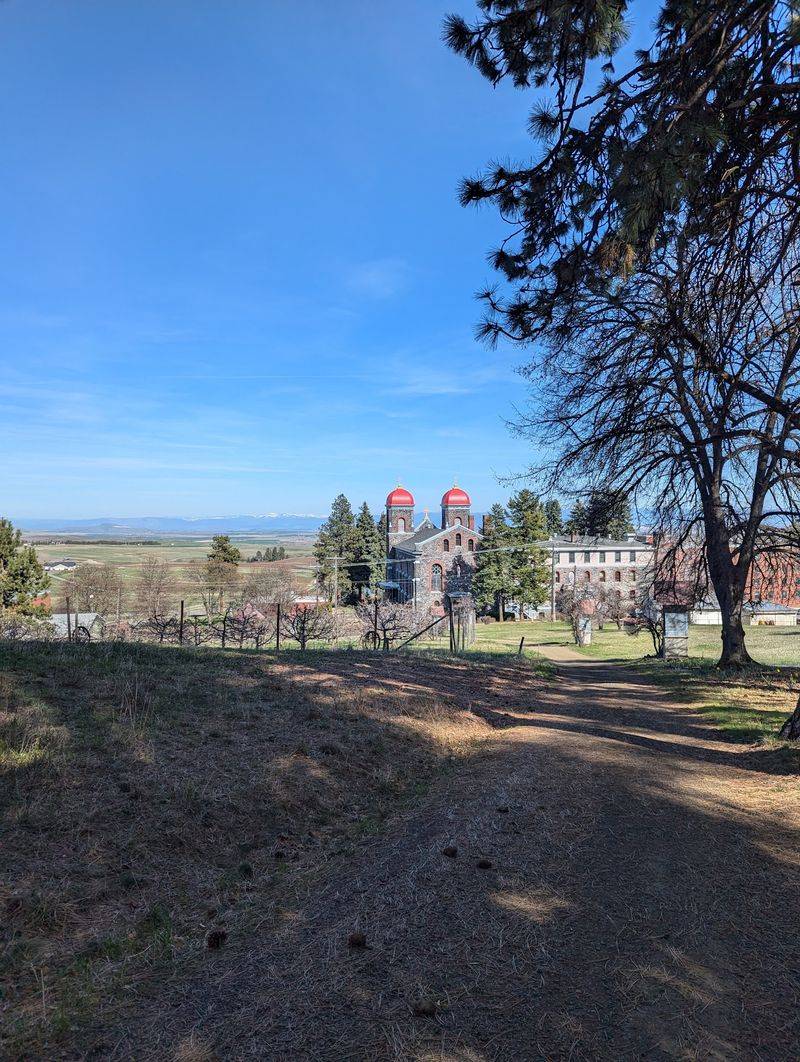
Height changes everything out here. Sitting at nearly a mile above sea level, the monastery uses its elevation the way a lighthouse uses a headland, and those 97-foot corner towers become a landmark for anyone crossing the prairie.
Mountains form the backdrop behind the complex, while wheat and canola fields spread out in every direction below.
From the grounds you can pick out the Clearwater and Bitterroot ranges, and on a clear day even glimpse the jagged Seven Devils to the southwest. Bring binoculars if you like naming peaks.
Travelers approaching from different highways often spot the towers at odd moments, a red smudge on a green ridge that grows sharper mile by mile. It works as a natural navigation point, which is exactly what the builders would have understood.
Late afternoon offers the widest views, when haze lifts and the prairie takes on long bands of shadow. Find a bench, sit still, and let the distance do the talking.
A Museum On The Grounds Adds Another Layer To The Visit
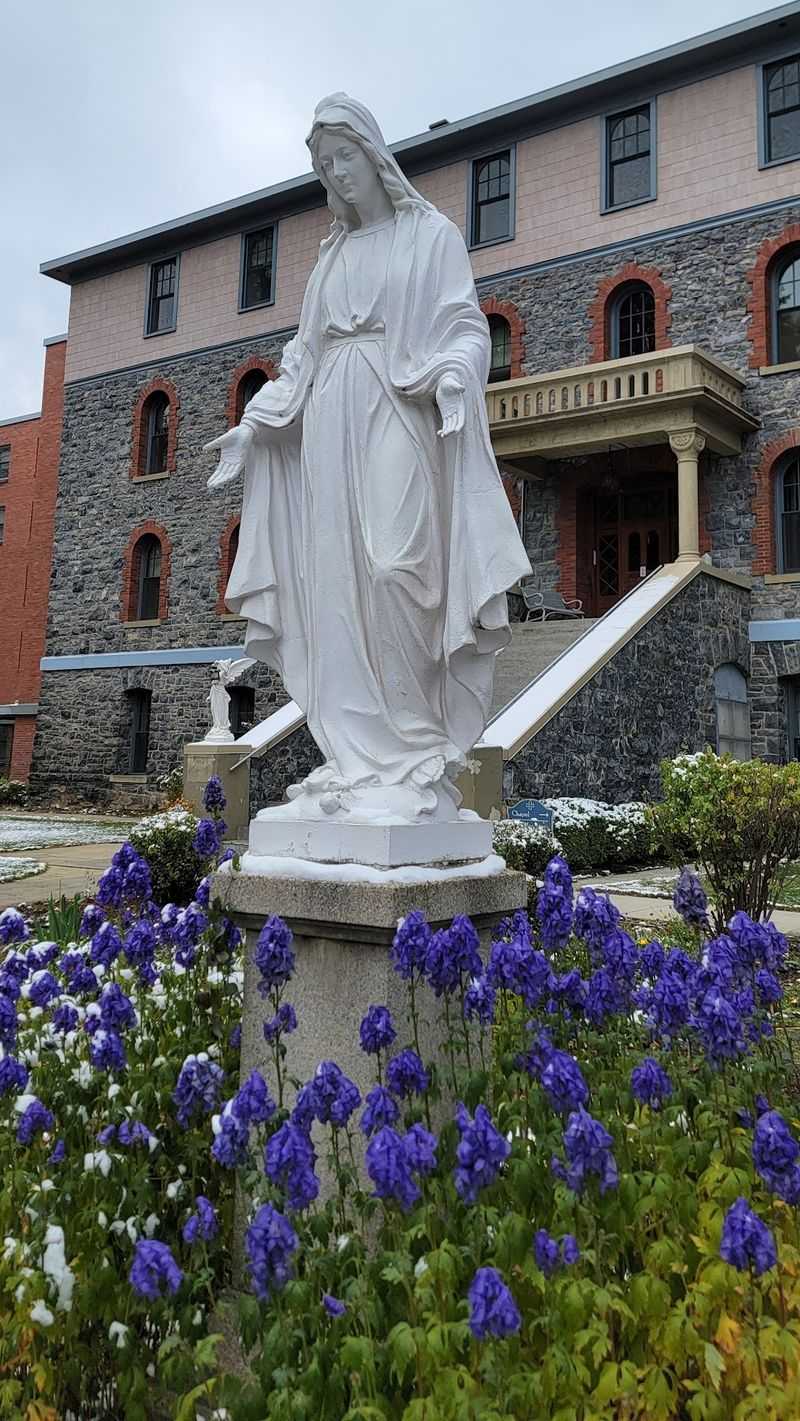
History hunters could easily lose an hour or two in the Historical Museum at St. Gertrude, one of the oldest continuously operating museums in the American Northwest.
The building sits on the monastery grounds at 465 Keuterville Rd, Cottonwood, ID 83522, an easy walk from the chapel.
Its mission covers the Camas Prairie, the Snake and Salmon Rivers, and the communities around them.
Exhibits introduce figures such as Polly Bemis, Buckskin Bill, and vaudeville performer Winifred Rose Emanuel.
Other galleries trace the Benedictine Sisters’ journey, share the history of the Nez Perce Tribe, and document Chinese mining across the region.
One case holds a 13,000-year-old Western Stemmed Point on loan from the Cooper’s Ferry Archaeological Site, where evidence points to people living here 16,000 years ago.
A faithful replica of the original attic museum honors Sister Alfreda Elsensohn, the historian who started it all. Restrooms and a gift shop are on site, and a modest admission fee applies.
Gardens, Trails, And Quiet Wooded Acres Surround The Historic Complex
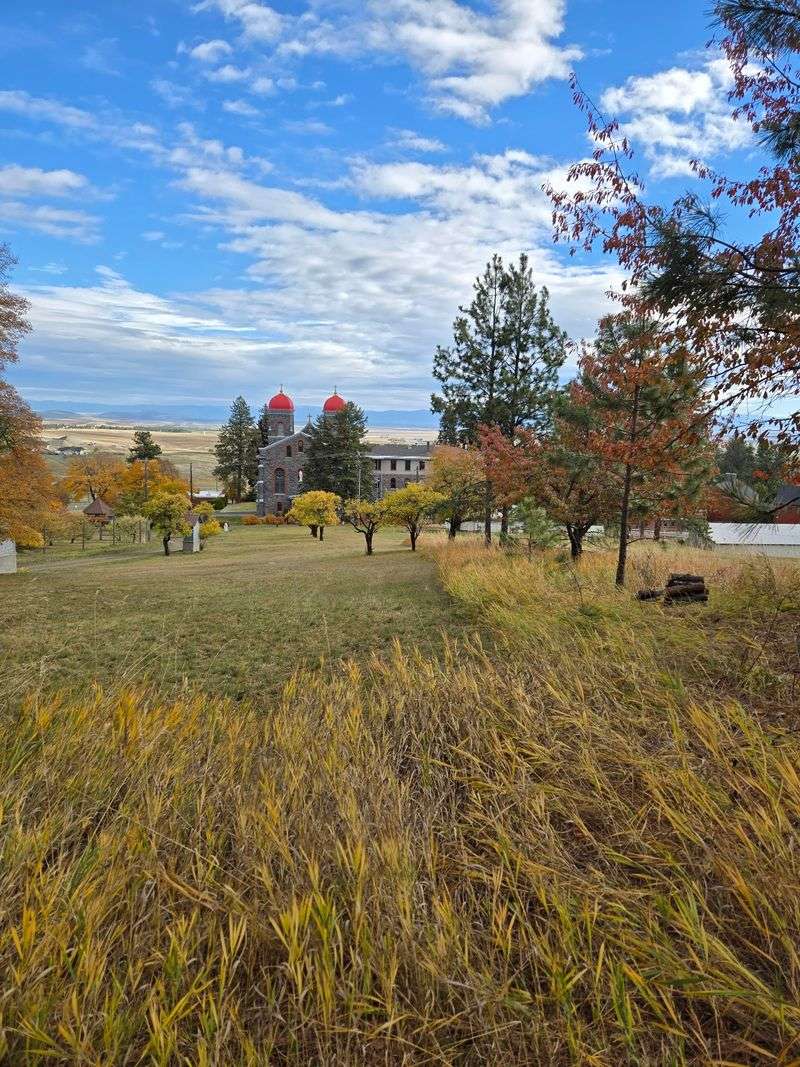
Roughly 1,400 acres wrap around the buildings, and much of that land is forest. Orchards, vegetable gardens, and berry patches grow here too, supplying fresh produce to the community and filling summer air with the smell of warm fruit.
Forestry on the property follows a professional management plan, and the operation earned recognition as Idaho’s Tree Farm of the Year in 2001.
Walking paths climb the hillside behind the monastery through wildflowers and songbird chatter. One loop trail runs about two miles down through sheltering timber, shady enough to feel welcome on a hot afternoon.
Stations of the Cross line part of the route, ending at a grotto chapel and the Sisters’ cemetery. A memorial garden nearby offers a bench and stillness.
Flower beds near the buildings hold columbine, roses, and other blooms under big shade trees.
Wear sturdy shoes, since the hill behind the complex gets steep quickly, and the summit views reward the effort.
The Contrast Between Open Prairie And Monumental Stone Architecture Makes The Arrival Unforgettable
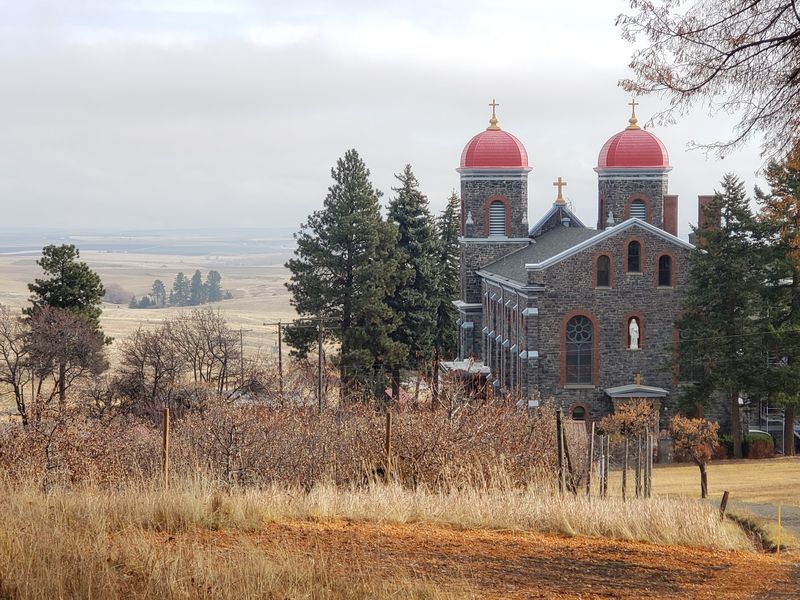
Few first impressions in the Northwest land quite like this one. Endless rolling farmland, then a sudden wall of quarried stone with towers on top, a combination that reshapes what you thought this corner of the map looked like.
The monastery stands about 2.5 miles from downtown Cottonwood, with mountains behind it and the prairie stretched out in front. Benedictine Sisters settled in the area in 1907 and chose this site deliberately.
Their reasons make sense the moment you arrive: sweeping views toward the Clearwater and Bitterroot Mountains, distant Seven Devils peaks, and pine-scented air that reminded the Swiss founders of home.
Built in the 1920s, the complex remains a singular example of traditional Benedictine architecture in this part of the country, and it joined the National Register of Historic Places in 1979.
Doors open at 9 a.m. Monday through Saturday and close at 4:30 p.m., with Sunday reserved.
Allow about three hours to see it properly.
Even if you arrive expecting a quick architectural stop, the scale and setting have a way of stretching the visit.
Give yourself time to wander slowly, look back across the prairie, and let the place reveal itself beyond the first dramatic view.