This Hidden Idaho Forest Lets You Walk Among 500-Year-Old Cedars Nearly 10 Feet Across
Five hundred years is a ridiculous amount of time to stand in one spot.
These cedars have managed it.
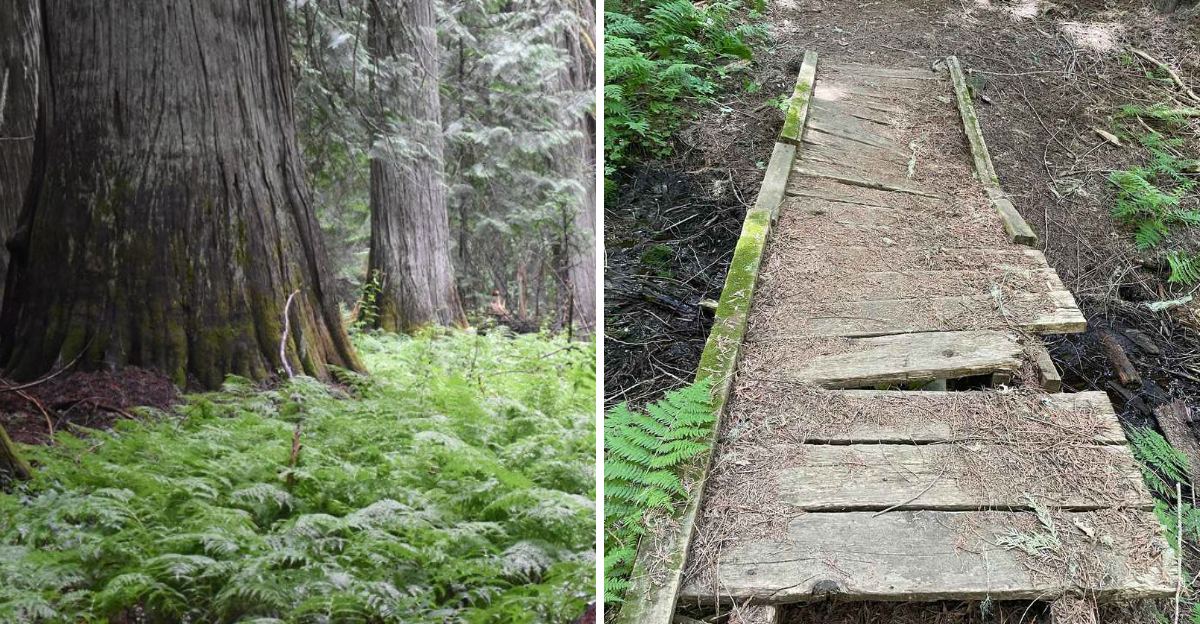
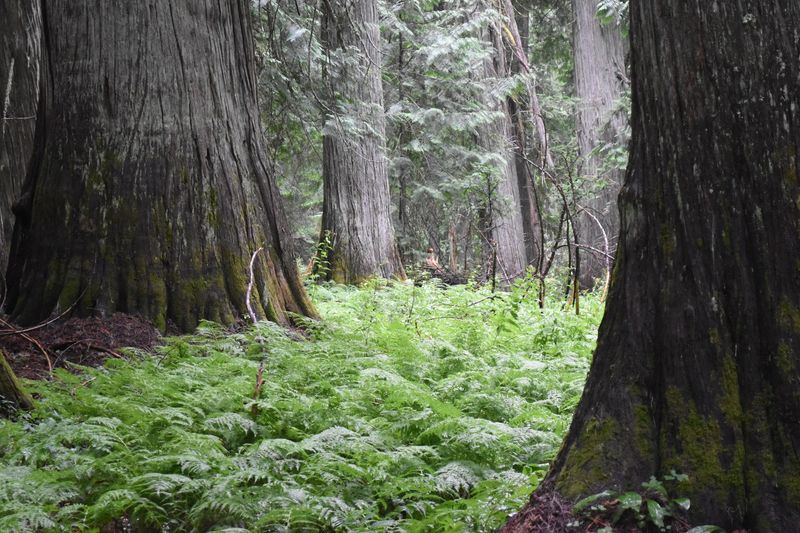
Far up in northern Idaho, a short forest trail slips between trees so wide that hugging one would require backup. Several trunks approach 10 feet across, and their roots disappear beneath a floor softened by centuries of needles and moss.
Then you look up. Way up.
The canopy closes overhead, the road feels much farther away than it really is, and even loud people tend to lower their voices without being asked.
That may be the strangest thing about this place. Nothing jumps out.
Nothing flashes. Nothing needs to.
A tree that started growing roughly half a millennium ago can handle the attention on its own.
The walk is short. The age math might keep you occupied for the drive home.
Walk Beneath Cedars That Were Already Old Centuries Ago
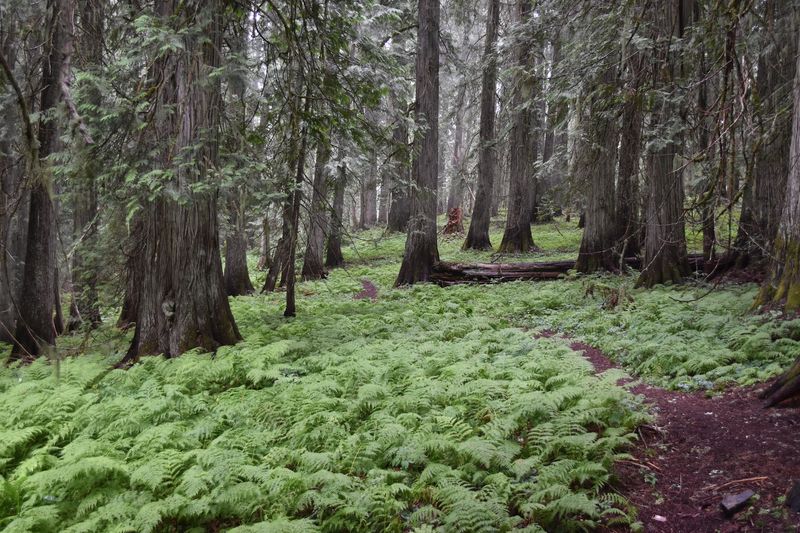
Some living things keep quiet records, and these cedars have been keeping theirs since the 1400s. Many of the western red cedars here sprouted more than 500 years ago, long before the first roads crossed this region.
Walking under them feels less like a hike and more like stepping into a very slow story.
Cool air greets you at the trailhead, damp and faintly sweet with cedar bark and wet soil. The grove spreads across forested hills near Clarkia, ID 83812, reached by a drive through creek bottoms and second-growth timber.
Even on a warm afternoon, the temperature drops several degrees once you pass the first big trunks.
Bark hangs in long, shredded strips, and the lower branches sweep down like heavy curtains. Take your time near the oldest giants; their roots have outlasted centuries of storms, fires, and deep mountain snow.
A few larch, spruce, and hemlock mix in, but cedar rules here.
Bring a light jacket even in summer, since shade this thick keeps the air cool all day.
You Can Stand Beside Trunks Nearly 10 Feet Across
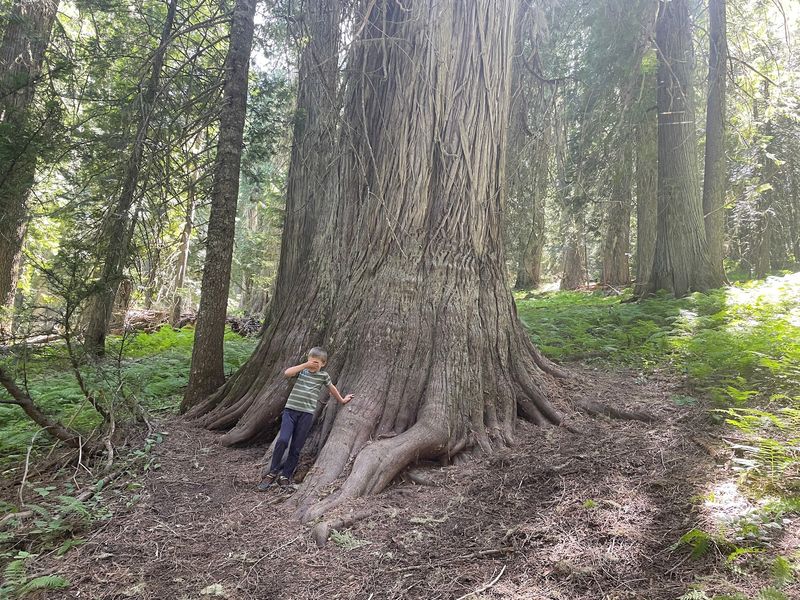
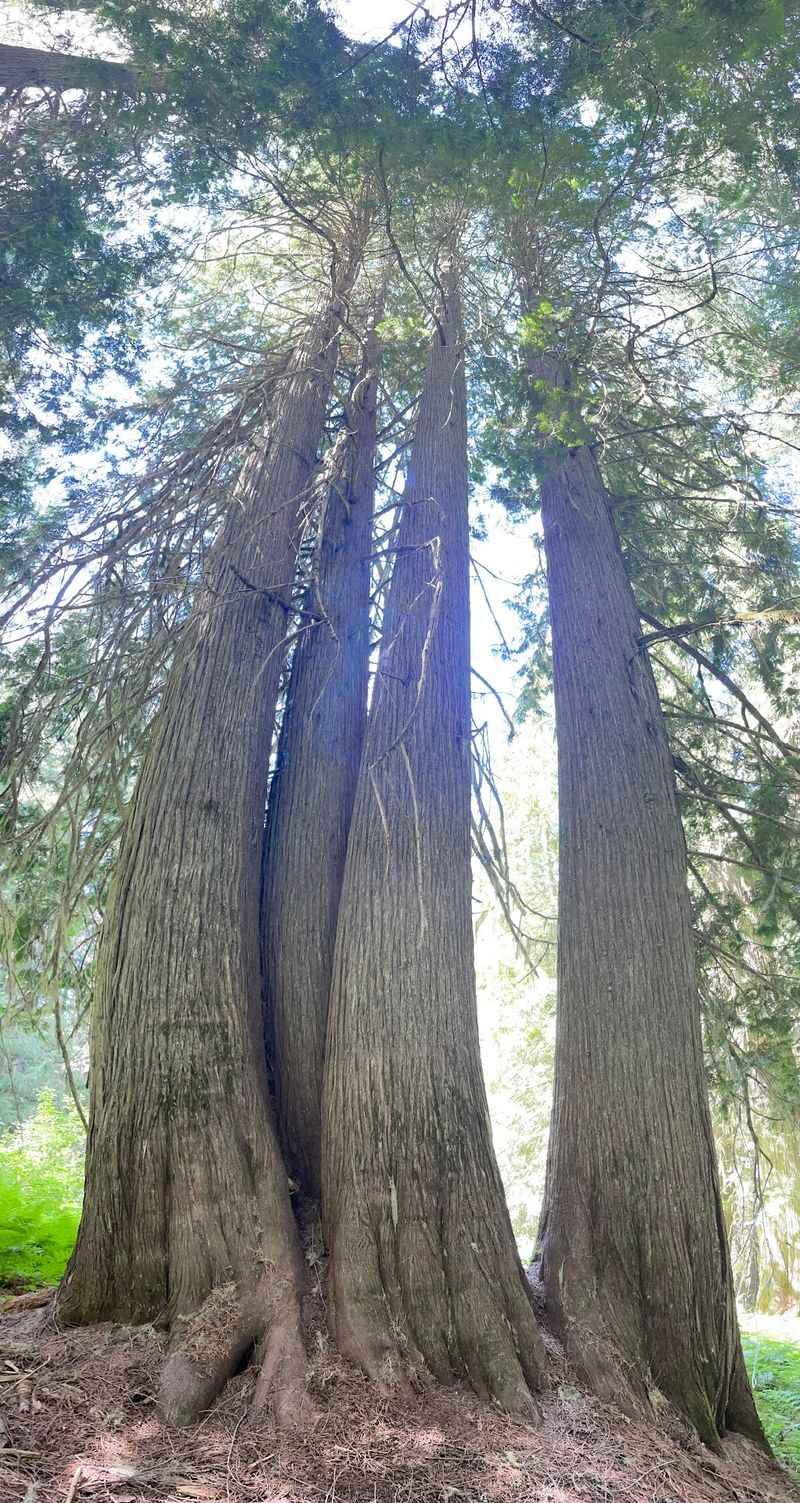
Hug one of these trunks and you will run out of arms. The largest western red cedars in the grove measure close to 10 feet across, which means it takes three or four people with fingertips touching to circle a single tree.
Photos rarely capture that width, so the first one always surprises visitors.
Scale becomes clearer when you stand at the base and look along the trunk. The bark ridges are wider than your hand, and the buttressed roots flare out like the feet of something enormous and patient.
Snow, wind, and centuries of growth have twisted a few of the crowns into strange, broken shapes.
Measuring by age helps too. Trees this size were young seedlings when the late 1400s brought European explorers to North America, and they were already mature when the first settlers reached this part of Idaho.
Standing beside that math changes how you see time.
Stay on the path while you admire them, since the shallow root systems sit just beneath the soft forest floor. A single misstep can compact soil that took decades to build.
Follow The Short Trail Through One Of Idaho’s Most Impressive Old-Growth Groves
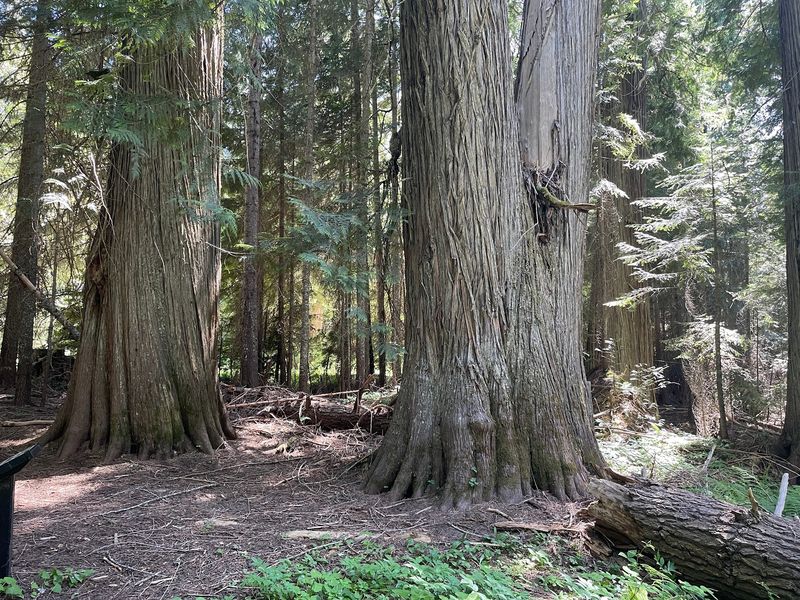
Trailhead parking is simple: a small gravel area, a sign, and a box of interpretive brochures. The main self-guided nature trail runs about half a mile in an easy loop, with numbered posts that match the descriptions in the booklet.
Grades stay gentle, which makes it manageable for grandparents, young kids, and anyone taking it slow.
Want more forest? The Big Loop Trail adds roughly another mile, curving deeper into the 240-acre botanical area where the understory thickens and the light dims further.
Both routes share the same trailhead, so you can decide how far to go once you arrive.
Footing is soft duff and packed earth, occasionally slick after rain, so shoes with grip beat sandals. Bring water, since there are no services at the site, and expect spotty cell coverage once you turn off the main road toward the grove.
Plan on an hour for the short loop if you stop to read the signs, longer if you keep tilting your head back at the canopy. Early morning brings mist, birdsong, and almost no company on the trail.
Look Up And See How Completely The Canopy Blocks Out The Sky
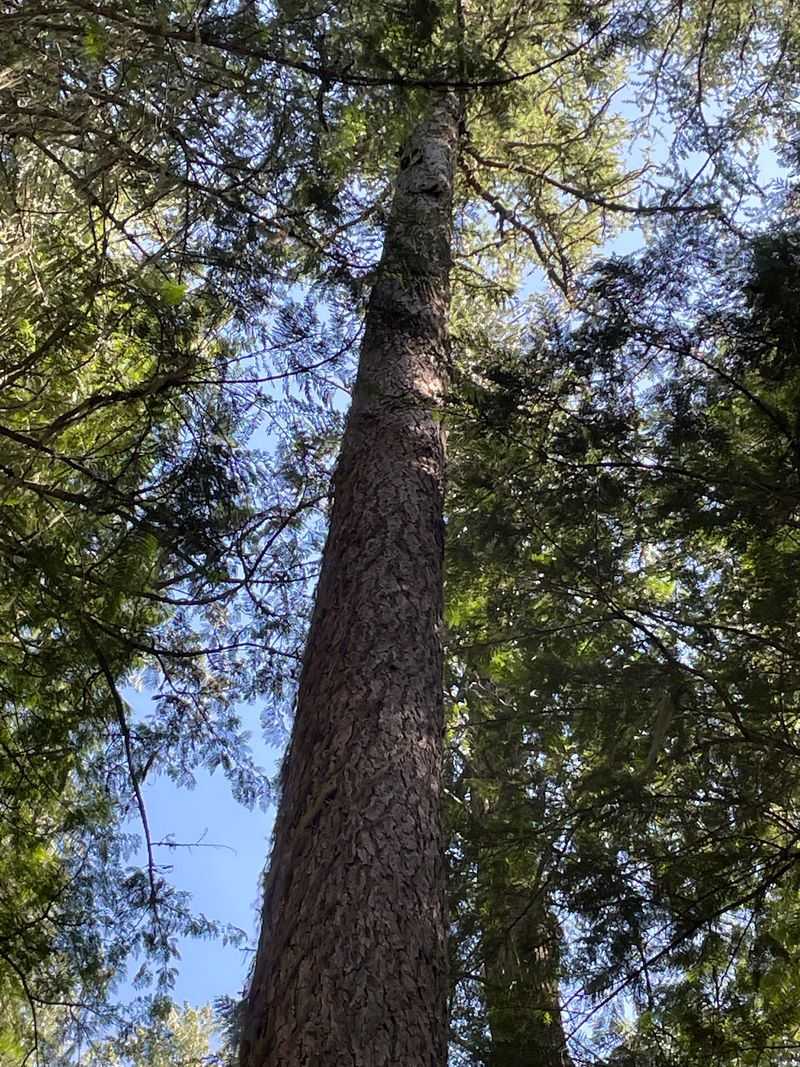
Look straight up and the sky mostly disappears. Branches from neighboring cedars weave together so tightly that only scattered beams reach the ground, dropping through the green like slender spotlights.
On overcast days the whole grove glows a soft, even emerald.
That thick ceiling does real work. It traps moisture, buffers wind, and keeps the ground cool enough that snowmelt lingers well into spring, creating a small climate different from the drier ridges nearby.
Lady fern thrives in that steady dampness, carpeting the floor between the trunks.
Sound behaves oddly too. Voices flatten, footsteps go quiet on the duff, and a raven passing overhead can seem strangely far away.
Few forests in northern Idaho give you this sensation of being indoors and outdoors at the same time.
Midday visits reward you with the sharpest light shafts, especially when a little mist hangs in the air. Photographers often wait for a breeze, since the moving branches shift those beams across the trunks in slow, changing patterns worth watching for a few quiet minutes.
Kids often notice the hush before adults do.
Slow Down For Ferns Moss And Forest Details Easy To Miss
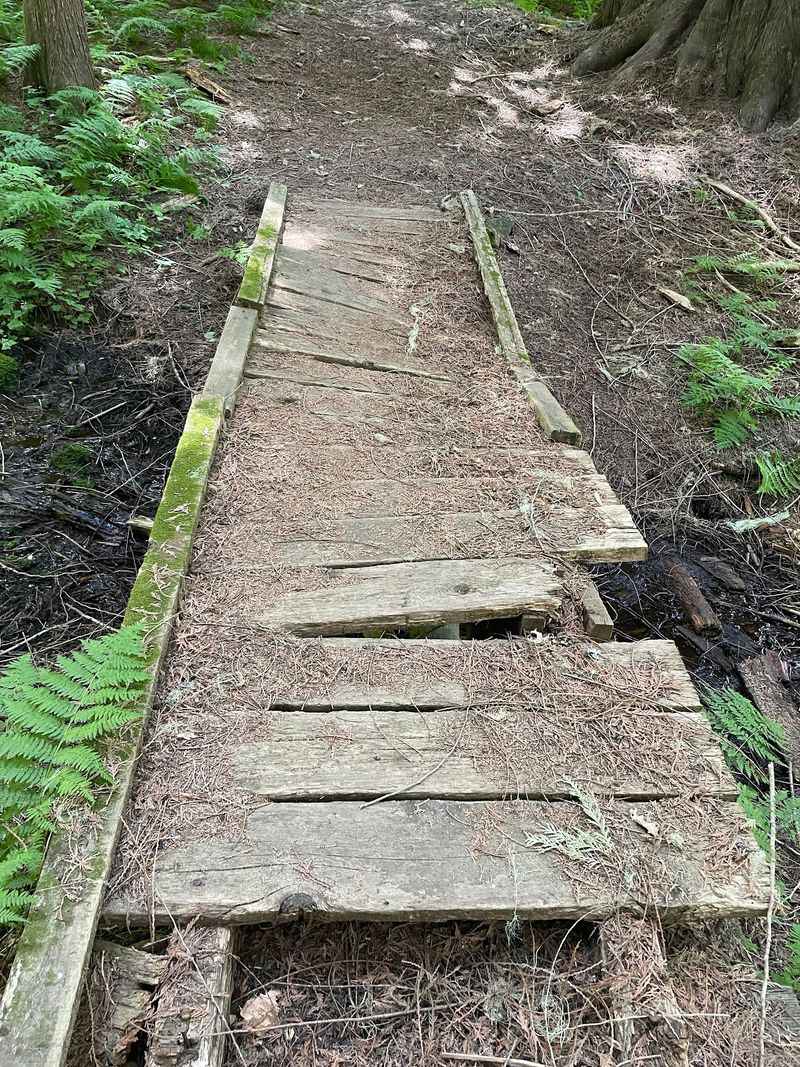
Slowing to a stroll changes everything you notice. Down near your boots, lady fern spreads in wide, feathery drifts, and moss coats fallen logs in green so plush it looks like fabric.
Tiny mushrooms push up beside decaying wood, doing the patient job of recycling the forest.
A small stream threads through the grove, gurgling quietly under overhanging fronds. Sit on one of the log benches along the trail and let your ears adjust; you will pick up water, wind, and the occasional tap of a woodpecker.
Nurse logs are worth a close look. These fallen giants sprout rows of seedlings along their length, feeding the next generation of cedars with their own slow decay.
Mosquitoes can be lively in early summer, so a hat and repellent make lingering more comfortable.
Look for wild ginger leaves, single flowers hiding under leaf litter, and lichens dangling from the branches like pale threads.
Pack a small hand lens if you have one, because the miniature world here rivals the giants for sheer interest, especially in late spring when new growth unfurls.
Bring A Camera Because The Scale Is Hard To Appreciate Until You Are There
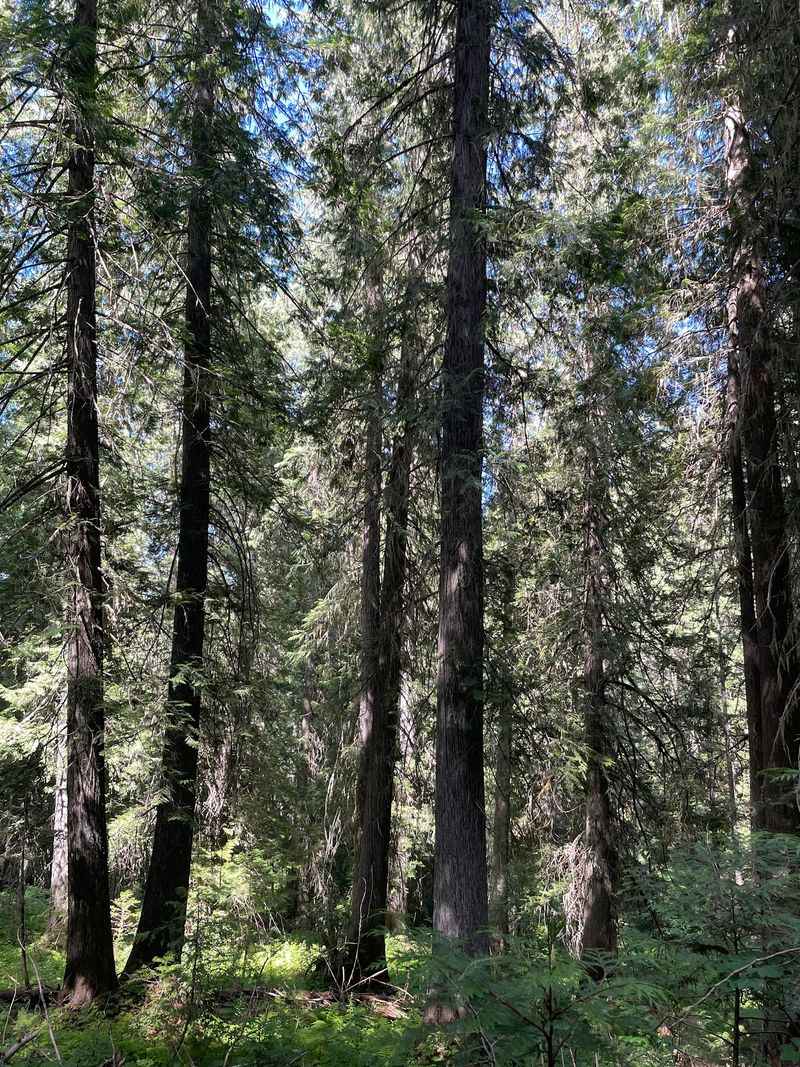
Cameras struggle here, and that is part of the fun. Wide-angle lenses help, but nothing quite conveys a trunk 10 feet across until a person stands beside it for scale.
Ask your hiking partner to pose at the base of the biggest cedar and the photo suddenly makes sense.
Light is the other challenge. The canopy keeps the grove dim, so steady hands, a small tripod, or a bump in your camera settings will save your shots from blurring.
Turning off the flash keeps the bark textures natural rather than washed out.
Vertical framing flatters these trees. Tilt the camera up along a single trunk and let the bark lines lead the eye toward the green ceiling far above.
Close-ups of bark strips and fern fronds round out the set.
Rain days deepen every color, turning moss neon and bark chocolate brown, which is why some visitors from across Idaho time their trips for damp weather.
Keep a cloth handy for the lens, protect your gear in a dry bag, and remember that phone cameras do surprisingly well in soft, shadowless light.
Enjoy A Quiet Walk That Feels Far Removed From Busier Idaho Attractions
Solitude comes standard on this trail. Weekday mornings often pass without another car in the lot, and even summer weekends stay calm compared with the crowded lakeshores and busy state parks elsewhere in the region.
There are no ticket booths, gift shops, or loudspeakers, just trees and the sound of your own steps.
Getting here takes intention. The route from Clarkia winds along forest roads through timber country and creek crossings, gravel in places and dusty in late summer.
The grove’s mailing address, Clarkia, ID 83812, points to the small community that serves as the last stop for fuel and snacks before the turnoff.
Autumn adds gold from the larch mixed among the cedars, while early summer brings the greenest ferns. Winter access can close with snow, so check conditions with the St. Joe Ranger District before making the drive.
Pack a picnic and eat at the benches, since restaurants are scarce out here. Carry out everything you bring, keep voices low, and the hush that makes this walk special will still be waiting for the next visitor.
Leave With A New Appreciation For Just How Ancient This Forest Really Is
Something shifts on the walk back to the car. Numbers that sounded abstract at the trailhead, 500 years, 10 feet across, 240 acres, start to feel like living facts you can point at.
The scale sinks in slowly.
Recognition came officially in 1980, when the grove earned status as a National Natural Landmark. That designation honors places showing the natural heritage of the country, and this pocket of old growth survived while so much surrounding forest changed hands and shape.
Think about what these trees have outlasted: droughts, windstorms, wildfire seasons, and generations of people who never knew they existed.
Their bark carries scars, their crowns show breaks, and still they stand.
A seedling planted the year you were born would look like a toothpick beside them.
Visitors often leave talking more slowly than when they arrived. If you want the feeling to stick, jot a note in your phone before you drive off, naming what you smelled and heard among the oldest trees in this corner of Idaho.
Memories of the grove fade less quickly when you write them down.