This California Art Fair Turns A Redwood Forest Into An Outdoor Gallery With 125+ Artists
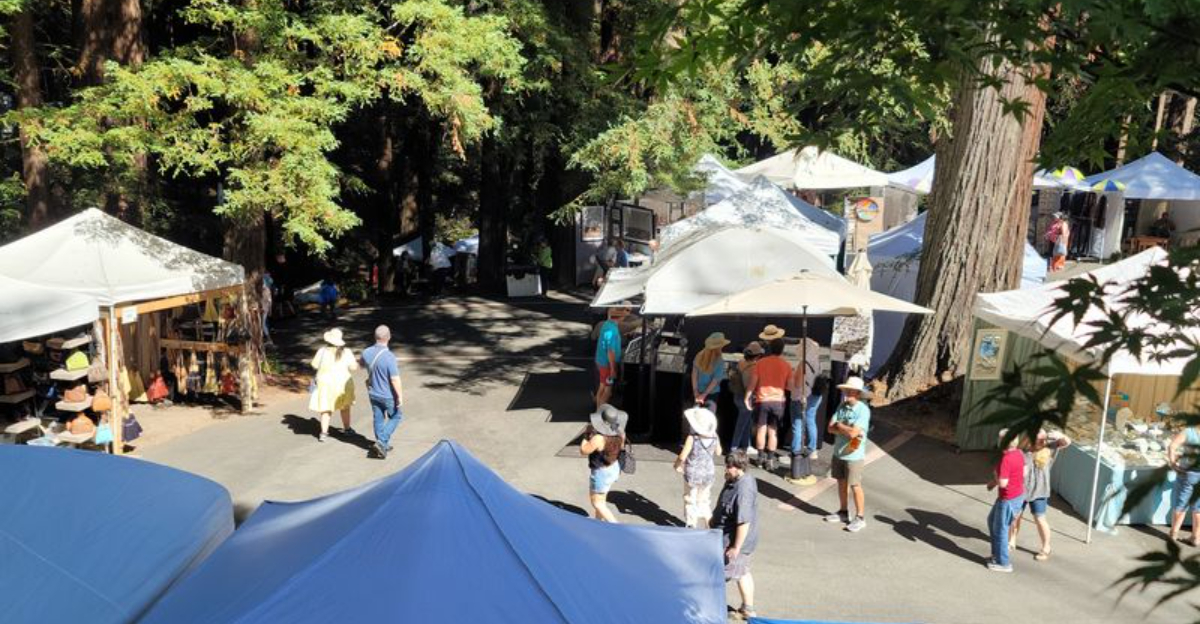
Redwoods are usually enough to make people stop and stare.
Add paintings, ceramics, jewelry, sculpture, and more than 125 artists beneath that canopy, and the forest starts behaving like a gallery with no ceiling.
This California art fair trades white walls and polished floors for towering trees and the kind of setting that makes browsing feel more like wandering.
You might pause over a piece of pottery, look up at the redwoods, then completely forget which direction you were heading. That is fine. The fair works better without a strict route anyway.
Art feels different outdoors.
Colors shift with the light. Handmade pieces sit against bark and greenery instead of blank walls. Even a simple booth can feel unexpectedly dramatic in the middle of the forest.
Come ready to browse slowly. The artwork deserves attention, but the setting keeps trying to steal it.
More Than 125 Artists Set Up Beneath The Redwoods
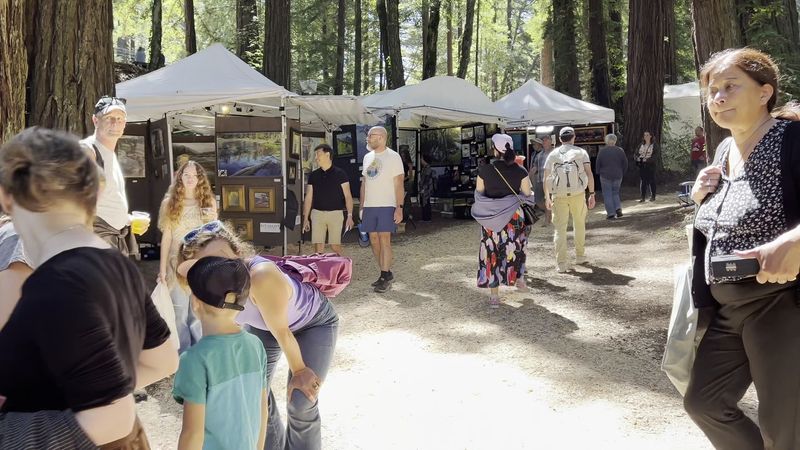
Over 125 participating artists fill the 2026 fair, and 23 of them are exhibiting here for the very first time. That mix matters more than the raw number suggests.
Returning artists bring familiarity, while newcomers keep the selection from feeling frozen in place year after year.
Booths are spread along forest paths rather than crammed into rows, so the pace of browsing stays comfortable even when the crowd thickens around midday.
Mediums range widely across painting, ceramics, jewelry, glass, sculpture, textiles, photography, and woodwork.
Someone hunting for a small handmade gift and someone shopping for a larger framed piece can both find options without walking the same ground twice.
Talking directly with artists is part of the appeal here, since most stand in their own booths and explain how a piece came together.
Questions about technique, materials, or care instructions usually get real answers rather than rehearsed pitches.
Bringing a rough idea of wall space or budget helps, because the range is broad enough to be genuinely overwhelming on a first visit.
Walking the full loop once before buying anything is a reasonable strategy.
Prices and inventory vary by artist, and popular items sometimes sell out over three days, so returning early on the second or third morning can improve selection.
A Juried Fine-Art Fair Rather Than A Craft Market
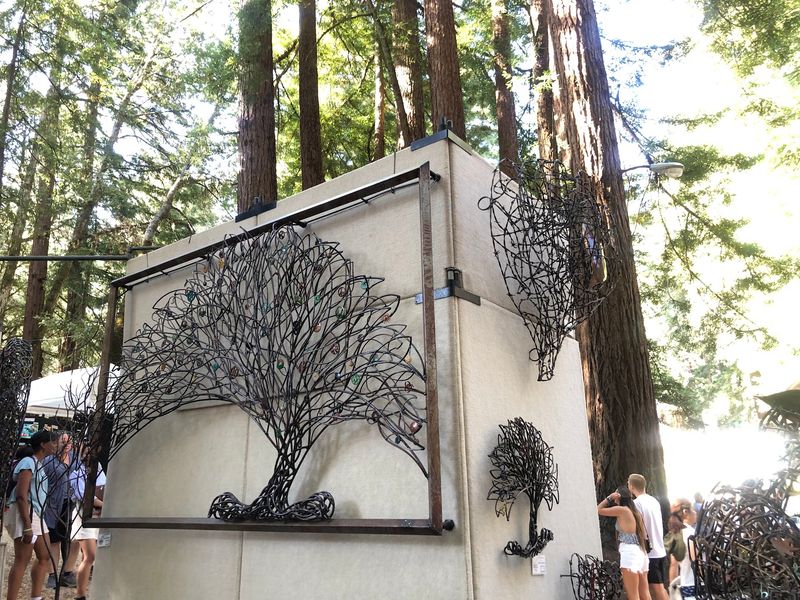
Selection here happens through a jury process, which changes what shows up on the tables.
Artists apply and are reviewed before being offered a booth, so the lineup is curated rather than first-come.
Fair rules require that exhibited pieces be original work created by the participating artist.
Shoppers used to wandering weekend markets full of imported goods will notice the difference quickly.
Booths tend to hold cohesive bodies of work instead of mixed resale inventory, and the person behind the table generally made what is on it.
That setup makes conversation easier and questions about process more rewarding.
For anyone learning to shop for original art, the juried structure functions as a helpful filter.
Comparing similar mediums across several booths becomes a decent education in craftsmanship, since differences in glaze, joinery, or brushwork stand out when the quality baseline is consistent.
Taking photos should always be cleared with the artist first, as many prefer their designs not be photographed. Asking politely almost always goes fine.
Business cards are widely available, and plenty of visitors use the fair as a way to find artists they will follow or commission later in the year.
Buying nothing at all is perfectly acceptable, and browsing carefully is part of what makes the weekend worthwhile.
The Forest Itself Does The Work Of A Gallery
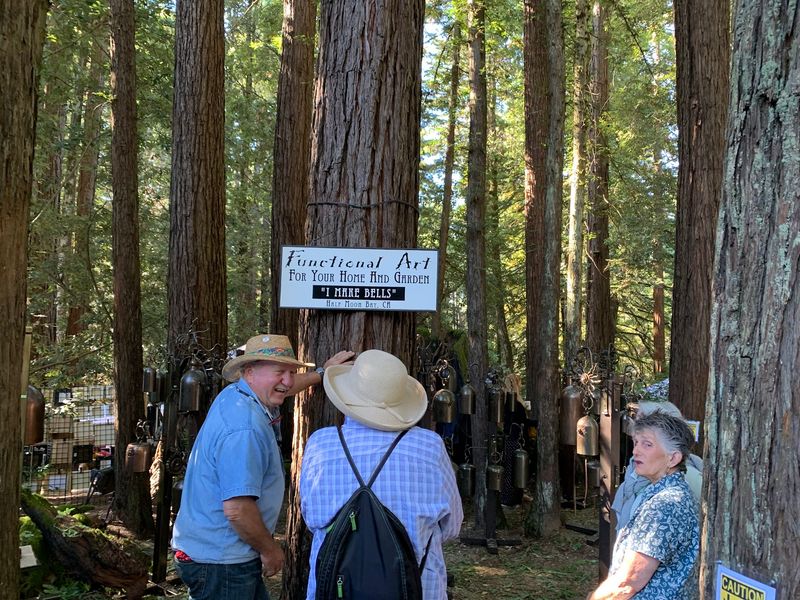
Skip the convention center comparison entirely, because nothing about the setting resembles one. Booths sit among coastal redwoods in the Santa Cruz Mountains at roughly 2,000 feet elevation.
Underfoot there is duff and packed soil instead of asphalt, and overhead the canopy filters light into soft patches that shift through the day.
Sound behaves differently in a redwood grove. Conversations stay muted, footsteps go quiet, and the general noise level sits well below what a street fair produces.
Visitors sensitive to crowds and echo often find the atmosphere easier to handle for a couple of hours.
Shade is nearly constant, which keeps the browsing comfortable but also means cooler air than the valley below.
Closed-toe walking shoes are the sensible choice, since paths include gentle slopes, exposed roots, and uneven patches.
Strollers and wheelchairs can be managed in places, though the natural terrain is not uniformly smooth, so planning for slower movement is wise.
The trees also affect how art reads. Colors look different under filtered green light than they will at home, so holding a piece up in a brighter spot before deciding can prevent surprises later.
A Labor Day Tradition Dating Back To 1963
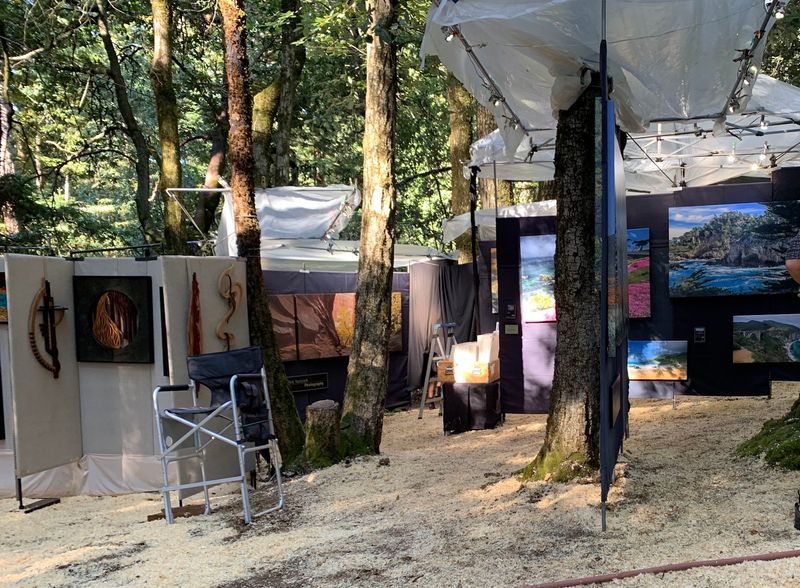
Six decades is a long run for any community event.
Founded in 1963, the fair has grown into a tradition spanning more than sixty years without abandoning its small mountain roots.
Longevity shows up in the details, from the layout of the grounds to the food traditions that regulars expect to find in the same spots.
Families return year after year, and it is common to see multiple generations walking the paths together.
Some artists have exhibited for decades, which means longtime visitors sometimes track a maker’s evolution across many summers. That kind of continuity is rare at larger commercial shows.
The history also explains the fair’s scale and character. Growth happened gradually and stayed tied to the neighborhood rather than expanding into a sprawling regional festival.
What resulted is an event large enough to offer real variety yet still small enough to walk comfortably in an afternoon. First-time visitors can lean on that stability when planning.
The Labor Day weekend timing has held for many years, so the fair is reliably on the calendar rather than moving around.
Checking the official schedule before driving up is still the smart move, since specific hours and details can be updated.
Free Admission For Everyone Who Shows Up
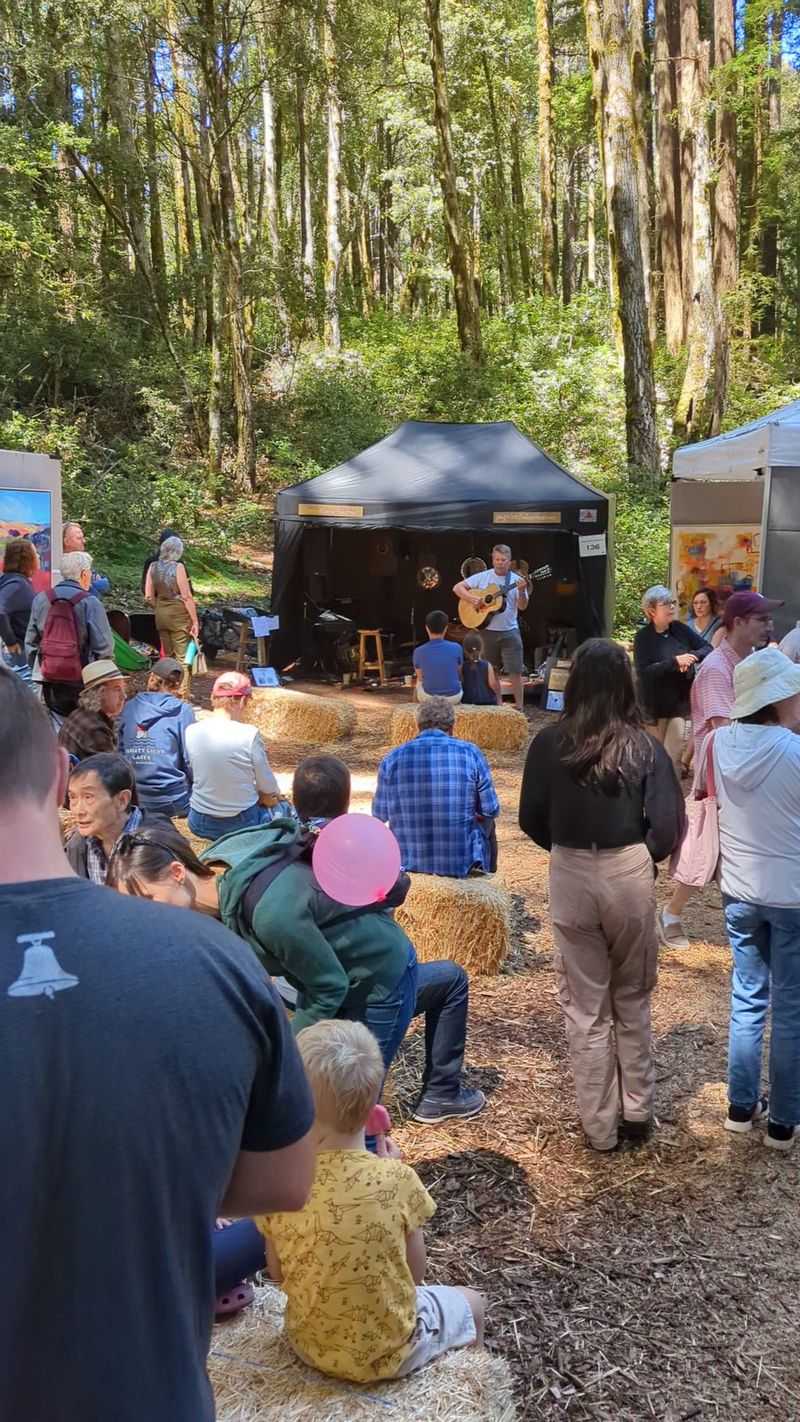
No ticket booth, no wristband, no online reservation. Admission is completely free, and visitors can browse the booths without buying anything to get in.
Artist booths stay open from 10 a.m. to 5 p.m. on all three days. Free entry changes how people use the fair.
Dropping in for forty minutes on the way somewhere else is reasonable, and so is spending most of a day walking the loop twice with a lunch break in between.
Nobody has to justify the cost of admission by staying longer than they want.
Budgeting becomes simpler too. Money that might have gone to entry fees can go toward art, food, or the kids’ activity area instead.
Families with several children benefit most from that arrangement.
Arriving right at 10 a.m. usually means thinner crowds and easier conversations with artists, while late afternoon brings a calmer, winding-down feel as the light gets lower in the trees.
Midday is generally the busiest stretch.
Bringing a card and some cash is practical, since payment methods vary from booth to booth and cell service in the mountains can be inconsistent.
Volunteers Run Practically Everything
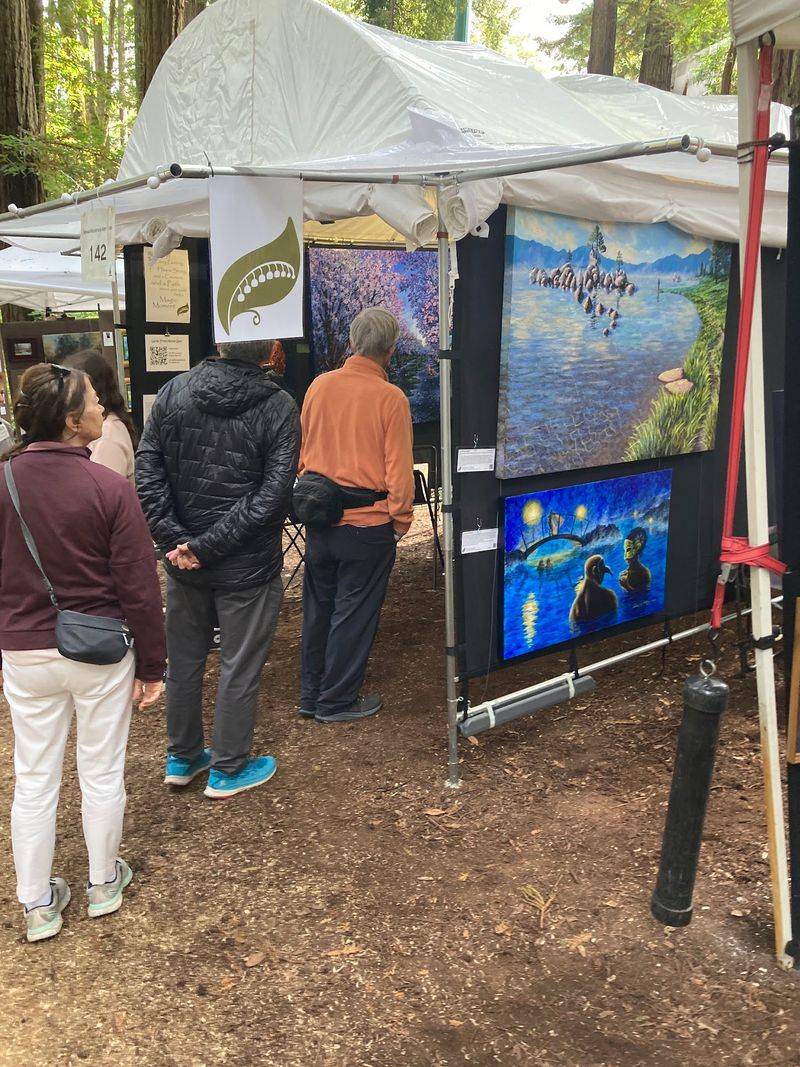
Behind the scenes, this is a neighborhood operation on a surprisingly large scale.
More than 400 community volunteers are involved in putting on the 2026 event, continuing a community-run tradition that goes back to the beginning.
They handle food service, shuttles, waste stations, information booths, and the countless small tasks that keep three days running. Recognizing that changes the tone of interactions.
The person handing over a plate of food or directing traffic likely lives nearby and signed up for a shift rather than clocking in for a job. Patience and a thank-you go a long way.
Volunteer staffing also explains why the fair feels personal rather than polished. Signage is straightforward, lines move at a human pace, and questions get answered by people who actually know the grounds.
Visitors looking for local recommendations often get better information here than from any printed map. Practically speaking, arriving with reasonable expectations helps everyone.
Peak lunch hours may involve waiting, and shuttle stops can get busy around late morning. Building a little flexibility into the schedule keeps the day relaxed instead of rushed.
Purchases Feed Directly Back Into The Mountain Community
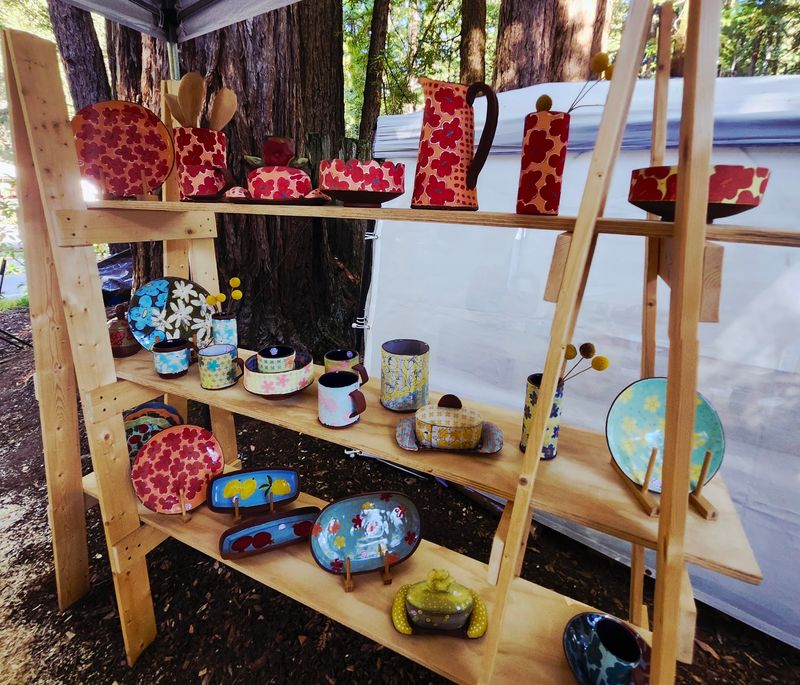
Spending here does more than fill a shopping bag.
Fair proceeds help support the Kings Mountain Volunteer Fire Brigade, Kings Mountain Elementary School, the community center, youth programs, and the expenses of running the fair itself.
For a small mountain community, that funding carries real weight.
Fire protection in a forested area at elevation is not an abstract concern, and a volunteer brigade depends on community backing to stay equipped.
The elementary school and youth programs benefit similarly from a weekend that draws visitors from across the Bay Area. Knowing where the money goes tends to shift how visitors approach the day.
Buying lunch, picking up cookies, or choosing a piece of pottery becomes a small contribution rather than just a transaction. Plenty of families make a point of eating on the grounds for exactly that reason.
Artists set and keep their own prices, so a purchase supports the maker directly while the fair’s food and activity revenue supports local causes. Both matter.
Getting There Involves Shuttles And Roadside Parking
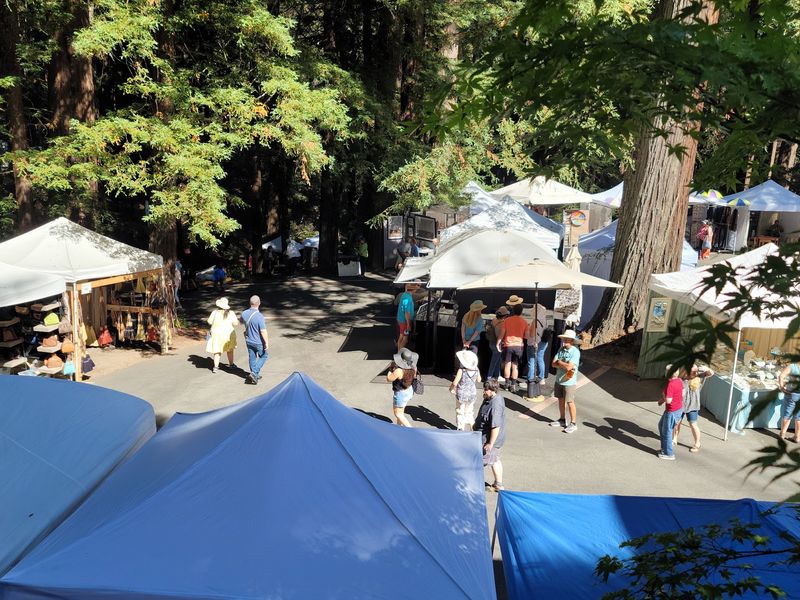
Plan the arrival carefully, because there is no dedicated fair parking lot.
Parking happens along Skyline Boulevard, and free shuttles run from designated stops both north and south of the grounds from 9:30 a.m. to 5 p.m.
The fair grounds sit at 13889 Skyline Blvd., Woodside, California, on a two-lane mountain road with limited shoulder space.
Following volunteer directions matters here, since the road is narrow and used by regular traffic including cyclists. Shuttles exist specifically to keep that road manageable.
Riding one is faster and less stressful than hunting for a closer spot.
Arriving earlier in the morning generally means shorter shuttle waits and easier roadside parking.
Late morning through early afternoon is the busiest window in both directions, and the return trip around closing time can involve a line. Building an extra half hour into the plan removes most of the frustration.
Comfortable shoes help on both ends, since there is walking between the parking area and the shuttle stop.
Only Three Days On The Calendar
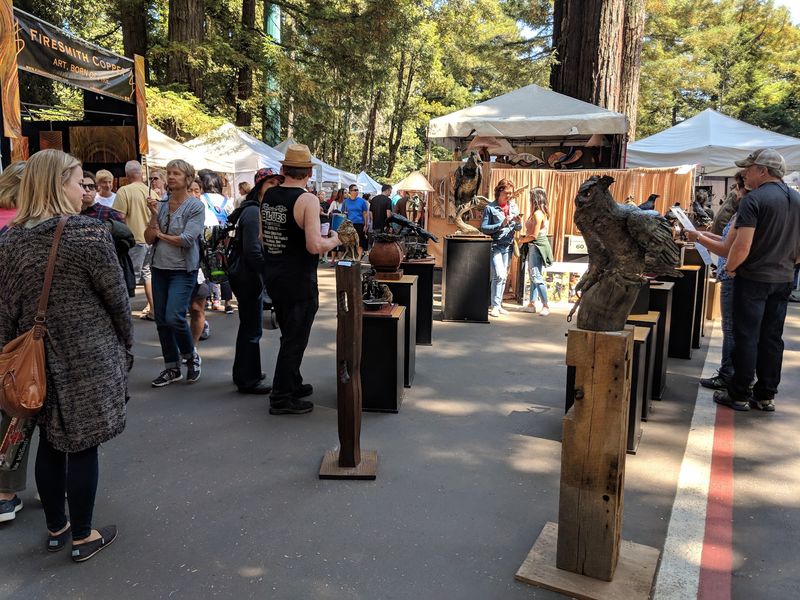
Missing this one means waiting a full year.
The 2026 fair runs Saturday, September 5 through Monday, September 7, at 13889 Skyline Blvd., Woodside, California, making it a short Labor Day weekend event rather than a season-long attraction.
Booth hours hold at 10 a.m. to 5 p.m. across all three days.
Each day has a slightly different rhythm, with Saturday often drawing strong early crowds and Monday feeling somewhat more relaxed as the holiday weekend winds down.
Choosing a day depends on preference for energy versus quiet.
Three days also means inventory changes.
Popular pieces sell during the first day or two, so visitors hoping for the widest selection tend to come early, while those content to browse casually may prefer the calmer later hours. Both approaches work.
Setting aside two to three hours gives enough time to walk the grounds, eat something, and revisit a booth before deciding on a purchase. Rushing through in forty minutes is possible but shortchanges the setting.
Confirming dates, hours, and shuttle details on the official fair website before leaving home is always worthwhile, since a volunteer-run event can adjust plans.