9 Historic Nebraska Towns Where The Past Still Feels Close
I like history best when it is still standing around town instead of hiding behind museum glass.
Nebraska has communities where brick streets, old courthouses, pioneer landmarks, and historic homes make the past feel surprisingly close.
Some towns connect to steamboats and wagon routes, while others preserve literary history, old theaters, or frontier stories. That variety keeps the road trip cheerful.
You can walk a downtown, tour a preserved building, then drive an hour and land in a completely different chapter.
It is an easy way to make history feel less like homework.
Pick a route, leave time to wander, and let the towns tell the story themselves.
1. Brownville, Nemaha County
You are in for a real treat along the Missouri River. Nebraska’s oldest town was founded in 1854, and it wears that age proudly.
Brownville was once the largest town in the Nebraska Territory. Its riverfront port pushed settlers and freight west for decades.
Daniel Freeman filed the nation’s first homestead claim from here just after midnight on January 1, 1863, the very first day the Homestead Act took effect. That single piece of paperwork changed how the West was settled.
Several house museums keep the story going today. The Governor Furnas House, the Captain Bailey House, and the Carson House all welcome guests.
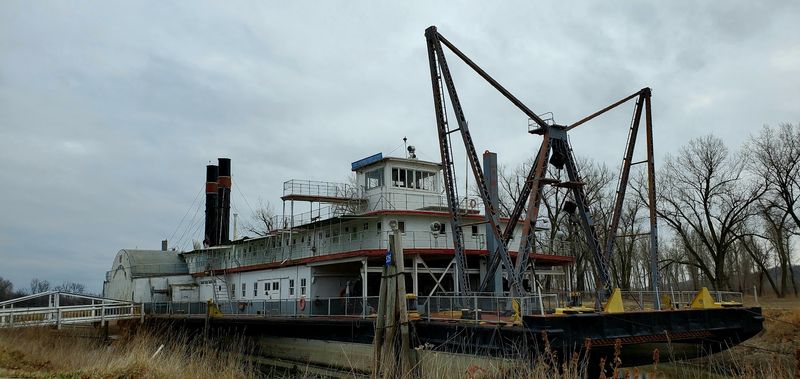
River history gets its own home aboard a retired dustpan dredge. The Meriwether Lewis Museum of Missouri River History sits inside the vessel itself.
The whole historic district is on the National Register of Historic Places. Look for the Lyceum, a complex of three brick structures with mixed styles.
One section dates to 1858 and 1859, with corbelled brickwork and columns. Greek Revival details like that are rare this far west.
The state’s oldest repertory theatre performs here as the Brownville Village Theatre. Small galleries fill the gaps between museums and shops.
Paint Brownville Autumn draws artists outdoors each fall. Flea markets, a Fourth of July celebration, and Old Time Autumn fill the rest of the calendar.
Walkers head for the Governor Furnas Arboretum and Whiskey Run Creek Nature Trail. Cyclists and runners prefer the Steamboat Trace Trail beside the water.
Come in September or early October for the best light on the bluffs. Then let the river carry your imagination the rest of the way home.
2. Bellevue, Sarpy County
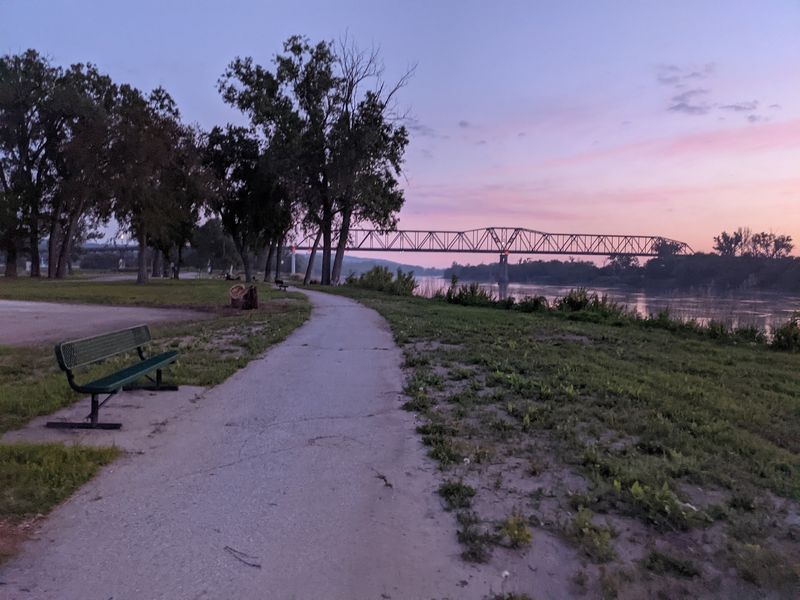
Are you seeing what I am seeing in these old town blocks? Fur traders set up shop here in 1822, making this the oldest continuous settlement in the state.
Bellevue sits just south of Omaha, close enough for an easy afternoon detour. It started as a trading post for the Missouri Fur Company.
Trade came first, then missionary work, then a steady stream of newcomers. Locals still call it the Birthplace of Nebraska.
Old Town holds the greatest concentration of early buildings. The First Presbyterian Church, founded in 1850, is the oldest standing church building in Nebraska.
An 1830s log cabin sits nearby, believed to be the oldest building in the state. Its hand-hewn logs make the 1820s feel very close.
The Fontenelle Bank served as city hall back in 1856. Preservation work keeps its simple frontier lines intact.
Nature balances out all that architecture. Fontenelle Forest Nature Center spreads trails and boardwalks across wooded ridges above the river.
Wildlife watching here is genuinely good, especially early in the day. Spring migration brings songbirds by the dozens.
The Missouri River explains why any of this exists. Commerce moved by water long before rails or highways arrived.
Lewis and Clark passed through this stretch in 1804. They noted its strategic value, and the traders who followed agreed.
Park once in Old Town and cover the historic sites on foot. Save the forest trails for after lunch, when the shade does you a favor.
3. Nebraska City, Otoe County
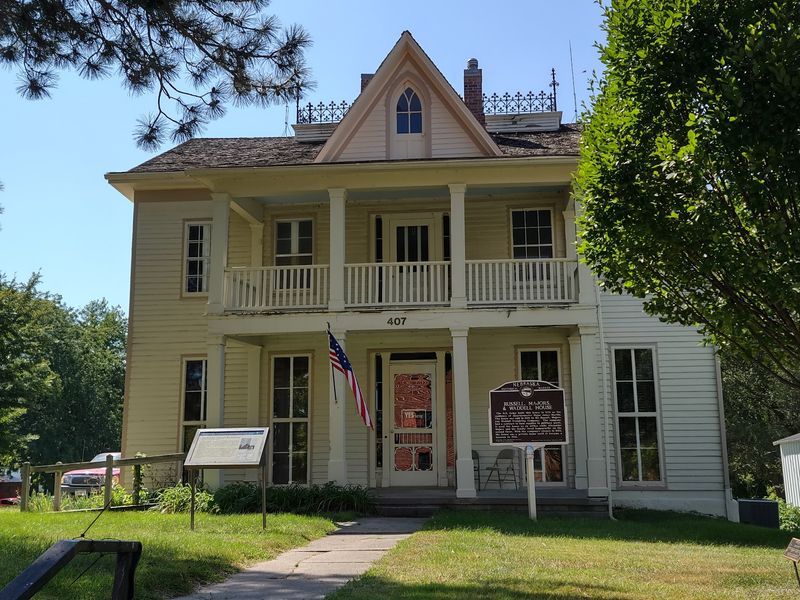
My jaw dropped when I traced how many layers of history stack up here. Arbor Day began in this town, and the trees have been thanking it ever since.
Nebraska City was founded in 1854 under the name Table Creek. Steamboats made it a serious trading hub almost immediately.
It also served as a key stop along the Oregon Trail. Wagons stocked up before facing the long haul west.
Four separate settlements merged in 1858 to form the modern town. Kearney City and Prairie City were two of them.
For a brief stretch it acted as the territorial capital of the state. That is a heavy resume for a river town.
Arbor Day turned local tree planting into a worldwide tradition. The idea started small and spread across continents.
Green space is the natural result of that heritage. Parks and shaded streets make warm days far more pleasant.
Downtown rewards slow walking. Brick storefronts here have watched more than a century of change roll past.
Historic preservation stays a priority, so old facades still anchor working businesses. Coffee, books, and antiques share space with heritage plaques.
The riverfront once buzzed with cargo and passengers. Today it hands over quiet views and easy strolling instead.
Autumn is the obvious season, when all those planted trees show off. Spring works too, especially around Arbor Day itself. Give yourself a full day, because the mix of old and new here refuses to be rushed.
4. Fort Calhoun, Washington County
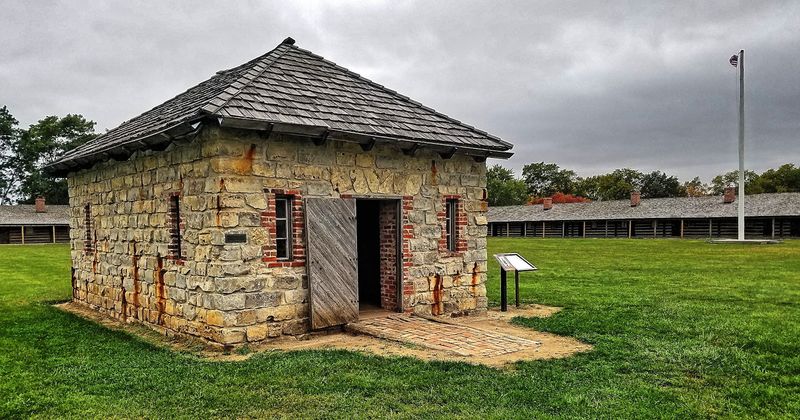
Military history, Mormon farmers, and Lewis and Clark all intersect within a few miles.
Fort Calhoun sits along the Missouri River north of Omaha. It grew into an agricultural community after settlement began in the 1850s.
Fort Atkinson was established nearby in 1819. It was the first permanent United States military post west of the Missouri River.
The fort protected trade routes and housed soldiers on the frontier. Its footprint still shapes the area’s identity. The town itself was platted in 1855. Its name honors statesman John C. Calhoun.
Mormon farmers from Winter Quarters, now Florence, arrived in 1847 and 1848. They salvaged brick and stone from the abandoned fort for their own buildings.
Those farmers grew grain for westbound caravans. Supply stops like this kept the migration moving.
Downtown spans several blocks of historic buildings. The scale stays small, which makes exploring simple.
Lewis and Clark stopped in 1804 for a diplomatic meeting with the Otoe and Missouri tribes. The site became known as Council Bluff.
The Washington County Historical Association Museum occupies the old Fort Calhoun State Bank. Exhibits cover that first council meeting with the Otoe-Missouria tribe.
Local history displays fill the rest of the rooms. Vault doors and teller windows add character you cannot fake.
Pair the museum with the fort site for one very full morning, and you will leave knowing 1819 far better than you expected.
5. Minden, Kearney County
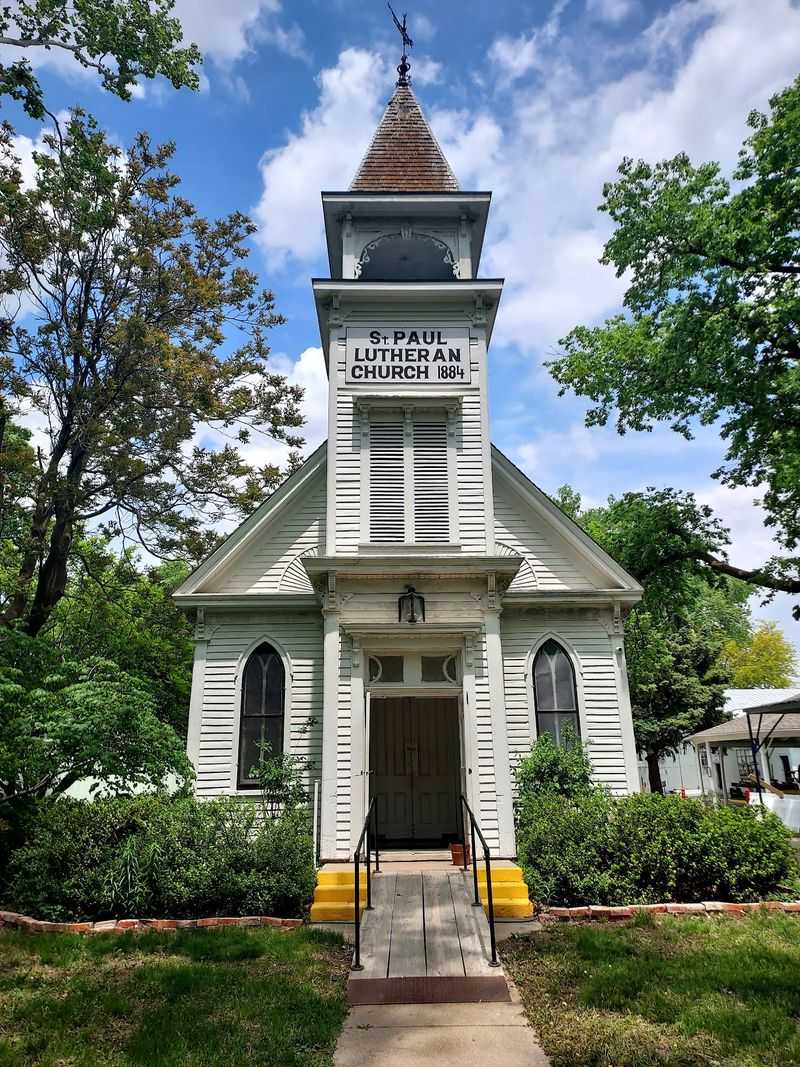
Fifty thousand artifacts in one small town sounds impossible until you see it. Harold Warp Pioneer Village turns American ingenuity into something you can walk through.
Minden holds that sprawling collection on more than 20 acres. Every corner covers another chapter of pioneer life.
Machinery, household tools, and cultural oddities fill building after building. Progress becomes something you can actually track with your eyes.
Twenty-eight buildings sit in chronological order, running from 1830 to the present. Start at one end and finish a couple of centuries later.
The layout makes comparison easy and weirdly addictive. You notice how quickly a plow becomes a tractor. Give yourself more time than you think you need. Rushing this collection is the only real mistake.
Beyond the village, a beautifully restored opera house anchors the town’s cultural side. Performances and gatherings once filled it with music and applause.
Its restoration keeps that tradition alive for current audiences. Check the schedule before you drive out.
The town square adds more historic atmosphere. Community events and seasonal celebrations gather here throughout the year.
Minden’s holiday light display has long been a regional tradition. December turns the square into something memorable.
Summer suits the outdoor buildings best, with long daylight hours helping. Weekday mornings tend to be quietest.
Bring water, wear real shoes, and pace yourself across those acres. By closing time you will have a much deeper respect for how resourceful earlier generations had to be.
6. Plattsmouth, Cass County
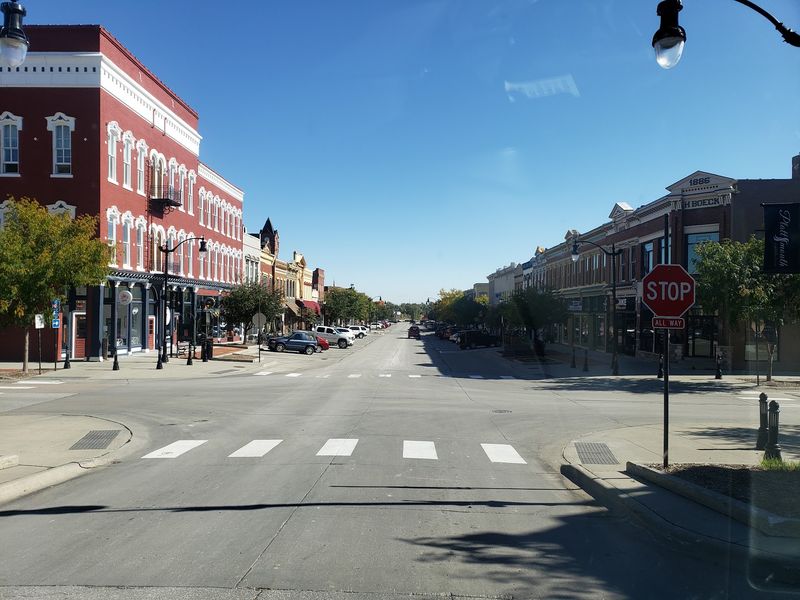
Two great rivers meet nearby, and pioneers used the junction constantly. Plattsmouth grew from a trading post opened in 1853 by Samuel Martin. He set up where the Platte joins the Missouri.
The Plattsmouth Town Company organized in 1854. Growth followed the water and later the rails.
The Cass County Courthouse dominates the square. Built in 1892 and designed by William Gray, it shows off Romanesque style in brick.
The Main Street Historic District includes 45 buildings on the National Register. Walking tours explain what each facade once housed.
Antique and specialty shops fill many storefronts today. Treasure hunting here is a legitimate sport.
The Cass County Historical Society runs a museum on Main Street. Pioneer, agricultural, river, and railroad history all get their space.
The society also maintains the 1868 Joseph and Mary Cook Log Cabin. A Burlington Northern caboose and a one-room schoolhouse sit alongside it. Kids tend to love the caboose most. Adults linger over the river displays.
The confluence of the Platte and Missouri is east of downtown. Find it at the Schilling Wildlife Management Area, a stop Lewis and Clark noted.
September brings the Kass Kounty King Korn Karnival. It ranks among Nebraska’s oldest festivals and pulls in thousands.
Time your trip for that weekend if crowds and parades sound fun, or come in May when the courthouse lawn looks its greenest.
7. Red Cloud, Webster County
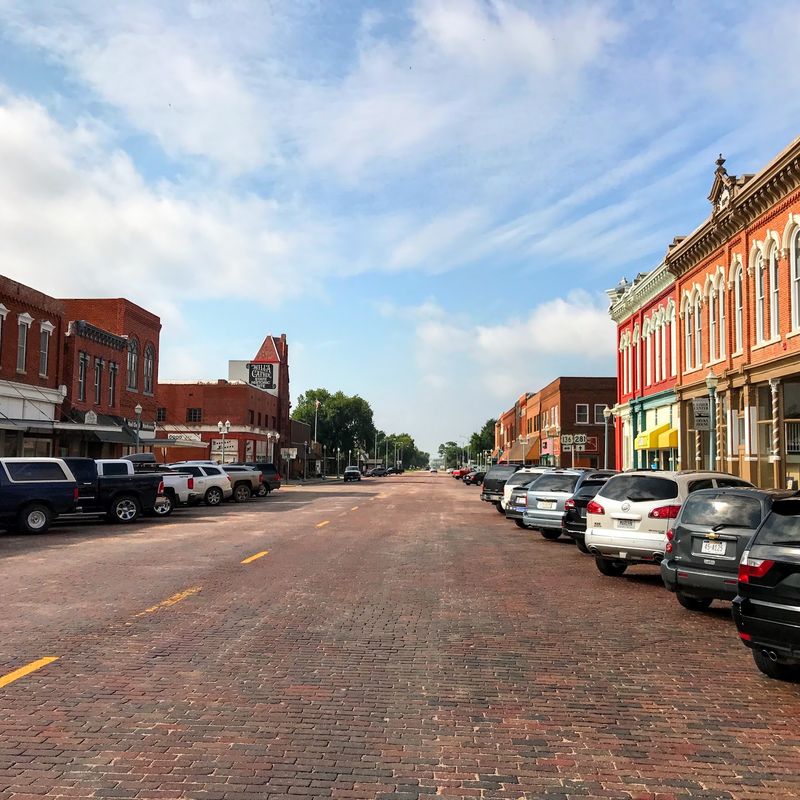
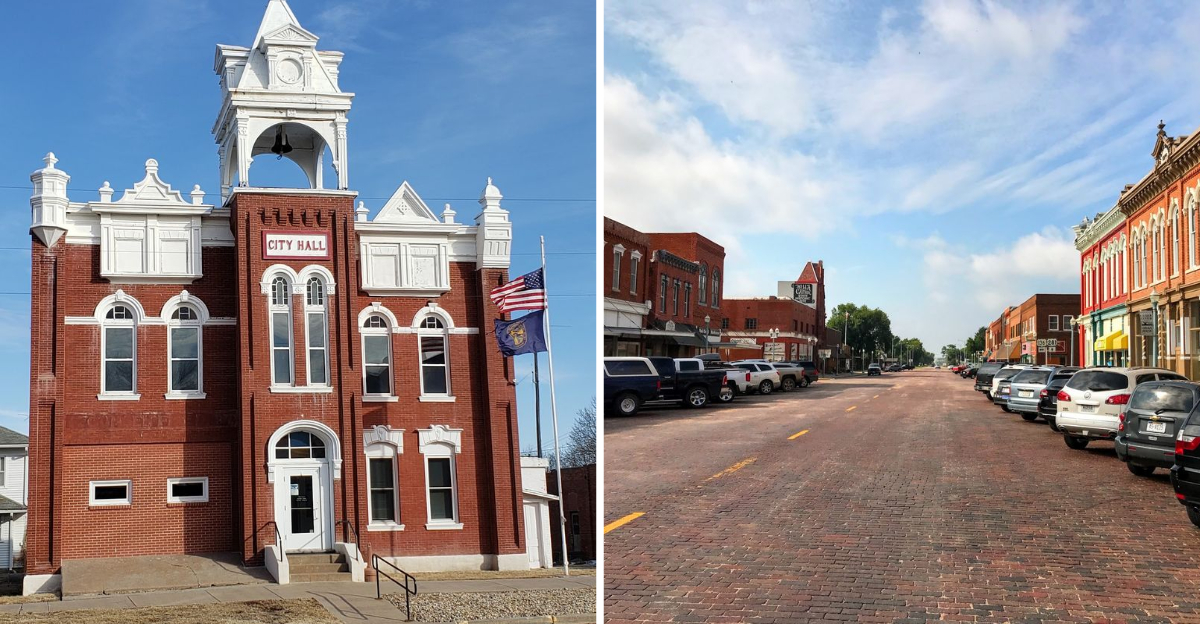
I had to do a double-take at how untouched this main street looks. Brick paving, tall storefronts, and a skyline that has barely shifted since the 1800s.
Red Cloud raised author Willa Cather, whose novels captured prairie life with startling clarity. Her childhood home is now a National Historic Landmark.
She lived there from ages 10 to 16. Tours walk you through rooms that shaped her imagination.
The Willa Cather Historic District is the largest National Register district devoted to an author. That is a remarkable claim for a small town.
The National Willa Cather Center anchors everything. Archives, exhibits, and a bookstore sit under one roof.
A guided seven-building tour covers the highlights. The Burlington Depot, Grace Episcopal Church, and the Red Cloud Opera House are included.
Built in 1885, the opera house still hosts performances. Cultural events run there through much of the year.
South of town, the 612-acre Willa Cather Memorial Prairie protects native grassland. Careful restoration is returning it to 19th-century condition.
Wind moves across those grasses exactly as her books describe. Sunset out there is worth planning around.
The Webster County Historical Museum handles broader local history. Late 19th and early 20th-century buildings line the walkable core.
The Hotel Garber offers restored lodging, with the Forrester restaurant inside. A well-rated 9-hole public golf course covers the outdoor itch.
Read one Cather novel before you go, and the whole town will suddenly read back to you.
8. Tecumseh, Johnson County
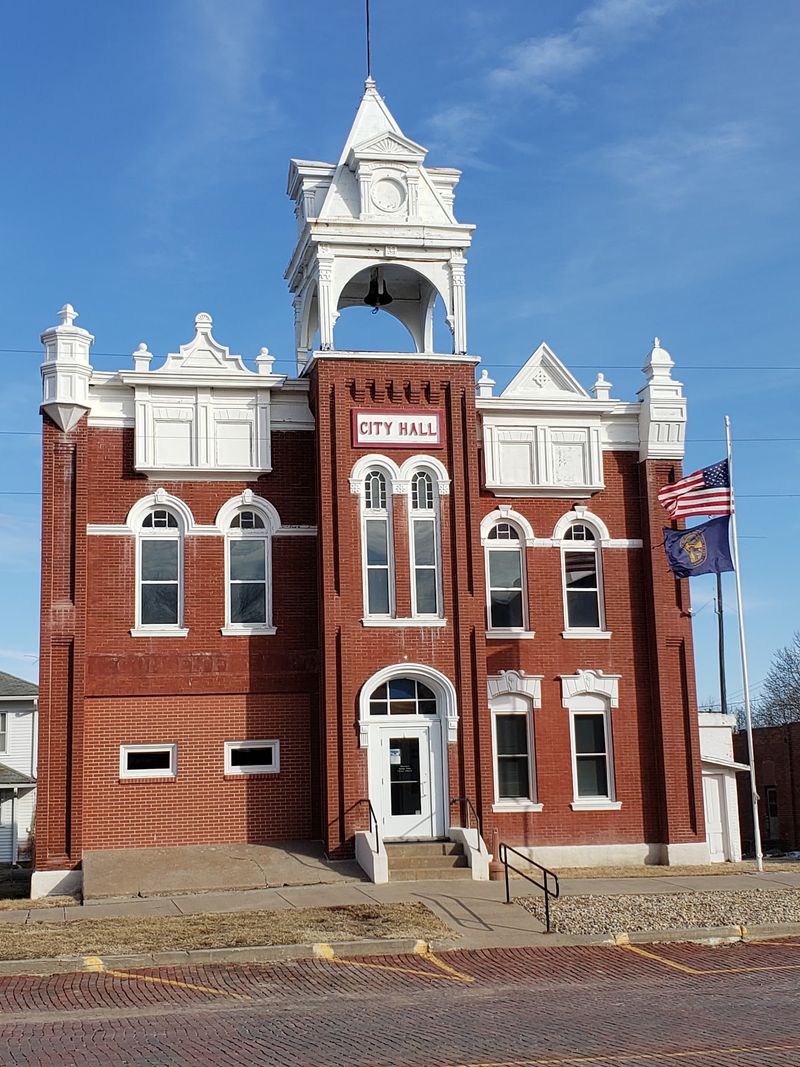
Just imagine how much history fits into a handful of downtown blocks. The entire creative district here sits on the National Register of Historic Places.
Tecumseh was incorporated in 1856 and originally called Frances. The name changed in 1857 to honor the Shawnee chief.
Its historic square remains the center of town life. Architecture from the 1800s surrounds it on every side.
The Johnson County Courthouse went up in 1889 using locally mined limestone. The stonework alone is worth the drive. The old jail dates to about 1872. City Hall also arrived in 1889, sharing that busy building year.
Romanesque and Classic Revival details show up throughout the square. Photographers do well here in late afternoon.
The 1889 Christian Church now houses the Johnson County Historical Society Museum. Exhibits trace how the county grew from prairie to farm towns.
Sticks, Stones, and Bonez gives younger travelers a discovery museum of their own. Hands-on exhibits keep restless kids happy.
The Montz Motorcycle Museum is Nebraska’s only motorcycle museum. More than 100 machines fill its floor.
Historical markers explain the town’s role in westward expansion. One sits along the old Brownville-Fort Kearny trail.
The creative district actively supports artists and cultural programming. That mix of old buildings and new energy keeps things interesting.
Find City Hall at 110 S 4th St, Tecumseh, NE 68450, and start your loop of the square from there. Two hours becomes four before you notice.
9. Ogallala, Keith County
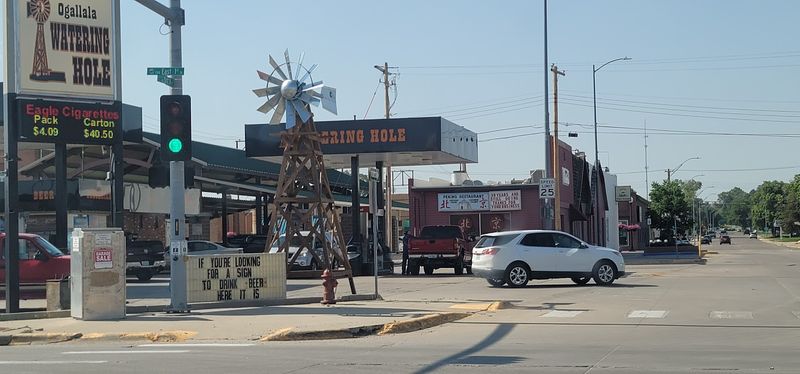
Correct me if I am wrong, but cowboy legends still hang in this western air. Cattle drives once ended here, and the town has never stopped telling those stories.
Ogallala earned its reputation during the great 19th-century cattle drives. Herds arrived from the south to be loaded onto trains.
Boot Hill Cemetery sits on a rise above town. It remembers figures from the roughest chapters of frontier life.
The setting is quiet and windswept, and the markers are plain. History gets very direct up there.
A 1,200-square-foot brick mural honors ranching and railroad heritage downtown. Scenes across it celebrate the industries that built the community.
Public art on that scale is hard to miss. Stand back a bit to take in the whole thing.
The Union Pacific Railroad drove the town’s growth. Without those rails, the cattle shipping business never happens.
Downtown still holds buildings from those early decades. Look up at the cornices for the oldest clues.
Lake McConaughy, nicknamed Big Mac, spreads just north of town. Sandy shorelines, boating, and fishing draw crowds every summer. Sunsets over that water are a regional bragging point. Camping options ring the reservoir.
June through August suits the lake best, while spring keeps the historic sites peaceful. Either way, bring sun protection.
Between cattle-trail lore and shoreline breezes, Ogallala hands you two very different kinds of Nebraska in one trip.