10 Famous Film Locations In Kentucky You Can Still Visit
You have probably seen more of Kentucky than you know. Hollywood has been quietly borrowing this state for decades.
Directors love the horse farms, the limestone hills, and the small towns that look like memory itself. Some scenes you remember were filmed on ground you can drive to this weekend.
The racetrack from that underdog story is still selling tickets. The courthouse steps from that quiet drama still hold a crowd.
A few of these places have barely changed since the cameras packed up, which is either charming or slightly eerie. You decide.
Here is the best part. Nobody puts up a plaque for most of them.
You can stand where an actor once cried, order a coffee nearby, and nobody will even blink. Kentucky does not brag about its screen time.
It just keeps the sets standing and waits for you to notice. Ten are waiting for you now.
1. Churchill Downs
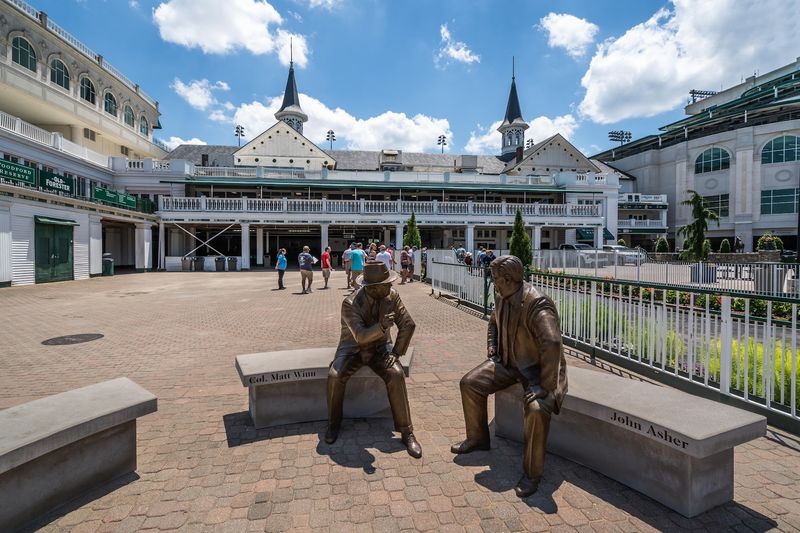
Horse racing movies need a real racetrack, and Churchill Downs has served that role more than once. The Kentucky Derby Museum sits right at the gate, sharing the grounds seen in Secretariat and Dreamer.
Inside, a 360-degree film puts you in the middle of race day. The sound alone is worth the ticket, with hooves and crowd noise coming from every direction.
Guided tours take you out to the track apron and the twin spires. Standing there, the scale finally clicks.
Television flattens it. In person, the grandstand feels enormous.
The museum keeps trophies, silks, and old photographs that stretch back generations. There is also a resident thoroughbred in the paddock area who greets visitors like a professional.
Find it at 704 Central Avenue, Louisville. Parking is straightforward on non-race days, which is exactly when I would go.
Fun detail: Secretariat filmed scenes at multiple tracks, but Churchill Downs anchors the Derby sequences. The crew used real racing fans as extras in some shots.
Plan about two hours. Longer if you take the full walking tour and stop at the finish line.
Bring a hat. The apron gets bright, and shade is limited out near the rail.
2. Keeneland
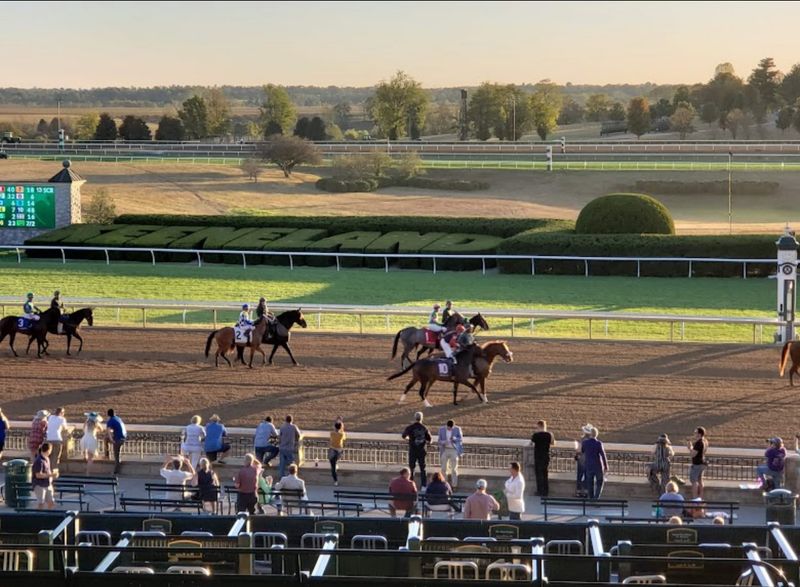
Filmmakers love Keeneland because it looks like a painting that happens to have horses in it. The stone buildings and clipped hedges have appeared in Dreamer and Secretariat.
What surprises most visitors is how open the grounds are. Outside of race meets, you can walk in during morning training hours and watch workouts for free.
The sunrise sessions are the real show. Steam rises off the backs of horses, exercise riders call to each other, and the track crew rakes the dirt smooth.
Track Kitchen serves breakfast to trainers, grooms, and anyone else who wanders in. Biscuits, eggs, coffee.
Nothing fancy, and that is the charm.
Address is 4201 Versailles Road, Lexington, just minutes from the airport.
The library on site holds one of the largest horse racing archives anywhere. Researchers fly in to use it, and casual visitors can browse too.
Spring and fall meets bring crowds and hats. If you want the movie-set quiet, come on a weekday in summer.
Photographers should aim for the paddock area. The old trees and stone walls do most of the work for you.
Keeneland has hosted cameras since the 1940s. It still looks the part.
3. Pompilio’s
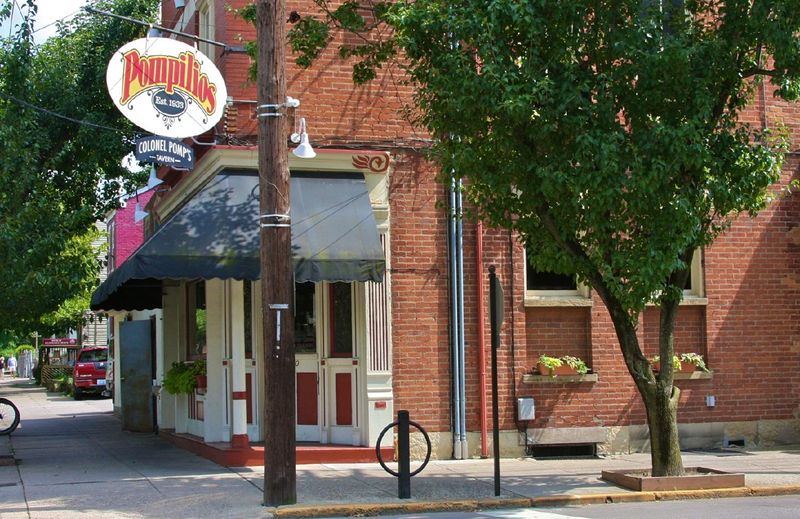
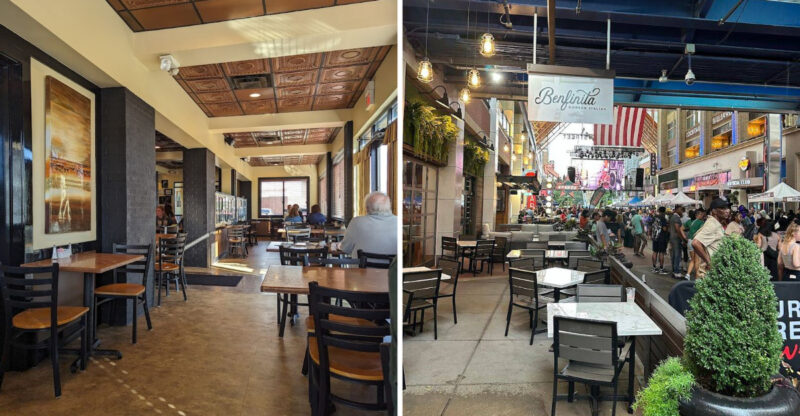
One toothpick scene made this restaurant famous forever. Rain Man filmed here in 1988, and the moment when the toothpicks scatter across the floor still draws visitors decades later.
The dining room has not been scrubbed of its history. Photos from the shoot hang on the walls, and staff will point out the exact table if you ask nicely.
Italian classics fill the menu. Lasagna, spaghetti with meatballs, chicken parmesan, all served in portions that assume you skipped lunch.
The bocce court out back is a genuine local institution. Leagues play there in warm months, and the competition is friendlier than it sounds.
You will find it at 600 Washington Avenue, Newport, a short drive across the river from Cincinnati.
Regulars come for the garlic bread and the fact that nothing here feels staged. The building dates to the early 1900s and wears its age well.
Weekend evenings get busy. A reservation saves you standing near the door reading old newspaper clippings, though that is not a bad way to wait.
Ask about the toothpick story and you will likely hear three versions. All of them are entertaining.
Order the cannoli. Trust me on that one.
4. Webb Grocery
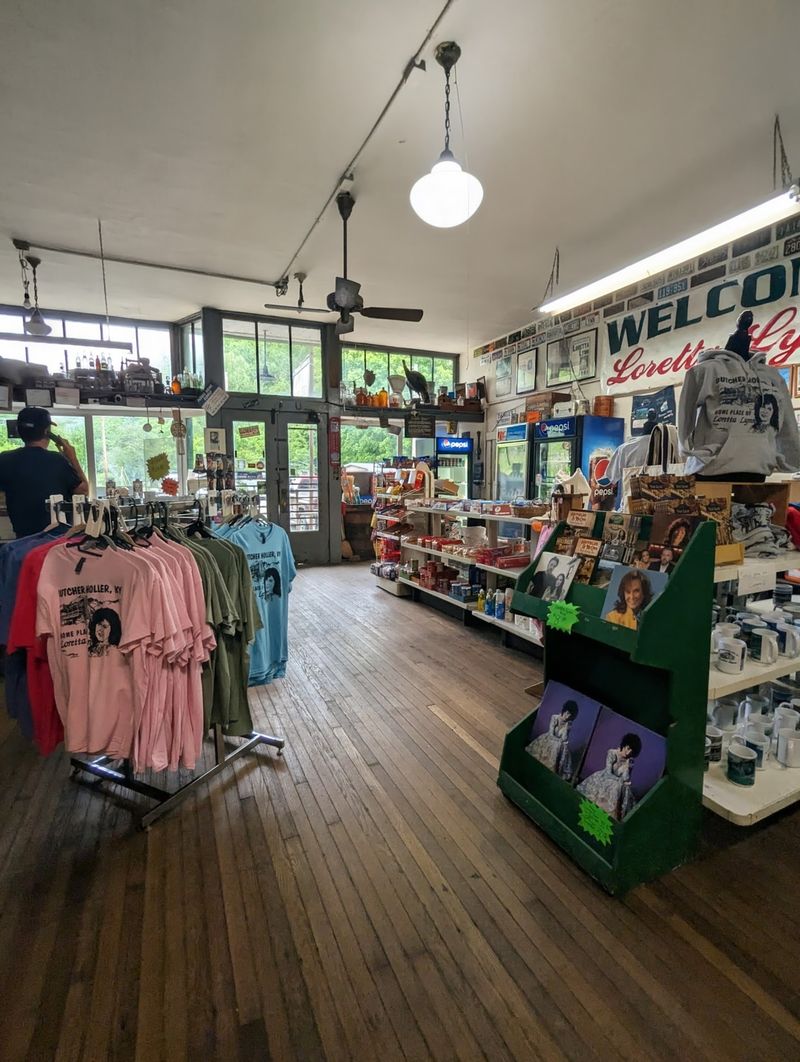
Coal Miner’s Daughter brought Hollywood to eastern Kentucky in 1979, and Van Lear has never forgotten it. Webb Grocery served as a filming site for the Loretta Lynn story.
The building looks like a country store because it is one. No gift shop polish, no velvet ropes, just a small structure in a mountain community.
Van Lear itself was a coal camp town, and the surrounding hills appear throughout the movie. Driving the roads here gives you the same views the camera caught.
The address is 1917 Millers Creek Road, Van Lear. Cell service can be patchy, so download directions before you leave the highway.
Nearby, the Van Lear Historical Society Coal Miners Museum fills in the background. Photographs, mining tools, and local records tell the story the film compressed into two hours.
Loretta Lynn’s childhood home at Butcher Hollow sits a short drive away and offers tours led by family members.
Sissy Spacek won an Academy Award for the role. She learned to sing the songs herself rather than lip-sync.
Go slow on the narrow roads. Locals know every curve, and you do not yet.
Bring cash. Small-town stops here do not always take cards.
5. The Brown Hotel
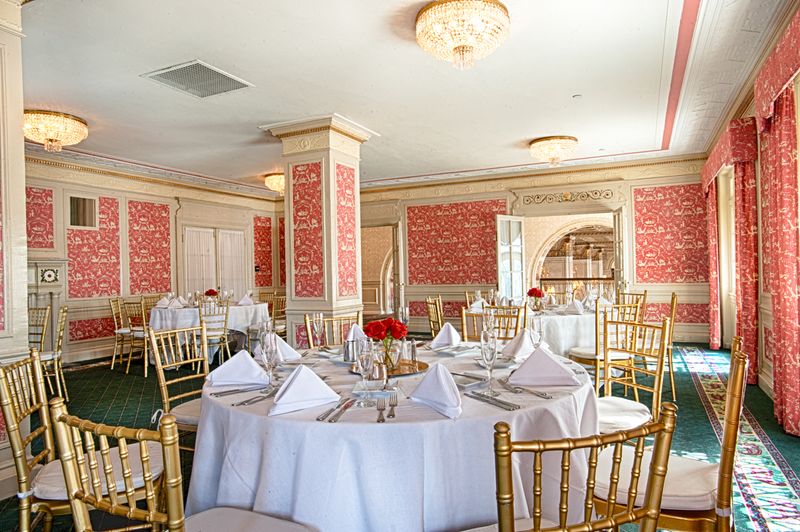
Marble floors, a coffered ceiling, and a lobby that belongs in black-and-white film. The Brown Hotel opened in 1923 and has hosted cameras and celebrities ever since.
Scenes from Elizabethtown were shot here, and the building has appeared in other productions looking for old-world grandeur. It photographs beautifully without any set dressing.
The Hot Brown sandwich was invented in this very building in 1926. Turkey, bacon, tomato, and Mornay sauce broiled until bubbling.
Order it in the English Grill or the lobby bar area. Either way, plan a slow afternoon afterward.
You will find the hotel at 335 West Broadway, Louisville, right downtown near the theater district.
Even if you are not staying overnight, the lobby welcomes visitors. Grab a seat, look up, and count the plaster details.
The rooftop garden offers a view over the city skyline. Ask at the desk whether it is open when you visit.
Staff here are used to curious guests. Several have worked in the building for decades and share stories freely.
Original elevators, original ballroom, original charm. Renovations have been careful rather than aggressive.
It is the rare film location that also serves an excellent lunch.
6. Cave Hill Cemetery & Arboretum
Rolling green hills, mature trees, and a lake full of swans. Cave Hill functions as an arboretum as much as anything, with hundreds of labeled tree species across 300 acres.
Elizabethtown filmed scenes here, and the landscape explains why. The grounds look designed by a cinematographer with unlimited patience.
Walking paths wind past Victorian monuments and stone bridges. Maps are available at the entrance and mark notable trees and historic sections.
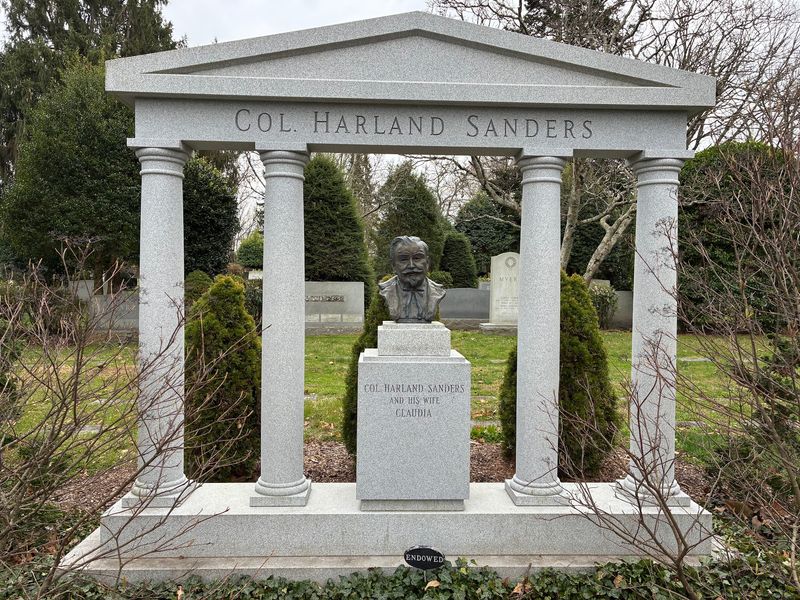
Colonel Harland Sanders rests here, and his marker is one of the most visited spots on the property. Muhammad Ali is also memorialized on the grounds.
Entry is at 701 Baxter Avenue, Louisville. Gates open in the morning and close before evening, so check hours ahead.
Birdwatchers show up early with binoculars. Herons, geese, and songbirds use the lakes year-round.
Autumn is the standout season. The maples and ginkgos turn the whole place gold and red.
Visitors are asked to drive slowly and stay respectful. It remains an active cemetery alongside its role as a public garden.
The Gothic entrance gate dates to the 1890s. Photographers line up for it constantly.
Give yourself an hour minimum. You will want longer.
7. Pisgah Presbyterian Church
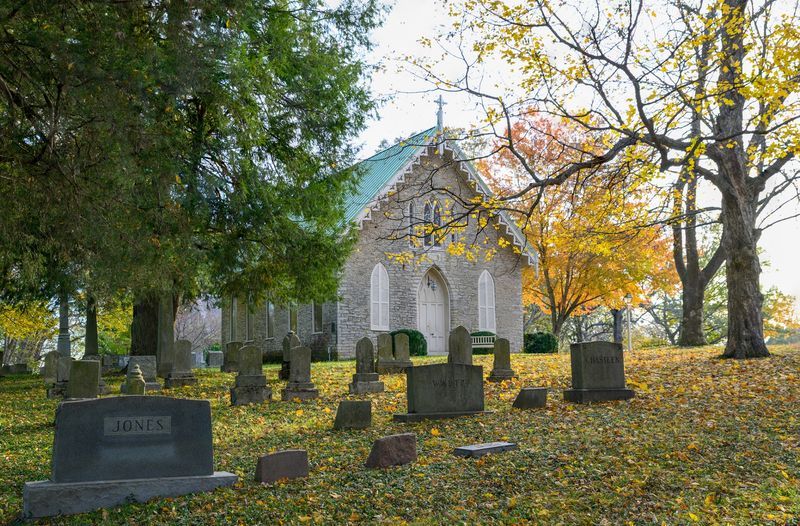
Down a two-lane road lined with plank fences sits a stone church that looks unchanged since the 1800s. Pisgah Presbyterian appeared in Elizabethtown, and horse country surrounds it on all sides.
The setting does the heavy lifting. Stone walls, ancient trees, and rolling pasture stretch in every direction from the churchyard.
Pisgah Pike itself is one of the prettiest drives in the Bluegrass. Locals call it a scenic byway, and the plank fencing goes on for miles.
The congregation dates back to 1784, making it one of the oldest in the region. The current stone building was constructed in 1812.
Address is 710 Pisgah Pike, Versailles, about twenty minutes west of Lexington.
Visitors are welcome to look around the exterior and the old burial ground. Services still take place, so timing matters.
Photographers arrive at golden hour for the light on the limestone. It turns warm amber right before sunset.
The road is narrow with few pull-offs. Park carefully and watch for farm traffic.
Nearby horse farms line the route, and you will pass thoroughbreds grazing behind those famous fences.
It is quiet, small, and completely worth the detour.
8. Cumberland Falls State Resort Park
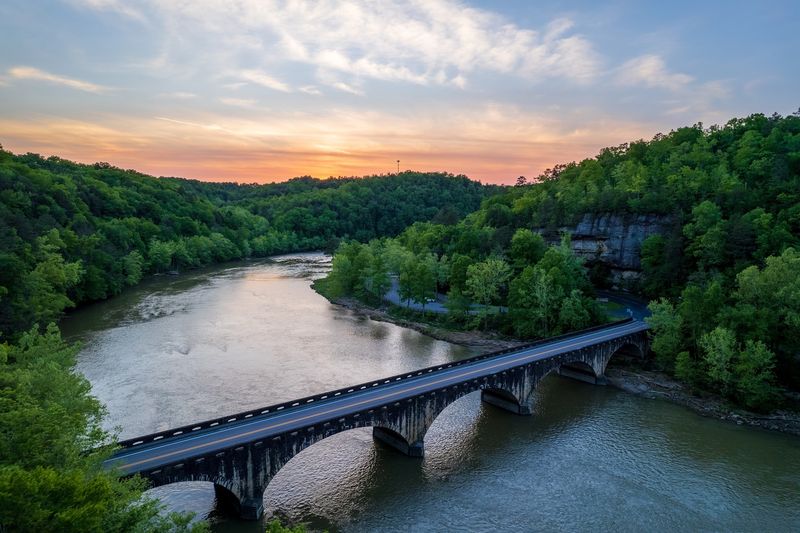
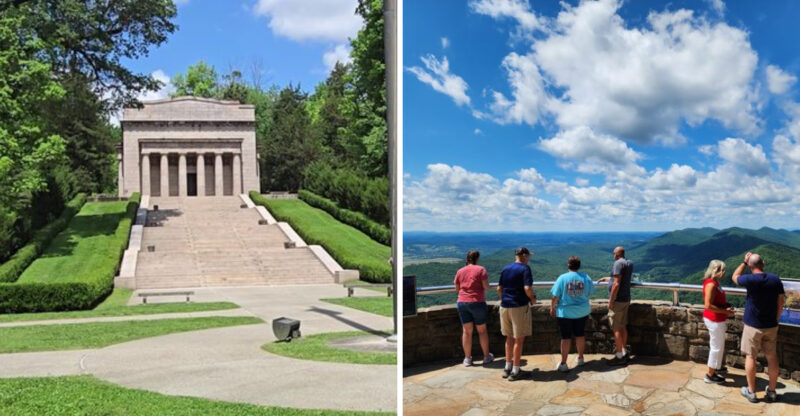
A 68-foot waterfall stretching 125 feet wide earned this place the nickname Niagara of the South. Cumberland Falls has drawn film crews looking for dramatic natural scenery.
The park appeared in productions including scenes for The Kentuckian and other features shot in the region. The falls themselves need no special effects.
What makes it genuinely unusual is the moonbow. On clear nights around the full moon, mist from the falls creates a lunar rainbow.
It is one of the only reliable places in the Western Hemisphere to see one. The park publishes a schedule of viewing dates.
Head to 7351 Highway 90, Corbin. The drive in winds through Daniel Boone National Forest.
Trails range from short paved overlooks to longer hikes along the Cumberland River. The overlook near the parking area is wheelchair accessible.
Dupont Lodge on the property serves meals with a view over the gorge. Rooms book out fast in fall.
Spring brings the heaviest water flow after rains. The roar carries a long way through the trees.
Wear shoes with grip. The rocks near the mist stay slick most of the day.
9. Levi Jackson Wilderness Road Park
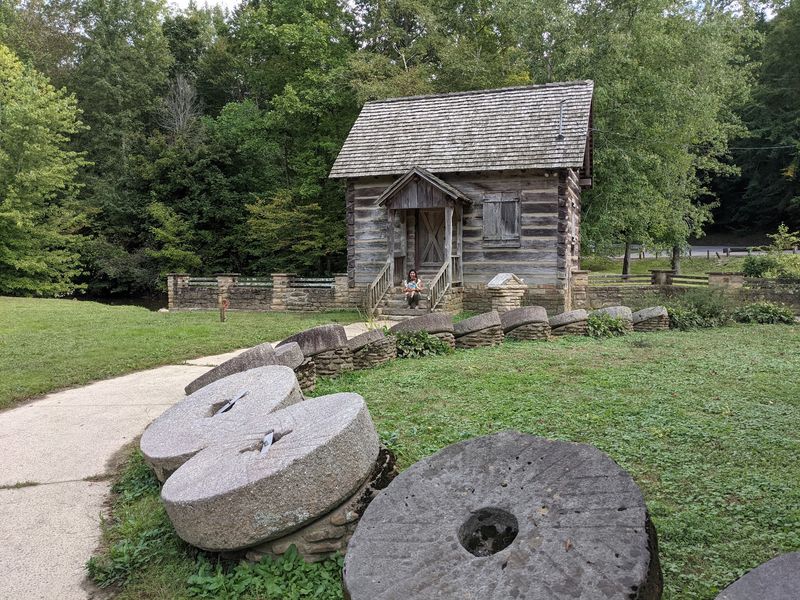
An old grist mill, log cabins, and a stretch of the original Wilderness Road all sit inside one park. Filmmakers have used the setting for period pieces needing frontier authenticity.
McHargue’s Mill anchors the property and holds one of the largest collections of millstones in the country. The wooden wheel still turns beside the creek.
The Mountain Life Museum recreates a pioneer settlement with restored cabins. Tools, furniture, and household items fill each building.
Hiking trails follow the Little Laurel River through hardwood forest. They are gentle enough for families with young kids.
Look for it at 998 Levi Jackson Road, London. Signs from the interstate make it easy to find.
Campsites, a pool, and picnic shelters make it a full-day destination rather than a quick photo stop.
Daniel Boone traveled the Wilderness Road through this area. The park preserves visible traces of the route.
Fall colors here rival anywhere in the state. The mill and creek together look like a postcard nobody staged.
Entry fees are modest, and the museum charges separately. Both are worth it.
Come on a weekday morning if you want the mill to yourself.
10. Old Friends
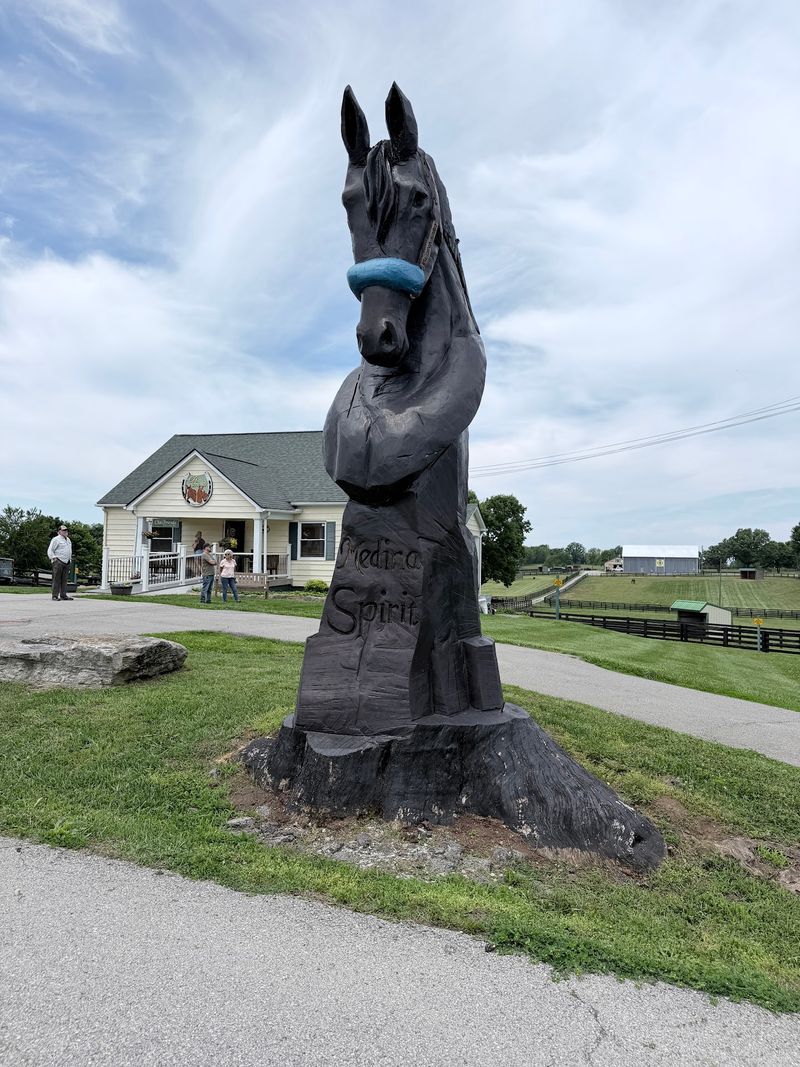
Retired racehorses get a second act here, and visitors get to meet them face to face. Old Friends has appeared in documentaries and news features about thoroughbred aftercare.
The farm gives lifelong homes to former champions. Some earned millions on the track.
Now they nap under shade trees and beg for carrots.
Guided tours run daily and are led by staff who know every horse by name and temperament. Reservations are strongly recommended.
Guests can feed carrots to many of the residents. Watching a Breeders’ Cup winner lip a carrot from your hand is a strange, wonderful thing.
The address is 1841 Paynes Depot Road, Georgetown, just north of Lexington.
Founder Michael Blowen started the place in 2003 after working as a film critic in Boston. The career change worked out.
Tours last around an hour and cover a good bit of walking on grass. Sturdy shoes help.
Donations fund the horses’ care, since the farm operates as a nonprofit. Gift shop purchases go toward feed and vet bills.
Spring foals are not part of the program, but the retirees have plenty of personality.
Bring a camera and low expectations about staying on schedule.