This 2-Hour Kentucky Horseback Ride Passes Waterfalls, Cliffs, And Ancient Rock Shelters
Let us be honest about your riding experience. You once sat on a pony at a birthday party and called it a day.
That is completely fine here. The horses on this trail have seen every kind of nervous beginner and they are not impressed by any of it.
They know the route better than the guides do.
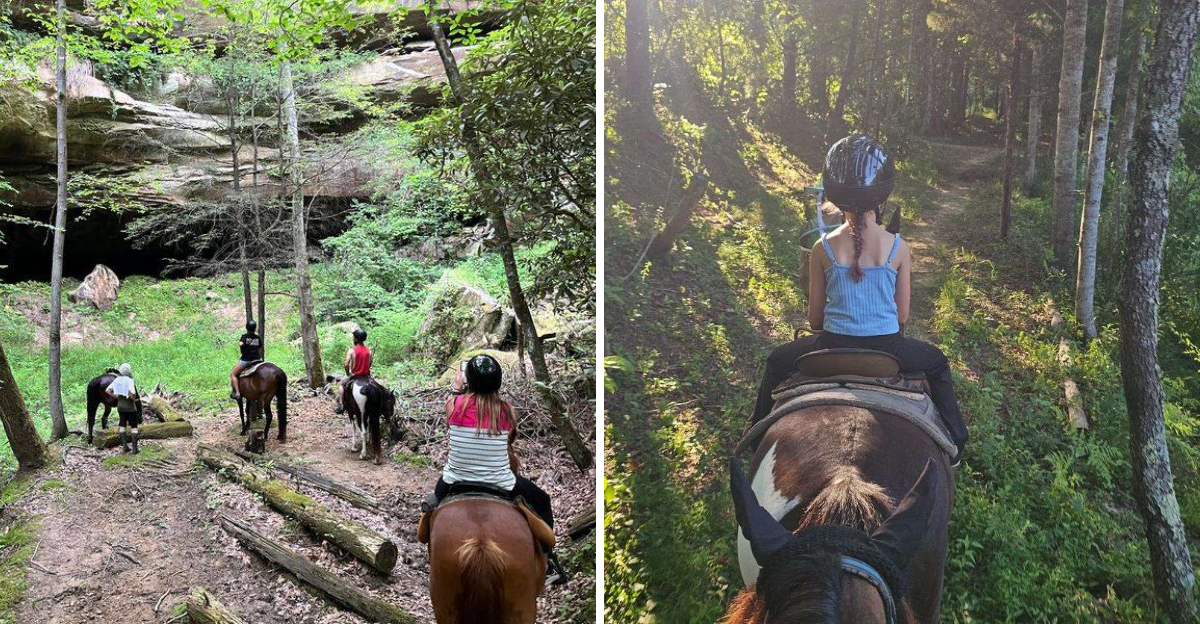
What they will carry you past is the interesting part. There are waterfalls that appear without warning.
There are cliffs that make you grip the saddle a little tighter. There are rock shelters that people used thousands of years before anyone thought to sell trail rides.
Two hours is exactly long enough to feel like an explorer and short enough that you can still walk afterward.
Kentucky keeps this kind of scenery in places cars simply cannot reach. A horse can get you there.
That is the entire point of the morning.
A Quiet Barn With Bigger Plans
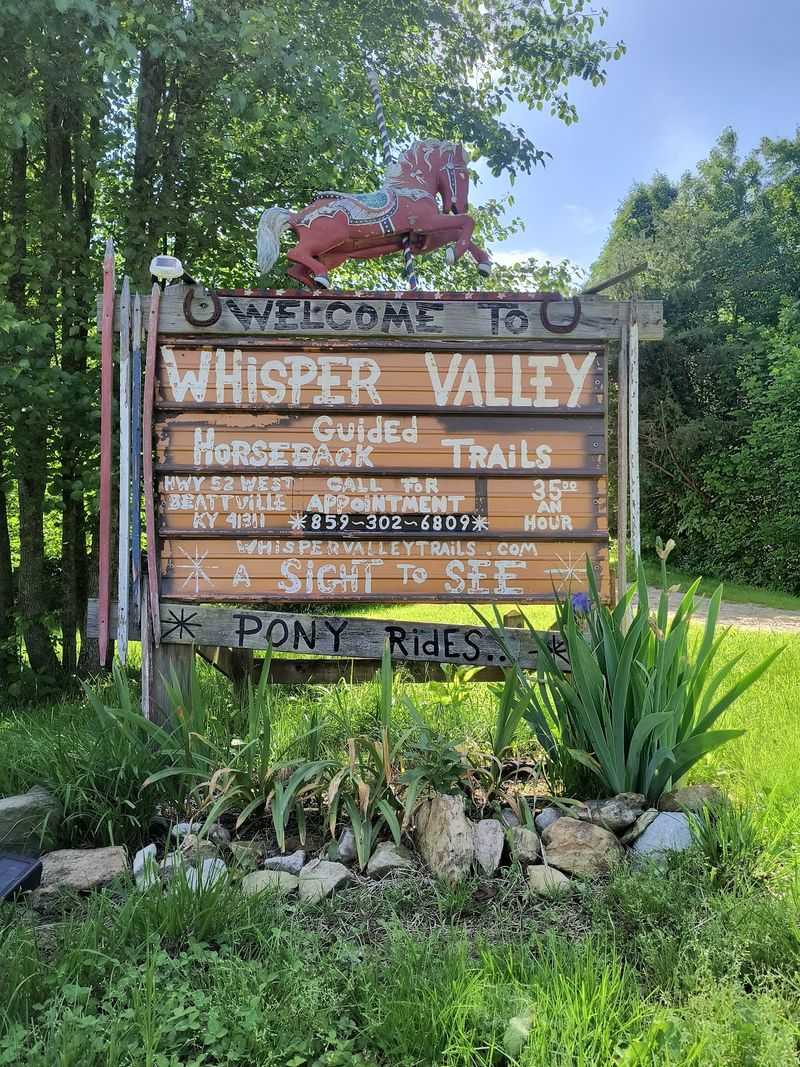
Whisper Valley Trails looks plain from the road, and that turns out to be the charm.
Gravel crunches under your tires as you pull in past the fence line. Horses stand in the shade, tails swinging, completely unbothered by your arrival.
I arrived expecting a short loop around a pasture. What followed was two hours through some of eastern Kentucky’s best backcountry.
There is no rush here, and no scripted sales pitch either. Questions get real answers, usually with a story attached.
Lee County sits at the doorstep of the Red River Gorge region. Ridges, hollows, and creek beds stack up in every direction.
Horses reach places most hikers never bother to find. That access is the reason this ride sticks with you.
Bring cash, wear closed shoes, and arrive early enough to meet your horse. The introduction matters more than you think.
Cell service fades on the ridges, which nobody seemed to mind. Two hours without notifications is part of the package.
The address is 5819 KY-52, Beattyville, Kentucky, right in the heart of Lee County.
Two Hours In The Saddle Goes Fast
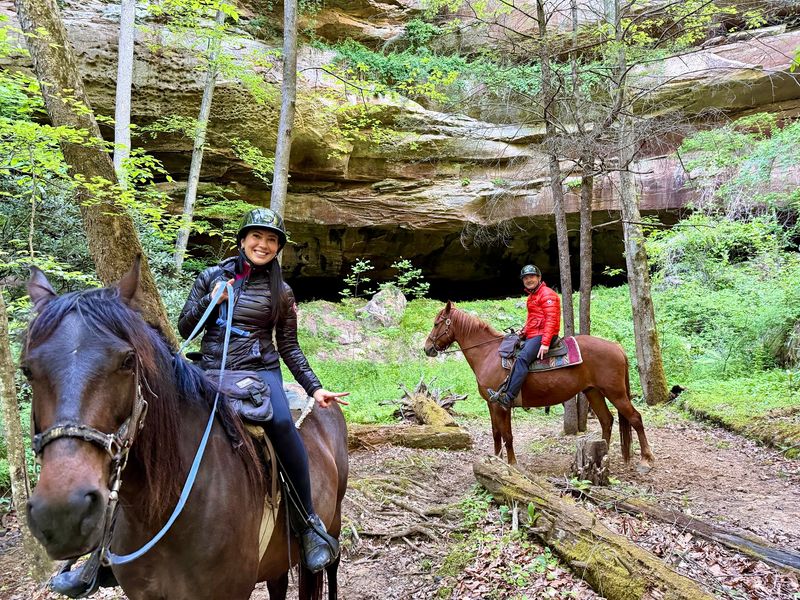
Two hours sounds long until the trail starts climbing. Then it shrinks into something closer to twenty minutes.
The route mixes open ground, shaded woods, and creek crossings. Each section looks different, so the scenery never settles into sameness.
Guides ride at a walking pace for most of the trip. That speed lets you look around instead of gripping the saddle horn.
My group had two first timers and one experienced rider. Nobody felt left behind, and nobody got bored either.
There are pauses along the way for photos and water. Those stops are where the guides share the best details.
Elevation changes come gradually rather than all at once. Your legs will notice by the end, in a good way.
Longer rides are available for people who want more miles. The two hour option remains the sweet spot for most visitors.
Plan for roughly three hours total once you count check in. Nobody enjoys rushing a horse, and horses know when you try.
Bring a small bottle you can tuck into a saddle bag. Hydration matters more than you expect in summer humidity.
Rain shows up fast in these hills during spring. A light jacket rolls up small and earns its space.
Waterfalls You Hear Before You Spot Them
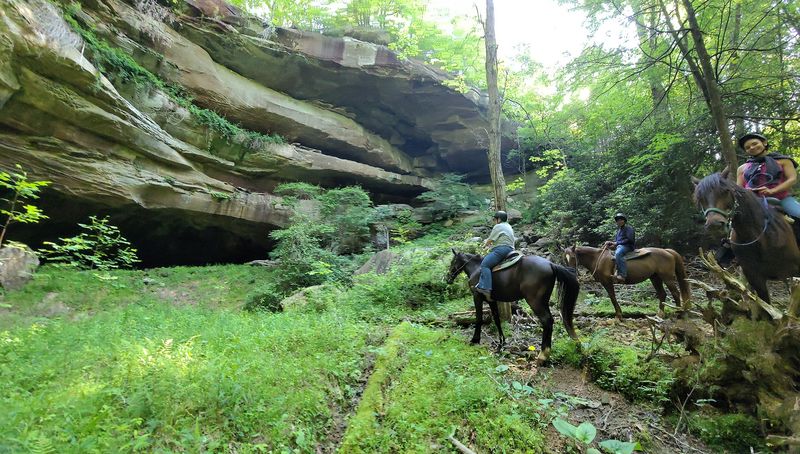
Water announces itself long before it appears through the trees. You catch a low rush, then the horses’ ears swivel forward.
Eastern Kentucky waterfalls depend heavily on recent rainfall. Spring visits usually deliver the loudest, fullest flow.
Late summer can slow them to a thin trickle over sandstone. Even then, the mossy rock and cool air feel worth the stop.
Horses handle water crossings with far more calm than most riders. Let the reins loose and trust the animal to pick its footing.
Photos here are tricky because light bounces off the wet stone. Shooting from the shade with the falls in sunlight works better.
Ask your guide before dismounting anywhere near the water. Slick rock and hard soles are a poor combination.
The sound alone justifies the ride. Close your eyes for ten seconds and listen.
Frogs, birds, and running water fill every gap in conversation. It is the kind of quiet that has plenty going on.
Winter rides bring another surprise along the rock faces. Ice forms in columns where water drips over the ledges.
Sandstone Cliffs That Make You Look Straight Up
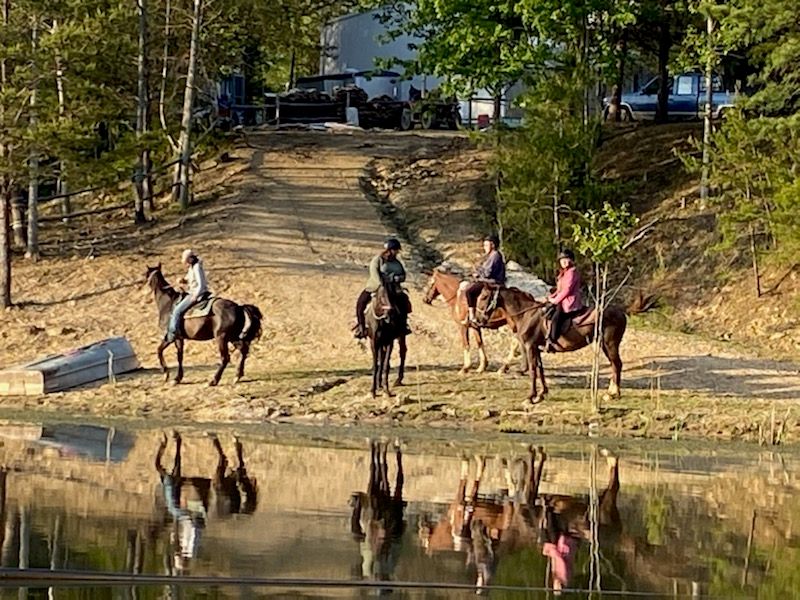
The cliffs sneak up on you around a bend in the trail. One minute you are in the woods, the next you are dwarfed.
This part of Kentucky is built on layers of tough sandstone. Rain and wind carved the rest over millions of years.
Some walls rise well above the treetops in tan and rust colors. Streaks of black run down where water traced the same path forever.
Riding along the base gives you a view hikers rarely match. Being up in the saddle changes the angle just enough.
My horse walked the ledge trail like he had memorized it. He probably had, several hundred times over.
Look for small ferns and lichens growing straight out of the rock. They survive on almost nothing, which is oddly impressive.
Hawks and vultures ride the air currents near the cliff tops. Watching them circle while you sit still is its own reward.
Keep your voice low near the walls, since sound carries strangely. Your guide may point out an echo worth testing.
Bring a wide lens if you want the whole wall in frame. Phone cameras struggle to capture the scale honestly.
Sometimes the better move is to put the phone away. Some views refuse to fit inside a screen.
Rock Shelters Carved Into The Sandstone
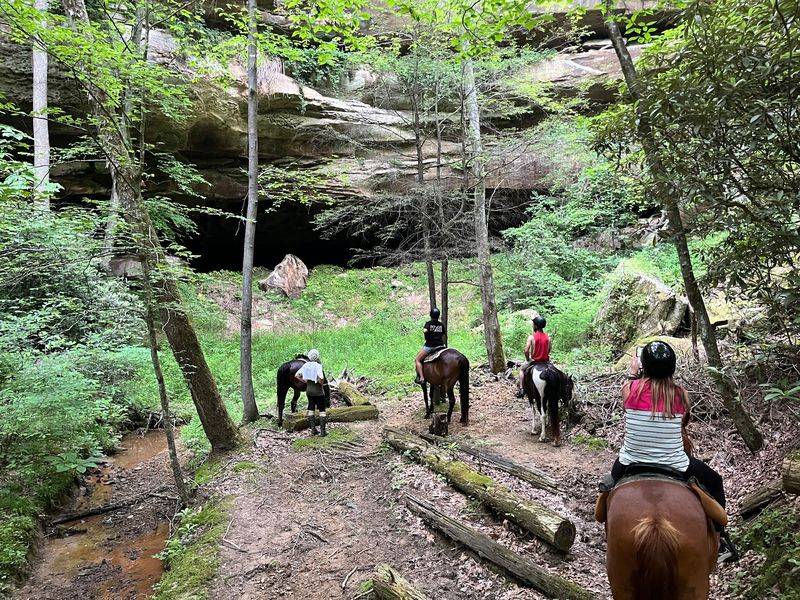
Rock shelters are overhangs where softer stone wore away underneath. What remains is a natural roof with a dry floor beneath it.
People used shelters like these across eastern Kentucky thousands of years ago. Archaeologists have found evidence of early plant cultivation in the region.
Standing under one, you understand the appeal immediately. Dry ground, shade, and a wall at your back solve a lot.
The floors stay powdery even after days of rain. That dryness is exactly why old material survived so long here.
Never dig, move stones, or take anything from a shelter. Removing artifacts from protected land is against the law.
Guides usually explain the basics while everyone stays mounted. Hearing that history in the actual spot beats any classroom.
Swallows and bats sometimes tuck into the higher crevices. Look up slowly and you might catch movement in the shadows.
Temperatures under the overhang run noticeably cooler in July. Nature figured out air conditioning long before we did.
There is something humbling about sharing space with that much time.
A small flashlight helps you notice details in the ceiling. Just keep the beam away from any wildlife resting above.
Horses That Know Every Turn Of The Trail
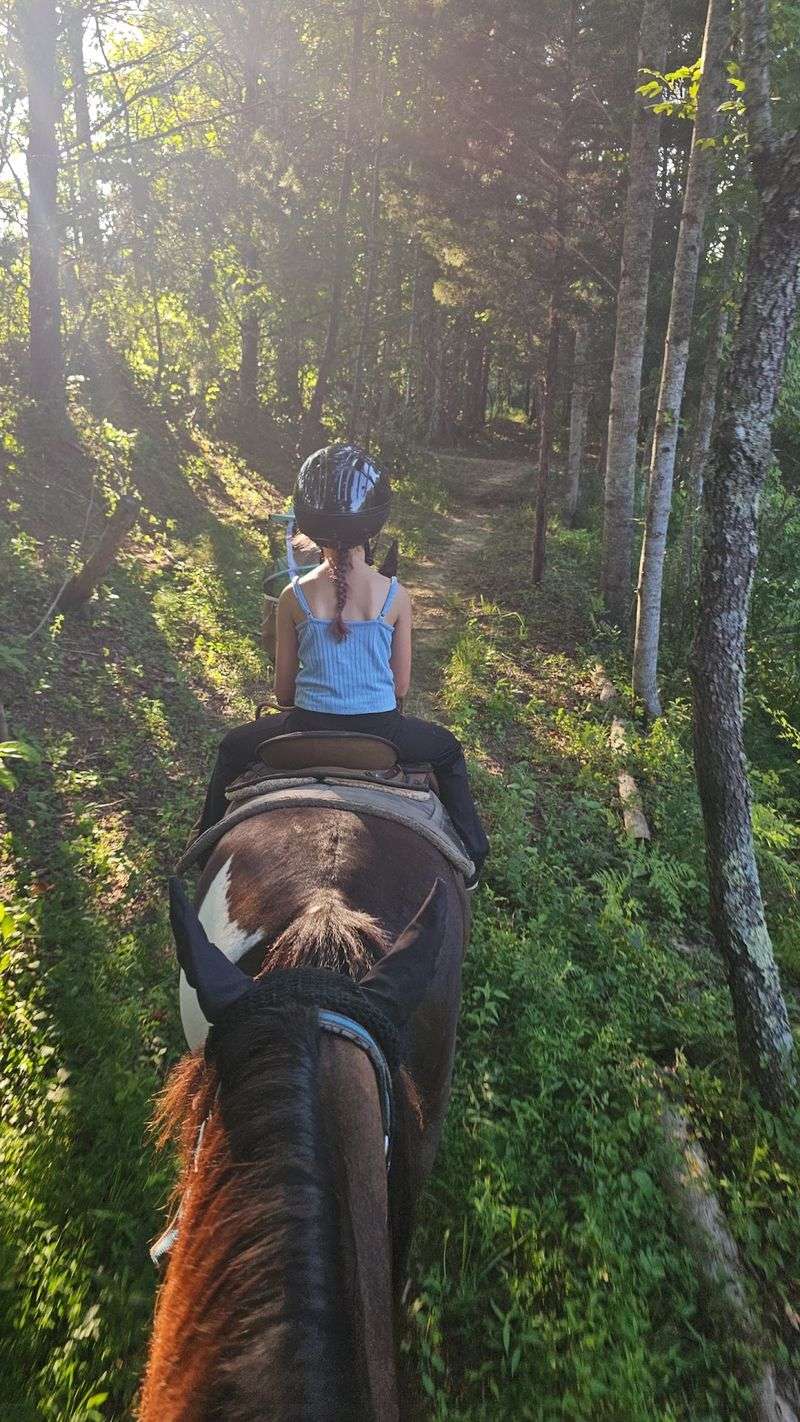
The horses here work these trails constantly, and it shows. They pick footing on loose rock without a moment of hesitation.
Staff read riders quickly and pair them with the right temperament.
Beginners get calm, forgiving mounts that follow the leader happily. Confident riders can request something with a little more spark.
Before mounting, someone walks you through the basics. Reins, stopping, steering, and where to put your heels.
Helmets are worth wearing even if you feel silly. Every experienced rider I know wears one without argument.
Feeding treats is a no without asking first. Horses have routines, and their handlers know what works.
A pat on the neck at the end costs nothing. These animals carried you through creeks and up hills for two hours.
Names get shared during introductions, and they stick with you. Mine was a chestnut with an opinion about walking speed.
Weight and height limits exist for the horses’ well being. Call ahead with questions so nobody is surprised.
Kids can ride, though age minimums apply for longer routes. Confirm details when you book rather than on arrival.
Riding is a partnership, not a driving lesson. Relax your shoulders and the horse relaxes too.
What To Wear So You Enjoy It
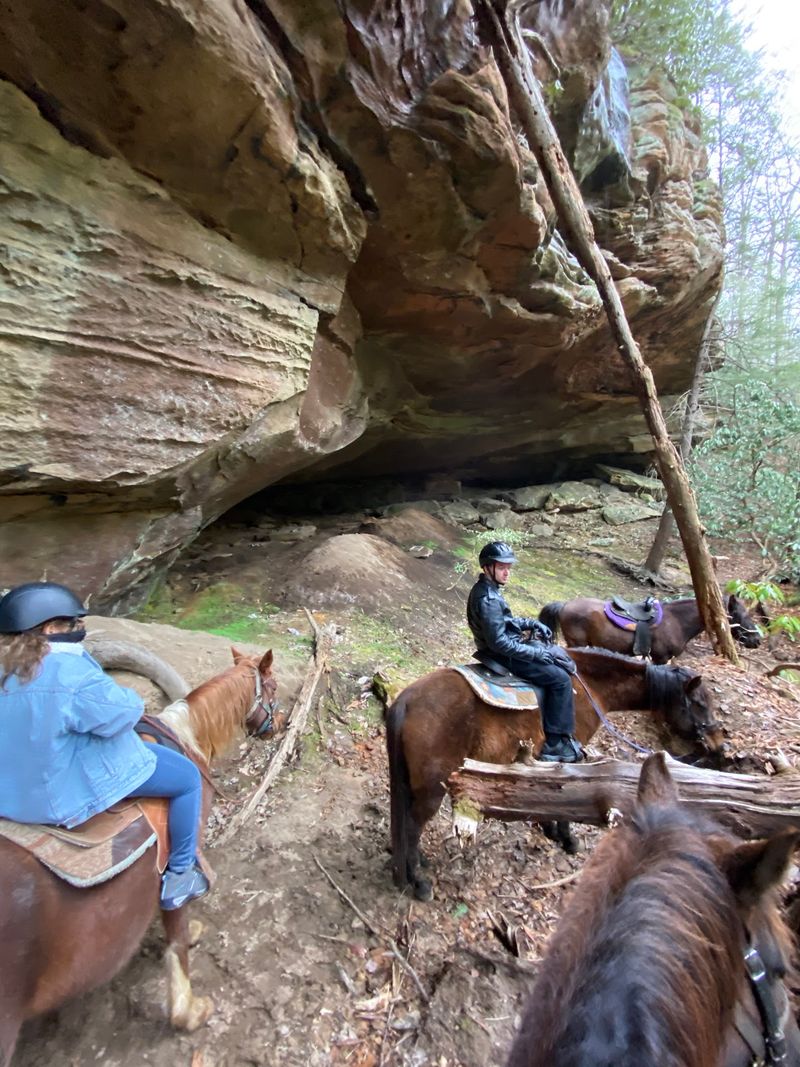
Jeans beat shorts every single time in a saddle. Bare legs and stirrup leather do not get along.
Closed toe shoes with a small heel are ideal. Sneakers work, but a boot heel keeps your foot from sliding through.
Sunglasses help on the open stretches between tree cover. A brimmed hat under a helmet is trickier than it sounds.
Skip the loose scarf and dangling bag straps. Anything that flaps can startle a horse at the wrong moment.
Bug spray earns its place from May through September. Apply it before mounting, not while sitting on a horse.
Layers matter in fall when mornings start cold and warm up fast. A jacket tied around the waist works fine on the trail.
Leave the big camera bag in the car. A phone in a zippered pocket handles most photo needs.
Use the restroom before you mount up. Two hours is a long time to regret that choice.
Gloves are underrated if your hands blister easily. Thin work gloves cost little and save some soreness.
Snacks are allowed, but keep wrappers quiet and pocketed. Crinkling plastic near a horse’s head is a rookie move.
Finally, charge your phone before you leave home. Service is spotty, and hunting for signal drains a battery fast.
Best Times To Book And Ride
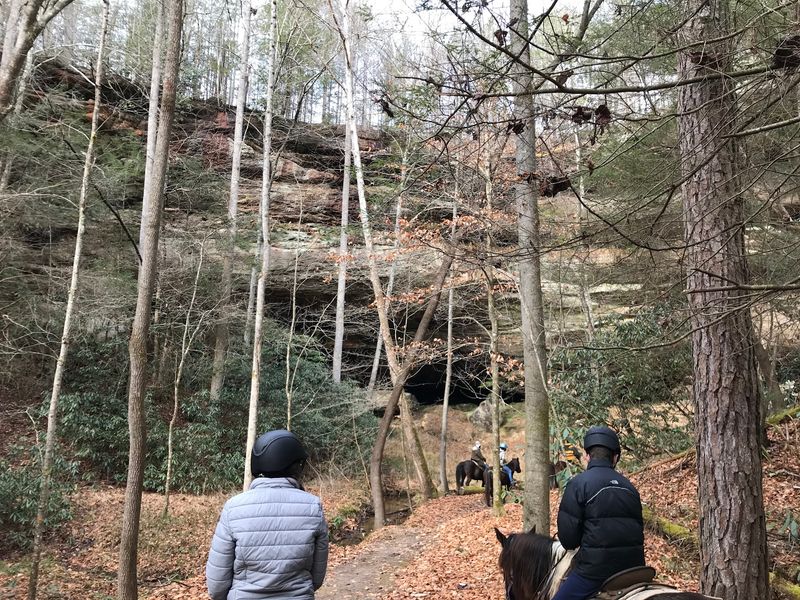
Weekends fill up fastest, especially during fall color season. Reservations are the safest plan, particularly for larger groups.
October brings crowds for good reason in this part of Kentucky. Ridge views open up as the leaves turn gold and red.
Spring rides deliver stronger waterfalls and softer ground. Expect mud, and dress like you know it is coming.
Summer mornings beat summer afternoons by a wide margin. Heat and humidity build quickly once the sun clears the ridge.
Winter rides happen on clear days and feel completely different. Bare trees reveal cliff faces hidden the rest of the year.
Weather can change plans, since safety comes before schedule. Call the morning of your ride if storms are forecast.
Beattyville sits close to Natural Bridge and the Red River Gorge. Pair the ride with a hike and make a full day of it.
Arrive fifteen minutes early to sign paperwork without hurrying. Late arrivals can push the whole group’s start time.
Tipping guides is customary and always appreciated. They handle the horses, the route, and every question you ask.
Take one photo of the barn before you leave. You will want proof that the day actually happened.