This 95-Foot Cross Can Be Seen From Three States, But Few Know Who It Honors
You can stand in one state and see it from two others. That is not a riddle.
It is just what happens when you put something ninety five feet tall on the highest bluff around. Two great rivers meet below it.
Barges slide past all day like they are late for something.
Most people who spot it assume it honors a famous name. They picture a general or a founder with a generous statue budget.
The truth is much better than that. The names attached to it belong to ordinary people.
They are mothers and neighbors and church members, each one loved enough that somebody bought a brick.
It took local churches years of fundraising to get it standing. They did it a little at a time.
You can stop by, read the wall, and watch the water. Kentucky put it far out west, where hardly anyone thinks to look.
A White Cross On A River Bluff
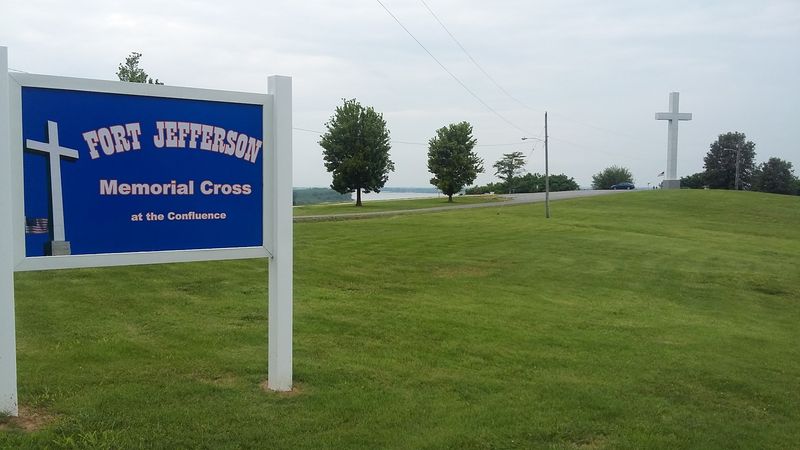
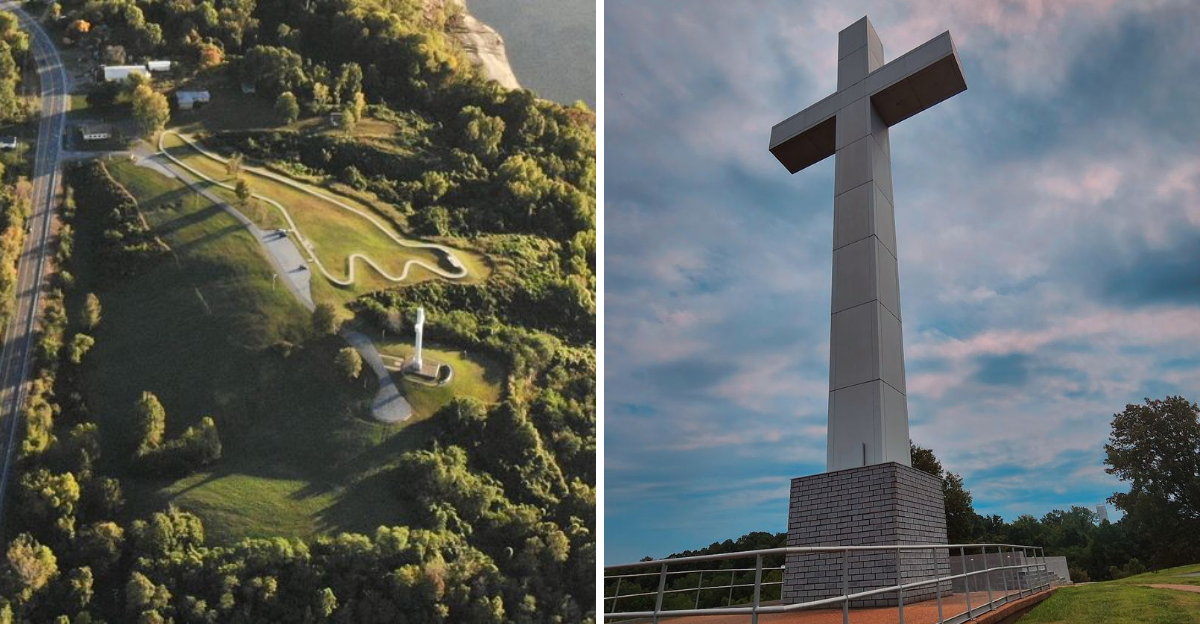
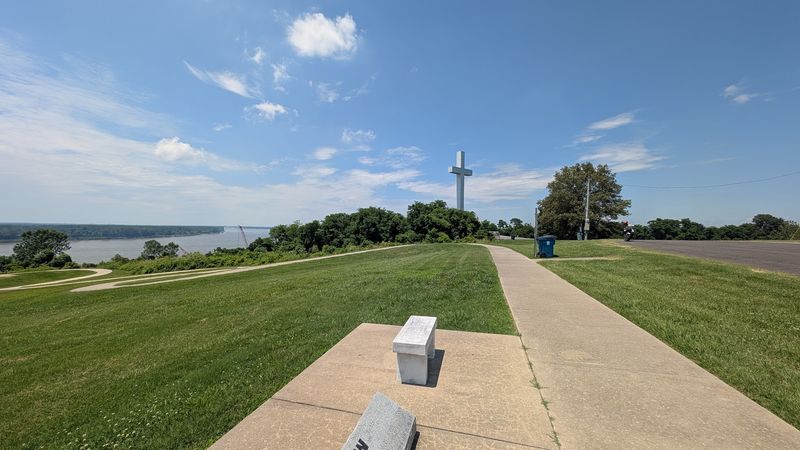
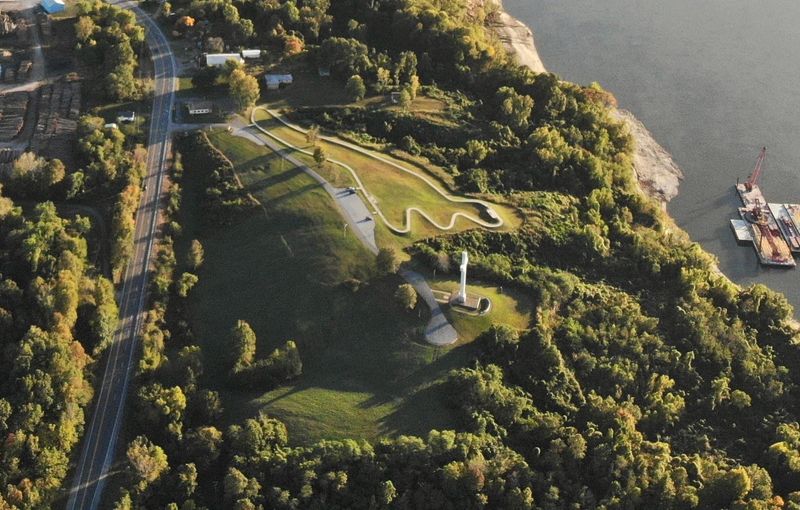
Fort Jefferson Hill Park and Memorial Cross crowns a bluff in far western Kentucky.
The drive up feels ordinary until the trees suddenly open. Then a white cross rises above you, with a river valley spread out below.
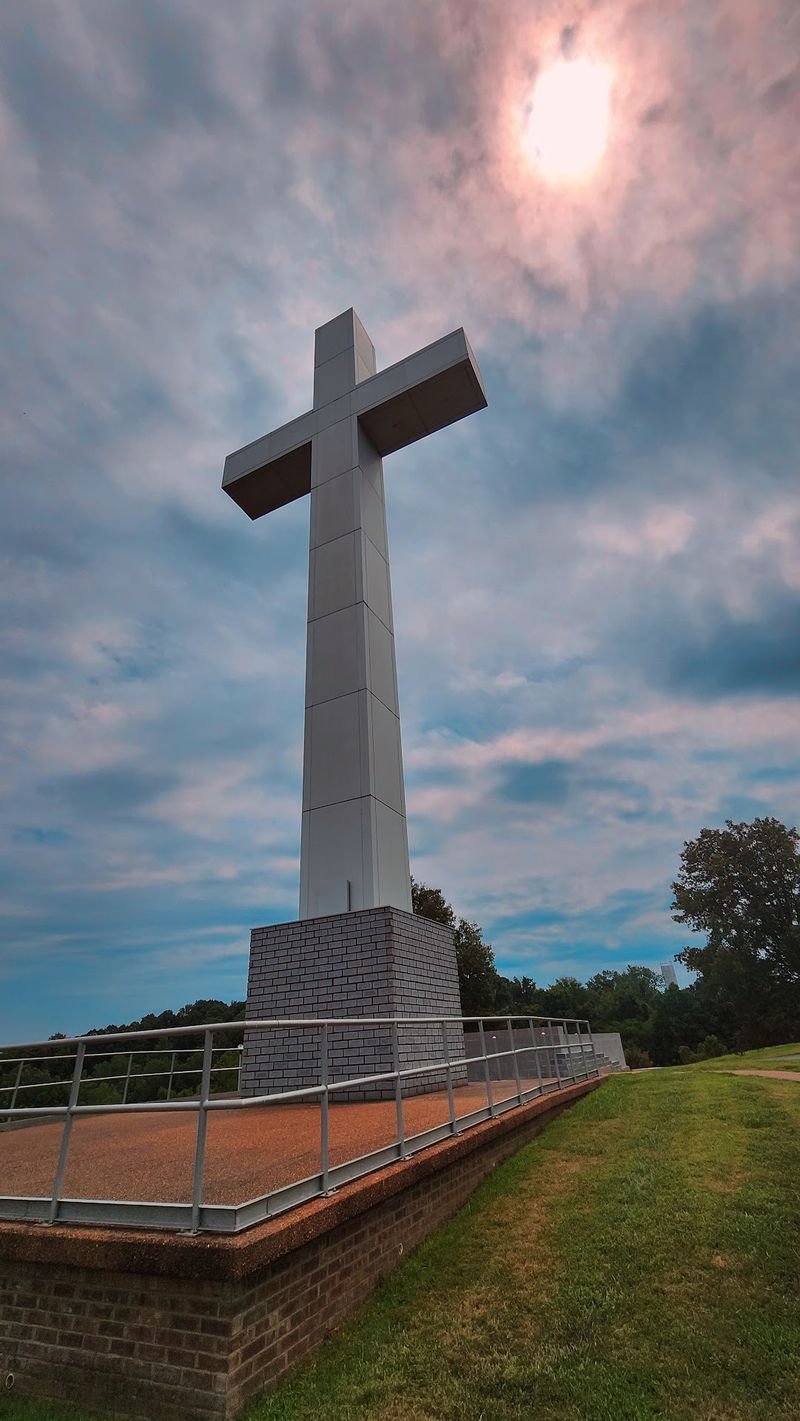
Ninety-five feet is hard to judge from a photograph. At the base, you tilt your head back and still miss the top.
The park itself stays modest. There is grass, parking, a few places to sit, and a very wide sky.
Wind is part of the deal up here. It comes off the water and pushes across the open ground.
Most visitors plan a five-minute photo stop. Many stay much longer, watching barges push slowly against the current.
There is no gate and no fee. Just a hilltop, a landmark, and two of the country’s biggest rivers.
That contrast is the whole appeal. A town of a few hundred people looks after a 95-foot landmark.
The overlook does not need a soundtrack. Wind, water, and the occasional train are all you get.
Bring a jacket even in mild weather. The bluff runs cooler than the road below.
I expected a quick roadside curiosity. I left with a full camera roll and a new favorite overlook.
The Community Story Behind The Memorial
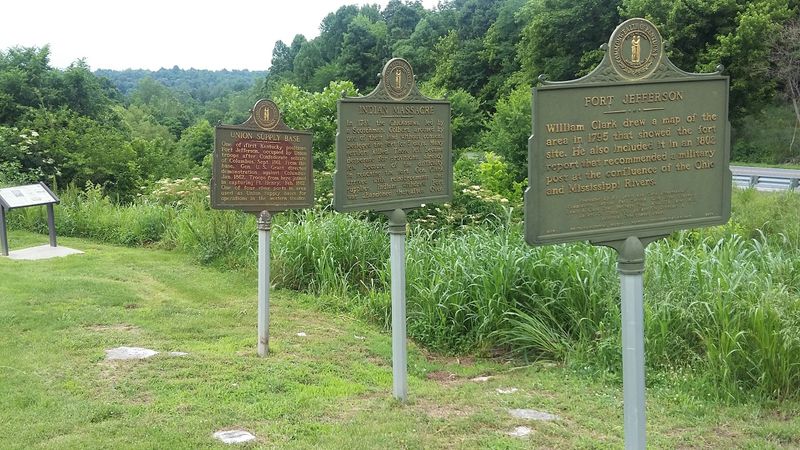
The story behind the Fort Jefferson Memorial Cross began decades before the 95-foot structure appeared on the bluff. In 1937, members of a local community choir erected a small wooden cross elsewhere in Wickliffe.
A larger illuminated cross replaced it in 1951 and became a familiar sight during Easter and Christmas.
When Murray State University purchased that property in 1981, community members began looking for a new location and imagining something much larger.
Their idea was ambitious: build a cross high enough to be visible from Kentucky, Illinois, and Missouri. Fort Jefferson Hill eventually became the chosen site, and Wickliffe purchased the property in 1989.
The project soon became a countywide effort.
Representatives from Ballard County churches helped organize fundraising, while residents contributed through donations, community events, aluminum can collections, and engraved memorial bricks.
The name “Cross at the Confluence” was suggested because the site overlooks the meeting of the Ohio and Mississippi rivers. “Memorial” was later added when organizers decided the cross would honor the memory of loved ones.
Construction stretched through the 1990s, with the cross completed in 1999. Today, it stands as a symbol of faith, remembrance, and the community effort that brought it to life.
Three States In One Long Look
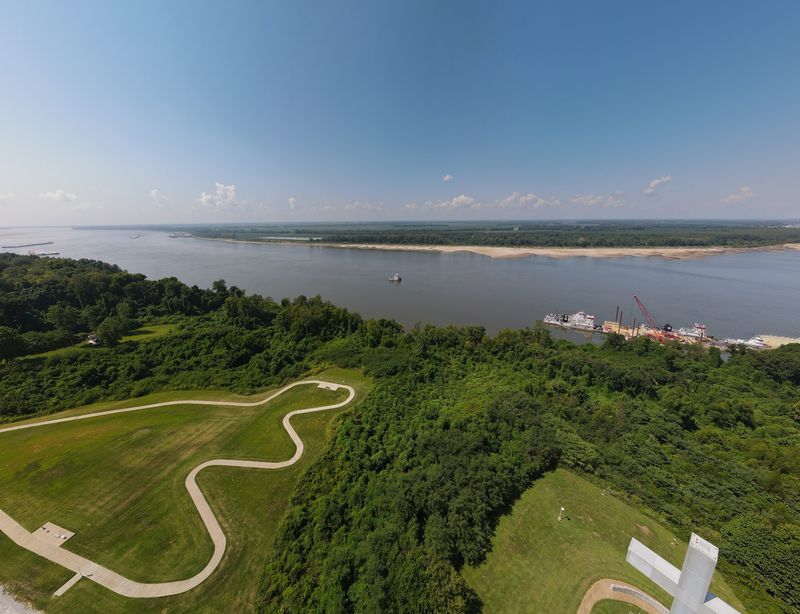
Three states show up in a single glance from this bluff. Kentucky underfoot, Illinois across the Ohio, Missouri past the Mississippi.
The confluence steals attention first. Two enormous rivers merge below, and the seam between them is often visible.
Cairo, Illinois sits directly across the Ohio. A bridge carrying US 51, 60, and 62 connects the two towns.
Barge traffic never really stops. Towboats push long strings of cargo, moving slower than you expect.
Binoculars make the overlook twice as fun. Following one tow downstream can eat twenty minutes easily.
Scale plays tricks from up high. Far-bank trees look tiny until a barge slides past for comparison.
Photos need help here. Include the cross in the frame so viewers understand the distance.
White steel catches the afternoon sun. That brightness is why the landmark reads clearly from across the water.
Maps make more sense after standing here. You finally see why early travelers valued this exact corner.
Trains rumble through the valley now and then. The sound carries oddly far across open water.
Few Kentucky overlooks hand you three states for free. This one skips the ticket booth entirely.
Sunset turns the rivers copper and pink. Bring something warm, because the wind does not quit.
Ninety-Five Feet Of Steel And Sky
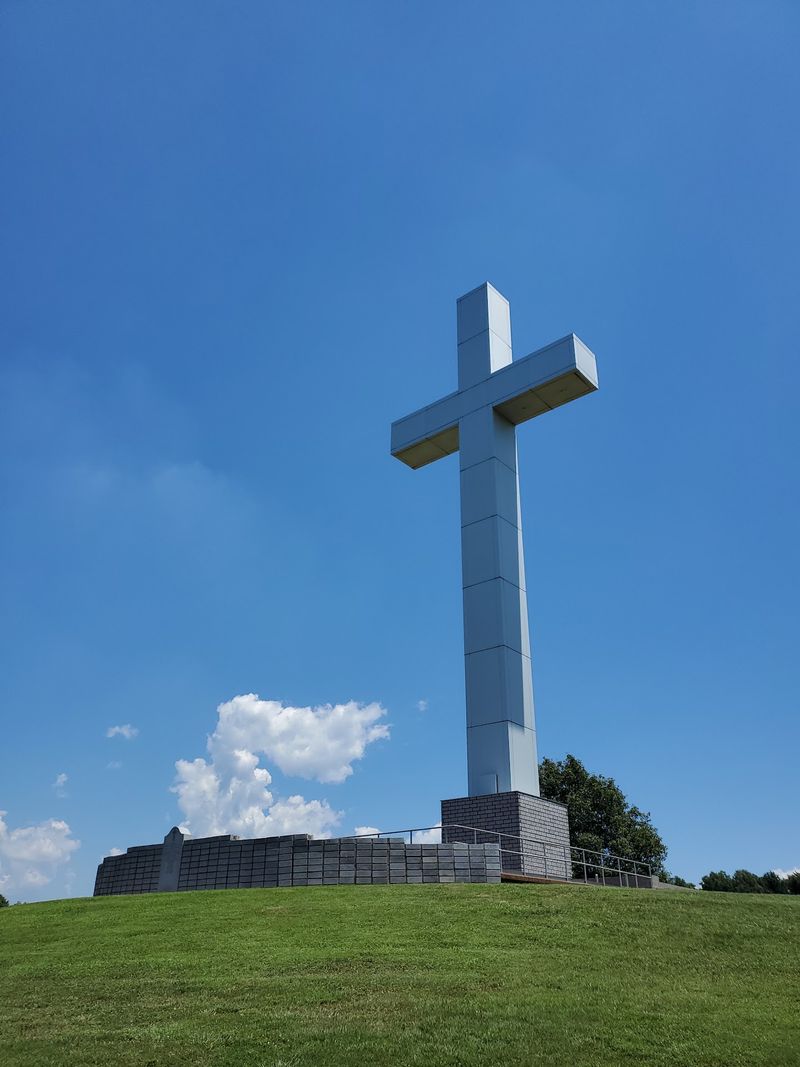
Picture a nine-story building with no walls, just a white cross. That is the rough scale here.
The structure is steel, painted bright and built to handle weather. River bluffs collect plenty of wind.
Its base sits in concrete, anchored for gusts and storms. Height like that needs serious footing.
From the parking area, the top looks close. Walk to the base and the perspective flips completely.
Kids love standing underneath and staring straight up. Adults do it too, then pretend they did not.
Photographers usually crouch low for a dramatic angle. Grass, steel, and sky make a clean composition.
The cross carries no signs and no slogans. Plain white against blue is the whole design.
Simplicity is why it works from miles away. Complicated shapes vanish at distance; this one does not.
Locals treat the landmark as a compass. Drivers and boaters use tall markers that way.
Maintenance falls to people who care about the hill. Paint and mowing are ongoing volunteer chores.
Wind noise around the steel surprised me. It hums quietly when gusts come off the water.
Bring a wide lens if you own one. Phone cameras fight to fit the whole thing.
Nothing about it feels flashy. That restraint is part of the charm.
A County Seat Of Fewer Than 700 People
Wickliffe holds the title of county seat for Ballard County. Fewer than 700 people live here.
The 2020 census counted 670 residents. Small numbers, big geography, since two rivers frame the town.
It also belongs to the Paducah metropolitan area. Paducah sits an easy drive to the northeast.
Downtown moves at a calm pace. Expect a courthouse, a few local businesses, and simple parking.
Rail lines and river traffic shaped the place. Transportation has always been the local story.
Ohio Township covers the ground around the park. Addresses out there use the 42087 zip code.
Ballard County spreads into farmland and wetlands. Birds use the river corridor constantly.
Fishing and birdwatching shape local calendars. Fall brings visitors from several states.
Travelers often stop for fuel and directions. Residents answer with more detail than you asked for.
Ask about the cross and you get opinions. Everyone remembers when it went up.
Small-town hospitality is not a marketing line here. It is just how conversations go.
Restaurants are limited, so keep meal plans flexible. A cooler in the trunk solves most problems.
Cell service works, though not evenly on the bluff. Download your map before the drive.
The town rewards slow travel. Rushing through misses the point.
Ancient Mounds A Few Minutes Away
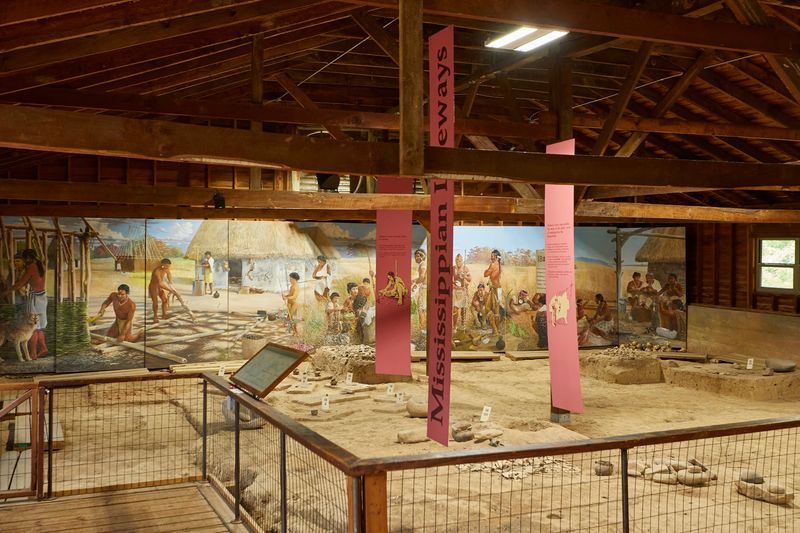
A few minutes from the cross sits Wickliffe Mounds State Historic Site. Different history, same neighborhood.
The site preserves a Mississippian village once built above the river. People lived here centuries before Kentucky existed.
Archaeologists have studied the mounds since the 1930s. Excavated areas sit under shelter buildings today.
Inside, you can see pottery, tools, and interpretive exhibits. Signs explain daily life in plain language.
Kentucky State Parks manages the property now. Hours shift with the season, so check ahead.
Admission is modest and worth paying. Kids connect with the exhibits faster than adults expect.
Walking the grounds takes under an hour. Shaded paths make summer visits comfortable.
Pairing the mounds with the memorial builds a smart afternoon. One site is ancient, the other much newer.
Both sit on high ground for the same reason. Rivers flood, and elevation has always mattered.
Staff answer questions patiently. I learned more in ten minutes than from any brochure.
The visitor center usually offers regional history books. Good reading for the drive home.
Programs run at certain times through the year. Calling ahead saves disappointment.
Respect matters at sites like this. Stay on the paths and leave everything in place.
Light, Fog, And The Best Hours To Go
Morning fog sits on the rivers and hides everything. Then it lifts, and the reveal pays you back.
Sunrise light hits the cross from the east. White steel glows warm for a few minutes.
Golden hour before sunset flatters the whole valley. Water turns copper, and shadows stretch long.
Winter offers the clearest views. Bare branches open sightlines that summer leaves block.
Spring brings high water and fast current. Barges work harder, and the rivers look wider.
Summer haze softens distance. Illinois and Missouri fade into pale blue layers.
Autumn is the crowd favorite. Color on both banks makes the overlook look painted.
Storms build fast over open water here. Watch the sky and leave early if clouds stack up.
Wind direction changes the sound completely. Some days you hear towboat engines clearly.
Check a river forecast if you enjoy details. Water levels shift the view week to week.
Weekday visits stay quieter. I once shared the hill with nobody but a hawk.
Weekends bring families and photographers. Parking remains easy anyway.
Layers beat one heavy coat up there. Temperatures swing quickly.
Whatever season you pick, allow extra time. Rushing an overlook defeats the purpose.
Simple Tips For A Smooth Visit
Entry costs nothing, which makes the trip easy to justify. Bring your own water anyway.
Facilities are limited, so handle restroom stops in town. Wickliffe covers that fine.
Parking sits close to the cross. Sturdy shoes help on grass and uneven ground.
Strollers manage the main area with some effort. Wheels and thick grass never fully cooperate.
Pack snacks, since nearby food options are few. A picnic on the hill beats a drive-through.
Leash pets and carry a bag. Shared spaces stay pleasant when everyone helps.
Trash cans may be scarce. Carry out whatever you carry in.
Combine the stop with the mounds site and the river bridge. That fills a cheap, satisfying afternoon.
Paducah sits under an hour away for dinner. Plan timing before you leave the hill.
Fill your tank before the rural stretches. Stations thin out quickly around here.
Photograph the marker text for later. Details fade faster than you think.
Ask locals for the best viewing angle. Their advice beat my guesswork.
Weather apps often miss river fog. Go anyway and adapt.
Finally, read the memorial signs fully. Knowing the story is the whole point of the stop.