Pack Your Bags For This Connecticut Small Town That Feels Made For Retirement

Retirement dreams get easier to picture when the setting already seems to understand the assignment.
The pace here feels comfortable without becoming dull, and the shoreline gives ordinary days a calmer backdrop.
A slower chapter of life feels especially tempting in this Connecticut small town, where scenery seems to soften the routine.
Historic streets give the area character without turning everyday life into a tourist production. A morning near the water can flow naturally into an afternoon that asks very little from you.
That balance matters when retirement is supposed to create more freedom, not more complications.
The town feels connected enough for practical life while still leaving breathing room. Even routine errands can seem less ordinary when the surroundings are this pleasant.
A weekend visit may be enough to start rearranging future plans in your head.
No grand sales pitch is required here.
The place simply makes slowing down sound like a very good idea.
1. Seaside Living With An Unhurried Small-Town Feel
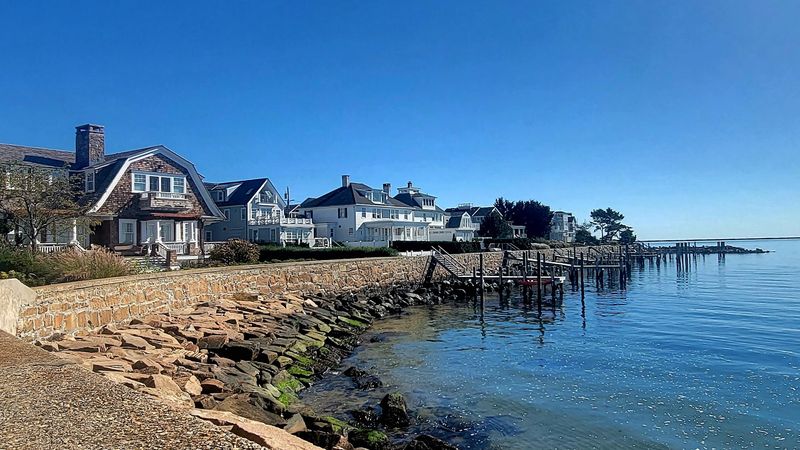
Life moves differently here. Even a morning errand can turn into a sidewalk conversation before you make it home.
That easy pace fits Stonington Borough, where narrow streets and a working harbor give daily routines a coastal feel. Historic homes line the peninsula, and much of the area is comfortable to explore on foot.
The borough’s preserved architecture reflects centuries of maritime history, giving ordinary walks plenty to notice without turning them into formal sightseeing.
Community events keep the calendar lively. The annual Fourth of July Parade remains a local tradition.
Summer concerts bring neighbors together during warmer months, while the long-running COMO Village Fair adds another favorite. In 2026, the borough is also hosting its first Porchfest alongside the annual Stonington Art Walk.
Quiet days still have plenty of appeal. Gardens soften the streets and harbor views appear around corners.
Coffee can become an excuse to linger rather than rush.
That slower rhythm can be especially appealing in retirement. Daily errands rarely require a production, and familiar faces become part of the scenery.
Instead of feeling like life has stopped, the borough makes it easy to settle into a routine that leaves more room to enjoy where you are.
2. Centuries Of History Still Visible Around Town

State’s oldest borough happens to be right here. Stonington Borough was settled in 1752 and chartered in 1801, and the years since have left marks you can still see on almost every block.
Whaling, fishing, and long ocean voyages built this place. Walk the residential streets and you pass carefully preserved homes in Greek Revival, Federal, and Colonial styles, many of them restored with their original details intact.
The Stonington Village Cultural District exists to keep that architecture and heritage front and center, which is part of why the village looks so consistent from one corner to the next.
There is a scrappier side to the story too. Stonington defended its shoreline against British attacks during both the American Revolution and the War of 1812, and artifacts from the 1814 Battle of Stonington are on display at the local Old Lighthouse Museum.
For retirees who enjoy learning where they live, this is a gift. History is not stored away in a distant archive; it is the house across the street, the stone in the wall, the name on an old marker.
Living surrounded by that much preserved past has a grounding effect. Ordinary days start to feel connected to something considerably longer than a calendar year.
3. Long Island Sound Beside The Rhode Island Line

Geography did Stonington a favor. The town rests along Long Island Sound at the easternmost stretch of state’s shoreline, right where the state hands off to Rhode Island.
Mystic sits just to the west, so familiar shops, restaurants, and services are close by. The eastern border touches Rhode Island, which puts a second state within an easy drive for day trips, appointments, or visiting family.
The borough itself occupies a slim peninsula reaching out into Fisher’s Island Sound and Little Narragansett Bay. Water surrounds you on three sides, and that changes how the light and weather feel throughout the day.
From Stonington Point on a clear afternoon, the view stretches across parts of Connecticut, Rhode Island, and New York all at once. The waters offshore are actually where those three states converge, which is a fun detail to share with visiting grandchildren.
Stonington also holds a distinction no other state town can claim: direct access to the Atlantic Ocean.
Practically speaking, that location means real ocean air, big open horizons, and quick access to two states without living anywhere crowded. For retirement planning, being close to more options while keeping a small-town address is a genuinely useful balance.
4. Stonington Borough Made For Slow Walks

Less than a mile from one end to the other. That is the whole borough, and it explains why so many residents leave the car parked for days at a time.
Water Street works as the main artery, lined with shops, art galleries, boutiques, and restaurants before it opens toward the harbor and the old stone lighthouse. Sidewalks run along most streets, and marked crosswalks make crossing straightforward.
Walkability is not a marketing word here, it is just how the day works. Groceries, coffee, a haircut, a bench by the water: much of it falls within a comfortable stroll.
For anyone thinking ahead about mobility or simply wanting to drive less, that compact footprint is one of the strongest arguments for retiring in the borough.
History buffs get a bonus. An official self-guided walking route, just over a mile long, starts at Wadawanuck Square, follows Water Street down to Stonington Point, and loops back along Main Street, passing beautifully preserved architecture the entire way.
Do the loop once and you have essentially toured your future neighborhood. Do it every morning and it becomes exercise, sightseeing, and social hour rolled into one very pleasant habit.
5. The 1840 Lighthouse Above The Harbor

A stone tower attached to a stone house may be modest by lighthouse standards, but this one has a resume. Built in 1840, it guided ships into Stonington Harbor for nearly fifty years until it was retired from service in 1889.
The Stonington Historical Society acquired the building in 1925 and opened it in 1927 as the nation’s first lighthouse museum.
Inside, the collection covers the town’s maritime and agricultural past through exhibits and local artifacts, including pieces connected to the War of 1812.
The best part comes at the top. Twenty-nine circular steps and a short ladder lead to a lookout with panoramic views reaching across Connecticut, Rhode Island, and New York.
You will find the Old Lighthouse Museum at 7 Water Street, Stonington, an easy walk from most of the borough. It runs on a seasonal schedule from May through October, generally from 10 AM to 5 PM, and is closed on Wednesdays.
Retirees often become regulars at places like this, whether as frequent visitors, members, or volunteers. Having a small museum this interesting within walking distance is a quiet luxury.
6. DuBois Beach For Easy Summer Afternoons

Not every beach requires a long drive and a parking battle. DuBois Beach sits at the southern tip of Stonington Village, right in the borough, with calm shallow water and gentle surf.
Jetties along the edge draw crabbers of all ages, and a gazebo offers shade when the sun gets insistent. Plenty of people show up simply to sit and watch the boats move through.
Sunsets are the main event. The views from the parking lot and grassy areas are widely admired, and late afternoon here has a soft, unhurried quality that is hard to leave.
Practical details help with planning. The beach is managed by the Stonington Community Center and owned by the Stonington Village Improvement Association.
During the summer season, roughly Memorial Day weekend through Labor Day weekend, lifeguards are typically on duty from 10 AM to 4 PM and a season or day pass is required. Children 18 and under enter free, and adult day passes have been listed at $15.
Free public parking is available in the adjacent lot, which visiting families appreciate.
From the sand you look out over Stonington Harbor, Fisher’s Island Sound, and Little Narragansett Bay. Grandkid-approved, and blissfully close to home.
7. Old Mariners’ Homes Around The Historic Village
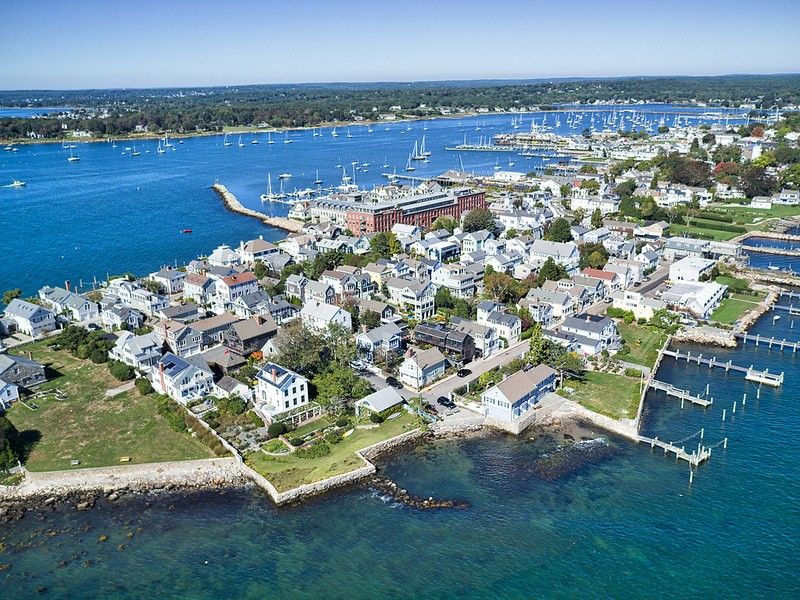
Sea captains who circled the globe came home to these streets, and their houses are still standing. Grand white clapboard residences with widow’s walks and generous porches line stretches of Main Street and Water Street, looking much as they did generations ago.
Housing options are more varied than first impressions suggest. Alongside those stately 18th and 19th century captains’ homes you will find restored cottages and condominiums, which opens the door for buyers who want less upkeep.
Quieter side streets such as Pearl, Union, and Church hold smaller historic houses, often with tidy front gardens and short walks to everything.
Greek Revival, Federal, and Colonial details repeat throughout the village, and that consistency is a big part of why the borough photographs so beautifully in every season.
Anyone considering an older home should think honestly about maintenance, since historic properties come with their own rhythms and responsibilities. The upside is character no new construction can imitate.
Downsizing retirees sometimes find the sweet spot in a restored cottage: enough history to feel rooted, small enough to manage comfortably.
Whatever the size, the reward is the same. You live inside a preserved seafaring village rather than merely visiting one on weekends.
8. Harbor Views That Make Quiet Days Feel Special
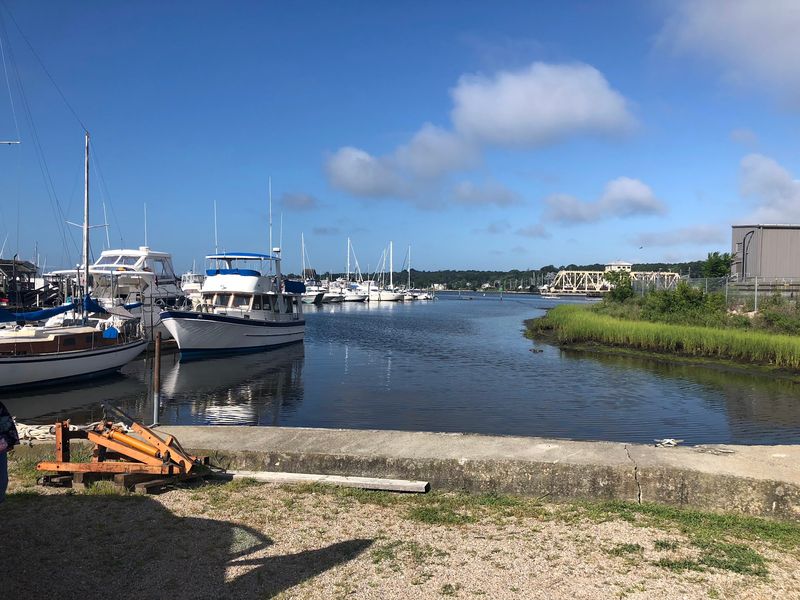
Water shows up constantly in daily life here, and that is the quiet magic of the borough. Walk down Water Street and the buildings gradually give way until the harbor opens in front of you, which naturally slows your steps.
Wayland’s Wharf, a public pier, is a favorite pause point with benches, a gazebo, and direct access to the water. It costs nothing and asks nothing of you except a few minutes.
Farther along, Stonington Point and DuBois Beach open onto wide views across Stonington Harbor, Fisher’s Island Sound, and Little Narragansett Bay. Sunsets from those spots have a well-earned reputation.
A publicly accessible paved walking path along the harbor makes strolling by the water simple, and the grounds of the Lighthouse Museum offer another pleasant overlook toward the bay.
If dinner with a view sounds right, Breakwater at Stonington Harbor and Dog Watch Cafe both face the water and offer outdoor seating during the warmer months, ideal for catching the evening light.
Being nearly surrounded by harbor means a water view is rarely more than a short walk away. Days that would feel ordinary elsewhere tend to feel a little richer with that horizon nearby.