This Tiny Idaho Town Has A 100-Foot Geyser That Erupts Right Downtown Every Hour
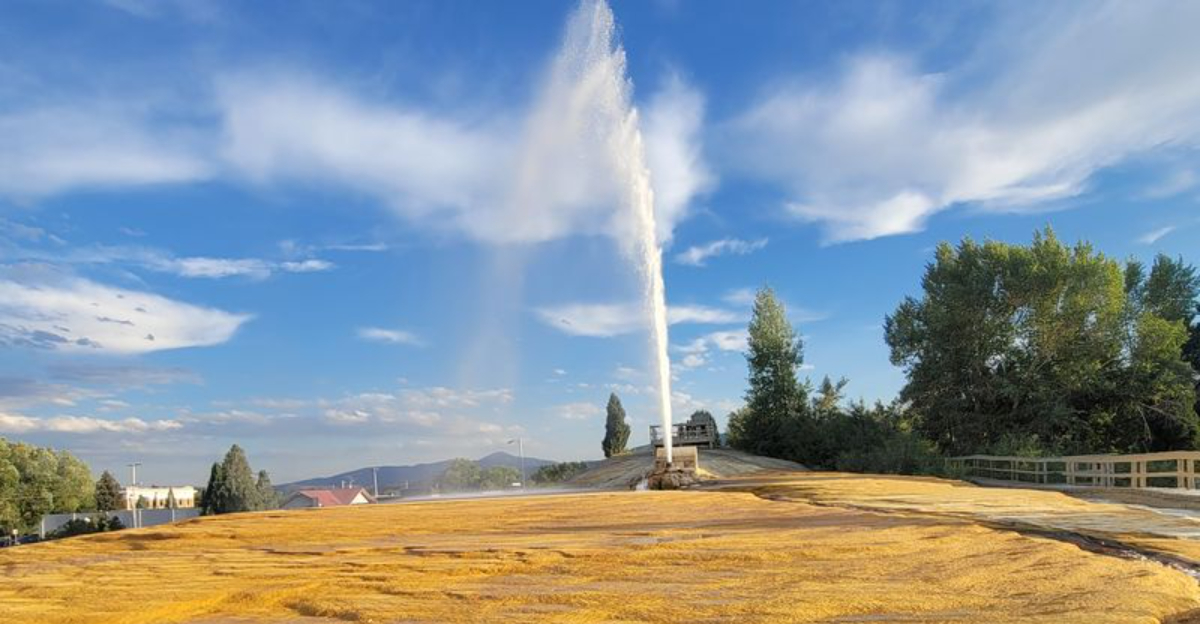
Every sixty minutes, this little Idaho town gets interrupted by the ground.
A roar suddenly rises behind Main Street, conversations pause, and a column of cold mineral water shoots skyward like nature has somewhere very important to be. Then it stops.
Locals carry on as though the earth performing on an hourly schedule is perfectly normal. First-time visitors tend to have a few more questions.
The strangest part is that this spectacle was never supposed to become an attraction at all. A drilling project accidentally created the geyser, and today its eruptions are controlled to happen predictably every hour.
No ticket booth stands nearby, either. Catching the show costs nothing, provided you arrive before the next eruption instead of becoming the person who hears, “You just missed it.”
In most towns, being five minutes late means missing coffee.
Here, it means waiting for the earth to go off again.
A 100-Foot Blast Of Water Steals The Show Right In The Middle Of Town
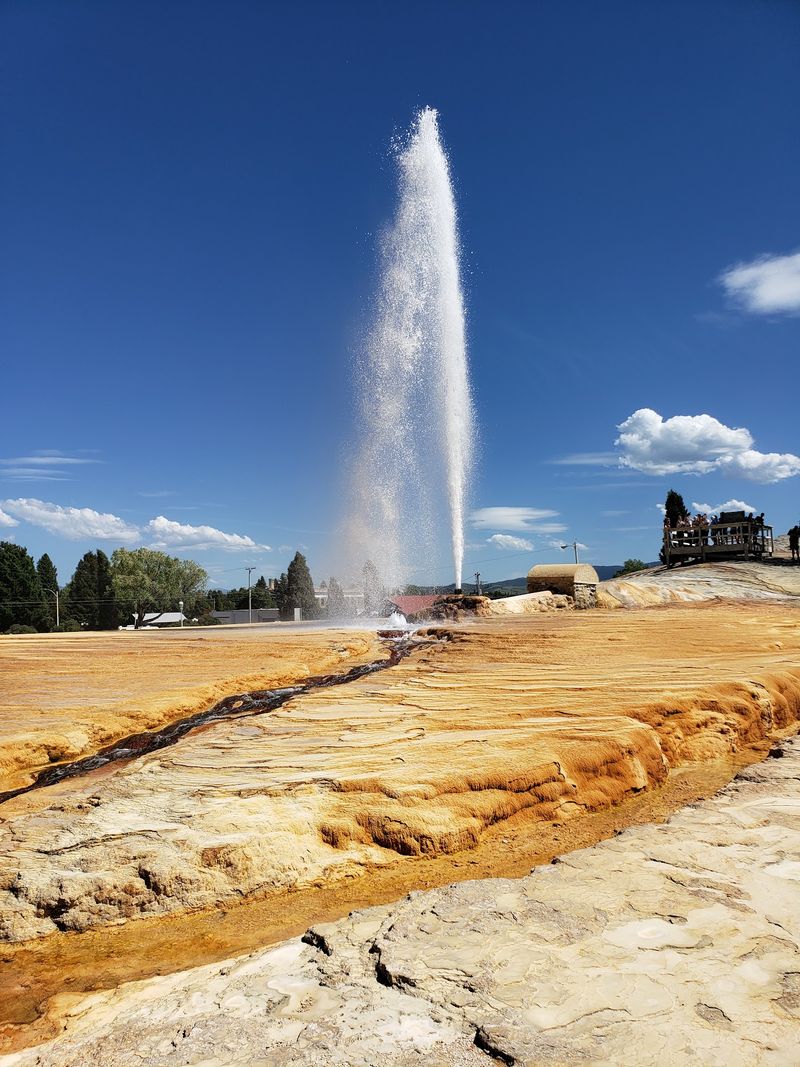
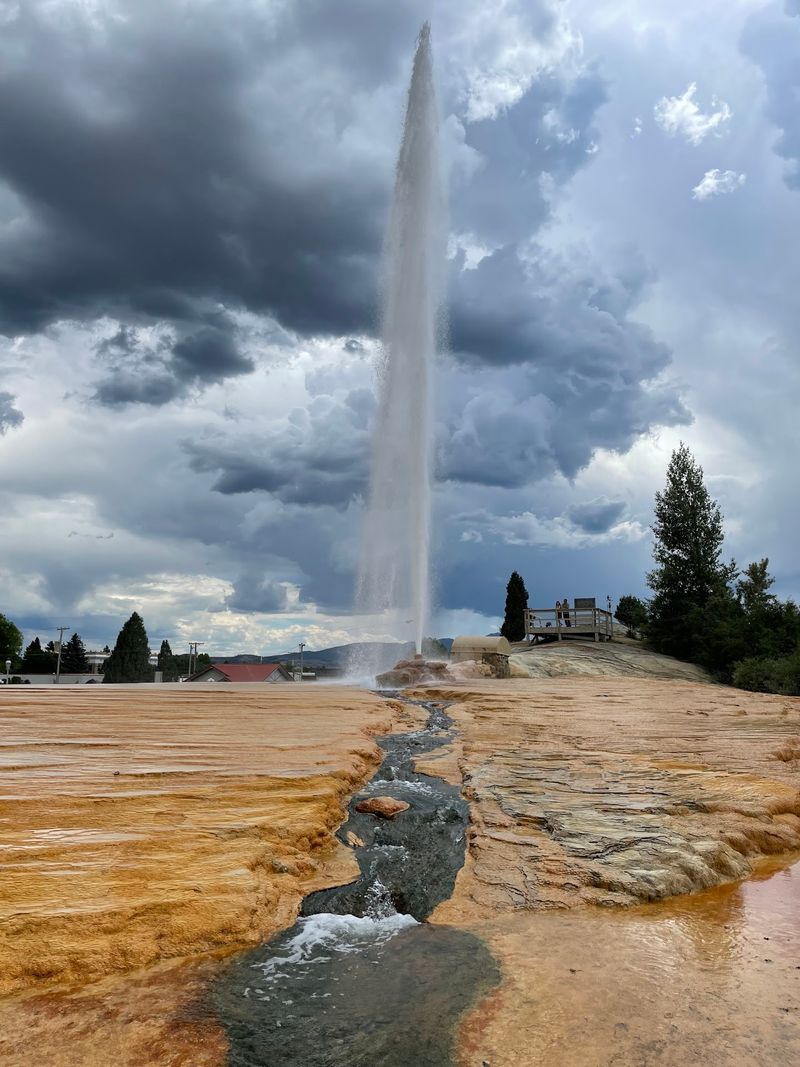
At first glance, Geyser Park feels far too ordinary to contain one of Idaho’s strangest roadside sights. Then the hour arrives, the valve opens, and a column of mineral-rich water climbs roughly 70 to 100 feet above the mound at the center of the park.
Nearby trees and rooftops make the height easier to appreciate, especially from the boardwalk that curves around the viewing area. Unlike attractions that require a trail, shuttle, or long detour, this one sits close to downtown Soda Springs and can be reached with very little effort.
Interpretive displays explain the geology and history while visitors wait, so the minutes before an eruption do not feel wasted. The mound itself also deserves attention, with mineral deposits giving the surface a layered, weathered appearance.
Once the water settles, the park quickly returns to its quieter rhythm, which makes the transformation feel even more surprising. Few places this compact can change character so dramatically at the top of every hour.
From spots around the boardwalk, changing angles reveal just how closely this landmark sits beside everyday town life.
Every Hour Brings Another Chance To Catch The Geyser In Action
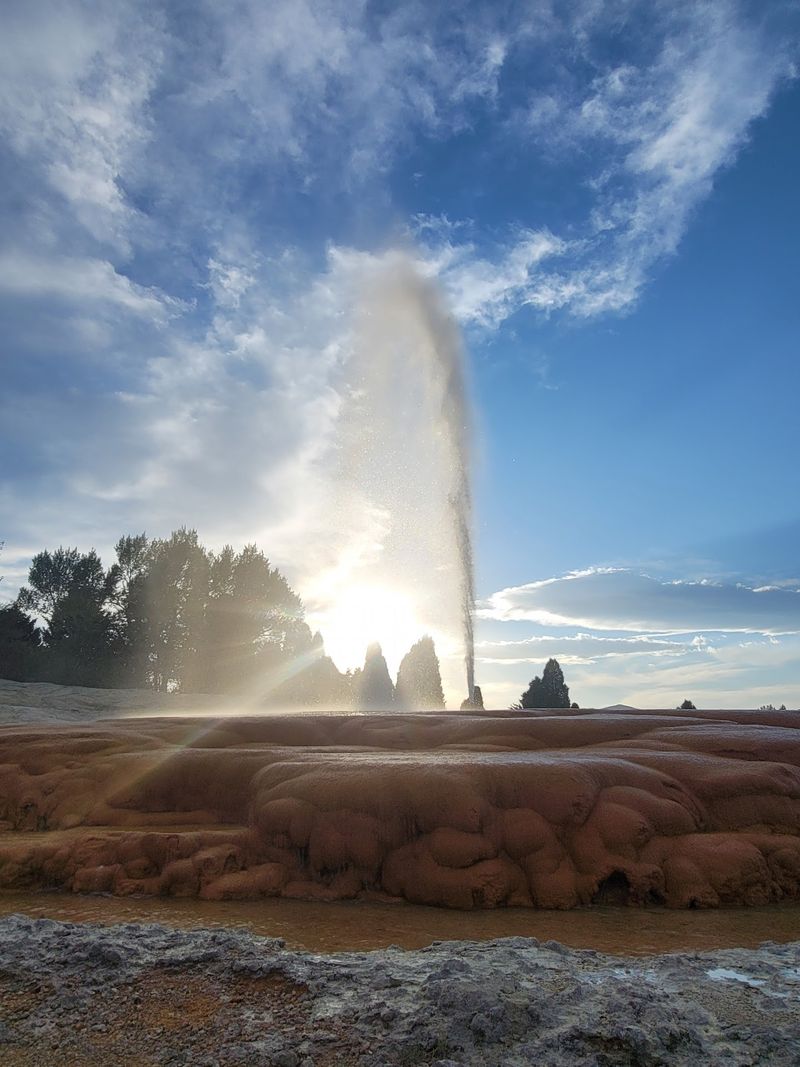
Timing a visit is refreshingly simple. Under normal operation, the Soda Springs Geyser is released every hour on the hour, giving travelers a schedule that fits easily into a broader drive through southeastern Idaho.
The attraction experienced a temporary mechanical shutdown in 2025, but a replacement valve system was installed and regular operation resumed that September.
Arriving several minutes early is still the smartest approach, since it leaves time to explore the boardwalk and read the interpretive material without watching the clock nervously.
Benches and picnic tables provide places to wait, while nearby visitor facilities make the stop practical for families and road-trippers. Once the release begins, the geyser continues for several minutes rather than disappearing after a single splash.
That dependable rhythm is part of what makes the site so unusual. Instead of waiting indefinitely for nature to choose the moment, visitors can plan around a clearly defined hour and still experience a genuinely natural underground system.
Even a brief stop feels manageable because the fixed schedule removes much of the uncertainty that usually comes with natural attractions here.
The Eruption Starts With Almost No Warning And Builds Fast
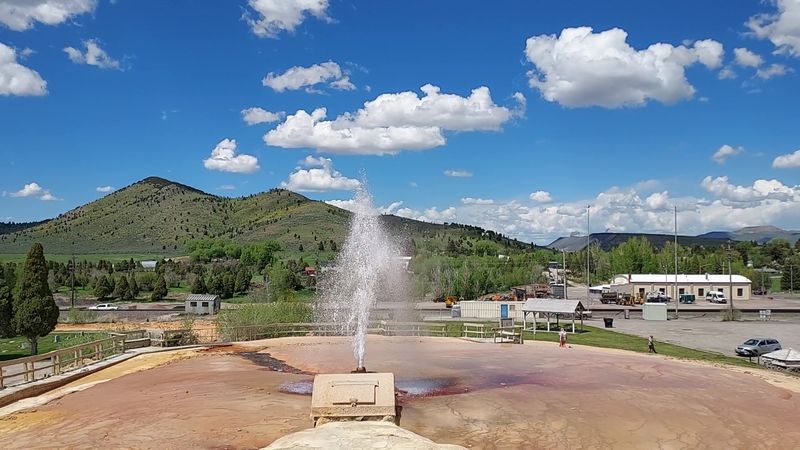
Beneath Soda Springs, the process is more unusual than the tall water column suggests.
Carbon dioxide mixes with groundwater underground and helps build the pressure that drives the geyser, setting it apart from the extremely hot geothermal systems many travelers associate with Yellowstone.
The water here is commonly reported at around 70 degrees Fahrenheit, so intense heat is not what creates the display. When the timed valve opens, accumulated pressure forces water upward through the well and into the air above Geyser Park.
A modern actuated valve now manages that release after the older mechanism developed problems in 2025. Once the system closes again, pressure begins rebuilding below the surface for the next scheduled eruption.
The important distinction is that the water, carbon dioxide, and underground pressure are natural; human equipment controls only the timing of their release.
That combination explains why Soda Springs is commonly described as a captive geyser rather than a completely artificial fountain.
That gradual underground reset prepares the system for another controlled release, repeating the same unusual process when the next scheduled hour finally arrives.
Mineral-Rich Water Has Left Colorful Deposits Around The Geyser Site
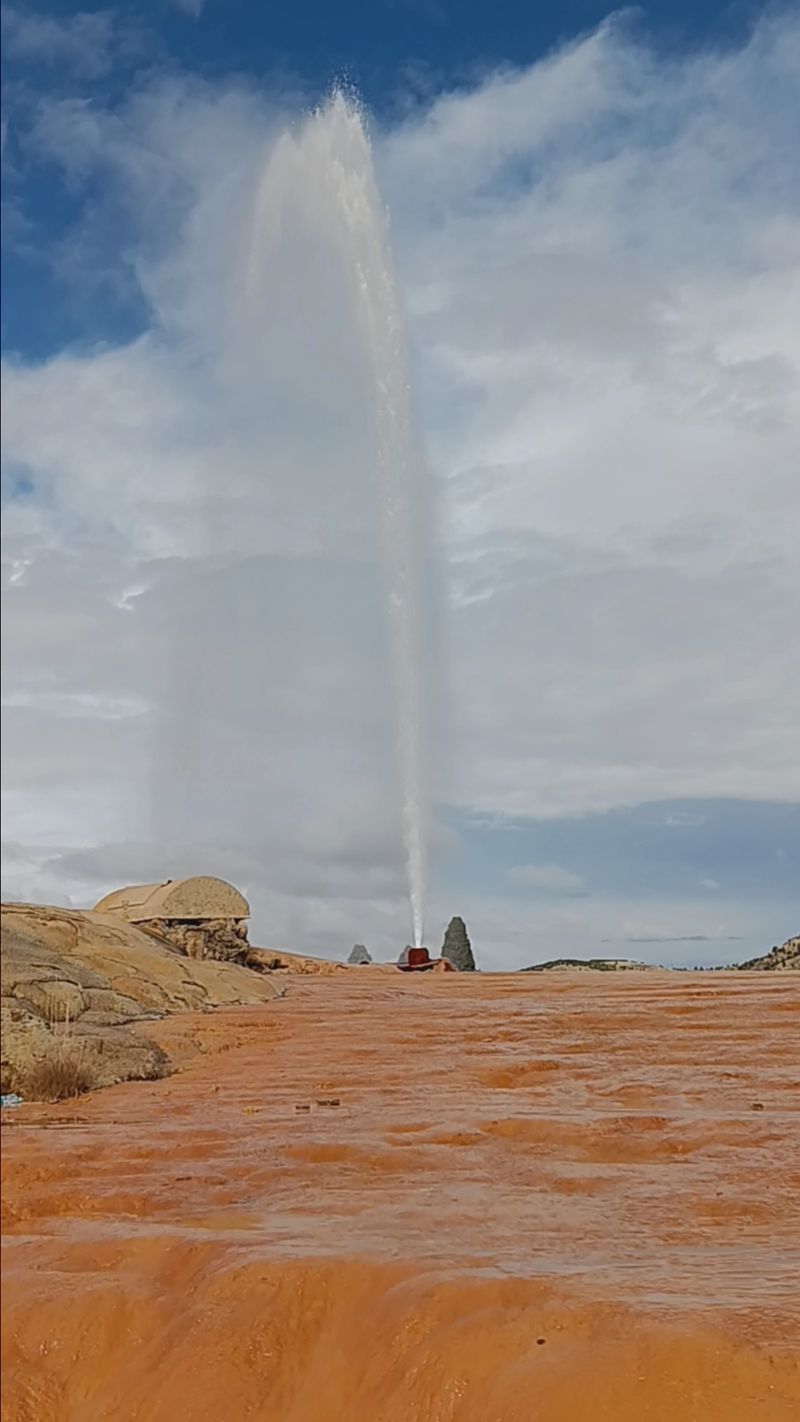
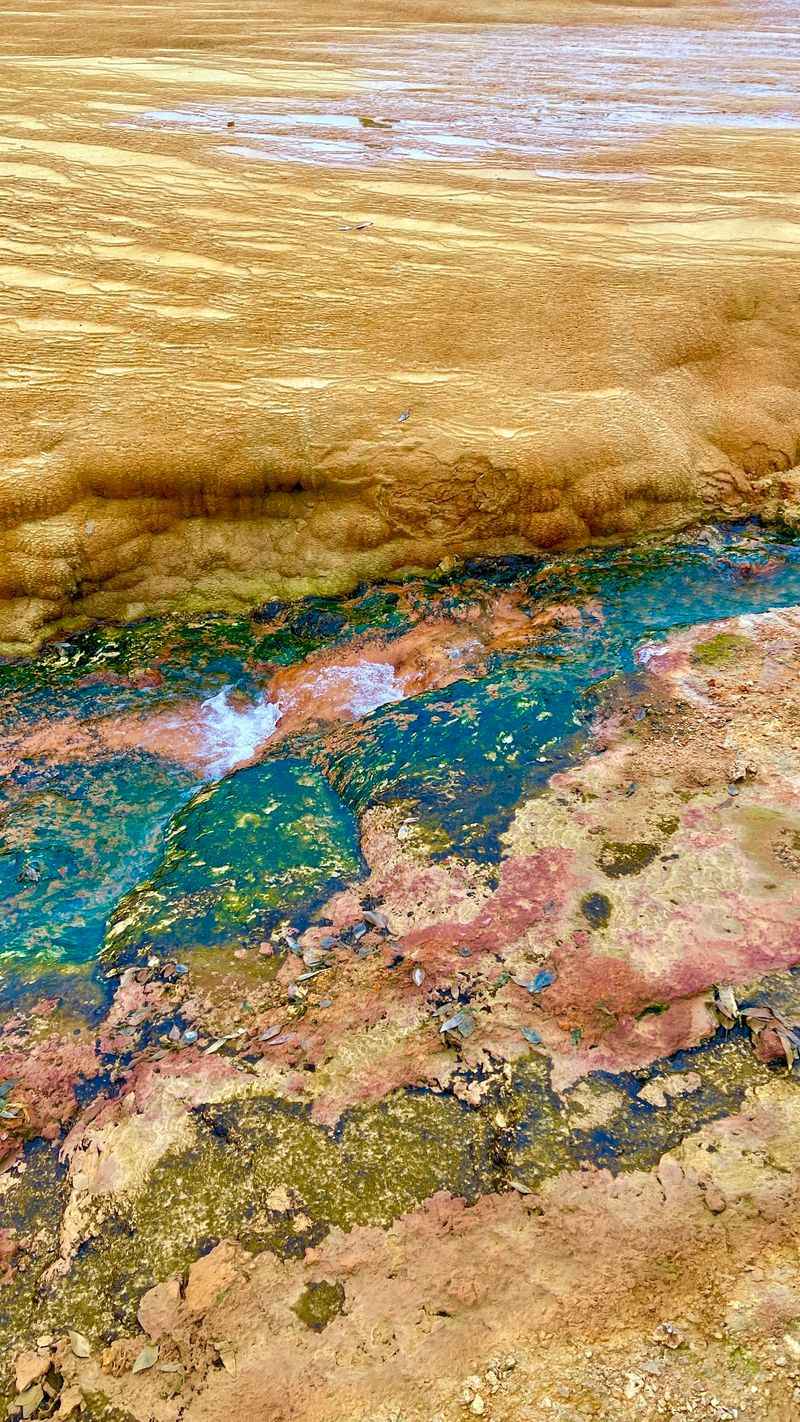
Color becomes the main attraction during the quiet stretch between eruptions. Mineral-rich water has coated and built up the travertine mound over time, leaving gray, orange, yellowish, and pale tones across a textured surface that looks noticeably different from the surrounding park.
The boardwalk brings visitors close enough to study those deposits without needing to step onto the formation itself, making the geology easy to appreciate even before the next release begins. Those minerals also create one practical consideration that is worth knowing in advance.
Spray carried by the wind can dry into hard-water spots on nearby vehicles, and Idaho tourism guidance has specifically suggested parking farther from the mist when possible. A few extra steps can save some cleanup later while also giving you another angle on the mound.
The colors are not decorative additions or landscaping choices. They are physical evidence of the mineral content carried upward by the same groundwater that powers Soda Springs’ hourly spectacle.
Seen up close, the mound records years of repeated mineral buildup in a way the airborne spray alone never really can.
A Happy Accident During Drilling Created This Unusual Idaho Landmark
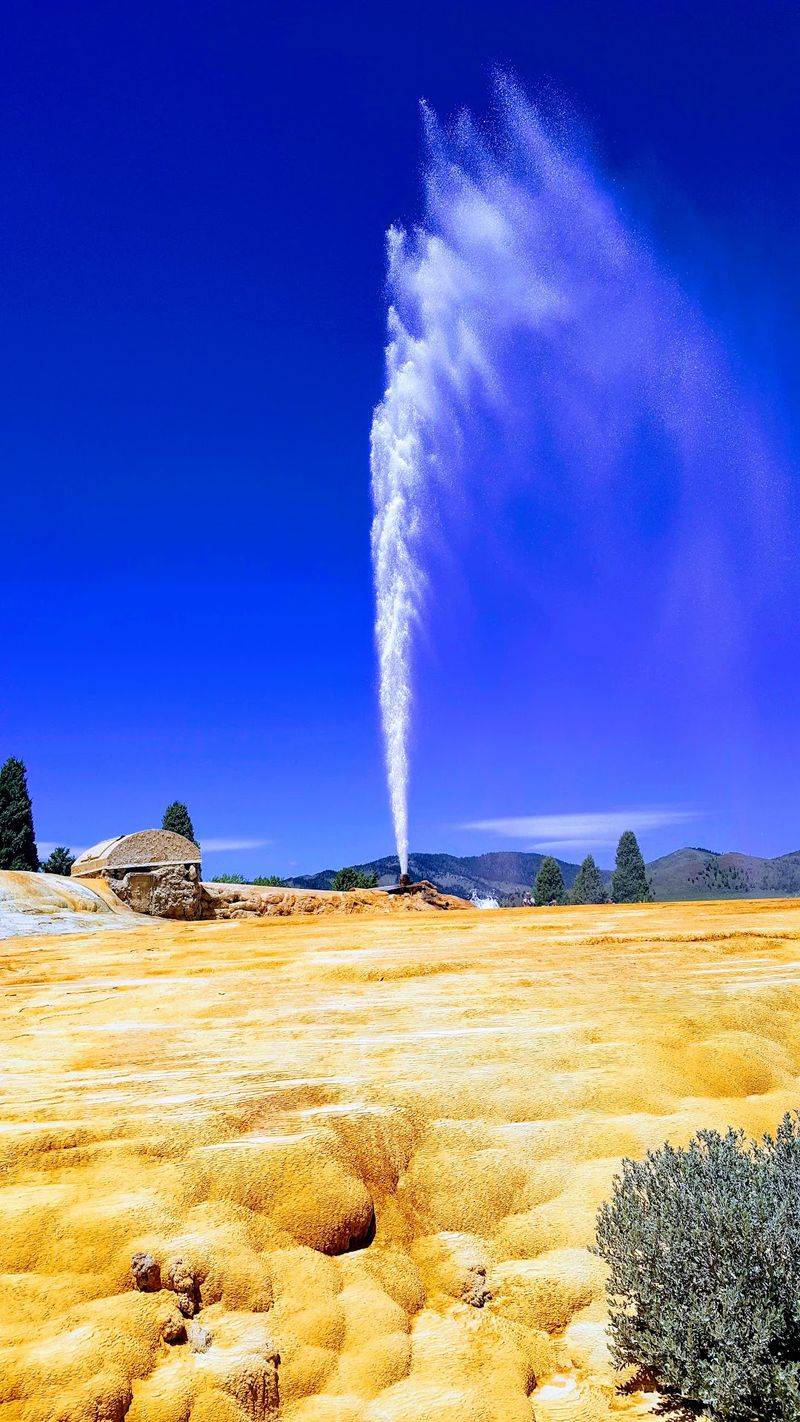
Back in 1937, nobody was trying to create a geyser. Drillers were searching for hot water that could support a swimming pool or bathing attraction when their equipment reached a pressurized underground system roughly 315 feet below the surface.
Once the drilling apparatus was removed, water rose forcefully through the opening and proved difficult to manage. The unexpected result eventually led workers to cap the well and install a valve, giving the town a way to control the flow rather than abandon the site.
That practical solution transformed an accidental discovery into the attraction visitors see today. Interpretive material at Geyser Park now explains how the drilling project intersected with the naturally carbonated groundwater beneath Soda Springs.
Knowing that history changes the experience slightly. The towering water column is not something planners designed from scratch, nor is it a decorative downtown fountain.
It is the visible result of a project that encountered something entirely different underground from what anyone expected. Nearly nine decades later, that accidental encounter remains the reason this small Idaho town has such an unusual recognizable centerpiece.
The Geyser’s Timer Keeps The Eruptions Predictable For Visitors
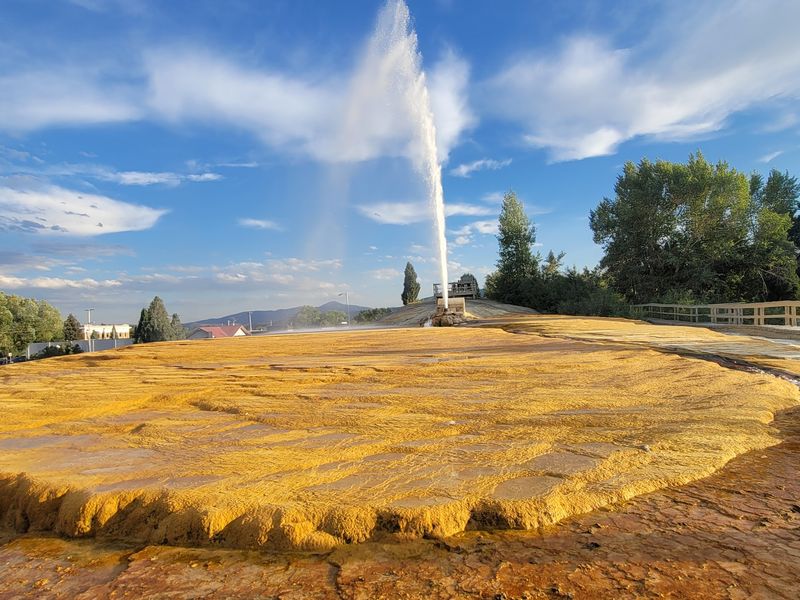
What makes this landmark especially unusual is the balance between natural geology and human control.
Idaho tourism materials promote Soda Springs as the home of the world’s only captive geyser, a description tied to the way the underground system is managed at the surface.
Between eruptions, the valve remains closed while pressure rebuilds below ground. At the scheduled hour, the system opens and allows the naturally carbonated water to rise through the well before the cycle begins again.
No artificial water source is being added, and the carbon dioxide responsible for the pressure comes from underground. People simply determine when that stored pressure can escape.
For visitors, the arrangement has an obvious advantage: the main event can be planned around rather than guessed at.
For the curious, it also creates a useful lesson in how engineering can manage a natural feature without creating the feature itself.
The geyser remains genuine; its timetable is the part that humans control. That balance is exactly what makes the site feel scientifically interesting while still being unusually convenient for a casual roadside visitor today.
Even A Quick Road-Trip Stop Can Line Up With The Next Show
For road-trippers, predictability turns Geyser Park into an easy stop rather than a scheduling gamble.
Check the time before reaching Soda Springs, aim for several minutes before the next hour, and there is usually enough breathing room to explore the displays before the release begins.
Picnic tables, benches, and visitor facilities make waiting comfortable, while the compact layout keeps the visit straightforward. Anyone continuing through southeastern Idaho can also fold the geyser into a broader day without adding a major detour.
Lava Hot Springs sits about 20 minutes away, so the two communities pair naturally for travelers already moving through the region. Still, the geyser deserves more than a hurried glance through the windshield.
Its history, visible mineral deposits, controlled mechanics, and unusual downtown setting reward a little attention before the clock reaches the hour.
A short visit can cover the essentials, but arriving early enough to understand what you are seeing makes the eruption considerably more memorable.
Because everything sits within a compact area, visitors can understand the site without turning a simple stop into a complicated afternoon outing.
Watching Water Shoot Above The Trees Makes Downtown Feel Anything But Ordinary
A mile north of town, Hooper Springs offers a quieter companion to the spectacle downtown.
Naturally carbonated cold water reaches the surface there without the controlled release that sends the Soda Springs Geyser high into the air, making the two sites useful contrasts within the same community.
The National Park Service describes a roughly 1.7-mile walking route linking Geyser Park and Hooper Springs, so visitors with extra time can experience both without treating them as separate day trips. Seeing the spring after the geyser helps put Soda Springs’ name into context, too.
Carbonated water has long been part of the area’s identity, and the downtown attraction is only the most dramatic expression of that geology. One site feels calm and understated; the other announces itself on a clock.
Together, they show how the same underground conditions can appear in very different ways above the surface. That contrast gives Soda Springs more depth than a single roadside photo might suggest.
The pairing also gives visitors a fuller sense of why naturally carbonated water matters so much to this corner of Idaho. The address: E 1st S, Soda Springs, ID 83276.