7 Idaho Railroad Adventures So Unusual They Belong On Your Bucket List
I have a weakness for old railroads, especially when they refuse to behave like museum pieces.
Give me a track disappearing into the mountains and I am already wondering where it goes.
Idaho makes that curiosity dangerously easy to indulge. Some former rail routes now carry bicycles instead of trains, sending riders into dark tunnels where every echo sounds much more dramatic than it probably is.
Elsewhere, historic depots still hold the little details that make rail travel feel wonderfully old-school.
Then things get stranger.
One locomotive still chugs through the forest for pure fun, while another rail stop can leave you standing on a platform at an hour when sensible people are asleep.
That is exactly my kind of trip.
I like places where history still moves instead of sitting politely behind glass. There is something satisfying about hearing wheels on old routes or walking through a station that once mattered enormously to a tiny town.
These seven Idaho railroad adventures are not all about riding trains.
Some are about chasing the stories they left behind.
And yes, I am absolutely bringing a jacket. Old tunnels have a talent for making summer feel like November.
7. Route Of The Hiawatha
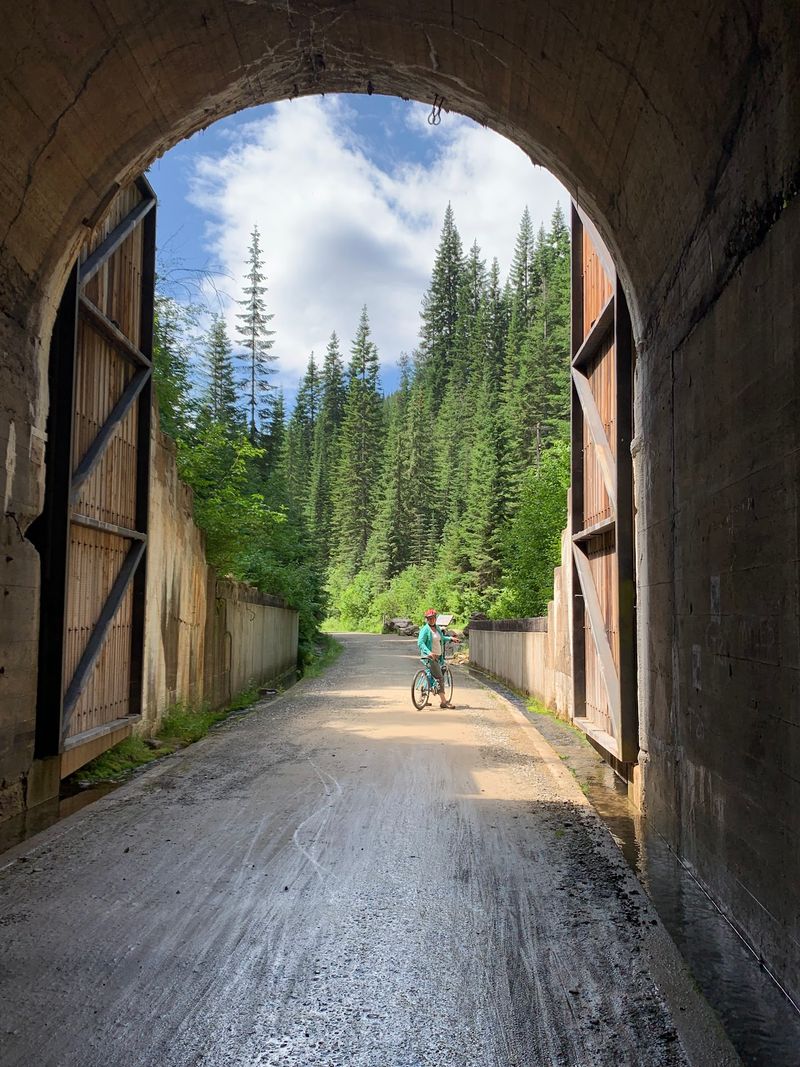
Cyclists enter railroad history almost immediately on the Route of the Hiawatha, a 15-mile recreational trail through the Bitterroot Mountains near the Idaho-Montana border.
The route follows part of the former Milwaukee Road, crossing seven high trestles and passing through ten tunnels. Riders get a close look at historic railroad engineering along the way.
The centerpiece is the St. Paul Pass Tunnel, also called the Taft Tunnel, which extends approximately 1.66 miles beneath the mountains.
No natural light reaches most of its interior, so every rider needs a powerful light, and the trail recommends layers because tunnel temperatures remain cool even when the weather outside is warm.
Most visitors begin near the East Portal and follow the gentle railroad grade downhill toward Pearson.
Shuttle buses operate between Pearson and Roland, allowing riders to avoid cycling the entire grade back uphill, although shuttle arrangements depend on the ticket selected and day of the week.
Bicycle rentals are available, with helmets and lights included with rental bikes. Regular 2026 bicycle operations began May 22 and are scheduled through September 13.
The combination of mountain scenery and surviving railroad infrastructure makes the Hiawatha much more than a scenic bike ride.
6. Moonlit Journeys On The Hiawatha
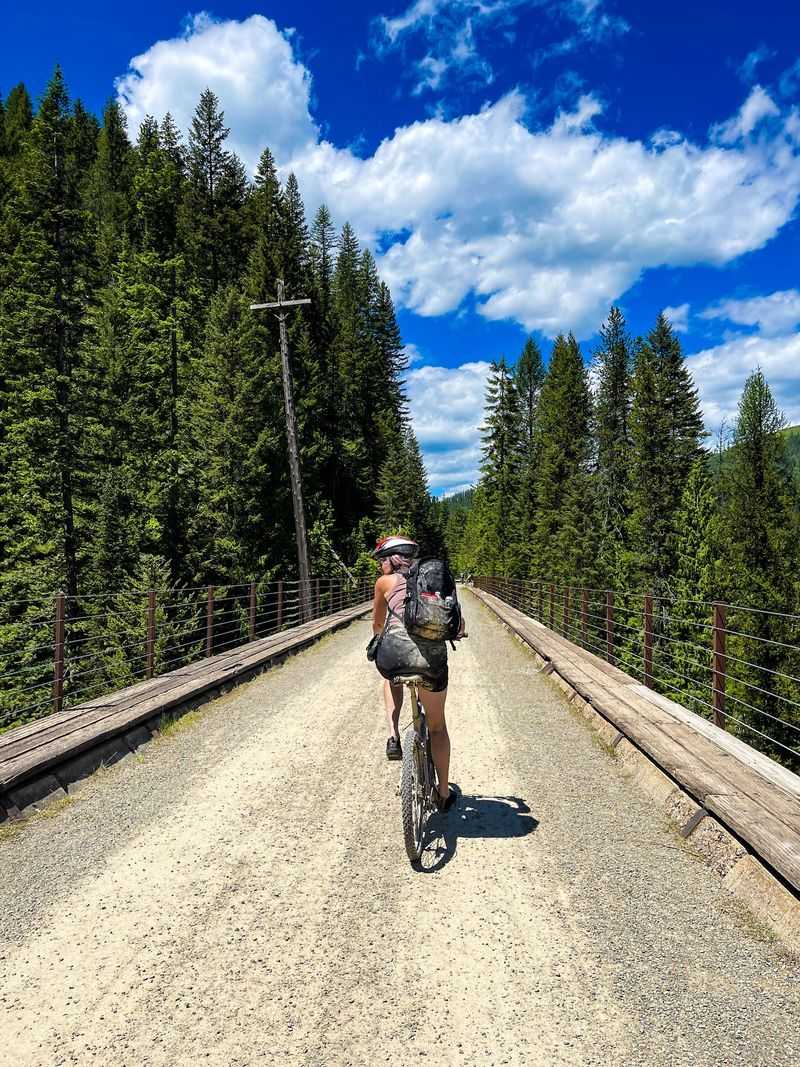
Special night rides turn the same mountain corridor into an entirely different experience after regular daytime traffic begins winding down.
The Route of the Hiawatha scheduled two Full Moon Night Rides for 2026, on June 27 and August 1, with participants gathering at East Portal at 7 p.m. before setting out on the trail.
Riders still encounter the route’s familiar collection of tunnels and trestles, but darkness makes reliable bicycle lighting especially important.
The longest tunnel remains completely dark regardless of the hour, while open sections of the trail pass through remote forest far from the concentrated glow of a large city.
The organized 2026 rides included a ride-and-shuttle ticket, with an optional package adding a long-sleeve shirt, snack, water, and sticker.
These are scheduled special events rather than ordinary after-hours trail access, so anyone hoping to experience a future night ride should use the official event calendar when new dates are announced.
Layers also deserve a place in the pack because mountain temperatures can drop noticeably after sunset and the tunnels stay cool. The appeal is simple: the railroad grade does not change, but the surroundings certainly do.
Riding across a high trestle or entering a long tunnel after sunset gives a familiar Idaho rail trail an atmosphere that daytime visitors never quite experience.
5. Silverwood’s Enduring Railway Charm
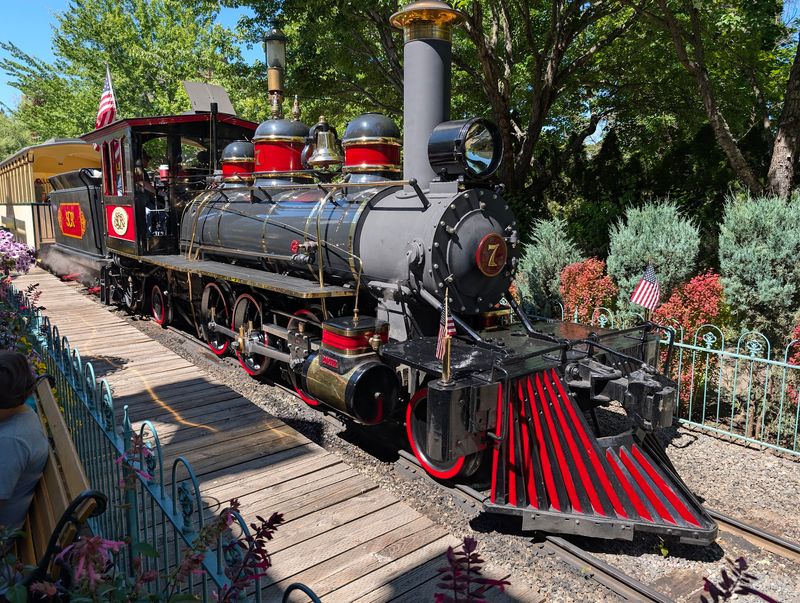
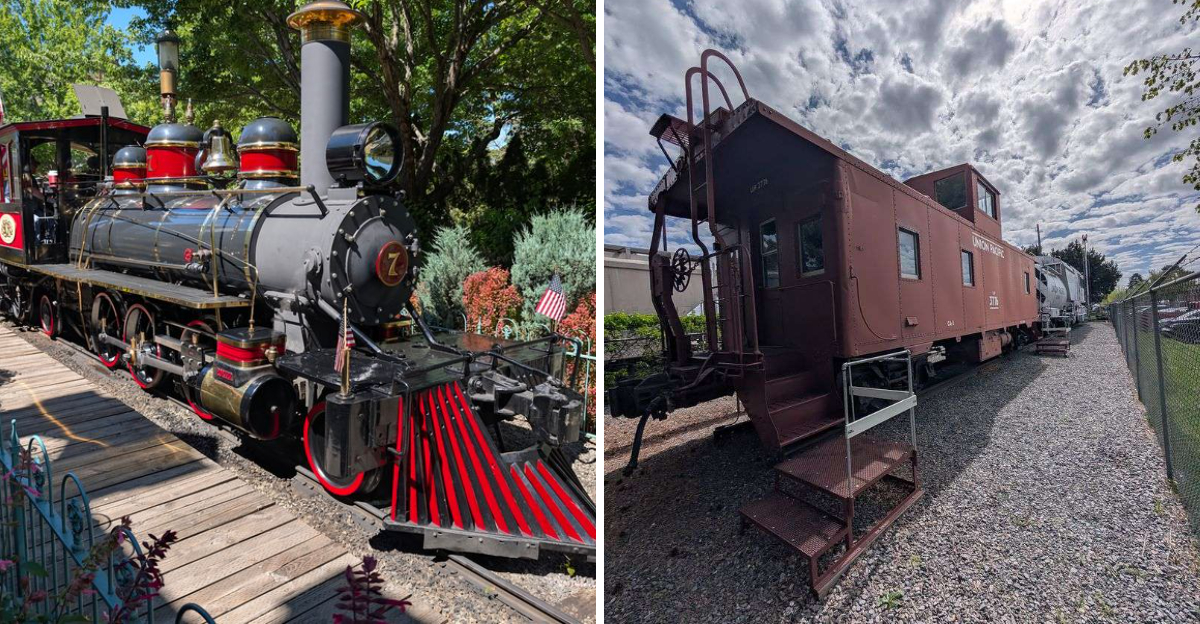
A 1915 Porter locomotive still circles through the woods at Silverwood Theme Park in Athol, making this one of the few places in Idaho where visitors can casually add a historic train ride to an otherwise modern day out.
Engine No. 7 travels on 3.2 miles of track around the park, carrying passengers beyond Main Street and through the wooded back portion of the property.
Silverwood has operated the train attraction since the park opened in 1988, and the locomotive itself predates the theme park by more than seven decades.
The ride is classified as low intensity and is open to all riders, which makes it accessible to families who may not be interested in the park’s faster attractions.
What makes the railway especially distinctive is the contrast surrounding it. Roller coasters and newer rides occupy other parts of the grounds, yet a compact historic locomotive continues following rails through stands of northern Idaho forest.
Departure times can vary with park operations, so checking the day’s schedule after entering the gates is the easiest way to work the train into a visit.
The railway is included within the larger Silverwood experience rather than operating as a separate mountain excursion.
For anyone fascinated by locomotives but traveling with companions who prefer amusement parks, Engine No. 7 manages to put both interests on the same itinerary.
4. Ashton-Tetonia Trail
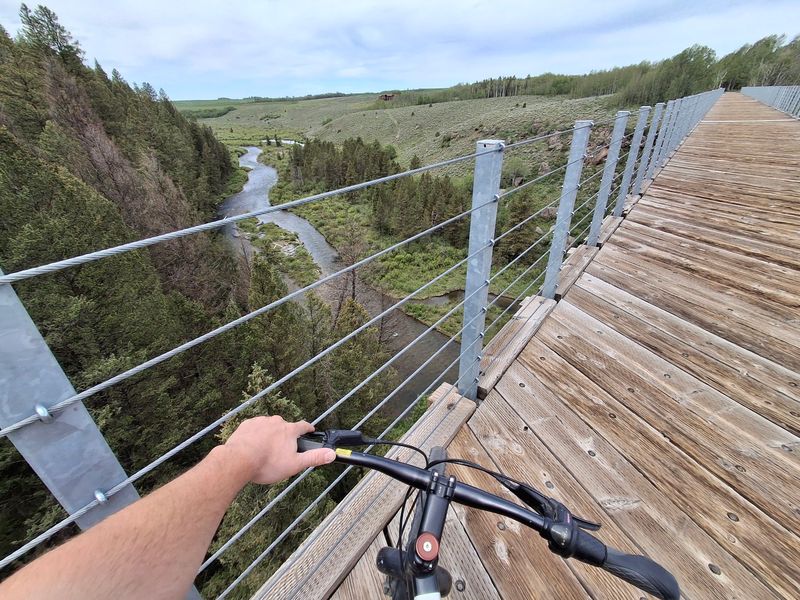
Eastern Idaho’s railroad past stretches for 29.6 miles between Ashton and Tetonia on a corridor once used by the Oregon Short Line Railroad.
The railway built the route in 1912 to connect communities including Ashton, Drummond, Lamont, Tetonia, Driggs, and Victor, while today’s state-managed trail welcomes hikers, cyclists, and horseback riders.
Sweeping views of the Teton Range accompany much of the route, and surviving railroad structures give the corridor a character that goes well beyond open farmland.
One of the standout features is the historic trestle over Bitch Creek, while old grain elevators around communities such as France preserve another visible reminder of the area’s transportation and agricultural history.
Elevation ranges from approximately 5,277 to 6,064 feet, and the trail remains exposed enough that wind and changing weather deserve consideration before a long ride.
A major paving project is underway in 2026, bringing new paved sections, improved parking areas, upgraded gates, and signage to portions of the corridor.
That work has also created temporary trail and parking closures, so current access information should be checked before choosing a starting point. The state specifically prohibits Class 3 e-bikes, ATVs, OHVs, and other motorized vehicles.
With nearly 30 miles available overall, visitors can plan a shorter segment rather than covering the entire former rail line at once.
3. Northern Pacific Depot
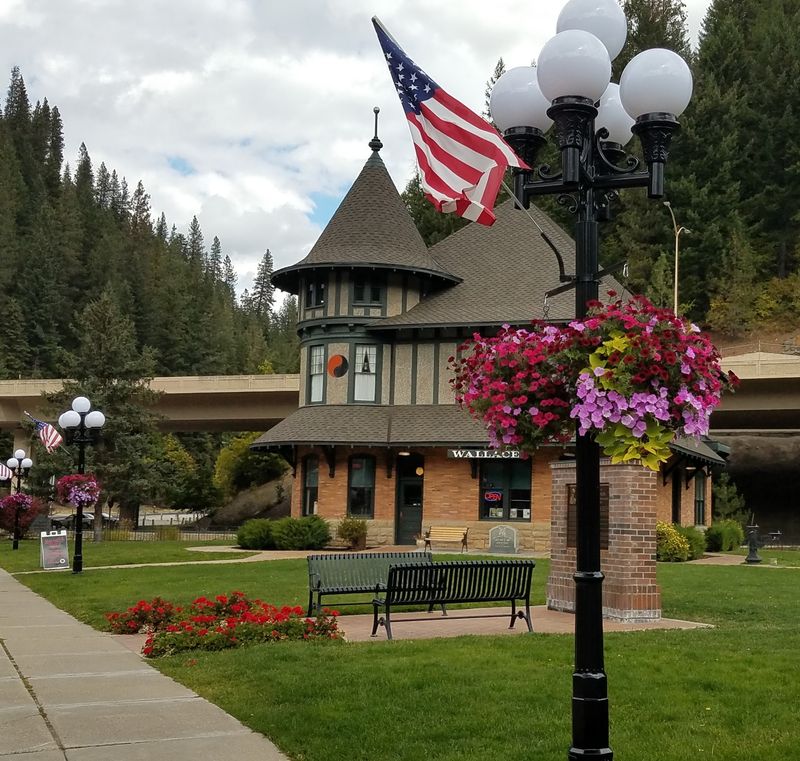
Wallace preserved one of northern Idaho’s most recognizable railroad buildings at 219 Sixth Street, where the Northern Pacific Railroad Depot now operates as a museum.
Constructed in 1901, the building stands out for its Chateau-style architecture and has been listed on the National Register of Historic Places since 1976.
Its location has its own unusual story. Interstate construction placed the depot in the path of planned highway work, so in 1986 the entire building was moved about 200 feet across the South Fork of the Coeur d’Alene River to the site visitors see today.
Inside, the museum focuses on the Northern Pacific and the broader railroad history of Wallace and the Coeur d’Alene mining district, making the building itself as important as the material displayed within it. The first floor is ADA accessible, and free parking is available beside the museum.
For the 2026 season, regular hours run from April 15 through October 15, with Monday through Saturday hours from 9 a.m. to 5 p.m. and Sunday hours from 10 a.m. to 4 p.m.
The depot also works conveniently as a starting point for exploring nearby recreational corridors, including the Trail of the Coeur d’Alenes and access toward the Route of the Hiawatha.
Few railroad museums can say the station itself once took a short journey to survive.
2. Nampa Train Depot
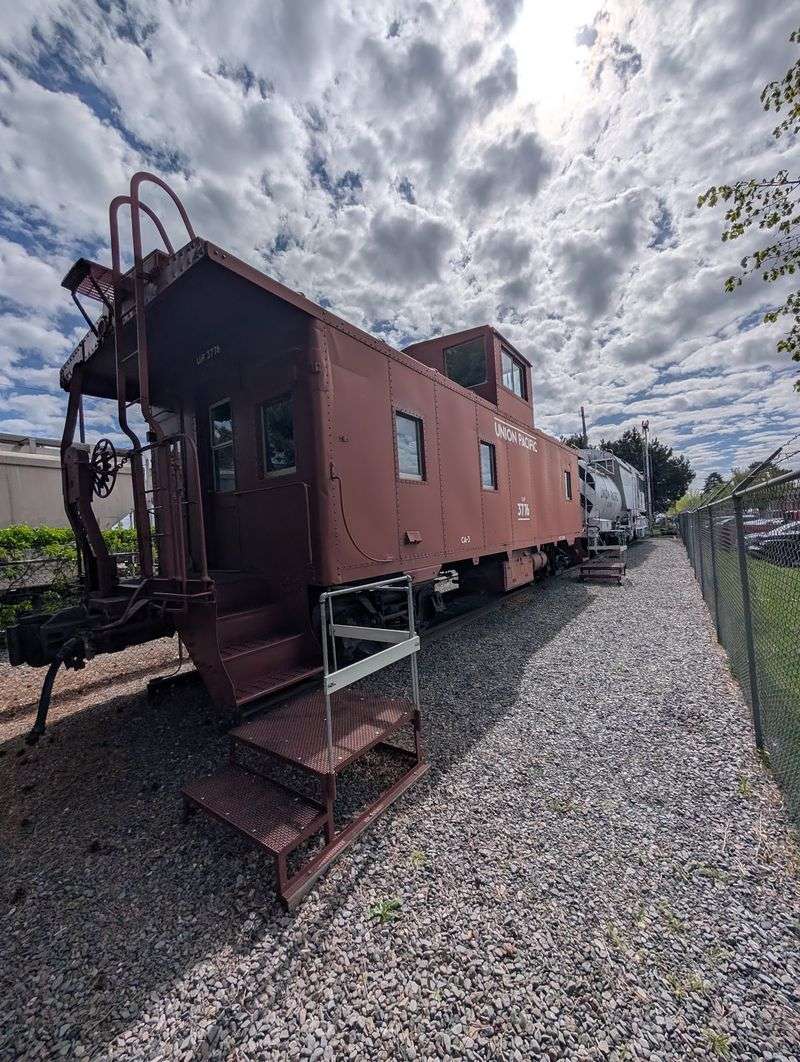
Nampa grew around the railroad, and the elaborate depot at 1200 Front Street still provides one of the clearest physical links to that beginning.
Designed for the Oregon Short Line and completed in 1903, the building served both passenger and freight traffic during a period when Nampa had become an important junction in southwestern Idaho.
The depot combines red brick, sandstone, and an unusually decorative mix of architectural influences that helped distinguish it from more utilitarian stations.
Passenger operations eventually moved to a newer depot in the 1920s, leaving the 1903 building to serve railroad office and storage purposes before it passed into the care of the Canyon County Historical Society.
Today it houses the Nampa Train Depot and Interpretive Center, where the focus extends beyond locomotives to the way rail transportation influenced settlement and commerce throughout Canyon County.
That connection matters because Nampa developed at a meeting point for several railroad lines, making rail service central to the city’s early growth.
Current museum information lists public hours on Friday from 11 a.m. to 4 p.m. and Saturday from 10 a.m. to 3 p.m., with free admission and donations encouraged.
The location sits at the edge of downtown, so the depot can fit easily into a broader walk through Nampa rather than requiring a separate day trip.
1. The Empire Builder
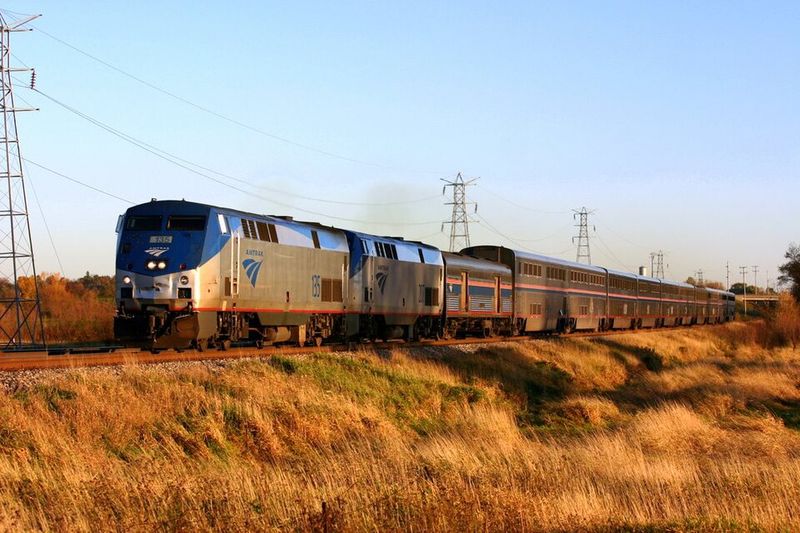
At Sandpoint, Idaho’s railroad story is still moving rather than sitting entirely behind museum doors. Amtrak’s Empire Builder stops here every day on its long-distance route linking Chicago with the Pacific Northwest, and Sandpoint remains Idaho’s only Amtrak station.
The train divides at Spokane, with western sections serving Seattle and Portland, while eastbound service continues through northern Montana and onward toward the Midwest.
Sandpoint’s depot dates to 1916 and is itself part of the experience, standing as the oldest former Northern Pacific Railway depot still active in Idaho.
The unusual part is the clock. Current schedules place the eastbound stop at approximately 2:20 a.m., while the westbound train calls at about 12:55 a.m., turning an Idaho departure into a decidedly late-night affair.
Boarding here can lead to something much larger than a short regional ride. Travelers can head west toward Washington or settle in for a journey that crosses northern Montana, the Great Plains, and eventually reaches Chicago.
The route runs daily, making this the only entry on the list that remains part of the national passenger rail network rather than primarily preserving or reusing railroad history.
For Idaho travelers who want an actual long-distance rail journey, a platform in Sandpoint is still the place where it begins.
Disclaimer: Railroad attractions, trails, museums, train schedules, operating seasons, special events, shuttle services, ticket options, rental availability, access rules, construction projects, closures, and visitor hours can change without notice. Some experiences described here are seasonal.
Others operate only on selected dates. Weather, maintenance, staffing, or special events may also affect availability.
Trail conditions can vary throughout the season. This is especially true on longer mountain routes.
Construction work may temporarily change parking, trail access, or shuttle operations. Night rides and other special programs may not return every year.
Visitors should confirm future dates through official event calendars.
Amtrak schedules can change as well. Arrival and departure times at Sandpoint may shift.
Passengers should confirm their itinerary before traveling to the station.
Trail rules may also be updated. Regulations for bicycles, e-bikes, motorized vehicles, helmets, lights, pets, and other equipment can differ by location.
Visitors should review current requirements before starting a ride.
Mountain weather can change quickly. Temperatures inside tunnels may also feel much cooler than outside conditions.
Longer routes can include remote sections with limited services. Riders should prepare for the distance and conditions expected that day.
Museum hours, admission policies, accessibility, parking, and exhibit availability can also change. Seasonal schedules may differ from year to year.
Special programs may require advance reservations.
Historical information can be updated as new research becomes available. Railroad affiliations, route distances, locomotive details, and architectural information are based on sources available at the time of publication.
Preservation projects may also change how a site is interpreted or accessed.
Before making a dedicated trip, check the official website for each destination. You can also contact the attraction, museum, park, trail manager, railroad operator, or transportation provider directly.
Confirm current 2026 schedules, fees, reservations, closures, parking, construction, accessibility, and operating dates.
Travelers using Amtrak should verify current service notices as well. Check departure times, baggage policies, and station information before leaving.
Distances, historical details, and operating information in this article are intended for general trip planning. They may change after publication.