This Beautiful Idaho State Park Will Make All Your Worries Melt Away
I went looking for the kind of park where nobody would mind if the afternoon plan became “sit by the water.” This one understood the assignment.
Idaho has a state park where clear mountain water and Selkirk scenery make doing very little feel like a perfectly good use of the day.
Swimming can handle the afternoon, while trails, boating, camping, and nearby huckleberry picking are there whenever you want more activity. I would stay until evening.
That is when the boats quiet down and the sky starts becoming part of the attraction.
Some parks make you want to see everything. This one makes slowing down sound equally tempting.
Selkirk Peaks Set The Scene
My first look at the water came after a slow drive through thick cedar forest. Then the trees opened, and the Selkirk Mountains filled the windshield.
Those peaks wrap around the lake like a natural fence. Ancient glaciers carved this whole basin, leaving granite ridges and deep green valleys behind.
The forest here is a mix of cedar, fir, and tamarack. In fall, the tamarack needles glow gold before dropping, which surprises most first-time visitors.
Sitting near 2,400 feet above sea level, the park feels cooler and cleaner than lower valleys. The air carries pine and lake water, and phone signals fade in and out.
I like that the area still feels remote. There are no giant resorts crowding the shoreline, just water, trees, and mountains doing their thing.
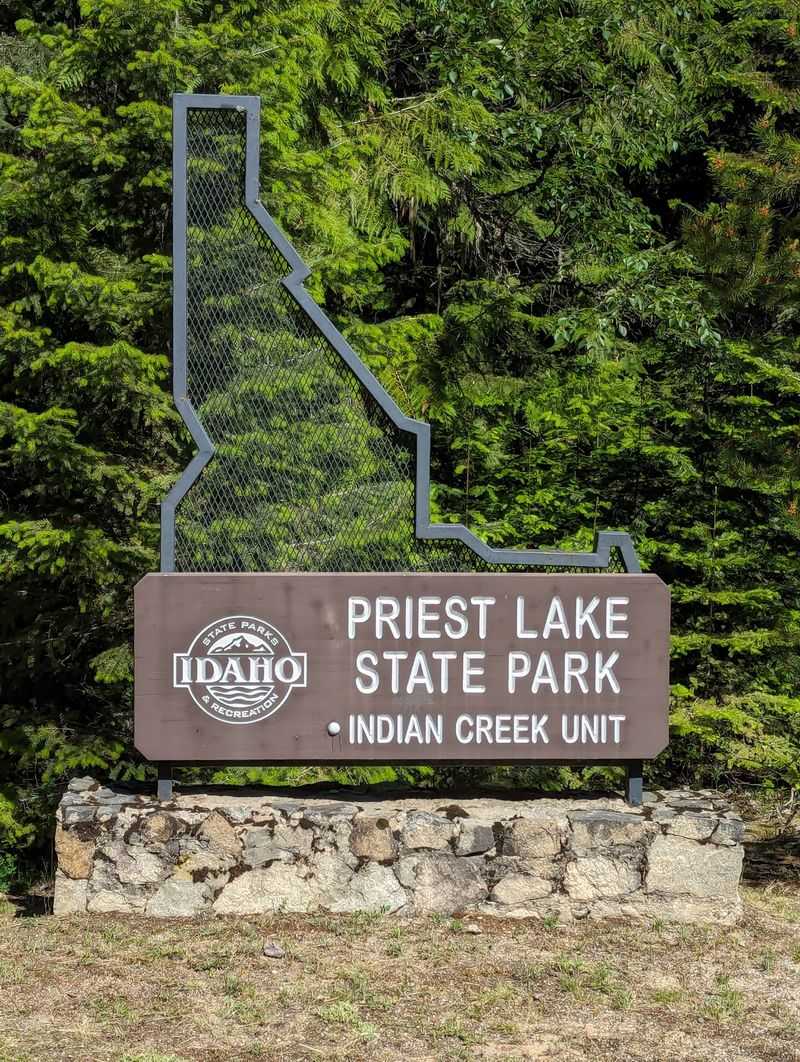
Curious hikers sometimes find a path locals call The Road to Nowhere. The name alone made me want to walk it, and the quiet was worth every step. Priest Lake State Park sits at 314 Indian Creek Park Rd in Coolin.
Water So Clear It Startles
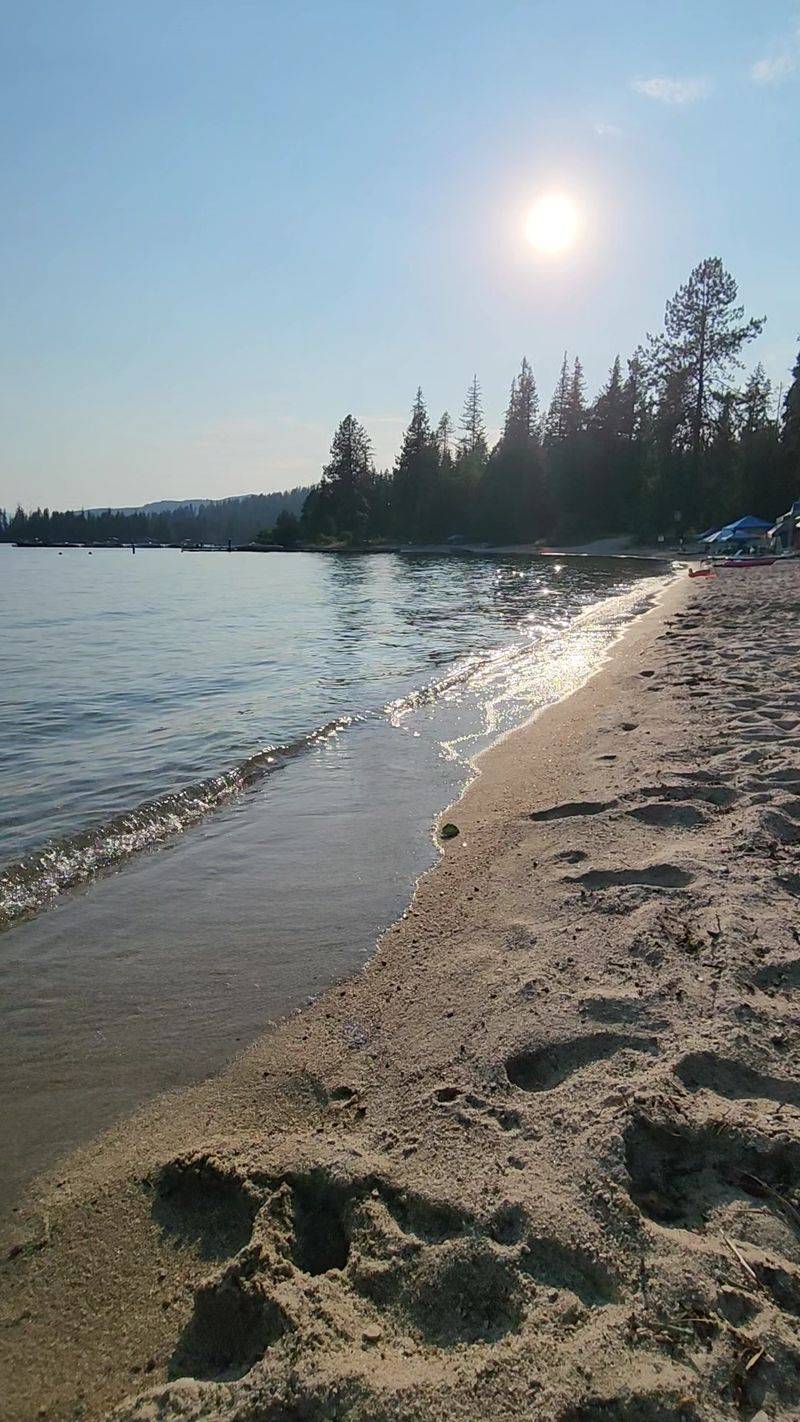
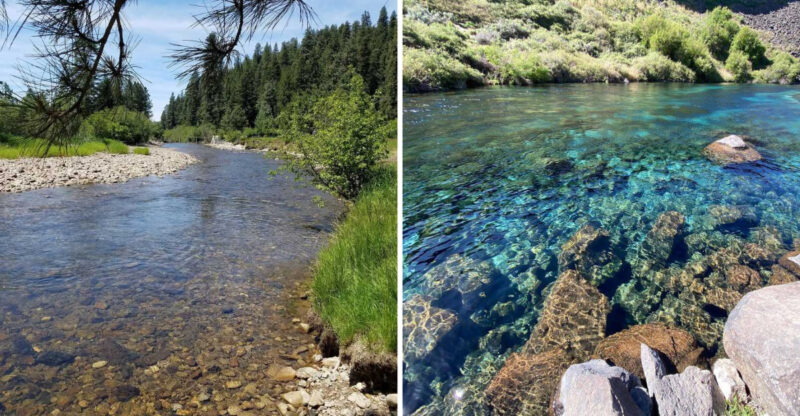
Nobody warned me how clear the water would be. I waded in knee-deep and could count pebbles on the bottom.
The lake stretches nearly 19 miles long and drops more than 300 feet deep in places. Cold mountain streams pour down from the Selkirk Range and keep it clean.
Near the sandy shallows, the color shifts from pale green to deep blue. On calm mornings the surface acts like glass, and the mountains double themselves.
Beaches here vary. Some stretches are soft and sandy, while others mix in rounded rocks, so water sandals are a smart packing choice.
The shallow entry is gentle, which families appreciate. Little kids can splash for a long while before the bottom drops away.
By mid-afternoon in August, the upper layer warms up nicely for swimming. I floated on my back and watched hawks circle overhead.
Parking near the day-use beach fills fast on hot weekends. Arriving before mid-morning saved me a long walk with a cooler. Shade is limited on the sand, so bring an umbrella or claim a spot near the treeline.
Boats, Paddles, And Trout
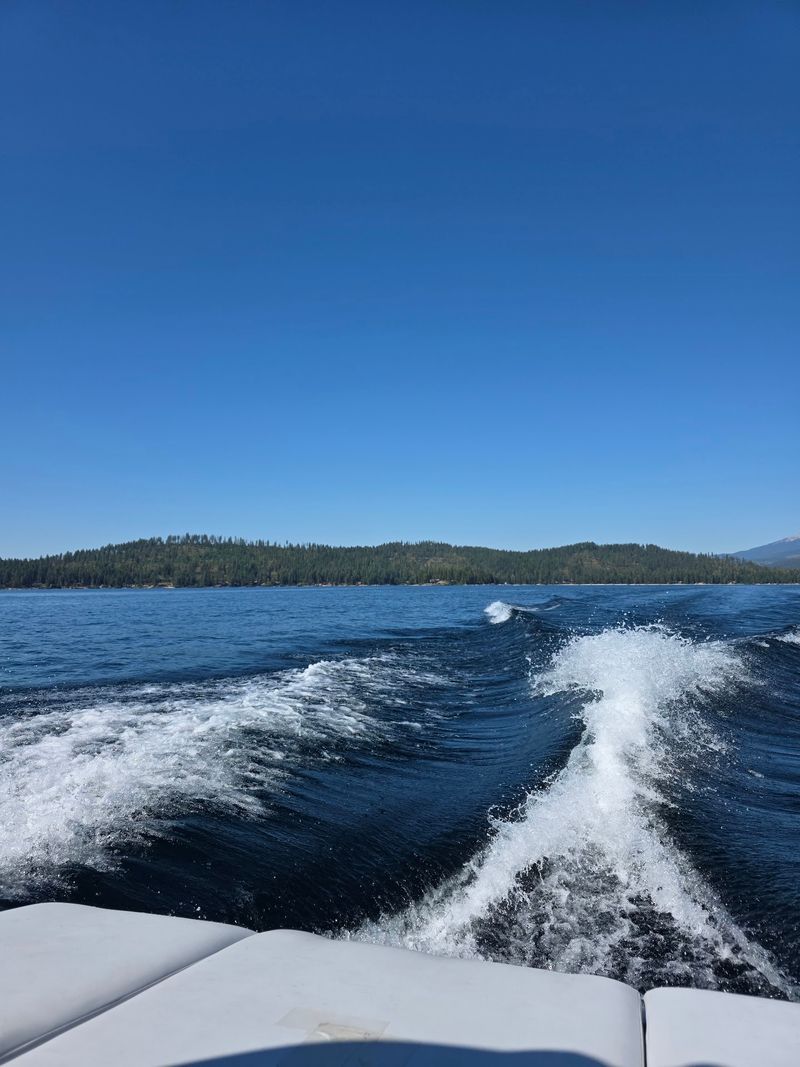
Boat ramps and docks make getting on the water simple. I watched families launch before breakfast, coolers packed and towels flapping.
Motorboats head out toward hidden coves along the shoreline. Others just anchor in a shallow bay and let the day drift by.
Kayaks and paddleboards suit the early hours best, when wind is low. Gliding over clear water, I could see submerged logs far below.
Anglers do well here. Priest Lake supports cutthroat trout, kokanee, lake trout, smallmouth bass and several other fish species, while native bull trout are also present.
I dropped a line off the dock and hooked a small bass within twenty minutes. Bull trout are catch-and-release only, while Priest Lake also has special rules for cutthroat trout and kokanee.
Even non-fishers get a show. Watching fish move under the surface beats staring at a screen any day.
Bring a life jacket for every paddler, since afternoon wind can build quickly on a lake this long. Weather shifts fast in the mountains.
Boaters with time should push north toward the narrow thoroughfare leading to Upper Priest Lake. That passage feels wonderfully wild.
Forest Trails Worth Lacing Up
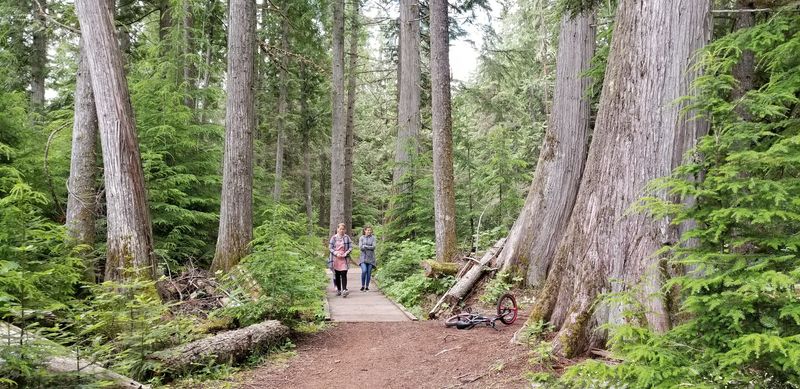
Not every hour belongs to the water. Trails here wind through shady forest where the ground is soft with needles.
Most paths sit in the easy to moderate range. Families with young walkers manage them without complaints, which is saying something.
The Viewpoint Trail delivers the payoff I wanted. From the top, the lake spreads out below with peaks stacked behind it.
Longer routes lead toward Upper Priest Lake, a quieter arm reachable only on foot or by boat. That hike feels like leaving the calendar behind.
Bikes work well on several of the wider routes. I passed riders pedaling slowly and stopping often for photos.
Wildlife shows up along these paths. Whitetail deer stepped across the trail ahead of me without much concern.
Carry water, bug spray, and a small snack. Yellow jackets can be persistent in late summer, so keep sweet food sealed.
Morning light through the cedars is the best time for photos. Fewer people, cooler air, and more birdsong.
Sturdy shoes matter more than fancy gear here. After a couple of miles in northern Idaho forest, I understood why people return to these trails year after year.
Wildlife Watching Without Binoculars
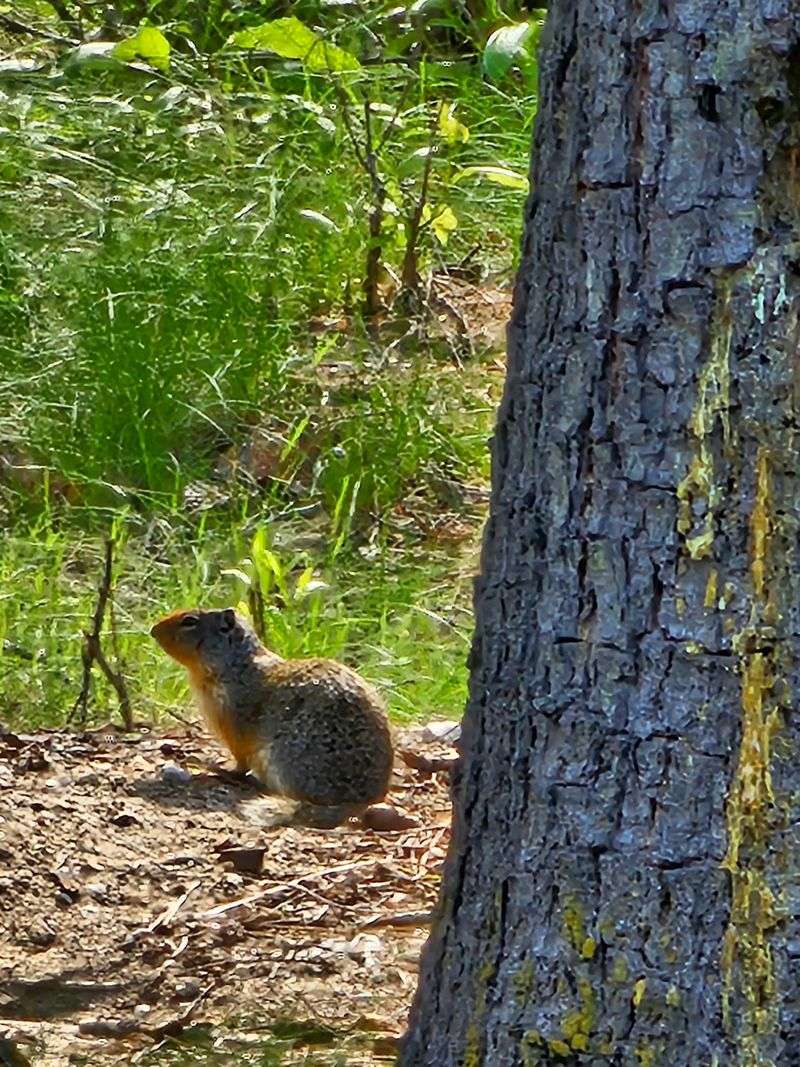
A bald eagle cut across the water while I was drinking coffee. That single moment made the early wake-up worthwhile.
Wetland edges and quiet forest corners attract moose, especially around dawn and dusk. Seeing one is luck, not a guarantee.
Waterfowl paddle near the reeds, and ospreys hunt the shallows. Deer wander close to campsites without much fuss.
Western toads make an odd overland journey to breed. Spotting that migration is one of the strangest treats in the park.
Keeping distance protects both you and the animals. Zoom lenses beat closeness every single time.
Food storage matters. I kept snacks inside the vehicle overnight, which saved me from unwanted visitors.
Staying on marked paths keeps fragile plants intact and reduces stress on nesting birds. Small habits add up across thousands of visitors.
Evenings brought a soundtrack of frogs and loons that no playlist matches. Watching wild neighbors go about their routines is one reason this park stays in my memory.
Four Seasons, Four Moods
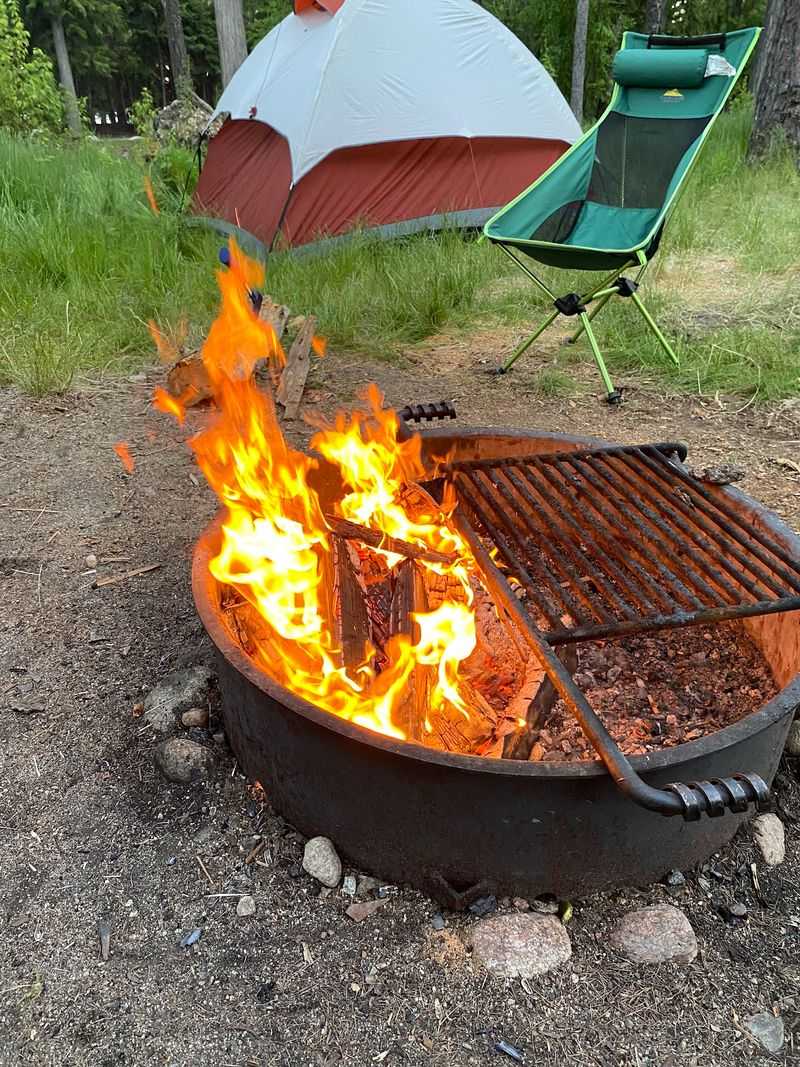
Summer gets all the attention, and for good reason. Warm days, clear water, and busy beaches define July and August.
Autumn changed my mind about the best season. Crowds thin, air turns crisp, and the tamaracks blaze gold across the hillsides.
October hikes came with rustling leaves and empty overlooks. I had a whole beach to myself one afternoon.
Winter turns the Indian Creek area into a snow playground. Groomed trails welcome cross-country skiers and snowshoers who want silence.
Snow on cedar branches and a frozen shoreline create a completely different park. Bring layers and check road conditions carefully.
Spring brings rushing creeks and hungry wildlife. Streams run strong, waterfalls swell, and birds return in noisy waves.
Bugs can be thick in early summer, so pack repellent. Late August often carries haze from regional fires, which is worth checking before you drive.
Reservations for peak summer dates go fast, sometimes months ahead. Shoulder seasons offer easier booking and quieter mornings.
Campsites, Cabins, And Ice Cream
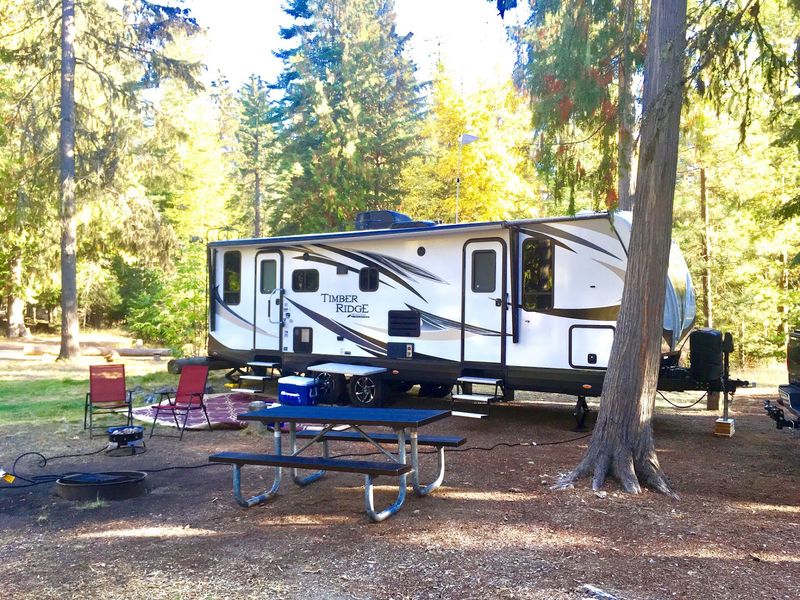
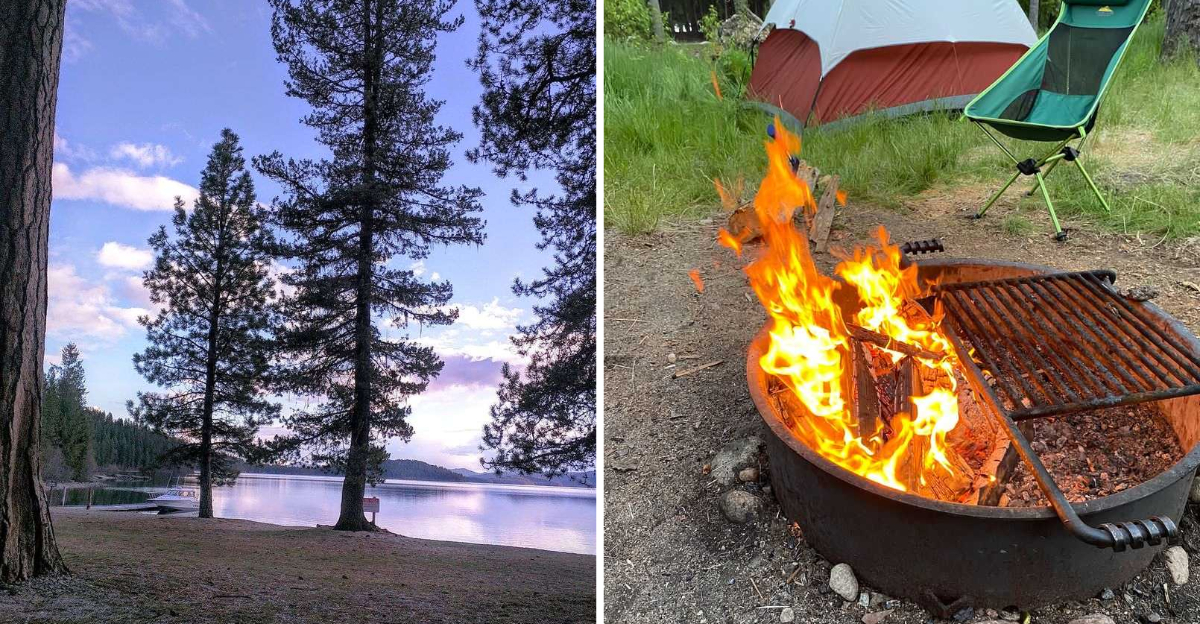
Camping at this Idaho park is comfortable without feeling packaged. The Indian Creek Unit is the busiest area and holds the main campground and visitor center.
Roughly 93 campsites spread through the trees. Options range from no-hookup spots to sites with water, electricity, and sewer.
Some electrical hookups run only 20 amp, so RV travelers should check before plugging in. Paved roads and walking paths make moving around easy.
Cabins are available for anyone who prefers walls to canvas. Bathhouses with hot showers and flush toilets are spread through the campground.
The camp store surprised me. It stocks forgotten gear, food, ice, gifts, and hand-dipped ice cream that disappears fast on hot afternoons.
Beyond camping, there is disc golf, horseshoe pitching, playgrounds, and shaded picnic areas. Dogs are welcome, which pleased my four-legged travel buddy.
Quieter sites usually sit farther from the beach and lack power. Trade a few conveniences for privacy and you win.
Wi-Fi is available at the Indian Creek Visitor Center, while the Lionhead Unit has no Wi-Fi service.
Nearby Detours Worth Driving
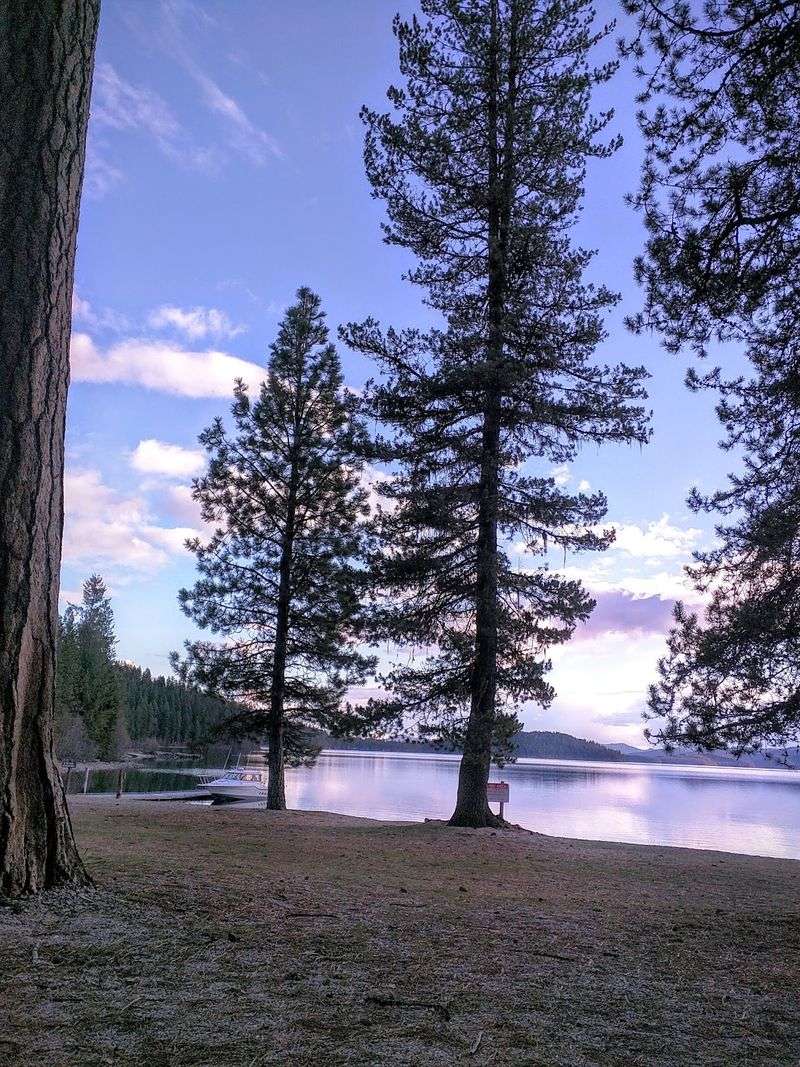
Save one day for the drive north. The Roosevelt Grove of Ancient Cedars sits a short trip beyond the lake and stopped me in my tracks.
Some of those cedars are estimated at more than 2,000 years old. A few reach 150 feet tall, which makes the trail feel like a cathedral.
Granite Falls is close by and roars in late spring. Snowmelt turns it into a wall of white water.
History fans should visit the Priest Lake Museum in Luby Bay. It occupies a 1935 Forest Service guard station and covers local heritage.
Huckleberry picking is a summer tradition around here. July and August bring ripe berries along sunny forest slopes.
Natural rock waterslides near the Lionhead area draw adventurous hikers. The walk in takes a little effort and includes a creek crossing.
Lionhead offers 47 campsites and a more remote setting at the northern end of the lake.
The small town of Coolin sits roughly fifteen minutes from the main gate for supplies and a better internet signal. Between the ancient trees and hidden waterfalls, northern Idaho keeps handing out surprises.