This Georgia Mountain Village Transforms Into A Bavarian Oktoberfest Every Fall
What if a quiet Georgia mountain town sounded like Munich in autumn? I heard the accordion before I saw anything else, floating through pine trees and cool air.
I followed the music around a bend, and the landscape completely changed. Wooden balconies painted in cheerful colors lined the street.
Flower boxes spilled over windowsills like a postcard from somewhere far away. Men in leather shorts danced past me, laughing with every step.
Kids chased each other between picnic tables while a band played on a small stage. I stood there for a second, trying to process what I was seeing.
Georgia hides more surprises than people give it credit for. I grabbed a warm pretzel and found a seat near the music.
I knew right then I would be back again, every single year.
A Logging Town That Reinvented Itself In 1969
Most towns fade quietly when their main industry slows down. Instead, this one picked up a paintbrush and rebuilt its entire identity.
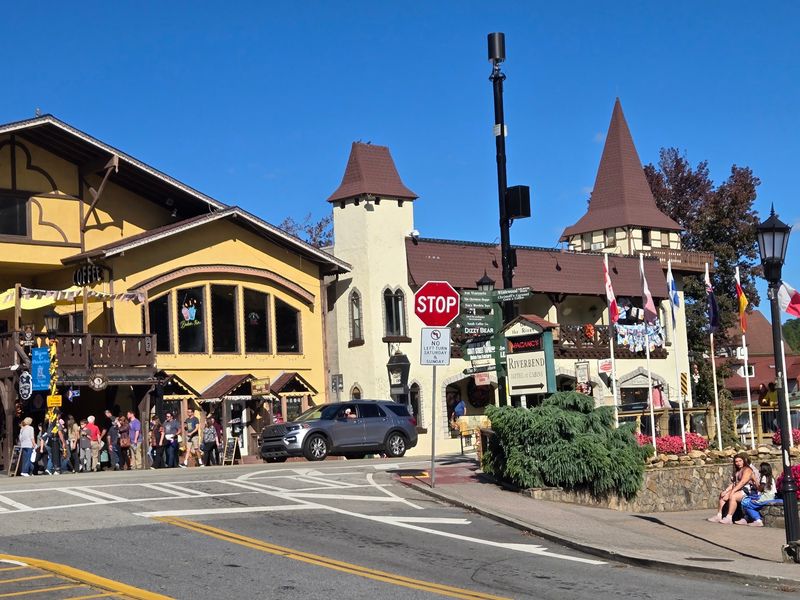
Back in 1969, local business owners faced a struggling logging community with plain storefronts. They decided to reimagine those buildings as an Alpine village straight out of Bavaria.
The gamble worked. Cobbled walkways, painted murals, and timber trim replaced ordinary siding within a few short years.
Today the mountain backdrop makes the illusion surprisingly convincing. Blue Ridge peaks stand in for the Alps, especially when fog settles low in the morning.
Walking the streets, I kept noticing small details. Wooden shutters, scrolled iron signs, and window boxes filled with bright blooms appear on nearly every corner.
The transformation also saved local jobs. Shops, bakeries, and restaurants replaced empty buildings, and visitors started arriving year round.
Fall remains the crown jewel of the calendar. Cooler air, colorful leaves, and festival music turn the whole place into something memorable.
If you want the full experience, plan your trip around the big autumn celebration. That is Helen Oktoberfest, held at 1074 Edelweiss Strasse in north Georgia.
The Longest Running Oktoberfest In America
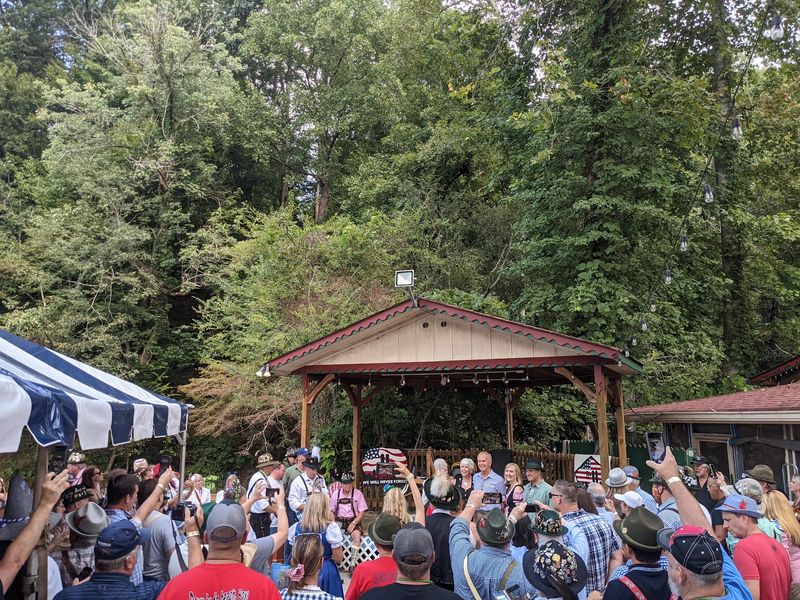
Bragging rights matter, and this celebration has earned a big one. It holds the title of the longest running Oktoberfest in the United States.
Rather than squeezing into a single weekend, the festivities stretch across multiple weeks. In 2026, the festival runs on select September dates before continuing daily from October 1 through November 1.
That long window changes how you plan. You can visit early for smaller crowds or later for peak leaf color.
I appreciated the flexibility. Weekday evenings felt relaxed, while weekends brought bigger crowds and a louder, more energetic buzz.
The extended run also gives bands time to rotate. Different groups perform on different nights, so two visits rarely feel identical.
Decorations go up across the village, not just at one venue. Blue and white banners, pumpkins, and lanterns show up in shop windows everywhere.
Ratings back up the enthusiasm. The event carries roughly 4.5 stars across more than one thousand reviews.
My advice is simple. Pick your dates early, check the posted schedule, and match the vibe you want to the day you choose.
Inside The Festhalle, Where The Party Lives
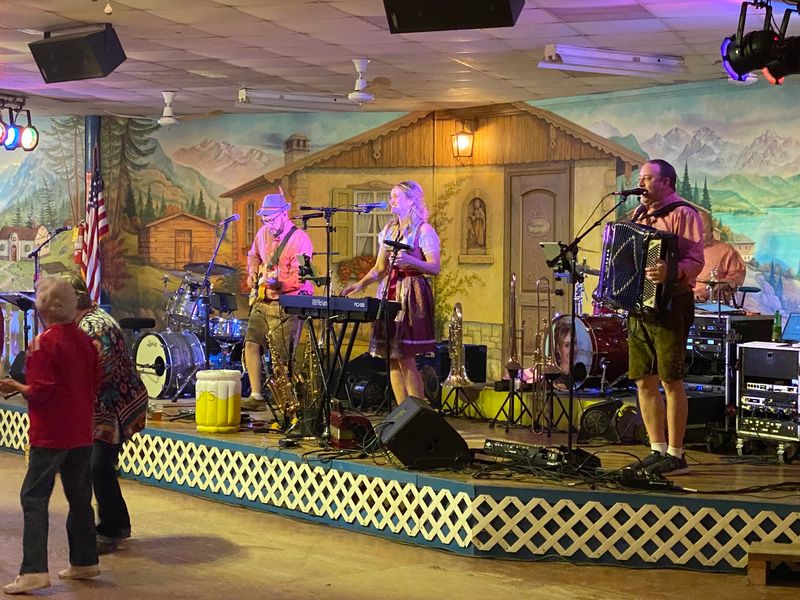
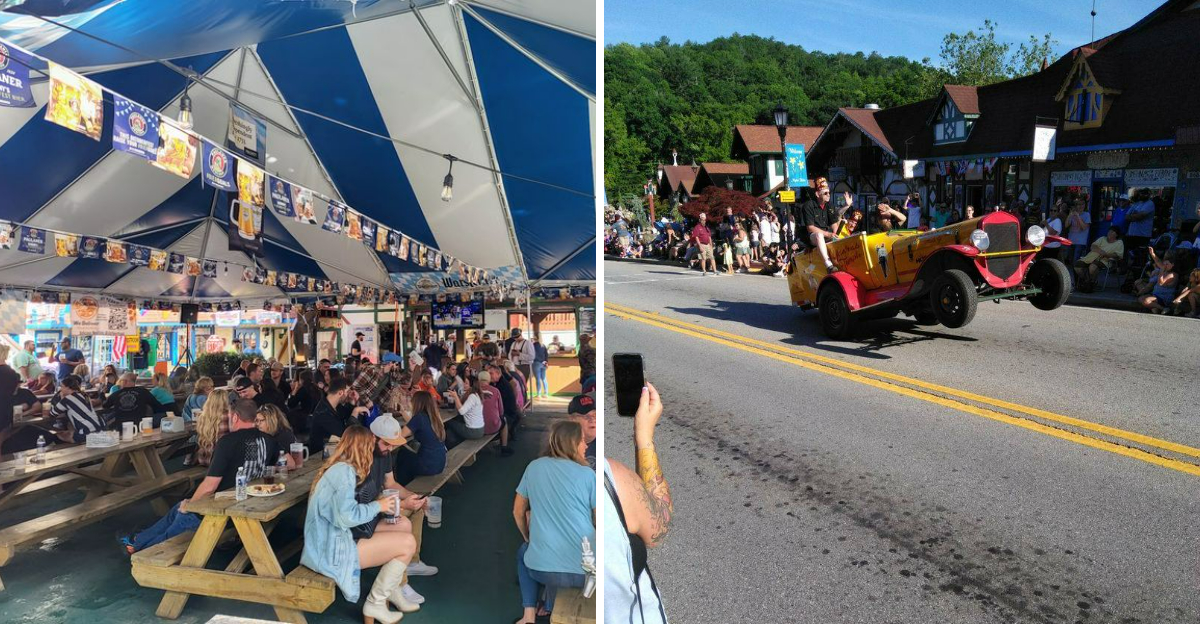
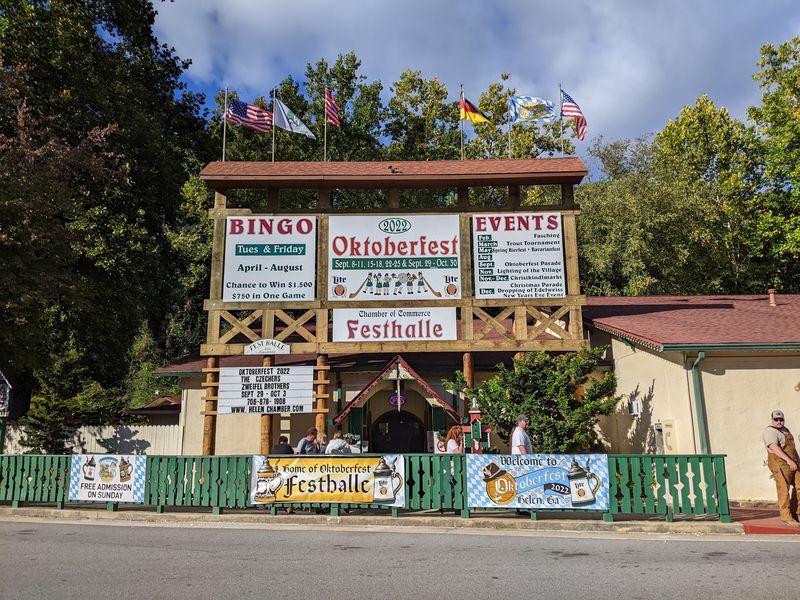
Every festival needs a heart, and here it beats inside a big wooden hall. Locals call it the Festhalle, and it anchors the whole celebration.
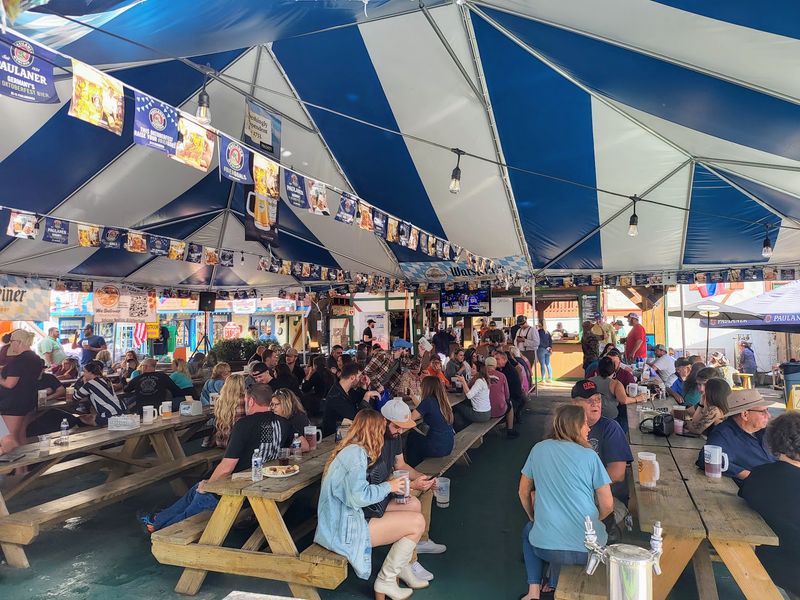
Long rows of tables fill the space, built for shoulder to shoulder seating. You will likely end up chatting with strangers, which is half the fun.
A dance floor sits front and center. When the music starts, it fills fast with people of all ages.
Admission is charged, and prices vary by day. Guests have reported around ten dollars on a Thursday and fifteen on a Saturday.
Sundays often bring free admission, which makes them a smart pick for budget travelers. Arrive early if you want a good table.
Hours shift through the week. In 2026, hours are 6 to 10 p.m.
Monday through Thursday, 6 to 11 p.m. Friday, and 1 to 11 p.m.
Saturday.
Sundays wrap up earlier, closing around 7 p.m. That timing works nicely for families heading home.
Pack patience for lines and bring cash for souvenirs. The hall rewards anyone willing to stay a while.
Live Polka Music And Alpine Horns Fill The Air
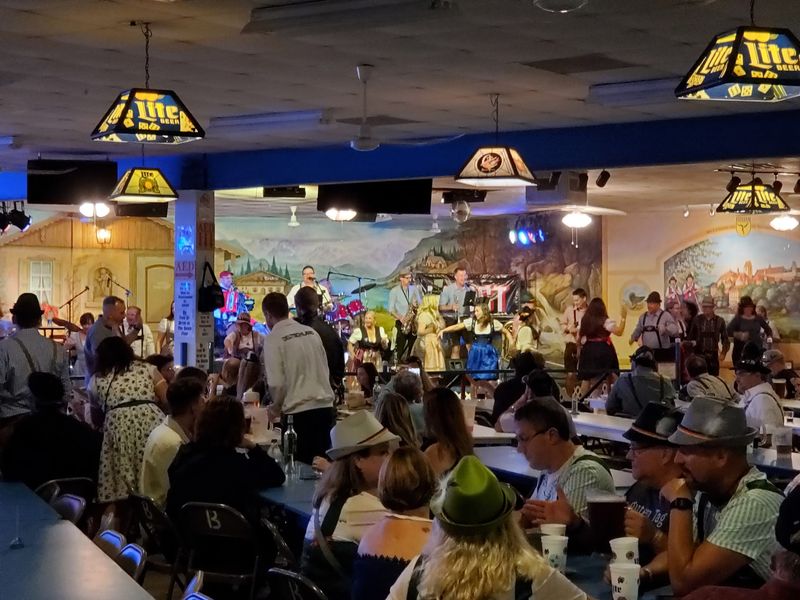
Live music is the engine that keeps this event running. Bands play traditional German-style tunes for hours at a stretch.
Performers travel from across the country, and some come from overseas. That variety keeps the sound fresh from night to night.
Accordions lead most songs, but they get plenty of company. Alp horns, cowbells, brass, and drums all join the mix.
One band I watched played Edelweiss using a violin bow and a handsaw. The crowd went quiet, then erupted.
Polka dominates the dance floor. Even people who claim they cannot dance end up spinning around after one song.
Sing along moments happen constantly. The bands know how to pull an audience into the chorus without much effort.
Music comes up more than any other topic in visitor comments. Live performances and polka rank near the top.
Bring comfortable shoes if you plan to dance. Standing on a wooden floor for two hours is no small task.
Sit near the stage for energy. Sit farther back if you actually want to talk.
Bratwurst And Pretzels Worth Every Bite
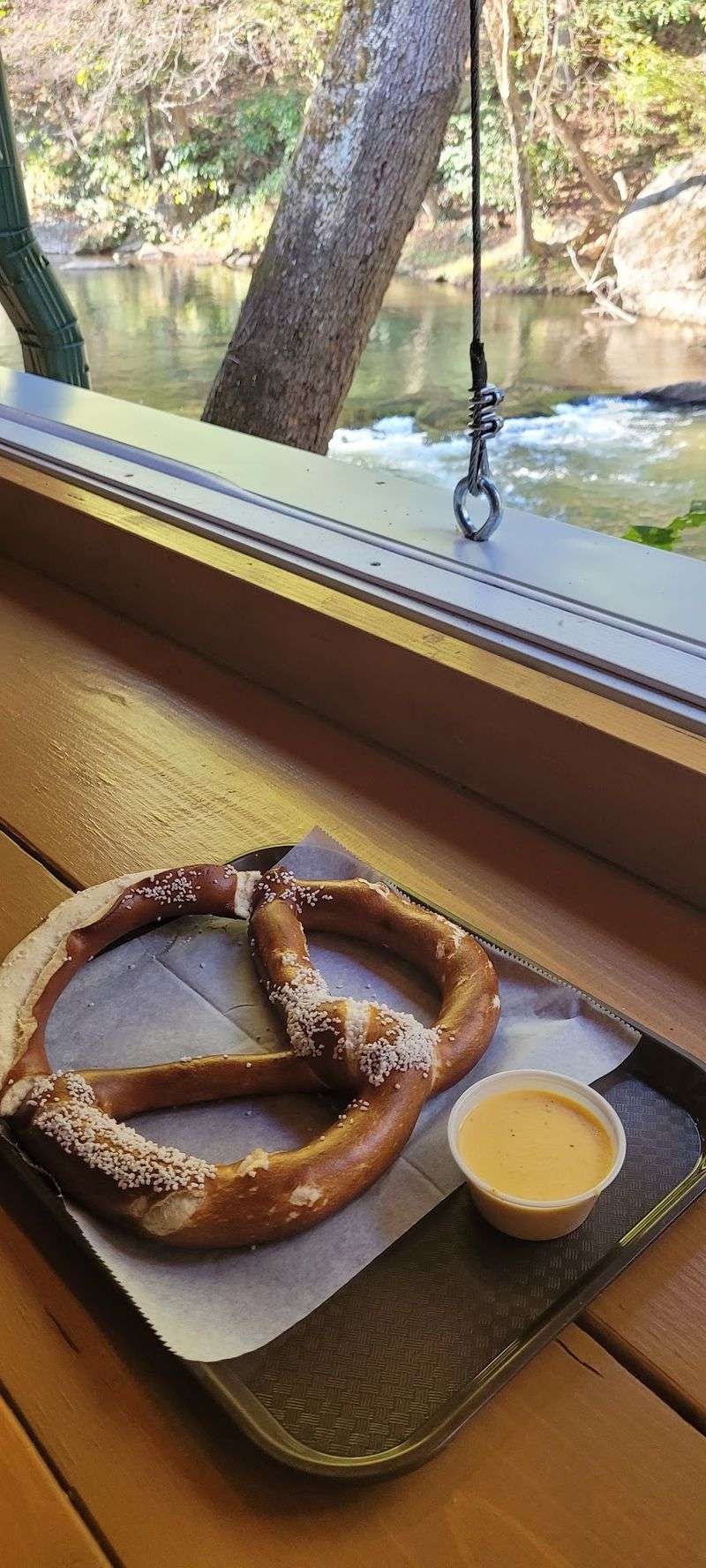
Smell hits you before you see the food counters. Grilled sausage and warm dough carry across the hall.
Brats topped with sauerkraut are the classic order.
German potato salad shows up often, tangy rather than creamy. Red cabbage appears beside it, sweet and slightly sharp.
Soft pretzels deserve their reputation. They arrive oversized, salty, and best shared with whoever is sitting next to you.
Schnitzel rounds out the menu at several spots around the village. Portions tend to be generous.
Budget roughly twenty dollars per person for food. Simple items like a burger can run around ten dollars on their own.
Lines get long during peak hours. Eating a snack before you arrive keeps everyone calmer while you wait.
Bakeries and shops in the village offer additional options. Strudel and cookies make an easy dessert stop after dinner.
My tip is to split plates. That way you taste more without ordering three full meals.
A Parade That Kicks Off The Season
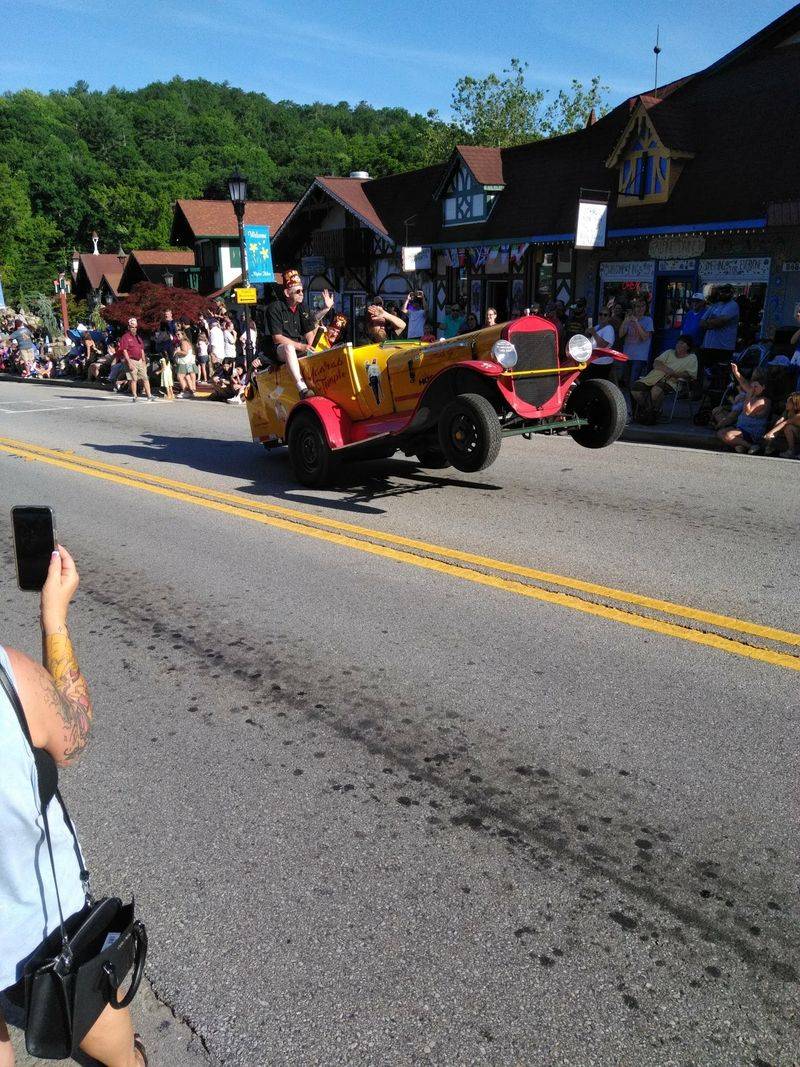
Confetti, cowbells, and costumes signal the official start. The annual parade is one of the early highlights of the celebration each September.
Marchers dress in traditional German clothing, from embroidered dirndls to leather knee breeches. Feathered hats bob along the route.
Floats roll through decorated with flowers, flags, and hand painted signs. Community groups take part alongside festival organizers.
Bands march too, so the music starts before you even reach the hall. Drums echo off the mountain sides.
Sidewalks fill early on parade day. Arriving an hour ahead gives you a decent viewing spot.
Kids love this part best. There is plenty of waving, noise, and color to hold their attention.
Photographers should aim for the morning light. Costume details show up beautifully against the timber buildings.
The parade also sets the tone for the weeks ahead. It reminds everyone that this is a heritage celebration, not just a party.
Check the posted schedule before booking. Parade day draws heavier traffic than a typical weekend.
Family Time And Lively Festival Fun
Plenty of festivals feel adults only, but this one makes room for everyone. Weekdays lean noticeably calmer and more family friendly.
Little ones get their own dedicated dance floor inside the hall. Watching toddlers attempt polka is genuinely delightful.
Bingo nights are another crowd favorite. Groups book tables and play together, which turns strangers into teammates fast.
Cornhole boards sit off to the side for casual games. They fill up quickly during busy hours.
Weekends bring bigger, louder crowds. If you have small children, aim for Monday through Thursday evenings.
Sunday afternoons work well too. The 1 to 7 p.m. window lets families finish before bedtime.
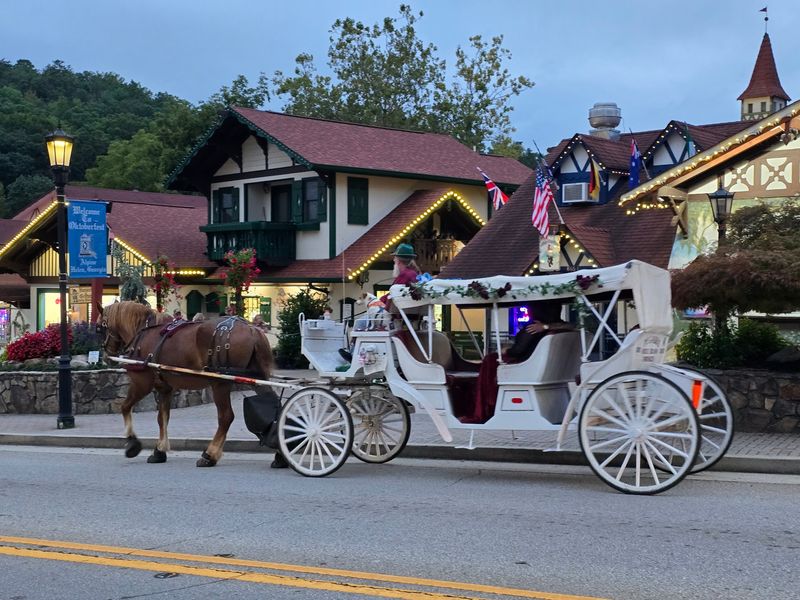
Outside the hall, horse and carriage rides add charm. Shops sell souvenirs that keep kids busy between meals.
Noise levels can rise once the bands hit full volume. Ear protection is not a bad idea for sensitive ears.
Repeat visitors are common here. Some families have made the trip every fall for more than a decade.
Fall Color In The Blue Ridge Mountains
Scenery alone justifies the drive north. Surrounding Blue Ridge slopes light up in red, gold, and burnt orange each fall.
Peak color usually lands in mid to late October. That timing overlaps beautifully with the festival schedule.
The approach roads curve through forest and along rivers. Even the drive feels like part of the trip.
Cooler mountain air makes the whole experience more comfortable. Sweater weather pairs well with warm pretzels.
Overlooks near the area offer wide views without long hikes. Bring a camera and pull off safely where allowed.
Morning fog often settles in the valley. It burns off by mid morning and leaves crisp, clear light behind.
Combining leaf peeping with the festival makes for a full day. Drive early, explore the village, then head to the hall at night.
Weather can swing quickly in the mountains. Layers beat a single heavy coat every time.
Autumn here is short and busy. Once you see it, the timing makes complete sense.
Smart Planning Tips Before You Go
A little planning turns a hectic trip into a smooth one. Parking is the first thing to sort out.
Lots fill quickly, especially on Friday and Saturday. Arriving early or using a shuttle saves real frustration.
Lodging books up fast during the fall season. Reserving cabins or hotel rooms weeks ahead is the safer route.
Bring cash and a card. Some vendors move faster with cash, and lines shrink accordingly.
Consider mixing your day. Explore the shops, bakeries, and riverside walkways before paying admission to the main hall.
Comfortable shoes matter more than a stylish outfit. You will walk, stand, and probably dance.
Renting or buying traditional clothing is popular. Many guests show up in dirndls and lederhosen, and nobody feels out of place.
Give yourself a full day at minimum. Rushing this celebration is the only way to get it wrong.