This Massive Connecticut Go-Kart Track Turns A Simple Race Into A Full-On Thrill Ride
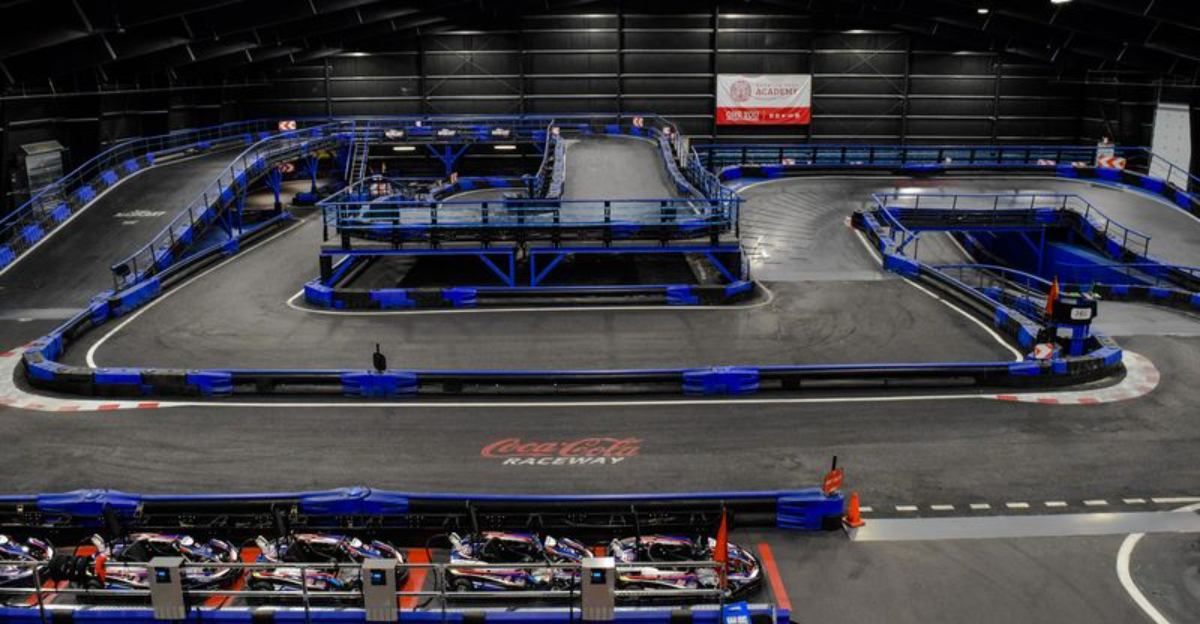
Speed sounds very reasonable until the helmet goes on and somebody starts talking about lap times. Then pride gets involved.
The track stretches far enough to make every turn feel like a new chance to prove you definitely meant to brake that late.
This Connecticut go-kart experience turns a casual race into a full-on adrenaline session with serious bragging rights attached.
The karts move fast enough to keep your attention glued to the next corner. Passing someone feels glorious.
Getting passed feels deeply personal. That rivalry is half the entertainment.
You may start with a relaxed little race and end up analyzing every mistake like there is a championship trophy waiting at the finish.
By the final lap, everyone has become suspiciously competitive.
Apparently, maturity has a very low speed limit.
1. Huge Indoor Fun Built Around Speed
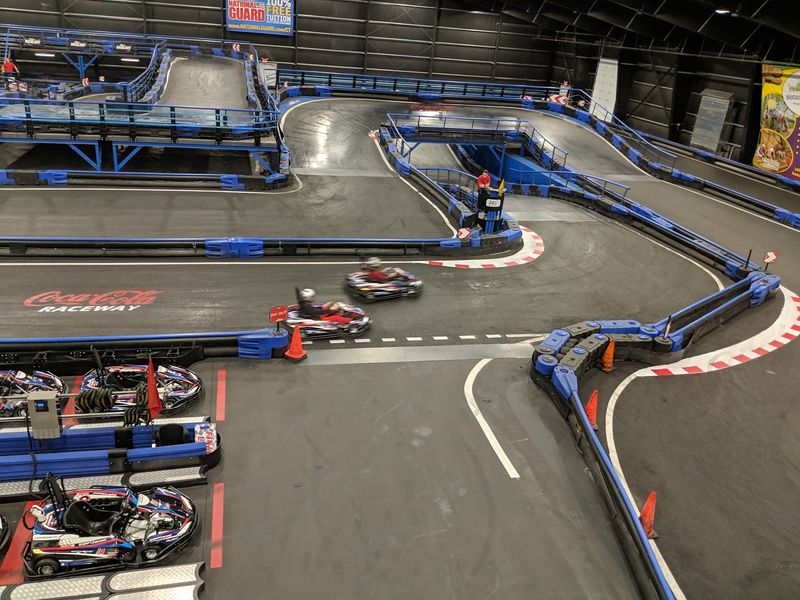
Fast starts here. So does the urge to race again.
Supercharged turns indoor karting into something much bigger than circling a flat track. Its 110,000-square-foot facility holds two quarter-mile, multi-level courses, with ramps and sweeping turns that send electric karts above and below other racers.
The real show arrives when the two courses combine into the half-mile Supertrack. The venue bills that configuration as the world’s largest indoor multi-level karting track, and watching racers disappear around one section only to reappear overhead helps explain the excitement.
Electric karts change the atmosphere too. Without the usual gas fumes or heavy engine noise, the sounds of tires and racing action become much more noticeable.
Each heat lasts eight minutes, and victory is based on the fastest individual lap rather than who crosses the finish line first. That makes checking your results dangerously tempting because one slow corner suddenly feels like unfinished business.
First-timers can choose a reduced-speed option, while experienced drivers can tackle Pro Speed if they meet the requirements.
One race introduces the track. The second is where you start plotting how to beat your own time.
2. An Oakdale Destination Near The Norwich Area
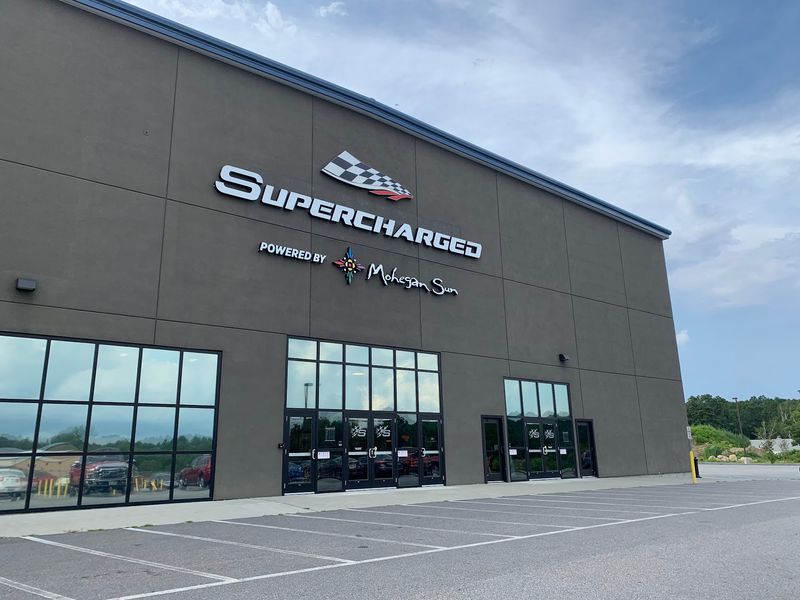
The outside gives almost nothing away. Then you step inside and suddenly there is a massive indoor racing complex where an ordinary Connecticut industrial road turns into the starting point for a much bigger outing.
Supercharged sits in Oakdale, a village within Montville, which explains why both community names sometimes appear in directions and listings. Its southeastern position also makes it a practical destination from Norwich, New London, and much of the shoreline.
Being indoors is a major advantage. Rainy weekends and cold winter afternoons do not have to derail the plan, and racing continues regardless of what New England weather decides to do outside.
Groups can make arrival easier by completing the required waiver online beforehand. Every participant needs one, while minors must have theirs completed by a parent or legal guardian.
The complex operates at 1 Sachatello Industrial Drive in Oakdale, where the quiet approach makes the size of what waits inside even more surprising. Current hours generally begin at 10 a.m. daily, with later closing times on Friday and Saturday.
Schedules can change for holidays or private events, so checking the current calendar before a longer drive is worthwhile.
3. 110,000 Square Feet Of Indoor Action
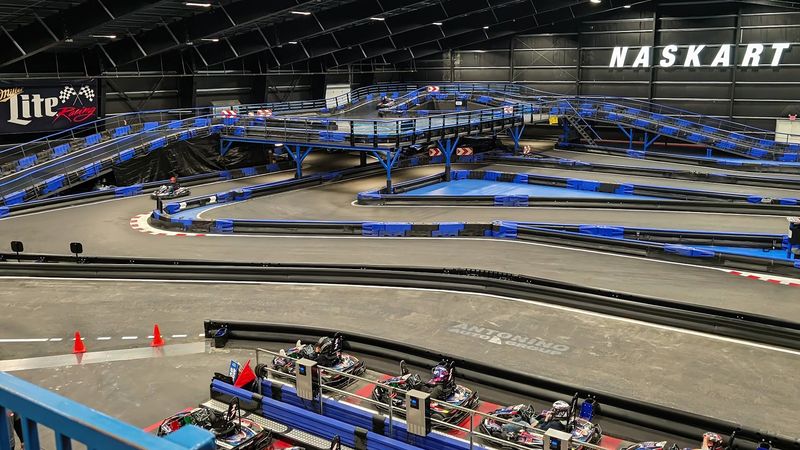
Numbers can be abstract until you stand inside them. The facility covers 110,000 square feet, which is roughly the footprint of a large supermarket and then some, all under one roof.
That space does more than hold two karting tracks. It also makes room for axe throwing lanes, a ninja and trampoline arena, an arcade area, and a pizzeria, so a single visit can stretch across several activities without anyone leaving the building.
Ceilings are high, which matters more than most people realize. Tall ceilings let the tracks stack into multiple levels and keep the air from feeling stuffy even when the place is busy.
Guests frequently mention how clean and easy to navigate the building feels, which is no small thing in a space this size. Signs, staffed counters, and clearly separated activity zones keep the layout from turning confusing.
Lockers are available for stashing coats, bags, and phones before you climb into a kart. Comfortable shoes help, since walking between the front desk, the track, and the food area adds up over a few hours.
Anyone planning a birthday party or a company outing will appreciate the elbow room, because groups can spread out instead of crowding a single counter. It is a building meant for motion.
4. Two Multi-Level Tracks Under One Roof
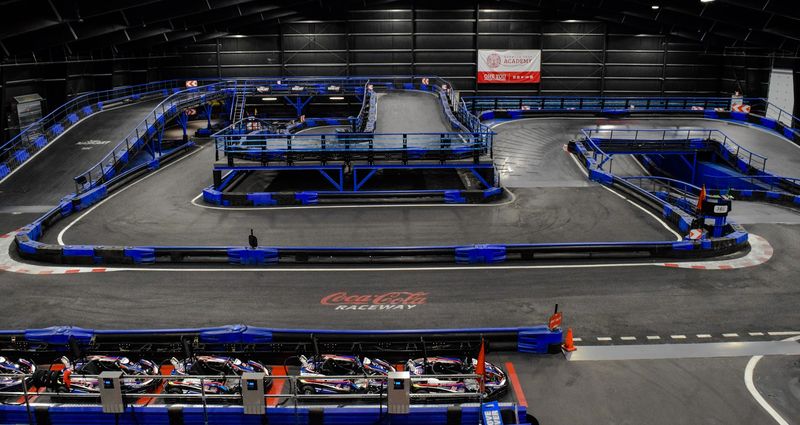
Two separate tracks share the space, each one climbing and dipping across multiple levels. Racers usually pick one depending on the session they book, and each has its own rhythm and character.
The best twist comes on Thursdays. On those days the two quarter-mile layouts are joined into a single half-mile course known as the Supertrack, doubling the distance and changing the whole strategy of a race.
More track also means more karts. A single track holds up to twelve drivers at once, while the combined Supertrack can accommodate as many as twenty-four drivers, which makes for a genuinely packed field.
Multi-level design changes how a race feels. Instead of watching the entire course from one spot, you lose sight of rivals as they climb a ramp, then find them again on a bridge above or below you.
Spectators get a good deal out of the arrangement too. Family members who would rather not race can follow the action from viewing areas and actually see something happen, rather than staring at one flat corner.
If the Supertrack is the draw for you, check the schedule before booking, since the combined setup runs on specific days rather than all week long. Regulars often plan their week around that one session.
5. Electric Karts Made For Fast Laps
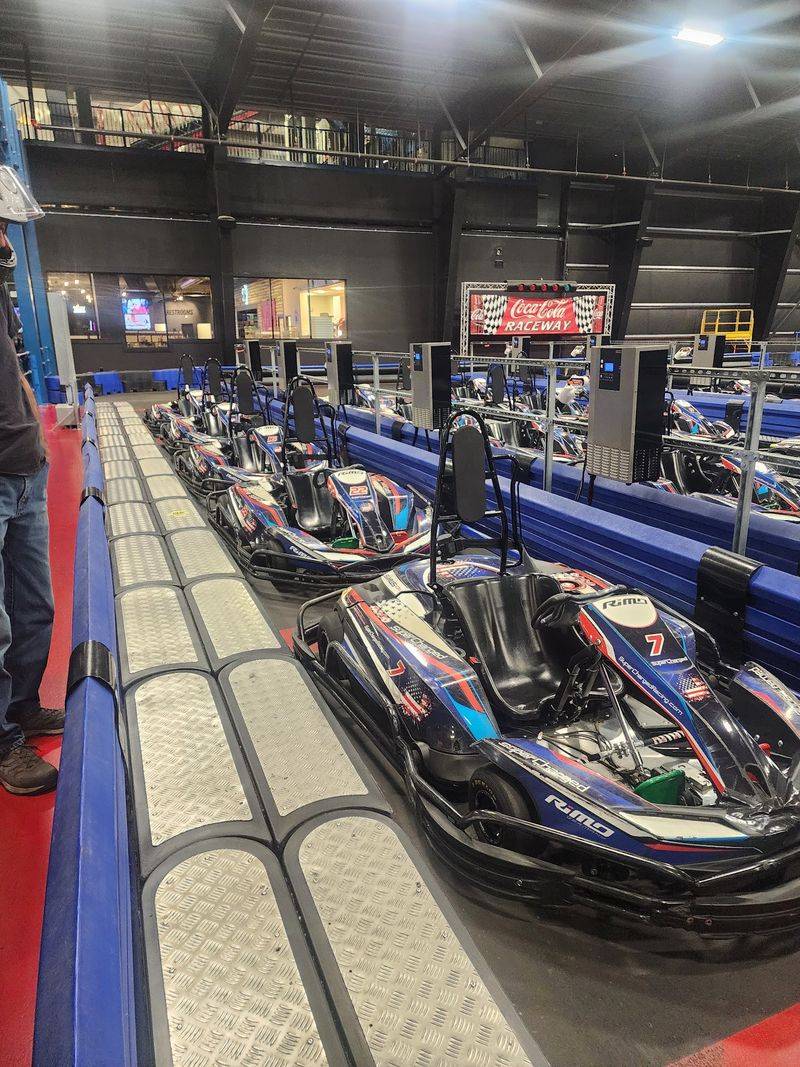
Electric power does something surprising to a go-kart: it makes the machine quicker off the line and quieter at the same time. The karts here are all-electric and zero-emission, so no fumes hang in the air after a long session.
Each kart runs on 19 horsepower and is rated for top speeds up to 45 mph, though the speed you actually reach depends on the track layout, traffic, and the setting assigned to your race.
Instant torque is the fun part. Press the pedal and the kart responds immediately, with no lag and no gear changes to think about, which lets new drivers focus entirely on steering and braking.
Quiet karts also mean you can hear the marshals, the announcements, and your own tires losing grip in a corner. That feedback helps more than you might guess when you are trying to shave time off a lap.
Helmets are provided, and many repeat visitors bring their own head sock or gloves for comfort. Loose scarves and bulky coats are worth leaving in a locker, since a snug fit in the seat makes the drive easier.
Expect your arms and shoulders to feel the effort the next day, because steering a kart at speed is real physical work.
6. Quarter-Mile Courses With Plenty Of Turns
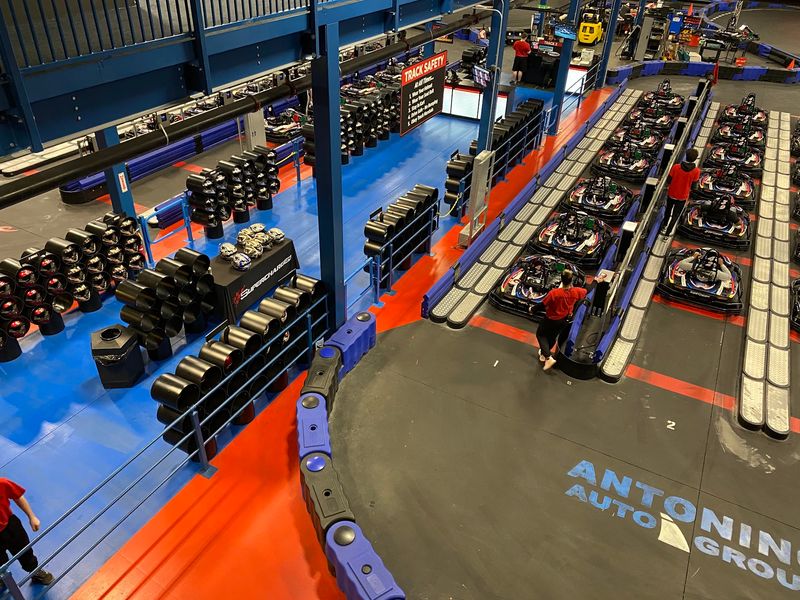
A quarter mile sounds short until you count the corners. Each of the two tracks measures a quarter-mile, and the layout packs in straightaways, steep ramps, uphill climbs, and hairpin turns that punish anyone who brakes too late.
Standard heats typically run eight minutes, which is longer than it sounds when you are concentrating. That length gives you time to learn the racing line, test a braking point, and then actually use what you figured out.
Elevation is the signature feature. Climbing a ramp bleeds off speed, so smart drivers carry momentum into the incline instead of stabbing at the throttle halfway up.
Hairpins reward patience. Going in slow and coming out fast beats diving in hot and scrubbing speed against a barrier, a lesson most first-timers learn about three laps in.
When the tracks combine, the course stretches to a half mile and the challenge changes. Longer straights, more passing zones, and a wider variety of corners turn the race into something closer to endurance driving.
Lap times are posted afterward, and comparing them with friends is half the entertainment. Two races back to back is a common choice, since almost everyone improves noticeably on the second run.
Hydrate between heats; the concentration alone will tire you out.
7. Racing Options For Beginners And Experienced Drivers
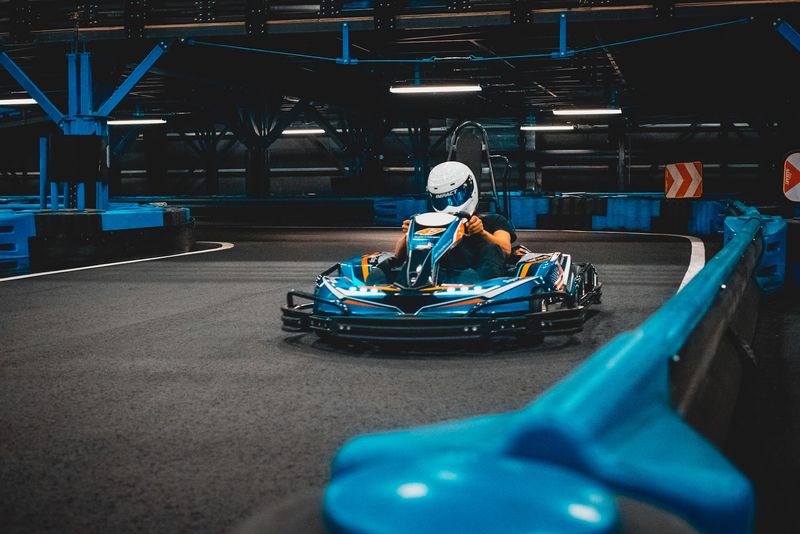
New to karting? You can still jump in.
Supercharged divides racing into Semi-Pro and Pro Speed sessions, giving less experienced drivers a chance to learn the track at a slightly reduced pace before tackling the more competitive option. Semi-Pro is also the category used by younger racers who meet the height requirement.
Height is the first thing to check before making plans. Every driver must measure at least 58 inches tall and be able to operate the kart safely.
Pro Speed adds another requirement: drivers must be at least 15 years old.
That means younger visitors are not automatically left watching from the sidelines. Once they clear the height rule, they can race in Semi-Pro sessions regardless of age.
Measuring kids before leaving home can save an awkward surprise at check-in.
Every racer also needs an annual racing license and a waiver on file. Before heading onto the track, participants watch a required safety briefing covering the rules they will need once the heat begins.
Closed-toe, closed-heel shoes are required as well. After that, the hardest part may be resisting the urge to book another race immediately.
8. Much More Than A Quick Spin Around The Track
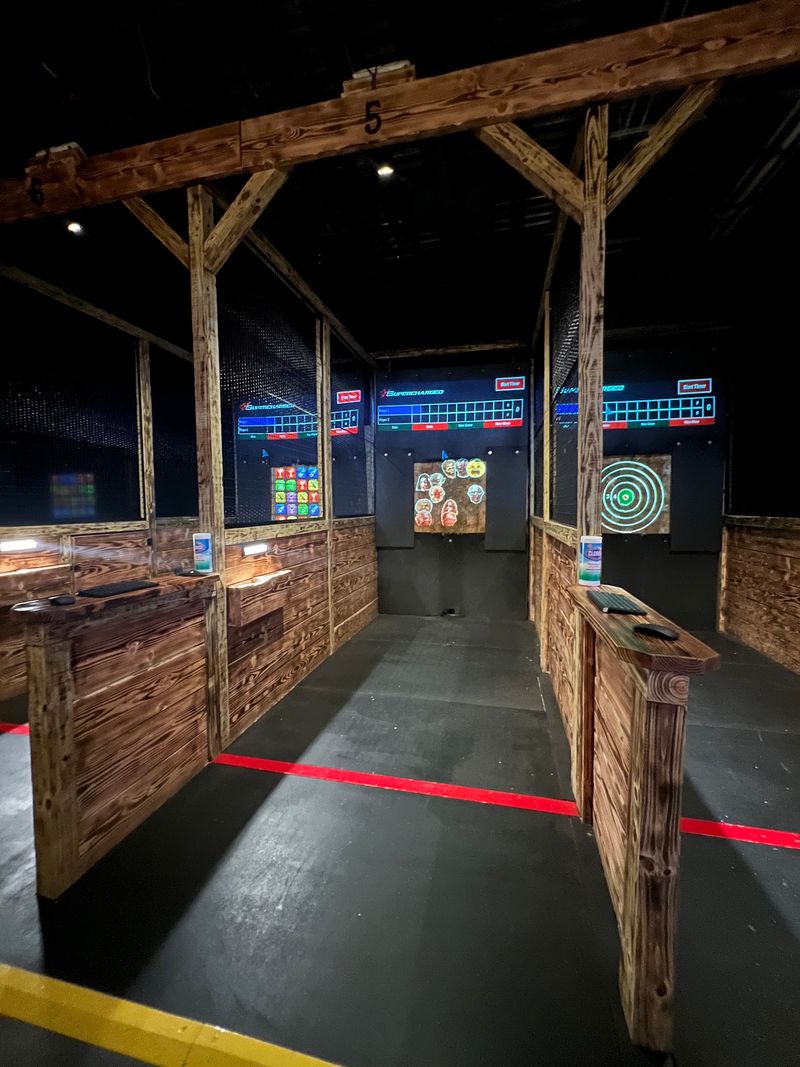
Karting may be the headliner, but plenty of visitors show up for everything else. Six lanes of axe throwing use high-tech projection targets, turning a straightforward toss into digital games with scoring built into the wall.
The 8,000-square-foot Ninja Wipeout Arena and Trampoline Park is a favorite with younger visitors and plenty of adults. Obstacles include jousting beams, wipeout balls, cargo net climbers, a spinning log, a zig-zag bridge, a net maze, and a cave crawl.
Jump time is sold in one-hour blocks, and the clock runs continuously once your session begins. Eating before or after that hour rather than in the middle is the practical move.
An arcade area covers the gaps between activities, useful when one group finishes racing before another. Food comes from V’s Brick Oven Pizzeria, which serves pizza on site and makes an easy stop between sessions.
Birthday parties, corporate events, and family gatherings are all part of the regular rotation here, with hosts guiding groups between activities. Many guests mention how organized the party experience feels, which matters when you are wrangling a dozen excited kids.
Building a half-day plan works better than rushing one activity. Race first, eat, then let everyone burn off the rest of their energy on the obstacle course before heading home.