A Japanese Spot In Connecticut Serves Tokyo-Style Comfort Food You Rarely See Around Here
Tokyo-style comfort food can be surprisingly hard to find when you want something that feels everyday rather than overly elaborate.
That is what makes this little dining room so interesting.
This Connecticut Japanese spot leans into the kind of dishes you might crave after a long day, with teishoku sets and deeply comforting rice bowls doing much of the talking. The menu feels thoughtful without becoming intimidating.
You can settle into a warm meal that tastes familiar in spirit even when the exact dish is new to you.
The cooking has a quietly confident feel, which suits the whole place.
Dinner does not need a big production when the food already carries enough personality. That gives the experience an unusually intimate quality.
For anyone curious about a side of Japanese dining that goes beyond sushi, this place opens the door to a much cozier kind of night out.
1. Japanese Comfort Food Gives This Spot Its Personality
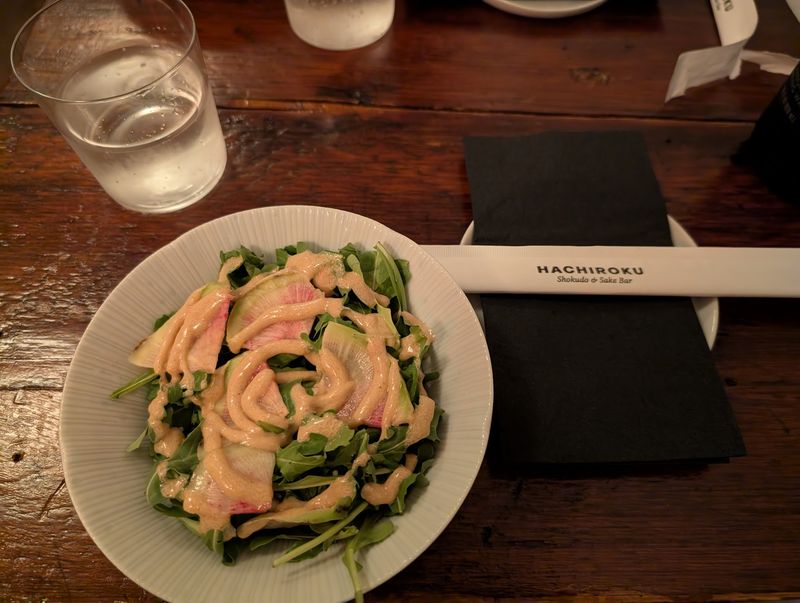
What does comfort food look like in Japan? Often, it is simpler than expected.
The appeal comes from familiar dishes prepared with care rather than oversized portions or dramatic presentation. That everyday approach shapes the experience here, where the food feels closer to something enjoyed on an ordinary evening in Tokyo.
Plates arrive neatly arranged, with attention given to texture and balance. Nothing needs excessive decoration to make an impression.
The flavors do most of the work, encouraging diners to slow down and notice the details.
Part of the fun comes from mixing recognizable favorites with dishes that may feel less familiar. That gives the meal a comfortable starting point while still leaving room to discover something new.
Thoughtful preparation ties everything together. Ingredients feel purposeful, and each plate seems built around the food itself rather than an elaborate presentation.
This also moves beyond the version of Japanese dining centered mainly on sushi rolls. The focus is broader and more casual, drawing attention to the kind of cooking that appears in everyday meals and relaxed dining spots across Japan.
That difference makes the experience especially interesting. Instead of chasing spectacle, the kitchen lets simple food reveal just how satisfying careful preparation can be.
2. The Small Downtown Setting Feels Easy To Miss
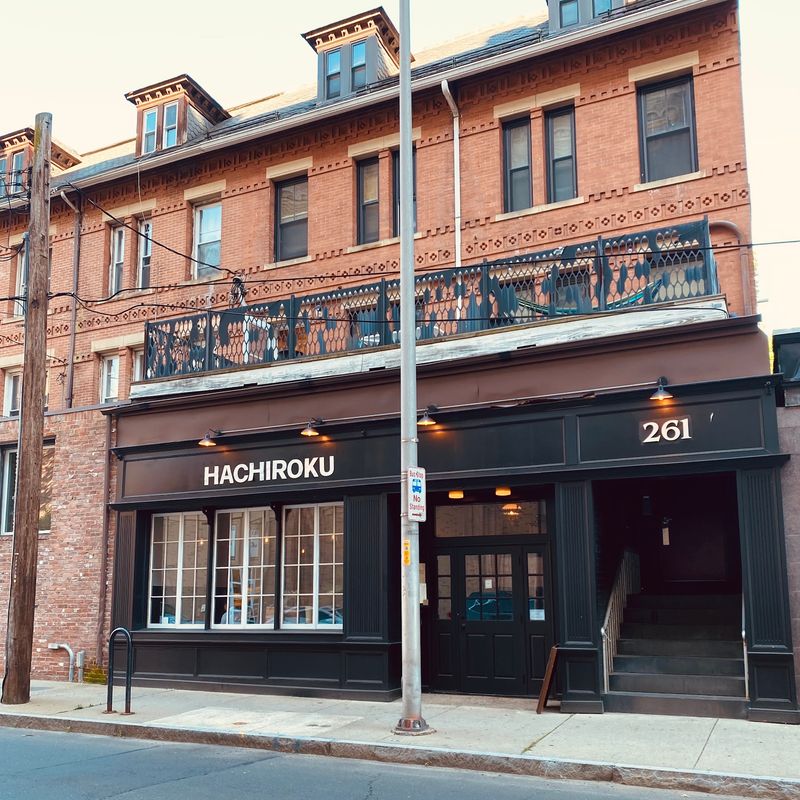
Easy to miss. Much harder to forget once you step inside.
The understated storefront barely announces itself from the sidewalk. Dark exterior finishes and restrained signage keep things simple, which makes the restaurant feel almost hidden among the busier downtown blocks.
That low-key entrance suits what waits inside. The dining room feels calm and intimate, with a polished atmosphere that unfolds gradually rather than trying to impress before you even reach the door.
Its central position also makes dinner easy to work into an evening downtown. The New Haven Green is only a short walk away, and theaters, shops, and other attractions sit within the surrounding blocks.
Evening service is the focus here, so this is much more of a dinner destination than a casual midday stop. The smaller dining room can feel especially cozy once tables begin filling later in the night.
The restaurant sits at 261 Orange St, New Haven, CT 06510, roughly a block from the Green. That convenient address makes it easy to reach on foot when you are already exploring downtown.
The best part may be the contrast. Outside, almost nothing demands attention.
Inside, the restrained setting feels intentional, giving the whole experience the appeal of discovering somewhere you nearly walked past.
3. Exposed Brick Keeps The Dining Room Warm And Casual
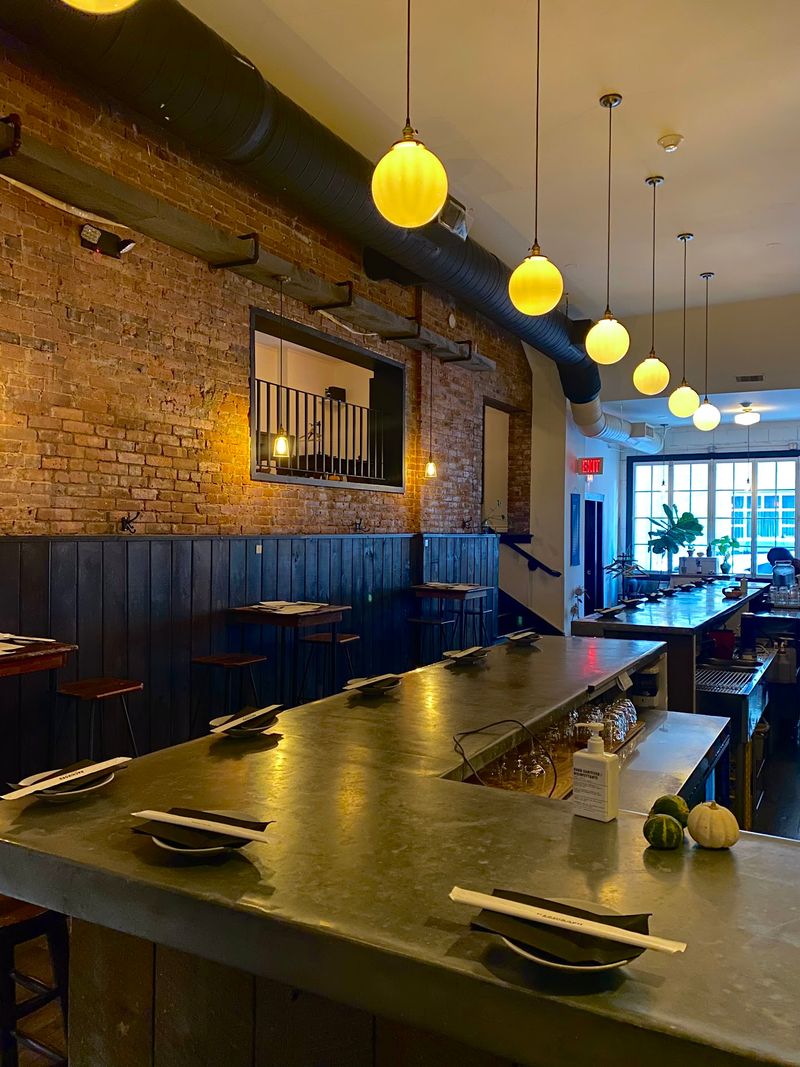
The room does not need much to make an impression. It lets the mood do the work.
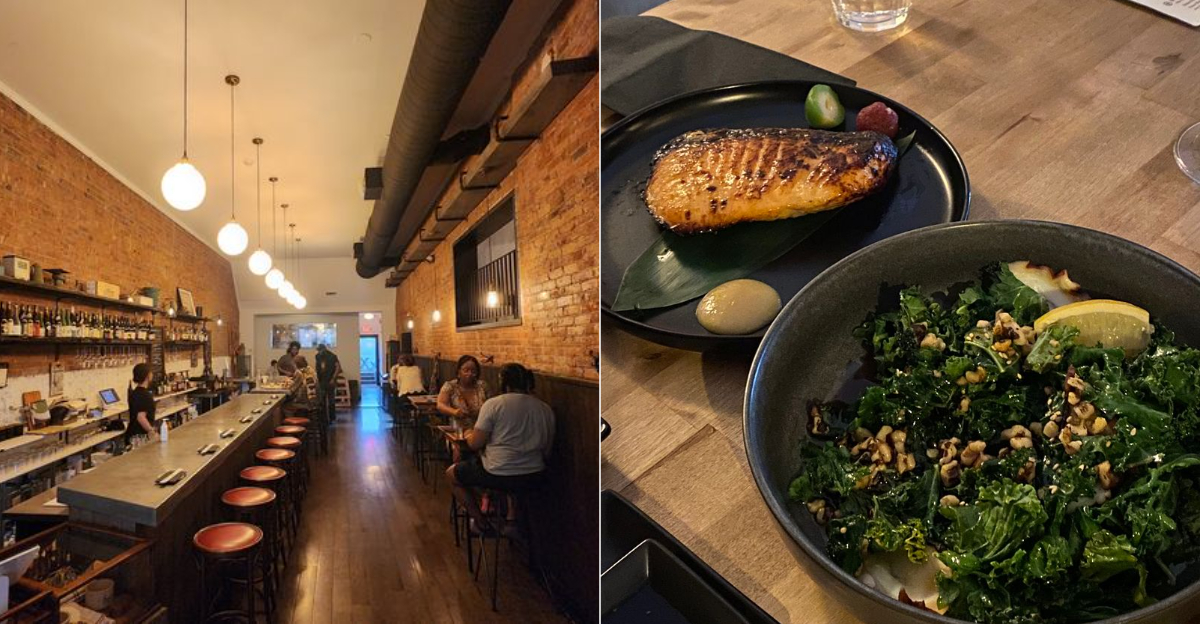
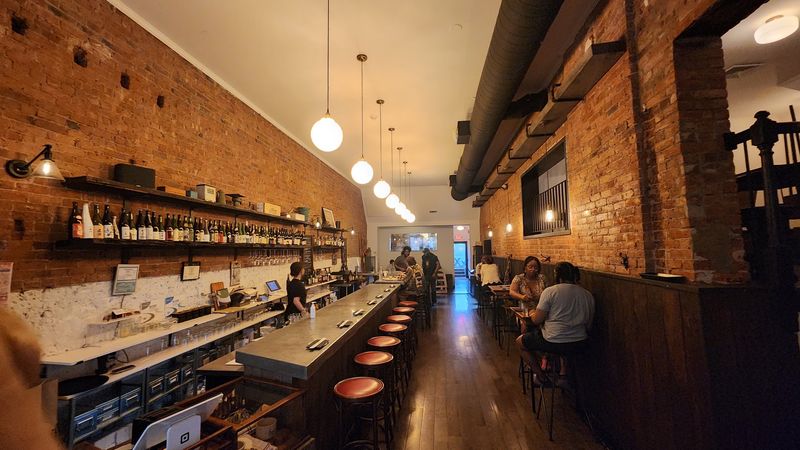
Warm wood and exposed brick give the space an easy, polished feel, while soft lighting keeps evenings relaxed. The design stays simple without turning stark, creating the kind of atmosphere that feels intimate almost immediately.
The restaurant has bar seating downstairs, tables along the exposed brick walls, and additional seating upstairs. Because everything stays within view, the room feels connected rather than spread out.
Couples often settle at the counter, where the pace of the kitchen and dining room becomes part of the experience.
As evening settles in, the softer lighting makes the brick and wood feel even warmer. It is an inviting setup for ordering another small plate and letting dinner stretch a little longer.
The compact layout works especially well for pairs and smaller groups. Tables are limited, so the room can fill quickly when dinner service gets busy.
That smaller scale is part of the charm. Instead of disappearing into a large dining room, guests stay close to the energy of the space, making the whole experience feel personal, calm, and comfortably removed from the rush outside.
4. Japanese Diner Traditions Shape The Menu
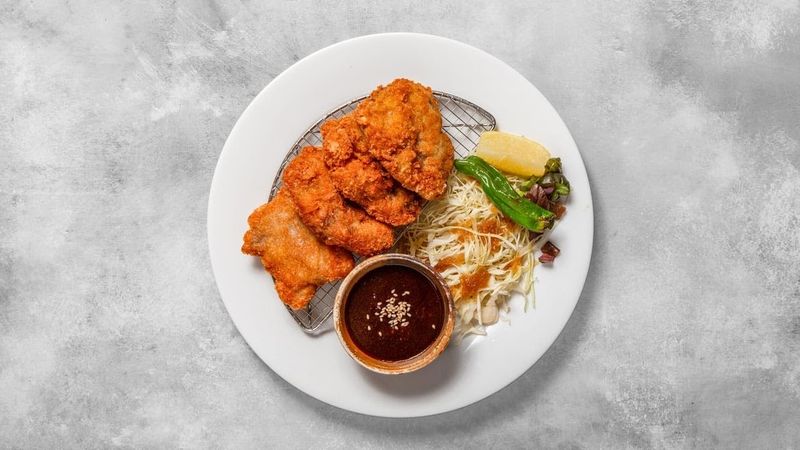
The name itself carries a wink. Hachiroku translates to eighty-six, restaurant shorthand for an item that has run out, while shokudo points to the casual dining rooms found all over Japan.
That naming choice tells you a lot about the approach. Instead of chasing formality, the menu follows the shokudo tradition of straightforward, satisfying food served without fuss.
Small plates make up a good share of the lineup. Expect raw and cooked fish, fried chicken, and traditional Japanese pickles, plus dishes like agedashi tofu and crisped Brussels sprouts that turn simple ingredients into something memorable.
For a fuller meal, the teishoku combination sets are the way to go. A teishoku set pairs a main dish with rice and pickles, plus a choice of salad or miso soup.
Ordering strategy helps here. Because individual plates run on the smaller, more detailed side, many diners build a meal from several shared items or anchor it with a teishoku set and add a plate or two around it.
Brussels sprouts, agedashi tofu, and house-made tofu come up often among frequent visitors, which makes them useful starting points for a first order.
5. Wagyu Curry Rice Brings Serious Comfort
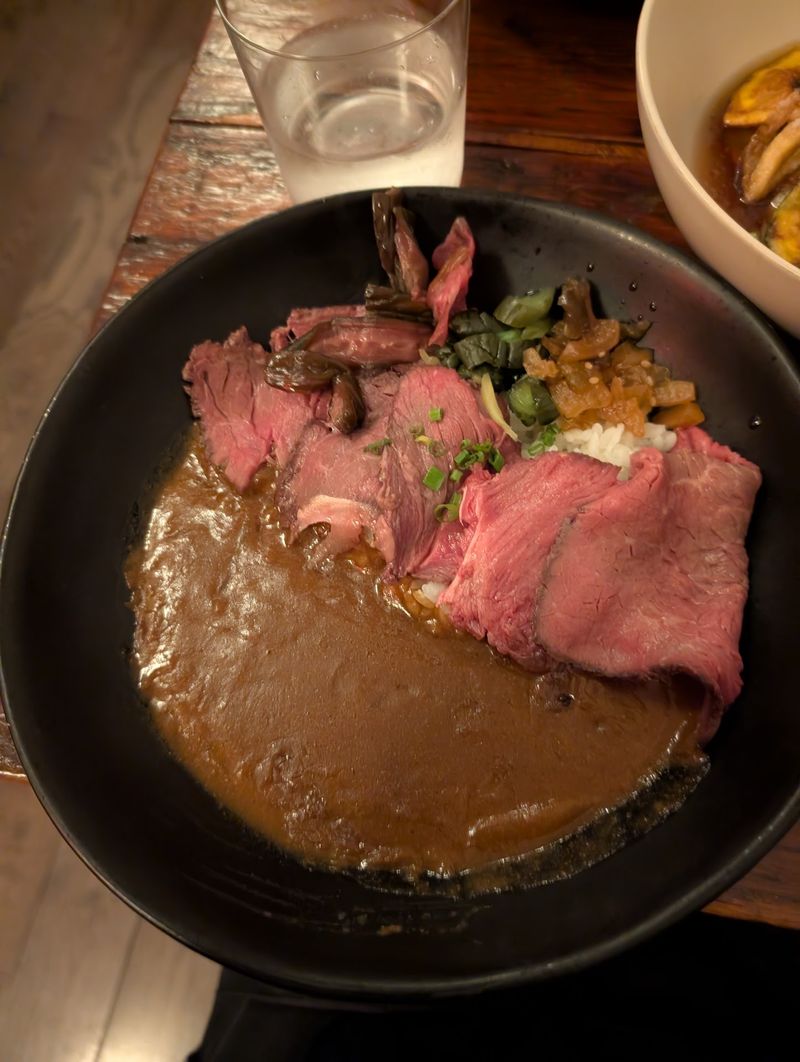
Curry rice is one of Japan’s most beloved everyday meals, and the version here gets a Connecticut-worthy upgrade. American Wagyu Beef Curry Rice puts steamed rice under roasted beef and a house-blended curry sauce.
What sets the sauce apart is its base. The kitchen builds it with its own spice blend and a stock made from American Wagyu beef, which gives the curry a deeper, rounder flavor than a standard preparation.
Japanese curry differs from Indian or Thai styles. It is thicker, milder, and slightly sweet, more like a rich gravy than a fiery sauce, which makes it very approachable for first-timers.
Comfort is really the point. Rice, sauce, and tender beef in one bowl is the kind of dish people crave on a cold night, and guests regularly single out the curry’s seasoning.
Flexibility helps too. You can order it on its own or as part of a teishoku set, which adds rice and pickles with a choice of salad or miso soup.
If you are trying to decide where to start on the menu, the curry is a reliable pick. It shows the kitchen’s balance of tradition and invention without asking you to try anything unfamiliar.
6. Miso-Cured Black Cod Shows Another Side Of The Kitchen
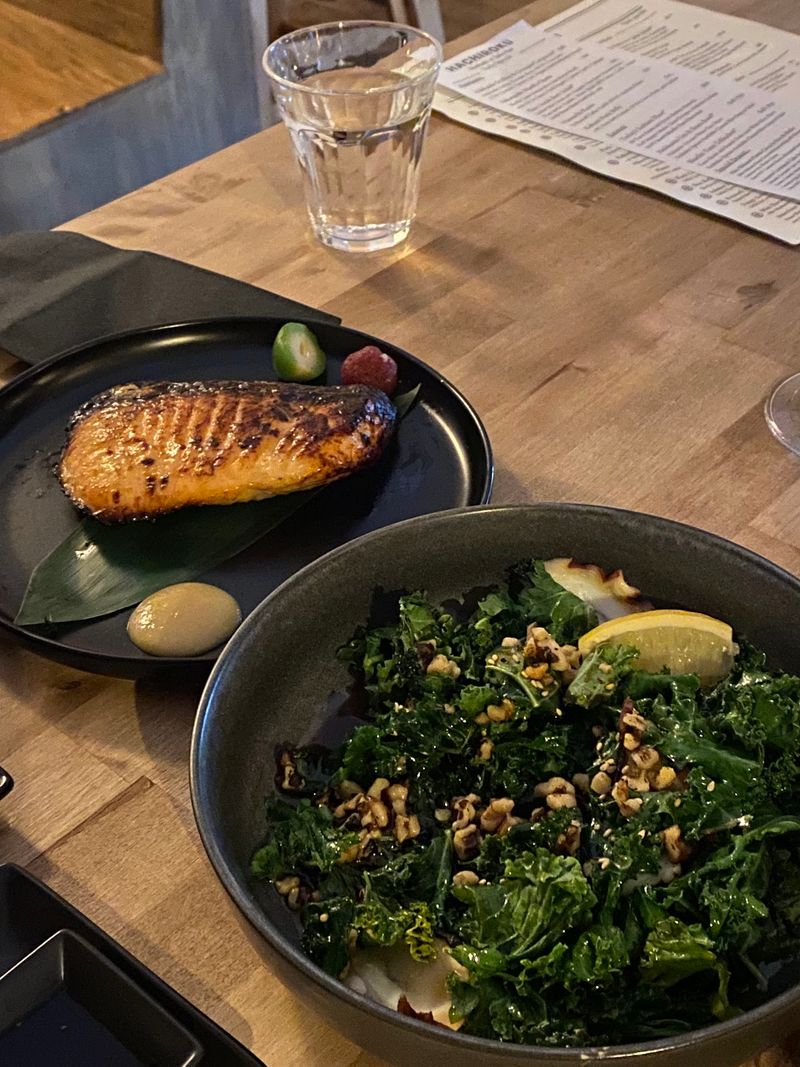
Patience is the secret ingredient in this one. The black cod spends an extended stretch curing before it ever reaches the grill, letting salt and savory depth work their way fully into the fish.
Here the cure involves a yuzu soy sauce, adding a bright citrus edge to the classic preparation. Once grilled, the surface takes on a light caramelized finish while the inside stays soft and flaky.
Black cod is naturally rich and a little sweet, which is exactly why it pairs so well with a savory marinade. The result is delicate but far from bland, and it lingers in a satisfying way.
Among regular visitors, the black cod comes up again and again as a favorite alongside the Brussels sprouts and agedashi tofu. It is a good example of how the kitchen handles seafood with real care.
Like the curry, it can be ordered by itself or as a teishoku set with rice and pickles, plus either salad or miso soup.
Anyone curious about the more refined side of Japanese home-style cooking should give it a look. It demonstrates technique without ever feeling stiff or overly fancy.
7. Daily Specials Keep Things Interesting
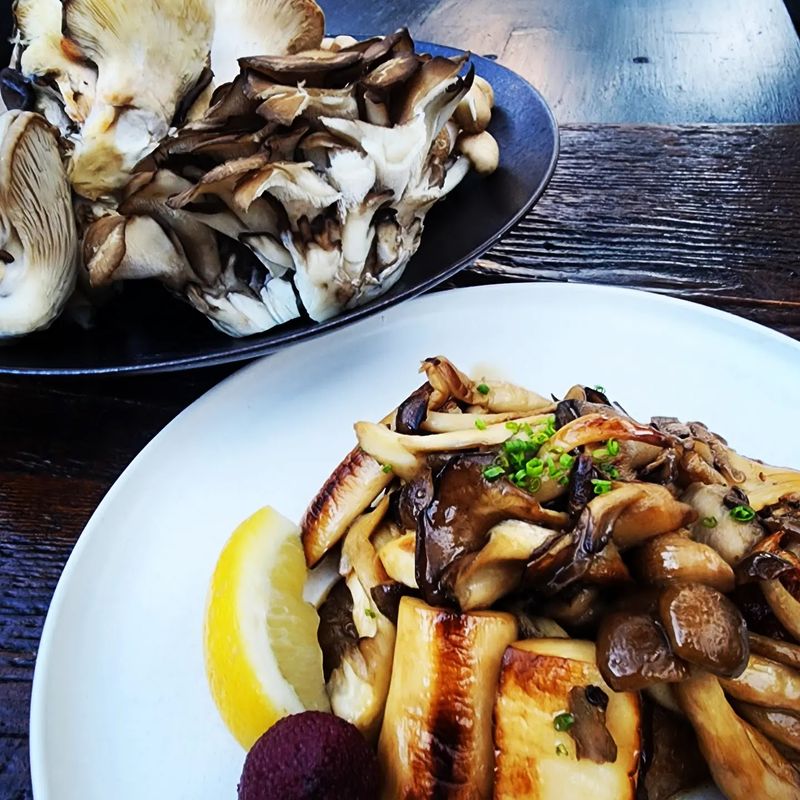
Regulars have a habit of asking what is new before they even open the menu. Daily specials give the kitchen room to play with seasonal ingredients and preparations that are not part of the standing lineup.
One past special that earned plenty of praise was a mixed mushroom dish featuring king trumpet, maitake, shimeji, and oyster varieties. It was prepared with only a few supporting ingredients so the mushrooms’ natural savory depth could lead.
Seasonal vegetable dishes also turn up frequently, which is welcome news if you like plant-forward options or simply want something fresh alongside richer plates.
The practical takeaway is easy. Ask your server what the specials are, because the answer changes and often includes something you will not find printed on the regular menu.
Specials also reward return visits. Someone who came in during one season may find a completely different set of options a few months later, which keeps the experience from feeling repetitive.
Staff tend to know the menu well and are generally happy to explain unfamiliar ingredients or suggest pairings. Taking their recommendation is one of the simplest ways to end up with a dish you would not have chosen on your own.
8. The Cozy Room Keeps Regulars Coming Back
Plenty of restaurants have good food. Fewer manage to make a small room feel genuinely welcoming night after night, and that combination is what turns first-time guests here into repeat visitors.
Service gets mentioned constantly in a positive light. Many guests describe the staff as warm without hovering, attentive, and unusually well informed about what is on the menu.
The pace of a meal tends to be unhurried. Plates arrive in a sensible rhythm, and the room invites you to stay put and keep talking rather than clear out quickly.
Because the space is compact, dinner can feel almost private, which explains why so many people recommend it for a quiet evening out or a special occasion. Bar seats work well for two, and the counter often has openings when tables are booked.
Portions run on the smaller, more detailed side, so plan on ordering a few plates to share or building your meal around a teishoku set. Knowing that ahead of time helps set expectations.
Between the brick walls, gentle lighting, and carefully cooked food, the whole visit adds up to something rare in the area. It is a Tokyo-style dining room that feels right at home in downtown New Haven.