This Small-Town Connecticut Restaurant Is Known For Steaks People Go Out Of Their Way For
Steak night gets serious when people are willing to leave their usual route just to get to the table.
The restaurant has the kind of country setting that makes dinner feel like a destination before the first plate even lands.
Dry-aged cuts are the big draw, and the kitchen treats them with the sort of attention steak lovers notice immediately.
At this Connecticut restaurant, a small-town address has done nothing to keep the steakhouse from building a much bigger reputation.
The room feels polished without becoming stiff, which makes the whole evening easy to settle into.
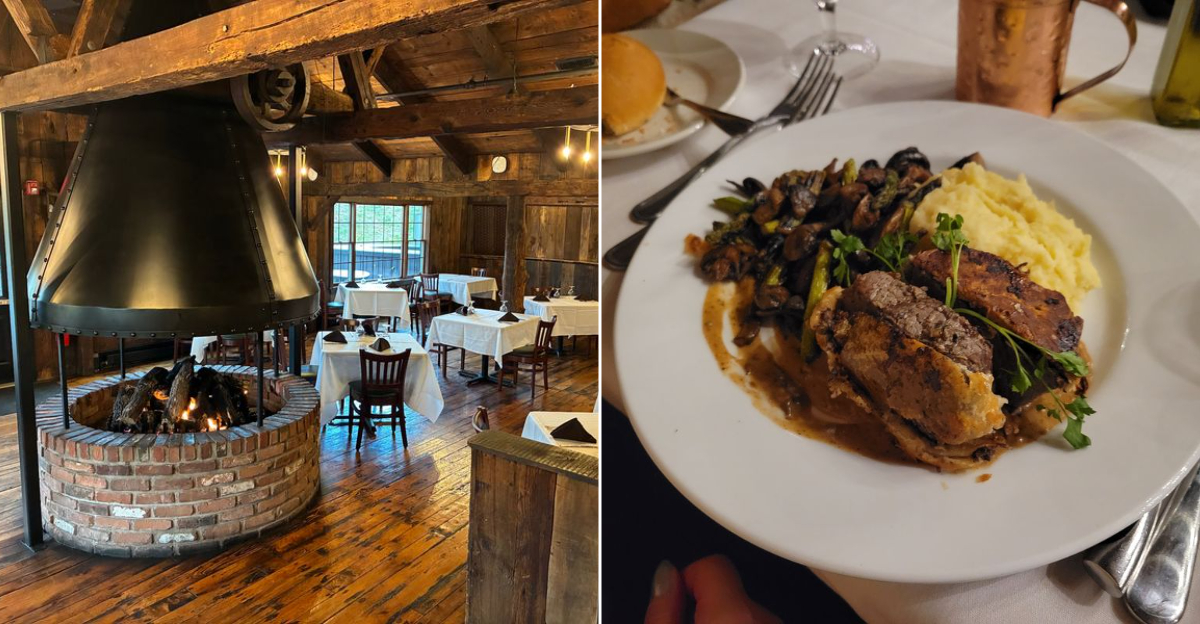
A wood-fired hearth adds extra personality to the experience without turning dinner into a show.
People come hungry and leave with strong opinions about their favorite cut. That is usually how a steakhouse earns repeat road trips.
When dinner is this much of an event, the extra miles start feeling like part of the plan.
1. Historic Mill Charm Shapes The Entire Experience
This building has lived several lives. Dinner is only the latest one.
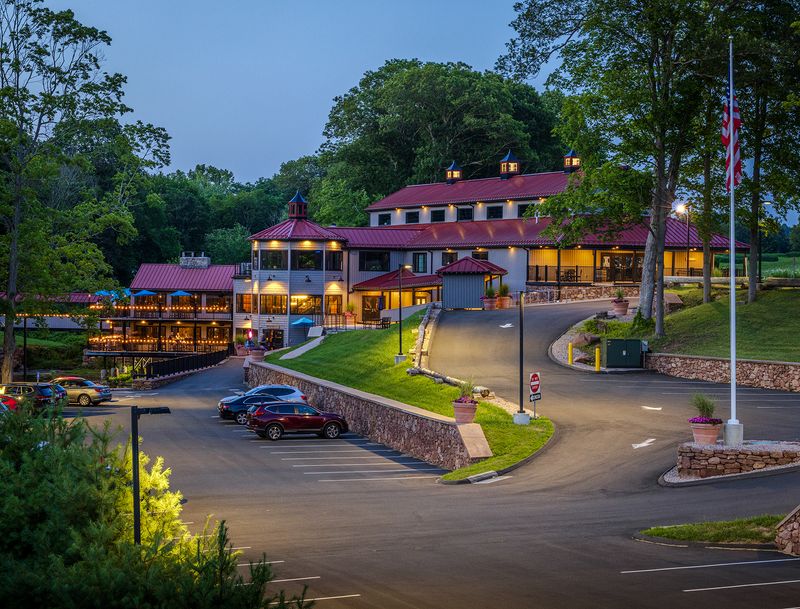
Long before Millpond Gatherings welcomed diners, the property was part of a manufacturing operation powered by water from the nearby river. Its history stretches back to the 1700s, and much of that earlier character still shapes the experience today.
The next chapter was even more surprising. At one point, the site became what was described as the largest greeting card factory in the country at the time.
That industrial past gives the property a story far different from the usual restaurant conversion.
Years later, an extensive renovation costing about $6 million transformed the historic structures for hospitality use. Preservation remained a major focus rather than wiping the slate clean.
Original character was kept wherever possible, and the water-powered history still receives a visual nod near the steakhouse entrance.
The broader property now combines restaurant spaces with areas designed for private gatherings. Its historic status also gives those weathered details real context rather than manufactured charm.
Arriving a little early makes sense here. The buildings reward a slower look before dinner begins, and the setting may be the first thing that gets your attention.
Food has serious competition before it even reaches the table.
2. The Riverside Setting Makes Dinner Feel More Special
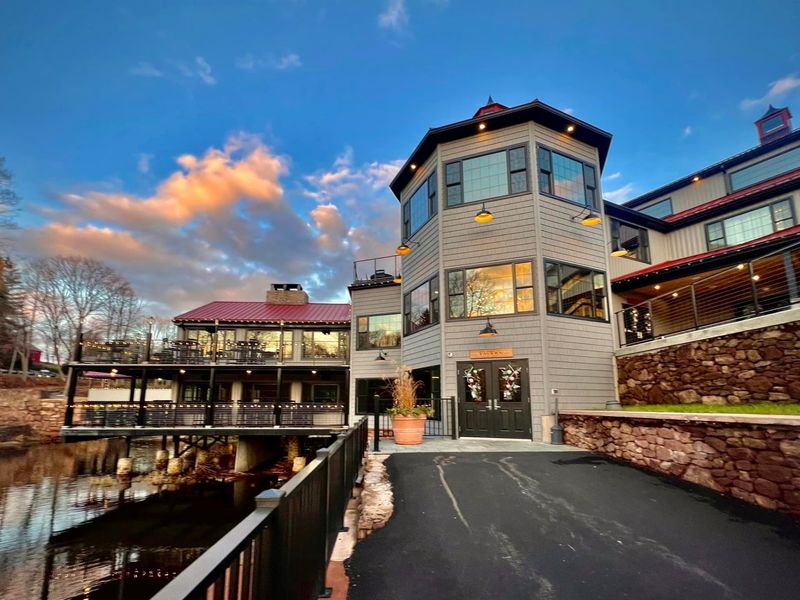
Water is the reason this building exists, and it still shapes dinner here. The Farm River runs alongside the property, and during warmer months the seasonal patio puts you close enough to hear it moving.
Greenery wraps the outdoor areas, and a small stream adds to the picture. On a mild evening, the sound of moving water does more for the mood than any playlist could.
Because the setting is semi-rural, the pace outside feels slower than what you get at a restaurant on a busy road. Conversations carry easily, and there is little traffic noise competing with them.
If riverside seating is the goal, calling ahead to ask about patio availability makes sense, since outdoor tables depend on both weather and season. Reservations are generally a good idea for a property this popular.
Visitors frequently describe the outdoor space as relaxing and scenic, and many mention plentiful patio seating on multiple levels.
Worth knowing for planning: the restaurant is closed on Mondays and opens at 4 PM Tuesday through Thursday, with earlier openings Friday through Sunday. Weekend afternoons give you the best light for a table near the water.
3. Original Beams Keep The Old Mill Character Alive
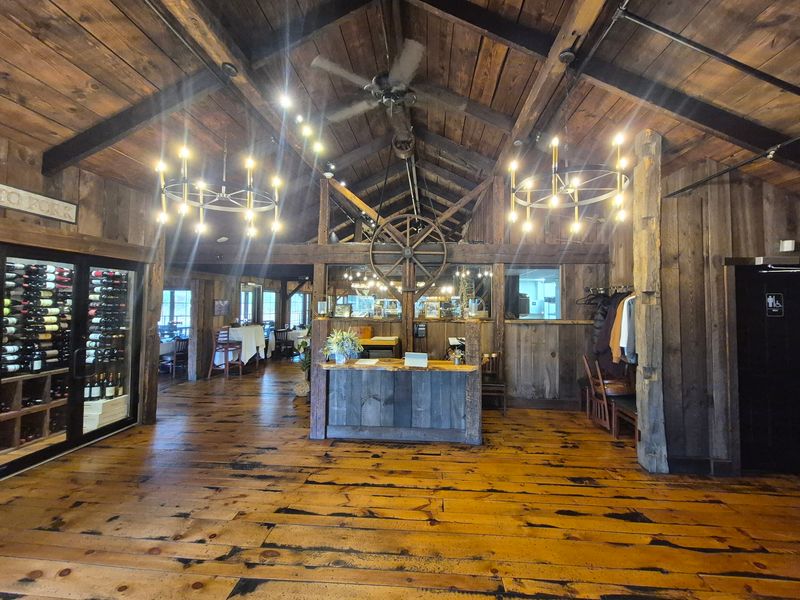
Look up. The original wooden beams overhead are the real thing, left in place rather than added for effect, and they run through the interior as the defining architectural feature.
Aged wood does something to a dining room that paint cannot. It softens the light, absorbs sound, and makes a large space feel considerably cozier than its square footage suggests.
The overall look lands somewhere between rustic and refined. Tables are dressed for a proper steakhouse dinner, but the surroundings keep things from feeling stiff or formal in an uncomfortable way.
There are two very different moods to choose from. The tavern downstairs leans casual and warm, while the upstairs steakhouse feels more polished, so it helps to decide which experience you want when you book.
Guests often single out the stained aged wood, the windows, and the fireplaces as reasons the place feels especially inviting during colder months and around the holidays.
A quick tip for anyone dressing for dinner: the steakhouse side runs a bit more upscale than first-time visitors expect. Smart-casual clothing fits comfortably in either room, and the tavern is the easier pick for a low-key weeknight meal.
4. Dry-Aged Steaks Take Center Stage
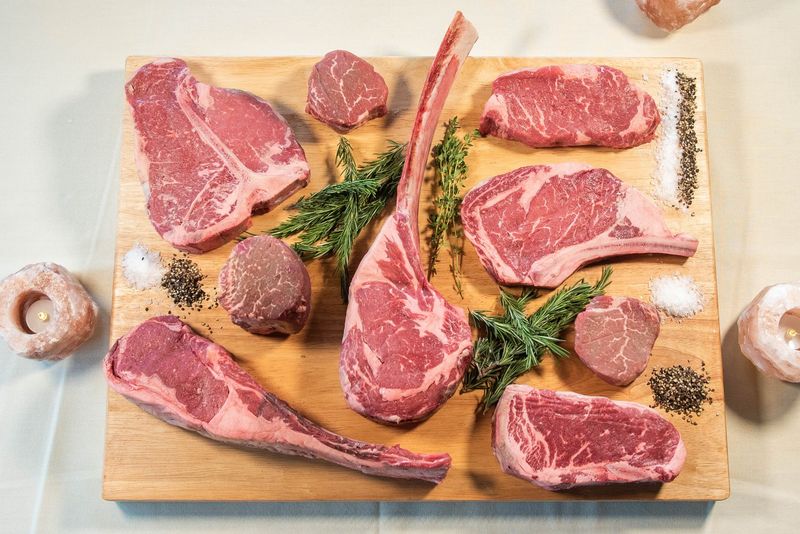
Here is the part people drive for. The menu leans hard into dry-aged beef, with 30-day cuts such as the T-Bone and Kansas City Strip, while the Delmonico and Ribeye are aged 40 days.
The regular Tomahawk for two is aged 30 days, while the Thursday special is aged 40 days.
Dry aging is not a gimmick. Controlled time draws out moisture and concentrates flavor while the meat becomes more tender, which is why an aged ribeye tastes deeper and nuttier than a fresh cut of the same size.
Sourcing is unusually direct for a restaurant this size. The beef comes from a working local cattle ranch connected to the property’s ownership, which shortens the distance between pasture and plate considerably.
Tomahawk Thursdays put a 40-day aged, 40-ounce Tomahawk in the spotlight, a cut clearly meant for sharing rather than solo dining.
Diners consistently praise the aged steaks, and the Porterhouse for two and Delmonico come up often in conversation about the kitchen’s strengths.
One practical note that regulars pass along: be specific about your preferred doneness when ordering, and mention it clearly to your server. On a cut this thick and this expensive, a short conversation up front is worth the effort.
5. The Wood-Fired Hearth Adds To The Atmosphere
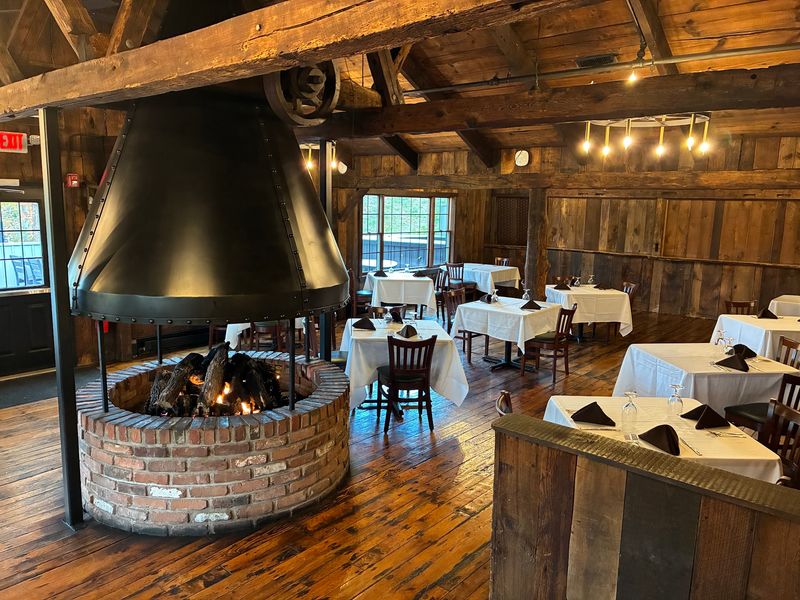
Fire is the anchor of this dining room. A wood-fired hearth serves as both a cooking tool and the visual center of the space, throwing warm light across the wood and stone around it.
The tavern has a working hearth of its own, which stretches that old-world comfort across the property rather than confining it to one room.
Open-fire cooking brings something to meat that a standard flat-top cannot replicate. There is a faint smokiness and a crust that only real wood heat produces, and it pairs naturally with beef that has already spent weeks aging.
Beyond flavor, the practical appeal shows up in winter. Connecticut evenings get sharp, and a table within sight of the flames turns a cold night out into something genuinely restful.
Guests mention the fireplace often, frequently in the same breath as the tavern’s live music, which appears regularly and gives the downstairs area a lively but comfortable feel.
If a fireside seat matters to you, mention it when reserving. Those tables are popular, particularly on weekend evenings and throughout the holiday season, when the aged wood and firelight combination is at its most appealing.
6. Outdoor Tables Look Right Toward The Water
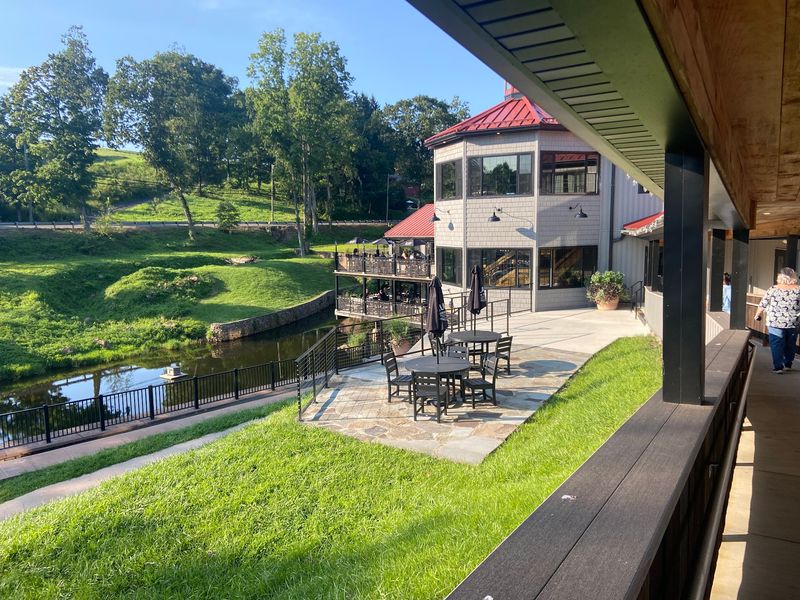
Warm weather changes this restaurant completely. Outdoor tables face the water directly, and the river patio is widely considered the best seat on the property when the season allows it.
Small details make the difference out there. The brook murmurs a few feet away, greenery frames the tables, and the light shifts slowly as the afternoon fades into evening.
Seating spreads across multiple levels, which keeps the area from feeling crowded even when it is busy. Some guests note views of the vineyard across the road as another pleasant surprise.
Timing helps. Friday and Saturday service starts at 11 AM and Sunday at 10:30 AM, so a late lunch or an early dinner outside is easy to arrange without competing for the prime dinner rush.
Parking is plentiful and the property is described as easy to access, which removes a lot of friction from an evening out in a semi-rural area.
Groups do well here too, since the grounds are spacious enough to handle larger tables comfortably. For birthdays or family gatherings, an outdoor table beside the water is a low-effort way to make an ordinary dinner feel like an occasion.
7. Farm-Fresh Ingredients Keep The Menu Seasonal
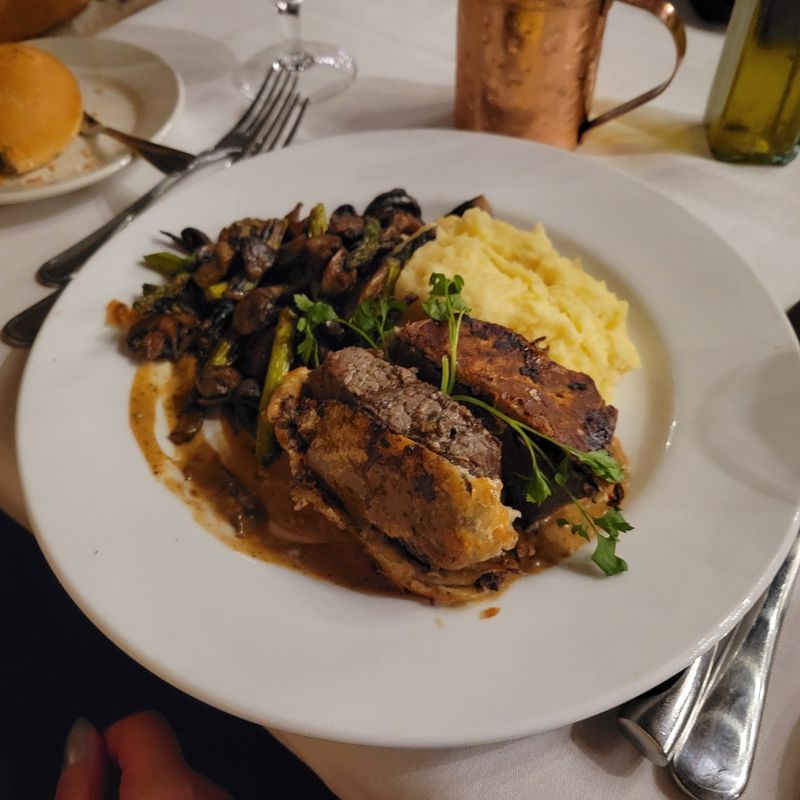
Beef gets the headlines, but the sourcing story runs wider than that. The kitchen builds its menu around farm-fresh, seasonal ingredients, which means dishes shift as the year turns.
Seafood arrives from local day fishermen, produce comes from nearby farms, and the beef travels in from the ranch tied to the property. That short supply chain shows up as brightness on the plate.
Menu range is broad enough to suit a mixed table. Oysters, clam chowder, tuna tartare, calamari, short rib dumplings, lobster tail, lamb, London broil, and pasta dishes all appear among frequently mentioned favorites.
Sides earn their own praise, particularly the garlic mashed potatoes, and the popovers come up regularly in conversations about what to order first.
Desserts hold their ground as well. Current dessert choices include a chocolate chip cookie lava cake and a raspberry lemon drop.
A useful strategy: order one or two appetizers for the table before committing to entrees. Because the menu rotates with the seasons, asking your server what just came in is often the fastest route to the best dish of the night.
8. Centuries Of History Still Show Through
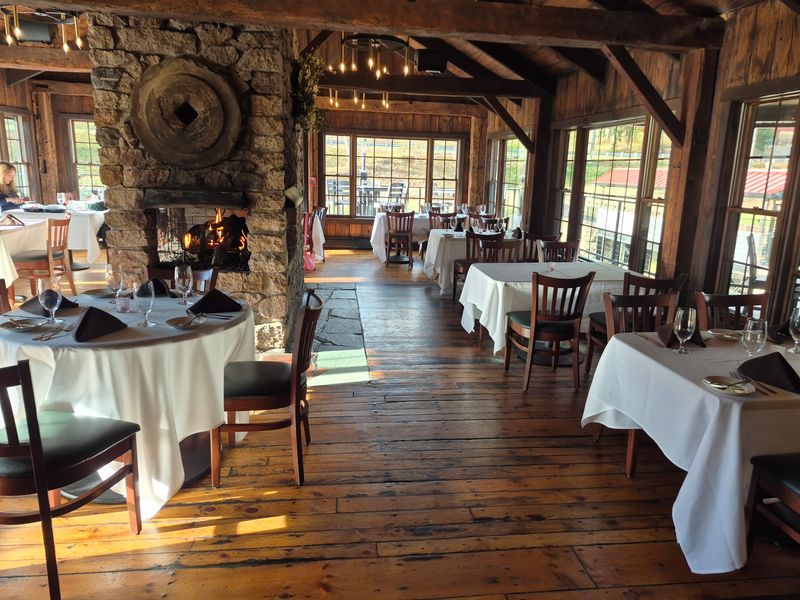
History is part of dinner here. You can practically see it in the beams.
Millpond Gatherings occupies a restored mill whose roots stretch back to the 1700s, and the building still carries that age with confidence.
Original timber adds texture overhead, while the nearby river keeps the property connected to the water power that once drove its early manufacturing work.
The restoration did not try to erase those centuries. Instead, the old structure became a country gathering place where the steakhouse shares the property with a tavern, while separate event areas handle larger celebrations.
The result feels polished without losing the warmth that makes an old mill worth preserving.
Food fits that setting surprisingly well. Dry-aged steaks are a major draw, including a 40-day-aged tomahawk served as a Thursday specialty.
The wood-fired hearth adds another layer of character to the steakhouse experience.
Dinner happens at 1565 Middletown Avenue in Northford, within easy reach of the greater New Haven area. Booking ahead makes sense when weekends or special events fill the property.
Arriving a little early is worthwhile too, because the historic details deserve more than a hurried glance. When centuries-old beams compete with dinner for attention, you know the setting is doing something right.