The Connecticut State Park With More Than 20 Miles Of Bike Trails Riders Love Returning To
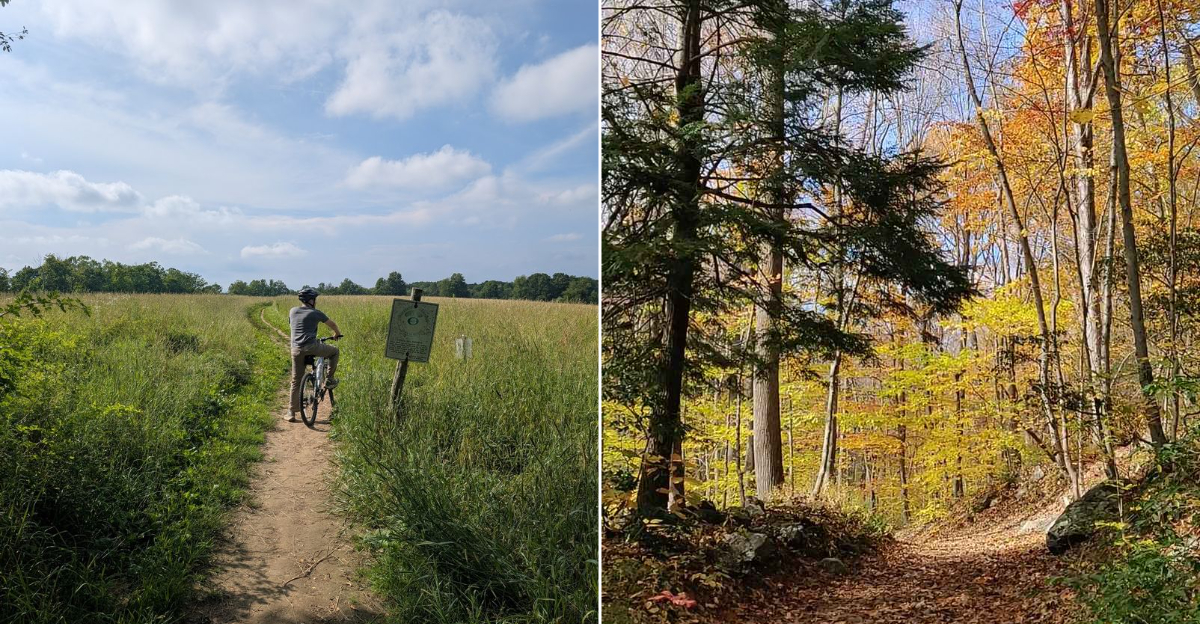
Connecticut gets wonderfully wild at this state park, where more than 20 miles of bike-friendly routes can turn an ordinary ride into a full afternoon adventure.
The terrain keeps changing enough to make every stretch feel fresh. Gravel roads give you room to cruise, while narrower multi-use trails wind through woods and past ponds with a little more attitude.
That mix is exactly why riders keep coming back.
You can settle into an easier pace or chase something more challenging without leaving the park. A few turns later, the scenery shifts again and the next section starts feeling like its own mini expedition.
There is space here for beginners, but experienced riders will not get bored either.
It is the kind of place where “just one more loop” becomes a very believable excuse.
Bring enough energy for the first ride. The park has a sneaky way of convincing you there should be another.
1. Wooded Trails Make This Park A Rider Favorite
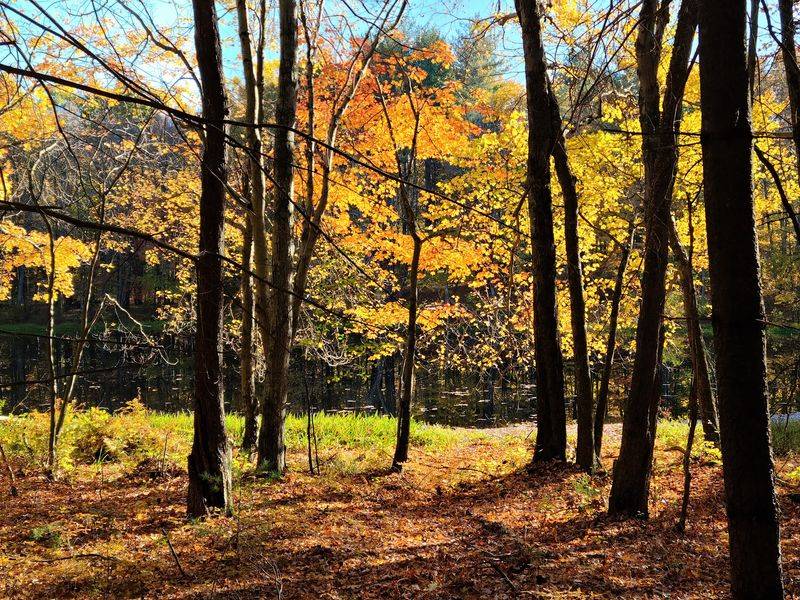
Your “quick ride” may not stay quick here. Nearly 20 miles of connected trails twist through hardwood forest and open clearings, giving riders enough choices to change the experience every time they return.
Newer mountain bikers can ease into the network on broad gravel carriage roads. The surfaces are firmer and the grades remain manageable, making them comfortable places to build confidence.
Riders craving more challenge can branch onto narrow singletrack where roots, rocks, and sharp turns bring classic New England terrain into play.
That range is a big part of the fun. One afternoon might mean relaxed cruising through the woods.
Another can turn into a technical workout that keeps both legs and concentration busy.
With trails splitting in several directions, it is surprisingly easy to ride longer than planned. Having a map downloaded before setting out makes navigation simpler, especially where junctions arrive quickly or trail markings become less obvious.
Snow can change the experience without ending the riding season. Packed routes sometimes create opportunities for fat bikes once winter conditions settle in.
Trail conditions matter throughout the year. After heavy rain, giving softer sections time to dry helps protect the surface.
When conditions cooperate, this network can turn an ordinary hour on two wheels into a much longer adventure.
2. Three Towns Meet Around This 1,017-Acre Escape
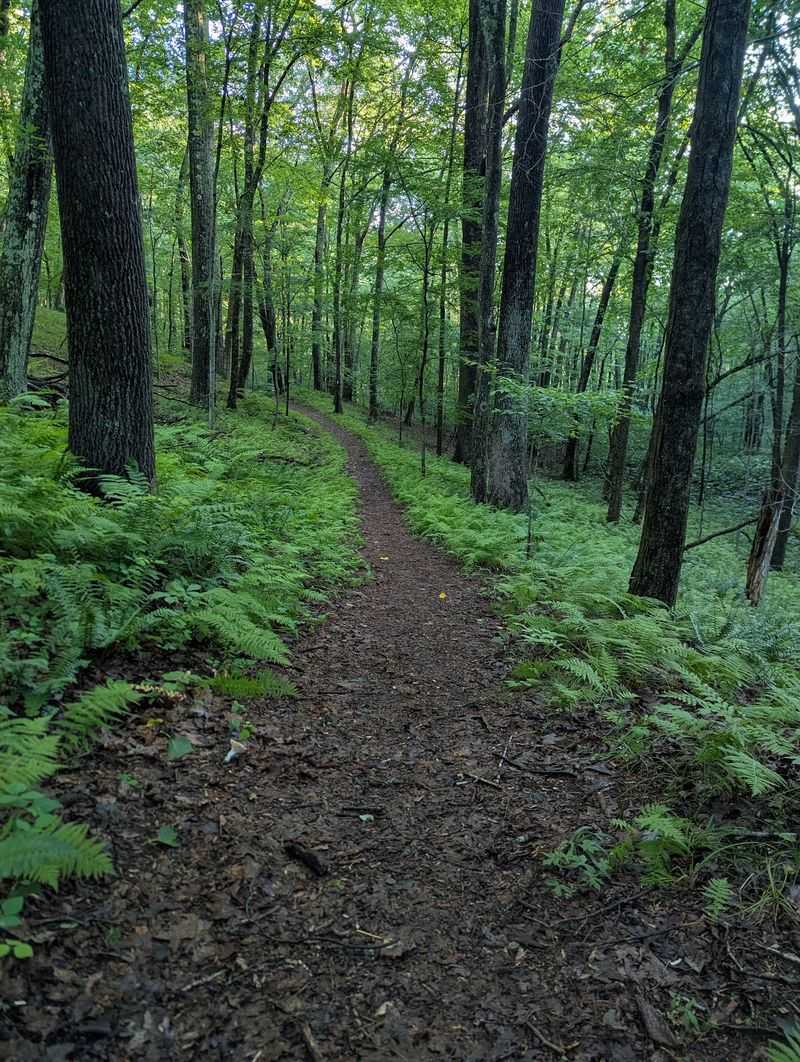
Three towns, one ride. That alone gives this park a sense of scale before the trail even begins.
Its 1,017 acres spread across Redding, Bethel, and Newtown, creating plenty of room for a longer outing without leaving the woods.
Open fields break up stretches of hardwood forest, while ponds and quieter woodland sections keep the scenery changing. The park also contains about ten miles of trails, so riders can connect different routes depending on how much time and energy they have.
Gentler paths make an easy starting point, while other sections bring more elevation and a rougher surface. That variety lets cyclists build a relaxed loop or keep adding mileage when the ride is going well.
Early mornings can feel especially inviting during warmer months, when temperatures are cooler and the trails have a calmer atmosphere. Dogs are welcome too, provided they remain on a leash.
Daily hours run from 8 a.m. until sunset, and admission is free. The main park address is 9 Dodgingtown Road, Redding, CT 06896.
From there, riders can head into a trail system that reaches well beyond one town boundary. With enough acreage to keep changing the view, a planned short ride can easily become the longer adventure you secretly hoped for.
3. Bear And Wolf Sculptures Greet Visitors At The Entrance
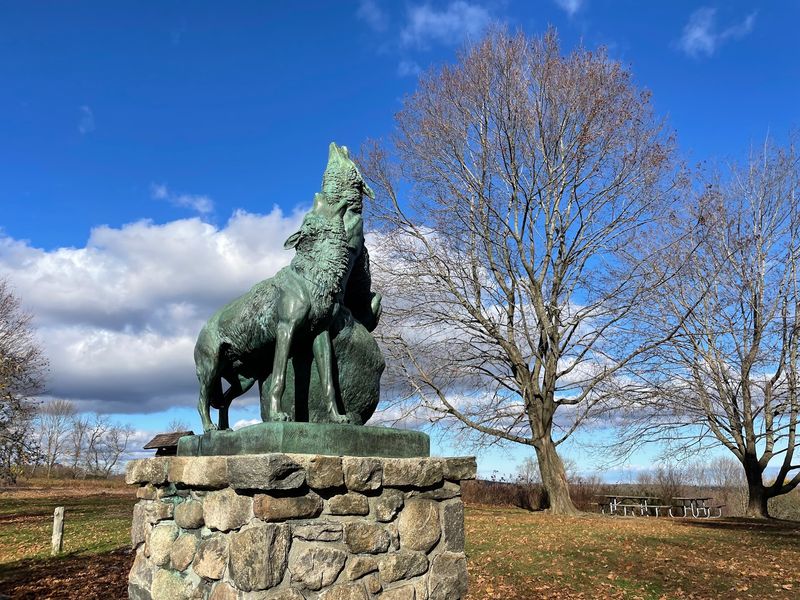
Most trailheads offer a wooden sign and a kiosk. This one offers wildlife cast in bronze.
At the main entrance, life-like bears perch atop stone pillars while wolves stand nearby, all created in 1955 by the internationally known sculptor whose family once owned this land. The animals are strikingly realistic, right down to the tension in their muscles and the tilt of their heads.
For riders, the sculptures double as the unofficial meeting point. It is the easiest landmark to describe when arranging to meet friends, and the natural spot to pause and adjust a helmet strap before rolling into the woods.
Photographers linger here too. Late afternoon light catches the bronze surfaces beautifully, and autumn foliage behind the figures makes for a memorable shot.
Kids especially love them. Families often stop for a few minutes of admiring and pointing before continuing on foot down the wide gravel path.
The artwork also quietly signals something about the park itself. Long before the trails existed, this was a private estate where art and nature shared the same ground, and those bronze animals remain the clearest reminder of that unusual heritage sitting right at the gate.
4. Multi-Use Trails Wind Through Woods And Open Fields
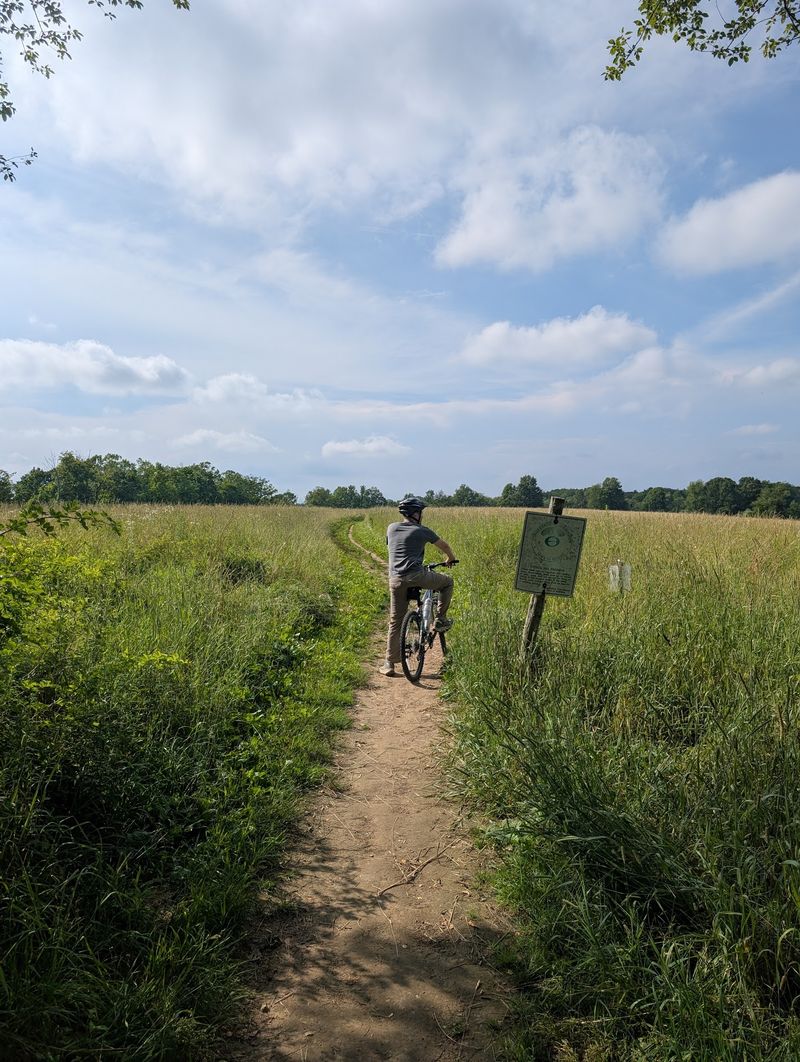
Sharing is built into the design here. Hikers, horseback riders, trail runners, and cyclists all use the same network, and the wide carriage roads make that arrangement work smoothly.
The scenery shifts constantly. One moment you are pedaling through a shaded corridor of trees, and the next the canopy opens into a broad field where the sky feels enormous and the grass moves in the wind.
Riders regularly single out that meadow crossing as a highlight of the whole park. It is the kind of stretch where you stop pedaling hard and just coast for a moment.
Trail surfaces range from smooth packed gravel to rockier doubletrack and rooty singletrack, with short climbs and quick descents mixed in. Nothing here is relentlessly steep, but there is enough variation to keep the ride interesting for miles.
Etiquette matters on shared paths. Slow down when approaching horses, call out well before passing walkers, and expect families with strollers near the main entrances.
Practical tip: bring more water than you think you need. There are no concessions in the park, and a casual outing can easily stretch into two hours once the trail junctions start tempting you.
5. Lake Hopewell Adds Water Views Along The Way
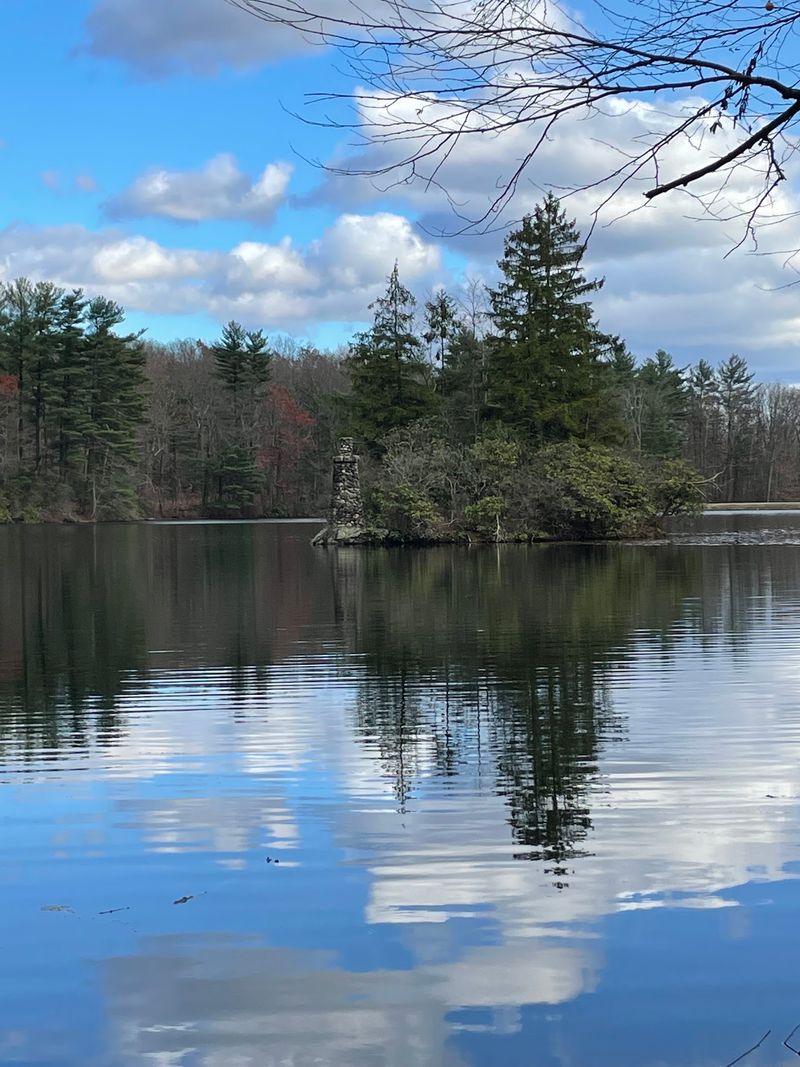
Round a bend, and suddenly the trees give way to water. Lake Hopewell covers about 15 acres and sits near the heart of the park, and trails running along its shoreline give riders a natural place to stop and catch their breath.
The best surprise is the miniature stone lighthouse standing on a small island in the lake. It is a leftover from the property’s private estate days, and spotting it for the first time is genuinely delightful.
Water changes the mood of a ride. The air feels cooler near the shore, the light bounces differently, and the sounds of the forest give way to the soft lapping at the bank.
Anglers work the shoreline in warmer months, and paddlers bring kayaks to enjoy the quiet surface. Some visitors simply spread out near the water and stay a while.
Swimming is not part of the picture here, so plan on views rather than a dip.
For photographers, early morning tends to deliver mirror-like reflections and mist drifting over the surface. It is worth setting an alarm and arriving close to the 8:00 a.m. opening to catch it.
6. Five Ponds Break Up The Forest Scenery
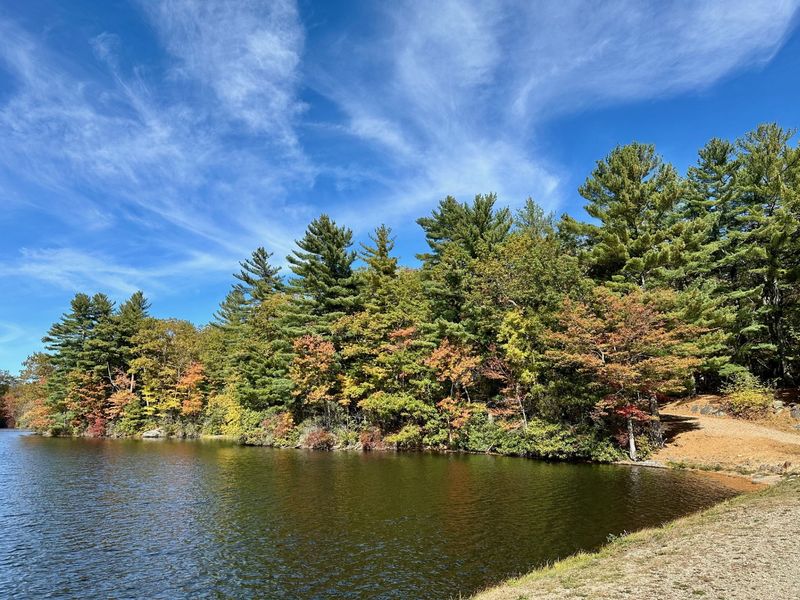
Water shows up again and again on these trails. Beyond the lake, five ponds are scattered through the park, along with a lagoon, and each one interrupts the forest with a bright open surface.
Their origins go back to the late 1800s, when the land was a private estate and the ponds were created rather than formed naturally. Over the decades they have settled comfortably into the landscape.
Trails loop near several of them, which makes route planning fun. You can design a ride that hits water views every fifteen minutes or so, and the changing scenery keeps the miles from blurring together.
Wildlife watching improves near the shorelines. Herons, turtles sunning on logs, frogs announcing themselves from the reeds, and dragonflies skimming the surface all reward a quiet pause.
Small brooks and modest cascades connect parts of the system, and visitors often mention stumbling across little waterfalls without expecting them.
One practical note for warm months: standing water means insects, so bug spray earns its place in your pack. Ticks are also present in the region, so a quick check of yourself and your dog after the ride is a smart habit.
7. Old Ruins Hide Along Several Trail Routes
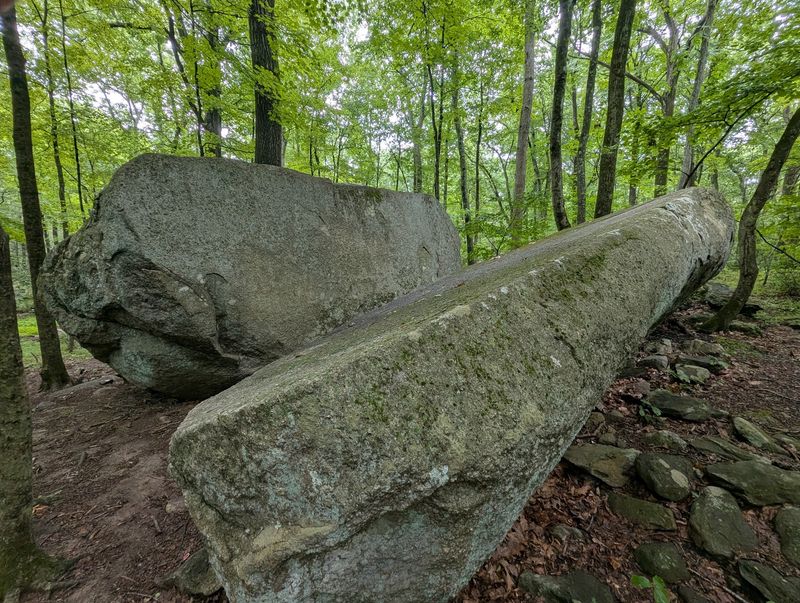
Half the fun of riding here is what you find when you are not looking for anything. Old stone foundations sit quietly in the woods along several routes, softened by moss and half-buried in leaf litter.
Reports also point to remnants of mica mines within the park, small openings in the rock that hint at how differently this land was once used. Between the farming era and the grand private estate years, plenty of human activity left marks here.
Coming across a low stone wall running off into the trees is a strange feeling. The forest looks so complete that it takes a moment to register that someone once lived, worked, or built something on that exact spot.
Riders who have explored the park for years talk about still discovering pockets they had never seen before, which says a lot about the size of the trail network.
Approach any ruins with care. Stones can be loose, footing near foundations is uneven, and old mine openings deserve respect rather than curiosity from close range.
Leaving everything exactly as you found it keeps these quiet reminders of the past intact for the next person who pedals past.
8. The Huntington Family Helped Preserve This Land
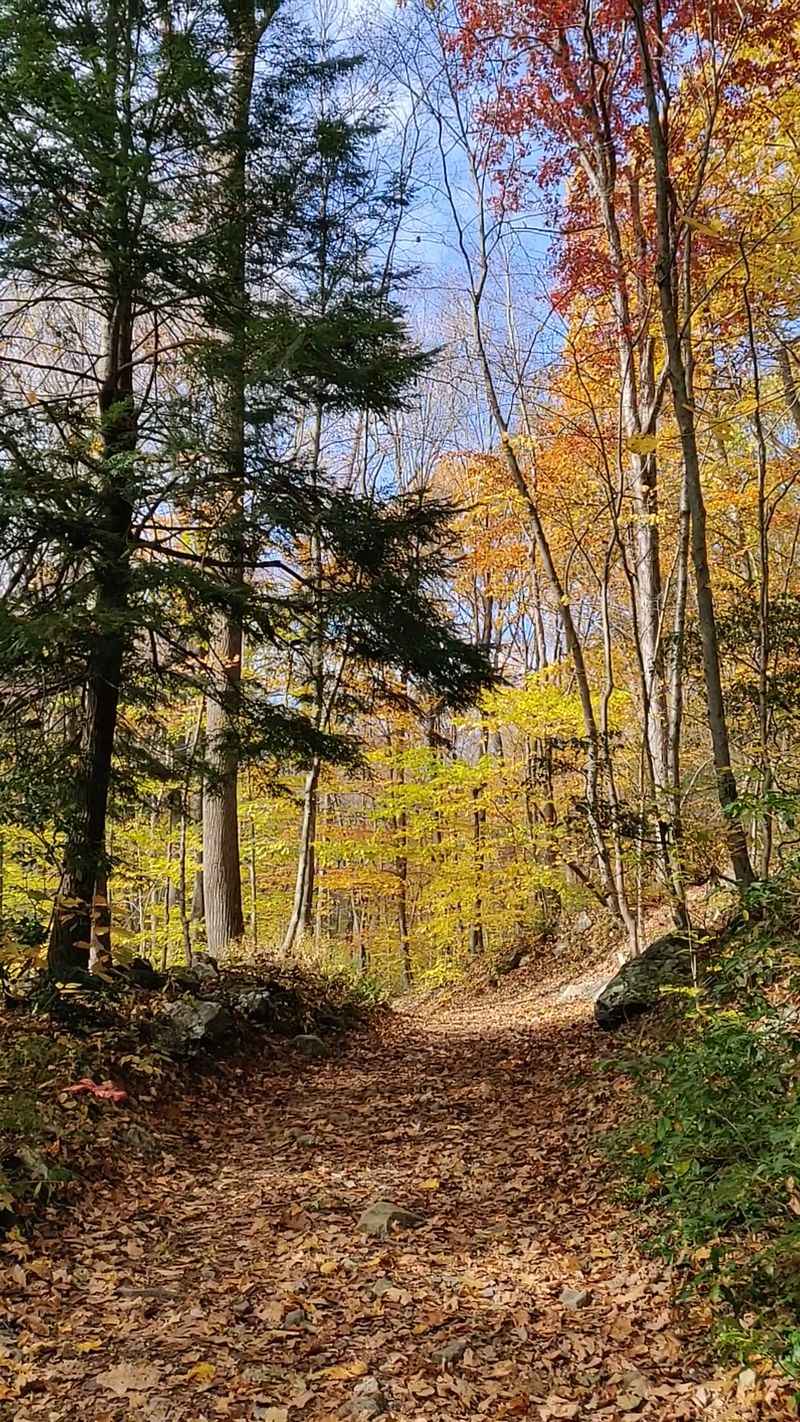
Public access to all this acreage was not an accident. During the 1930s, a poet and scholar acquired the land, and he and his wife, a celebrated sculptor, made it their home under the name Stanerigg.
They eventually willed the property to the State of Connecticut, which is why nearly 20 miles of trails exist for anyone to use today. The park opened to the public in 1973.
The name honors the previous generation. Collis Potter Huntington was a major figure in the late 19th-century railroad industry, and the park carries his name at his son’s wish.
Knowing that backstory changes how the place reads. The wide carriage roads that riders love were built for a working estate, and the ponds were shaped by owners who wanted a beautiful landscape rather than a trail system.
The bronze animals at the entrance connect directly to that history, since the sculptor who made them lived on this very land.
Visitors frequently describe the park as one of the finest in the state, praising its peaceful atmosphere and the sheer variety packed into one property. Riding here is enjoyable on its own, and the history quietly makes it richer.