10 Churches In Connecticut With Architecture That Feels Straight Out Of Europe
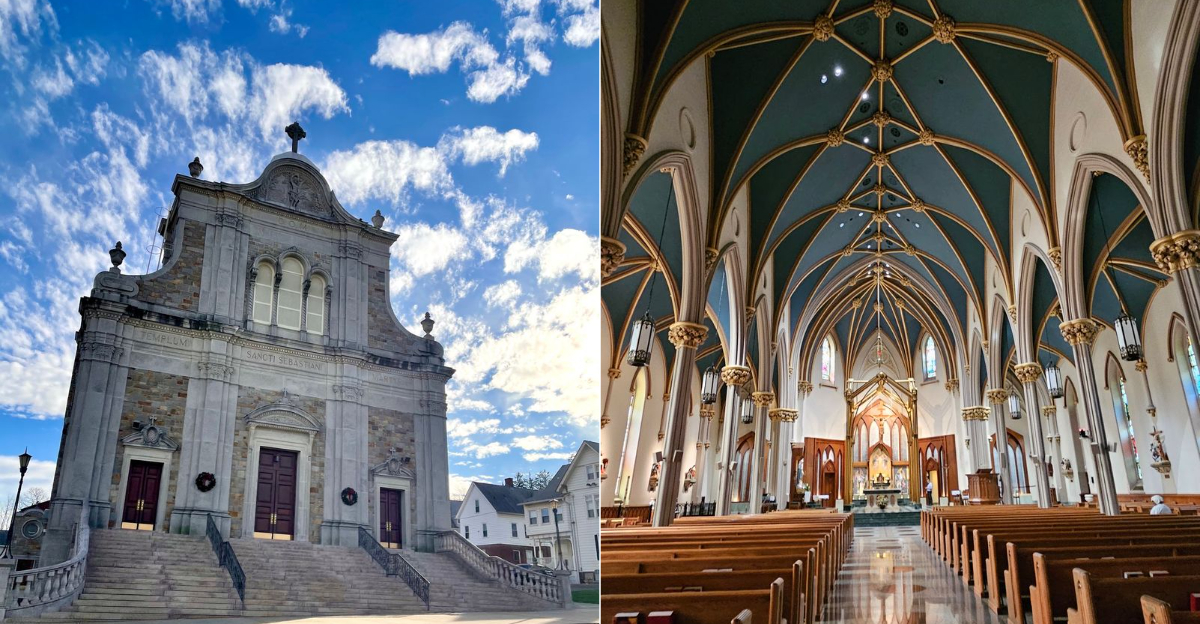
Some churches make you check the map twice because the architecture feels far removed from an ordinary New England streetscape.
Stone towers rise above rooftops, stained glass throws color across quiet interiors, and carved details reward anyone willing to slow down for a closer look.
Across Connecticut, several churches carry architectural influences that feel unmistakably European without losing their own local history. That contrast gives them a special kind of presence.
Gothic arches can make a city block feel centuries older, while grand interiors bring the sort of atmosphere usually associated with a long-awaited trip overseas. You do not need to know architectural terminology to appreciate the effect.
Sometimes the ceiling alone is enough to stop you mid-step. These buildings are still active places of worship, but their craftsmanship also makes them fascinating destinations for people who simply love beautiful spaces.
For an afternoon, Europe can feel surprisingly close to home.
1. Cathedral Of Saint Joseph, Hartford
Disaster forced a dramatic rethink. The result was anything but ordinary.
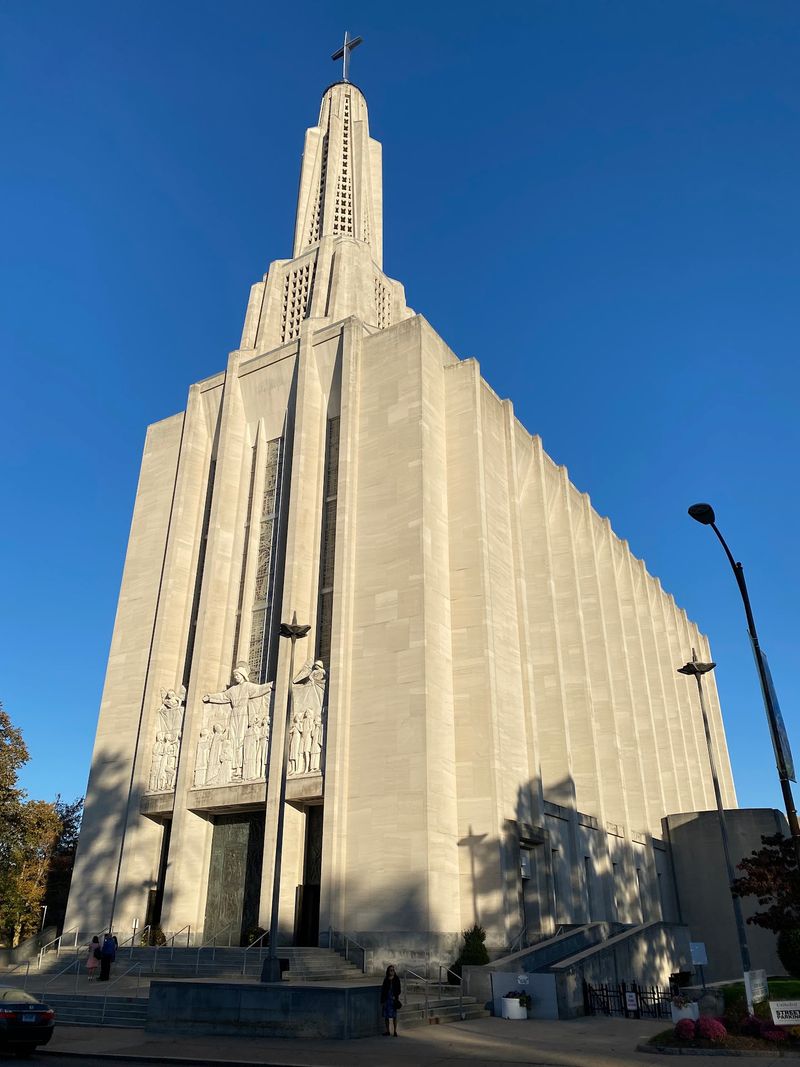
After the original Gothic Revival cathedral burned on December 31, 1956, its replacement took a strikingly modern approach.
Dedicated on May 15, 1962, the new building kept the soaring vertical feel of European churches while trading traditional Gothic stonework for reinforced concrete faced in pale limestone.
New York architects Eggers & Higgins designed the cathedral, which rises 281 feet above the sidewalk. Its tower is pierced with patterned openings, allowing sunlight and shadow to constantly change the look of the stone.
Twelve carillon bells, cast in Holland, hang above.
The scale becomes even more impressive at the entrance. Massive bronze doors weigh about five and a half tons, with biblical scenes worked across their surfaces.
Above them, a monumental image of Saint Joseph stretches across the façade and immediately commands attention from outside.
Inside, French-designed stained glass brings a strong Sainte-Chapelle influence. The towering panels are set directly into concrete rather than traditional lead.
Behind the altar, the enormous Christ in Glory artwork adds another dramatic focal point.
An etched glass wall by Hungarian artist János Hajnal separates the narthex from the nave. The mother church of the Archdiocese of Hartford stands at 140 Farmington Avenue, just beyond downtown.
2. St. Michael’s Church, Litchfield
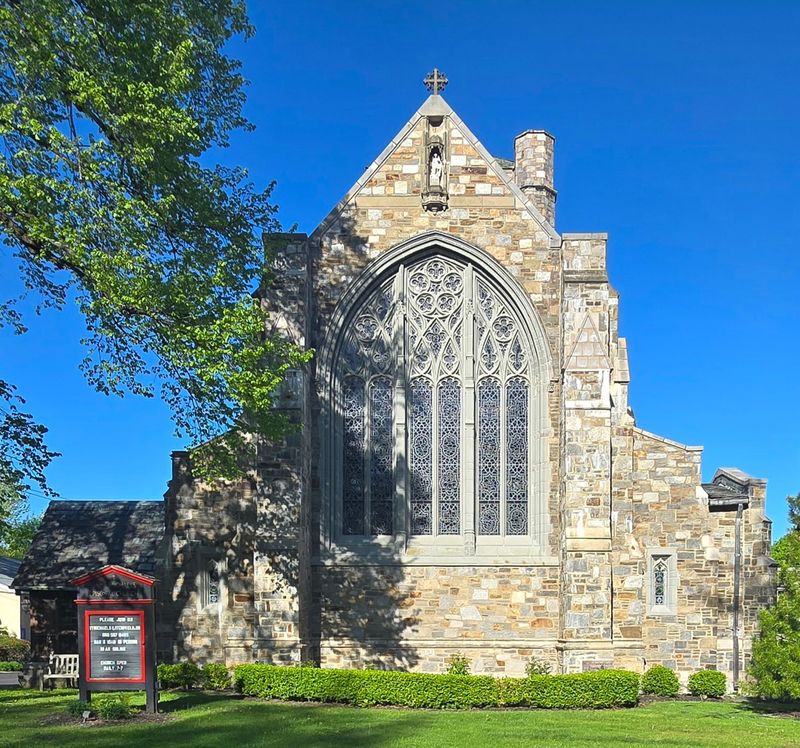
England feels surprisingly close here. The details make that connection hard to miss.
The current church was consecrated on July 13, 1921, becoming the fourth home of a parish founded in 1745. Henry R.
Towne gave the building in memory of his wife, Cora White Towne, and architects Rossiter and Mueller chose the English Decorated style for its design.
Roxbury granite covers the cruciform exterior, giving the building a solid medieval character. Inside, English oak carving adds even more history.
Irving and Casson Company created the choir stalls and reredos, while other finely worked pieces continue through the sanctuary.
Even the floor looks across the Atlantic for inspiration. Tiles in the nave reproduce patterns from a fifteenth-century English priory and were made by Moravian Pottery and Tile Works.
The altar, meanwhile, is fashioned from Sienna marble.
Color takes over higher up. A medallion window by Reynolds, Francis & Rohnstock recalls the deep blue glass of Chartres, while a later window came directly from Gabriel Loire in Chartres.
The church stands at 25 South Street in Litchfield. A stone fragment from England’s Lichfield Cathedral also rests inside.
It was presented to the parish in 1906, adding one more genuine English connection.
3. St. Peter Church, Danbury
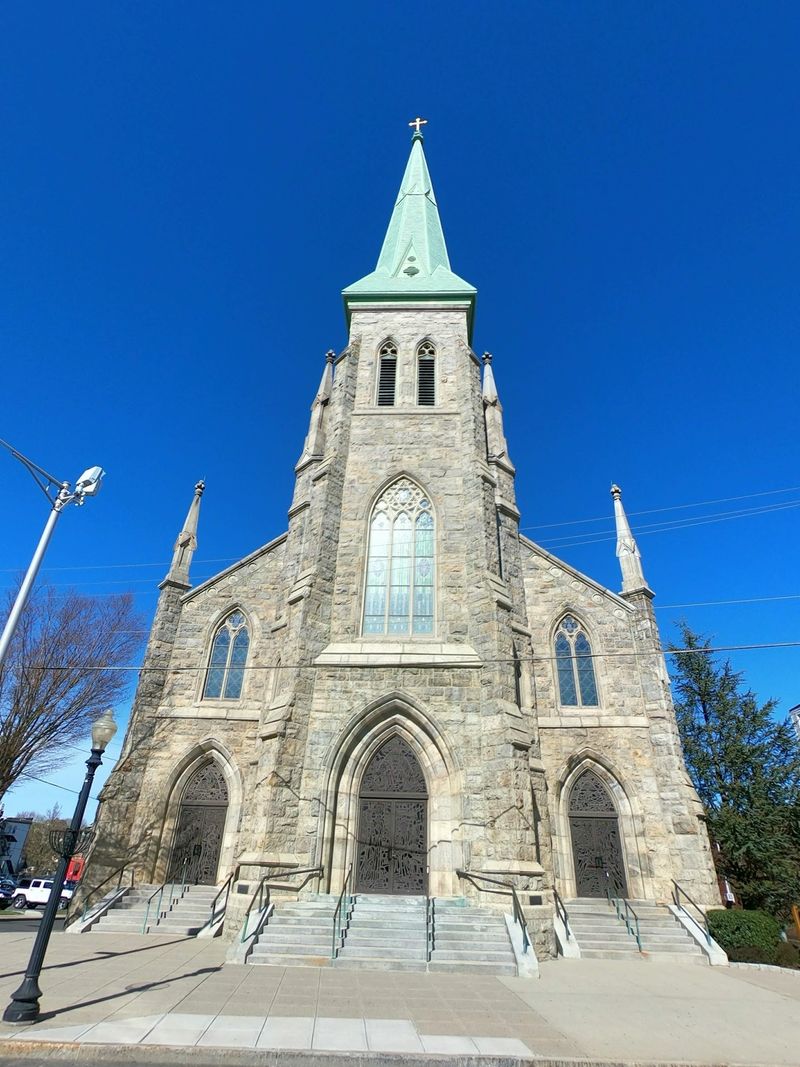
That 190-foot spire has been a Danbury landmark since 1889, when it was dedicated and topped with a gold-leafed cross. Drivers still use it to orient themselves on Main Street.
Construction ran from 1869 to 1875 under Father Philip Sheridan, with the cornerstone laid on August 28, 1870 and the dedication following in January 1876. Granite for the walls came from a quarry on nearby Brushy Hill, which gives the exterior a rooted, local weight.
The design came from the firm of Keely and Murphy. Patrick Charles Keely, born in County Tipperary, Ireland, became the leading designer of Catholic churches in nineteenth-century America and did more than anyone to make Gothic Revival the default look for them.
Three entrances sit inside polychrome Gothic porches, each crowned by stained glass in a pointed arch.
The windows are the strongest European link: they were made in Munich, Germany, supplied through the Royal Bavarian Art Institute and the F. X. Zettler Company, and are believed to have been installed between 1874 and 1890.
As the first Catholic church built in northern Fairfield County, it anchored a whole region’s community. The 1870 church at 104 Main Street contributes to Danbury’s Main Street Historic District on the National Register.
4. St. Mary Church, Stamford
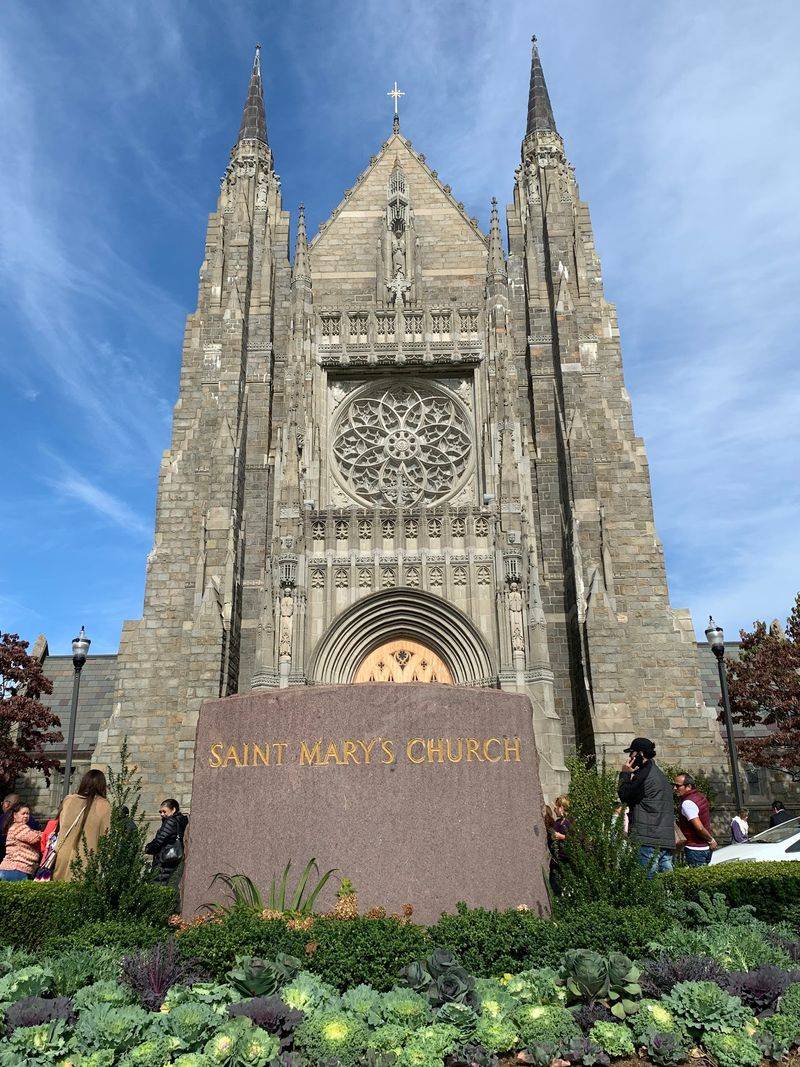
That rose window steals the show. It immediately gives the façade a distinctly French character.
The parish began in 1907, and the present church followed in 1928. Boston architects O’Connell & Shaw designed the building in the Gothic Revival style, drawing strongly from French Gothic traditions.
Its steep lines and prominent front gable give the exterior a sense of height before you even reach the doors.
Inside, the design becomes quieter. Traditional details guide the eye toward the sanctuary, while the architecture keeps the focus upward without feeling overly ornate.
That restraint is part of what makes the space so memorable.
The church complex earned a place on the National Register of Historic Places in 1987, recognizing its architectural importance and its connection to Stamford’s neighborhood history.
Its community has continued to change with the city. In 2020, Saint Mary and Saint Benedict–Our Lady of Montserrat were united as one parish, preserving long-standing Slovak-American roots while serving a growing Central American community.
The church stands at 566 Elm Street, close enough to downtown to work naturally into a day of exploring Stamford. Look up before heading inside, because that rose window is still the detail that gives the building its unmistakable identity.
5. St. Augustine Cathedral, Bridgeport
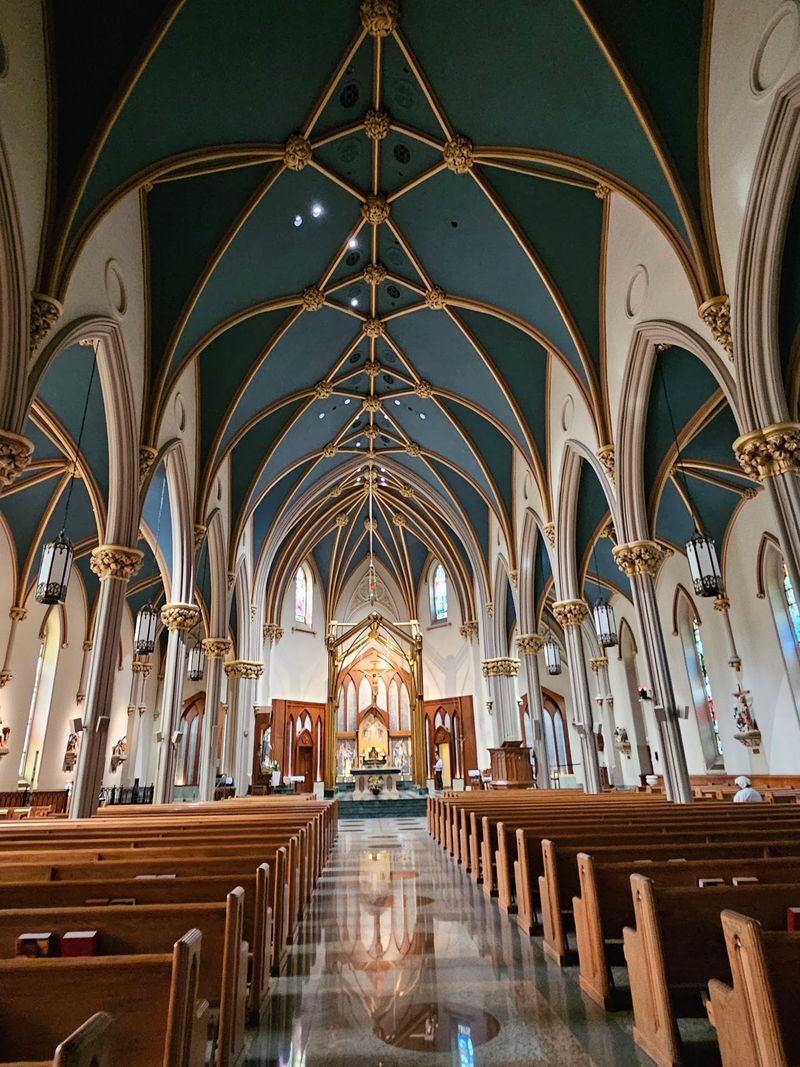
Hilltop placement does a lot of work for this cathedral. Rising from Golden Hill, its stone tower and spire can be spotted from miles off, which is exactly what nineteenth-century builders had in mind.
The parish began as St. Augustine Church in 1842. The cornerstone of the present building was laid on August 28, 1865, the finished church was dedicated on St. Patrick’s Day in 1868, it was consecrated in 1869, and the tower and spire were completed in 1894.
Patrick C. Keely, the same prolific architect behind Danbury’s St. Peter, drew the plans, so the two churches share a family resemblance in their Gothic Revival lines and confident verticals.
It became a cathedral in 1953 when the Diocese of Bridgeport was created, and it remains the diocese’s seat at 399 Washington Avenue.
A roughly $4 million renovation in 2003 and 2004 raised seating capacity to 750 and brought new marble tiles, repainted ceilings, and a new altar, blending historic character with a more current take on Gothic detailing.
Music lovers should note the organ. Originally a 1979 M. P. Moller instrument, it was rebuilt and expanded to 42 ranks in 2014 by the A. Thompson-Allen Organ Company, serving both liturgy and classical repertoire.
6. Christ Church, New Haven
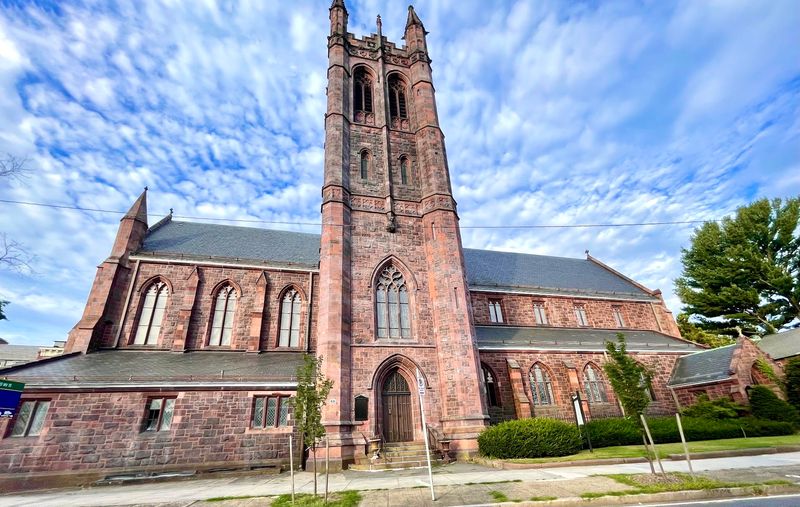
Right in the busy Broadway shopping area near Yale, a heavy stone tower interrupts the storefronts and shifts the mood completely.
Christ Church is an Episcopal parish known for its English Gothic Revival architecture and for a strongly traditional Anglo-Catholic style of worship, including incense and chant.
The combination of look and liturgy is a big part of why visitors describe the experience as feeling transplanted from Britain.
The exterior sticks to sober, dark stone and pointed arches rather than ornament for its own sake, so the drama waits inside, where the nave draws your eye toward the altar and the light filters down rather than pours in.
Because the church sits at 84 Broadway, it fits neatly into a day spent around the Yale campus. You can pair a visit with the university’s museums and green, all within an easy walk, and there is no need for a car once you are in the neighborhood.
Practical tip: parking downtown is metered and limited, so arriving on foot or by bus saves hassle.
Service times and open hours vary through the year, and the building is an active parish rather than a museum, so a quieter weekday visit tends to be the most respectful way to see it.
7. Basilica Of The Immaculate Conception, Waterbury
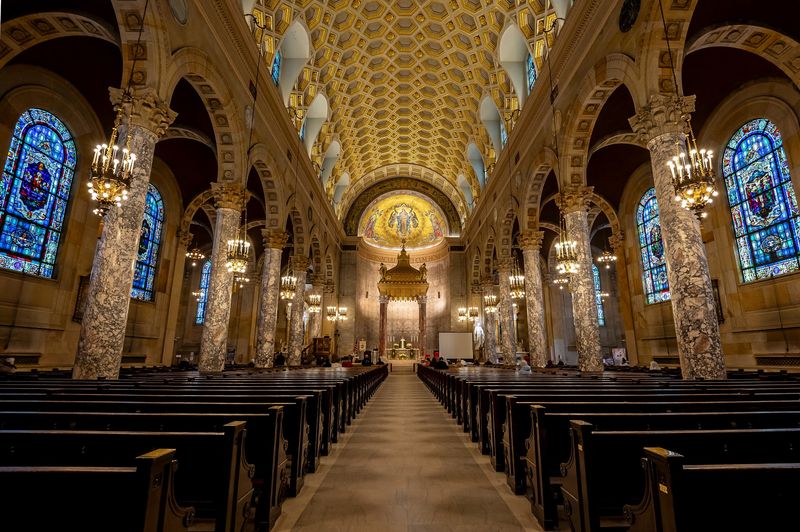
Waterbury’s Green has a proper landmark anchoring it. The Basilica of the Immaculate Conception, at 74 West Main Street, faces the heart of downtown with the kind of monumental stone front that European city churches usually get.
Twin towers and a broad, symmetrical facade give the building a formal, almost civic presence, and its scale reflects the size and confidence of the Catholic community that built it in a booming brass-manufacturing city.
The title of minor basilica is not handed out casually. It is granted by the Vatican and marks a church of special significance, which puts this Waterbury parish in the same category as some famous churches abroad.
Inside, the long nave, columns, and classical detailing create a sense of order and hush that contrasts sharply with the traffic outside the doors.
For anyone planning a stop, the location is a real advantage. The Green, city hall area, and nearby streets are all walkable, and the church makes an easy first or last stop on a downtown Waterbury stroll.
Because it remains an active parish, hours are tied to Mass and parish schedules rather than tourist timetables, so checking ahead by phone is the surest way to see the interior.
8. St. Sebastian Church, Middletown
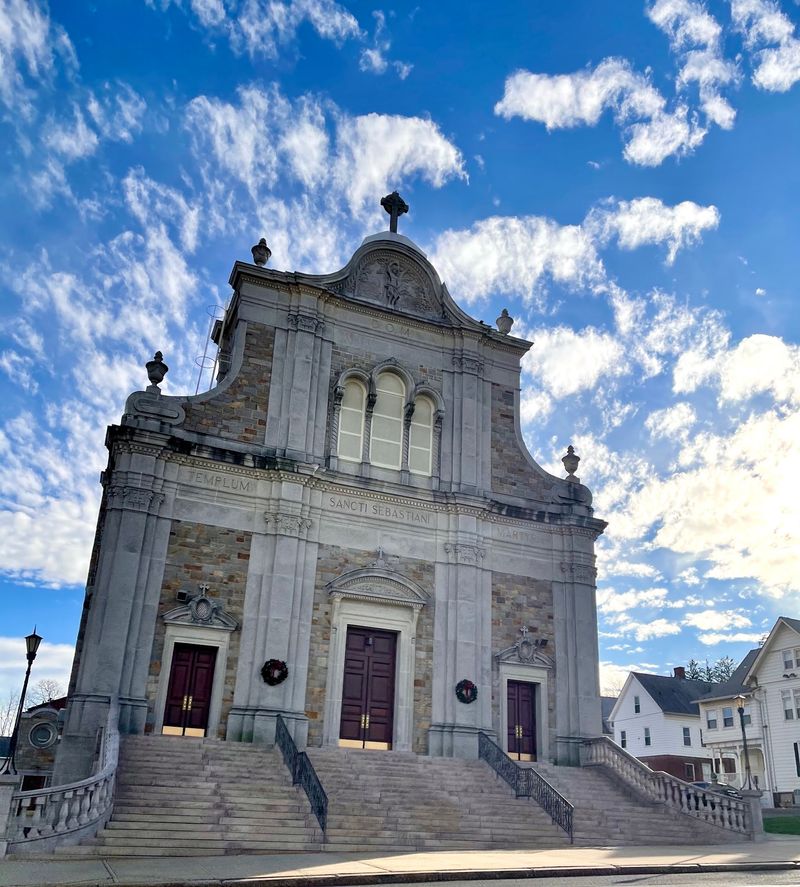
Look twice. The view feels almost Sicilian, with a façade built to echo Melilli in style and spirit.
Built by the city’s Italian community during the Great Depression, the 1931 church was designed by architect Raymond Gorrani.
Its Italian Renaissance appearance closely follows the Basilica of Saint Sebastian in Melilli, the Sicilian town that sent many immigrants to Middletown in the early twentieth century.
That connection becomes especially vivid each May, when the annual Saint Sebastian Feast brings the neighborhood to life with traditions carried across the Atlantic. The procession remains one of the clearest reminders of how deeply Melilli still shapes the parish’s identity.
The church stands at 155 Washington Street, within easy reach of downtown and Wesleyan University.
On quieter days, the building itself gets more attention, from the Carrara marble in the sanctuary to the murals overhead, creating a richer interior than the restrained exterior might initially suggest outside.
Local tradespeople also helped build the church, contributing their labor during a difficult economic period and making the structure a true community effort.
The first Mass was celebrated here in December 1931, giving this striking landmark nearly a century of history and an unusually direct connection to Sicily.
9. Cathedral Of Saint Patrick, Norwich
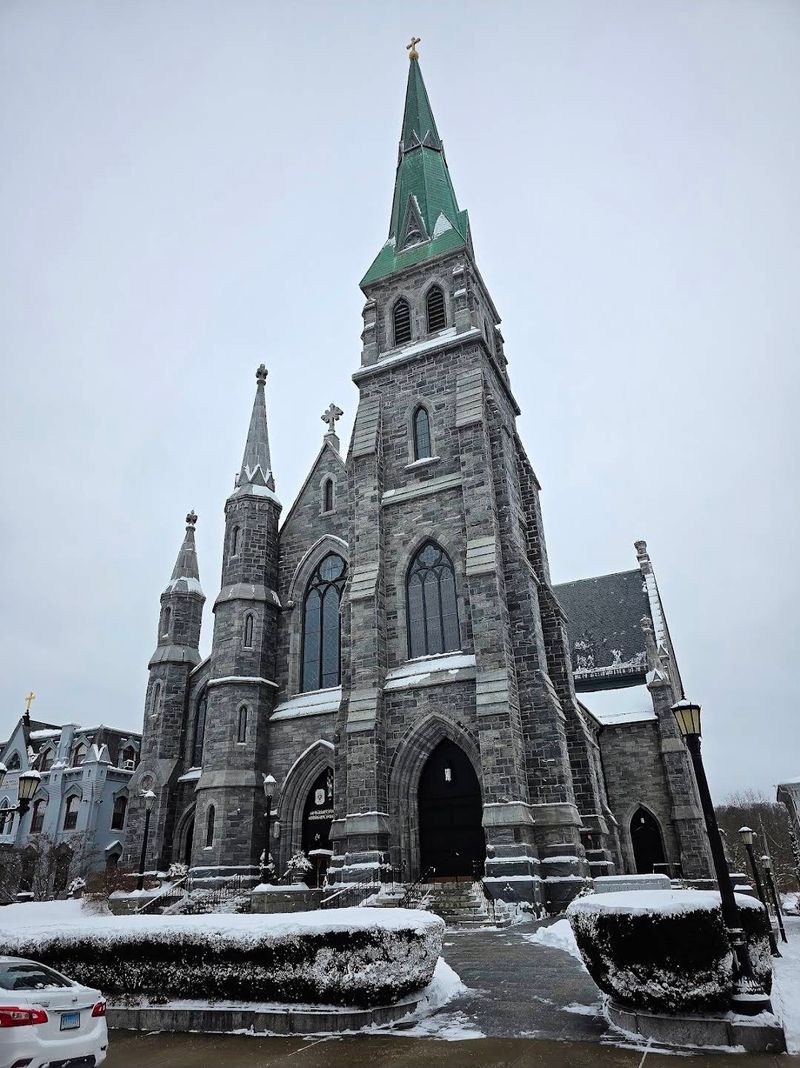
Norwich rewards anyone willing to look up, and the spire of St. Patrick Cathedral is one of the best reasons to do it.
Serving as the seat of the Diocese of Norwich, the church anchors the eastern corner of Connecticut in the same way Hartford and Bridgeport do their regions.
Its Gothic Revival design uses pointed arches, buttresses, and a strong vertical tower to create the classic silhouette associated with nineteenth-century Irish-American parishes.
Stone gives the building much of its character, weathering into soft, uneven tones that photograph beautifully in late afternoon light.
Set at 211 Broadway, it stands among the older streets of a city famous for Victorian houses, so the walk to and from the cathedral is part of the appeal. Norwich’s hilly layout means comfortable shoes help.
Inside, tall windows lift the eye toward the ceiling and keep the space bright even on gray days, and the arrangement is straightforward enough that visitors quickly feel oriented rather than lost.
A cathedral is a working center of diocesan life, hosting ordinations and large liturgies, so schedules shift around major events. Calling the parish office before making a special trip is the practical move if you hope to see the interior.
10. St. Mary Star Of The Sea Church, New London
The harbor is never far away. Neither is the history.
This Gothic Revival church grew from a Catholic community that began serving Irish workers in New London during the 1840s. Construction on the present building began in 1866 under architect Patrick Keely, one of the nineteenth century’s best-known church designers.
Pointed arches give the exterior a Gothic character, while the stonework keeps the building imposing without feeling ornate. The tower came later, added in 1911, and gave the church the skyline presence it has today.
Its name also feels especially fitting in a city shaped by the sea. St. Mary Star of the Sea became the parish name in 1874, tying the church’s identity even more closely to New London’s maritime setting.
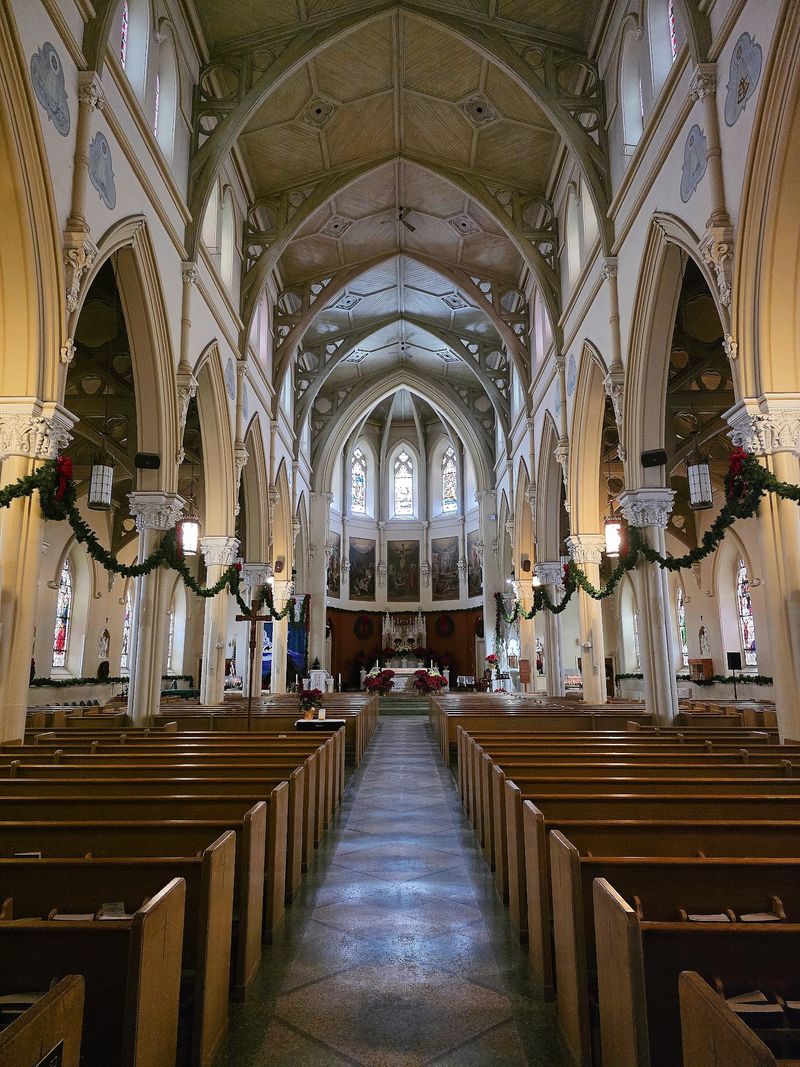
Inside, stained glass brings color into the stone interior and softens the mood. It remains an active Catholic church, so visits are best made respectfully around services and parish events.
The church stands at 10 Huntington Street, within an easy walk of downtown and the waterfront. That makes it simple to pair the architecture with a stroll through New London’s historic center.
More than a century later, the church still feels completely at home in this port city.