This 3-Hour North Carolina Train Ride Takes You Past Rivers, Smaller Communities And Major Cities
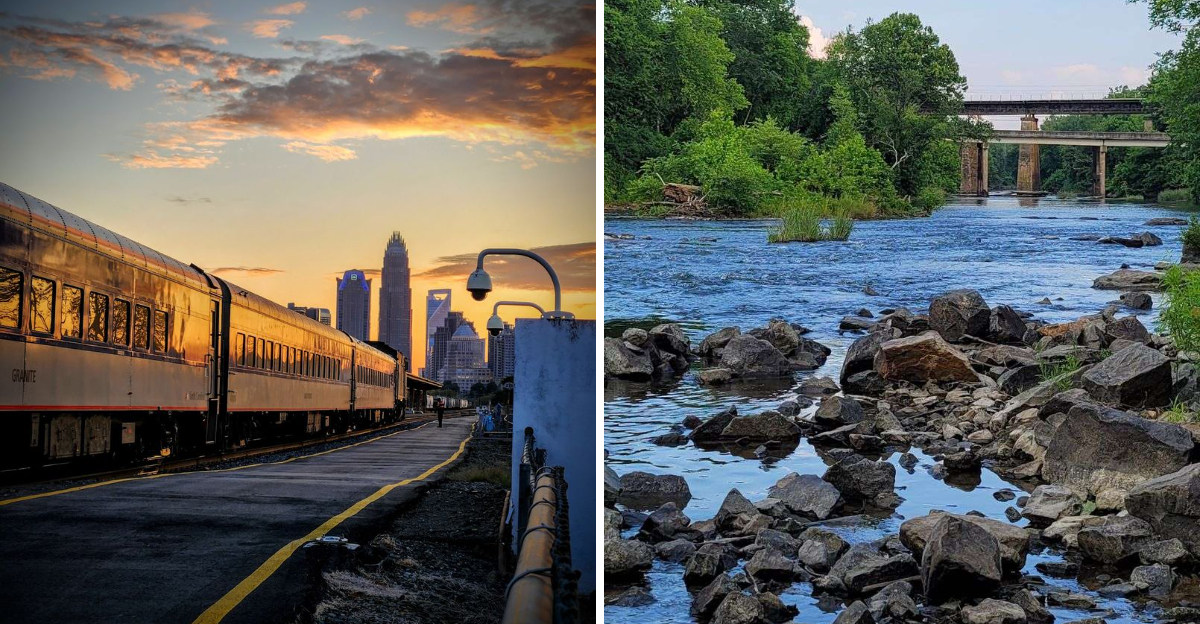
I do not need much convincing to board a train.
Tell me it runs 172 miles across North Carolina and I am already checking the departure board like this is a major life event.
The Piedmont rolls from Charlotte to Raleigh in roughly three hours, which means the scenery gets to do the driving while I sit there feeling extremely pleased with myself. Towns slide past the windows.
Trees blur together. Then the train crosses the Yadkin River and suddenly staring outside feels like a perfectly respectable hobby.
A same-day round trip means about six hours on the rails before sightseeing gets added, which sounds excessive only to people who do not understand trains properly.
I understand trains properly.
There are several departures each day, although schedules are temporarily shifting through October 8, 2026, so checking the exact train before booking matters.
Honestly, highways have had enough attention.
Sometimes the best North Carolina road trip does not involve a road at all.
The Journey Trades Charlotte’s Skyline For Smaller Piedmont Communities
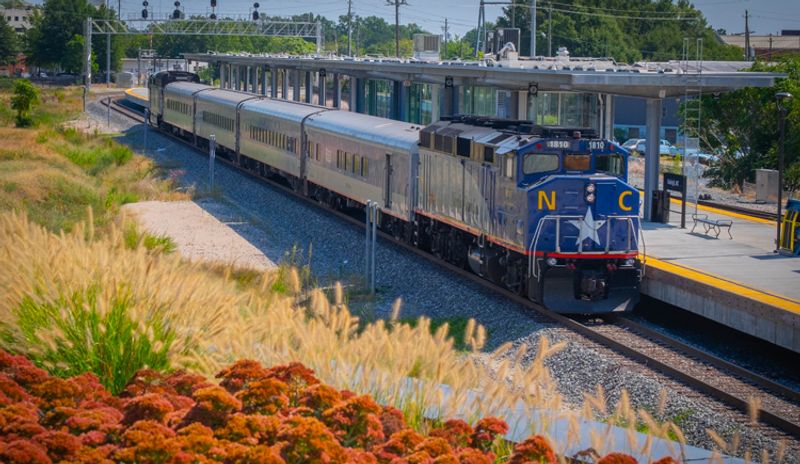
The trip begins at the Amtrak Charlotte Station, a 24-hour facility at 1914 N. Tryon Street rather than at a downtown Union Station.
Paid parking is available beside the station, and the current timetable gives Charlotte multiple northbound Piedmont departures each day in addition to the Carolinian.
Once aboard, the train follows the long-established rail corridor northeast toward Cabarrus County, gradually replacing the dense Charlotte landscape with smaller communities and more open stretches between them.
Kannapolis is normally the first scheduled Piedmont stop, only about 25 minutes beyond Charlotte on Train 72, followed shortly by Salisbury. The contrast arrives quickly enough that the ride never feels like spending hours escaping one metropolitan area before the scenery changes.
Industrial sections and neighborhoods appear between longer stretches of trees, while bridges and rail infrastructure become part of the view as the train works through the Piedmont.
NC By Train recommends arriving about 30 minutes before departure, rather than relying on a last-minute boarding call, which leaves enough time to park and get settled before the northbound trip begins.
Kannapolis And Salisbury Bring A Slower Small-Town Feel Along The Route
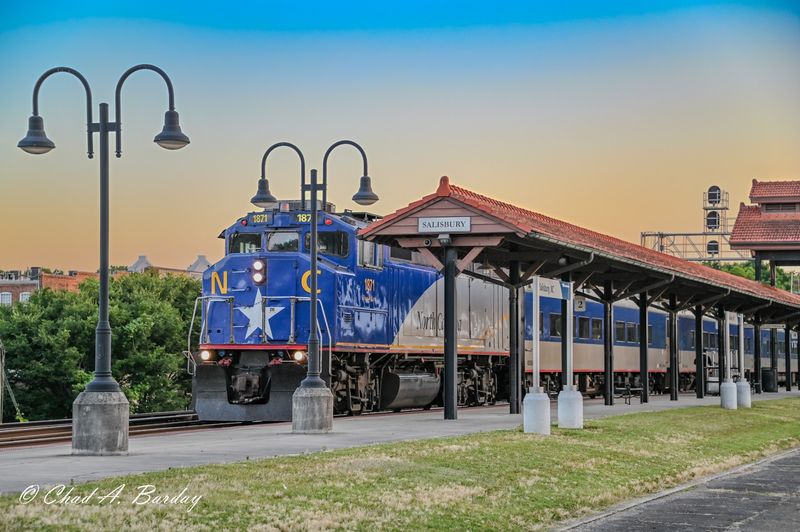
Kannapolis and Salisbury break up the journey before the train reaches the larger Triad cities.
The Kannapolis station sits at 201 S. Main Street, one block from the North Carolina Research Campus, putting passengers directly into the central part of town rather than beside a remote highway interchange.
Salisbury follows soon afterward at 215 Depot Street, where its historic station gives the stop a noticeably different character from Charlotte’s simpler terminal.
Travelers who make Salisbury their destination can connect with local transit, and weekday Salisbury Transit service links the Amtrak station with the North Carolina Transportation Museum in nearby Spencer.
Staying aboard reveals another important detail missing from the original route description: High Point comes next before Greensboro on most Piedmont trips.
That means the full corridor includes nine North Carolina station cities rather than jumping directly from Salisbury to Greensboro.
The stops are brief when Raleigh is the goal, but they give the ride its changing rhythm as larger urban areas repeatedly give way to smaller downtowns and wooded spaces before the next station appears.
Greensboro Adds Another Major City Without Ever Leaving The Train
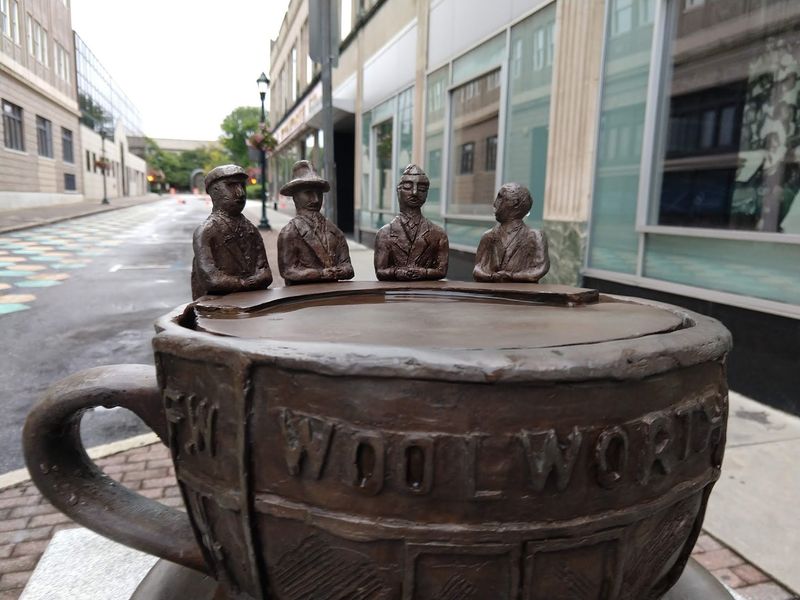
Greensboro marks one of the clearest shifts back into a major city along the corridor. After passing through High Point, Piedmont trains arrive at the Greensboro station at 236 E.
Washington Street, a central location that also serves local transit and intercity bus connections. On the current standard schedule, Train 72 leaves Charlotte at 10:25 a.m. and reaches Greensboro at 11:59 a.m., putting the Triad less than two hours into the journey.
Riders continuing toward Raleigh do not have to transfer trains or change platforms. The stop simply becomes another chapter in the same trip before the tracks continue east toward Burlington.
That uninterrupted format is one of the corridor’s strengths. Charlotte, the Triad and the Triangle are linked by one passenger-rail line, yet the landscape between them prevents the trip from feeling like a continuous strip of development.
Greensboro’s larger street grid and downtown buildings briefly replace the smaller-scale scenery that came before, then the view begins opening again as the train leaves the city.
Anyone wanting to explore Greensboro itself can instead book it as the destination and choose a later southbound departure back to Charlotte.
River Crossings And Wooded Stretches Break Up The Urban Views
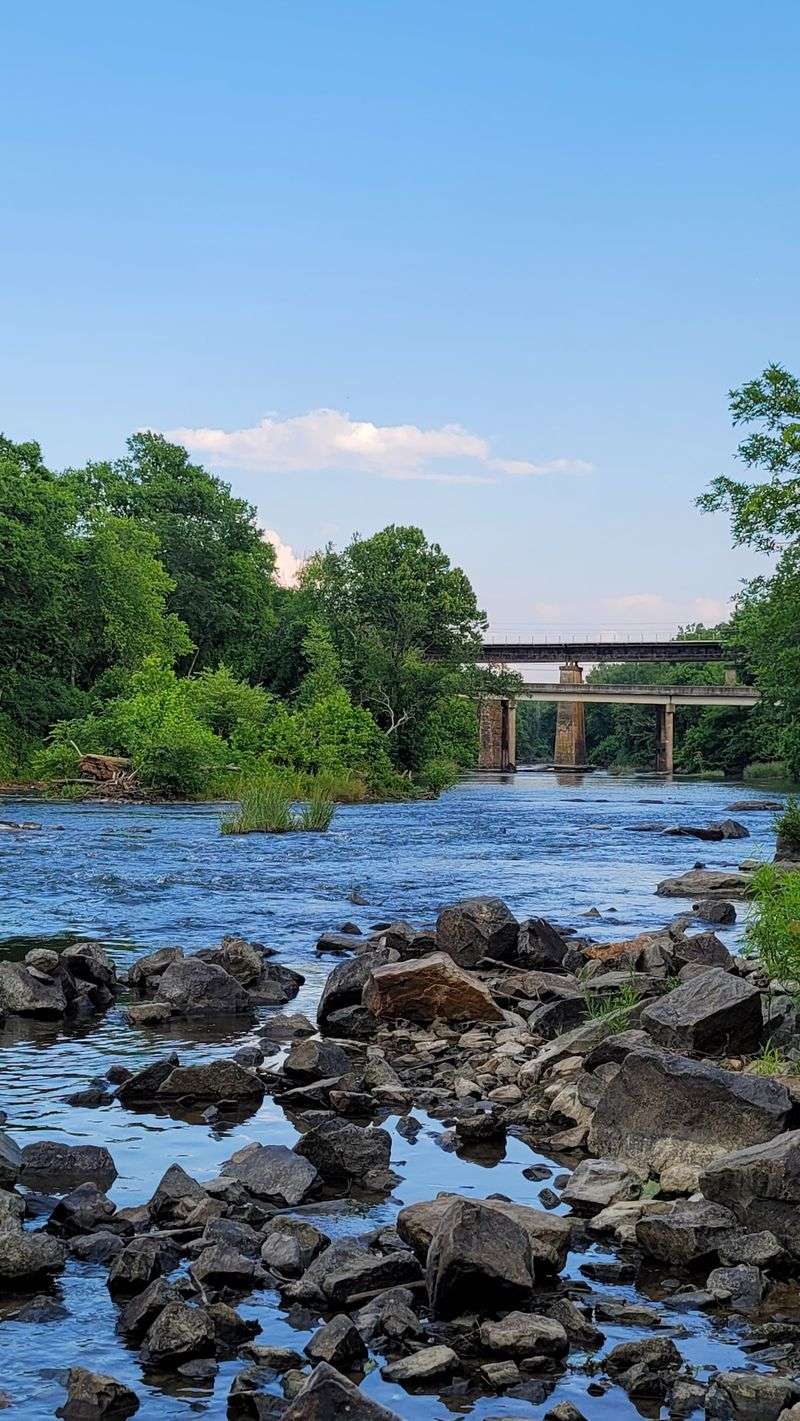
Cities are only part of what passes the windows. NCDOT documentation confirms that the Charlotte-Raleigh rail corridor crosses the Yadkin River north of Linwood, between the Salisbury area and the Triad.
Rail improvements there included rebuilding track near the river bridge to improve travel times. Farther east, the line reaches Burlington before continuing through the Graham and Haw River area on its way toward Durham.
The North Carolina Railroad also crosses the Haw River here, giving the route another documented river crossing. Those sections are what keep the trip visually varied despite connecting some of North Carolina’s largest population centers.
The train also passes farmland, creeks and established railroad communities along a corridor that has carried both passenger and freight traffic for generations.
Exact scenery changes with season and weather, so claims about which side always has the better view are best ignored.
A window seat is enough. One stretch may be lined closely with trees, while another opens around a bridge or field before buildings begin gathering around the next station.
The movement between those settings gives the Piedmont much of its road-trip appeal without requiring anyone aboard to watch traffic.
Durham Signals The Final Big-City Stretch Before Raleigh
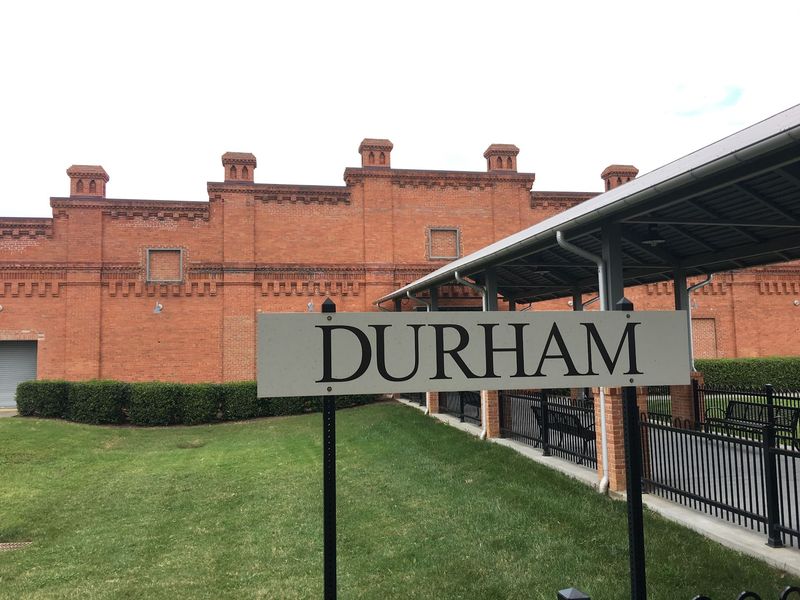
Durham arrives after Burlington and signals that the train has entered the Triangle portion of the route. Its station at 601 W.
Main Street sits directly in downtown Durham, making this one of the easier stops to turn into a car-free destination of its own. Train 72’s standard timetable, for example, reaches Durham at 1:02 p.m. after leaving Charlotte at 10:25 a.m.
Passengers continuing east have only two station cities left after Durham: Cary and Raleigh. The approach brings another transition in scale as denser development replaces the quieter stretches beyond Burlington, yet the rail trip never requires a change of train.
That makes Durham particularly useful for travelers who do not necessarily want to cover the entire 172 miles.
A Charlotte-to-Durham outing takes roughly two and a half hours each way on many schedules, allowing the city to work as a shorter alternative to Raleigh when return times cooperate.
The station has ticketing service and local transit connections, and NC By Train lists both free short-term and long-term parking for passengers who begin their journey there. For Charlotte travelers, it is simply another major city reached without touching an interstate steering wheel.
Downtown Stops Make It Easy To Turn The Ride Into A Car-Free Day Trip
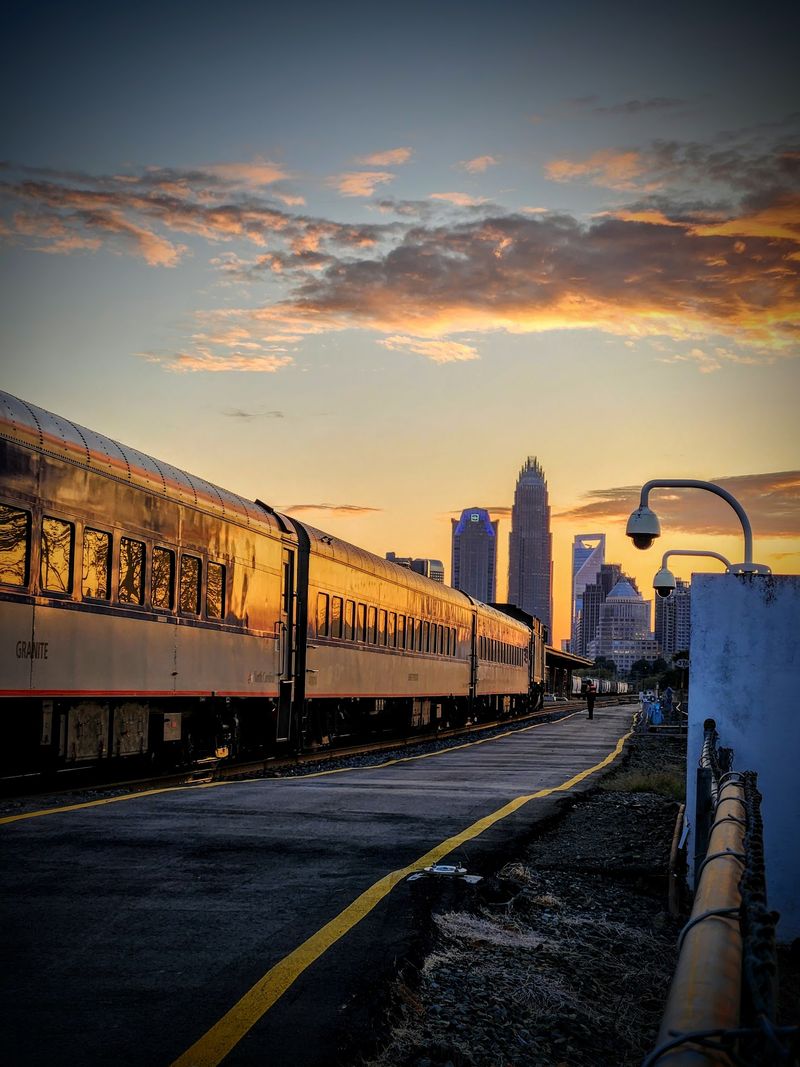
Multiple daily trains make the Piedmont corridor useful for more than traveling straight from Charlotte to Raleigh and immediately returning.
Kannapolis, Salisbury, High Point, Greensboro, Burlington, Durham and Cary all sit between the two endpoints, so passengers can choose a destination based on how much time they want aboard and which return departure fits the day.
Several stations sit in or near established downtown districts, particularly Kannapolis, Greensboro and Durham. Raleigh Union Station also places arriving passengers at 510 W.
Martin Street in downtown Raleigh. The practical part comes before buying the ticket.
NC By Train currently advises travelers to arrive about 30 minutes before departure, and its website notes that schedules can change.
That matters especially now because temporary track-work adjustments affect selected Piedmont and Carolinian services from August 31 through October 8, 2026.
On board, Piedmont trains offer Wi-Fi, electrical outlets and a lounge car with vending options, while Amtrak also lists complimentary coffee and water among the route’s amenities.
Those basics make a several-hour trip easy to handle without treating every station stop as a chance to leave the train.
Wide Windows Let The Piedmont Scenery Do Most Of The Entertaining
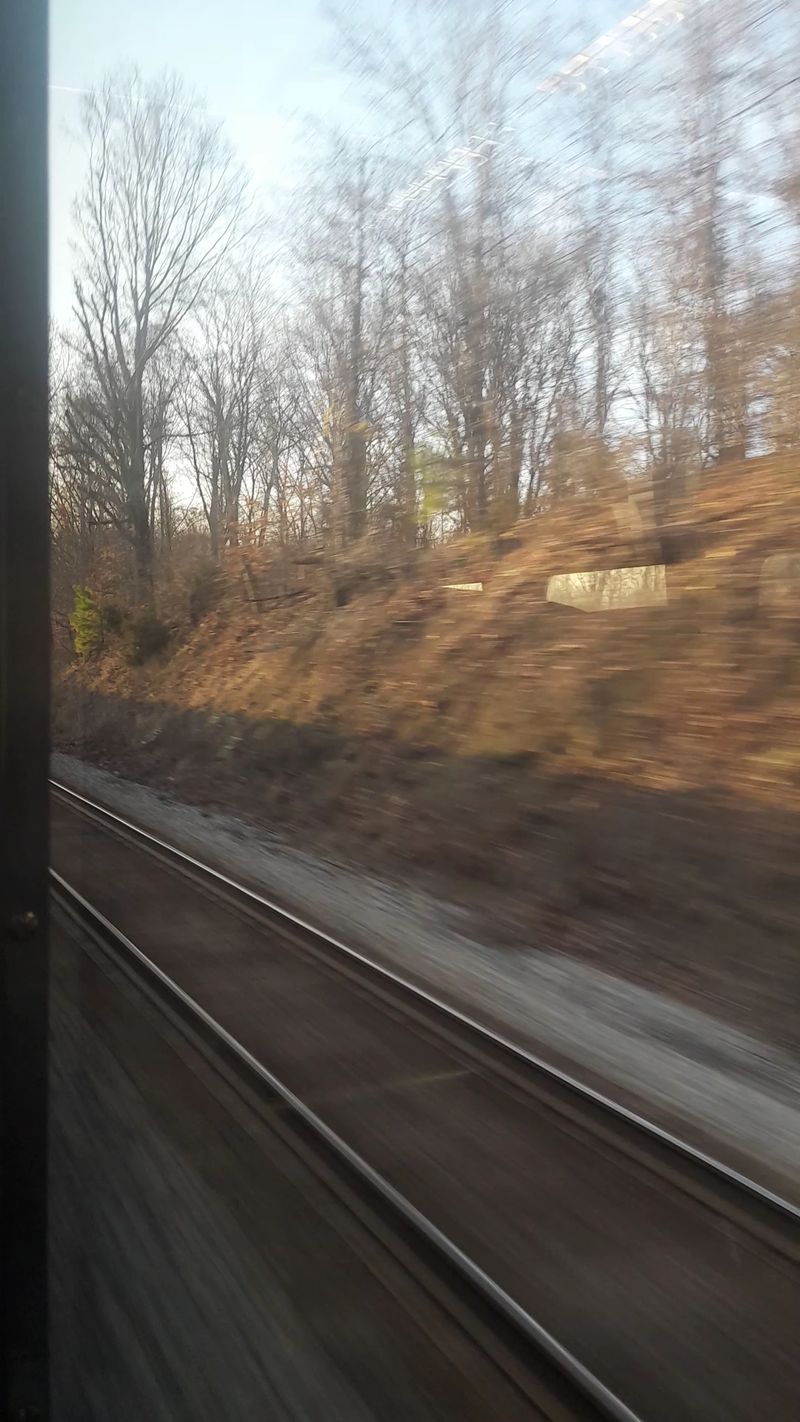
Part of the pleasure comes from having nothing to steer. Coach seating turns the passing corridor into the main attraction while towns, rail yards, wooded sections and open ground continually replace one another outside.
Piedmont equipment is owned by the North Carolina Department of Transportation and used on the Charlotte-Raleigh route. Passengers have access to onboard Wi-Fi and electrical outlets during the trip.
A lounge car with vending machines provides basic refreshments, and volunteer train hosts may also be aboard.
What the train does not offer is a sightseeing narration synchronized to every bridge and town, so this works best as a relaxed passenger-rail journey rather than a formal scenic excursion. That distinction actually suits the route.
There is no need to watch for one famous overlook or dramatic mountain pass.
The appeal comes from seeing the ordinary Piedmont landscape from a perspective most drivers never get, including the back sides of downtowns, stretches of railway infrastructure and changing land between the major cities.
Put the phone down for a while and the three-hour ride provides plenty of movement on its own.
By Raleigh, You Have Crossed A Broad Slice Of Central North Carolina
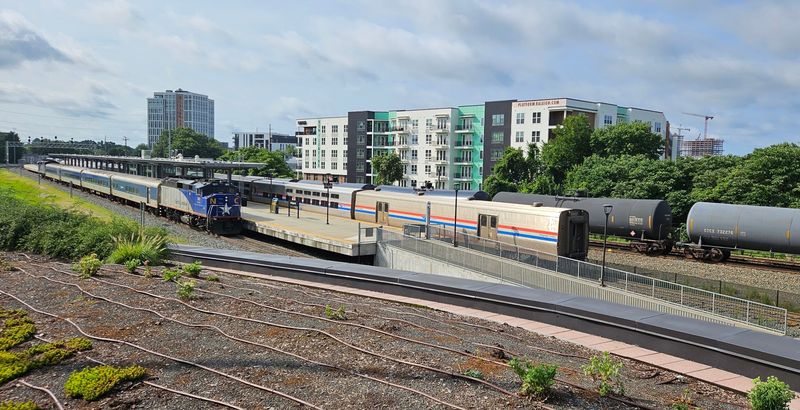
Raleigh Union Station provides a much more urban finish than the simple Charlotte terminal where the trip began. The station stands at 510 W.
Martin Street downtown, with local transit connections and paid parking available for travelers beginning from the eastern end. Under the current standard timetable, Train 72 covers Charlotte to Raleigh from 10:25 a.m. to 1:41 p.m., or about three hours and 16 minutes.
Other Piedmont runs vary slightly, which is why calling the route a five-hour one-way train ride would significantly overstate its length.
The full corridor covers 172 miles and serves nine station cities. The route runs from Charlotte through Kannapolis, Salisbury, the Triad, Burlington, Durham, Cary, and Raleigh.
Anyone planning to return to Charlotte the same day should allow roughly another three hours aboard plus whatever time is spent exploring, making the complete outing comfortably longer than six hours. That is still manageable as a day trip, but it is a full day rather than a five-hour loop.
The scenery and changing cities provide plenty to fill the time between the two endpoints.