This North Carolina Lake Shore Has So Many Snakes Slithering Around, Visitors Are Starting To Take Notice
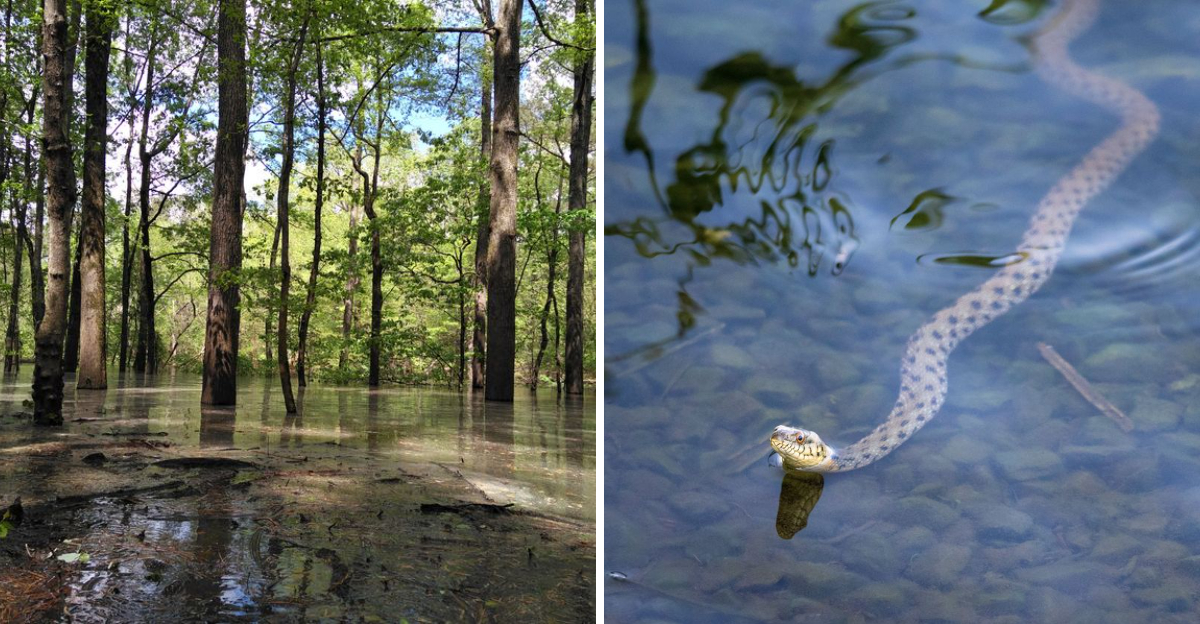
At first, the shoreline looks peaceful enough.
Then something moves. Not a fish. Not a branch.
Definitely not the relaxing little nature moment you thought you were having.
Along one huge North Carolina reservoir, snakes are part of the scenery. Some swim close to shore.
Others turn up near wooded edges, where a perfectly normal walk can suddenly become much more interesting.
The good news is that the drama is usually bigger than the danger.
Most snake species in North Carolina are nonvenomous, and harmless watersnakes in this part of the state are regularly mistaken for something far more intimidating.
That does not mean your heart rate will receive the update in time.
The best response is simple. Give the snake space and let it move along.
It probably wants nothing to do with you.
Unfortunately, it also has absolutely no concern for your peaceful afternoon.
Explore Roughly 180 Miles Of Wooded Shoreline
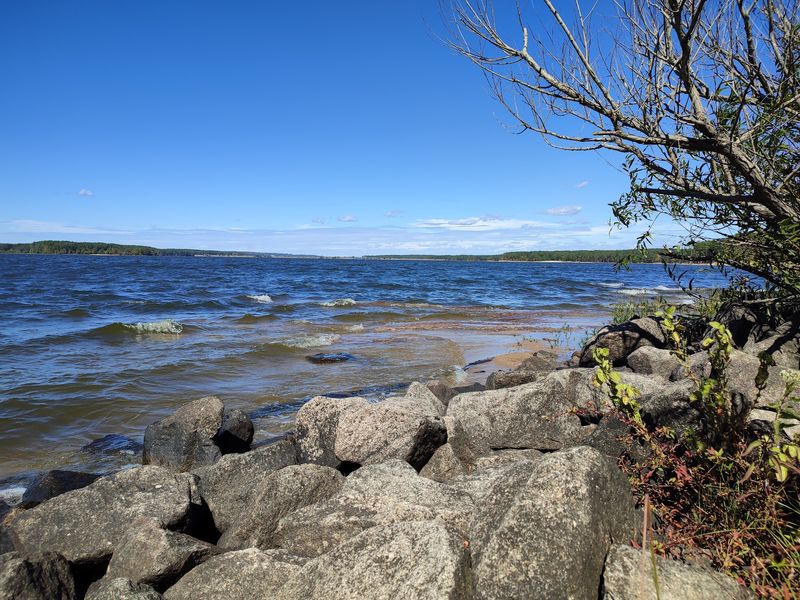
The scale of Jordan Lake creates countless places where wildlife can stay out of sight. Roughly 180 miles of shoreline wrap around the reservoir, much of it bordered by hardwood forest, pine woods, wetlands, and undeveloped land.
The lake itself covers about 14,000 acres. Hiking provides one way to explore the edges without getting on the water.
The current state-park trail system includes the 5.4-mile New Hope Trail, the 3-mile Red Trail, the 2-mile Poplar Point Campground Trail, and several shorter loops. New Hope is rated moderate rather than easy, while many of the shorter routes are classified as easy.
More than 1,000 campsites spread across five access areas, and swimming, boating, fishing, and paddling add still more ways to spend time near the shoreline. All of those woods and waterside habitats naturally support reptiles too.
A snake seen near a log or moving through shallow water is simply another resident using the same shoreline.
Know Which Snakes Are Common Around The Water
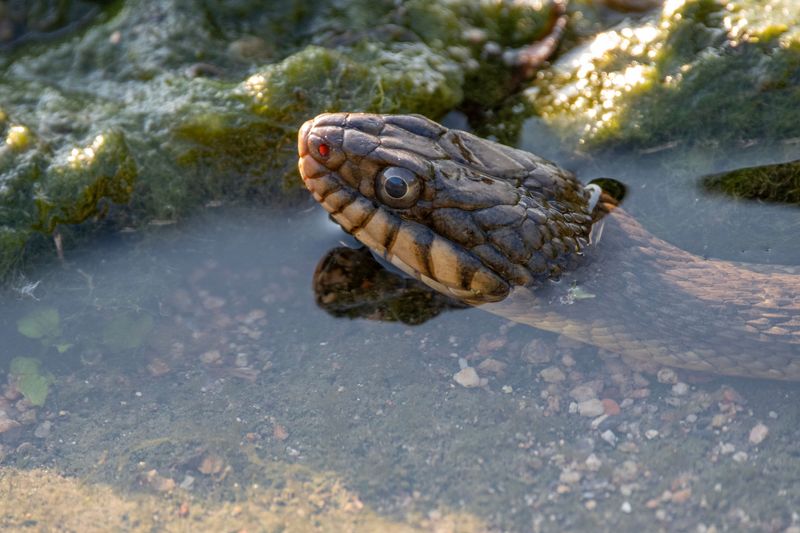
A snake swimming near shore is much more likely to be a harmless watersnake than the venomous species many visitors immediately fear. Northern watersnakes occur throughout the North Carolina Piedmont and have been specifically photographed at Jordan Lake in Chatham County.
They feed mainly on fish and amphibians, making reservoirs and other freshwater habitats a natural fit. Rat snakes also occur at Jordan Lake and throughout the state.
They are nonvenomous, excellent climbers, and often use wooded environments where rodents and birds provide food. Copperheads require more caution.
They are venomous and occur statewide, including the Piedmont, where wooded edges and leaf-covered ground provide useful camouflage. Eastern garter snakes and eastern hognose snakes are other nonvenomous species found widely in North Carolina.
Cottonmouths are a different story. Wildlife range information places Chatham County outside their established range, so reports of “water moccasins” around Jordan Lake are commonly cases of mistaken identity involving nonvenomous watersnakes.
Learn Why Warm Weather Brings More Reptile Activity
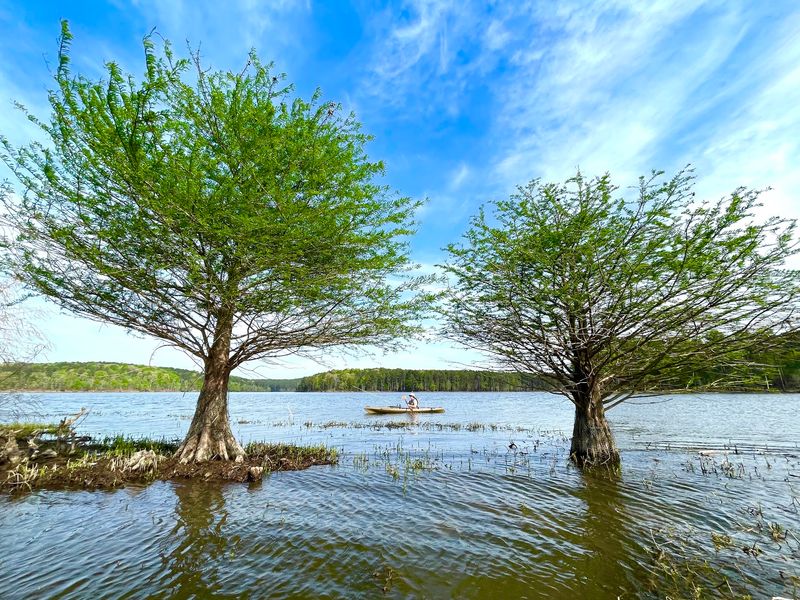
Spring changes the odds of seeing a snake well before summer vacation season begins. North Carolina wildlife officials note that snakes become more active when temperatures reach roughly 60 degrees Fahrenheit and above, so sightings naturally increase as the weather warms.
Like other reptiles, snakes depend on their surroundings to regulate body temperature. They may spend time basking when conditions are cooler, then seek sheltered places when heat becomes intense.
That means activity is not limited to one predictable hour of the day. Copperheads, for example, can be active during daylight or darkness but become largely nocturnal during hot weather.
Around Jordan Lake, a warm season also means far more people are walking trails or spending time beside the water, increasing the opportunities for humans and snakes to notice one another. The animals are not gathering around visitors.
Both are simply making greater use of the same landscape. A snake lying still beside a trail may also need more time to move away on a cool morning, so patience is safer than trying to encourage it along.
Watch The Ground Carefully Along Trails And Lake Edges
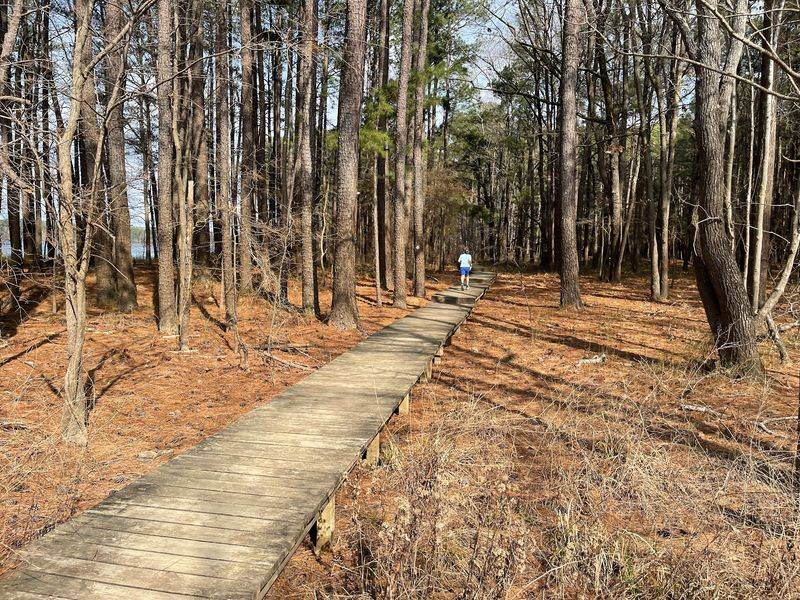
Camouflage is one of the main reasons a snake can seem to appear out of nowhere.
Copperhead markings blend remarkably well with dry leaves and woodland debris, while smaller nonvenomous species can disappear among grass, roots, and fallen branches.
At Jordan Lake, simply watching where you step and where you place your hands is one of the most useful precautions. North Carolina wildlife officials specifically recommend staying aware of surroundings and keeping a respectful distance from any snake encountered outdoors.
Closed shoes make sense on wooded trails for many reasons beyond snakes, and remaining on established paths also reduces unnecessary contact with dense vegetation. There is no need to poke into brush, reach beneath rocks, or attempt to make a snake move.
If one is resting across a trail, stop and give it time and space to continue on its own. Jordan Lake’s trail network ranges from short easy loops to the moderate New Hope Trail, so visitors can choose terrain that suits their comfort level while still experiencing the forested shoreline.
Tell Harmless Water Snakes Apart From Copperheads
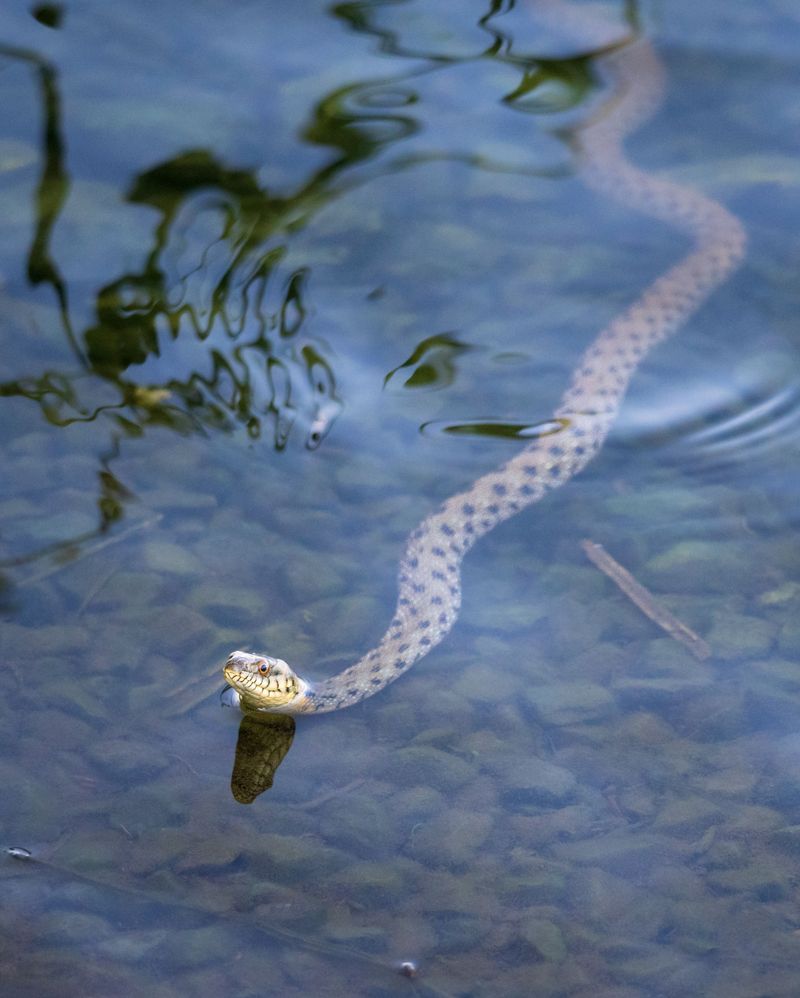
Patterns can help with identification, but there is no single shortcut that works for every snake. North Carolina wildlife officials specifically warn against relying on head shape or pupil shape to decide whether a snake is venomous.
Nonvenomous snakes can flatten their heads defensively, and pupils can change appearance with lighting. At Jordan Lake, northern watersnakes are usually reddish-brown with crossbands and are nonvenomous.
Copperheads have a tan or coppery background marked by darker hourglass-shaped bands that narrow across the center of the back and widen down the sides. Geography provides another useful clue.
Cottonmouths are predominantly associated with the Coastal Plain, and Chatham County falls outside their established North Carolina range. Even with those clues, nobody needs to approach a snake closely enough to make a perfect identification.
A photograph taken safely from a distance can be checked later. The same response works regardless of species: leave the animal alone, give it an escape route, and enjoy the sighting without turning it into a close encounter.
Give Any Snake You Encounter Plenty Of Space
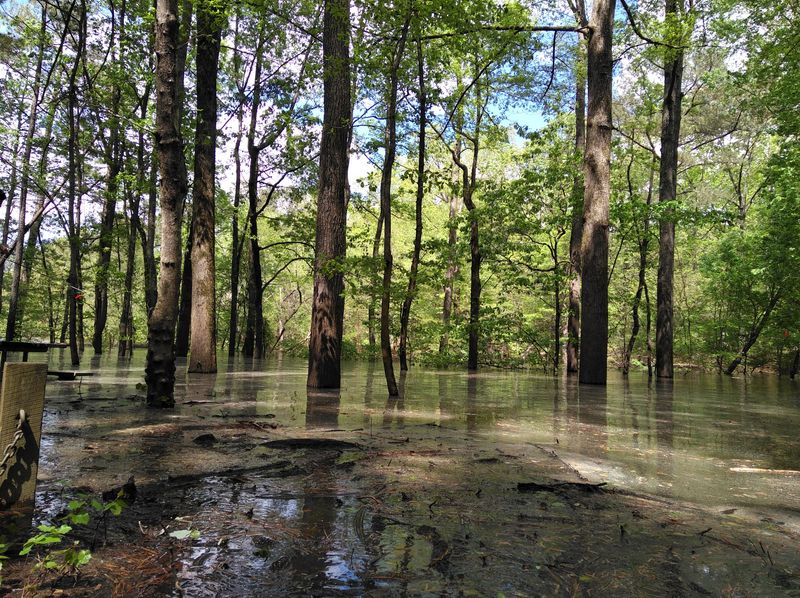
Distance does more for safety than trying to predict what a snake will do next. North Carolina wildlife guidance says most snakes are shy and pose little threat when they are left alone.
When surprised, they generally prefer an opportunity to escape rather than a confrontation. That makes a Jordan Lake encounter fairly straightforward to handle.
Stop moving toward the snake, remain calm, and give it enough room to leave on its own. There is no need to pick it up or attempt to relocate it.
A snake that stays still is not necessarily preparing to strike; cool temperatures can leave reptiles without enough energy to retreat immediately. Children should be reminded to look without touching, particularly around logs or rocky areas where small animals can stay hidden.
Pets are safest when kept under control according to park rules rather than allowed to investigate wildlife. The same approach protects the snake as well.
North Carolina has dozens of native snake species, including several protected species, and wildlife officials discourage killing snakes because of the useful role they play in local ecosystems.
Enjoy The Beaches And Trails Without Turning Every Sighting Into A Scare
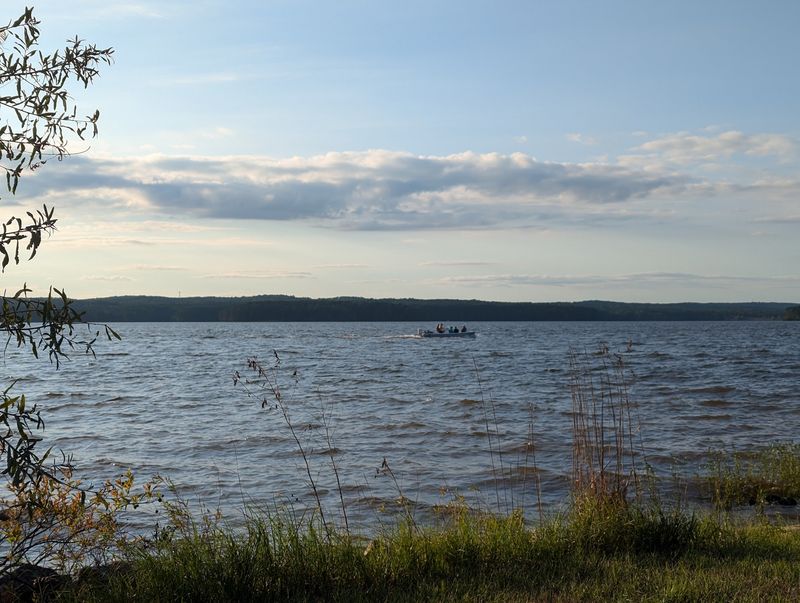
Snake habitat and family recreation comfortably exist side by side around Jordan Lake. Seaforth and Ebenezer Church both have accessible swimming beaches, while Parkers Creek, Vista Point, White Oak, and other recreation areas provide additional seasonal opportunities near the water.
During the main recreation season, the state charges a $10 vehicle entrance fee at Jordan Lake on weekends and holidays in April, May, and September and every day from Memorial Day through Labor Day. The day-use areas are free during the rest of the year.
Wildlife awareness does not require treating every log or patch of grass as a threat. Visitors can use maintained beaches and marked trails normally while remaining observant around natural cover.
If a snake appears, giving it space is usually all that is necessary. The same wooded shoreline that supports reptiles also provides much of Jordan Lake’s scenery, so keeping those habitats healthy is part of what makes the recreation area appealing in the first place.
Discover The Wildlife That Shares This Huge Recreation Area
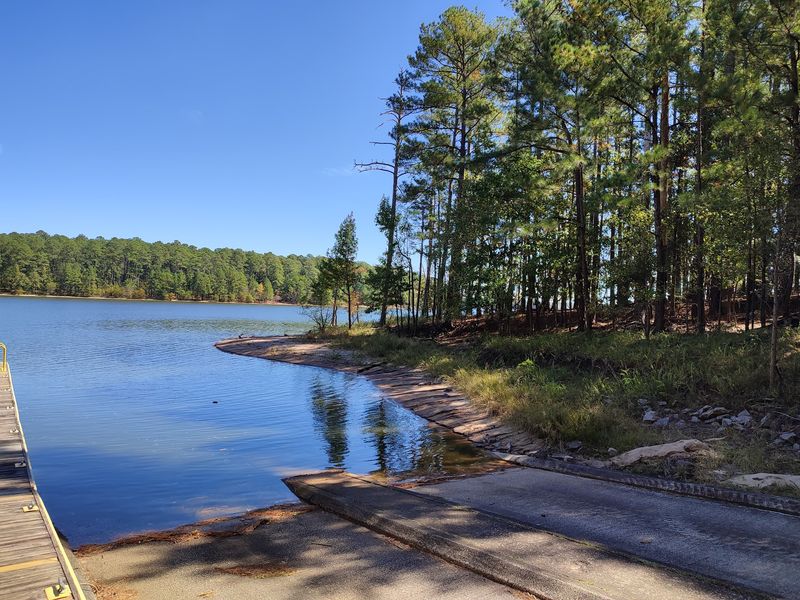
Snakes occupy only one corner of a much larger wildlife community at Jordan Lake. Bald eagles are the headline species, and North Carolina State Parks says the reservoir hosts the largest concentration of bald eagles east of the Mississippi River during summer.
New Hope Overlook and the shoreline around Ebenezer Church are among the recommended places to watch for them. Ospreys are also regularly seen around the lake, while surrounding forests support white-tailed deer and many smaller mammals.
Federal environmental surveys have documented reptiles and amphibians alongside birds throughout the project lands, including rat snakes and corn snakes.
Fish populations support much of that ecosystem and provide both wildlife and anglers with plenty of activity.
The U.S. Army Corps of Engineers manages Jordan Lake partly for fish and wildlife conservation in addition to recreation and water supply.
Seeing a watersnake hunting along the shore therefore fits naturally into a day that might also include an eagle overhead. Jordan Lake is not notable because snakes have suddenly taken it over.
It is notable because a huge, largely undeveloped shoreline gives many native species room to live.