This Challenging 8-Mile Washington Hike Leads To A Brilliant Turquoise Lake
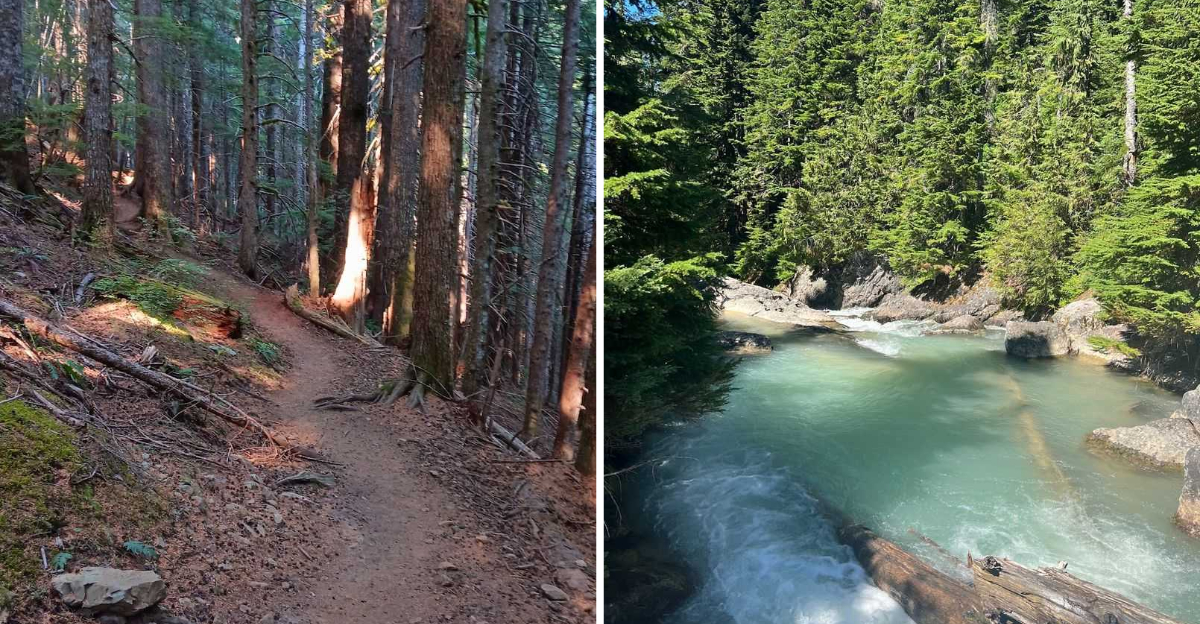
Few trail rewards hit harder than turquoise water appearing after a long climb.
In Washington, this route pushes through thick forest before revealing a glacial lake framed by rugged slopes and alpine scenery.
That first glimpse through the trees can erase a lot of tired-leg complaints. Waterfalls and rocky ridges add even more drama along the way.
The climb asks for steady effort, good shoes, and enough water, but the shoreline gives the day a clear purpose. Leave time to sit once you arrive.
A place this striking deserves more than a quick photo.
For hikers who love a big finish, the final reveal lands exactly where you want it to.
Where The Adventure Begins
My alarm went off at 4 a.m., and honestly, that felt early even for me. The drive matters here as much as the walking does.
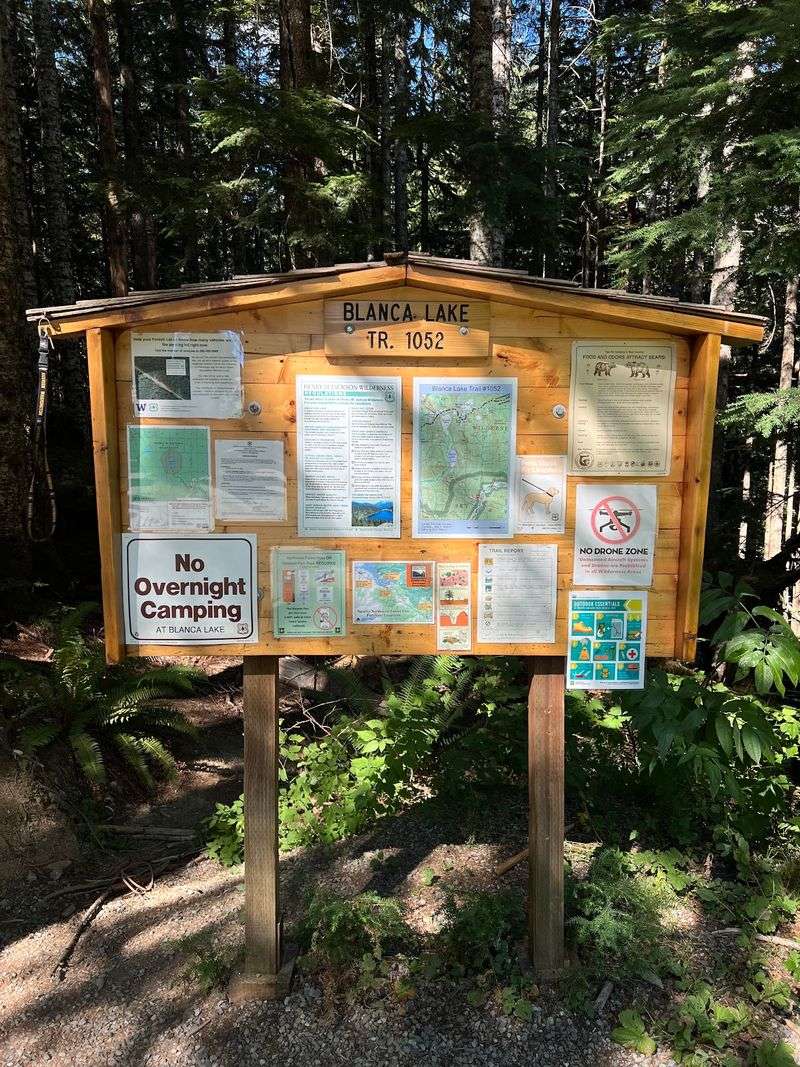
Blanca Lake Trail crosses rugged Cascade terrain through both the Wild Sky and Henry M. Jackson wilderness areas. Getting there means leaving Highway 2 and winding onto forest roads that lose cell service fast.
I downloaded my maps before Index, which saved me later. Mapping apps sometimes route drivers onto the washed out Index-Galena Road, and that route does not work.
Current road access must be checked before attempting this hike. WTA continues to flag Blanca Lake Trailhead as inaccessible because of flood damage affecting Beckler River Road.
Under normal access conditions, the small trailhead parking area accommodates roughly 20 vehicles and can fill quickly on busy weekends. You will find Blanca Lake Trailhead at Gold Bar.
Switchbacks Through Ancient Timber
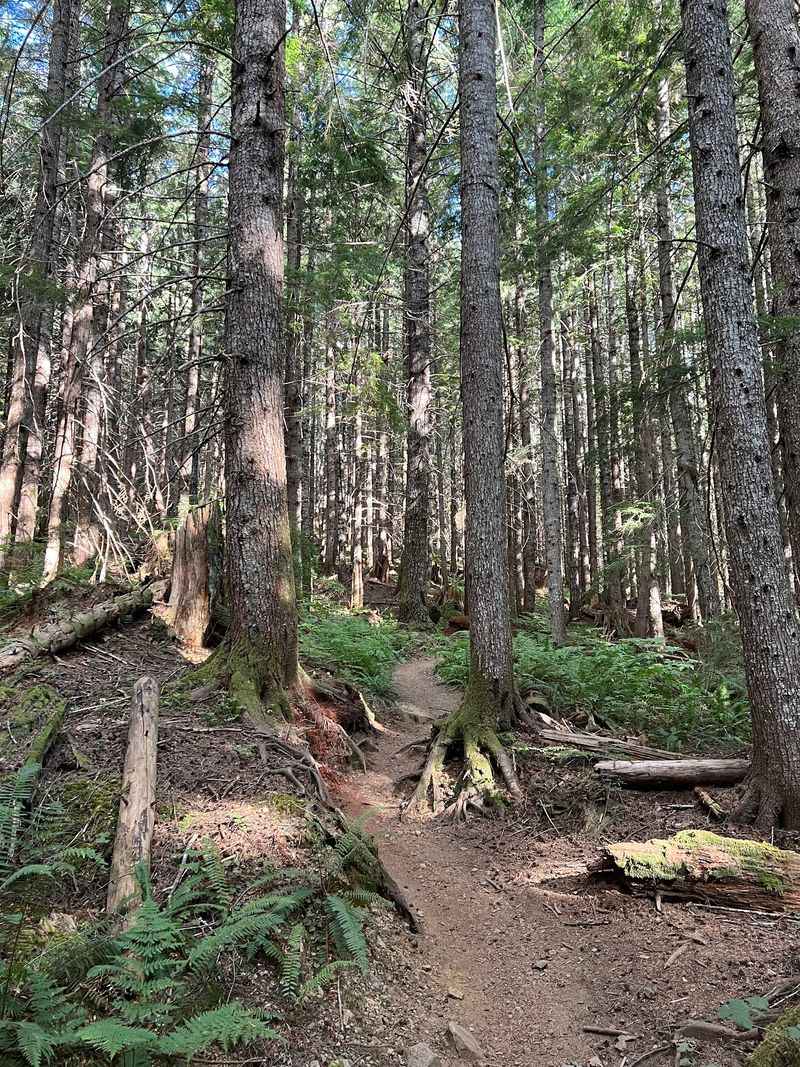
The opening climb tackles roughly 37 switchbacks before the trail reaches higher terrain.
The climb starts immediately, with no warm-up stroll to ease you in. The trail gains roughly 2,700 feet within its first three miles.
Thick second-growth forest surrounds the lower trail, with sizable trees, moss, and a shaded understory. Moss drapes the branches, and mushrooms pop up along the edges in cooler months.
Shade is the real gift here during summer. I hiked in July and stayed comfortable while my legs quietly complained.
Roots and rocks cover much of the tread, so sturdy hiking boots make a difference. After rain, mud shows up in patches and turns steps slippery.
Trekking poles helped me more than I expected, especially on the return. My knees appreciated them on every downhill step.
Occasional gaps in the canopy offer peekaboo views of ridgelines across the valley. Those glimpses kept me motivated when my breathing got loud.
Mosquitoes can be fierce in summer, so bug spray belongs in your pack. I reapplied twice and still collected a few souvenirs.
Berries, Meadows, Virgin Lake
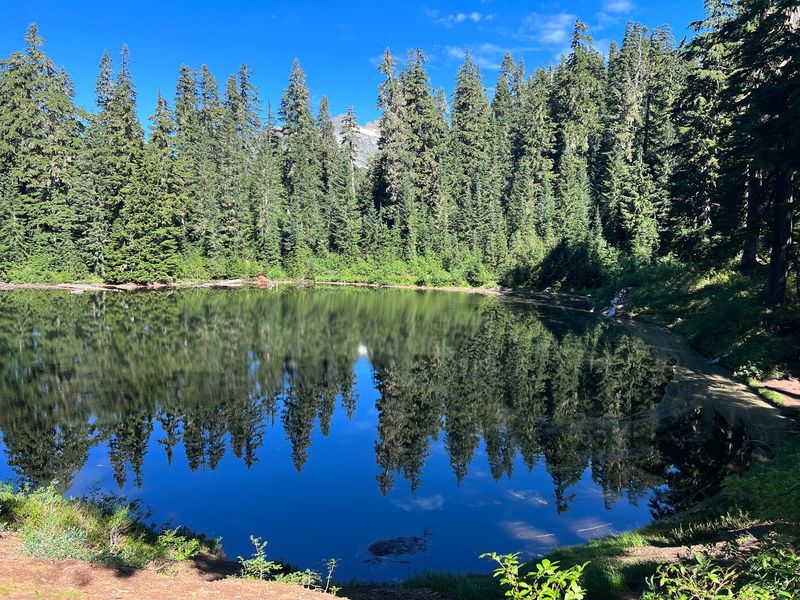
Just when my legs started negotiating with my brain, the grade eased. Reaching the ridge felt like the trail finally showed mercy.
Subalpine meadows open up around 4,600 feet, and the scenery shifts completely. Huckleberry bushes crowd the path in late summer and early autumn.
Huckleberry bushes line portions of the upper trail, especially around the higher terrain.
Virgin Lake appears at this point, small and quiet. By late season it shrinks toward pond size, but it still marks an important milestone.
Campsites sit near the ridge above Virgin Lake, and several fit multiple tents. Backpackers use this area because camping is not allowed at the larger lake below.
A pit toilet has been available around the Virgin Lake camping area, though hikers should verify current facilities before setting out.
On clear days, gaps in the trees reveal Glacier Peak standing tall in the distance. I stopped, ate a snack, and simply stared for a while.
Bears reportedly roam this meadow country, though I saw none. Chipmunks and birds provided all the wildlife entertainment I needed.
The Steep Descent Surprise
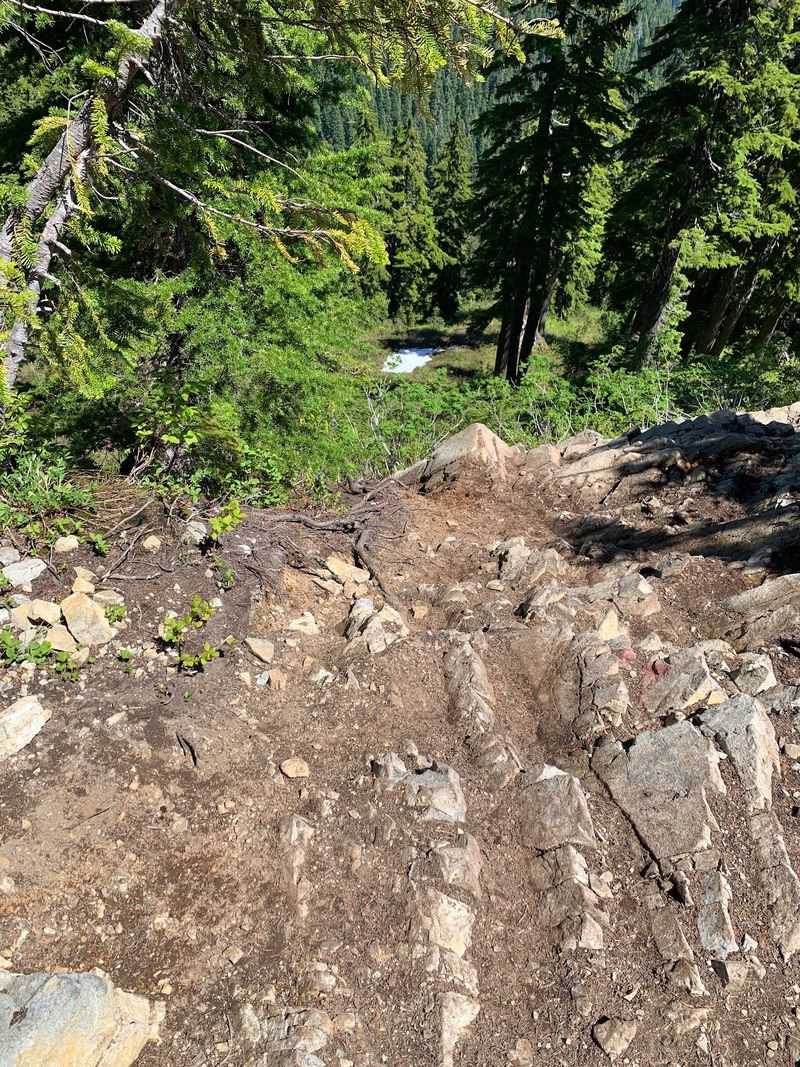
Uphill both ways sounds like an old joke, yet here it is literally true. After the ridge, the trail plunges downward toward the water.
Roughly 600 feet of elevation disappears in about 0.6 mile on the steep descent toward Blanca Lake.
Roots twist across the path, loose rock shifts underfoot, and mud collects in shaded pockets. I moved slowly and used my poles constantly.
Big steps down require careful placement, and this section is not ideal for small children. Late in the season, icy patches make it riskier still.
What makes the stretch fascinating is the suspense. The lake begins revealing itself near the end of the descent, including a viewpoint roughly 0.2 mile before the shoreline.
Then it appears, all at once, glowing an impossible aqua. I actually laughed out loud at the reveal.
Remember that everything you descend must be reclimbed on the way out. Many hikers underestimate this and arrive back at the ridge with jelly legs.
I budgeted extra time and snacks for the return climb. That decision paid off nicely.
Why The Water Glows
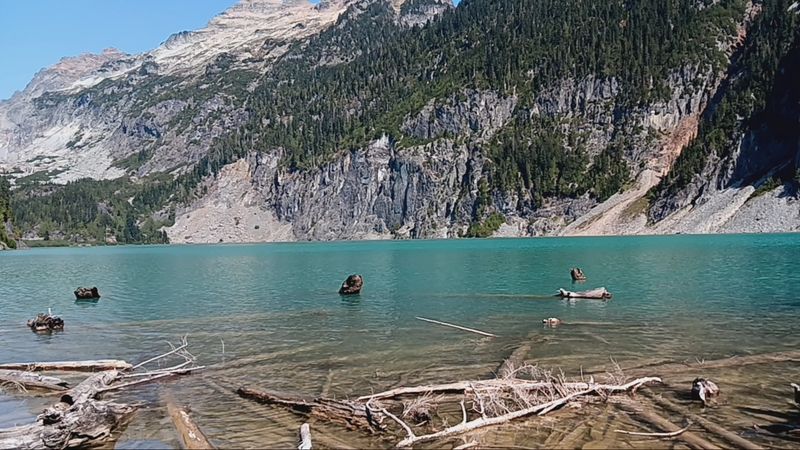
Nobody believes my photos, and I have stopped trying to convince them. The color looks edited, but it is entirely real.
Meltwater from the Columbia Glacier feeds this basin continuously. As the ice grinds against bedrock, it produces extremely fine sediment called rock flour.
Those tiny particles stay suspended in the water and scatter light. The result is that opaque milky turquoise shade that seems to glow from within.
Jagged summits frame the scene dramatically, with Monte Cristo, Columbia, and Kyes peaks rising around the basin.
Twin waterfalls spill down from the glacier above, feeding the lake directly. Troublesome Creek carries the outflow away downstream.
Cloudy weather mutes the color noticeably, so I always check the forecast first. Sunshine unlocks the full effect.
The glacier has retreated significantly over recent decades, which is worth thinking about while you sit there. Landscapes like this one change faster than we expect.
Blanca Lake regularly earns recognition as one of the most striking alpine lakes in this part of the Cascades. Few places anywhere match that shade of blue-green.
Resting On Driftwood Shores
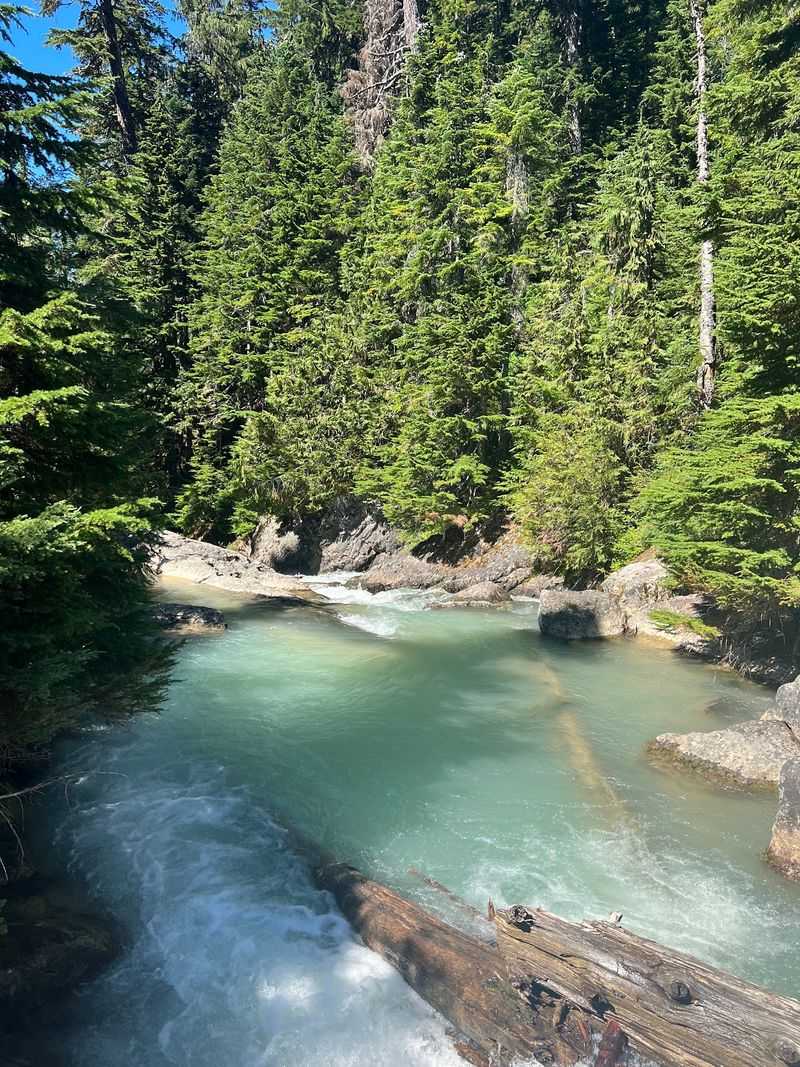
My boots came off within thirty seconds of reaching the water. That first breeze on tired feet was pure relief.
A small beach edges part of the shoreline, scattered with bleached driftwood logs. Those logs make excellent benches for lunch.
I arrived midmorning on a weekday and had the place nearly to myself. Solitude here feels rare and precious.
Swimming is possible for the brave, though the glacial water stays seriously cold. Some hikers take quick dips and describe it as refreshing.
I waded to my knees and decided that counted. Bring a towel if you plan to go further.
Marmots scurry across the rocky slopes nearby, and they are ridiculously photogenic. Chipmunks patrol the shoreline hoping for crumbs, which you should never provide.
Camping is prohibited within a half-mile of Washington’s Blanca Lake, while hikers should follow all posted restoration closures and remain on established routes. Hammocks are not permitted in those recovery zones.
The basin holds sound strangely well, so voices carry across the water. Keeping quiet helps everyone enjoy the setting.
Timing, Passes, And Rules
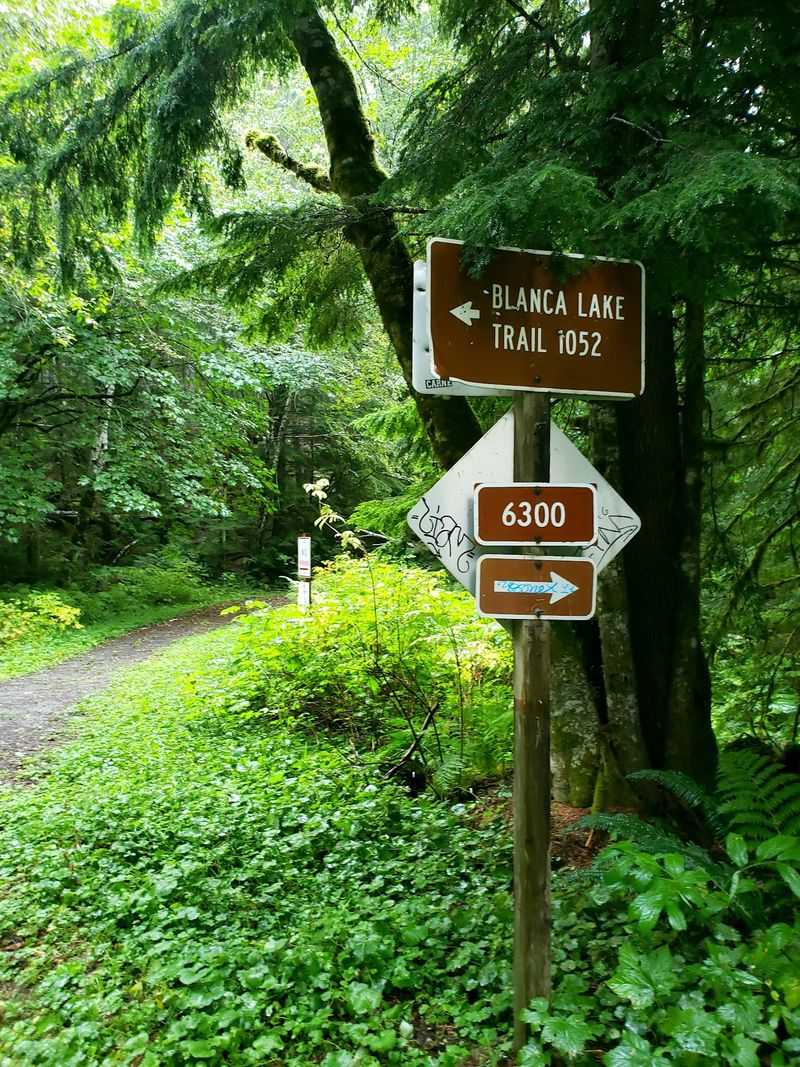
Show up in the wrong month and you may find snow instead of turquoise. Season matters enormously on this route.
Snow, road damage, weather, and seasonal conditions can dramatically change access, so hikers should check current trail and road reports before every trip. Snow and ice make the steep final descent genuinely hazardous outside that window.
Parking requires a recreation pass at Blanca Lake Trailhead. A Northwest Forest Pass or an America the Beautiful pass both work.
The Washington Discover Pass does not apply here, since this is federal land. Buy your pass ahead of time rather than hoping for a kiosk.
The route travels through Wild Sky Wilderness before reaching the Henry M. Jackson Wilderness near the upper portion of the hike. Drones are banned, and group behavior should stay low impact.
Leave No Trace principles apply strictly. Pack out all trash, including fruit peels and food scraps.
Staying on the established tread protects fragile meadow plants. Cutting switchbacks causes erosion that takes years to heal.
Dogs are welcome on leash, and I passed several happy trail pups. Bring extra water for them too.
Packing For A Punishing Day
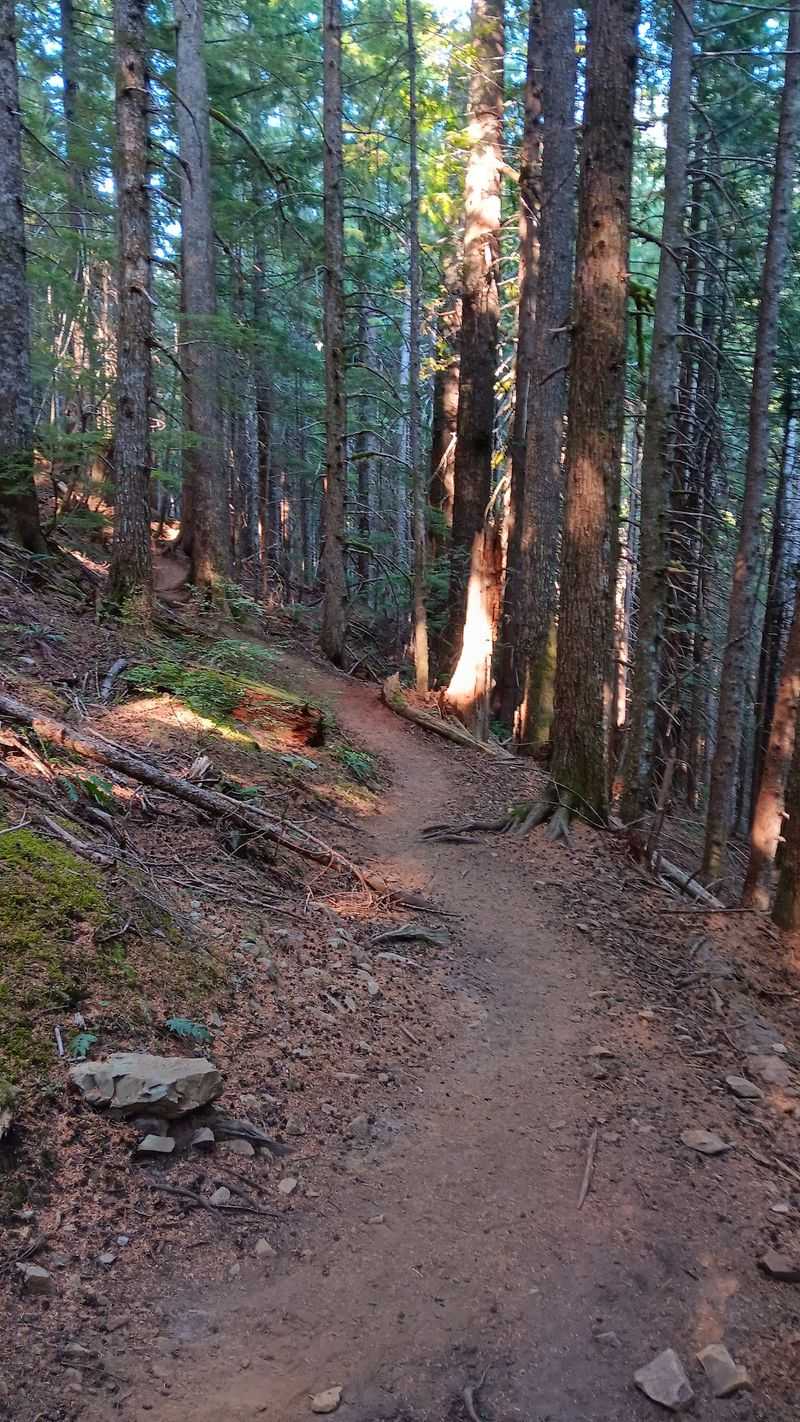
Current Washington Trails Association information lists the route at about 8 miles round trip with roughly 3,400 feet of total elevation gain.
Total elevation gain is about 3,400 feet, including the demanding climb back from Blanca Lake toward Virgin Lake.
This is a strenuous route, so hikers should allow generous daylight and turn around if conditions or timing make a safe return uncertain.
Water tops my list, and I carry at least three liters. A hydration bladder makes sipping easier on steep sections.
Real hiking boots with ankle support beat sneakers on those roots. Trekking poles rank as the single best comfort upgrade.
Bug spray becomes essential in summer, when mosquitoes get aggressive. Long sleeves help too, since brush crowds parts of the path.
Snacks with protein kept my energy steady, and I brought more than I needed. A headlamp lives permanently in my pack for late finishes.
Layers matter because the lake basin feels cooler than the sunny ridge. Fog can roll in without warning.