Kentucky Hosts A Monthly Full Moon Hike That Most Travelers Overlook
Here is a thing you probably did not have on your Kentucky list. There is a forest that stays open past closing once a month.
The reason is the moon. When it goes full, volunteer naturalists lead a group around a lake in the dark.
The walk is leisurely, not a workout. Every month gets its own moon name, which is more charming than it has any right to be.
There is the Worm Moon in spring. There is the Corn Moon in September.
Your guides will explain the folklore and then let the forest do the talking. You will hear owls that you would never notice at noon.
You will also notice how differently your eyes work after twenty minutes without a phone screen. The fee is small and it includes a guide.
You do have to register the day before, so a spontaneous visit will not work here.
The Forest Behind The Moonlight
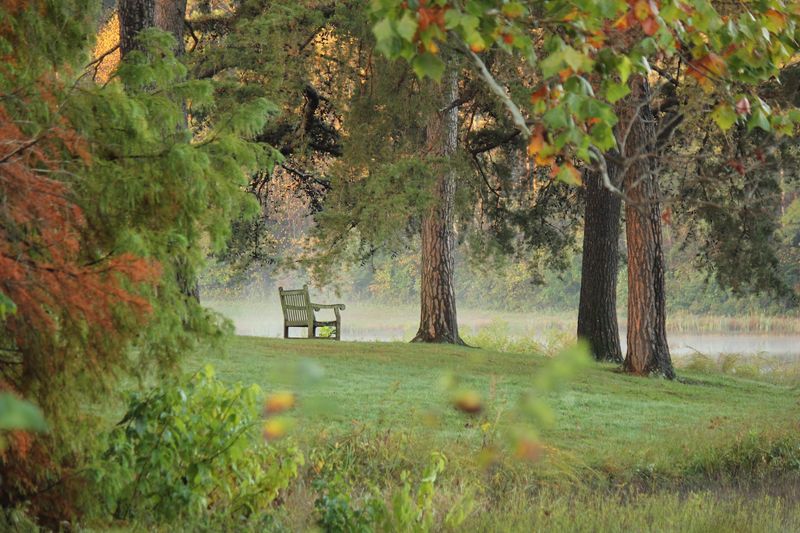
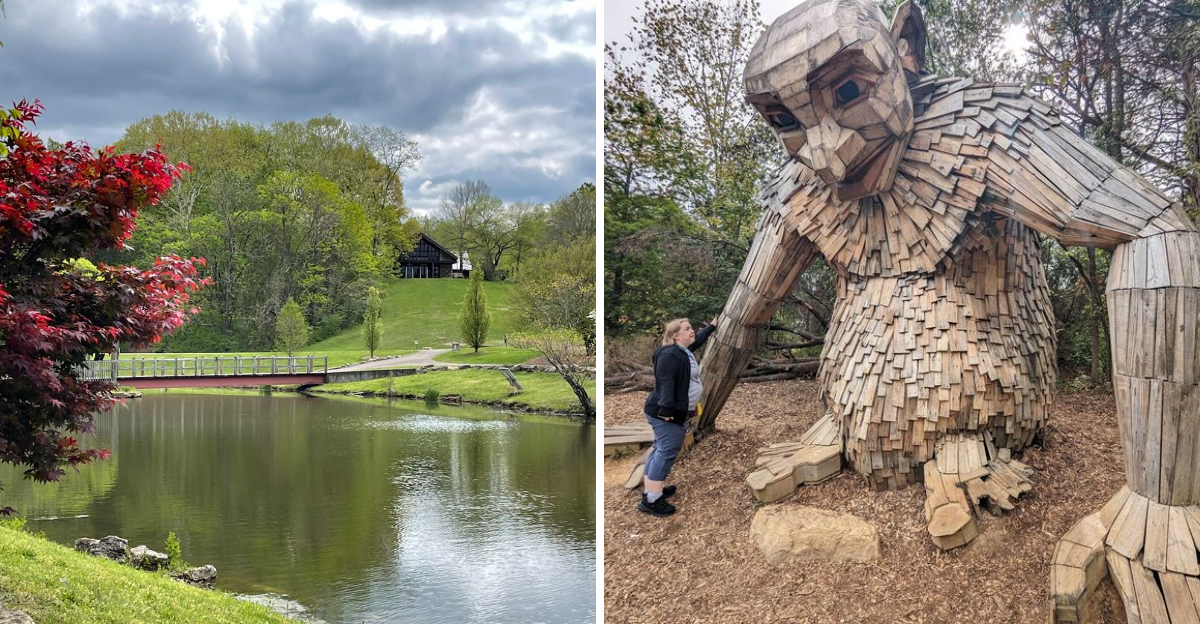
Bernheim Arboretum and Research Forest covers more than sixteen thousand acres of Kentucky woods, meadows and water. That is a generous stage for one moon to light.
The land became public in 1929, when Isaac Wolfe Bernheim established it as a gift to the people of Kentucky. His reasoning was refreshingly uncomplicated.
He wanted ordinary people to have somewhere green to go. Nearly a century later, the place is the largest privately held contiguous forest block in the eastern United States dedicated to conservation and education.
That is a mouthful, and it also explains the quiet. There are around forty miles of trails and more than two hundred bird species on the property.
Most visitors experience all of that in daylight, then drive home before anything interesting happens. The forest keeps different hours once a month.
Volunteer naturalists lead a group in after the gates would normally be locked, and the whole character of the place shifts. Same trees, same lake, entirely different animal.
You are not seeing a nature preserve at night. You are seeing a nature preserve doing its actual job.
You will find it at 2075 Clermont Rd, Clermont, Kentucky, roughly half an hour south of Louisville.
Why The Moon Steals The Show Here
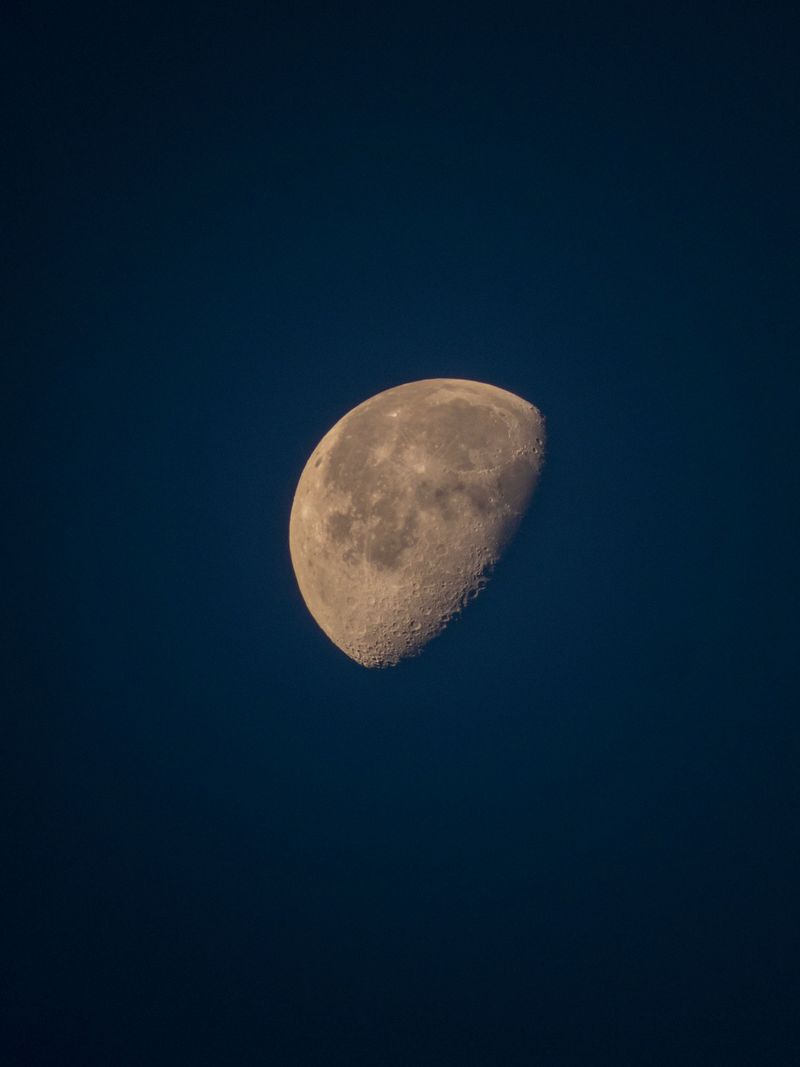
Light pollution flattens most night skies within reach of a city. Out here the tree line does you a favor.
Streetlights get blocked, the meadows open up, and the sky gets to be the brightest thing around.
Your eyes need about twenty minutes to fully switch over to night vision. It is a real physiological handoff, and once it happens the forest looks like a different photograph.
Shadows sharpen. Color drains toward silver and gray, because the cells doing the work in dim light are not the ones that handle color.
This is why guides ask you to keep white light off.
One phone screen resets the whole group’s adjustment in about a second. A red light preserves it, which is why red is the standard request on night programs.
A full moon over open ground gives you enough light that you are not staring anxiously at your shoes. The moonrise is usually the moment the chatter stops.
There is something faintly ridiculous about a group of adults going silent over an object they have seen ten thousand times. Then you see it come up over a treeline with nothing electric competing, and the silence makes sense.
Guided Hikes You Should Reserve Early
Here is the practical part, and it matters more than the poetry. Bernheim’s Full Moon Night Hike runs monthly, and registration is required by four in the afternoon on the day before the program.
That deadline is the thing that catches people. You cannot decide at dinner that a moonlit forest sounds nice and simply turn up.
The program is listed on Bernheim’s online events calendar, along with the meeting point, which has been Parking Lot A. Pricing has run fifteen dollars for Bernheim members and twenty for non-members.
Volunteer naturalists lead the walk, and they are the reason to do the guided version rather than a solo evening stroll somewhere else. They know which sounds belong to which animal.
They know where the trail turns treacherous in the dark. They also take you around sections you would not access on your own after hours.
Pets are not permitted, so leave the dog at home rather than arguing at the gate.
Weather can force changes, and the calendar is where staff post updates. Check it the afternoon you plan to drive out.
Booking ahead is far more dignified than negotiating with a locked entrance.
What Your Ears Notice First
Once your vision downshifts, your hearing gets promoted. This is the part almost nobody anticipates, and it is arguably the best reason to come.
Spring peepers start ringing from wet ground in March and April, and the volume is genuinely startling for a frog the size of a paperclip. Summer layers katydids over tree frogs in waves that never quite sync up.
Owls take over in the colder months, calling across the ridges with long gaps between. Bernheim provides habitat for several owl species, including the small and dramatic screech owl, whose call sounds more like a horse than a bird.
Guides tend to halt the group and request total silence at some point. Thirty seconds of that will rewire how you think about a forest.
You stop hearing background noise and start hearing individual animals with individual opinions. It also reveals how much sound you personally generate just by existing.
Your jacket is loud. Your gravel steps are loud.
This is a strong argument for leaving the portable speaker in the car and bringing patience instead.
The forest already has a soundtrack. It has been working on it considerably longer than you have.
Dress Like The Temperature Will Drop
Forest air cools faster than town air once the sun clears the treeline, and it keeps cooling. The jacket you rolled your eyes at during the drive becomes the smartest thing you packed by the second hour.
Layers beat one heavy coat every time, because walking warms you up and then a stop for owl-listening cools you right back down. You want to be able to adjust without hauling a bundle around.
Closed shoes with real grip matter far more than looks here. Roots and rocks hide beautifully in low light, and moonlight is generous about atmosphere while being useless about detail.
Ankle support is not a bad idea on the less groomed sections. Bring a red-light headlamp rather than a standard flashlight.
It protects your own night vision, it protects everyone else’s, and it means you will not be the person who ruins twenty minutes of adaptation for a group of strangers.
Add repellent from late spring through summer, since Kentucky mosquitoes treat visitors as a scheduled meal. A water bottle is worth the weight.
You will walk further than you expect, mostly because the pace is slow enough to feel like nothing.
Giants That Look Different After Dark
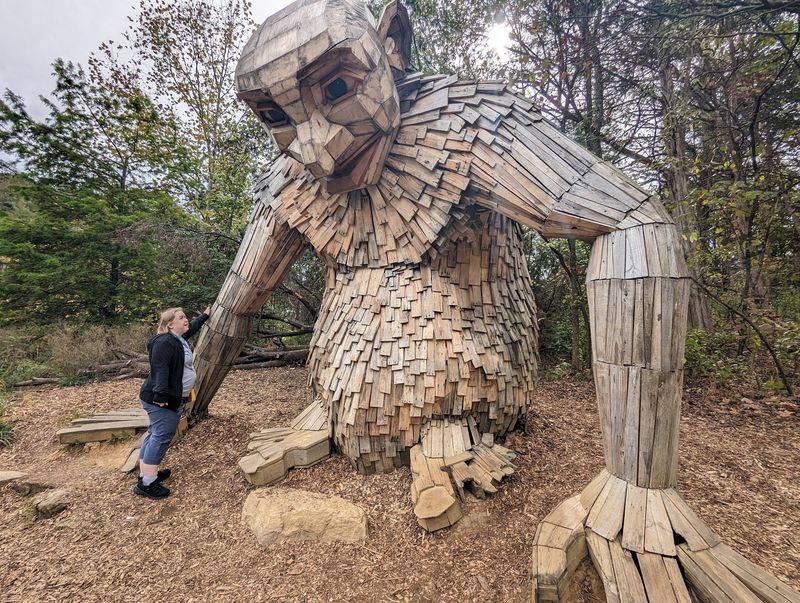
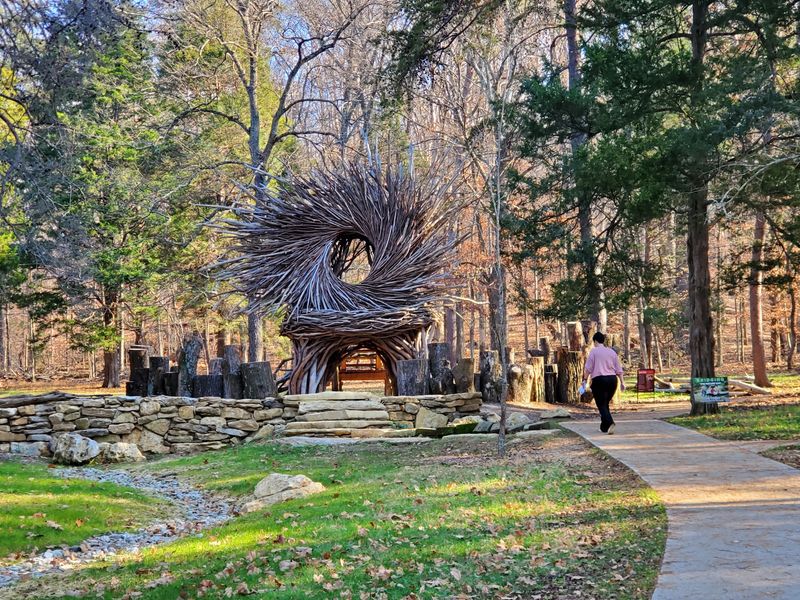
Bernheim is home to the Forest Giants, enormous sculptures built from recycled and reclaimed wood by Danish artist Thomas Dambo.
They arrived in 2019 and became the property’s most photographed residents almost immediately. By day they are cheerful.
Families pose with them, children climb toward them, and the whole scene reads as friendly public art.
Moonlight edits the mood considerably. The same figures go quiet and grow noticeably stranger, and a large wooden face surfacing out of shadow is a different experience than the same face in July sunshine.
It is not frightening exactly. It is closer to the feeling of finding a statue awake.
Worth managing expectations, though.
Trail access varies by program, and the route on a given night depends on the group, the conditions and the guide’s plan. Ask when you register rather than assuming a giant is on the itinerary.
If seeing one is your main goal, a daylight visit guarantees it and an evening program does not. The better approach is to treat any giant sighting as a bonus.
You came for the moon and the sound. A twenty-foot wooden woman appearing out of the dark is simply excellent value.
Timing The Season For The Best Walk
Each month out here has a distinct personality, and the traditional moon names lean into it. Winter gives you the cleanest version of the experience.
Bare branches let moonlight reach the ground, sightlines open up, and the cold keeps both insects and crowds honest. Spring is the loud season.
Frog choruses arrive, the ground smells like wet earth waking up, and the whole forest sounds busy.
Summer stays comfortably warm well past dark, which is lovely, and it also brings the full mosquito committee, so repellent stops being optional.
The trade is worth it for the insect chorus, which peaks in July and August. Fall delivers crisp air and leaves that crackle so loudly underfoot that the silence exercises become genuinely difficult.
There is real comedy in a guide asking twenty people to stand still on dry leaves. Pick your month based on what you want your ears to do, not just on what temperature you find pleasant.
The moon shows up regardless. The soundtrack is the part that changes.
If you only go once, go in a month with frogs or owls and let the visuals be the supporting act.
Making A Full Evening Of The Visit
Arriving before sunset roughly doubles what you get out of the drive. Daylight lets you scout the lake loop, look in at the visitor center, and see the landscape you are about to experience as silhouettes.
It also means you are not learning the parking layout in the dark. Sort the money side in advance.
Bernheim’s suggested admission has run fifteen dollars per vehicle for non-members, and the Full Moon Night Hike carries its own program fee on top of registration.
Check the current figures for both on Bernheim’s site so nothing surprises you at the entrance. Plan food around the forest rather than inside it.
Shepherdsville sits close to the north and Bardstown is a short drive south, and both give you dinner options once the program wraps.
Eating beforehand is the safer play, since kitchens in small Kentucky towns keep earlier hours than you might hope.
Fill the gas tank before you turn onto Clermont Road. Rural options thin out fast after dark, and the forest gate is not a place to discover you are running low.
Come early, stay late, and let the drive home be the quiet part.